

Prost to Patience: OYC’s Oktoberfest Race Delivers Light-Wind Tactics and Heavy-Duty Fun
The Bay Area sailing community knows that October can serve up just about any kind of weather, and for Oakland Yacht Club’s Oktoberfest 2026 race on October 3, the menu featured a heavy serving of patience and a side of serious light-air tactics. With a starting line plagued by practically zero breeze and an unforgiving, building flood current, the race committee was forced to cap the postponement at a strict half-hour.
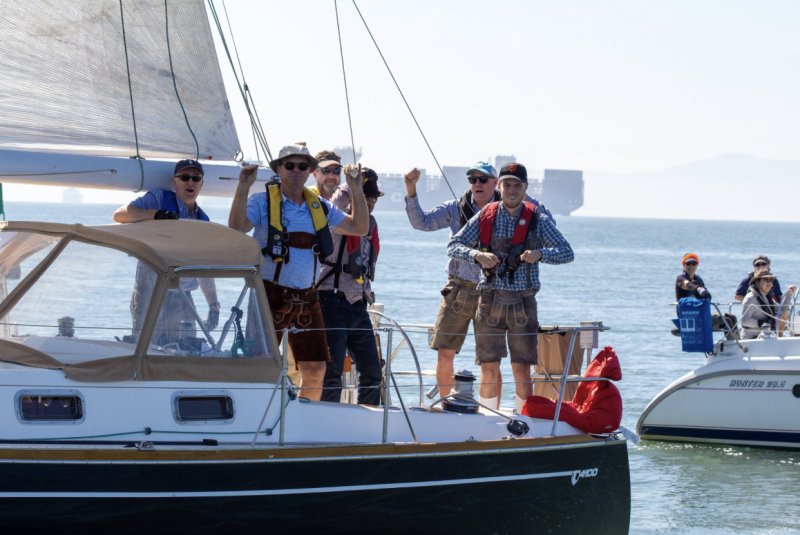
Fortunately, morale remained sky-high. In a (successful) attempt to wake up the wind, the fleet was treated to a buoyant pre-race soundtrack of Bavarian music blasting from the committee boat. Sailors embraced the spirit of the day, dancing on deck and swapping tension for camaraderie until the breeze finally began to fill in.
Once the horn sounded, it was all about optimizing sail trim and keeping weight distribution dialed in across the light-air courses. Fleet A, the beloved “Tunas” (Santana 22s), was sent on a 7.1-mile track out to SC1 and back down the Estuary to OYC. The rest of the fleets set out for the 11.7-mile course, pushing northwest of Treasure Island before bearing away for the 7-mile downwind parade toward the Estuary finish line.
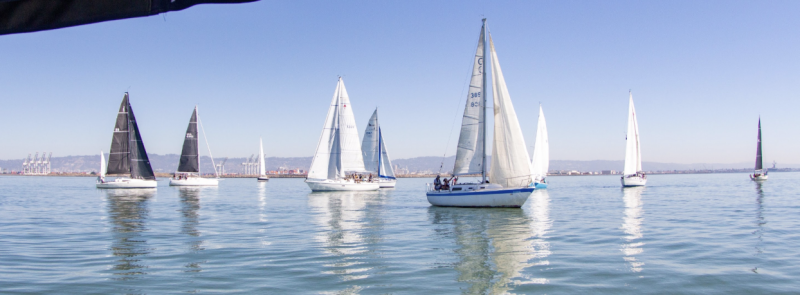
When the wake settled, the podiums featured some hard-fought victories:
Rhett Smith’s Humble Vandal and Justis Fennel’s Good and Plenty delivered a photo finish — while only a second apart at the finish line, Humble Vandal clearly won the spinnaker fleet on corrected time. Hank Lindemann’s Anemone was the first Tuna to cross, followed by Albacore and Adagio. Jim Brady showed exceptional light-wind endurance in his Catalina 34 Sterling as the sole finisher in the non-spin PHRF >145 fleet, and Nicholas Crescimanno’s Moonshadow took top honors of the non-spins with PHRF less than 145, before Muninn and Roxanne.
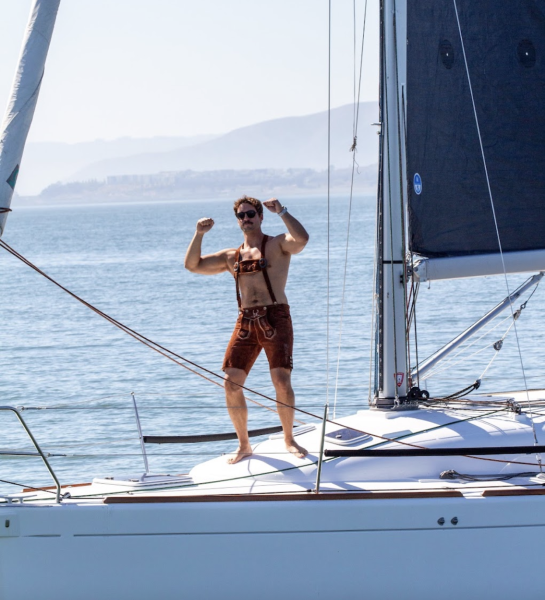
Back on land at Oakland Yacht Club, the tactical exhaustion quickly gave way to a massive celebration. The post-race party featured a sprawling German food buffet that properly rewarded the fleet’s on-the-water focus. The highlight of the evening was the eagerly anticipated costume contest, where the crew of the Santana 22 Albacore thoroughly dominated, taking home first place for their exceptional Oktoberfest outfits and undeniably energetic dancing.
It was a brilliant reminder that while we all show up for the competition, we stay for the community.
Good Jibes #258: Ainsley Parramore on Building Confidence in Youth Sailors, With Host John Arndt
This week we catch up with Ainsley Parramore to chat about building confidence in kids through sailing. Ainsley is the program director for Sailing Education Adventures (SEA) in San Rafael.
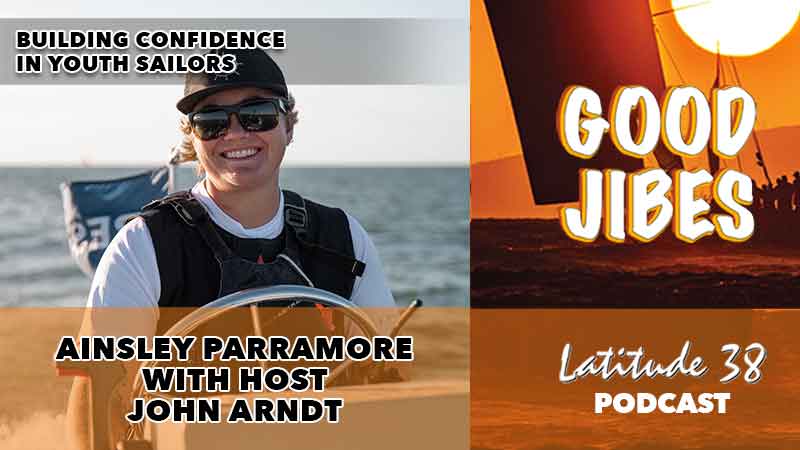
Tune in as Ainsley shares with host John Arndt stories about her first encounter with the grittiness of sailing, the perks of small-boat racing, how to approach sailing as a career path, the sailing lessons SEA teaches to kids, and how sailing can thrive as a hands-on activity in the age of AI.
Here’s a small sample of what you will hear in this episode:
- Northern California’s first neurodivergent sailing camp
- Six of 10 core instructors are San Rafael High School students
- What sailing teaches kids
- Growing up in a small-boat racing family in Annapolis
- The sailing scar story
Learn more about Ainsley at SEAsailing.org.
Listen to the episode on Apple Podcasts, Spotify, and your other favorite podcast spots — follow and leave a 5-star review if you’re feeling the Good Jibes!
Check out the episode and show notes for much more detail.
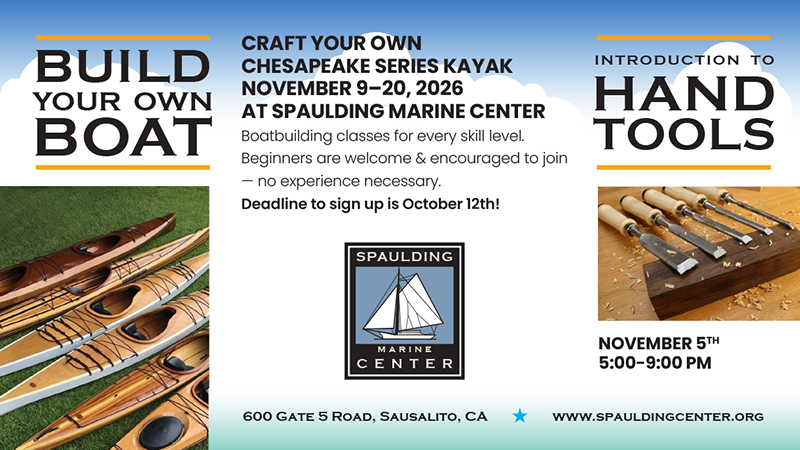
Craft Your Own Chesapeake Series Kayak!!
YRA Hosts 2026 RC’s Choice Race
The Yacht Racing Association (YRA) held its last offshore race on Saturday, October 3. As I was unable to line up enough crew to sail Ahi I agreed to help on race committee along with a couple of my crew. When we arrived at the road outside the Golden Gate Yacht Club (GGYC) to do the start — GGYC was not open yet — we saw a light easterly and a light ebb. The wind forecasts did not show the wind picking up until mid-afternoon, so we went with what we had. Eleven boats started in two groups and hoisted kites for the trip west to the Golden Gate Bridge.
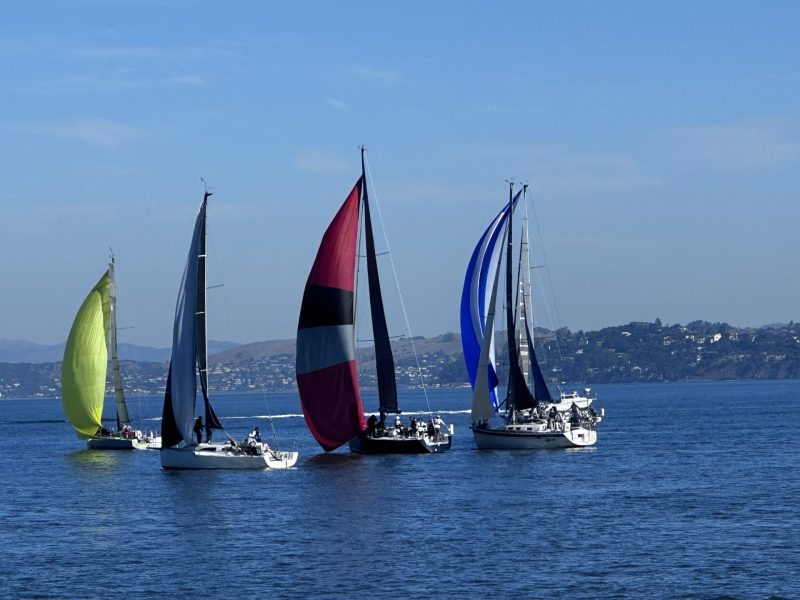
Once the starting sequence was over, all that remained for the race committee was to record the finish times of the boats. I was released from RC duty and went home.
We had a new boat in the fleet for the first time. They managed to finish first overall, even against some much faster boats. I asked skipper Derik Anderson to describe their day, and what follows is what I got. Congratulations to Shockwave and crew; thank you for the write-up, and I hope to see you on the start line next season.
“Shockwave’s crew was excited for the race. It was our first ocean outing since splashing the boat a few months ago after bringing the boat up from San Diego. The team is a mix of sailing veterans, rookies (a first race for two of the crew) and family. The common thread among us all is the goal to go fast in the right direction while learning and having a great time. If Wednesday and Friday nights have shown us anything, that goal had a chance of being achieved on this day.”
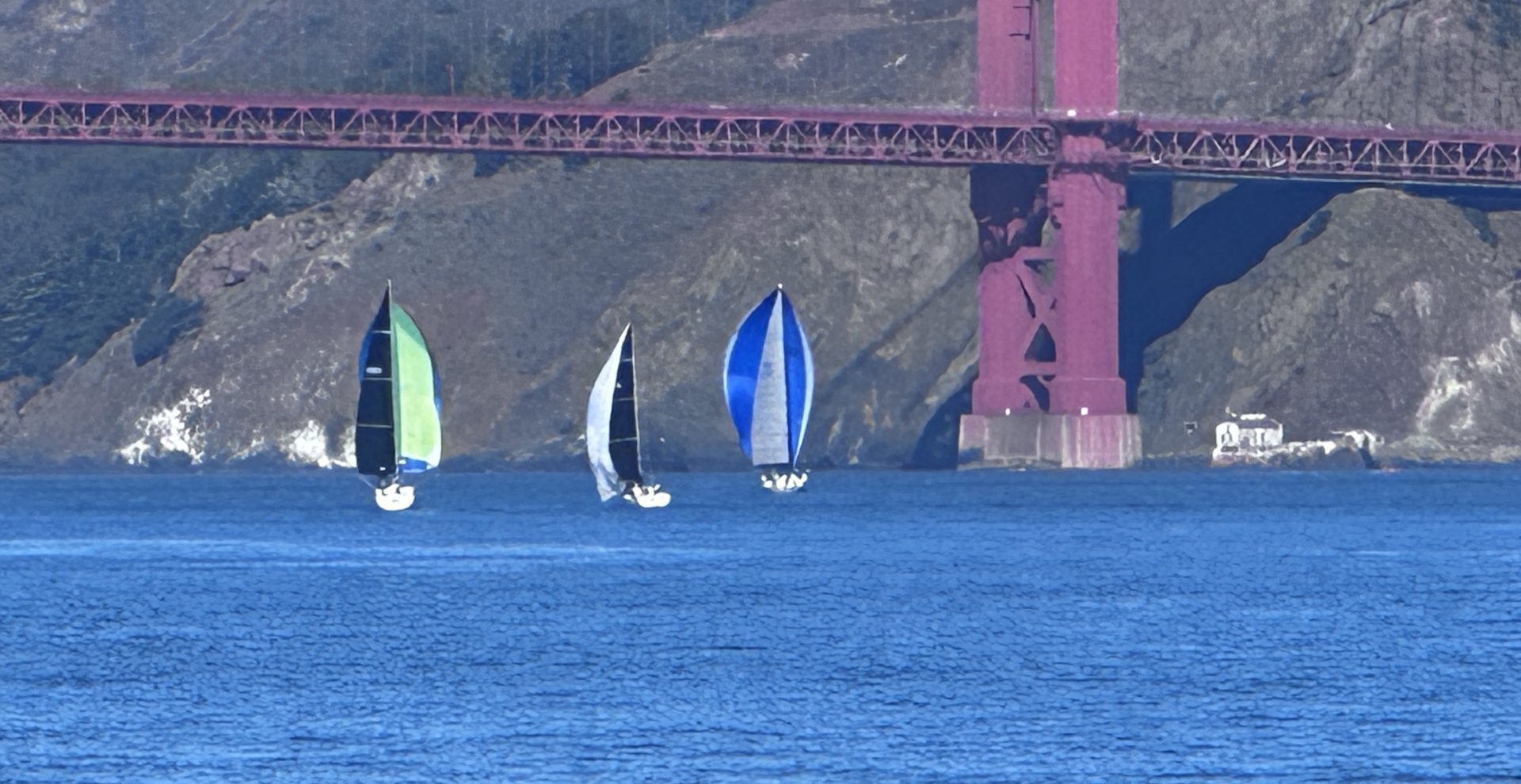
“The wind predictions varied. So when the southeast breeze persisted until our start, we hoisted a kite at the gun. Our goal was to simultaneously stay in the breeze and current flow. The fleet had a lot of different opinions on what was the best course. The breeze stayed 8-10 knots for most of the ride out to R8, though it was somewhat shifty. The ride was downwind and (small) upswell all the way. It was hard not to look back at Baghdad by the Bay on such a beautiful, Caribbean-like morning.
“Once we spun back toward the Gate, the ebb that had quickly carried us to the turning mark was now pushing against us. We deliberated on when the prevailing wind would actually fill in. After rigorous debate, it was decided that the new breeze was likely hours away. The breeze was still carrying over the city; how could we be wrong? Upwind and down-swell we went, seeing 30-degree swings in the offshore breeze. As we neared the Gate, we could see kites re-hoisting behind us. And it was dead between us and the finish line. Uh oh. Tim, Sofia, Lily, Dan and Duco sprang into action.”
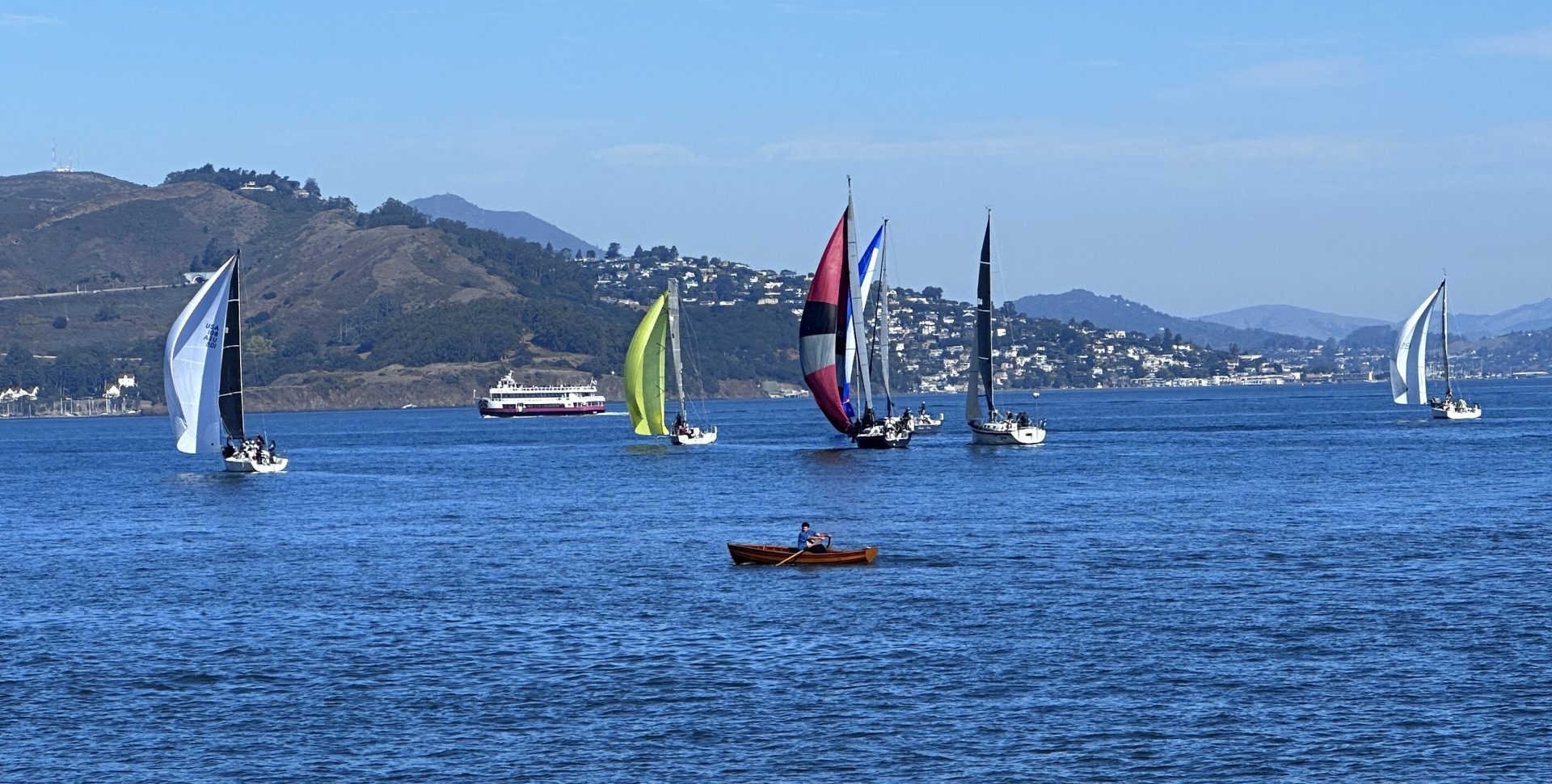
“We shuffled the kite, changed our strategy, and prayed that the wind would reach us before the fleet did. The 12-knot NW showed up as a chunk of the fleet compressed. Many dove toward the shore. We ended up wrangling with the big boats as we approached YRA X on starboard. Communication aboard was clear, concise, and as amicable as it can be when fighting with two other boats. The team crushed it.
“The RC made a smart call for the OYRA season-closer course and ran a very smooth event. Thanks, RC!
“We also want to thank Rebelution for the great music throughout the race.”
Hang Out With Sailors and Talk About Sailing? Someone Has To Do It
Over the past year or two, Latitude reader Gerry Gragg has filled an important and helpful role in the Bay Area as a Latitude 38 Ambassador. In this role, Gerry visited various sailing clubs and community sailing organizations around the Bay Area, sometimes taking part in the event, or at other times, simply showing up and chatting with participants of various programs during a regular sailing day. Sounds like a good gig, right?
Gerry is making new life plans and will no longer be available to visit and take part in the sailing events and programs that he would often report on — programs such as Coyote Point YC’s youth-sailing program, Berkeley Yacht Club’s Summer Camp aboard Pegasus, and Blue Water Foundation’s MOB practice. He also was a regular visitor at Cal Sailing Club’s regular Open House sessions over the summer months. He even stopped in at various locations to check on and tidy up our magazine racks. We can’t be everywhere, so we really appreciate Gerry’s commitment to the local sailing community.
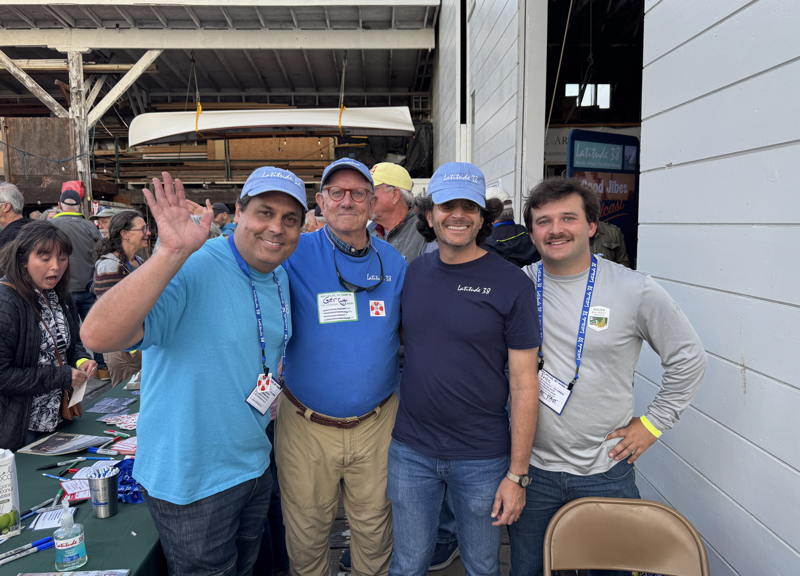
We’re now left with a hole in our crew. We need a new Gerry, or at least someone who will take on his role as Ambassador. One of the things we loved about having Gerry on board, apart from his wonderful personality, is that he embraced his role and was willing to hang out with sailors all around the Bay Area. We would love to do that ourselves, but we also need to work on producing our magazine. Is there anyone out there who can help round out our team?
One of Gerry’s favorite stops was the Cal Sailing Club Open House. This was a regular feature of his community outreach. The open houses are going into recess for the winter, but they’ll be back next April with a summer-long schedule.
If you’re curious about what goes on at a Cal Sailing Club Open House, check out the video below. We discovered it on their website. Granted, it was made in 2020 or thereabouts, so some of the references (COVID for example) are not current, but the gist is, and we thought it was a fun and very informative video.
You can also tune in to our Good Jibes podcast, during which Gerry Gragg shares some of his own sailing stories, and what it means to him to be a Latitude 38 ambassador.
If you’re feeling inspired, and have some time to give to hanging out with and chatting with sailors, let us know. We’d love to have you aboard. Email us at: [email protected].
National Marine Manufacturers Association Advocates to Save Waterfront Access
We’ve written often about the vanishing space on land that gives the public access to the Bay and ocean. The alarming decline of space to access America’s waters has received growing attention from organizations like the National Working Waterfront Network and the National Marine Manufacturers Association (NMMA).
The NMMA recently launched the Waterways Access Initiative. It’s a new campaign advancing policies to protect public water access, modernize recreation infrastructure, support conservation, and strengthen the made-in-America recreational boating industry. Federal and state government agencies are also increasingly focused on legislating policies to support the working waterfront, the marine trades and public access to our nation’s waters and the oceans beyond. We wrote about the Bay Area’s biggest “park” back in May.
The shrinking access for the maritime trades is one of the reasons we decided, years ago, to give more attention to the working waterfront and keep those stories visible on our Working Waterfront page. There are waterfront-access initiatives in the legislature that can use the support of boaters who want to protect the working waterfront and access to the Bay.
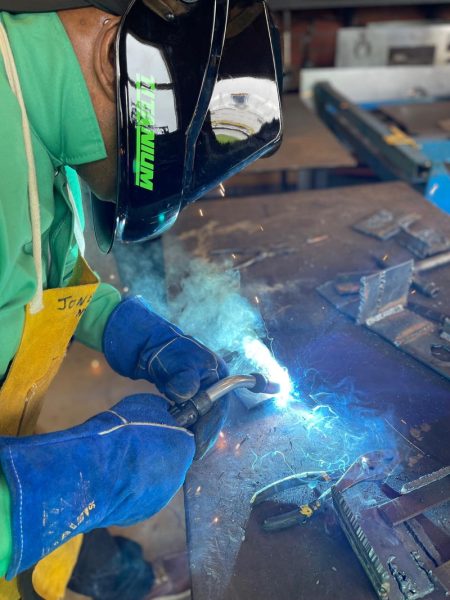
The NMMA wrote, “America’s public lands and waters are where families boat, fish, camp, and experience the outdoors. But access to these shared places depends on safe, reliable infrastructure — from boat ramps, marinas, and docks to roads, campgrounds, and visitor facilities.
“In 2020, Congress created the National Parks and Public Land Legacy Restoration Fund to repair aging infrastructure across federally managed lands and waters. Since then, the Fund has supported nearly 400 projects nationwide, including work to rebuild boat launches, repair marinas, and improve roads and recreation facilities.”
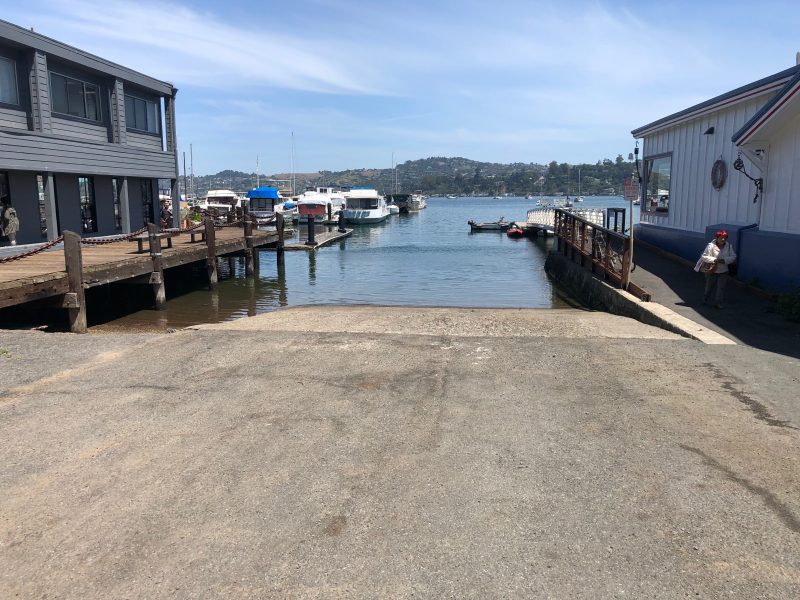
The Marin IJ recently reported the good news that Sausalito has plans to upgrade and improve the Turney Street launch ramp and neighboring docks. As the IJ reported, “The ramp and docks are a rare public access point to Richardson Bay. Built decades ago, the site has become run down and an eyesore — apart from a recently installed gangway leading to floating docks near the boat ramp.” As the IJ notes, public access is scarce around Richardson Bay (and much of the rest of the Bay), which is why organizations like the NMMA are asking voters to support state and federal funding.
Two additional critical needs to ensure boating access are dredging the channel in Sausalito and many other areas around the Bay and making sure there is land along the shore reserved for marine use. For launch ramps, that means a place to park your vehicle and trailer after you’ve launched the boat. Without protected land, access to the Bay will become rare.
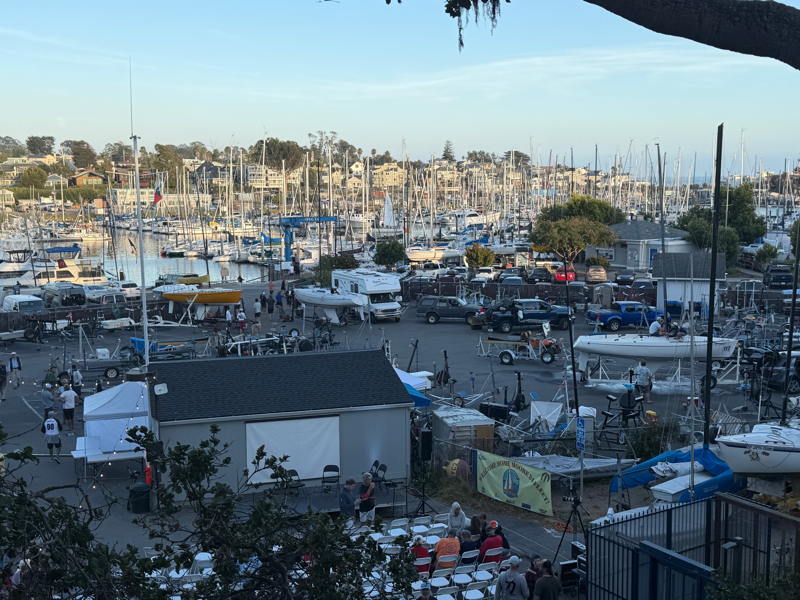
The NMMA says there is bipartisan legislation being advanced by House and Senate committees (H.R. 9250 and S. 1547) that would reauthorize and strengthen the Legacy Restoration Fund to help boating interests. They are asking us all to help by writing Congress to preserve the public access, outdoor experiences and local economies that depend on well-maintained public lands and waters. The NMMA has a page that makes it easy for you write to support recreational access to our Bay and oceans. It is this land that allows our local tugboats, ferries, dredges, sailboats and recreational and commercial fishing boats to be maintained.
We spoke with Bill Elliott of Svendsen’s Bay Marine and Bay Ship & Yacht in Alameda, which repairs many of the large vessels in the Bay Area. He relayed the clear need for a working waterfront but also the need for the necessary skills to make the waterfront industry work. He’s a big proponent of adding vocational training to local high schools (see the boat built by Jim Bender’s class at Redwood High School in Redwood City) and notes there is increasing interest by young people in choosing trade careers. He sent us the video below of some of the career training opportunities they offer.
The loss of land to access boating and support the necessary maritime trades for both recreational and commercial purposes is the reason the NMMA, the National Working Waterfront Network (and the local affiliates) and state and federal governments are racing to shore up the shoreline for public access to the nation’s waters. The marine industry needs the support of the boating public, who can help by writing their legislators and supporting the NMMA’s access-to-boating initiatives.
Westwind Yacht Management — Washing, Waxing and Varnishing
Westwind Yacht Management: Premiere Yacht & Fleet services for the San Francisco Bay Area.