

National Marine Manufacturers Association Advocates to Save Waterfront Access
We’ve written often about the vanishing space on land that gives the public access to the Bay and ocean. The alarming decline of space to access America’s waters has received growing attention from organizations like the National Working Waterfront Network and the National Marine Manufacturers Association (NMMA).
The NMMA recently launched the Waterways Access Initiative. It’s a new campaign advancing policies to protect public water access, modernize recreation infrastructure, support conservation, and strengthen the made-in-America recreational boating industry. Federal and state government agencies are also increasingly focused on legislating policies to support the working waterfront, the marine trades and public access to our nation’s waters and the oceans beyond. We wrote about the Bay Area’s biggest “park” back in May.
The shrinking access for the maritime trades is one of the reasons we decided, years ago, to give more attention to the working waterfront and keep those stories visible on our Working Waterfront page. There are waterfront-access initiatives in the legislature that can use the support of boaters who want to protect the working waterfront and access to the Bay.
The NMMA wrote, “America’s public lands and waters are where families boat, fish, camp, and experience the outdoors. But access to these shared places depends on safe, reliable infrastructure — from boat ramps, marinas, and docks to roads, campgrounds, and visitor facilities.
“In 2020, Congress created the National Parks and Public Land Legacy Restoration Fund to repair aging infrastructure across federally managed lands and waters. Since then, the Fund has supported nearly 400 projects nationwide, including work to rebuild boat launches, repair marinas, and improve roads and recreation facilities.”
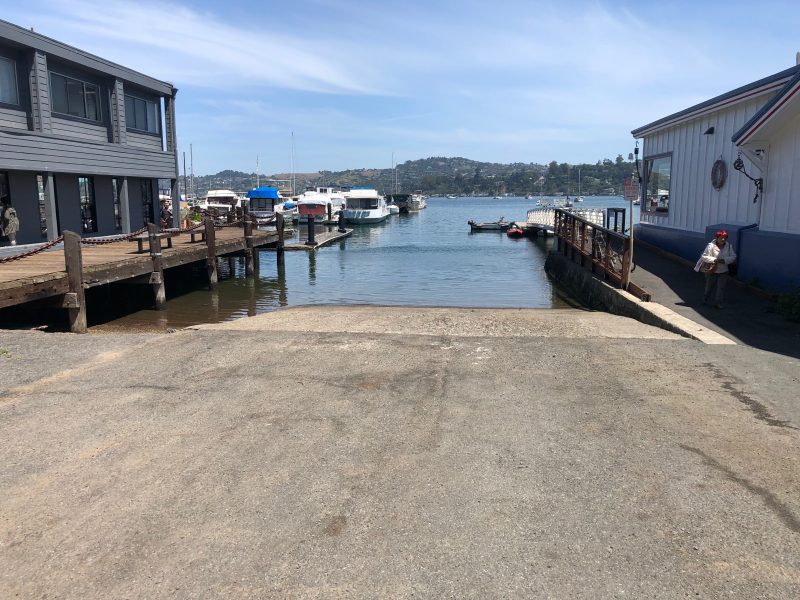
The Marin IJ recently reported the good news that Sausalito has plans to upgrade and improve the Turney Street launch ramp and neighboring docks. As the IJ reported, “The ramp and docks are a rare public access point to Richardson Bay. Built decades ago, the site has become run down and an eyesore — apart from a recently installed gangway leading to floating docks near the boat ramp.” As the IJ notes, public access is scarce around Richardson Bay (and much of the rest of the Bay), which is why organizations like the NMMA are asking voters to support state and federal funding.
Two additional critical needs to ensure boating access are dredging the channel in Sausalito and many other areas around the Bay and making sure there is land along the shore reserved for marine use. For launch ramps, that means a place to park your vehicle and trailer after you’ve launched the boat. Without protected land, access to the Bay will become rare.
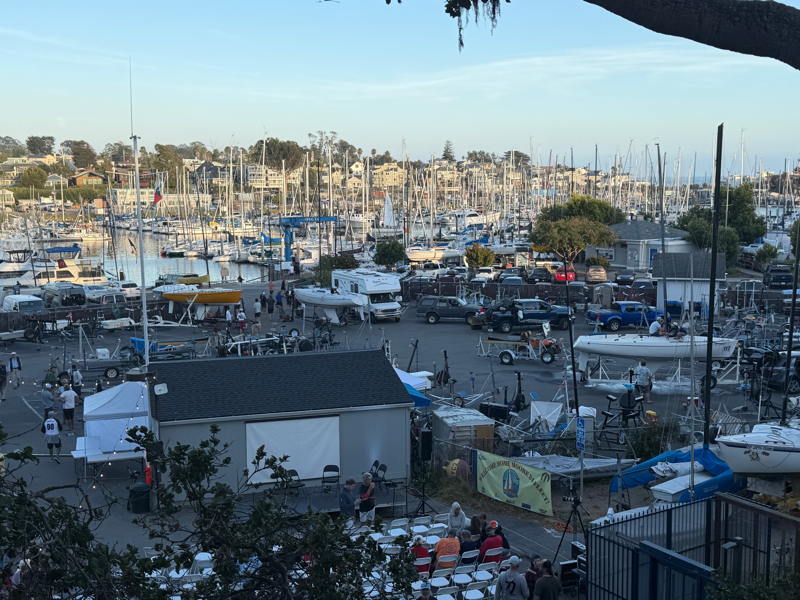
The NMMA says there is bipartisan legislation being advanced by House and Senate committees (H.R. 9250 and S. 1547) that would reauthorize and strengthen the Legacy Restoration Fund to help boating interests. They are asking us all to help by writing Congress to preserve the public access, outdoor experiences and local economies that depend on well-maintained public lands and waters. The NMMA has a page that makes it easy for you write to support recreational access to our Bay and oceans. It is this land that allows our local tugboats, ferries, dredges, sailboats and recreational and commercial fishing boats to be maintained.
We spoke with Bill Elliott of Svendsen’s Bay Marine and Bay Ship & Yacht in Alameda, which repairs many of the large vessels in the Bay Area. He relayed the clear need for a working waterfront but also the need for the necessary skills to make the waterfront industry work. He’s a big proponent of adding vocational training to local high schools (see the boat built by Jim Bender’s class at Redwood High School in Redwood City) and notes there is increasing interest by young people in choosing trade careers. He sent us the video below of some of the career training opportunities they offer.
The loss of land to access boating and support the necessary maritime trades for both recreational and commercial purposes is the reason the NMMA, the National Working Waterfront Network (and the local affiliates) and state and federal governments are racing to shore up the shoreline for public access to the nation’s waters. The marine industry needs the support of the boating public, who can help by writing their legislators and supporting the NMMA’s access-to-boating initiatives.