

Catherine Breed Completes Record-Breaking Swim Down the California Coast
She’s done it! Mill Valley’s Catherine Breed completed her 900-mile swim down the California coast from Brookings, OR, to the Mexican border this past Monday, October 19. While Mexico-bound sailors from the Pacific Northwest were cruising the California coast, Breed was swimming it, covering about 9 1/2 miles per day to complete her “passage” in 111 days.
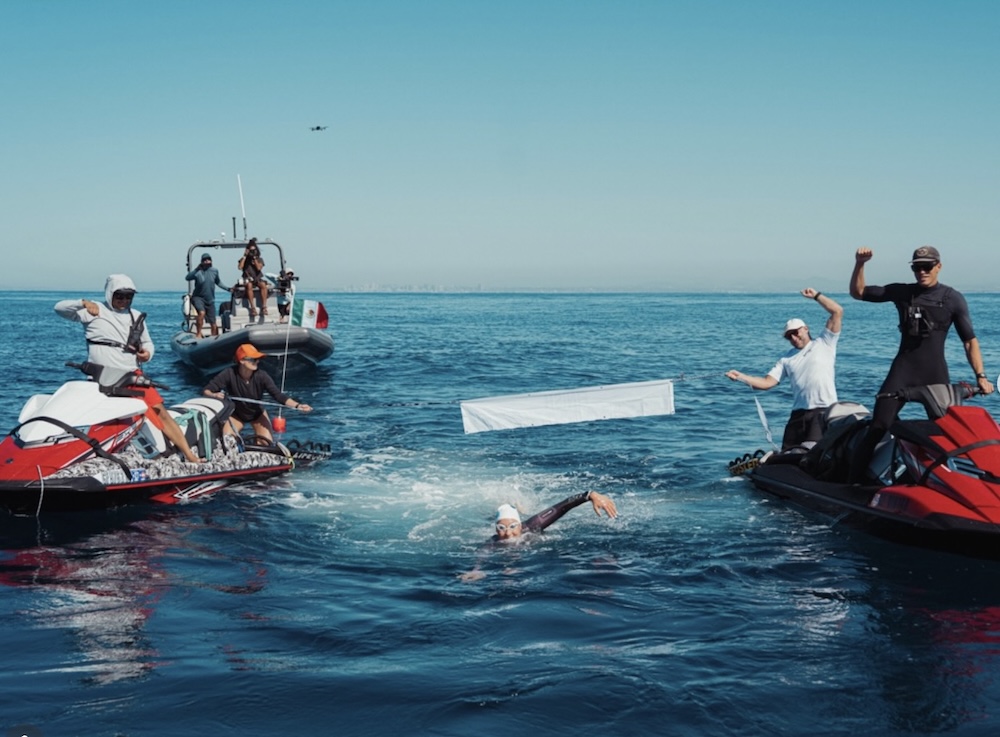
As we published in July, Breed was wearing a wetsuit for the swim, but did not use a shark cage. She was, however, being watched by a support team on the San Diego-based mothership, the Beneteau 52 Catalyst. Prior to this challenge, Breed had swum the English Channel, the length of Lake Tahoe, the Farallones to the Golden Gate Bridge and much more.
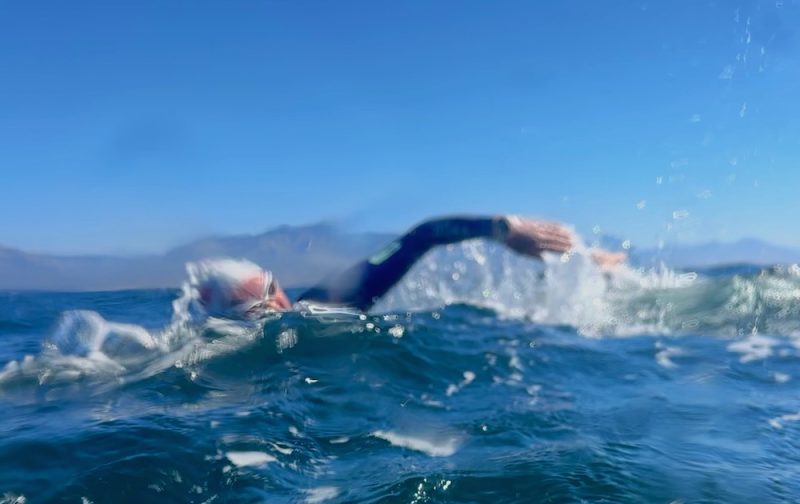
As noted in prior stories, she averaged around nine miles per day by swimming about five hours in the early morning before afternoon breezes picked up. After completing each daily swim, she would reboard Catalyst to refuel and sleep in preparation for the next day’s swim. Despite the well-known challenge of finding any harbors along the California coast, the team did manage to find an anchorage almost every night close to the waypoint where they’d start the next morning’s swim.
The Baja Ha-Ha has only allowed sailboats and powerboats. Should we open a swimming division?
Breed highlighted both the richness of marine life and the environmental threats facing the ocean and coastline she loves as she made her way south, stroke by stroke. An Instagram post by San Diego Magazine quoted Breed as saying, ““Everyone’s been so fixated on sharks. And we are more fearful about that than we are about the damage and destruction that we are causing to our own home.” The damage and destruction are part of the inspiration behind Breed’s Swim California mission. As the founder of Sea Dreamers, a nonprofit that aims to empower women and girls to engage with the ocean through free, inclusive, community-led events focused on connection and conservation, Breed’s swim has brought community attention to our oceans and marine life.
Congratulations, Catherine!
Good Jibes #260: Greatest Hits: John Arndt, Dawn Riley and Alan Olson, With Host Max Branstetter
This week on Good Jibes, host Max Branstetter shares three Good Jibes Greatest Hits from the early days of Latitude 38’s sailing podcast.
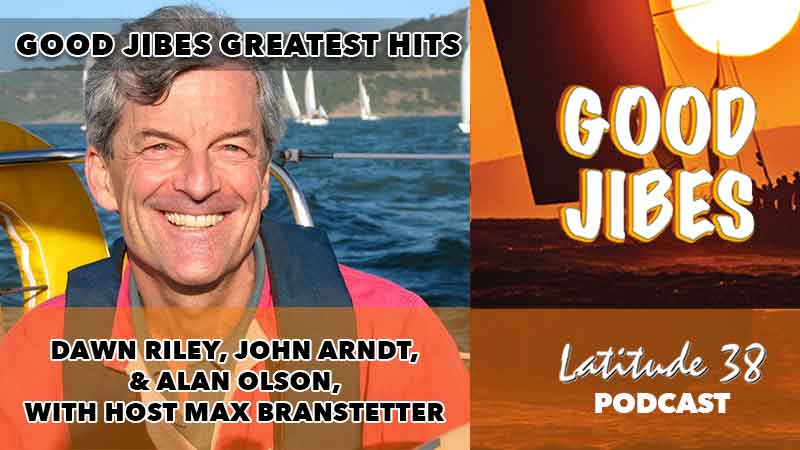
Hear Ryan Foland interview publisher John Arndt on the origin story of Latitude 38 in Episode #1; Moe Roddy Wieneke chat with Hall of Famer Dawn Riley on her racing career in Episode #47; and Moe catch up with Alan Olson on building tall ships in Episode #74.
Here’s a small sample of what you will hear in this episode:
- The question that sent Alan straight back to the shipyard
- How John went from selling foul weather gear to answering a Latitude 38 ad
- A mutiny in Uruguay
- Why print still matters
- Winning the America’s Cup, then being politically edged out of the final eight races
Listen to the episode on Apple Podcasts, Spotify, and your other favorite podcast spots — follow and leave a 5-star review if you’re feeling the Good Jibes!
Check out the episode and show notes for much more detail.
Your Safe Harbor on Mexico’s Pacific Coast
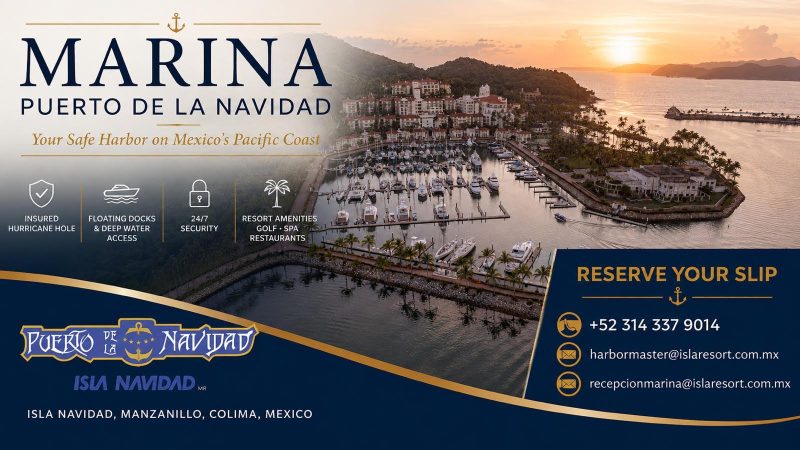
Puerto de la Navidad is the best kept secret of the Costalegre. It’s beautiful resort type marina and lagoon offers first class cruising grounds with 11 surrounding anchorages that make it a great home base. Lined with paverstone streets and filled with little tiendas, great restaurants and a fantastic choice of music nightly, nearby Barra de Navidad shines at night even brighter than it’s days.
A Working Waterfront Needs More Than New Buildings
As things heat up on the Sausalito waterfront, we received the following letter from a concerned reader:
As someone who cares deeply about Sausalito’s waterfront and the maritime community that still calls it home, I’m concerned that Measure X could fundamentally change the character of the Marinship.
The argument for Measure X is that more development will revitalize the waterfront. But a working waterfront isn’t simply a collection of buildings that happen to be near the water. It is the boatbuilders, marine trades, fabricators, artists, chandlers, welders, designers, mechanics and small businesses that depend on access to the waterfront, and on being able to afford to remain there.
That is where Measure X concerns me.
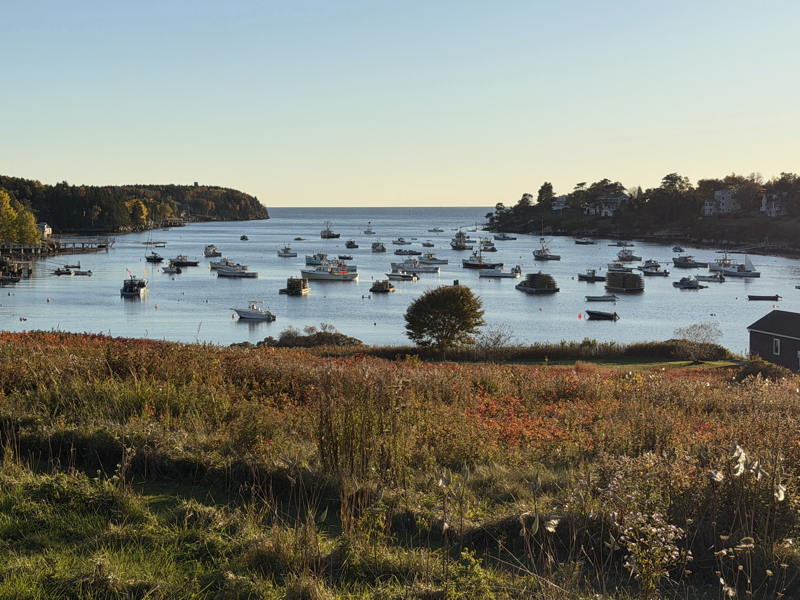
The measure would substantially increase what can be built on waterfront properties, repeal the Marinship Specific Plan, and allow a broader range of commercial uses. It also removes existing protections that have helped preserve the industrial and maritime character of the Marinship.
Once land becomes more valuable because substantially larger and more profitable buildings can be developed on it, rents tend to follow. A marine business that needs a large, affordable workspace cannot necessarily compete with an office tenant, retail operation or other higher-paying use.
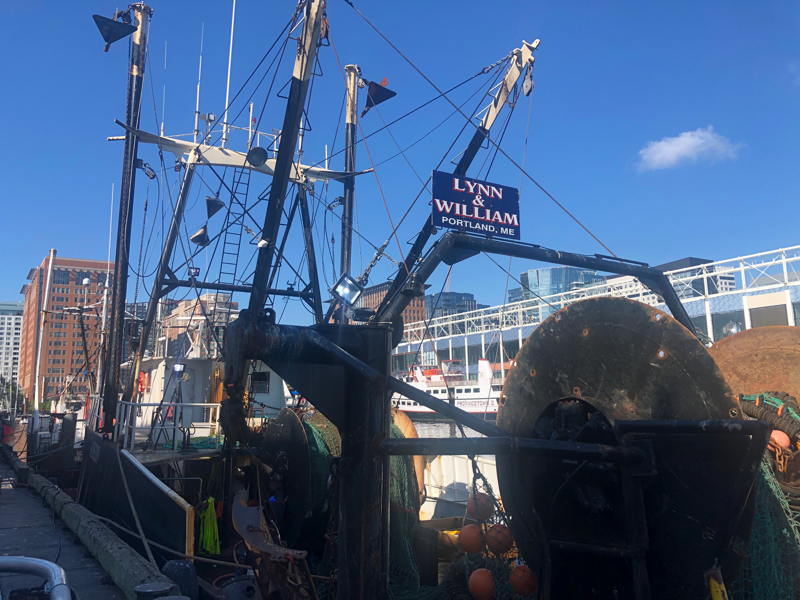
The same problem applies to artists. Sausalito’s artists are not decorative accessories to the waterfront. Their studios and workshops are part of the working fabric of the community. If redevelopment causes commercial rents to rise, many artists will simply be priced out.
And once those people leave, they are difficult to bring back.
There is a legitimate need to address Sausalito’s aging infrastructure, flooding and deteriorating waterfront buildings. But we shouldn’t confuse redevelopment with preservation. We can improve the waterfront without making it economically impossible for the people who currently work there to remain.
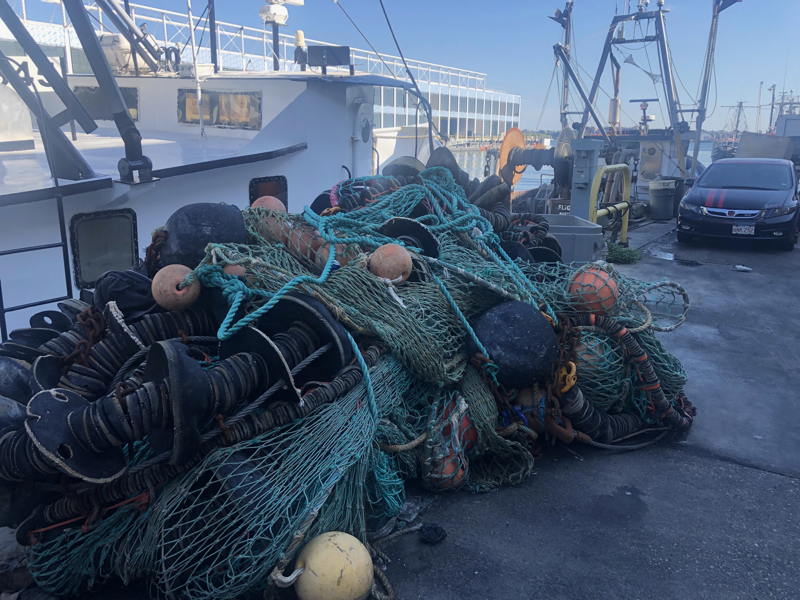
If Measure X is supposed to preserve Sausalito’s arts, industrial and maritime heritage, then those protections should be explicit and enforceable — not dependent on hoping that new development will somehow benefit the people who are already here.
A working waterfront should continue to work.
Let’s make sure we don’t “revitalize” it by pricing out the very people who make it a working waterfront in the first place.
– Captain Jaz
The 2026 Rolex Big Boat Series at St. Francis Yacht Club
Perhaps the annual highlight of sailboat racing on San Francisco Bay is the St. Francis Yacht Club’s (StFYC) Rolex Big Boat Series (RBBS) in September every year. The 2026 edition featured 81 different boats and more than 700 sailors racing on San Francisco Bay, across eight different divisions.
Racing took place from September 17 through 20, and the regatta saw a variety of conditions, excellent seamanship, tight racing and several wild parties. The eight fleets were the classic yachts making their triumphant return after a one-year hiatus, three one-designs (J/105, Express 37 and J/88) and four ORC fleets. Of note, the regatta saw a much higher ORC turnout than it had in recent years, with the event also serving as the 2026 ORC North American Championship.
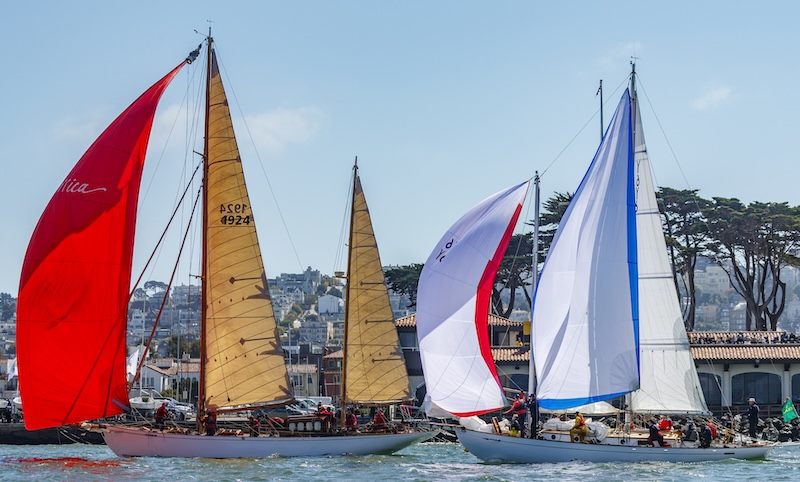
This year’s regatta featured several new twists, with the ORC boats sailing in an ocean race on day one of racing (on different courses depending on the ORC fleet), and the one-designs sailing several more races than in previous years.
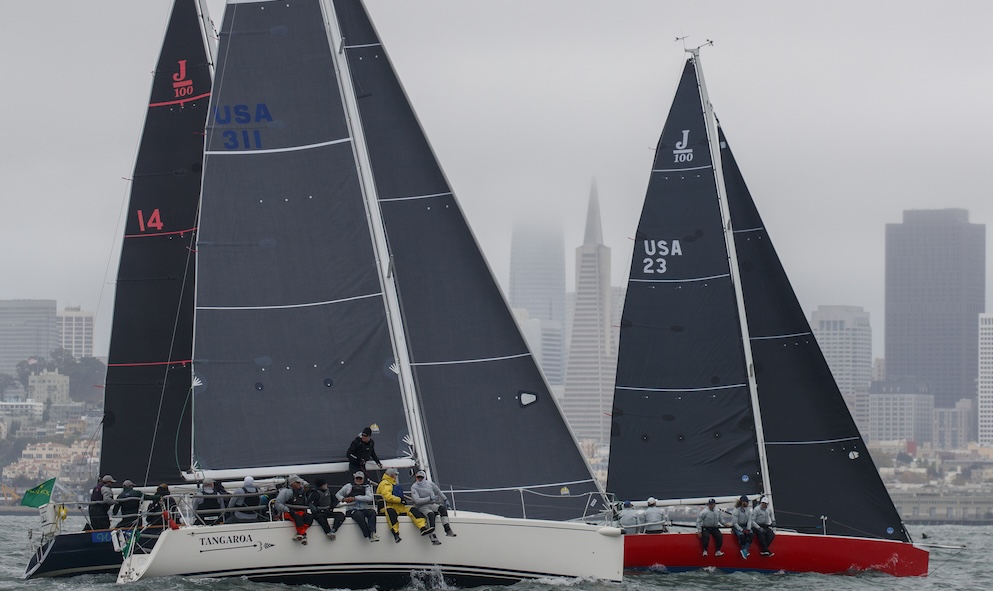
J/105 – Winner: Niuhi, Randy Hecht, SFYC
The J/105 fleet has consistently been the largest fleet at RBBS, one-design or other, over the past few decades. The 2026 RBBS was no different in that it drew 30 J/105s to the starting line. With the size and competitiveness of the J/105 fleet, the winner is normally awarded one of the Rolexes up for grabs at the event, but that was not the case this year as the two Rolexes went to the ORC A and ORC C fleets. This likely had something to do with the fact that the regatta served as the ORC North Americans.
What was new for the fleet was the number of races: Instead of the seven races that had been the norm in recent years, the J/105 class (and all of the other one-design classes) raced 10 races across four days — three each on Thursday, Friday and Saturday, and one Bay Tour race on Sunday to wrap up the regatta. The fleet was as competitive as ever, as shown by the fact that across the 10 races, seven different boats won. With that many boats capable of a bullet, and even more capable of a top-three finish, the winner was decided by consistency.
Find Relief With Division of Boating and Waterway’s Pumpout Nav App

You know what really floats our boat? Clean California waterways. Next time your vessel’s septic tank is running on full, find your nearest pumpout station with the Pumpout Nav app. Download it for free today. http://www.boatcalifornia.com/