

Baja Ha-Ha Founder Richard Spindler Comments on the Hurricane Season
With the approaching start of the Baja Ha-Ha, Ha-Ha founder Richard Spindler wrote some comments on his Facebook page to give some perspective on the 2026 hurricane season.
As the architect of the Baja Ha-Ha and the individual who ran it for 31 years, even though I’m retired, I’d like to address some of the concerns that this year’s Ha-Ha entries may be having about the late-season hurricanes in Mexico.
First of all, there is nothing uncommon about this hurricane season. There have been 22 named storms this year, including 12 hurricanes.
The record was 27 named storms in the El Niño year of 1997. Sixteen of those were hurricanes, a number matched in 1990, 1992, 2015 and 2024.
The average over a long period of time has been 15 named storms, with eight of them being hurricanes.
When I created the Ha-Ha I built in what I believed was a good buffer to protect the fleet against tropical storms and hurricanes. As the publisher of Latitude 38, I’d been to dozens of post-hurricane sites and had seen the terrible destruction the storms can cause.
Years ago, for example, I’d been keeping my Ocean 71 Big O in Culebra, which was considered an ultimate Caribbean hurricane hole. I’d had my captain run the boat up to Virgin Gorda for a bottom job when a massive hurricane hit Culebra. So I wasn’t there when something like 315 of the 320 boats were obliterated by a hurricane. But I saw the damage later. Yikes!
I’d also seen the remnants of the 700-boat fleet in St. Martin’s Simpson Bay after Luis came through. Only a couple of boats survived in that totally enclosed bay.
As hurricanes terrify me, I never wanted to subject myself to one, and that goes many times over for members of any fleet I was leading.
The thing to know is that starting in mid-October, environmental conditions begin to change significantly along the Ha-Ha route. The air temperatures begin to cool, particularly at night, the ocean temperature starts to cool, the days get shorter, and the amount of hurricane-killing wind shear increases.
That’s why in the 31 years of the Ha-Ha there has never been a tropical storm, let alone a hurricane, that has passed through the Ha-Ha route during the Ha-Ha dates.
That said, there are three times when I, as Grand Poobah, made the decision to partly or totally modify the Ha-Ha because of weather.
In 2009, upper Baja was subjected to moderately strong northwesterly winds, not hurricane in nature. As the Poobah, I suggested that some less experienced crews and/or those with smaller boats might want to take shelter in one of the several great anchorages between Ensenada and Turtle Bay. To give support, we joined a group of them in Colnett. We had a restful night and continued on with no problem the next day.
In 2014 I paused the fleet in Turtle Bay on cautions from Commanders’ Weather and other professional forecasters. All of them warned that there was a system, a week out and much farther to the south, that had a slight chance of potentially affecting us. So I kept the fleet in Turtle Bay for the night, during which time the storm eliminated itself as a threat. The next day we continued on.
Finally, in 2019, Tropical Storm Raymond was far south but possibly approaching Cabo San Lucas the day before the anchored fleet was to leave Bahia Santa Maria for the Cape. Despite the fact that all the professional forecasters predicted Raymond would hit Cabo as a mild tropical depression rather than a tropical storm, I decided that the possibility of strong winds hitting a very crowded anchorage in Cabo was unacceptable. With safety the ultimate concern, I had to cancel the last couple of days of the event.
The forecast arrived so far in advance that some of the boats that had berth reservations in La Paz had time to make their way 175 miles down to Cabo and then 135 miles up to La Paz. A few boats that had reservations in the marina at Cabo went there. The rest remained in Bahia Santa Maria, where they didn’t have more than 20 knots of wind from the tropical depression.
A key thing to remember is that tropical storms and hurricanes are now easy to predict far in advance, and they would have to come far to the north to reach the fleet. So in the very unlikely event of an approaching storm there would be plenty of time to take shelter or reverse course and run from it.
What are the chances of a tropical storm or a hurricane reaching Cabo San Lucas when the Ha-Ha fleet is slated to arrive? Or even Puerto Vallarta, which is much farther south? Per Gemini:
“Just like in Cabo San Lucas, direct landfalls or impacts from tropical storms and hurricanes north of Puerto Vallarta after November 15 are practically nonexistent in the modern historical record.”
I hope this addresses some of your concerns.
I’m sorry that I won’t be able to join you this year, so I’ll have to console myself with the fact I had a fantastic 31-year run. God, I love the Ha-Ha, which I consider one of the crowning achievements of my life.
Be safe; have fun!
ILCA Sailors Recap Totally Dinghy Experience
Richmond Yacht Club hosted the 2026 Totally Dinghy regatta on October 10. Among the various fleets were the 14-boat ILCA 6 fleet and the 16-boat ILCA 7 fleet. David LaPier (ILCA 6) and Colin Brochard (ILCA 7) sent us their accounts of the event. You can find the full results here.
ILCA 6: Written by David LaPier
The seasons are changing, but San Francisco Bay provided one more glorious day of racing in Richmond, with temperatures in the high 60s and a crisp sea breeze at 15 to 20 mph. The tide turned from the last of the flood into early ebb as the day progressed, allowing for a heathy chop that placed a premium on boat speed and handling. The ILCA 6s and 4s started together. Eighteen boats hit the line for the first race.
Neil Marcellini, an outstanding kiteboarder and 470 and 29er sailor, decided to take a walk on the slow side, easily winning the ILCA 6s with superior speed and a memorable port-tack start. Your correspondent, David LaPier, was second, followed by Chris Boome, Marcel Sloan and Toshi Takayanagi. The top youth sailor, Ethan Mooiweer from Tahoe YC, finished sixth.
It was a challenging day for the race committee, with one race abandoned due to a drifting weather mark out in deep water. They did a great job keeping the line fair with the changing tide, and getting in plenty of great races. The northern side of the Berkeley Circle is always interesting. Getting off the line on starboard early was generally a safe bet, but there were plenty of opportunities on the right-hand side of the course if you picked your spots with occasional veers and somewhat smoother water. For me, sailing in lots of space so I could keep the boat moving with the bow down, staying on the lifted tack, picking smooth spots to tack while keeping speed, and not overstanding worked well, as did getting out to practice on Friday to prepare and shake off some rust. If I may offer one tip: If it’s windy, don’t jibe within 5 minutes of your start. Tack around and avoid capsizing. It’s a big bummer to tip over then hear the horn go off for your start, and it broke my heart to see it happen Saturday more than once.
It was great seeing friends while cleaning up after the races in the warm Richmond Riviera sunshine. Lots of folks crowded the deck upstairs at the club for a happy awards presentation and endless pizza. The great people and volunteers at RYC helped make it special. The day ended with a happy farewell gathering for Courtney Clamp, who is a damn good sailor and better friend. We wish her all the best on her round-the-world sailing adventures next year.
ILCA 7: Written by Colin Brochard
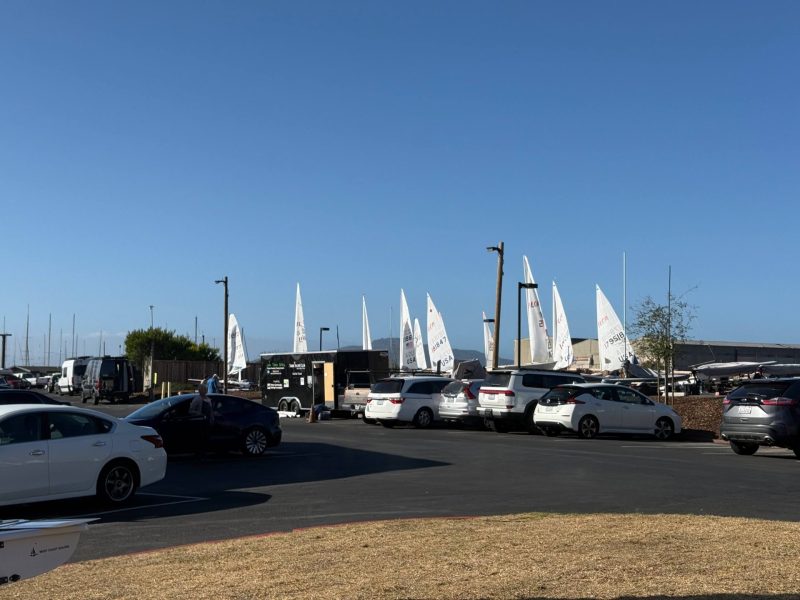
Excitement for the 2026 Totally Dinghy spiked the night before the event when Al pointed out we had 41 ILCA sign-ups across the three rigs. RYC seems to be becoming the center of mass for the NorCal fleet, so most of the usual suspects signed up, along with a handful of out-of-towners. Kudos to the Tahoe sailors who made the trip!
As promised, the Bay delivered a steady breeze in the mid- to high teens, clocking right throughout the day, while the tide flooded, slacked, and then ebbed as the afternoon wore on. Conditions were defined by a steep, confused chop that seemed to come from three directions at once (the South Bay, the Slot and a bit from the straits). This made for exceptionally physical sailing.
The local race committee didn’t take it easy on us, setting a very long course. So long, in fact, that on the first race of the day, a handful of the top guys decided they’d had enough and rounded the wrong weather mark instead of continuing to the red buoys! I kid. Nevertheless, having been burned at the Tahoe Fleet Champs by sailing the wrong course, yours truly studied the course sheet diligently the night before and capitalized on their misfortune, rounding the correct top mark in first and barely holding off Emilio and Elliot on the downwind leg.
My legs were already toast after what felt like a 20-minute beat in race one, and the RC signaled a two-lapper for race two. The breeze built and continued to clock right. Julian and I managed to catch a couple of shifts, rounding the top mark in first and second. Very quickly, I was swallowed up on the run by several sailors, including James Espey and Stephen Bourdow, who demonstrated serious downwind prowess in very tricky surfing conditions. Near the top of the second beat, my legs gave out completely, and I was content to finish wherever I landed. Alas, it was not meant to be; the weather mark had gone adrift near an upside-down I-14, forcing the RC to abandon the race. A lot of hard hiking for nothing!
From there, it became a pure war of attrition. The final two races were sailed in angry chop as the tide began to ebb. The fleet thinned out as bodies and gear gave up the ghost, separating the wheat from the chaff in grueling conditions. James, Julian, Stephen and Al simply sailed away from the rest of us in both races. To be honest, they were so far ahead I can’t tell you exactly what happened, but by all accounts Bourdow turned back the clock and put on an absolute master class with two bullets. Pretty inspiring stuff. In the end Julian won the day by finishing in the top four every race.
Time to pop some Advil and build a hiking bench.
Your Safe Harbor on Mexico’s Pacific Coast
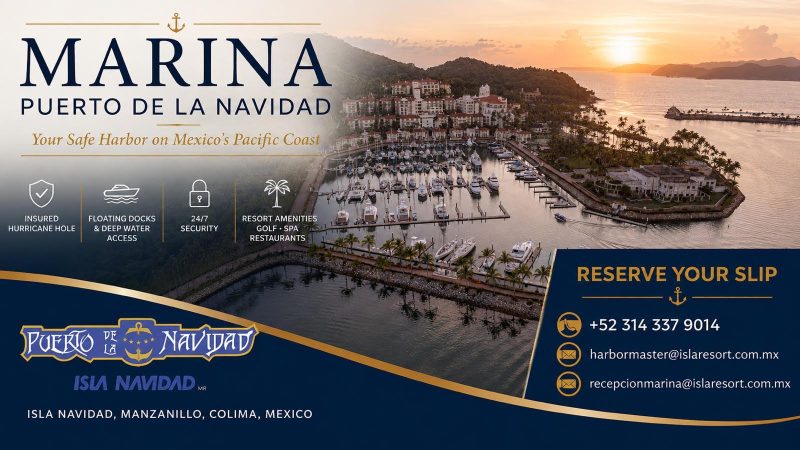
Puerto de la Navidad is the best kept secret of the Costalegre. It’s beautiful resort type marina and lagoon offers first class cruising grounds with 11 surrounding anchorages that make it a great home base. Lined with paverstone streets and filled with little tiendas, great restaurants and a fantastic choice of music nightly, nearby Barra de Navidad shines at night even brighter than it’s days.
When Sailing Monterey Bay You Sail Over 20,000 Octopuses
Turns out the Beatles were on the right track! There really is an octopus’s garden in the sea. Well, a nursery.… If you’ve sailed south to Monterey Bay or beyond, you might be interested to know that you sailed above the recent scientific discovery of the world’s largest octopus nursery.
According to a story in The Optimist Daily, new underwater mapping technology helped scientists discover an estimated 20,000 pearl octopuses who live near thermal conditions on the floor of the Monterey Bay Marine Sanctuary.
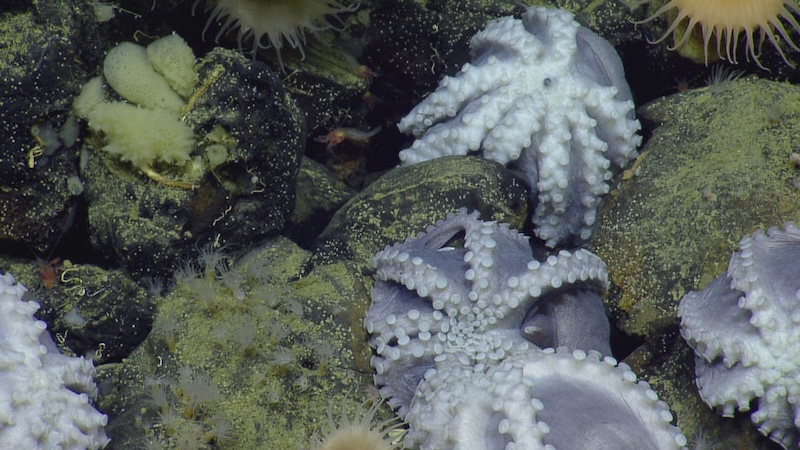
The octopuses are pale purple, roughly grapefruit-sized, and not especially known for sociability. The octopuses were found on roughly 6.2 acres of seafloor after scientists counted about 6,000 in the area and extrapolated the rest.
What else is living on the floor of our vast oceans?

Circumnavigating the Island of Martinique
Have you ever wanted to sail around the island of Martinique? Art Hartinger had just that idea.
Last year we took a Moorings 46 cat from Guadeloupe to Martinique, visiting Dominica along the way. I realized I had not really explored Martinique, and our last anchorage there, Grand Anse d’Arlet, was superb, with great snorkeling, turtles and a beach lined with cafés. I vowed to return and explore a bit more.
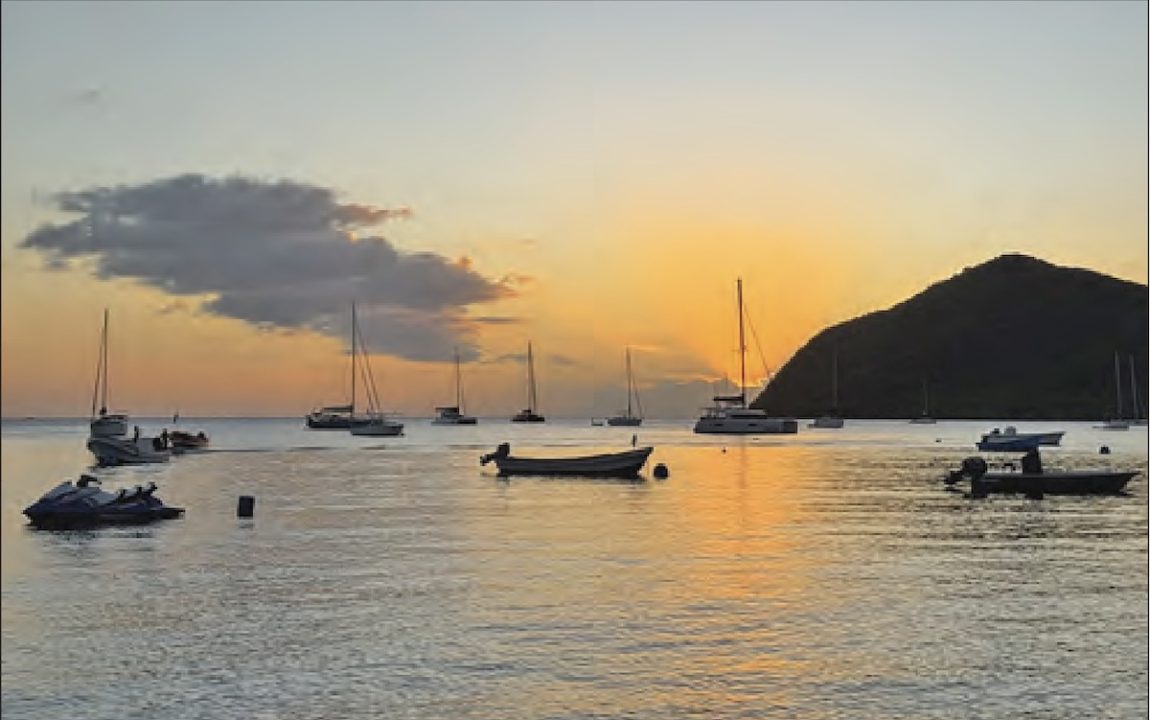
We chartered a Lagoon 42 from Dream Yacht Charters (DYC) based in Le Marin in the south part of Martinique. I am pleased to report that we saw many turtles, hundreds of flying fish, dolphins and more. These are our trip notes.
We were a crew of six. My wife Yumi Wilson and I were joined by good friends Brian and Lis Walter from Los Angeles, and Tomek Stec and Paulina Karbownik from Warsaw, Poland. We met earlier and had a wonderful meal at a restaurant in Trois-Îslets called L’Antares — off-the-charts great food by a couple (he cooks; she works the front of the house).
There is a Carrefour market less than a mile away from the DYC base. We had rented a car from Europcar from the airport (Fort-de-France — FDF), and returned it to Le Marin. The marina at Le Marin is about a 45-minute drive from FDF. But having a car made provisioning easy. They simply asked that we deposit the keys in an envelope through a slot across the street from the marina at the Europcar office. We boarded the boat on May 2, 2026, at 5 p.m. Our boat was Violet, and it looked to be in great condition, very new with a generator, AC, inverter, watermaker, freshwater toilets, four cabins and everything working. The program called for an overnight; then we would receive a briefing the next morning and shove off approximately noonish. For the dinner before shoving off from Le Marin, I highly recommend Pizza Steff across the street from the marina. Very casual but excellent pizza.
On May 3, our tech Maurice showed us the boat. I must give him a shout-out. I have done many, many charters, and this was by far the most thorough and informative checkout. We shoved off about 11:30 a.m. for about a 10-mile easy sail up to Grande Anse d’Arlet.
Westwind Yacht Management — Washing, Waxing and Varnishing
Westwind Yacht Management: Premiere Yacht & Fleet services for the San Francisco Bay Area.