

Episode #260: Good Jibes Greatest Hits: John Arndt, Dawn Riley, and Alan Olson, W/ Host Max Branstetter
This week on Good Jibes, host, Max Branstetter shares three Good Jibes Greatest Hits from the early days of Good Jibes with Latitude 38.
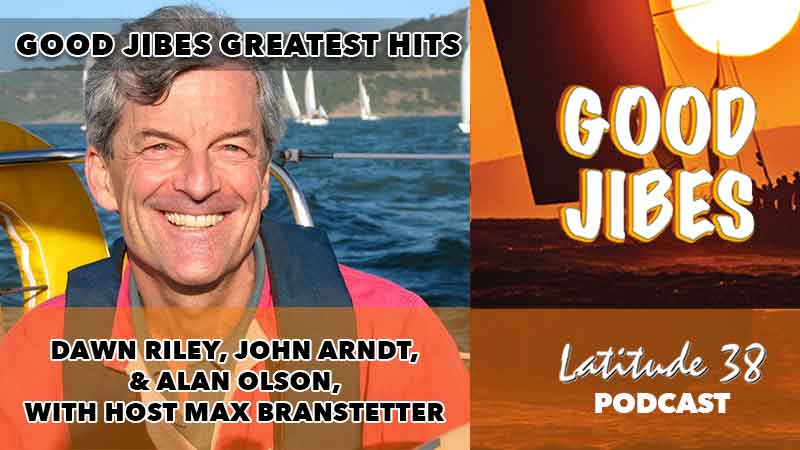
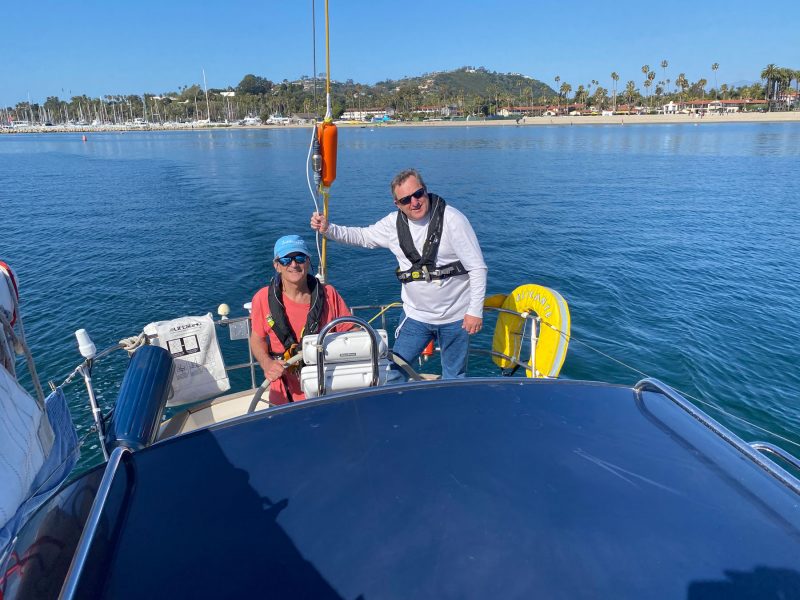
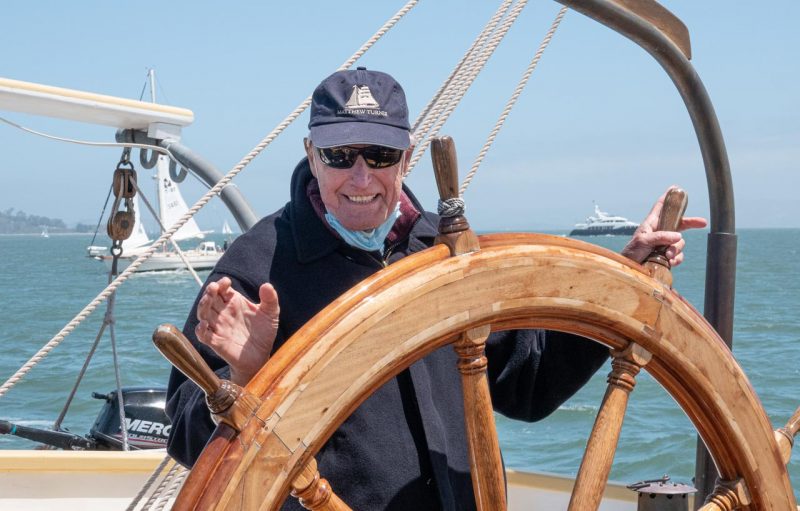
Hear Ryan Foland interview Publisher John Arndt on the origin story of Latitude 38 – Ep #1; Moe Roddy Wieneke chat with Hall of Famer Dawn Riley on her racing career in Ep #47; and Moe catch up with Alan Olson on building tall ships in Ep #74.
Here’s a small sample of what you will hear in this episode:
- The question that sent Alan straight back to the shipyard
- How John went from selling foul weather gear to answering a Latitude 38 ad
- A mutiny in Uruguay
- Why print still matters
- Winning the America’s Cup, then being politically edged out of the final eight races
Listen to the episode on Apple Podcasts, Spotify, and your other favorite podcast spots — follow and leave a 5-star review if you’re feeling the Good Jibes!
Check out the episode and show notes below for much more detail.




Show Notes:
- John Arndt, Dawn Riley, and Alan Olson (Good Jibes Greatest Hits), with Host Max Branstetter
- [0:14] Welcome to Good Jibes with Latitude 38
- [0:38] The greatest hits with Max Branstetter
- Episode 1: John Arndt on the origin story of Latitude 38
- [1:31] In April 1977, Richard Spindler launches Latitude 38 the same month Bill Lee launches Merlin and California boat building is at its peak
- [4:44] John moves to California in 1984, finds Wednesday night racing at St. Francis within weeks, and discovers Latitude 38 at the center of it all
- [7:07] How John went from selling foul weather gear to answering a Latitude 38 ad
- [11:55] Why print still matters
- [17:47] Check out our Classy Classifieds at Latitude38.com
- Episode 47: Dawn Riley on her racing career
- [18:45] Being good enough at 13 that nobody noticed she was a girl
- [19:43] The Richardson Cup qualifier at 15
- [22:12] Making the leap to Maiden and the Whitbread
- [23:36] The Southern Ocean, the beauty of sailing inside a snow globe, and just wanting to get the hell out of the dock at the start
- [27:20] Winning the America’s Cup, then being politically edged out of the final eight races
- [29:48] A mutiny in Uruguay
- [33:38] Mighty Mary and the Bill Koch women’s America’s Cup campaign
- [34:36] Launching her own AC challenge out of St. Francis Yacht Club with her dad as marketing director
- [33:14] Want to sponsor Good Jibes? Email [email protected] to learn more
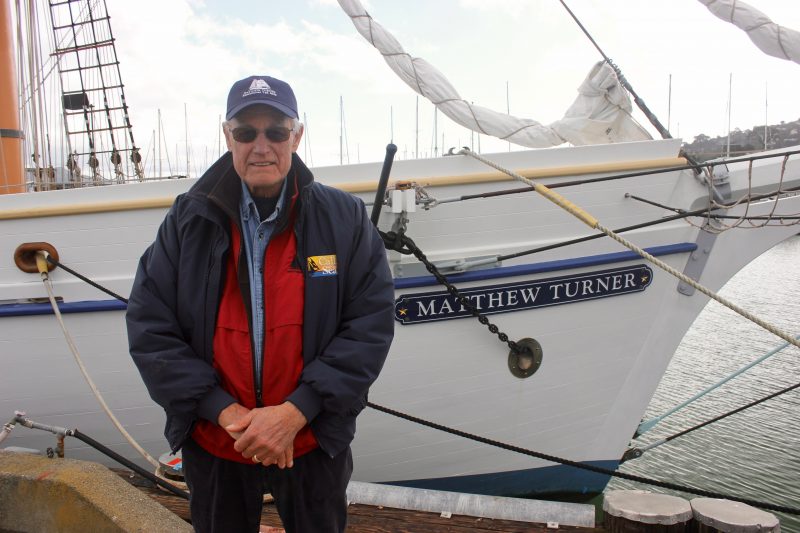
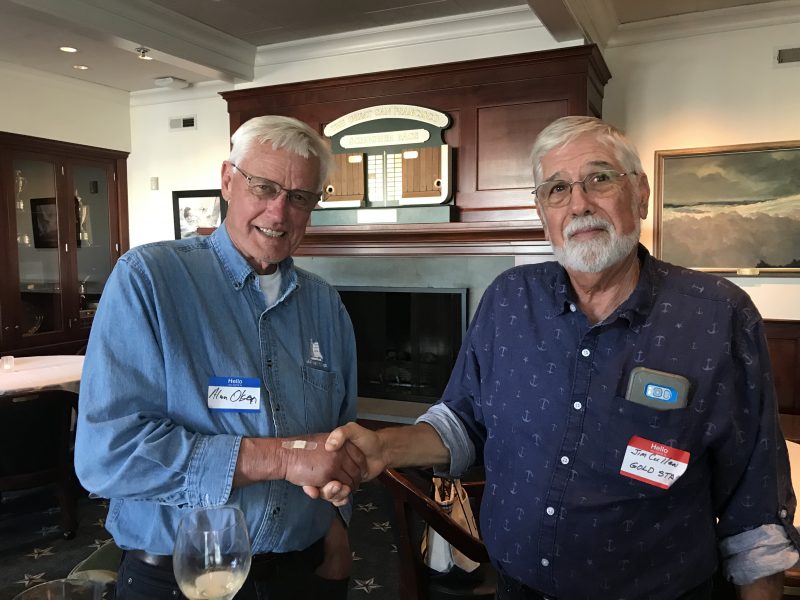
- Episode 74: Alan Olson on building tall ships
- [37:22] Hitting an uncharted rock in Mexico in 1985
- [39:43] Raising her back up with salvage bags
- [44:57] Coming back to San Francisco with one goal: build a tall ship.
- [47:21] Time at a Buddhist monastery
- [51:45] Twenty years of laying the groundwork, then launching the nonprofit that built the Matthew Turner
- [54:59] 200,000 volunteer hours to build
- Check out the October 2026 issue of Latitude 38 Sailing Magazine
- Make sure to follow Good Jibes with Latitude 38 on your favorite podcast spot and leave us a 5-star review on Apple Podcasts
- Theme Song: “Pineapple Dream” by SOLXIS
Transcript:
Please note: this transcript is not 100% accurate.
_
00:02
I understand that you’re afraid, but you’re gonna be fine. Please do this.
00:14
Ahoy! It is time to cast off, laugh, learn, and have more fun sailing. My name is Max Branstetter. I am typically behind the scenes as producer, but today I am the host of today’s episode of Good Jives, a podcast to help you experience the world of sailing through the eyes of the West Coast sailor. Each week, hear stories and tips from the West Coast sailing community on cruising, racing, and just plain sailing. Brought to you by Latitude 38.
00:42
the sailing magazine for West Coast sailors since 1977. Today, I’m excited to share three good jibes greatest hits from the early days of the podcast. You’ll hear host Ryan Foland interview publisher John Arndt on the origin story of Latitude 38 Sailing Magazine way back in episode one. You’ll also hear host Moe Roddy-Wieneke interview Hall of Famer Dawn Riley on her racing career from episode 47 and Moe as well.
01:12
interview Alan Olson on building tall ships and that is from episode 74. So let’s set sail first with John and Ryan taking us back to episode one which released on August 25th 2021.
01:31
you know, let’s talk a little bit about the history of Latitude 38 for somebody who maybe is a longtime sailor and knows about it. They might learn something else for somebody who they’re just listening to this podcast or they were referred by a friend to check this out. You know, where when did it all start? We know 1977, but what’s sort of the core history behind the magazine? Well, Latitude 38 came to life. Richard Spindler and his wife, Kathy, were living on a boat in Sausalito.
01:58
classic San Francisco waterfront. really it was a very different era in San Francisco at the time. Sausalito was, it’s still core sailing culture, but it was really, I think, full of the more Bohemian life and transients and cruisers from all walks of life were passing through as well as boat building and California in general was a much more thriving boat building place. Santa Cruz was just coming to life and
02:27
Bill Lee in April, 1977 launched Merlin, which is one of the iconic classic California sleds really started the California sled culture. And Latitude was launched the same month, April, 1977. And at that same time, Costa Mesa, California, Southern California was rocking the sailing world with all the boat builders were there, Coronado, Columbia Islander, Catalina, which is one of the few still.
02:56
going ranger yachts. I there were just so many boats. Your Cal 34 was built as you say, 1977. John, not built born, born in 1977. You know, that was a really booming time for sailing and actually, amazingly, 1979 was the peak year of participation in sailing. There’s actually been some decline in participation sailing since 1979. But
03:23
happily for latitude in California, it’s still got a huge core culture of sailing, which today there’s a fleet leaving for the Transpac race from Los Angeles. So, you know, that is still a very active part of the sailing culture. And the great thing right then in 1977, it was busy. There was lots of racing, all these boats coming out of Costa Mesa being built, MORC midget ocean racing circuit.
03:53
big boats and cruisers. The Westsail 32 was starting to take cruisers all around the world. So it was a very thriving time, adventurous time. Lynn and Larry Pardee built their wooden boats, Seraphine, around that time a little earlier. So the whole culture of sailing was coming to life and rippling out across the world. And California was really central to that story.
04:16
Well, I think now with the pandemic has really gotten people into some alternative activities. And I know boating in general has been an uptick. so hopefully that translates to also getting more people out there raising their sales. Hashtag raise your sale. Hashtag raise your So when did you first see or experience? Like, did you get the first the first issue in April 1977? Like, when did it become on your radar? Yeah, no, it came on my radar when I moved to California because I was an East Coast guy.
04:44
I had a friend out here who was doing a little sailing and skiing being another great passion. looked like I got to try California before I settled down in Maine where I thought I’d live. But I moved out here in 1984 and quickly actually within two or three weeks I was doing Wednesday night races on the St. Francis Yacht Club, the Canar fleet and joined the sailing community. And then quickly there was Latitude 38. And of course reading it and getting to know the local sailing community.
05:14
which again was filled with rock stars from the Bay area, Paul Kayard, who’s now heading the US Sailing Olympic Committee. John Kosteki, all kinds of guys who were just going out into the world, taking on the champions elsewhere. But San Francisco was a hub. And the magazine, you I moved here in 84, they started in 77, and it was already a centerpiece of the Bay area, but also…
05:42
down to California and he had spent very quickly, started spending a lot of time in Mexico. They started spending time in Mexico. So the whole West Coast was quickly connected via Latitude 38. I would say that’s really one of the main things that inspires me. Well, two things inspire me. Of course, sailing, number one is super fun. Two, Richard, who founded it, is a really fun and great writer. And so he really created a culture around the magazine that was
06:10
inspiring and fun and attracting lots of people to connect through sailing or sharing the story of the sailors themselves. mean, the sailing community in California is pretty fun. If you just cross paths with it, cross tax of it, cross tax. All right. I thought instead of cross paths, cross tax. And if you’re new to sailing, tacking is just changing the complete opposite direction. It’s like a left or a right hand turn based on where the wind’s at. Right. And a jive, a jive is more like a U-turn to a certain direction. Right.
06:39
And a good jibe is one where nobody gets hurt. Name of a podcast. Yeah, I like it. I like it. So you were an employee. You just were you drawn to it or how did you get connected with the publication? I got here in 84. I started working at latitude 87 in between 84 and 87. I was doing a lot of sailing, racing around the Bay, big boat series, working on people’s boats. I got I worked for the marketing firm was selling printing and advertising and and but was.
07:07
drawn always to sort of getting into the Marine market and looking for ways to do that. And I worked with the Yacht Broker for a little while. I was selling Doralon Fowl Weather Gear. I was selling Canterbury of New Zealand Rugby Wear, which was to the Marine market, which was being sold as a uniform and gear for the sailing market. And then somebody said, hey, did you see this ad for an ad salesperson, Latitude 38? And of course called up and.
07:36
Who’d have thought, I remember it’s funny because I was there being trained by the prior ad salesperson, Tim Stapleton, who’s still here in the Bay and still sailing. He was taking off to go to Mexico, cruising with his wife and been here five years. And I had sort of floated around and sailed a bunch and didn’t, and I remember him saying to me, I asked him, how long have you been here? And he said, oh, five years. And I laughed and I said, ha, I’ll never be here that long.
08:04
30, however many years later, here I am. And still obviously loving Latitude and what it’s done and the mission we sort of have and what Richard started. It’s been a great voyage for me and it continues. Well, I think your passion for publishing and sailing and community building, it’s definitely coming through. But what would you say is the one thing you love most about publishing Latitude 38?
08:33
right now? You know, one thing I got a degree in engineering, so I had no, and I still have no idea about publishing. You know, whatever I’ve learned has been by us most of classic sailor learn as you go, right? Yeah, yeah, it’s just OK. You know, you know, I’ve been learning all about it through osmosis basically. But, you know, one of the things that’s really a fun activity, the fun industry publishing is great. I love sharing the stories of others when we get things in from from the readers.
09:02
I just got a nice story and beautiful pictures of a guy doing his first cruise with his family up the Delta on his Ranger 33. It’s so inspiring because of course I love the beauty of sailboats, the power of the wind and working with nature and everything that sailing represents and being able to convey that with the magazine and storytelling is always terrific. Actually, before I became publisher, I spent my first 30 years here as an ad salesman. So I was not a writer. I didn’t, I’m not from the editorial side of the magazine.
09:33
But being a small company, I got to write some things, take a lot of pictures, do some traveling. So I got to know the other side of it to some degree, but the customers, the advertisers are terrific people too. And what really comes through from the whole thing is the sailing community is full of great people. know, my, my daughters are in their twenties now have done some traveling, gone around the world. And I think one of the fun things I said, Oh, you should look up so and so, and usually they’ve grown up sailing with us.
10:00
What’s fun is that they get there and my daughters come home from a few trips and says, dad, now I know why you like sailing so much. It’s really a great community of people. And I can’t believe the connections you’ve had through sailing and as much fun as the activity is and working with boats and nature and the silence and the sounds and the exploration or the racing, which I also really enjoy, you know, the friends you make and the shared activity is really fun. And I think the magazine, of course, is just a wonderful way to help.
10:30
Spread that good news, share the story, share the news and inspire people to have fun with their boats or explore. So you obviously hate your job. I get it. I like that. I So, you know, to kind of sum up, that’s a great history. You’ve got enough names that I’m to have to listen back to the show and start Googling as I, know, somebody who’s newer to the sort of traditional sailing scene. I don’t know these names and, you know, I’ve been intimidated by that, but I’m just like accepting it.
10:58
and even like boat names and the different manufacturers and people in the sailing community drop them like they’re hot. And I’m just like, so I find myself like Googling on the side. So if you’re listening and you’re a little intimidated by not knowing any of these people or just a little overwhelmed, it’s okay. And that’s what this podcast is here to help sort of decode and decipher. So I look at sailing as an opportunity to constantly learn and there’s a lot of history to learn with it as well, which is fun to do.
11:26
I’ve got some Googling to do after this, but it’s all good. The magazine, think, is particularly interesting because you’re still in print. So give me just a little bit of rationale on that because it’s awesome to have a print publication. So many things are digital. And then where do people pick it up? I know that there’s an easy way to find it, like West Marine or wherever else you’re in, but tell us the magic of print in today’s modern world and how people can get their grubby hands on it. Yeah.
11:55
Yeah, well, of course, print, I still love and I subscribe to a lot of other magazines, which I get every month in the mail, the Atlantic National Geographic and Latitude 38. One of the great things about latitude and magazines in general is it’s to me, it’s like sailing. You why do people sail? If you survey people, one of the most common things is freedom or escape. And I like to think when you pick up a Latitude 38, you get to escape.
12:22
And you don’t get to escape on your computer so much. You know, when you get on and you sit there and read something halfway through it, you’re Googling. You’re all of a sudden now you’re seeing some, you know, click bait. Next thing you know, you’re going to want to, what you were reading. And then a video pops up and then you’re like, what was that story? And now you’re miles away from that peace and quiet. And you’re also not, you’re sitting at your computer or you’re on a, you know, your phone or tab tablet. And to me, it’s a very different experience to read a magazine or a book.
12:52
And I, so I really liked that experience of being absorbed, which is also the experience of sailing. mean, sailing draws your attention in you. You’re paying attention. You’re focused. And I think the magazines do that really well. And then I think they also have the shelf life and longevity. think you look at the digital world. It’s very transient. It’s terabytes of stuff coming by at nanoseconds. Where can people pick it up? Because, you know, I love this idea that if you want to escape, grab a latitude 38. I have.
13:21
had intention of reading it while sailing, that doesn’t work. Too much attention is unless I’m like on a dead down wind and I’m on autopilot, but I enjoy reading it on the boat. But where can people find it to augment their own freedom and escapeness? Yeah. So, you know, of course you can find it online. Go to allowed to thirty eight dot com and you can read the digital edition of the print, which, which, by the way, it has the magazine feel the pages peel, which is cool. Yep. Yep. So it’s got the flip viewer. But I think
13:51
I would prefer the print experience. so to get that, you can subscribe, of course, and we will mail it to you every month. And you can subscribe on our website, or you can go down to one of our 700 distributors, which are up and down primarily the West Coast, a few East Coast ones. But if you’re a West Coast sailor and you go to our website, you can click on distribution, you’ll see a map. You’ll probably find a nice small shop near you, a yacht broker, a yacht club.
14:17
a rigger, any of the marine businesses up and down the coast from Seattle to San Diego, definitely heavier in California than the Northwest. So you will find one close to you. And that, think, is the other great attraction. You’ll be down on the waterfront, hopefully close to your boat if you’ve got a boat in the California waterfront, or you’re signing up for a sailing school and taking your first lesson next weekend. If they don’t have one there, ask them to make sure they have them there. Tell us.
14:45
Nice plug. Good plug, John. like it. Truly. Like you’re saying, one of the fun things about the industry or the community of sailing is it’s got its own language and like you’re saying, Oh, yeah. What’s an Island or Cali in a Columbia Coronado, um, all these brands of boats or, you know, who’s Merlin and what’s the birds. just learned about a Thunderbird today. I never knew about Thunderbirds. I do admit that I sometimes go through the classified ads and I just look and I try to associate, that boat looks like that.
15:14
Cause if you’re on the water with sailors, sometimes you’re going by like, let’s say in the isthmus and you’re cruising. If you have somebody who’s been around, they know that I’ll be like, Oh, I think that’s a, is that a Columbia? Nope. That’s not a Columbia. Oh, well, is that a, is that a Cal? Nope. That’s the same. we’re like, it’s kind of like a bingo guessing game, but I’ll look through your classifieds and that’s been like a little bit of a memory game for me. For myself, having grown up in the days of magazines too. And you know, one of the things magazines used to have in them was called a bingo card.
15:44
And you’d be through, and it was a card. before the internet, you would go, they had a postcard in the magazine and you would put a circle on it and say, I’m interested in Catalina 27 or the Cal 34. You would send this to Sale Magazine. Sale Magazine would provide this to the manufacturers as leads. I was 12 or 14. I was not a good lead, but I loved all the boats.
16:08
And I actually, my brother and I had a filing cabinet full of all the brochures of all the of all the boats from way back when the print version of the magazine. If you read it, as you say, we’ve got cruising, racing, general sailing stories. We’re sort of a generalist in that way. But I think very quickly, if you know nothing about sailing, you’ll start to get a feel for what sailing is all about. If you’re in California, you’ll get to know your your close in sailing community, the people and the names who are sailing in your boat and dock.
16:38
neighbors. You’ll also re who have sailed off to T Mexico and taken off cru will inspire you to broad think differently. And tha in L. A. Just sailing fo to Catalina or up here in your first trip to half to California Delta and e sailing waters a little m there you go. If you want
17:08
I believe that as we build this podcast and incorporate so much of the same sort of elements, the community elements, the adventure elements, the technical elements, the how-to elements, the windows on a damn boat element to help identify it, that this podcast can eventually also be an escape for people to plug in and chill out and learn while it’s happening. So I’m excited that the transition has gone not only from
17:37
1977 through your tenure to now where it is, but taking this next step to let people escape through their ears.
17:47
Hey good Jibes listeners and Latitude 38 readers. Have you looked in our classy classifieds lately? It would be impossible for us to know how many boats have sold to new owners over the last 45 plus years of publishing Latitude 38. But we’re sure they have helped countless people realize their sailing dreams. Every month there are new boats listed that will fill someone’s sailing adventures. If you have a boat you want to sail or are looking for that next boat in your life, the pages of Latitude 38 will surely have something to suit your fancy.
18:17
Pick up a magazine at a local marine business or visit our classy classified pages at latitude38.com to find boats, gear, job opportunities and more. Then tell us your next sailing story. Now let’s head to episode 47, where host Mo Roddy-Winneke interviewed Hall of Famer Dawn Riley on her legendary racing career. Can you share a story that shaped you as a young sailor? Oh, I’ve got lots of stories.
18:45
That’s like a loaded question. Right. Keep it to keep it to five minutes or less. No, no. Um, you know, when I was young, we sailed with our family. Uh, I already mentioned that I raced with them, uh, with my dad and my mom didn’t really race. So I was able to be in a lot of different boats and being an adult situation and then know that I was, I was good. And so to be, to be that young.
19:14
in hindsight to be a female and not really be not really realize that it was a problem because I was good enough that people are like, oh, she’s good. Isn’t that funny? She’s a girl, as opposed to me trying to prove myself to be good as a female. And so it was a really sweet spot, know, 13, 15 years old, where I was able to make huge gains and confidence and a skill level. Mm I’m going to come back to that in a bit. I’ve got some questions.
19:43
Later on, I’m going to ask you specifically about that. So what came first, match racing or the Whitbread? Technically, match racing came first because I probably was 15 and there was an event called the Richardson Cup, which was the qualifier for the congressional cup. Yep. We used to have regional qualifiers and all the rock stars of the lake thought they came to me and said, we want you to steer and we’ll crew for you.
20:13
And we ended up second. So we didn’t go, we didn’t move on, but at that point you had to bring your own boat or tart and tents and nobody would lend me a boat. took me forever to find somebody to lend me the boat. We had to unload a bunch of beer out of the bilge, uh, to try to make the boat competitive. And it was supposed to be around Robin so that everybody would sail every boat. And then it was even in the end.
20:42
Well, all the other competitors got together and had their owners say that I wasn’t allowed to steer their boat. So we had the shitty boat. So the fact that we ended up second was amazing. It was, was bullshit, but why did they not, why did they do that? What was that about? Well, I like to think because they were afraid that they were going to get beaten by a girl. She’s, but that’s the gold cup tube, right? And Bermuda’s, if you get through all that, you get to race the guys.
21:12
No, no, no, no, no, no. This was, this was coed. No, this had nothing to do. It was just the fact that I was the only female skipper and I was 15. And so, and the other guys, you know, were competitive and they didn’t want me to beat them. So this was just an open event. It’s the way we used to do match racing nowadays, you know, at Oak Cliff and St. Francis and all the places they’re provided boats back then they didn’t have provided fleets. So you would go around and get, you know, tartan tens or J 22s later on or.
21:42
etchals or whatever it was, and everybody bring their own boat, you do a round robin. It’s just like in college. If the, you know, the big teams have 10 boats and just bring the people that most of the colleges, you all bring your boat. And then you see you have 10 teams, you have 10 boats and you round robin, you just go through and sell a different boat every, every race. What, and so for me, it seems like it was a, a big leap to go from going around the buoys to going around the world.
22:12
So I know Maiden came first. Yeah, but I had already done 17 Mackinaws by then. So because I was running big boats, Matt tracing came first before the whip bread just because it was fun and it was competitive. I’d already done 17 Mackinaws. I’d already done, I don’t know, three SORCs. I had delivered boats up and down the East Coast, know, thousands and thousands of miles. And then I was
22:40
trying to decide what to do next. And then I ended up on Maiden. So how did that happen? A friend of mine who turned out to be the co-author of my book, Taking the Helm, had interviewed Tracy and the women after they’d done the route to Rome and they’d stopped in Miami or Fort Lauderdale, anyway, Florida. And she said, you should consider going sailing with these people. And I said, absolutely not. I’m not sailing around the world with an artificial team.
23:10
And there’s, of course I sounded arrogant, but it was logical because I had never come across women that I would want to sail around the world with. Well, the good news is I went over and tried out and met everybody and they’re all good friends now because there was was a fair amount of people like me that had the same opinion. We just hadn’t met each other yet. the the movie is very inspiring.
23:36
I loved it. I cry. What do you remember most about that race? I know there’s another one and there’s plenty more, that one is specifically, what do you remember most about it? Some of the moments of the Southern Ocean, just the pure adrenaline, some of the beauty of being out at sea and completely dark, no moon, stars, not being able to see the horizon because you can’t figure out.
24:06
It’s like being inside of snow globe. remember the start wanting to get the hell out of there because it was, everybody was making a big deal of it. I’m like, let’s just go. I just want to go sailing. And then once you’re at sea, you settle in. You are always on the helmet. Weren’t you at the start? No, not always Michelle or I would be on the helm. So Michelle was the other watch captain. She’s a Swiss French French Swiss. Yep.
24:32
So you sort of partially answered my next question and it was, is there any moment that you think back to that you catch your breath and you think, wow, that was so profound. I’m not really a profound type person. Oh, you’re making this hard. I’m sorry, but I’m not. remember sailing. was awesome. I’m action oriented. was just talking, doing a corporate motivational speech.
25:01
I was like, I’m the one that’s like, just do that, just get it done. And somebody else wants to discuss it. And I’m just like, oh my God. And so I have to learn how to say, I understand that you’re afraid, but you’re going to be fine. Please do this. See, I’m the one sitting on the rail, just taking it all in, looking overboard. Oh, this is so beautiful.
25:25
I mean, yeah, every once in a while. like just on the Bermuda race, there was the last night, finally, when the sea state calmed down a little bit, it was absolutely gorgeous. And I go, I remember thinking this is why we go offshore, because the first two days, the sea state was horrific, especially for such a huge, powerful boat. So all we were doing was preserving the equipment. We were not trying to race the boat as fast as it possibly could go because it would just break.
25:53
I think one of the boats, did they, they did have problems and had to come back. Yeah. Quite a few had problems and it was in a lot of spinnaker’s blew up because there was a cease. There was supposed, there’s supposed to be a following C, but it didn’t build and there was still coming on your starboard bow. And then every once in there’d be lifting under your starboard quarter. And then there was a port wave that was coming in just slapping you. So it was like being in a washing machine. I’ll, I’ll be for the Gulf stream. Yeah. Yeah, exactly.
26:23
I was like, it actually got more organized when we were in the Gulf Stream. And I was wondering if it had something to do. And I would love to talk to a scientist about it. And my brother was there. was like, Todd, I wonder if this is like, you know, when you go along a flat seawall and you have waves, they bounce back. And I think it was almost at the wave pattern was coming up against the Gulf Stream, which acts as a wall. And it was bouncing against that because it literally got better.
26:50
when we’re in the Gulf Stream and then on the other side of the Gulf Stream is the first time it really calmed down. Yeah, that whole the watercolor changes and it’s just a whole new new place. Yeah. Okay. So after, after that, after Maiden, you ended up on the America’s Cup on America cubed, right? Yep. And you were the only woman on the team at the end. Yep. Well, what was that like? It was fun to be a rookie, to be in the America’s Cup, to win the America’s Cup.
27:20
You can’t go much wrong with that. Probably the biggest leap there was to, again, I didn’t feel intimidated, but I was a little bit in awe of the infrastructure, the organization, the complication. You know, we had 280 people on the team. was a guy that was from Detroit that I saw three years later wearing an America cubed uniform, like dress uniform. like, were you on the team? He’s like, yeah.
27:50
But we never, we knew each other, but we never, know, cause he was on the design side. I never saw him out there. What’s it on the boat? was your job on the boat? I was a sewer, some pit assist sewer. Yeah. And then I did some runners as I went, I kind of stayed no matter what I did, I would always be the pit assist to run forward because I could do that and then run back. But in the 1992, um, super, super physical myself and labby, because we had.
28:18
z legs to make them interesting so we go when word Luke, then we go when word 135 reach 90 degree reach 135 degree reach when we’re lured. So the same sale that used on the 135 this way you would use on the 135 that way and every once in a while, the wind which shipped and you might be using the you have to also try to repack the 90 degree, which was Cuban fiber sticky heavy similar to the code zeros now.
28:48
Yep. Is what stands out about that campaign? And what did you come away with as being the most important thing you learned about yourself? The tough question, I know. The thing that sucked about that campaign is there is a political thing. So I didn’t race the final seven races, eight races, because the person that wanted my job successfully lobbied behind my back completely unfairly. And it was the first time I realized that
29:18
If you do what I’ve always done, I feel better about myself. I always just take the high road. I’m strategic. So if it’s a competitive thing, but I’m not going to be an asshole about it. But it was the first time I realized that politics can undercut you, even if you’re the best person for the job, even if you have other people that support you. Buddy Mel just threatened to walk off the team. If I wasn’t sailing, there was, it was a big, a big thing, but yeah, that part sucked. Yeah.
29:48
Well, then after that, you moved back, back to the whip bread, right? And did you really? I wasn’t planning on it. was planning on doing the next America’s Cup. wrote the business plan. called it the manifesto, but it’s essentially a business plan for the women’s team. And some other people weaseled their way in and tried to kick me out. And they got their come up because they were no longer on the team.
30:16
So there’s the other side of it, but I was working on that and I got a call from the race organizers saying the women’s team that was Nance Frank was in the race and they had had a mutiny and they were no longer continuing and the boat was an Uruguay and they claimed that they had no boat problems. They claimed the boat was fine. They just needed four or five people. And then they also did say that.
30:44
the sponsor Heineken would come in, but only if I was there. And if I wasn’t there, they wouldn’t sponsor it. So I had a choice between going down in less than ideal conditions and found out that they were even more less than ideal. Once I got there with a week to go and finding other friends to go to race in the Southern Ocean. So it’s kind of a crazy thing that the choice was to do that or to undo everything we had done with Maiden in terms of women’s capabilities.
31:14
Yeah, yeah, that would have been bad. What what stands out for you on that trip? That was well, how many legs did you have to do? When you got there, they had already started the they did one and I did the rest. That was what? Four more, five more. Five, five more. OK, so the thing that you know, it’s funny is the book, we retyped it. We fixed it because the publisher Little Brown
31:43
gave us the rights back. We were able to republish it in paperback because it started to become popular again, just recently. And we had to retype the book. And the funny thing is, again, I’m always moving forward. I’m not self-reflective. And I was like, oh, that race is done. I was engaged. I was disengaged. We broke the rudder three times, moved on, did another America’s Cup. That was cool. And I completely forgot that we were on the podium for the only leg that we had good sales and a rudder.
32:12
Oh, not only not only we could have done so much better if the rudder had just stayed attached to the boat. As a matter of fact, the third time, the last time we lost the rudder when we lost it completely, we were within an hour, less than an hour of setting the monohull speed record. Oh, my goodness. This close. But what everybody remembers, even what I remember was we lost the rudder. I now know how to sail without a rudder very, very well.
32:39
Oh, you know, I should take that this moment since you mentioned it to tell people again about your book, Taking the Helm. And it was co-written by you and Flanagan. Cynthia Flanagan. OK. Yeah. Taking the Helm. it’s a great book. In fact, it’s it’s appropriate today. You wrote in the in the one you gave to Donald. Let me say because it’s today of all today of all days. Of course, we know we don’t talk politics here, but today is the day that Roe v. Wade got.
33:09
And then when you wrote Don, sailing is safer than than political conversations. And here we are. Here we are. Yeah. The day after Title IX, 50th anniversary, they undo Roe v. Wade. So I do talk politics. Yeah. And I work for Hillary Clinton for a while. So I’m very clear. I’m so frustrated right now. I’m not sure what to do on Facebook. So I’m just pausing. I’m yeah. It’s taking me all day to.
33:38
do stuff too. Well, this is appropriate. Let’s get back to Mighty Mary. She came next. That came next, right? That was Bill Koch. Bill Koch. He says, and it’s partially true, that he’d already won the America’s Cup, and he didn’t want nor did his company want him to take enough time away for him to sail personally. And he had seen me do the race and be a key member of the team.
34:07
And so he said, why don’t we do a team of all women? And of course, I had the same initial conversation like, oh dear God, I’m the only one who’s ever sailed on an America’s Cup boat. Are you kidding me? I don’t know. And then I stopped myself. said, let’s figure out how we can do this. that dinner in Kansas has gone from then on. It’s always, how can we?
34:36
as opposed to can we Yeah, instead of can we? That’s a that’s a question that’s easy to answer. No. And when you say how can we you can’t that’s not a yes or no question. That’s a how I’m going to I have another question here. I’m to ask you about that. But after Mighty Mary, 1995, that inspired you to launch your own AC challenge, right? America True here on the West Coast. And that’s why you qualify for this podcast.
35:05
called America too. And your dad was part of that one, right? And it was out of San Francisco Yacht Club. Yep. He was a marketing director of that or chief marketing officer. I don’t know. It was funny. George Clyde, who’s still in the area was our attorney. This is a great story, but he, when we’re trying to put together the structure, I’m like, well, what’s the law? What do we have to call people? He goes, you can call yourself the princess of the board, as long as you have a structure. The titles don’t matter. I’m like, okay, I get that.
35:35
So, but the way I got George Clyde is there was also Paul K.R. and St. Francis and there was America True and the San Francisco Yaklom. And we were doing things the way that I wanted to do it. Part of the frustration for me to do it was because on the women’s team, it was a women’s team run by men and we had some issues and we would have done better if we had had women in the management and management on the team and team in the management.
36:04
So I wanted to do it a different way. I wanted to give back. I wanted to do true youth. I wanted to have it open. I wanted to be mixed. I wanted it to be diverse. We didn’t quite get to that, but we also wanted to involve the community. we had volunteer opportunities and we got this letter and I found out later George sent it both to me and to Kaard. And I read the letter and it was about his resume.
36:29
where he was at in his life that he wanted to be involved in America’s Cup. And I read it, was like, either this guy is crazy or he’s a godsend. Hey, listen up. We hope everyone is enjoying listening to the stories of West Coast sailors on our Good Jives podcast. We’ve heard lots of great feedback from the 150,000 listeners who’ve tuned in over the last couple of years. And if you have a marine business, we’d like to give you an opportunity to connect with them during upcoming podcasts.
36:59
If you’d like to be a sponsor of future podcasts, you can email Latitude38 to learn more about how your company can benefit from sponsoring Good Jibes. And finally, let’s head to episode 74, where Moe interviewed Alan Olson this time on building tall ships, including the Matthew Turner. She was, I was…
37:22
Going to build a tall ship about that. I have to mention the fact that, what happened to Stone Ridge? Well, what happened to Stone Ridge is we hit in 1985, we hit a rock that was not charted on my chart book that I had. It was about four feet under the water. You couldn’t see the breaking unless it was calm water. We didn’t see it. I had a course and I was overtaking
37:50
another vessel sailing vessel so I thought I would I would go underneath them not take the wind away and sure enough, bang, we hit this rock, rode right up on top of it. was oh my god. And lay down the side had a couple of crunches and then we sailed off and I said, well, okay, well, let’s sail. I said, go down there, check out the what’s down below. And somebody came back that the floorboards are floating. I said, okay, everybody go get only your
38:17
your money, your passport, and any air tickets. Do not try to get anything else. Just get up here and get safe because we’ve got an abandoned ship. Wow. Not that far away. We saw a beach. I said, well, let’s see if we can run up on the beach. And that was getting lower and lower and lower. And pretty soon everybody had left. then just Michael Seaman, who was still a friend of mine, and my grandson. Actually, he’s my son, my stepson. He was there.
38:45
So I said, well, you guys are gonna have to get off. And my grandson, he took the conch and he blew this long whaling song. And I said, you gotta go guys. And they left and they got into one of the floating dinghies that we had there. And I just kept sailing, because they said, you gotta stay with your ship till it’s gone. And I did. And the next thing I knew was the bow went down and the water started coming over. She was still sailing. And I said, okay, this is it. So I jumped off the stern.
39:14
turned around, took a look and there she goes straight down. Oh my gosh. And she’s got the rail on her sail on her her topsoil and there she goes. So we were all course bummed. We had somebody gave us a place to stay that night and we were looking at getting home and somebody had this idea. They said, well, why don’t we save the stone? Why don’t we raise the stone witch up? Let’s raise the stone witch, you know?
39:43
Uh, okay, let’s raise the sum of which and that’s a three month story. I don’t know if we have time for it. But in the end, you, you did? We did raise it. We did it on our own. I went to some, uh, over in, uh, Alameda where there was some guys who were salvager. I said, what would I, should I do? And they said, you can buy, uh, bags of $450 each.
40:11
they’ll lift, what was it, five, 10, 10 tons each. And they come actually from bags you see on semi somehow, sometimes, excuse me. But they’re really heavy duty and you got cables inside and he says, yeah, just fill them up and it’ll pull them right up. he said, you have to keep the bottom open because if you don’t, it’ll blow up in 40 feet because you’re at three times.
40:41
Atmospheric pressure. No. So we took us a month and a half to finally do it. You could only work down there so many hours. We had a one of the Mexican fishermen who was who worked below and he was a they called him caracol because he was such a diver. Those are are shellfish down at the bottom of walking around.
41:09
He saw, he was the first one to see it. He came back, it’s just like a magic down there. He oh yeah, what does it look like? He said, well, it’s just sitting there, straight up and the sails are up and everything’s just there. And we were like, oh wow, let’s go for it. 145 feet, did we care? No. She was in 145 feet? Oh my gosh. Ellen, missed, where did this happen? Here in San Francisco?
41:35
No, this happened in Mexico. In Mexico. Okay. Teneretica. Or Teneretica. But the water was a bit warmer than here. Oh, yeah. No, the water was great. Never an issue at all with water. Anyways, we did get it up. We brought her finally, we got her up once. And we noticed that the one of the back float was bubbling water out of it.
42:01
And we knew what that meant. And the next thing we knew, the stern went down and then the bow went down because it was pulled down. We just had enough flotation to bring her up. So I said, we’re getting out of here. Let’s pack it up. They said, oh, no, we can’t go. We can’t go. We got to do it. This is my team, all volunteers. They said, OK, well, all right, we have to make a way of valve so that when it gets up, it closes as well. So we invented one. We put it down there. It worked perfectly.
42:31
Uh, it came up, we dragged it over into this Quasticomati little bay there, anchored in 16 feet of water. That’s, and I went to, and we partied as you can imagine. So we’re up the next morning. I went out to take a look because I never got down that deep. wasn’t able to get 145 feet down and I looked around and there were cracks and there were this and I looked at it and I said, we’re never going to get this fixed here. We don’t have the money to do it. I don’t have the.
43:00
bandwidth to do it. I said, she’s gonna leave. So we brought her over. So, and we took a lot of good stuff off of there, brought it to the beach, brought it over to the little end of an area where nobody goes in this this bay and took the air out of her and down she went. So I got to see her go down three times. Oh my God. I’m laughing, but it’s not funny. It’s sad. What else can you do? mean, it’s over.
43:29
It’s a story now, but it was… And I’ll tell you, we got out of there, we almost… They wanted to charge me a million pesos because I had provided a hazard to fishermen, which was only about $1,500 back then. So was not so bad. And I was with somebody who brought me there, who bought some stuff, which was worth 1,500. So I turned to him and he was there with the port captain. And I said, okay, I forget his name.
43:58
You owe me $1,500. You pay the port captain, okay? And he said, okay. I said, let’s get out of here. So we were ready to go. I didn’t know if I was going to get out of there alive or not. But you created a tourist attraction. Now there’s an artificial reef you probably started with that boat. was very popular place to go. But finally, it just sort of sunk into the sand. Occasionally it gets uncovered, but not often.
44:27
That’s just what we’re going on with too many stories. No, that’s a great story. So OK, so then you found Maramel. what I did came back with the sole purpose of building a tall ship. OK, I created nonprofit organization the year before and I thought, let’s I don’t want to own another vessel. Let’s build this and and let and let Colisee own it and we’ll build a tall ship. But you know, that’s not as easy said as done.
44:57
And we tried for a few years to get together. had a lot of enthusiasm and this and that, but we could never bring in the kind of money it took to build. I was tired of just surviving and I never collected any money ever from Call of the Sea. I’ve always been a volunteer. So I was getting, my money was getting a little low and we were getting nowhere with the tall ship. I said, you know, man, better go look for a boat. So we looked around and Marmel showed up.
45:28
45 foot on deck, William Hans Kuhner built in 1929 in good shape and at a price I could afford and I bought her. We put a little work on her and started sailing her. And one of the trips we had with her, one the biggest trips we had with her was the Pacific Rim. And that’s where we went down to those islands, the Marshall Islands and up into Guam and all that up in Japan and then into Shanghai.
45:58
And then from there, we went back to Japan, spent some time there and then went up by the Aleutians, up around by the Aleutians and came in into Alaska. And then we went on down the intercoastal way and back home. So it was a year trip. It was a great trip. Lots of different people involved. We had no serious issues. We were not able to manage and
46:27
Yeah, Sitka. We came into Sitka. a to come into. Yep. Did she have a motor? Did she have an engine? She did have a motor. Made it little easier. Did you take passengers or were you? Yes, we did. We took… It’s the only way I could ever operate. It’s still the same. The Coliseum operates, the power boats operate. We have to have people come in and be part of the program, part of the crew. Everybody who came on was part of the crew. Everybody had to their duties. Nobody was a…
46:56
still called passenger that we took care of. We take care of ourselves as a team. And that was a good way to go. It worked out. Yeah. So after this trip on the Pacific Rim, is somewhere, this is probably my most fascinating question to ask you, but somewhere in here after this, you joined a Buddhist monastery? Yeah.
47:21
I had been working when I got back before I left around the Pacific Rim. had been going up to a Buddhist monastery up in 90 miles north, it’s three miles off the ocean. It’s up high on a mountain up there. can see the whole ocean. You can actually see the pharaohs. If you’re up on one of the temple roofs, you can see it. Which I was there to help build things and work on it. I found it fascinating. I got a lot of very fascinating jobs to do that I’ve never done before.
47:51
And so a lot of it had to do with art. Some of it had to do with just construction techniques. And because I built boats, I knew a lot of kind of stuff. So I just got involved with that. I enjoyed that very much. But that’s when I took this trip around Pacific Rim trip. That was before I took that trip. But I decided I wanted to take that trip. And I did that, came back.
48:20
And then I signed up to be up there to build a new temple. And I didn’t know how long that was going to last. I went up there in 2000, or I think it was 99. And I started working on a temple up there. It’s going to be all bronze. It’s going to be over almost a million pounds of cast bronze art that we built. wow. Nothing’s ever been done like that before at that level. And I was in charge of putting there, making a foundry, and figuring out how to do it.
48:48
do the casting and all the rest of it, which was a pretty interesting challenge for me. I don’t have any regrets about it or I wasn’t really intimidated by it. Just really, well, let’s just go figure it out. I traveled around the country to find out how you do really big, big statues and big, big, big things like that. There’s only a few that do that. Actually, we were not lucky enough. Artworks in Berkeley did.
49:16
pretty good sized one. I was sort of an aunt, what you call it. I went there, they helped three and worked there for a while to learn a lot. And we pulled it off, we built it. In the process, I was up there and we were building, doing some work late at night, some prayer wheels we wanted to get running by the next day, because it was an auspicious day. And my mentor or the wimpishay, I guess is what you call it, is your teacher.
49:46
Tar-Thang Toh-Ku, who was a very famous and probably one of the most, I would say, influential lamas in the world today. And what he’s done would take a long time to even explain what he’s done, not only up at Odeon, but throughout the world, in Berkeley. It just goes on and on and on. And so that was actually one of reasons I went up there, because I learned about him. And I thought, well, maybe I could learn something about building a tall ship. Maybe I need to know more. And I hadn’t really thought I had got to that point.
50:17
And then one, we’re working late at night, he says to me, Alan, I said, Alan, are you afraid to die? You know, I’m thinking, I’m trying to get this all together. you know, it was kind of an off shot question. And I said, well, Rinpoche, I don’t know how I feel about it. I might welcome it. I just don’t know till I get there. And he says, he stopped for a minute. He said, what would you regret? ooh, literally.
50:46
bolt of lightning to hit me in the head and I just was just shaken. Shaking when I realized I gotta go build a boat. I gotta build a ship. I have to do this. I cannot not do this because that’s what I would regret. I had, so I didn’t say anything to him. He didn’t ask me what it was. It was my own business, what I would regret. So I stayed on for another year and finished up my work and left with the sole purpose of building.
51:16
a tall ship. So it took 20 years, under 20 years to put it all back together, get the nonprofit together, to get a smaller schooner together, get a board together to learn what we’re And just keep moving on that long range plan. And finally, it got to a point where I felt it was time to build it was 2011 and called the sea.
51:45
was not really interested in it. And I think it was a smart move. said, we don’t, we’re not ready to take on such a project, Alan. And I said, I totally understand. And I said, what I’m going to do is I’m going to form another nonprofit, educational tall ship for the sole purpose of building the ship. If when it’s done, Colisee is able to operate it, we’ll be donated or just pass it over. If not, it’ll run it, it’ll run the new ship. So that was a good, we had a
52:13
good understanding, we worked together on all of that. And it turned out that Coliseum and we did merge earlier than expected. And that worked out. Well, of course, we’re talking about now the Matthew Turner. Yes. So I have to tell you, I moved out here in 2011 and I was down at the tennis courts down at Marineship with Donald. We had just met and we were playing tennis on a Monday evening.
52:40
somebody, we met you. I don’t think you remember meeting us, but we were talking to you you were telling us, oh yes, we’re going to build a tall ship here. And it was just like this little grassy area next to the parking lot. And Donald and I are like, really? Wow. And then we watched the whole thing happen. You did it. You actually did it. It’s just, it’s fabulous. So. Well, we’ve been lucky along the way. I think we did our homework.
53:09
to know what we wanted and how it would work and had enough experience. So, and I did a lot of research on the boat, what it would look like and work with our naval architect over in Point Richmond, a tri-posteral marine. So we had some pretty good ideas of what to do. We had a history of all the CEOs actually operating programs, youth programs and adult programs. So we were in a fairly good position and we were lucky to get some major donors in our
53:38
major donors, it was just three of us that started. That was Angie and I, the Johnsons and Terry Kousen. And we each put in a chuck of money to get things going. And then Terry, who is a fascinating guy, wonderful guy, who is a sailor, who been involved with this and who’s worked in so many different ways before, but his efforts didn’t work out for various reasons to have a talk show.
54:05
They had one for a while in a while, but it just didn’t work out. So I had been telling him about this. And so he was interested and he wrote a check too. But he did something else. He wrote me later. He says, no, this Alan, I’m in it for completion. it was million later. He’s still writing checks. So yes, that’s important to understand that. And he wasn’t the only one we did bring in some major donors.
54:31
Most projects, capital campaign projects like that are 90 % from a very small number of people, three or four. And that’s where the money comes from. Everybody else, it’s important what the money they put in. We love all the other money, but you really need those major donors. You can look at any kind of, and I knew that because I did some research on how do you do major constructions, major building schools or whatever you build or whatever you do.
54:59
So I wasn’t surprised that it turned out this way. We’ve been very fortunate. People who’ve gotten involved, had three quarters of the people who built the ship were volunteers. They put in over 200,000 hours. That was one of my questions. Yeah, good. 200,000 hours. today. Okay. Many of them are out working today. On Wednesdays a big day. They’re getting the ship ready. Matthew Turner, they work on C-word. They’re not batting at many anymore.
55:29
But we still have a strong volunteer group and we still have a very strong support group that keep us financially from getting in trouble. Excellent. So what’s going to happen with her now? I had heard a rumor she’s going to go south. Yes, Matthew Turner, our plan is to have her voyaging as soon as we can do that. We have a number of things to do. We have to have change our
55:58
to SSV, a sailing school ship vessel, the sailing school vessel. And that takes different kinds of things that we have to get. It shouldn’t be too hard. It’s been designed to pass that test, all those tests. And then we would go to Solis, then means that we can operate internationally to other countries who will then allow us in without any issues because we are a sailing.
56:26
SSV and that’s a kind of an important thing that most tall ships traveling the world are. Yeah. So that’s what we have to do to get all that taken care of, get make sure we feel comfortable. And so it’s possible we’ll be down in Mexico in 2014. It is possible that we might be doing the Pack Cup in 2014. No, 2024. Yeah, that’s okay. don’t know why I did that. That’s all right.
56:56
24 and so that’s anyhow in our future. We haven’t quite got there yet, but this is our goal. It sounds awesome. I think you’re going to need a medical officer on some of these voyages. We just might. We just might. I better get my nursing license back. Are you tired and let it go? Oh yeah, I mine go.
57:21
And I said, you know, I’ve been through all this. I’m just not going to go for my license again. Yeah. But here’s one. And that is it. Thank you so much for tuning in to the latest episode in a special Good Jibes Greatest Hits episode. If you like this podcast, make sure to follow or subscribe to Good Jibes with Latitude 38 on your favorite podcast platform. That is where you can find the episodes included in this version of Good Jibes Greatest Hits.
57:50
And of course, we’ve included the specific links to these three episodes in this episode description. And to get the latest issue, go to Latitude38.com or follow latitude38 on social media. To learn more about me, you can go to MaxPodcasting.com. Until next time, Happy Sailing!