

Did You Visit ‘Cuauhtémoc’ on the Weekend?
While the Latitude crew were mingling with sailors and marine-business vendors at the Sausalito Boat Show this past weekend, the Mexican navy sail-training vessel Cuauhtémoc was docked in San Francisco welcoming visitors aboard. We raced out to the headlands to take some photos of the ship’s arrival last Wednesday, but … yep, fog. We couldn’t see a thing. Thankfully the ship found her way into port without incident.
As we mentioned, given that our local crew were all busy at the boat show, we didn’t visit the ship. Perhaps some of our readers did and could share some of their thoughts about their experience. We recall being aboard 378-ft BAP Union when she spent four days in the Bay in 2019. She was an impressive vessel, and it was fun to be among her greeting party as she sailed in under the Gate. Granted, Cuauhtémoc is only 296-ft, by comparison, but that’s still significantly longer than the boats we frequent.
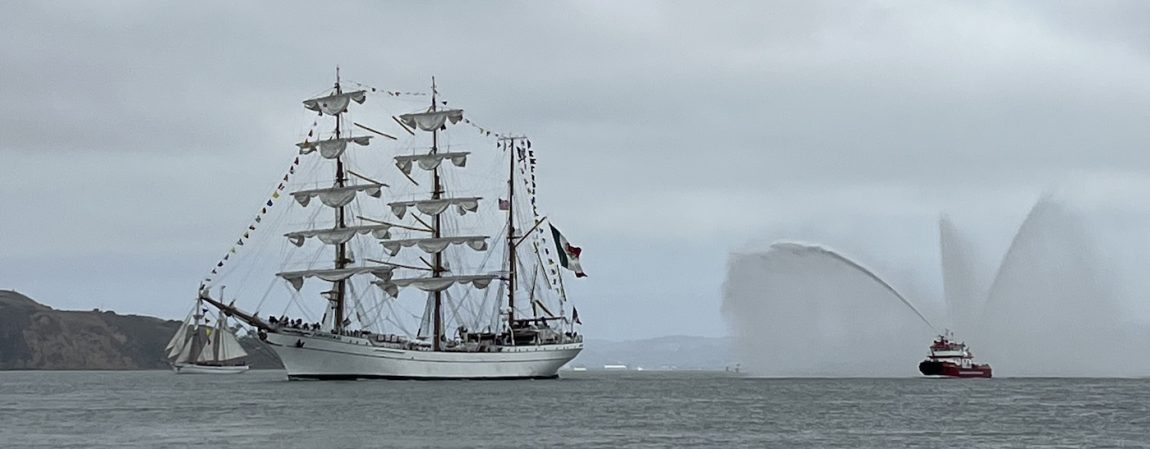
Friend of Latitude, Call of the Sea’s director of community and business development Sylvia Stompe, was sailing aboard her Hughes 48 Iolani as Cuauhtémoc headed back out the Gate on Sunday.
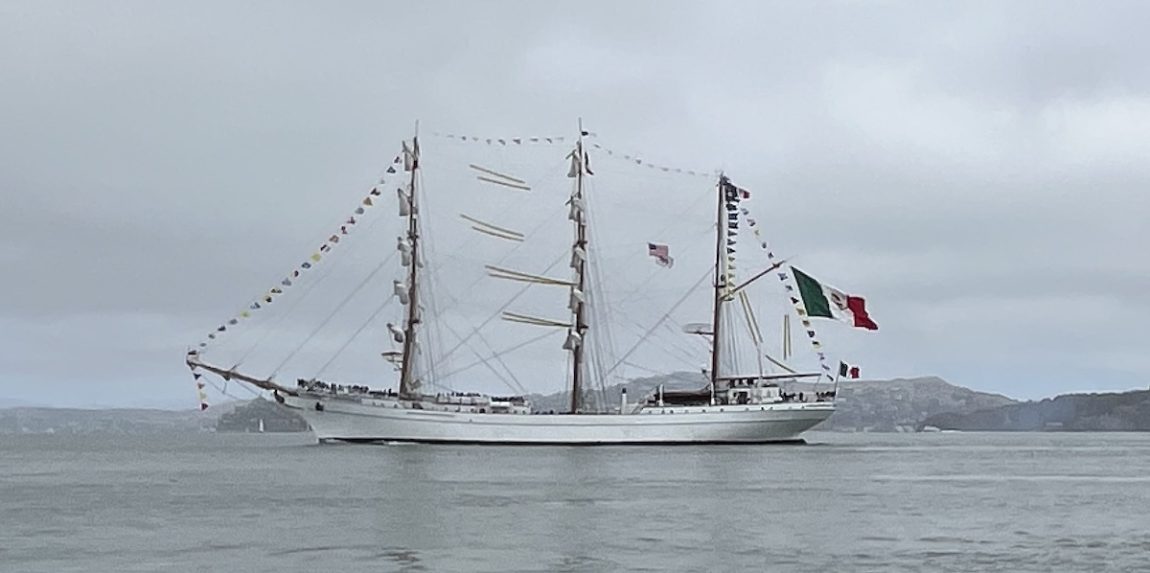
“Amazing to see the difference in scale of the 100-ft [LOD] Matthew Turner in the background,” Sylvia commented.
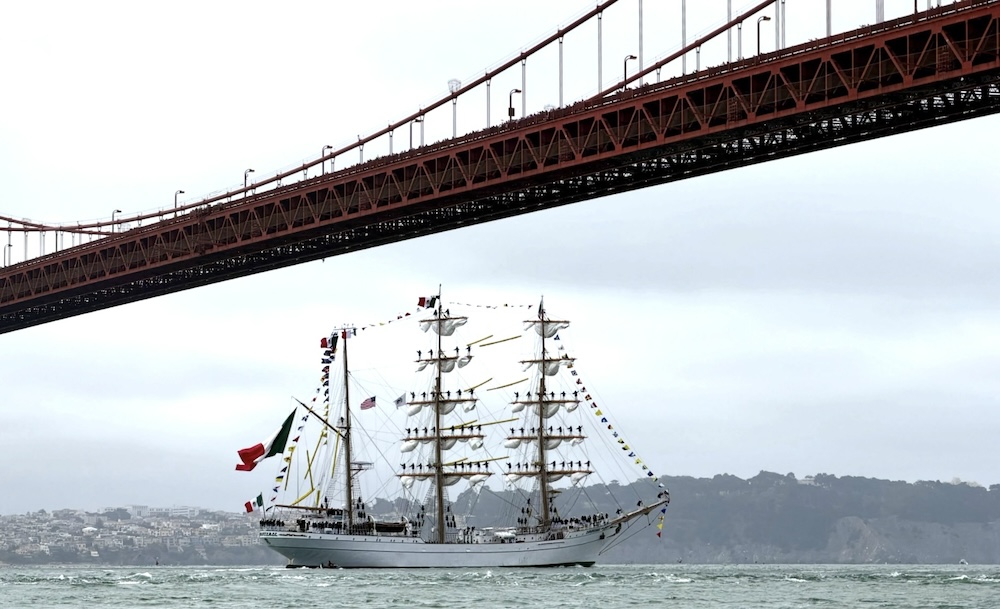
At the same time, another friend of ours, sailor and photographer Bryan McDonald, was out on the Bay paddling with the Tamalpais Outrigger Canoe Club when Cuauhtémoc crossed beneath the Golden Gate Bridge. We snuck the photo below off Bryan’s Instagram page.
Sailboat Grounded on Santa Rosa Island; Four Rescued After Whale Strike in Southern Pacific
A 25-ft sailboat ran aground on Santa Rosa Island last Thursday, leaving its sailor high and dry on the sand. The US Coast Guard, Sector Los Angeles-Long Beach, received a report of the vessel at 12:18 p.m. on VHF-FM channel 16.
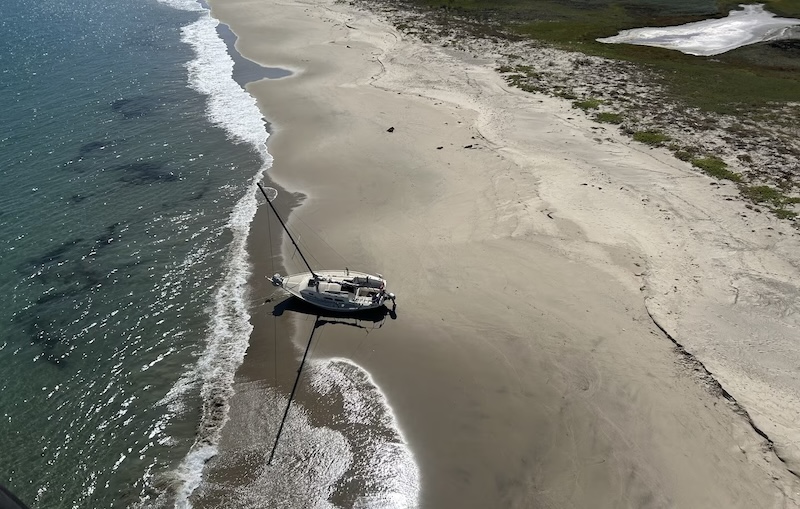
Watchstanders organized an MH-60 Jayhawk helicopter crew from Ventura to respond to the call. One mariner was picked up, transported to Camarillo Airport, and assessed by Ventura County Fire Department personnel. No injuries were reported.
USCG watchstanders later confirmed that the boat had been removed by a local towing company and taken to Ventura Harbor.
———————————————-
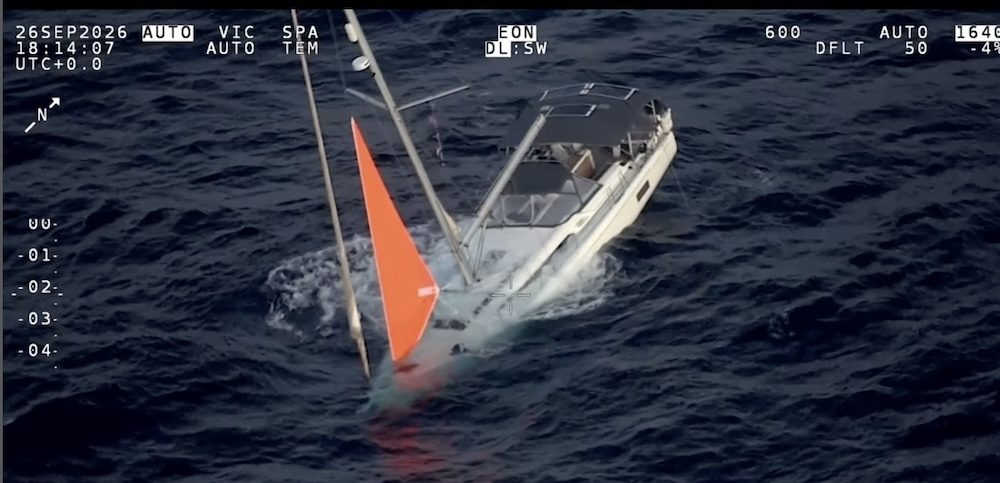
Elsewhere in the Pacific, much farther south, a crew of four was rescued from Tai Tam, a 51-ft Amel [Correction: Beneteau] after reportedly striking a whale around 250 miles northeast of Norfolk Island on Saturday.
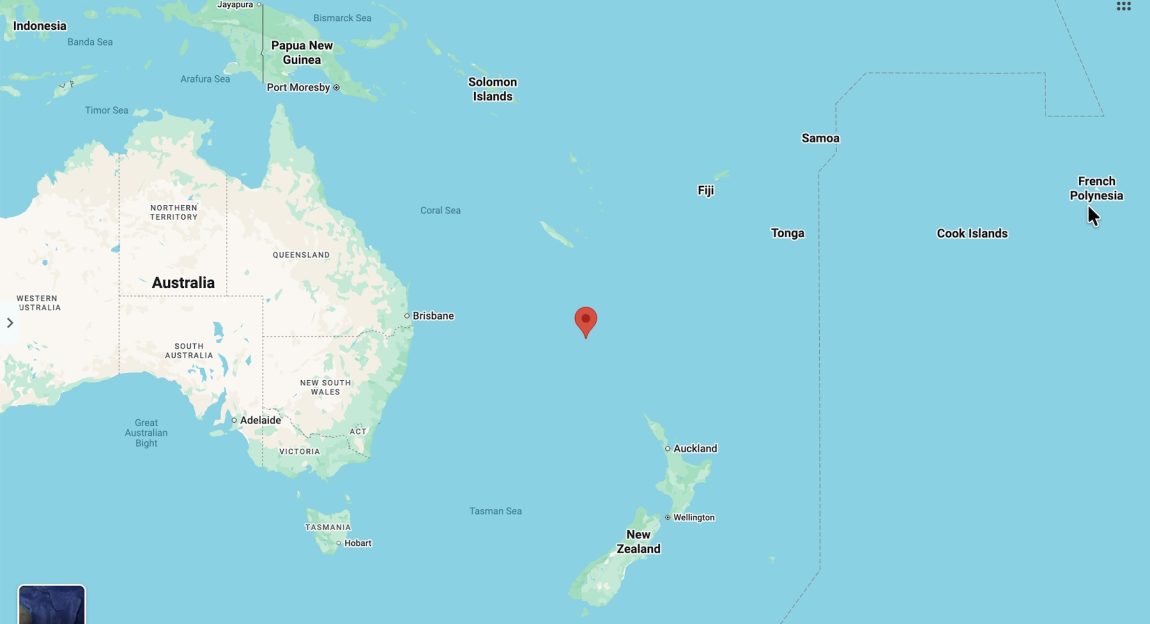
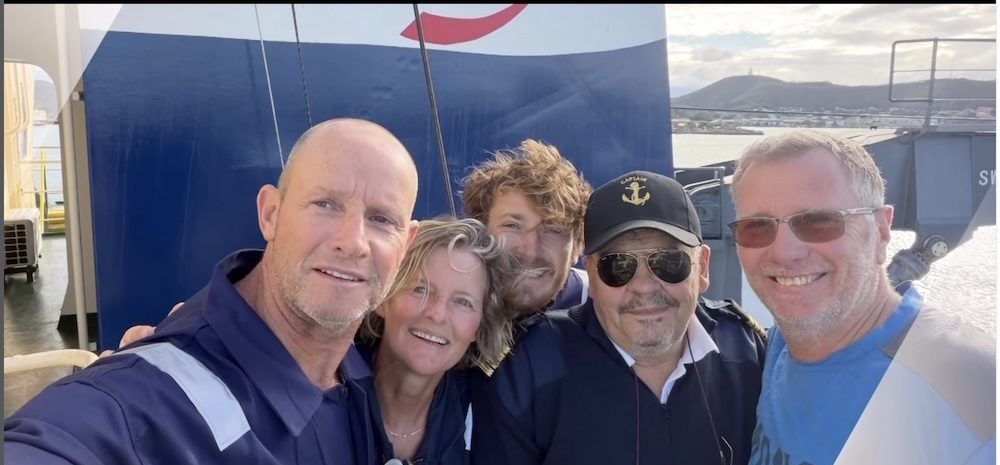
The Australian-flagged boat was sailing home to Melbourne after a voyage around Fiji when it struck the whale. Aboard were Tai Tam’s Australian owners Jeremy and Gemma Cooper, a New Zealand national and a French national.
Jeremy told Australia’s Nine News of the massive impact in which Gemma, at the helm, “got thrown off the wheel.” According to the news report, Tai Tam’s rudder was “all but torn off.”
“And then you see a pod of whales around,” Jeremy commented.
When the boat began taking on significant water, the crew activated their EPIRB and boarded the life raft. New Zealand’s Rescue Coordination Centre (RCCNZ) received an alert at approximately 1 p.m. Saturday (local time), advising that the Tai Tam was sailing in difficult conditions and taking on water.
“We sat in the life raft and watched the boat sink 100 metres away from us, not a great moment,” Jeremy told Nine News.
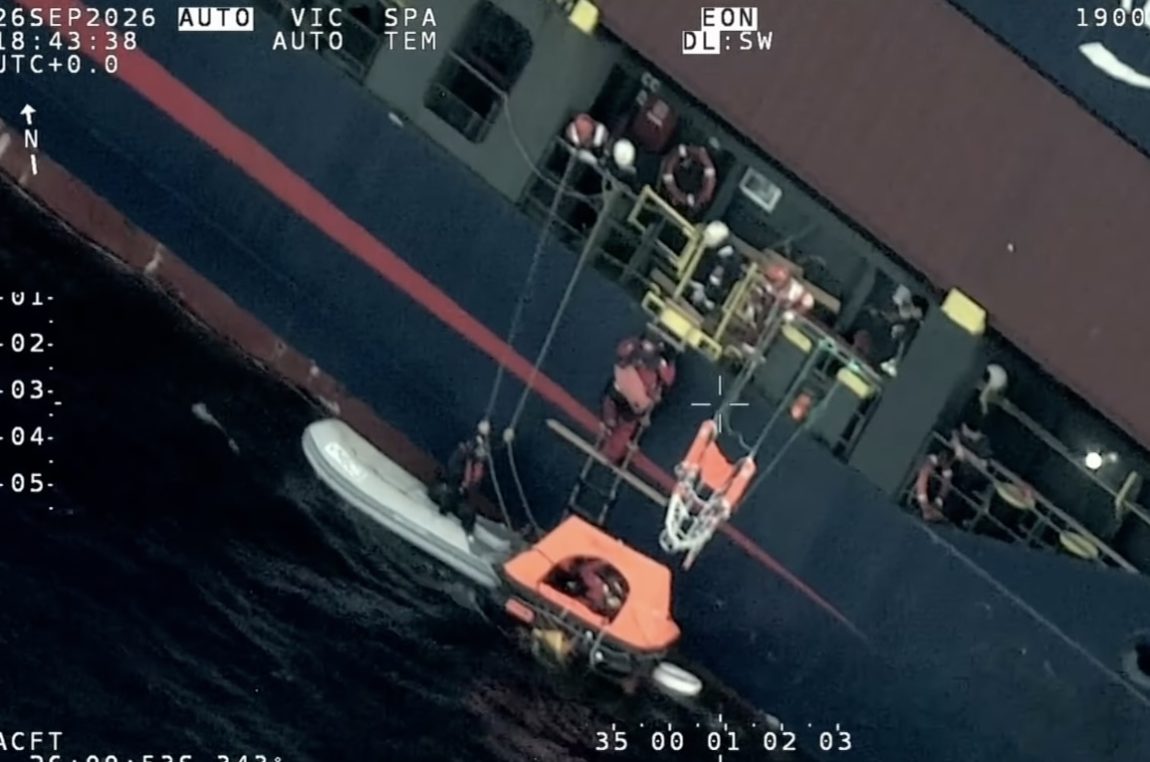
The sailors spent about seven hours adrift in the raft before being picked up by the 470-ft cargo ship Sofrana Surville at around 6 a.m. Sunday.
We’ve shared many stories about the orca activity causing damage to sailboats near the Strait of Gibraltar, but not so much about whale and sailboat interactions in the Pacific. Readers may recall the story of the Kelly Peterson 44 Raindancer that collided with a whale in March 2023. As with Tai Tam, the sailors scrambled into their life raft while their boat sank to the ocean floor. Raindancer’s crew were picked up by the catamaran Rolling Stones.
Let’s hope whale strikes in the Pacific continue to be a rare occurrence!
The Best Destination Deserves the Best Boat
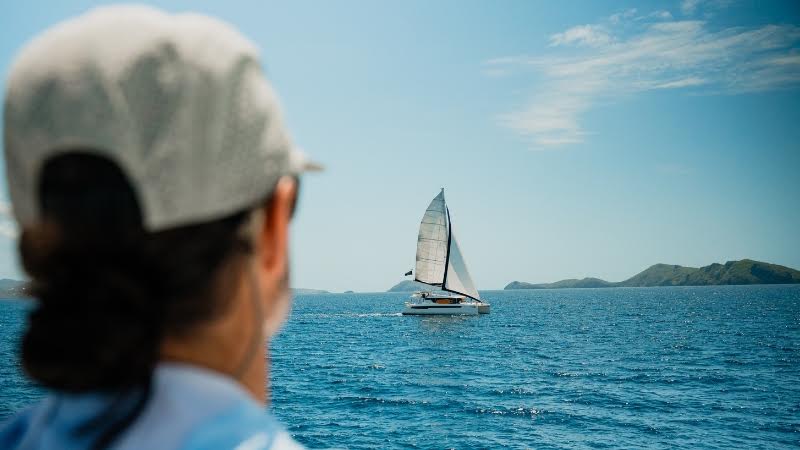 When the setting speaks for itself, your yacht should too. This is the British Virgin Islands, and this is how it’s meant to be sailed. Spend your days snorkeling vibrant reefs, anchoring off white-sand beaches, and dining ashore at laid-back beach bars; classic Caribbean sailing made even better with exceptional service and award-winning yachts from The Moorings.
What’s the Issue With October? Here’s a Sneaky Preview
As September draws to a close, we’re eagerly anticipating the arrival of our October Latitude 38. The new issue is out tomorrow and will on the docks before you know it!
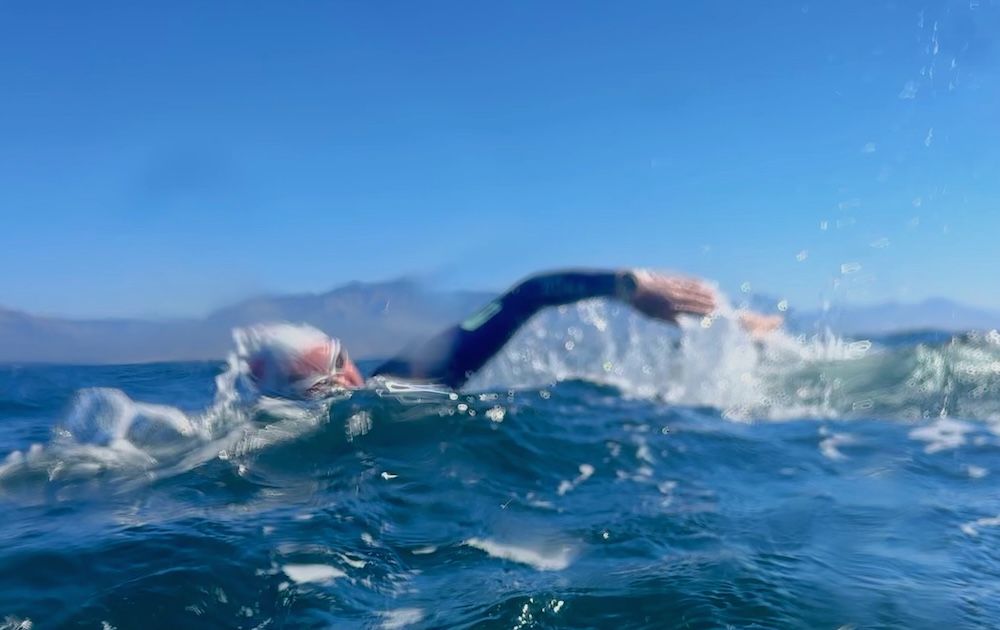
In the October issue, we’ll be covering both sides of the seashore — that thin line between the water and the land. On the water side, there’s a lot of sailing activity, and right now, one lone swimmer is swimming about three miles offshore from Oregon to Mexico.
“Most cats don’t like to swim, but Cat Breed is a different kind of cat. On July 1, she began her effort to become the first person to swim the entire 900-mile California coast, from the Oregon border to the Mexican border. As of this writing in late September, Breed’s Swim California venture is at Point Conception and turning the corner into SoCal.”
We also have a story about the other side of that shoreline, where people wrestle over what to do with the small scraps of land that give everyone access to the water. Voters in Sausalito will be voting on Measure X to shape the future of what remains of their working waterfront.
“Today’s working waterfront isn’t about freezing an old-fashioned maritime economy in amber. It’s where some of the technologies shaping the maritime economy of tomorrow are being built. And, as the conversation about revitalizing Sausalito’s industrial marine-trade zone has grown, we asked ourselves what’s happening on working waterfronts around the world. The answer is pretty thrilling, and some of it is already local.”
Outside of swimming and land-use debates, we get back to sailing and all that’s going on with West Coast sailors on the Bay, along the coast, and across the world’s oceans. The Rolex Big Boat Series leads the features before we jump into Starlink and cruising, the life of the J/24’s extended family, and the hard truths about living aboard. (It’s pretty good most of the time.)
Max Ebb gets really technical this month as Lee Helm’s sailing guests Rose Wood and Doug Fur get into the physics of wet and dry transoms.
Art Hartinger shares excerpts of his charter around Martinique in our World of Chartering section, while Changes in Latitudes will change your attitude, and perhaps convince you that our lives on the dry side of that thin shoreline would be better spent on the wet side.
Stay tuned for the October issue of Latitude 38, out tomorrow!
Changes in Latitudes and Changes in Starlink for the Baja Ha-Ha
Baja Ha-Ha and Mexico cruising veteran Ed Lecco, of the Hylas 54 Voyager, sent us this recent update on Starlink for Baja Ha-Ha participants and cruisers heading south. His aim is to help people understand the current rates and options for managing Starlink while cruising.
Warning: This is a long outline, but I believe some may find it helpful.
Using Starlink on the Ha-Ha and not sure what subscription you need? My recent “bash” from Cabo to San Diego can provide some insight on what plan works best, as well as how we managed Starlink use and data on Voyager.
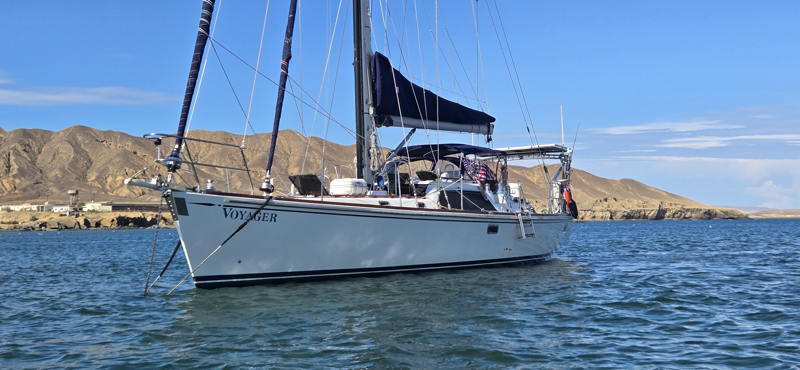
My Starlink is on a localized Mexican account. Most cruisers, unless you have a “Mexican” Starlink, will be on a US account. My overall costs will be lower, but Starlink charges the same for Ocean Data regardless of the service address.
We had three crew on the trip from Puerto Vallarta to San Diego. I have an Unlimited Roam account. This allows in-motion use on the water up to 12 miles off the coast of the Mexican border.
Anytime we were cruising 12+ miles offshore, I “Opted In” for Ocean Data. It can take up to 15 minutes to become effective. When we were within 12 miles of the border, I “Opted out” of Ocean Data. Note: When you opt in or out, make sure the website or app reflects what you just set. I often had to do it twice, immediately, but it works.
Devices: We all put our phones in low-data mode for Wi-Fi use, not just cellular. No updates, etc. If you are going to stream and an app allows, select lower quality. When devices were not needed, we turned them off (at least some of the crew, I think, did that; I did not).
During the trip, I made sure the crew was aware of what mode we were in (Ocean or Unlimited). Unlimited … stream away! We watched NFL football games in Turtle Bay during a weather layover. No extra costs, all covered under Roam Unlimited. We did not stream movies, etc. when under Ocean Mode (OK, to be transparent, I did once, but hey, I am paying for the Starlink).
Here is what our Ocean Data use looked like coming from Cabo:
Day 1: 8.5 GB
Day 2: 21 GB (I “had” to watch the latest episode of Lioness.)
Day 3: 12 GB
Day 4: 0 GB (Turtle Bay)
Day 5: 0 GB (Turtle Bay)
Day 6: 0 GB (Turtle Bay)
Day 7: 3.6 GB
Day 8: 13 GB
Day 9: 0 GB (last leg was close to shore into Ensenada)
Ocean Data currently costs $2 per GB. We used 58.1 GB for a cost of $116 USD. Add that to a USA Starlink Unlimited Roam plan and it’s not a bad deal.
On the Ha-Ha, Ocean Data costs are going to be $6 per GB, so $348 USD.
For most Ha‑Ha participants, I would frame the advice this way:
* Just making the passage and reaching Cabo: Keep the US Roam plan and enable $6/GB Ocean Data only when you need it.
* Remaining in Mexico longer than 30 consecutive days: US Roam Unlimited now becomes problematic because Starlink limits foreign-country use to 30 consecutive days. [Users] must return to the US, legitimately move the terminal to a Mexican account, or consider Personal Maritime. Starlink Roam travel rules.
* Localize your dish as a Mexican Roam or Residential (if in or near a marina) — may be considerably cheaper. Use of a marina address and a new email account to attach the new subscription is all you need. You can pay with your US credit card (I did this).
* Boat under 60-ft without a Mexican-account option: The US Personal Maritime plan may be the cleanest long-term cruising arrangement because it eliminates the 30-day foreign-country problem — but Ocean Data still costs $6/GB.
* Heavy offshore users: Compare Global Priority, particularly the 50-GB configuration, rather than automatically buying 500 GB.
Ed and crew will be in San Diego to sail south with the rest of the 2026 Baja Ha-Ha fleet. To sign up for this year’s Baja Ha-Ha, click here.
Your Safe Harbor on Mexico’s Pacific Coast
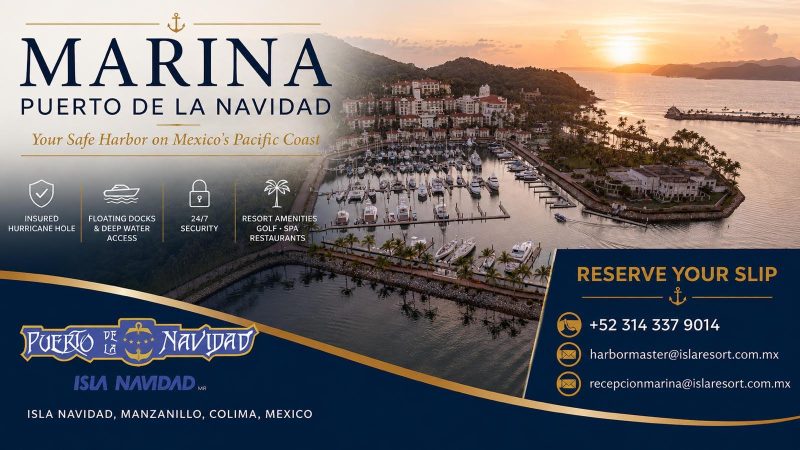
Puerto de la Navidad is the best kept secret of the Costalegre. It’s beautiful resort type marina and lagoon offers first class cruising grounds with 11 surrounding anchorages that make it a great home base. Lined with paverstone streets and filled with little tiendas, great restaurants and a fantastic choice of music nightly, nearby Barra de Navidad shines at night even brighter than it’s days.