

Classics Go Full Send in Rolex Big Boat Series
The crew carpool across the Golden Gate Bridge was the first clue: sea chanteys, sailors singing along. Racing in the Rolex Big Boat Series Classics division was not what I expected. Yes, I expected beautiful boats — there’s a reason the docking plan has the wooden beauties right at the bottom of the ramp at St. Francis YC. Yes, I expected complex rigging and oddly shaped sails to figure out.
What I didn’t expect was the hard-core, boat-on-boat maneuvers, crossings with inches to spare, boats battling on port and starboard for the perfect start, and highly tactical racing. We got all that and more, as six classic wooden boats crisscrossed the Bay, dodging the entire fleet of J/105s and ORR boats for the 2026 Rolex Big Boat Series.
On our boat, Kenneth Wadsworth’s 1927 staysail schooner Wiletie, I think many of the crew had never even crewed on anything with more than one mast, let alone a trapezoidal “fisherman” that had two halyards (peak and throat). I laughed as Quantum’s Will Paxton encouraged us to “trim it like a blooper,” as half the crew hadn’t even been born when that IOR-design banana sail ruled the Bay. He was right though; it worked.
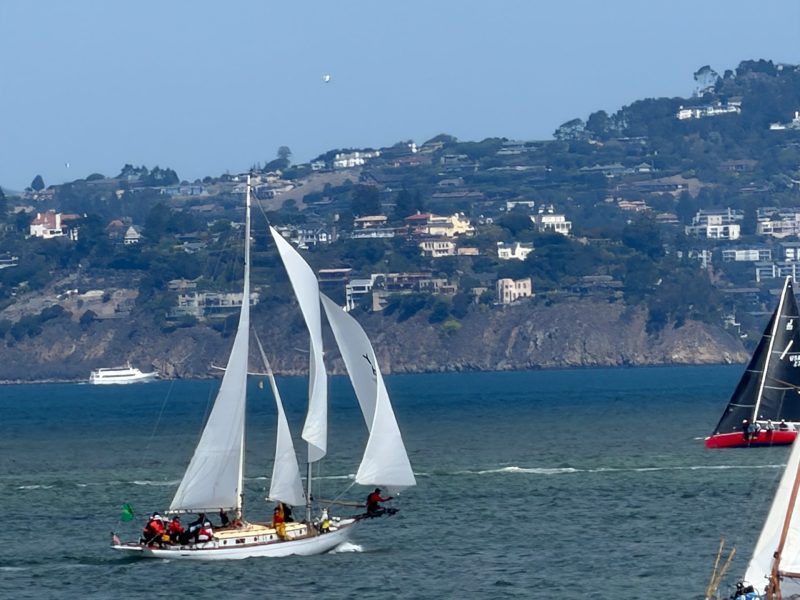
We had practiced on Monday for the first time, with the new sails, and an experienced crew that was used to Dyneema lines, carbon rigs and giant masthead kites towering over modern decks and bulb keels. This was different.
Classics are heavy, often with full keels, and the rigging is nothing like what you’d expect. The NORs required boats to be built using traditional wooden plank-on-frame construction, and to be clear, “cold molded construction” does not qualify. In 2025, there weren’t enough boats for a class, but this year they were out in force.
When we stepped on board the 99-year-old staysail schooner, it felt as if we were about to take a fine piece of furniture out on the Bay. The boat was Bristol, the brightwork shined to a mirror finish. The decks perfectly restored. The spars gleaming with new paint. We just didn’t want to break her. Soon we learned she was far stronger than we imagined.
We learned the “fife rail,” a rectangle below each mast with belaying pins and rings. With nary a single rope clutch on the boat, every halyard — and we always flew four sails at a time — had to be tied off on a pin. Sheets ran everywhere, with the cockpit looking like exactly that: a pit of fighting chickens that had to bob and weave around one another, making every tack look like a wrestling match to get the lines in. Almost all the lines are beige, meaning you had to learn what led where.
Day one: Light wind meant very wide tacking angles and a slow performance upwind. We had a lot to learn to make this boat go fast. Day two: We improved by nearly 30 minutes over our closest competitor. Days three and four, we were calling hair-raising crossings, drag-racing rail-to-rail across the Bay, and in it to win it.
This photo sequence shows one of the hair-raising crossings:
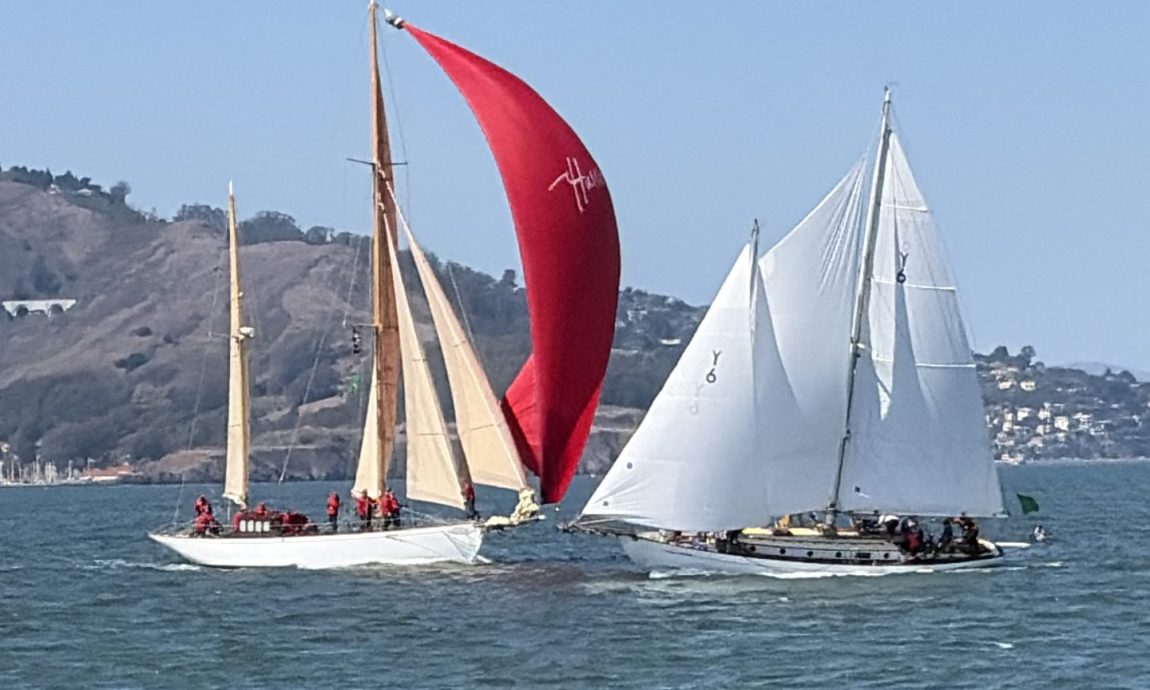
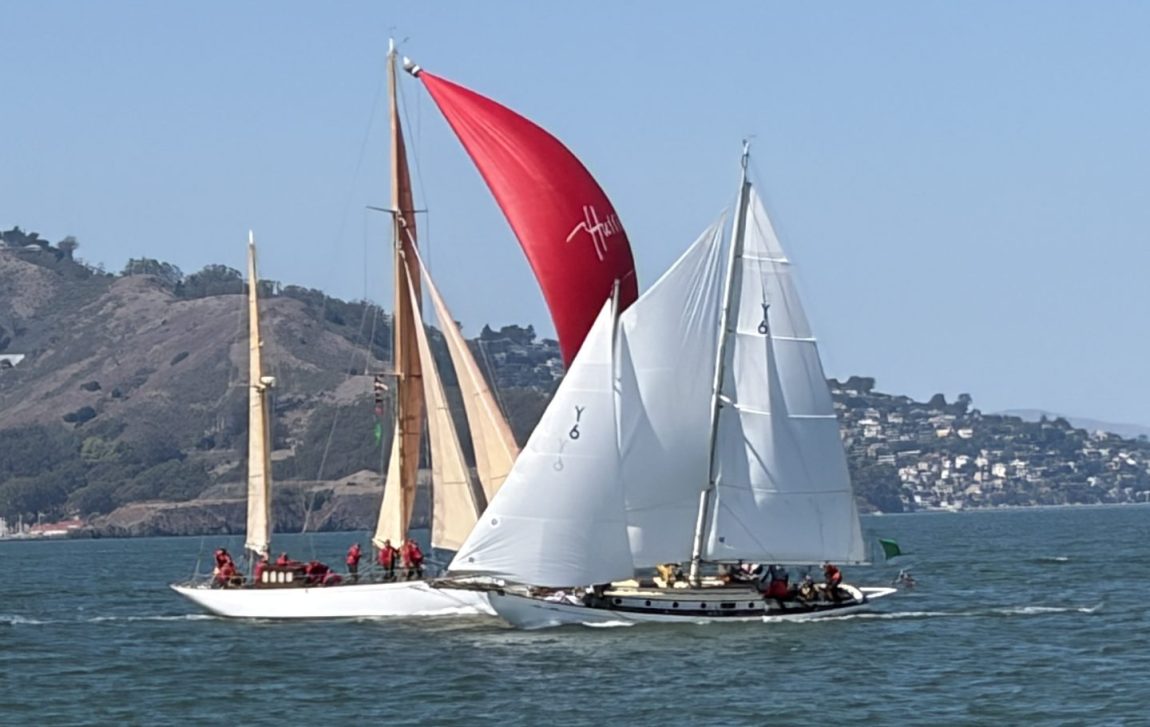
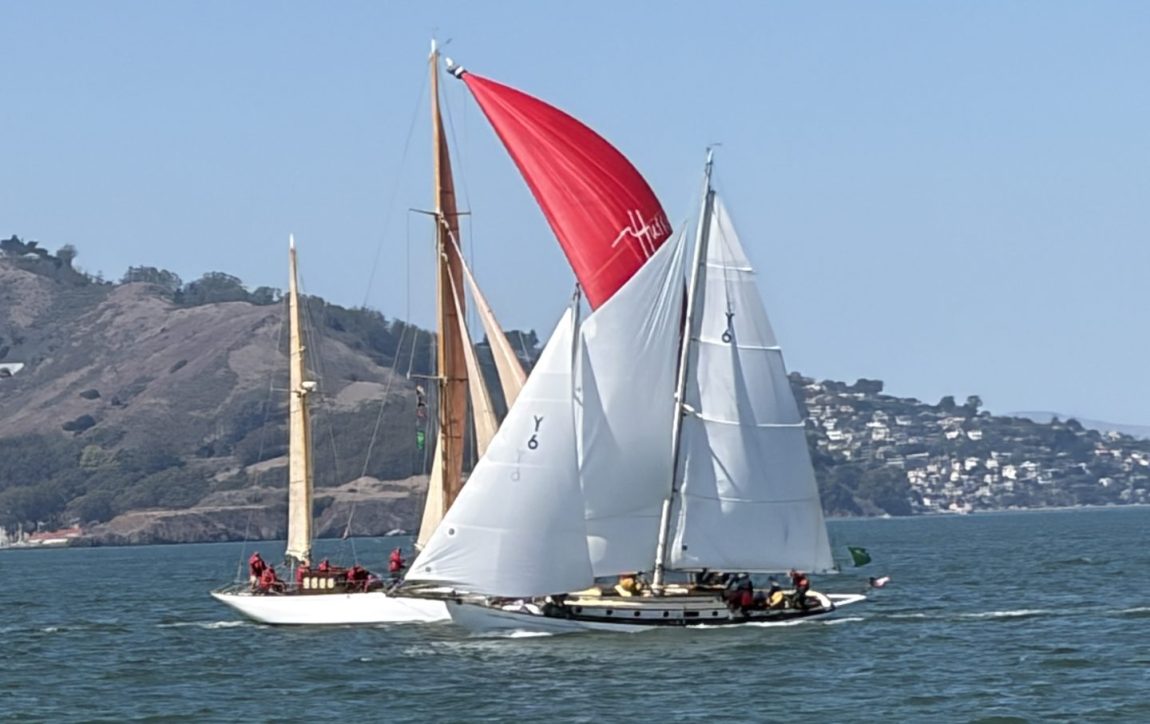
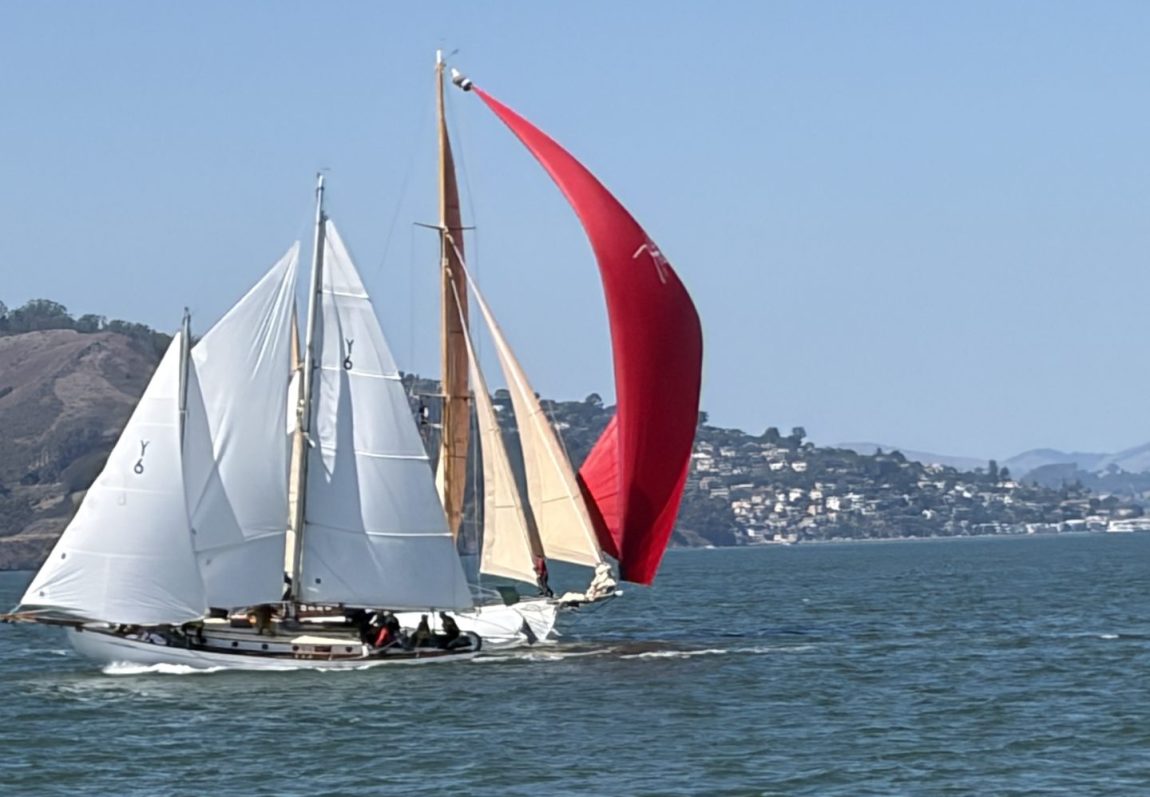
The Sparkman and Stephens yawl Fairwyn took first, with three bullets and five points. The Peninsula Youth Sailing Foundation’s 1951 yawl Ocean Queen V took second, finishing just behind Fairwyn in most races. Wiletie came from behind to capture third place. That was the boat I sailed on, with a new crew, new sails and a new outlook on the past and future of sailing.
And, with just one race each day, the Classic fleet gets to come up to the race deck to watch the other fleets cross the finish line in broachy, explode-the-kite conditions. Would I do it again? Most certainly. And we’re already planning for Rolex 2027!
Latitude Print Issue Helps Host Women’s Sailing Seminar
OK, we admit the headline is a little misleading. We didn’t personally do anything at Island Yacht Club’s Women’s Sailing Seminar. But we did make an appearance by way of our September issue. Shelli Bohrer is the sailor in the September issue cover photo, which was captured by Ruth Motter. We had mistakenly printed that the photo was taken by Shelli. We offer our sincere apologies to both Shelli and, in particular, to Ruth, the photographer.
Honestly, we think having your picture on the cover, and for people to see your smiling face, is an honor akin to gracing the cover of Rolling Stone magazine; as sung by Dr. Hook in 1972. Our question to Shelli and Ruth is, “Are you going to buy five copies for your mother?”
Shelli tells us she used the Latitude 38 September issue as a prompt during the recent 34th Annual Women’s Sailing Seminar. We don’t know exactly what role the magazine played in Shelli’s talk that day, but we’re feeling pretty honored to have been present, and to have been presented to the sailors gathered in the room.
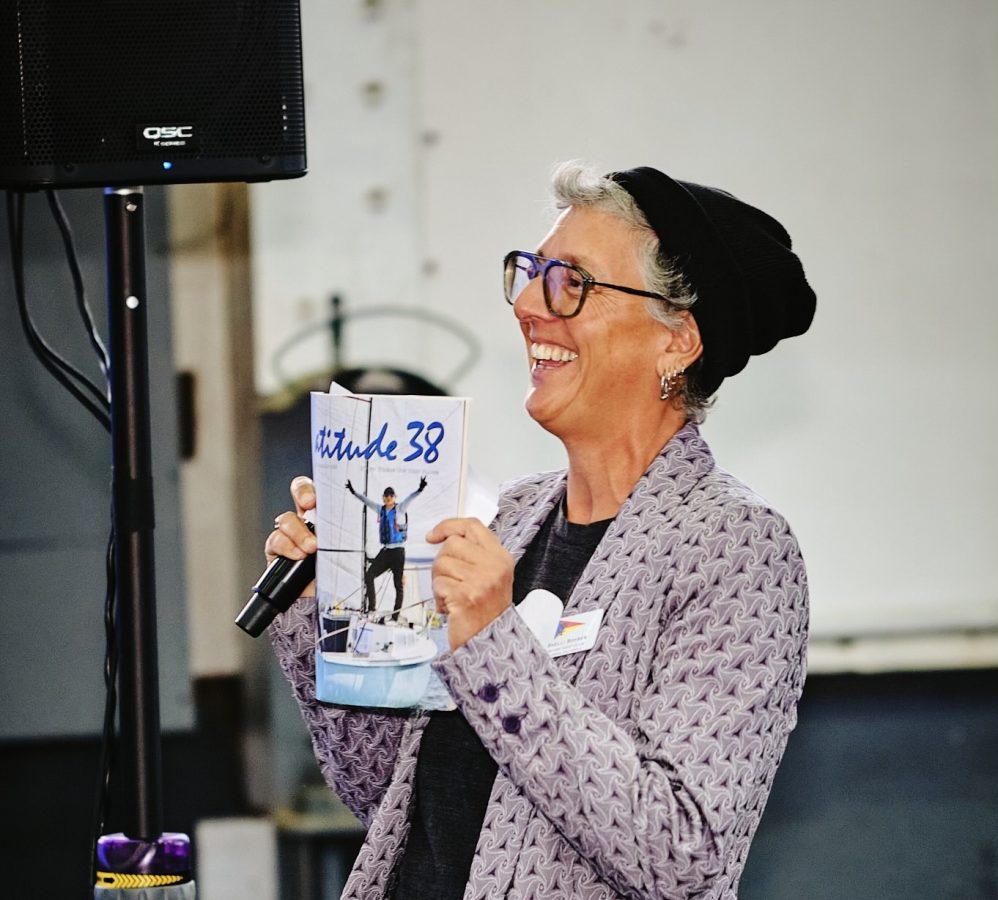
The Women’s Sailing Seminar is designed to deliver high-quality women’s sailing classes and training. It is a community event taught by women, specifically for women, and it’s run entirely by volunteers. Our understanding is that this year’s seminar was a great success, with women gaining in classroom knowledge and on-the-water experiences including cruising and racing. The classes range from Beginner to Intermediate.
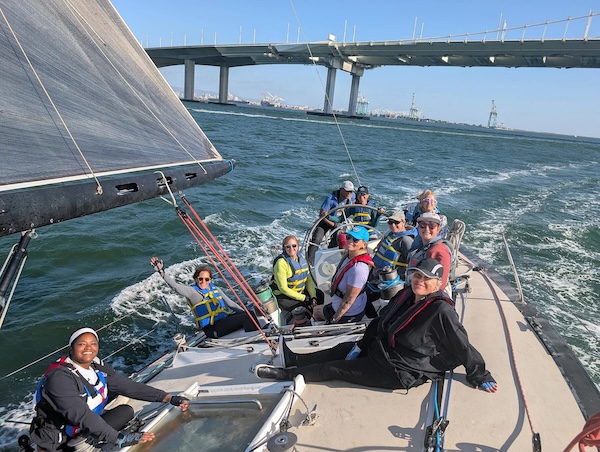
We’re hoping to hear more about the 34th Women’s Sailing Seminar soon, and when we do, we’ll be sure to share it with our readers.
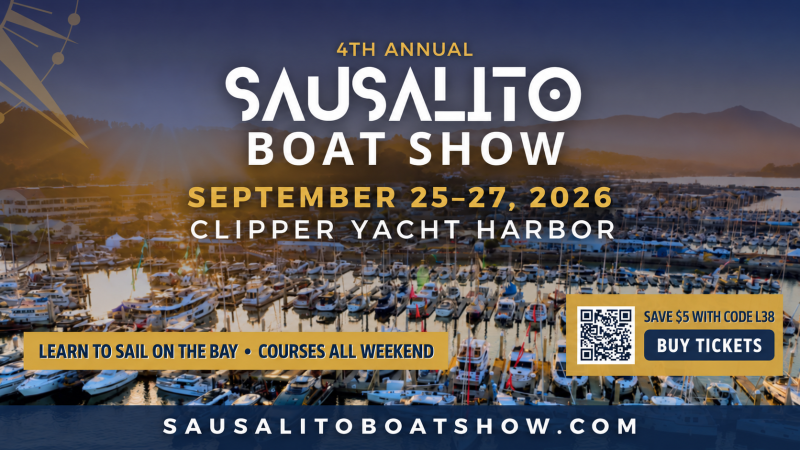
Come Out to the Sausalito Boat Show!!
El Niño Heating Up With Hurricanes Polo and Odalys
As predicted, the El Niño-influenced 2026 hurricane season is producing more hurricanes in the Pacific and fewer (none so far!) in the Atlantic. Currently, Hurricane Polo is churning up the ocean off the west coast of Mexico — it quickly turned into a Category 5 storm with wind speeds reaching up to 180 mph.
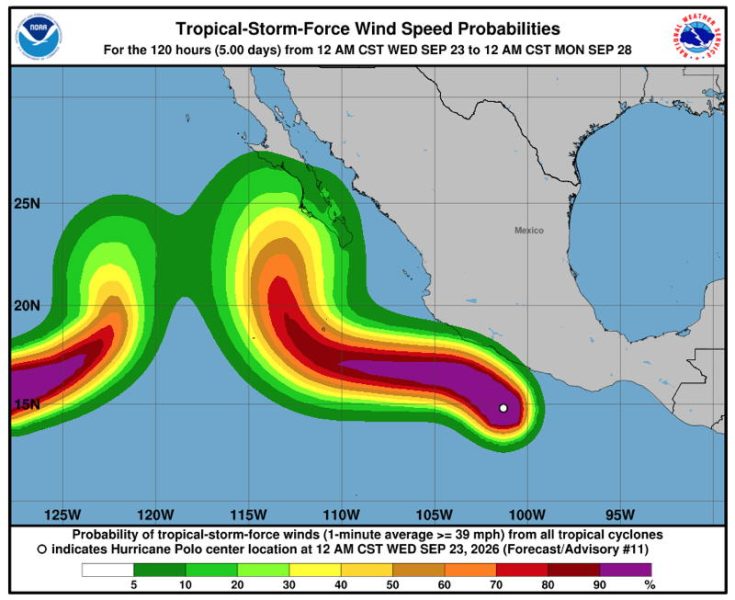
It has been a busy year in the Pacific, with most of the 16 named storms in the Pacific moving west toward Hawaii rather than impacting the Mexican mainland. That hasn’t been good for Hawaii. Although they haven’t had any direct hits, the islands have had significant rainfall, flooding and wind damage.
Of the 16 named storms in the Eastern Pacific, five have been hurricanes, and three of those have been major hurricanes. Hurricane Polo is said to be the second-strongest hurricane on record in the Eastern Pacific. Meanwhile, the Atlantic has been mostly quiet and calm, with only six named storms and no hurricanes.
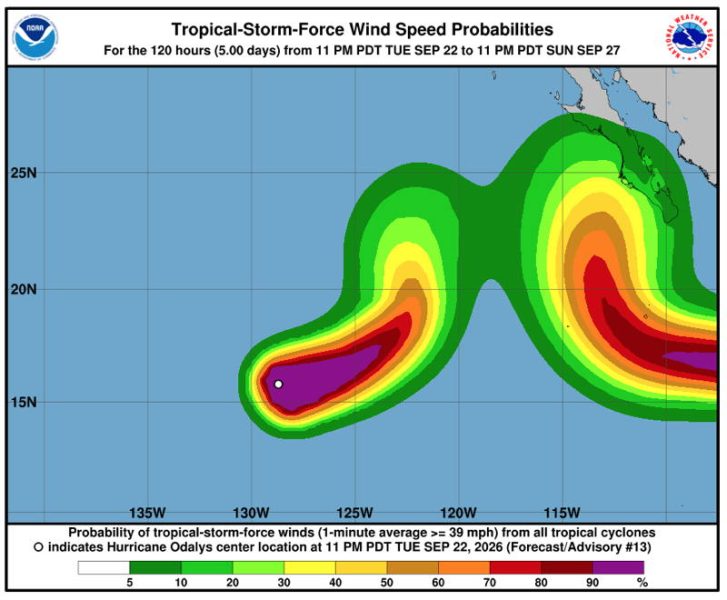
Following Hurricane Polo up the Eastern Pacific is Hurricane Odalys, which is farther, offshore but still heading east.
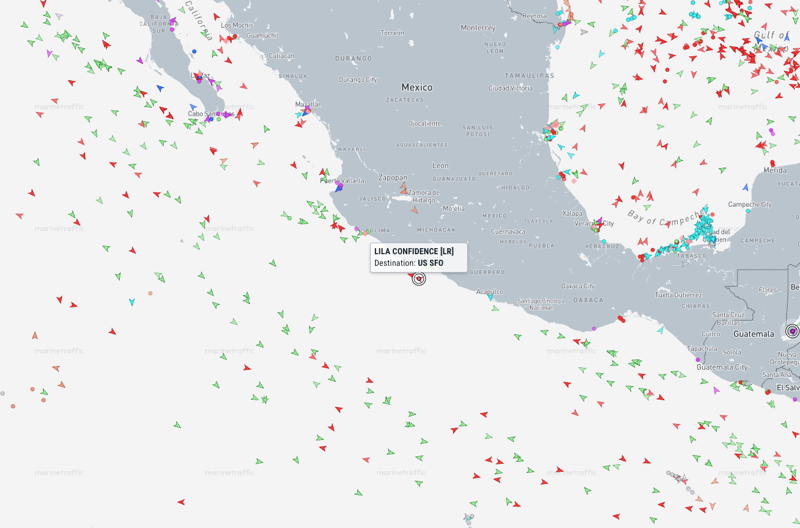
You can see lots of marine traffic in the Marine Traffic site’s image above. They are giving the area around Hurricane Polo space, but given the scale of the storm, it still looks uncomfortably close to us. We assume the captain of the Lila Confidence has confidence in their ship and the forecast path of the storm.
There are about six weeks left in the “official” hurricane season, and despite the increased activity, damage to the shoreline has been limited (though wind, rain, waves and storm surge can still wreak havoc).
We hope the number of hurricanes slows down and that those that do form continue the trend of staying offshore.
A West Coast Perspective on the 2026 ILCA Masters Nationals
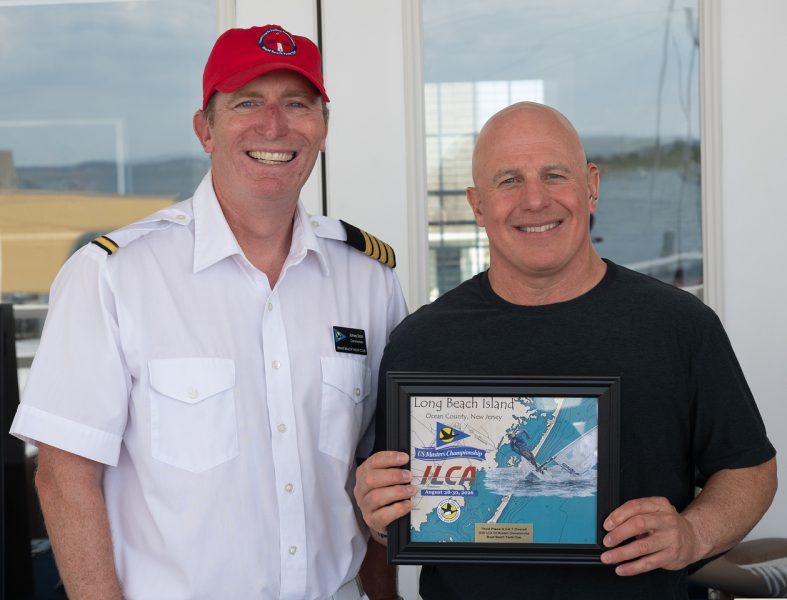
Brant Beach Yacht Club, New Jersey, August 28 to 30. About 35 ILCA 7s. Friday brought rain and no wind, so eight races got packed into two days.
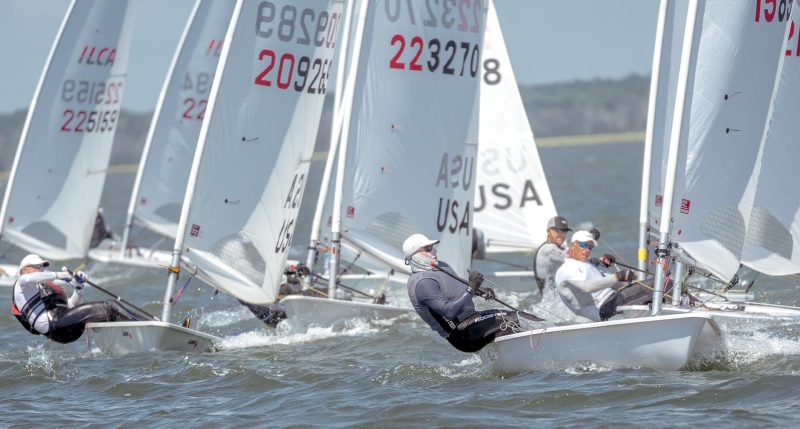
I finished third overall and third Grand Master. Peter Hurley won, Patrick Wachholz took second, and David Hiebert fourth. Peter Vessella, a fellow Bay Area sailor, finished sixth. No soft spots: Every one of them has cracked the top 10 at a Masters Worlds.
The course favored left, nearly always. Two of every three shifts came from that side, and in race five, closer to nine of 10. That is not a race course. That is a hallway, and you want to be first down it.
Race five was where I paid for caution. The pin was heavily favored and crowded. The committee had backed the pin boat off on four boat lengths of rode, 55 feet of line in eight feet of water and no deadman weight, so it lay at about 10 degrees to the surface, a tripwire across the favored end. Figuring the left half would be carnage, I started midline, safe but wrong. Hurley went left and stayed. I rounded the first mark around 13th, and in seven knots nobody hands places back. Ninth. Ugh.
Race three cost me another way. I was grinding out left with one boat to windward. When I finally looked around, the fleet had tacked onto port a minute earlier. My compass had shown no header, so I assumed nobody had a reason to go. They did: The gradient breeze was shifting left, and the puffs came with it. Twelfth, clawed back to eighth, and I had to count it. A look over the shoulder was worth four places.
Small numbers, big difference. My outhaul was two centimeters too tight, and I could not hold a lane against Roman Plutenko. I eased it two centimeters, got the pointing back, and squeaked across starboard tackers at the windward mark.
The current ran ahead of the tables. Peak flow doubled over the week, 0.6 knots to 1.2, and slack slid 30 to 45 minutes later each day. On Sunday the ebb arrived two-and-a-half hours early. Read the water, not the printout.
Halfway through Sunday it looked bad. Two timid midline starts had dropped me from third to about sixth. So, screw it, win the pin. The breeze built to 15 to 18 knots. Downwind was full effort at 150 beats per minute, the game now overtaking waves, not surfing chop. Two seconds, and third overall.
Cruising Unplugged, Except for the Wi-Fi
Setting sail and leaving the world behind is just about every sailor’s dream. It was certainly mine when we cast off our lines at the Corinthian Yacht Club harbor and pointed FriendShip, our Hanse 388, south toward Catalina.
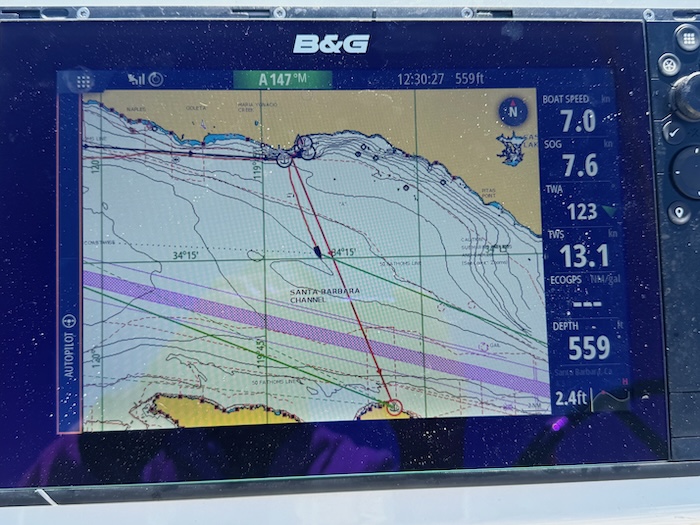
The trouble with the dream is that Point Conception doesn’t care about your digital detox. Neither do the shipping lanes, and neither does a wind forecast that changes its mind multiple times a day. I wanted my crew to get home in the same condition they arrived in, and that meant I wanted weather — real weather, updated weather — and not a printout from four days ago tucked into the nav station. So the disconnecting got complicated long before we ever left the dock.
Planning a trip to the Channel Islands with a copilot
I first built a route in Navionics the old-fashioned way, making sure we stayed off the rocks and out of the traffic lanes. I had also created a spreadsheet with multiple stop options based on fuel and water capacity. Then I did something I hadn’t tried before: I exported the GPX file, gathered up the crew contact sheet and the boat’s USCG documentation and the spreadsheet with stop options, and handed the whole pile to Claude, an AI assistant, with a simple ask — help me turn this into a float plan, and while you’re at it, fold in the marine forecasts that actually matter for this route.
Claude went looking for the boat’s specs and came back with a cruising speed estimate, which I checked against what I know FriendShip actually does with a full crew and a full fridge. Three or four iterations later, I had a document better than anything I’ve put together by hand, which included contact information for every harbor on the itinerary, forecast summaries tied to each major waypoint, a set of departure options built around our speed, and emergency contacts for everyone aboard. I sent the document to a few trusted folks ashore before we cast off.
I’m not going to tell you that a computer plans a passage better than you do. It doesn’t. But it’s very good at the tedious middle part — the phone numbers, the zone forecasts, the arithmetic on when we’d actually arrive — and doing that part faster meant I got to spend more of my planning time on the parts that needed my judgment.
Pumpout on the Go With the Pumpout Nav App
Boat sewage spreads disease, harms aquatic life & ruins water. Let’s put waste in its place. Get On Board with the Pumpout Nav app to find the nearest sewage pumpout, dump station, or floating restroom. Download it today at www.boatcalifornia.com/pumpout