

Cruising Unplugged, Except for the Wi-Fi
Setting sail and leaving the world behind is just about every sailor’s dream. It was certainly mine when we cast off our lines at the Corinthian Yacht Club harbor and pointed FriendShip, our Hanse 388, south toward Catalina.
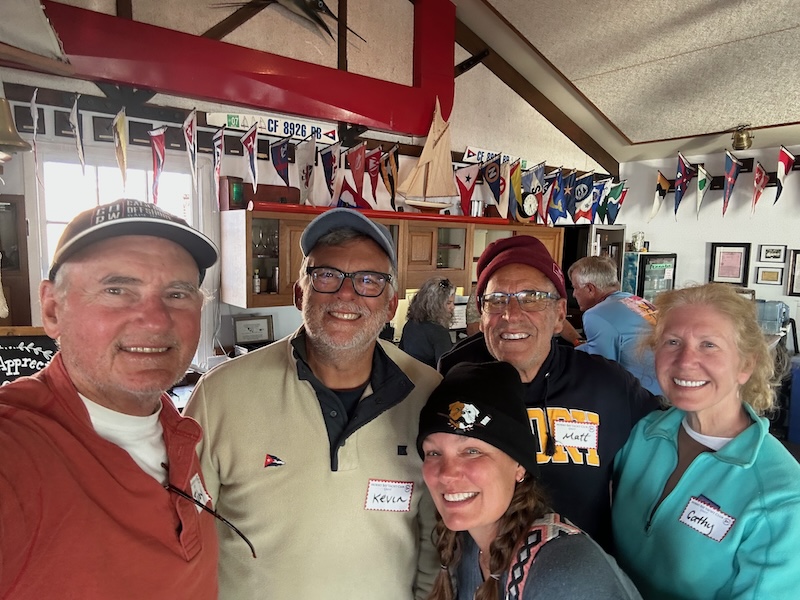
The trouble with the dream is that Point Conception doesn’t care about your digital detox. Neither do the shipping lanes, and neither does a wind forecast that changes its mind multiple times a day. I wanted my crew to get home in the same condition they arrived in, and that meant I wanted weather — real weather, updated weather — and not a printout from four days ago tucked into the nav station. So the disconnecting got complicated long before we ever left the dock.
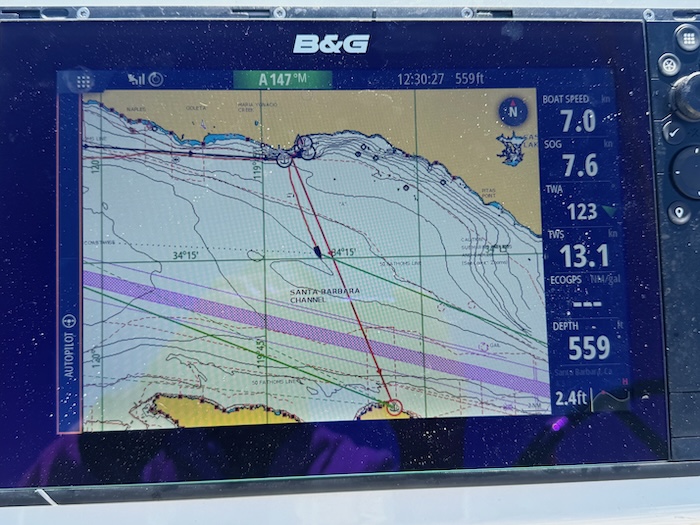
Planning a trip to the Channel Islands with a copilot
I first built a route in Navionics the old-fashioned way, making sure we stayed off the rocks and out of the traffic lanes. I had also created a spreadsheet with multiple stop options based on fuel and water capacity. Then I did something I hadn’t tried before: I exported the GPX file, gathered up the crew contact sheet and the boat’s USCG documentation and the spreadsheet with stop options, and handed the whole pile to Claude, an AI assistant, with a simple ask — help me turn this into a float plan, and while you’re at it, fold in the marine forecasts that actually matter for this route.
Claude went looking for the boat’s specs and came back with a cruising speed estimate, which I checked against what I know FriendShip actually does with a full crew and a full fridge. Three or four iterations later, I had a document better than anything I’ve put together by hand, which included contact information for every harbor on the itinerary, forecast summaries tied to each major waypoint, a set of departure options built around our speed, and emergency contacts for everyone aboard. I sent the document to a few trusted folks ashore before we cast off.
I’m not going to tell you that a computer plans a passage better than you do. It doesn’t. But it’s very good at the tedious middle part — the phone numbers, the zone forecasts, the arithmetic on when we’d actually arrive — and doing that part faster meant I got to spend more of my planning time on the parts that needed my judgment.