

Classics Go Full Send in Rolex Big Boat Series
The crew carpool across the Golden Gate Bridge was the first clue: sea chanteys, sailors singing along. Racing in the Rolex Big Boat Series Classics division was not what I expected. Yes, I expected beautiful boats — there’s a reason the docking plan has the wooden beauties right at the bottom of the ramp at St. Francis YC. Yes, I expected complex rigging and oddly shaped sails to figure out.
What I didn’t expect was the hard-core, boat-on-boat maneuvers, crossings with inches to spare, boats battling on port and starboard for the perfect start, and highly tactical racing. We got all that and more, as six classic wooden boats crisscrossed the Bay, dodging the entire fleet of J/105s and ORR boats for the 2026 Rolex Big Boat Series.
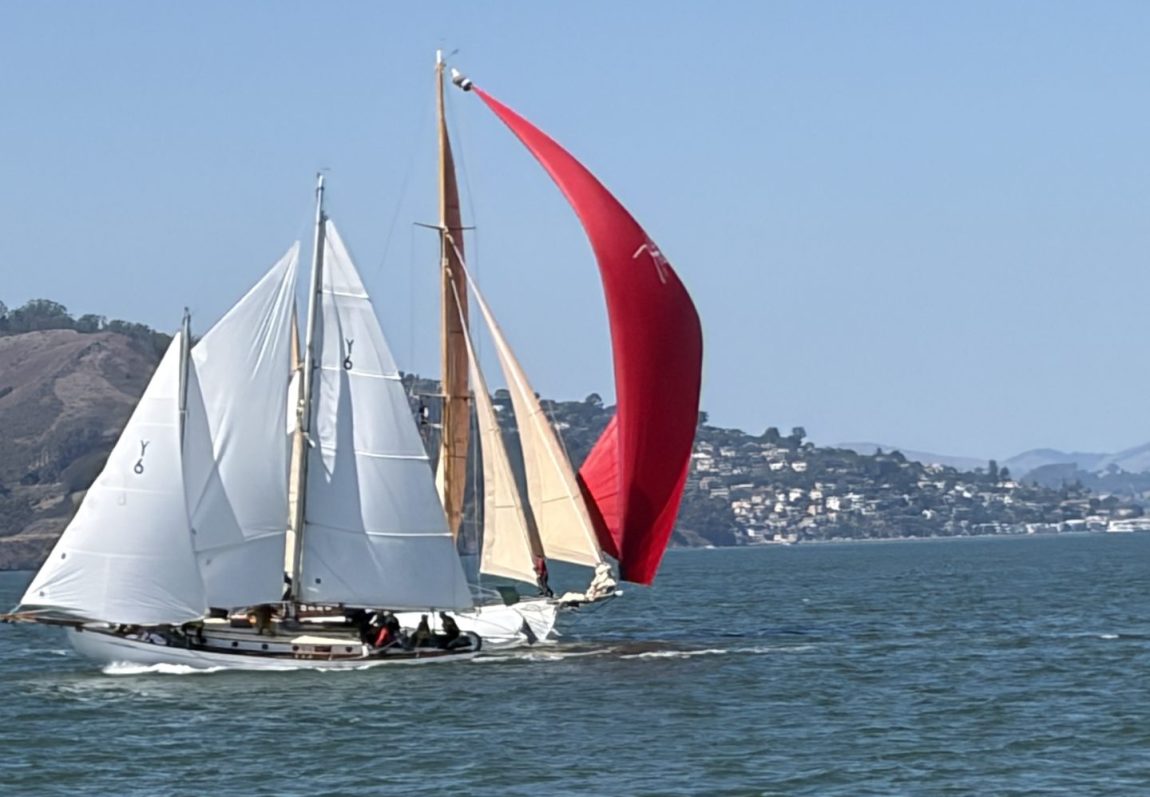
On our boat, Kenneth Wadsworth’s 1927 staysail schooner Wiletie, I think many of the crew had never even crewed on anything with more than one mast, let alone a trapezoidal “fisherman” that had two halyards (peak and throat). I laughed as Quantum’s Will Paxton encouraged us to “trim it like a blooper,” as half the crew hadn’t even been born when that IOR-design banana sail ruled the Bay. He was right though; it worked.
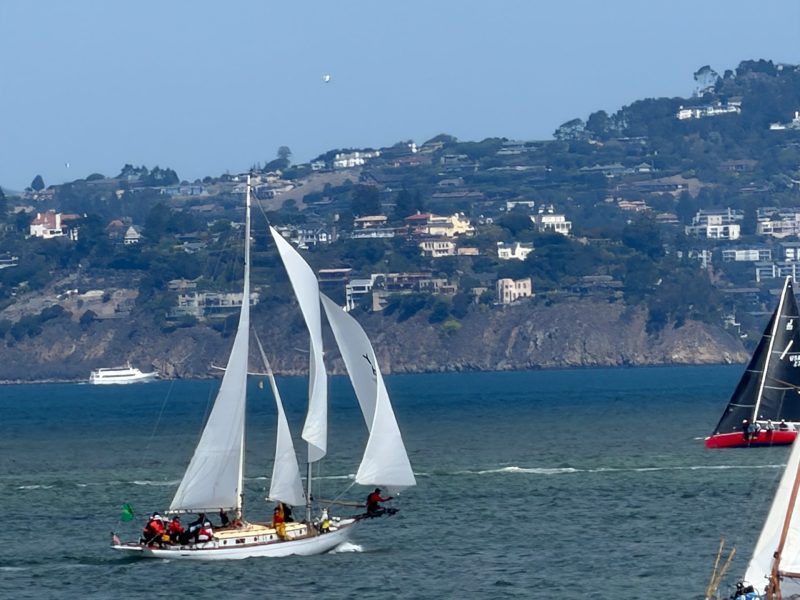
We had practiced on Monday for the first time, with the new sails, and an experienced crew that was used to Dyneema lines, carbon rigs and giant masthead kites towering over modern decks and bulb keels. This was different.
Classics are heavy, often with full keels, and the rigging is nothing like what you’d expect. The NORs required boats to be built using traditional wooden plank-on-frame construction, and to be clear, “cold molded construction” does not qualify. In 2025, there weren’t enough boats for a class, but this year they were out in force.
When we stepped on board the 99-year-old staysail schooner, it felt as if we were about to take a fine piece of furniture out on the Bay. The boat was Bristol, the brightwork shined to a mirror finish. The decks perfectly restored. The spars gleaming with new paint. We just didn’t want to break her. Soon we learned she was far stronger than we imagined.
We learned the “fife rail,” a rectangle below each mast with belaying pins and rings. With nary a single rope clutch on the boat, every halyard — and we always flew four sails at a time — had to be tied off on a pin. Sheets ran everywhere, with the cockpit looking like exactly that: a pit of fighting chickens that had to bob and weave around one another, making every tack look like a wrestling match to get the lines in. Almost all the lines are beige, meaning you had to learn what led where.
Day one: Light wind meant very wide tacking angles and a slow performance upwind. We had a lot to learn to make this boat go fast. Day two: We improved by nearly 30 minutes over our closest competitor. Days three and four, we were calling hair-raising crossings, drag-racing rail-to-rail across the Bay, and in it to win it.
This photo sequence shows one of the hair-raising crossings:
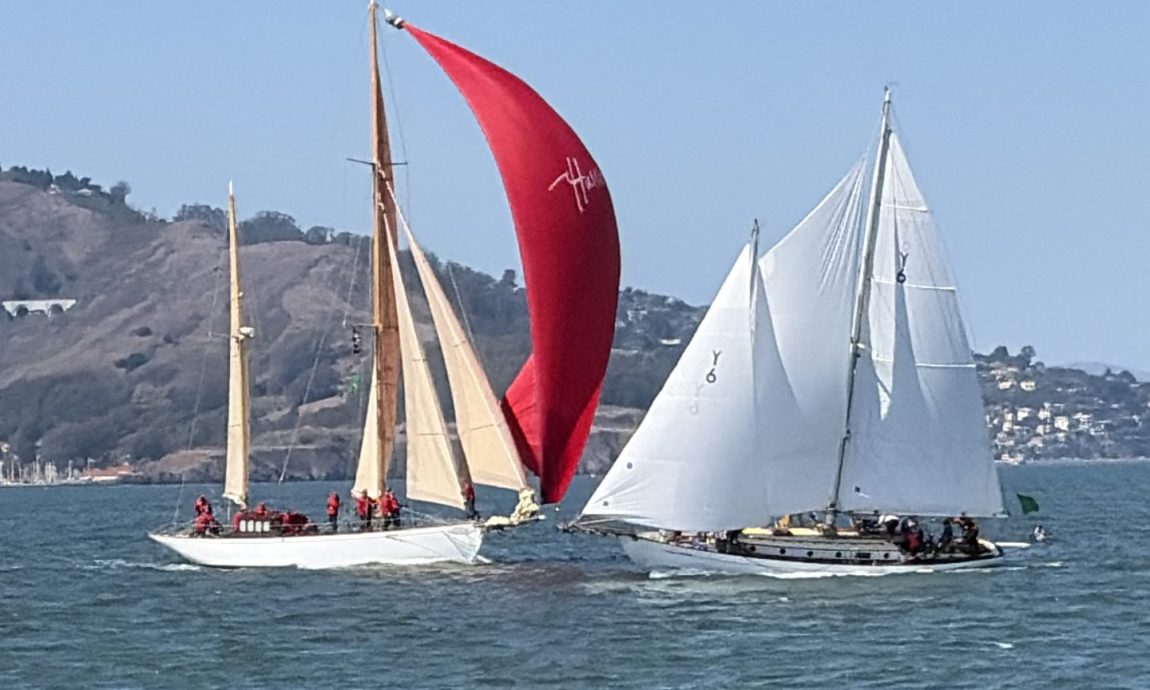
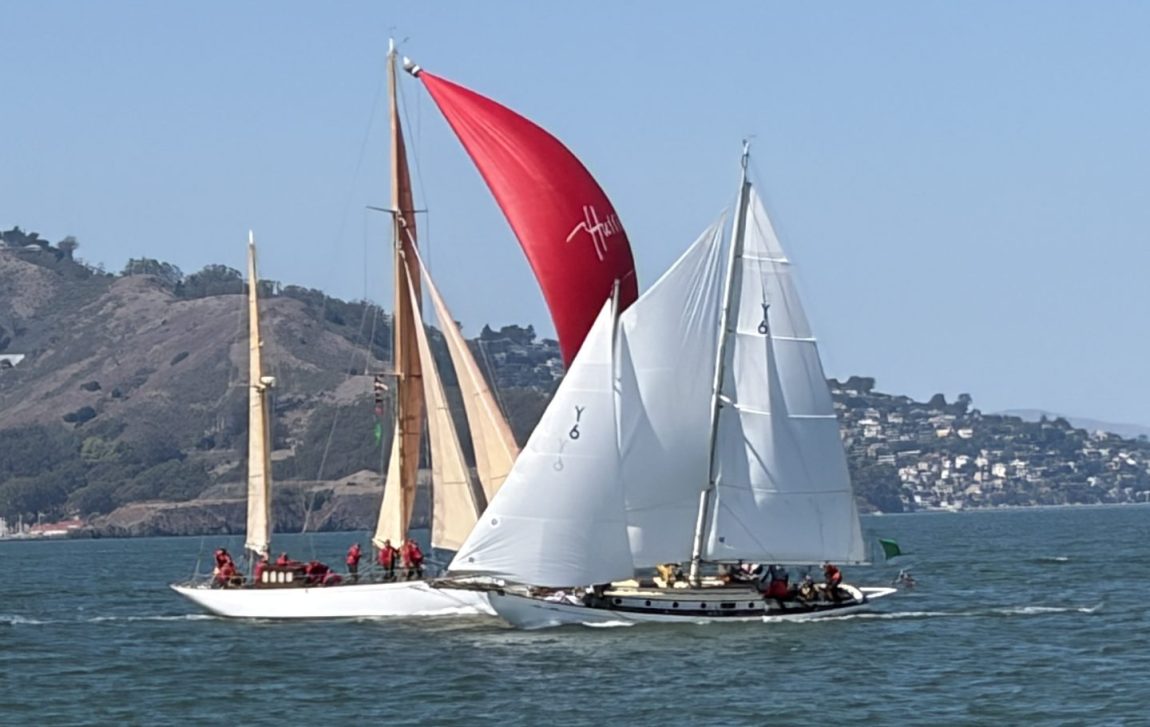
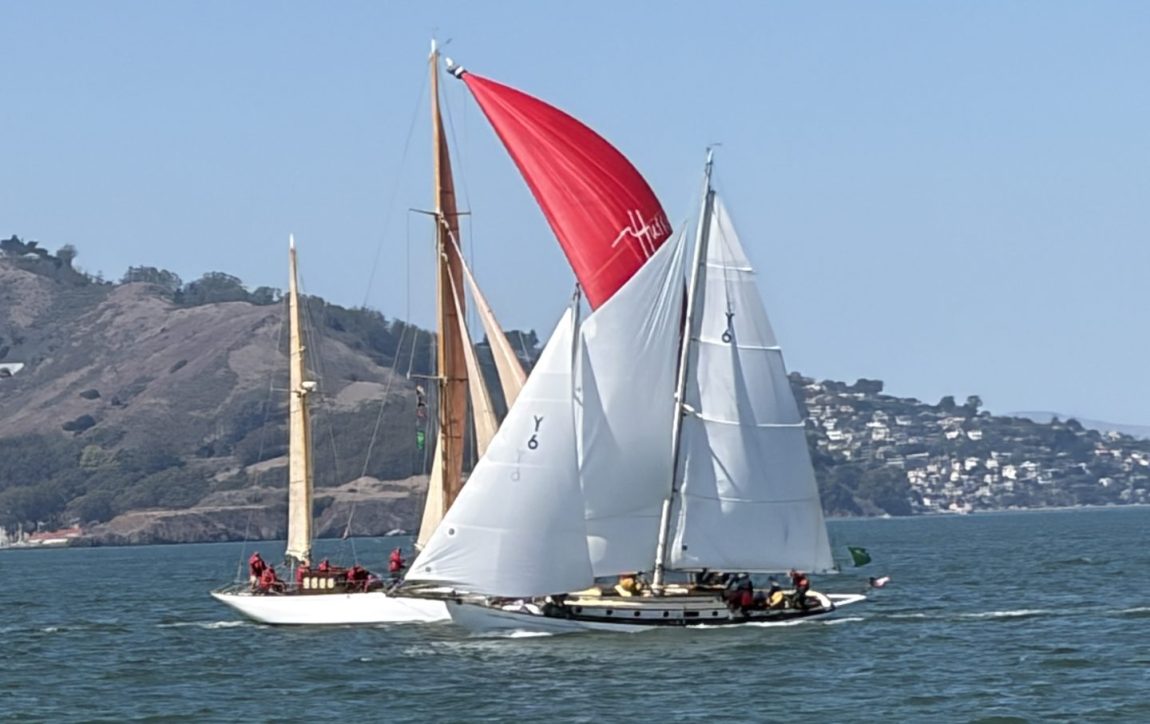
The Sparkman and Stephens yawl Fairwyn took first, with three bullets and five points. The Peninsula Youth Sailing Foundation’s 1951 yawl Ocean Queen V took second, finishing just behind Fairwyn in most races. Wiletie came from behind to capture third place. That was the boat I sailed on, with a new crew, new sails and a new outlook on the past and future of sailing.
And, with just one race each day, the Classic fleet gets to come up to the race deck to watch the other fleets cross the finish line in broachy, explode-the-kite conditions. Would I do it again? Most certainly. And we’re already planning for Rolex 2027!
Keep it wooden! There isn’t anything as soul-fulfilling as a sailor as driving a 18K+ lb displacement vessel in a breeze.
Looking forward to the Jessica Cup in October!
Nicely written, Brandon. You captured both the uncertainty and the joy.