

Rolex Big Boat Series Takes On the Bay and Ocean
The 2026 Rolex Big Boat Series hosted 81 boats crewed by 700 sailors who came out to take on the challenges presented by the Bay, the ocean and their class competitors. As always, it was a challenging four days of diverse conditions and varied courses.
This year’s series served as the ORC Nationals, so racing included more time outside the Bay on ocean courses. Days one and four were a bit gray and quieter, and days two and three had spectacular sunshine and solid Bay Area breezes. While we’re putting together a story for the upcoming October issue, we thought we’d share the photos of Zeus‘ spectacular finish-line spinnaker split.
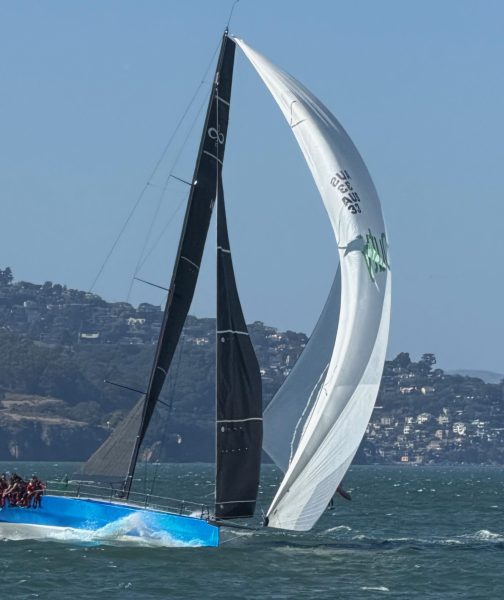
These kinds of events happen all over the Bay, but it’s always generous to treat the spectators at the St. Francis Yacht Club to a finish-line drama.
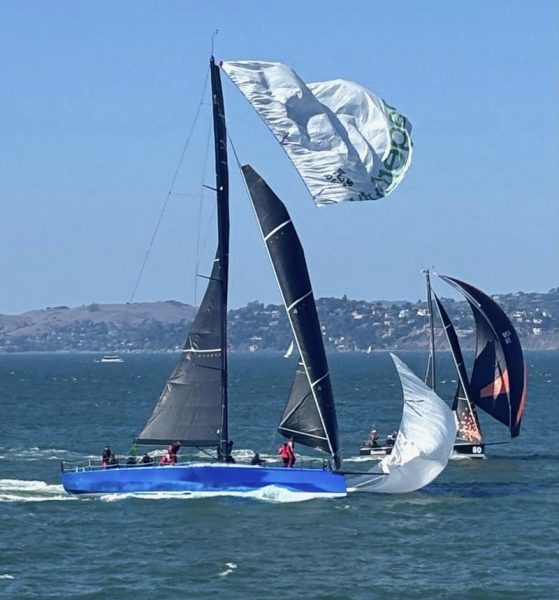
Michael Firmin’s Infiniti 52 Zeus had a spectacular series battling it out with rival Victor Wild’s TP52 Fox for the ORC title in Class A. Fox took the overall win over Zeus in second.
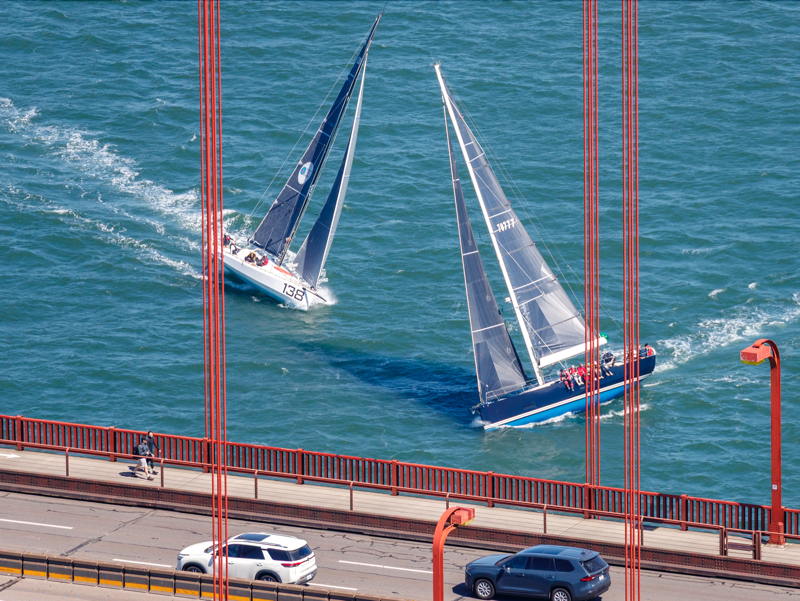
As always, St. Francis Yacht Club’s Rolex Big Boat Series showcased why San Francisco Bay remains one of the world’s best sailing venues. Spectacular scenery, challenging conditions and reliable winds attract and challenge the world’s best sailors.
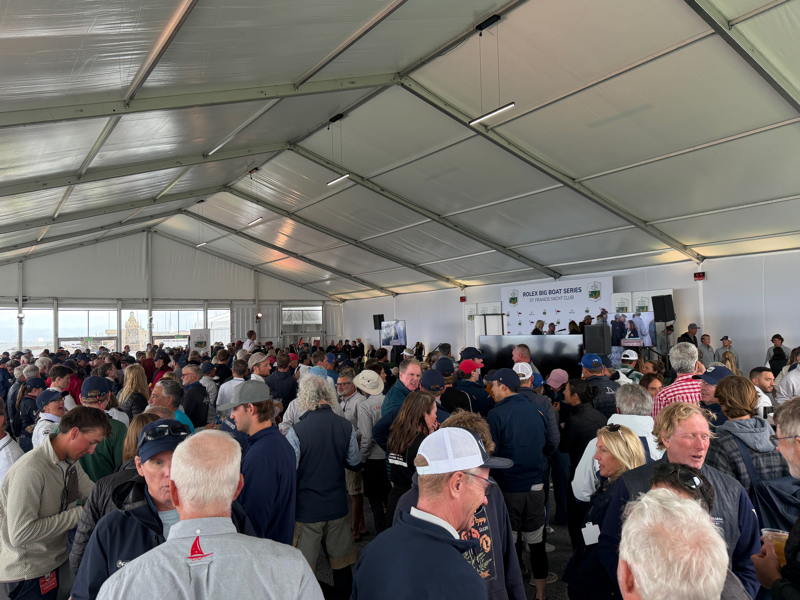
We’ll have a more complete wrap-up and photos in our October issue, but you can check out the complete results here.
- General Sailing
- Repair & Maintenance
- Current News
- Environmental News
- Commentary
- Wings & Foils
- Working Waterfront
What Happens on Innovative, Pioneering Working Waterfronts?
This isn’t your grandfather’s working waterfront, and this isn’t simply an exercise in maritime nostalgia. Today’s working waterfront isn’t about freezing an old-fashioned maritime economy in amber. It’s where some of the technologies shaping the maritime economy of tomorrow are being built.
As the conversation has grown about revitalizing Sausalito’s industrial marine trade zone, we asked ourselves what’s happening on working waterfronts around the world. The answer is pretty thrilling, and some of it is already local.
New Zealand’s Core Composites built the wings and foils that helped win the 2013 America’s Cup on San Francisco Bay, and now builds boats and wings for SailGP. French yards are building 100-ft foiling Ultim trimarans capable of sailing around the world in about 40 days. Meanwhile, in stodgy old places like Maine, innovators are 3D-printing boats.
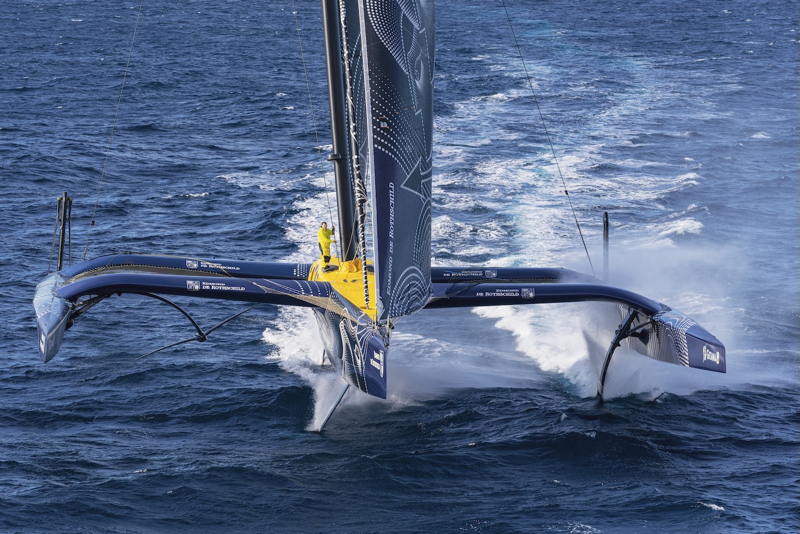
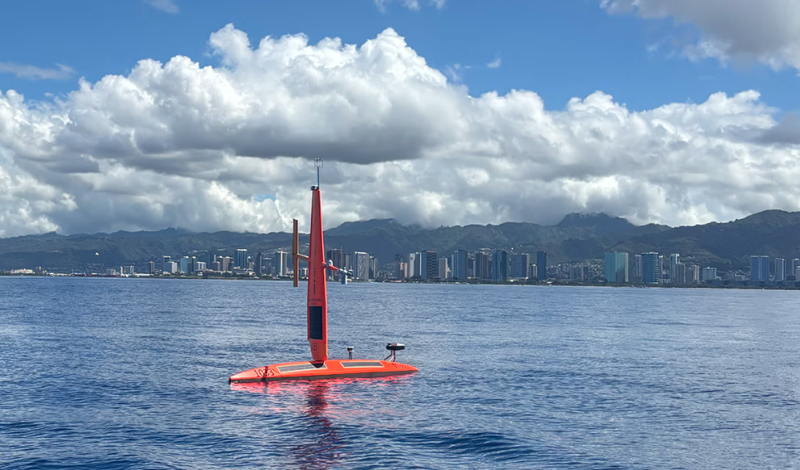
But it’s not just sailing. Working waterfronts are also home to a growing blue-tech economy spanning autonomous vessels, aquaculture, energy, ocean exploration, underwater robotics and wave power. In Sausalito’s Marinship, Universal Sonar Mount builds systems for deploying sonar and other equipment beneath vessels; across the Bay in Alameda, companies such as Navier and Saildrone are developing electric foiling boats and autonomous vessels.
Saildrone founder and CEO Richard Jenkins is a sailor and former world land-speed sailing record holder who founded the Alameda company in 2012. What began with autonomous, wind- and solar-powered sailing vessels collecting ocean and weather data has grown into a much broader business spanning fisheries research, ocean mapping and maritime intelligence, including defense work. Saildrone’s uncrewed vessels have now logged more than 2 million miles and 60,000 days at sea.
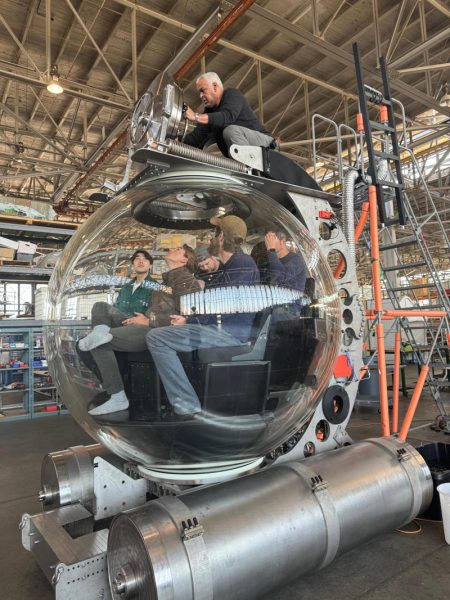
At the Port of Los Angeles, the nonprofit AltaSea has transformed former cargo facilities into a 35-acre campus where ocean-focused businesses, researchers and educators can develop and test new technologies. Through partnerships such as the Scripps Institution of Oceanography’s StartBlue accelerator, the campus supports emerging companies working in fields ranging from wave power and underwater infrastructure to weather intelligence and autonomous systems, while also providing education and workforce training.
Around the Bay, DOER builds deep-ocean exploration vehicles; Bedrock maps the seafloor with autonomous underwater vehicles; Reefgen develops underwater robotics for marine restoration; CalWave is developing technology to generate electricity from ocean waves; and Wildtype is growing seafood from cells. Sofar Ocean uses a network of ocean sensors to provide maritime intelligence; and Terranova is lifting land, like the Marinship, out of flood zones.
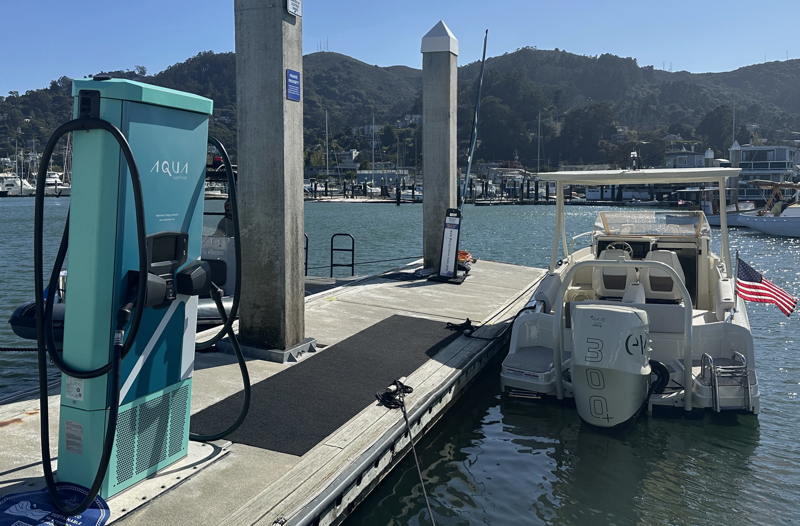
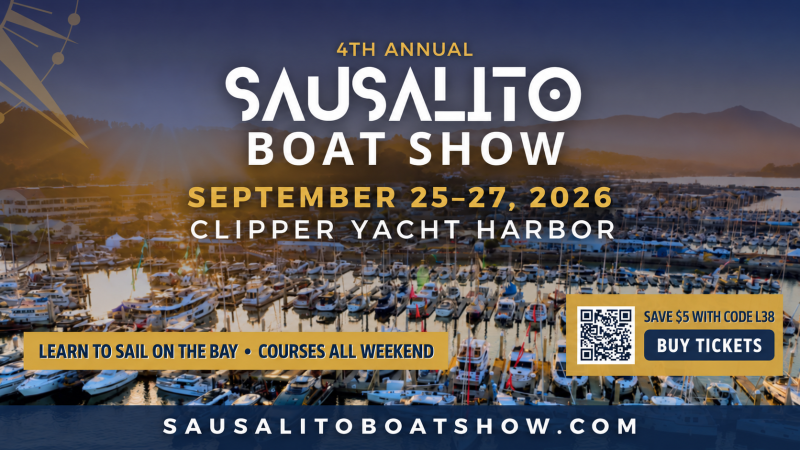
Clipper Yacht Harbor in Sausalito has installed the Bay Area’s first dockside EV charging station for the growing number of electric boats on the waterfront. Some of those advances will be on display — and available for demo rides — at next weekend’s Sausalito Boat Show, where exhibitors include Saildrone, Vita Power, Sea Watts, RAD Propulsion, ARC and others. (Come see us at Booth #203, and use code L38 for a $5 discount.)
Before becoming Safe Harbor Sausalito/Richmond, KKMI was known for investing in environmentally sound boatyard practices; its Point Richmond yard became the first Bay Area boatyard to earn Clean Marine certification. Berkeley Marine Center has installed the Bay Area’s first fuel-cell auxiliary system in a sailboat and converted numerous sailboats from diesel to electric auxiliary propulsion.
Labor capital
Hundreds of volunteers contributed labor, skills and money to build the tall ship Matthew Turner, embodying the kind of community that can grow around a working waterfront. While it looks traditional on the outside, Matthew Turner broke the mold with a modern auxiliary power system using a BAE regenerative power plant.
Working waterfronts also accumulate something less visible: generations of skills and knowledge passed among the people who build, repair, and operate boats and develop the technologies around them. Many lament the lack of hands-on skills in younger generations, but those skills have to be learned somewhere — and working waterfronts are one place that happens.
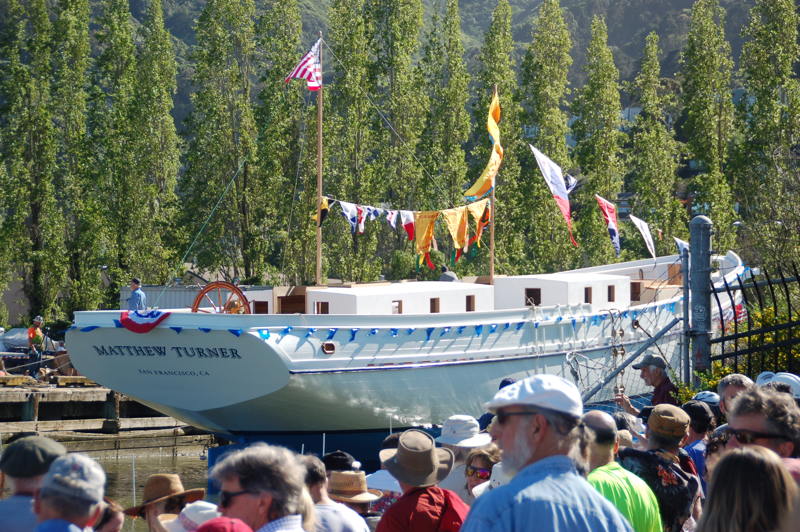
Imagine finishing job training at Spaulding Marine Center and walking into a Marinship where a 100-ft carbon foiling multihull is being built; an autonomous deep-sea submersible is taking shape; new aquaculture and oyster-restoration technologies are being developed; commercial fishing boats are coming and going; boats are being 3D-printed; and an electric foiling ferry is hauled out for repair. And amid all that new technology, there might still be a classic wooden boat like Yankee, launched by Stone Boatyard in 1906. You might bump into a recent Cal Poly Maritime graduate who just raced the Pacific Cup aboard Oaxaca.
To us, that sounds much more thrilling than walking down a waterfront with more food, retail, breweries and coffee shops. Those uses could add activity and amenities to the district, but would they help sustain the arts, industry and maritime trades that make the Marinship a working waterfront?
The Marin working waterfront needs change to reach its potential, but we believe Measure X is the wrong initiative to achieve it. A no vote now is not a vote against change; it’s a vote to protect the working waterfront we already have while making room for something better.
Come Out to the Sausalito Boat Show!!
TYC’s Women’s Skipper Race, last race of the 2026 racing season. Great finale!
Women took the helm last Wednesday night, September 16, for Tahoe Yacht Club’s Women’s Skipper Race and the club’s final sailboat race of the season, a fitting celebration to wrap up a successful summer of sailing!
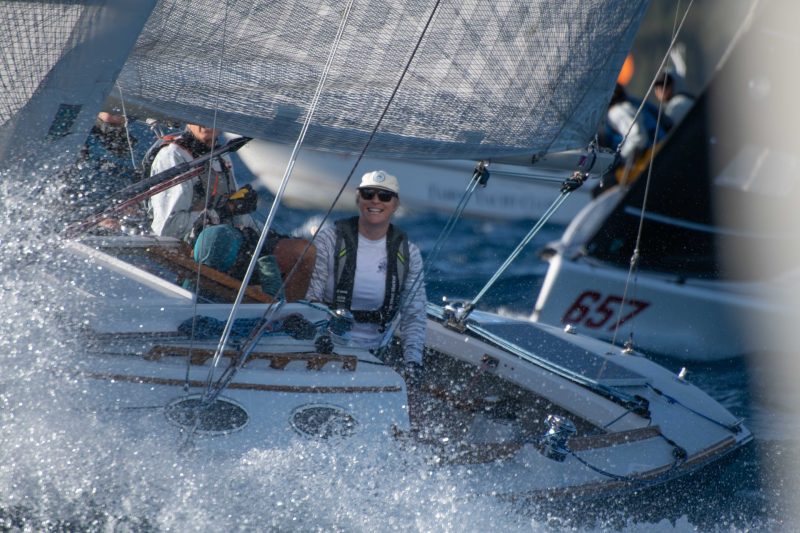
The race put female sailors in the skipper’s seat for a spirited evening of keelboat racing. While crews could include both women and men, a woman was required to remain at the helm throughout the race, giving experienced female skippers a chance to take charge and others an opportunity to try their hand at the helm in a race setting.
The Women’s Skipper Race was a regular TYC event for many years, but for a variety of reasons, it has been absent from the racing calendar for over 15 years. It returned this year with enthusiastic support from the keelboat community, with 10 women skippers signed up and ready to race.
The weather, however, had a few challenges in store. Shifting winds of 15 to 18 knots and bumpy water made for a demanding evening, and even with a late race date change, six women skippers were more than up to the task.
The result was a competitive and fun evening on the water — a successful return for the Women’s Skipper Race and a great way to close out TYC’s 2026 sailing season.
Sailing Into Fall via Tomorrow’s Equinox
As September comes to a close, we checked the calendar and saw that tomorrow is the fall equinox. This means summer will officially be over. While some may see that as a sad event, the reality for the USA’s West Coast sailors is that it does not mean a close to our sailing season. We get to enjoy being on the water almost all year round. We just need to adjust our sails, and our outfits. We’re also, indirectly, reminded of the time before Starlink, AI and the myriad other technologies that keep us metaphorically tethered, even as we sail off the docks and into what used be “the unknown.”
Yesterday, while we were taking an Uber ride in an all-electric vehicle, our driver mentioned he also owned a “gasoline vehicle.” He keeps it topped up and in good working order, in preparation for the (hopefully nonexistent) day when all the power grids go down and electric cars are useless. Today we’re reminded of that theory also being true for sailboats. We’ve become so accustomed to using electronics for our navigation and communications that some of us may become lost without them. And while the old SSB and VHS radios might also fall by the wayside in dark times, celestial navigation is one boat skill that requires no human-made power source — other than the human energy of handling the sextant and using our brains for calculations. So how does this relate to the fall equinox? Well, it doesn’t, really, other than the shorter days and longer nights making us think about how fall and then winter cause us to slow down a little, to spend more time in quieter pursuits. Sure, we still go sailing, but we might not race as much. And when we do race, we might not feel as compelled to go for the win. Many sailors are preparing to head south so they can continue to enjoy warmer weather. The Baja Ha-Ha fleet, for example, sets off for Mexico on November 2. That’s just six weeks away!
According to the Weather Channel, the “equinox happens at 8:05 p.m. EDT Tuesday, Sept. 22.” For us here in the West, that would be at 5:05 p.m. PDT, tomorrow!
We did a little scouting on the internet and found this very cool image and explanation shared by NASA.
“On the September and March equinox, when Earth is at a right angle to the sun, light is spread evenly across the globe and the terminator [the edge between the shadows of nightfall and the sunlight of dusk and dawn] runs from pole to pole. But on the December and June solstice, when Earth is tilted away from and toward the sun, respectively, light is cast disproportionately on each hemisphere, causing the terminator to appear slanted.”

With that, we say farewell to summer and embrace the fall season. We’ll still be sailing, and we hope to see many of our readers out and about on the water. And, to be honest, we will also be counting down the days to the next Summer Sailstice (June 19, 2027), at which time we will celebrate sailing (and the official start of summer) with the world and enjoy the extended hours of daylight.
While we’re on the topic of seasons, this Saturday, September 26, is a Harvest Moon. If the weather is good, untie your dock lines and go enjoy a night under the full moon.
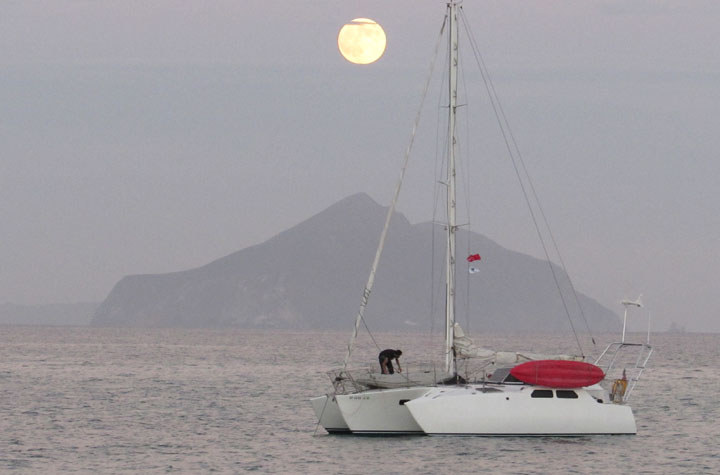
In the meantime, perhaps fall is a good time to brush up on or learn celestial navigation — you never know when it might come in handy. Check out this story on celestial navigation by Max Ebb.
A Boat Show Warm-Up in Newport, RI
This past weekend, while West Coasters were cleaning up the shorelines and racing in the Rolex Big Boat Series, some of us were on on the East Coast watching the onset of fall colors along the river banks. The visit happened to coincide with the Newport International Boat Show. What does a sailor do when there’s a boat show nearby? We go to the show, of course! Naturally, as things go, we picked the only rainy day after three days of sunshine. But nonetheless, there was lots to see and do.
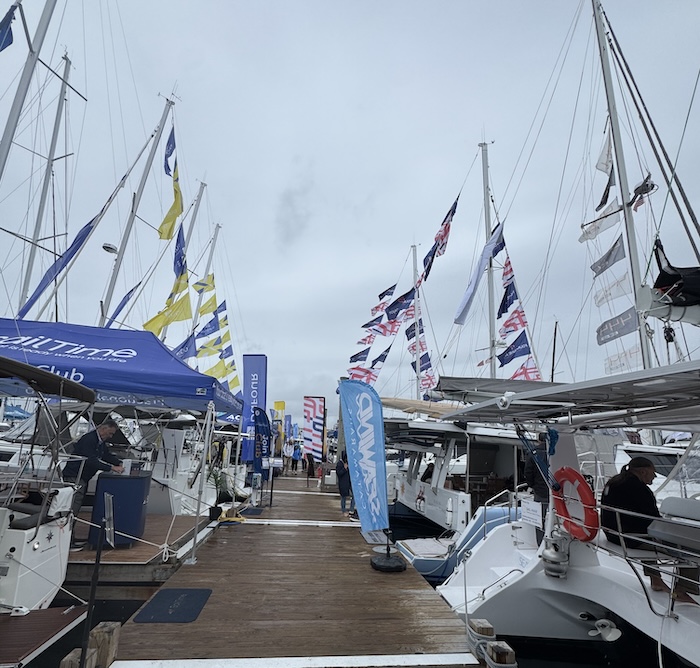
This year was the 54th Newport International Boat Show, running September 17–20. And what a show it was! The biggest thing that stood out for us was the number of boats on display — all sorts and all sizes.
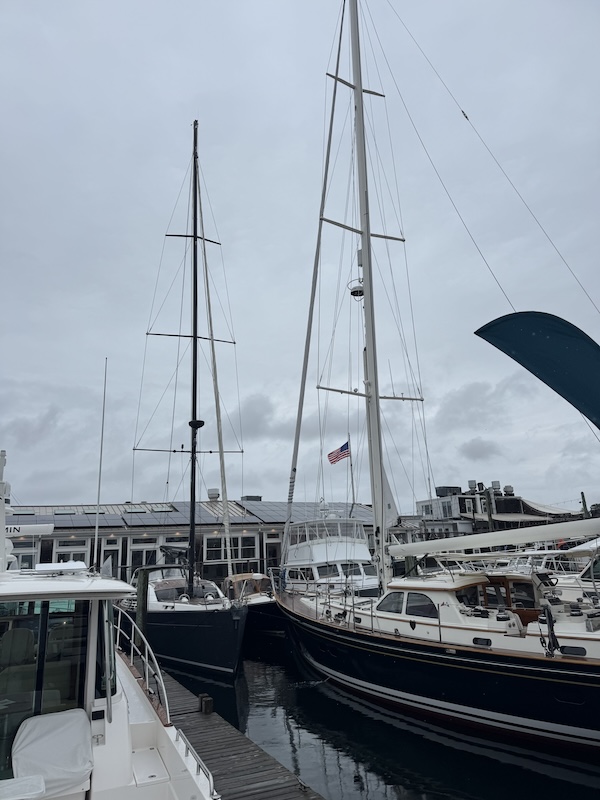
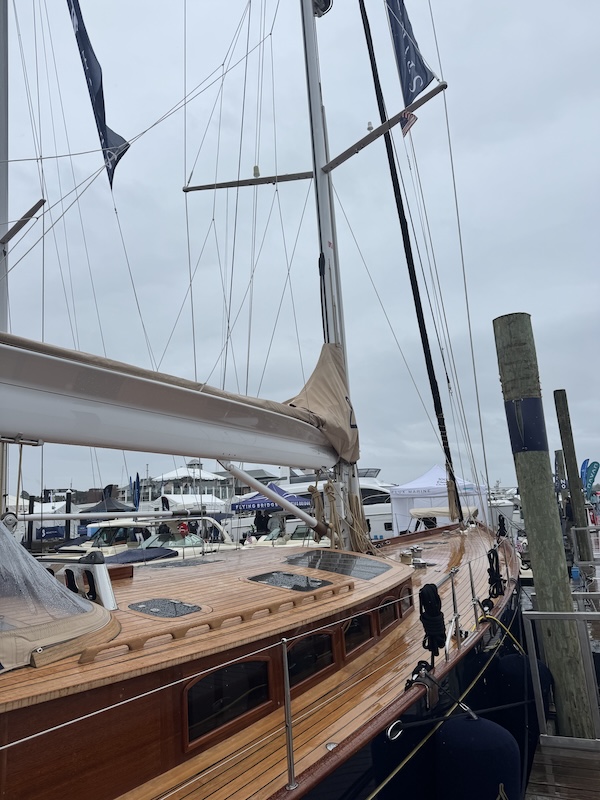
The sailboats ranged from pretty little wooden skiffs to luxurious-looking teak-laden cruisers.
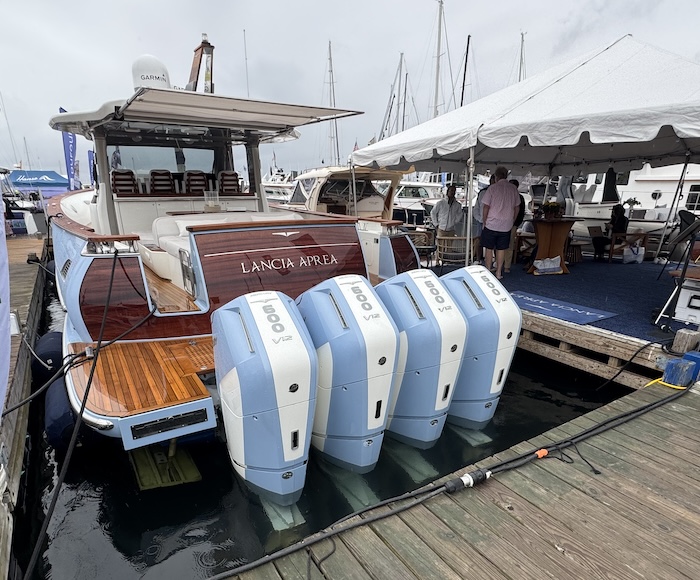
Powerboats ranged from fold-up tenders to small runabouts to massive-engine fishing rigs: We’re talking five 600-hp engines. We found the sailboats much more appealing.
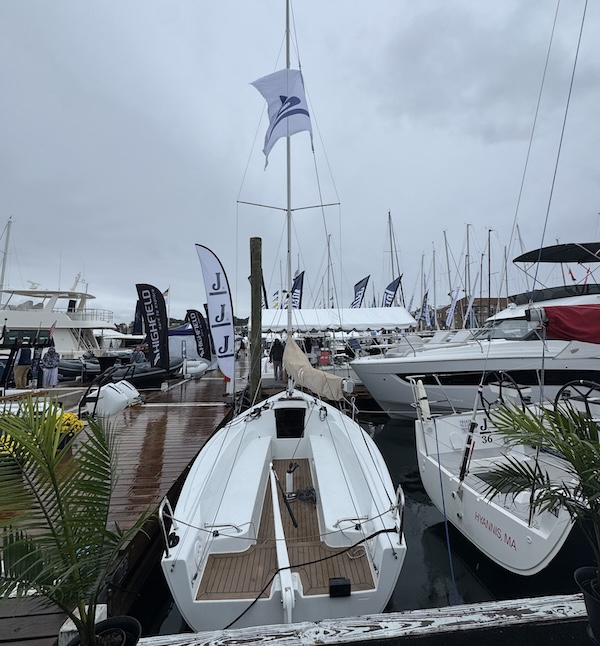
But back to sailboats. The J/Boats cornered a section of the docks where they displayed some of their fleet — J/7, J/9, J/36 and upward.
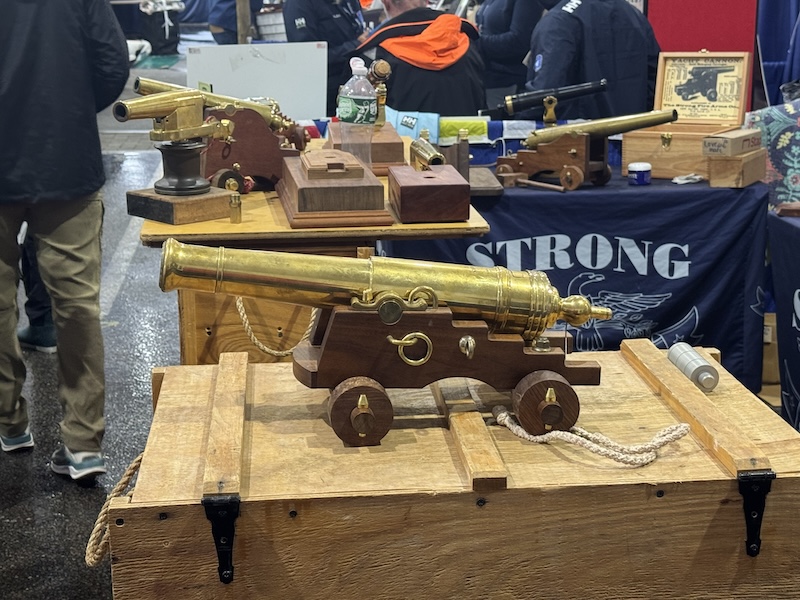
Inside the tents were a range of vendors displaying clothing to bags to novelties.
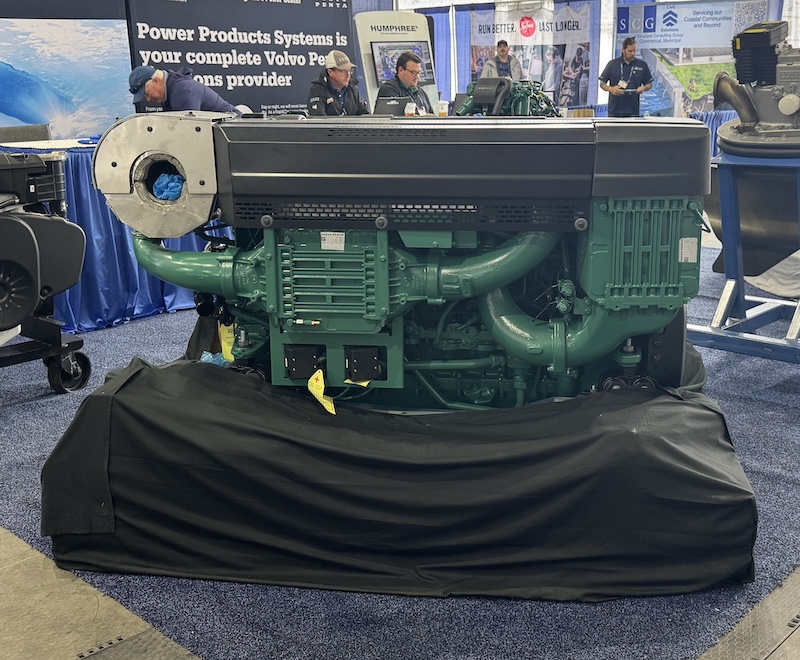
There was an entire tent dedicated to engines and other powered-up and technical gadgetry.
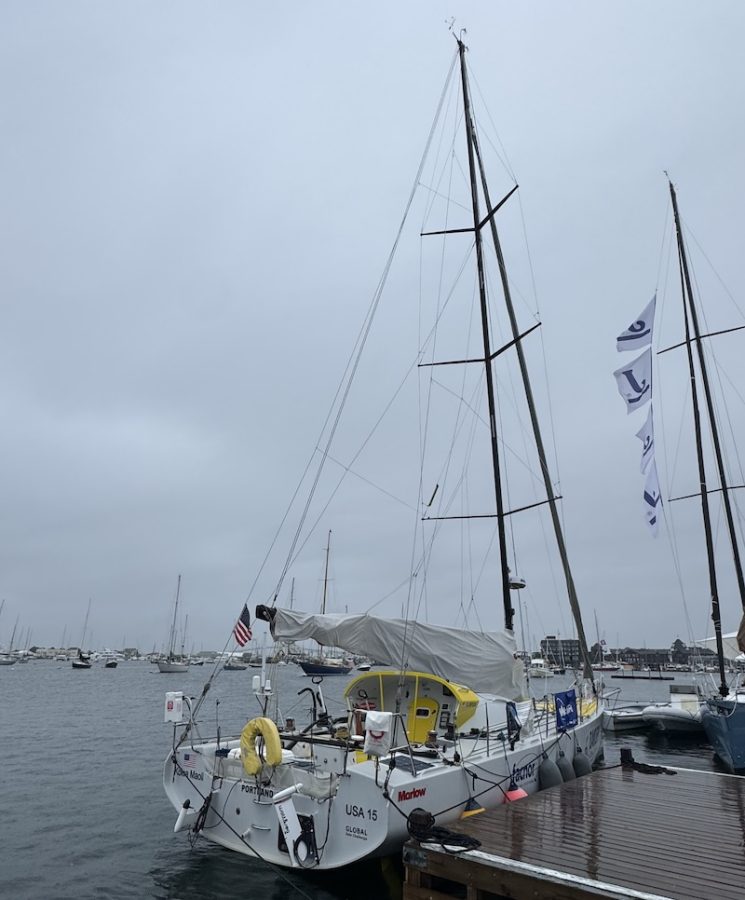
Later in the day, we came across Ronnie Simpson’s Class 40 Koloa Maoli, aboard which he will compete in the second Global Solo Challenge, a singlehanded nonstop sailing race around the world, in October 2027. Readers may recall Ronnie’s campaign in the inaugural Global Solo Challenge in 2023–24. It ended when, after sailing most of the race in third place, he dismasted after Cape Horn and was unable to finish the race.
While it can be tiring to spend the day looking at boats (someone has to do it), it’s also exciting to see what’s happening outside our own relatively small window. We also left wanting more. Thankfully, there is more on the very near horizon.
This coming weekend, September 25–27, is the fourth annual Sausalito Boat Show. This grassroots show has grown exponentially in its short lifespan, and we’re excited to see all the boats and vendors who will be in Sausalito over the three-day show. We’ll be there with our Latitude crew, and aside from looking forward to seeing who and what is at the show, we’re looking forward to catching up with our readers, in person!
So, grab your tickets — you can get $5 off with code L38 — and come see us at Booth #203. We’ll meet you there!
San Francisco on the Bay: Dock, Dine, Stay, Play
The List: Dine, Drink, Smoke, Stay, Play and Shop. Discover San Francisco Bay and all that inspires those of us who live or visit here.