

- Chartering
- Heading South
- Community Sailing
- West Coast Sailing
- Commentary
- General Sailing
- Racing
- Cruising
- Latitude 38 Magazine
- Events
Latitude 38’s September Issue Is Out Now!
Lots of interesting stories appear in this month’s issue of Latitude 38. Jonathan Livingston tells the story of 94-year-old Commodore Tompkins, a master of going with the flow, which he demonstrated again with a class win in the 2026 Pacific Cup aboard Flashgirl. We share a summer cruise down the coast to the Channel Islands; a preview of the Big Guns coming out for the Rolex Big Boat Series; September’s 50th Anniversary Moore 24 Nationals and some Moore 24 history; and a few helpful tips for doing the Ha-Ha from a four-time participant who’s going again for his fifth rally. Latitude racing editor Fritz went to Norway for the International Knarr Championship, where Bay Area sailor Jon Perkins raided the Vikings to bring home the trophy. Plus more racing, cruising, and some great letters including one sent by Jack London to the Vallejo Yacht Club in the early 1900s. Here’s a preview.
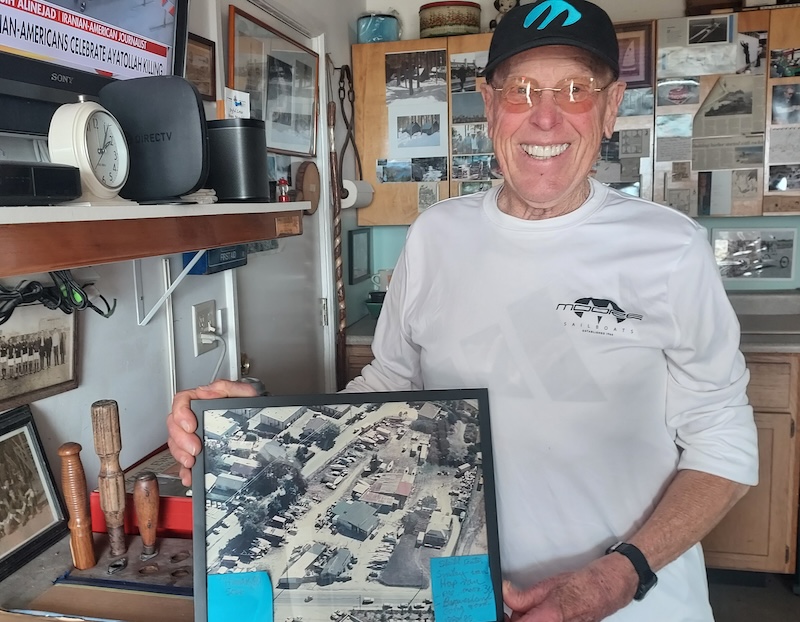
Moore Than Ever Before — Moore 24 50th Nationals
The 50th Moore 24 Nationals will happen September 24–27 in Santa Cruz, and at the time of this writing there were 75 boats registered — nearly half the boats ever made (only 156 Moore 24s were built). This is almost double the 42 boats entered in the 30th Moore 24 Nationals in 2006, at the time the most-attended event in the fleet’s history. How, then, did the 50th become such a big event?
Was This Mystic’s Last Race? — Dismasted In the Mackinac
“I was trimming the main, actively scanning between the telltales, the draft and the knotmeter, and talking to Bob at the helm. A gust blew us over hard, the rig rattled, and then there was a mighty bang! Instantly, the pressure disappeared from the mainsheet, and the boat stood up. The mainsail was in a heap aft of the masthead that was bouncing on the deck and lifelines. The jib, lines and rigging were in the water.”
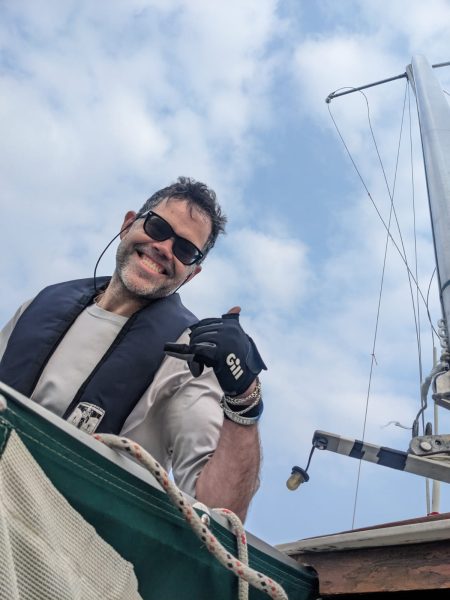
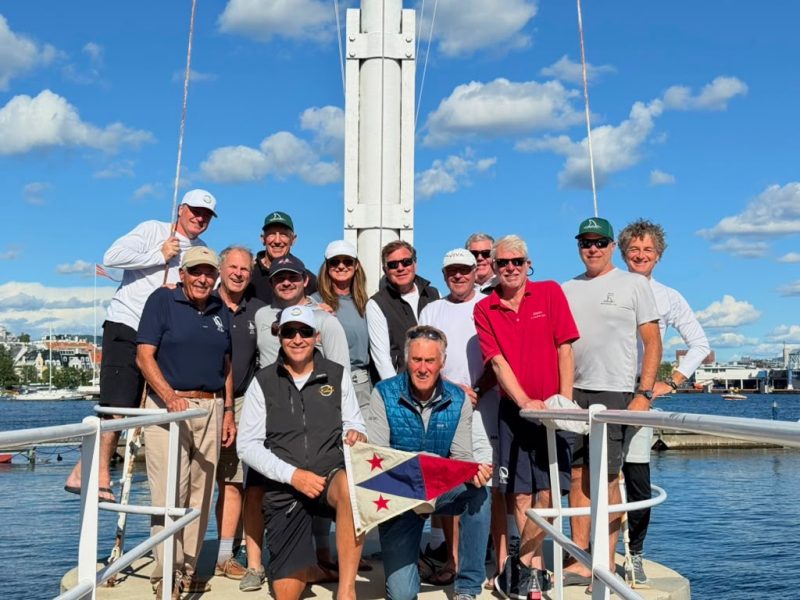
S.F. Knarr Sailors Renew Scandinavian Friendships
The IKC midweek party awards a trophy to the leader halfway through the regatta, and then requires the winning team to chug a bottle of champagne out of the trophy, in an effort to give everyone else a chance.
A quick note: Remember to join the Latitude 38 Fall Baja Ha-Ha Crew List Party on September 10, at Spaulding Marine Center, Sausalito.
Now back to our September issue preview.
In this month’s regular columns:
Letters: A Letter from Jack London; Questioning a Greek Legend’s Seamanship and Decision Making; The Resourceful Sailor’s DIY Winch Maintenance, and the Case for Low Budget; Dismasted Boat Towed to Port in Sausalito; and stacks more readers’ letters.
Sightings: Commodore Tompkins races the Pacific Cup; Unplugged to the Channel Islands; Building a Wooden Boat in Redwood City; Rolex Big Boat Series Preview; Meeting Some of the Baja Ha-Ha Sailors; Sausalito Boat Show.
Max Ebb: “Fight to the Finish”
Racing Sheet: This month’s edition of the Racing Sheet kicks off with Encinal Yacht Club’s Encinal Regatta, traditionally the Second Half Opener. We then stay at EYC for the 2026 Corsair Nationals. Next, we journey up to the Sierra for a recap of Sail Week Tahoe. Then it’s down to Southern California, where a local wins this year’s Governor’s Cup. In closing, we wrap up with two national championships: the International 110s in Tomales Bay, and the Santana 22s in Santa Cruz.
World of Chartering: Our friend Jeff Lo was a golfer, auto buff and landlubber, until he did a charter with some experienced and not-so-experienced friends in the Bahamas. We asked him for his impressions of his first sailing charter.
Changes in Latitudes: With reports this month from Ethos’s adventures in the Med; a look back over 35 years of cruising aboard Mendocino Queen; Dragonfly’s Pacific crossing; and some interesting catch-ups with old friends in Cruise Notes.
Find the latest in sailboats and sailboat gear for sale in Classy Classifieds.
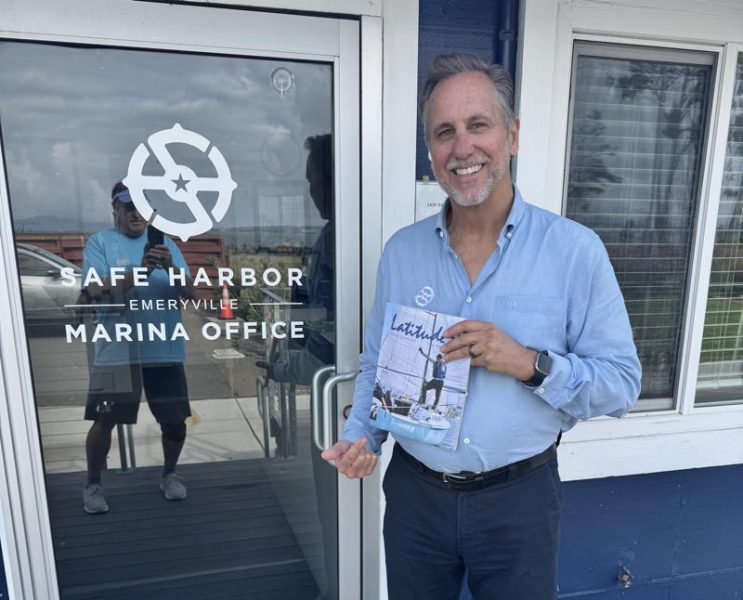
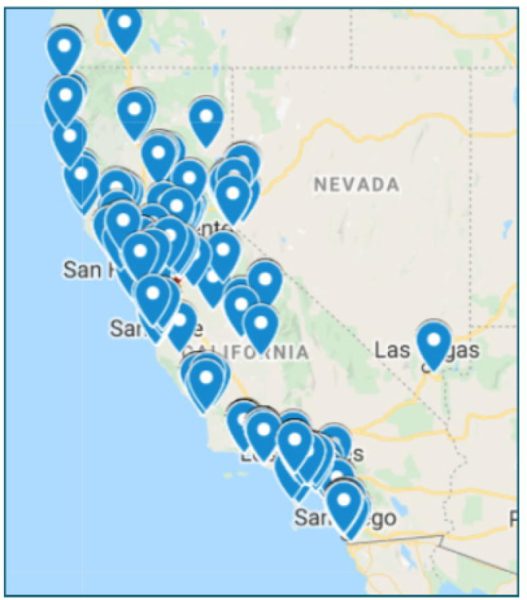
Pick up your copy today at any one of our West Coast distributors.
See the full list and map of locations here.
Commodore Tompkins Sails Home From the Pacific Cup
After finishing first in class in the 2026 Pacific Cup, Commodore Tompkins enjoyed a few weeks aboard Flashgirl in Hawaii before his crew rejoined him for the sail home. Marco Misbach, who sailed with Commodore on the Pacific Cup, sent in a few photos from the return voyage as they made their way north to try to get over the Pacific High.
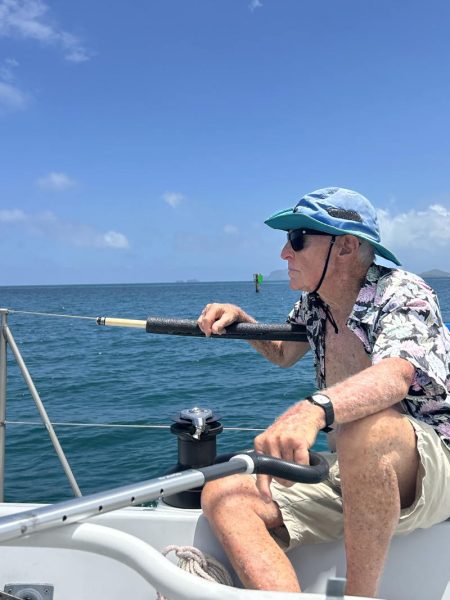
You can read more on Commodore’s Pacific Cup in the current issue, delivered yesterday, where Jonathan Livingston recounts the tale of the privilege of sailing with the 94-year-old legend as they raced across the ocean.
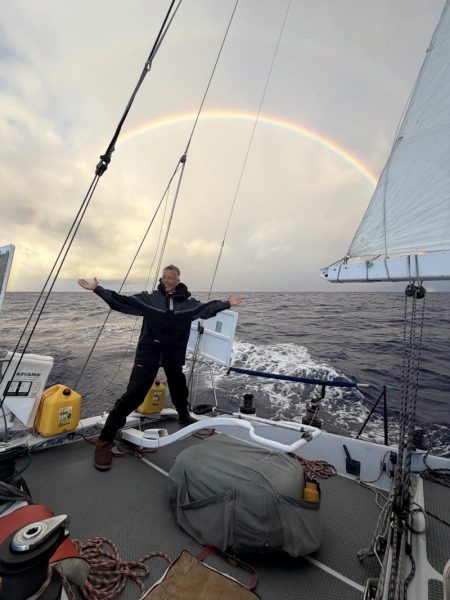
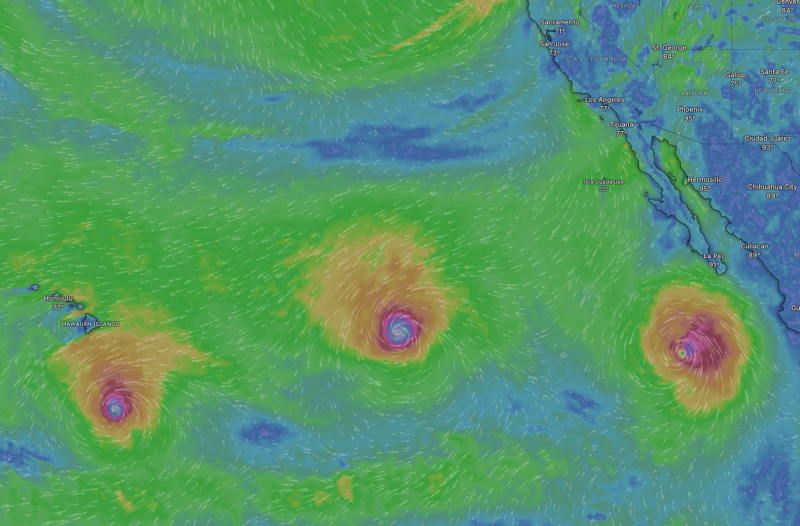
Commodore, Marco and Emily Maker have been sailing north to get over the Pacific High before tacking east toward the Gate. Yesterday they were up at about 38N and 139W, which is a good place to be when you look on Windy and notice hurricanes Lowell and Karina and tropical storm Marie to the south. Looking at Flashgirl’s approximate position, they should be in some northerlies, shifting to westerly for an improving but chillier ride home.
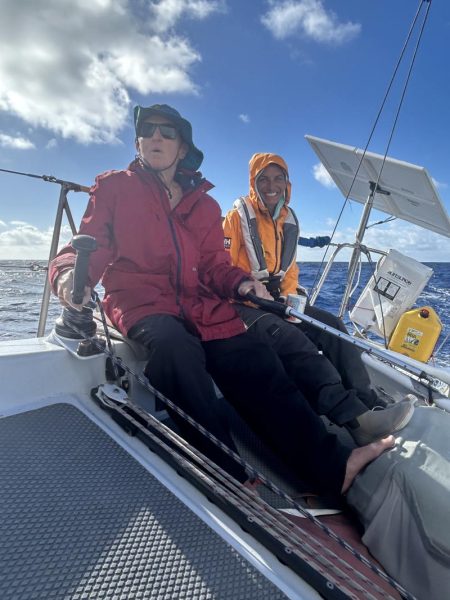
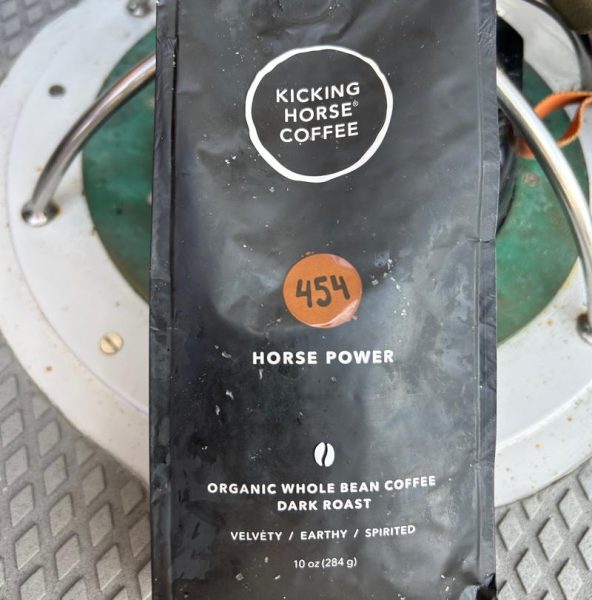
As Marco says, he’s sailing with his youngest friend, Commodore Tompkins, who is standing watch on Flashgirl’s return trip. With just three crew, they are all a bit sleep-deprived, though he describes one of the best watchmates as the Kicking Horse coffee they have on board.
They’re now traveling east with growing speed after having had some 120–130-mile days. They just hit a day’s run of 201 miles in the right direction! They’ve had some autopilot and engine problems but are now hoping they might make it in for the Labor Day weekend, or shortly thereafter.
Look for the red Flashgirl passing through the Gate soon. We’re sure a fresh package of Kicking Horse will be welcome after a good night’s sleep.
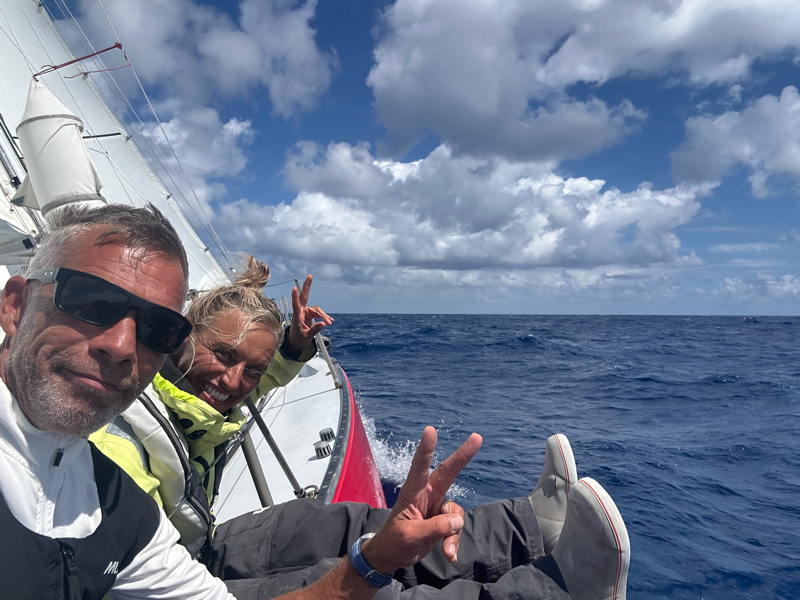
We don’t imagine there are too many 94-year-old sailors out making ocean passages today, though it wouldn’t surprise many people that Commodore Tompkins would be the one adding another 2500 miles to his many hundreds of thousands of offshore sailing miles.
Multihull of the Year 2026: The Moorings 5200
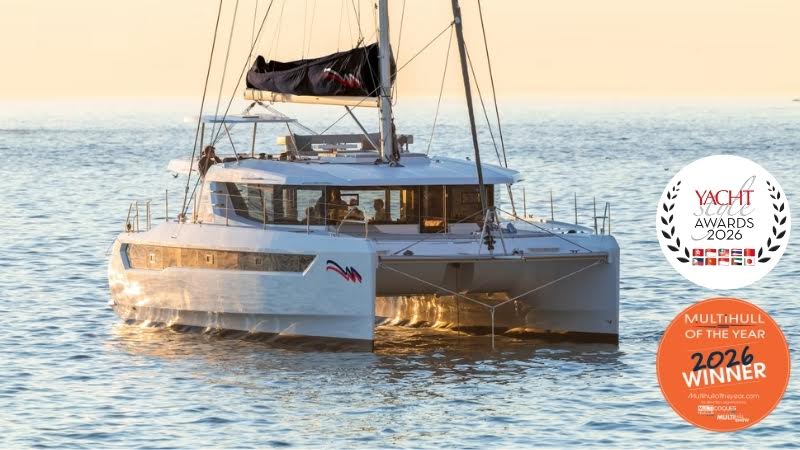
The Moorings 5200 received two prestigious industry awards this year, celebrating the innovation, performance, comfort, and design of the latest sailing catamaran in The Moorings fleet. Available for bareboat charters in 10 destinations worldwide this 5-cabin catamaran is designed for real life at sea.
- Heading South
- West Coast Sailing
- Commentary
- General Sailing
- Cruising
- Latitude 38 Magazine
- Ha-Ha
- Events
Why Sailors Should Try a Cruising Rally: A Baja Ha-Ha FAQ
Those of us who have done the Baja Ha-Ha, and those of us who help make it happen, have a pretty good understanding of what this cruisers’ rally is. But what if you have no idea what the Baja Ha-Ha is?
We’ve put together a list of a few frequently asked questions that we hope will fill in the blanks: a Baja Ha-Ha FAQ. Of course there will always be more questions, more to know, but we hope this helps cover the basics to get you started, and signing up.
What is the Baja Ha-Ha?
It is a 750-mile-long (approximately) cruising rally from San Diego, CA, to Cabo San Lucas, Mexico.
What is a cruising rally?
A cruising rally is when a bunch of boats sail to the same location at approximately the same time. Ha-Ha organizers aim to facilitate a sail in which people can have fun and know that there are others not too far away whom they can meet up with at the beach, or who can help each other if needed.
Is it a race?
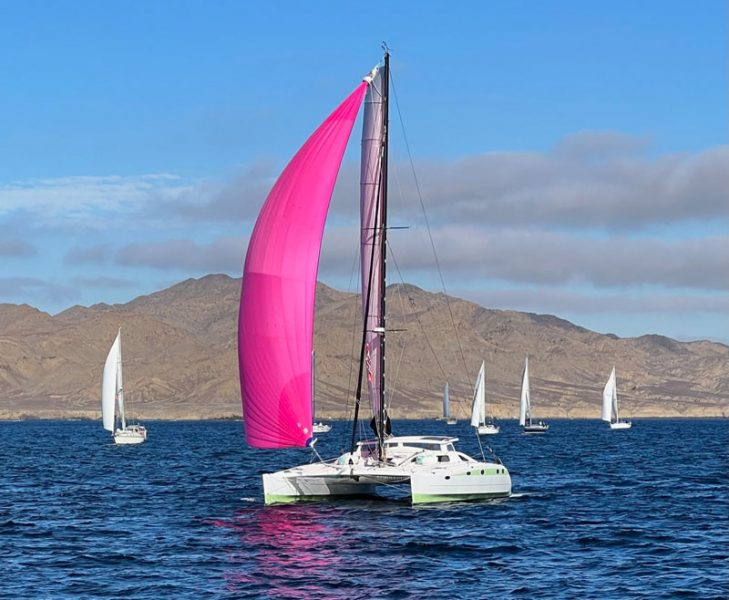
No, it is not a race. While some boats inevitably push hard to arrive earlier than others in their class, most participants are simply looking for a safe, comfortable trip down the coast. Unlike in a race, you may use your engine whenever you choose. You can also go “off-piste,” so to speak, as long as you inform the rally organizers. This means you’re free to stop at anchorages you enjoy and to depart a little early or late.
Do we need to register?
Yes. Ha-Ha participants need to register themselves and their boat.
Does it cost anything?
Yes. The entry fee is a non-refundable $545 per boat before June 1, and $595 after. (However, if you are under 35, or your boat is under 35 feet, we offer a discounted rate of $500 before June 1 and $550 after.) These rates are only about 25% of the cost of similar two-week rallies elsewhere in the US and around the world. 71 boats from 27-ft to 88-ft are currently registered.
What is the deadline?
The deadline is today, September 2, but Newbah Poobah Chuck Skewes has extended the deadline until October 15. Assistant Poobah Patsy Verhoeven adds that anyone who signs up after today will have to pick up their entry packet with burgee in San Diego. Also, if you wait too long to sign up, you may miss getting your immigration paperwork into Mag Bay Outfitters for check-in at Bahia Santa Maria, and you may not get your boat information included in the Baja Ha-Ha event program. For the skipper and first mate to get into the Latitude 38 Crew Party for free you must be entered by September 9.
What do I get for my fees?
The number-one thing you get for your entry fee is the opportunity, not a guarantee, to have a great time on the ocean with a great group of people. Each boat receives the Meet the Fleet roster with fleet bios where you can read up about what boat you are sailing close to, who is aboard, whether they’ve been to Mexico before, and where they are going after the Ha-Ha. This really makes things fun, and isn’t found on any other rally in the world.
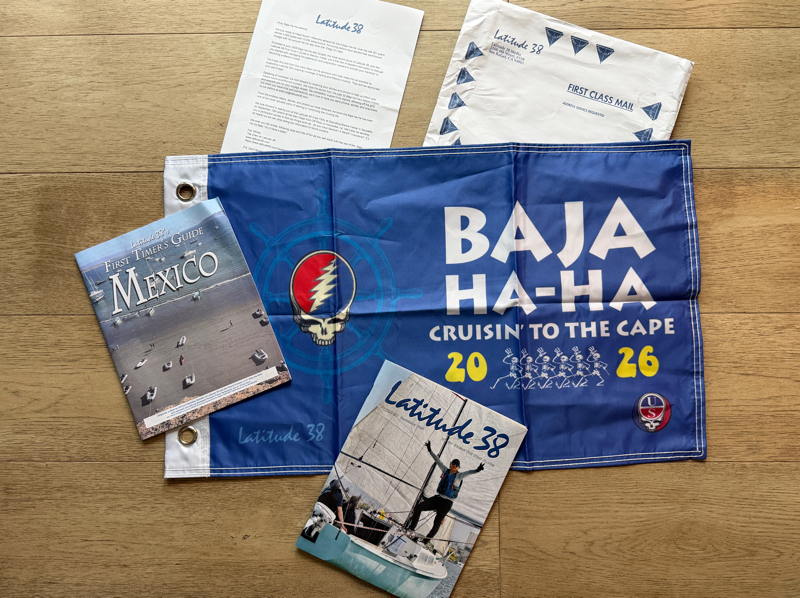
Entrants also get swag bags with things like hats, shirts, sunglasses, frisbees, beach balls, discount flyers and more. Many of these things are also for sale at the Ha-Ha ship’s store. Check out this year’s gear here.
The captain and first mate get free entry into the Latitude 38 Fall Crew Party and Mexico cruising seminar coming September 10 at Spaulding Marine Center in Sausalito. They also get free entry, food and drink at the Costume Kick-Off Party in San Diego.
Everyone gets free entry to the beach parties in Turtle Bay and Bahia Santa Maria and free entry to the legendary Bazeball Game in Turtle Bay.
Are there exact dates?
The Ha-Ha usually runs for 10 days from early November. This year’s launch date is Monday, November 2. The Ha-Ha ends in Cabo San Lucas on November 13, followed by a party and dance, and an awards night on November 14.
The intention is to cruise and enjoy being on the water. But there will be some fun prizes awarded at the end of the rally.
Are boats going down from S.F., or does it all happen in SoCal?
The Baja Ha-Ha (Ha-Ha for short) sets off from San Diego. The participating boats come from all along West Coast USA and Canada. Most meet in San Diego to set sail with the fleet, though some may join the fleet starting from Ensenada.
Can non-boat owners join the Ha-Ha?
Absolutely! If you don’t own a boat, you can look for a boat to join on the Latitude 38 Crew List. You can also attend the Latitude 38 Fall Baja Ha-Ha Crew List Party on September 10 (next week) at Spaulding Marine Center — dozens of skippers will be there and many will be looking for extra crew.
Do the organizers inspect entered boats?
No. It is the responsibility of each owner or skipper to make sure the boat is safely equipped and maintained for adverse offshore conditions.
What is in place for crew or boat emergencies at sea?
All Ha-Ha boats must be capable of long-distance, two-way communication. Check-ins are preferred by email, but SMS text is also acceptable. Acceptable devices include Garmin inReach or inReach Mini, Iridium GO!, satellite phones, Starlink, HF radio with Pactor modem or software, and other satellite communicators such as SPOT X, Bivy Stick, or ZOLEO. Cell phones do not qualify, as they do not work offshore or away from cell-tower coverage.
While sailing conditions during the Ha-Ha are generally benign, you nonetheless must be prepared for the possibility of heavy weather. Weather forecasts will be passed along during the roll call while in port. But remember, a forecast is a prediction, not a guarantee.
How do the boats get back? Are there coordinated return events too, for supporting people sailing back to their home port?
Each boat owner is responsible for making their own way back to their home port. Many Ha-Ha participants use the Ha-Ha as an opportunity to spend time cruising in Mexico, or as a stepping-off point for further sailing adventures. A few boats turn right around to return home, but most stay south for at least a few months or take off for years!
Can powerboats join the event?
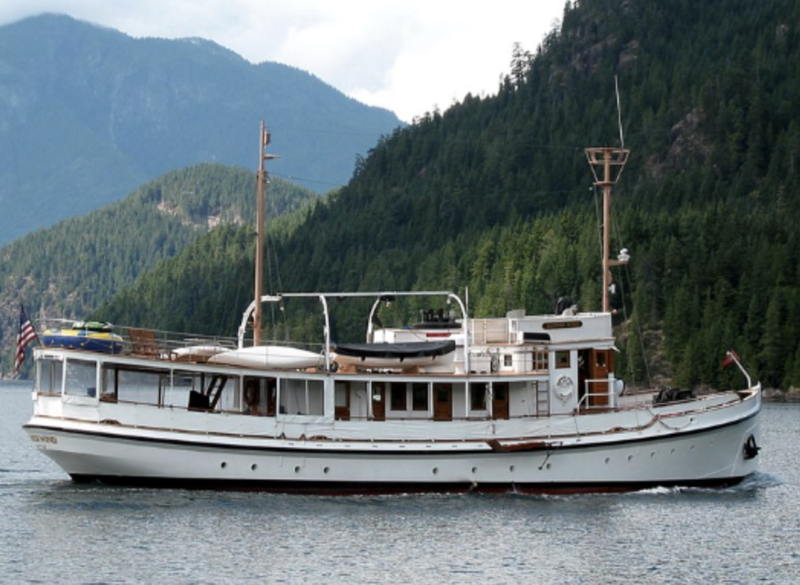
Yes, powerboats are also welcome. They enter in the No Comprende division.
We hope this helps answer those unanswered questions. But if not, here is where you can find more answers: “How To Ha-Ha.”
Also, Patsy Verhoeven, the Assistant Poobah of the Baja Ha-Ha, will be at the Latitude 38 Fall Baja Ha-Ha Crew List Party on Thursday September 10, at Spaulding Marine Center. If you have questions, Patsy, who has done 19 Ha-Ha’s and is based out of La Paz, has the answers. The Mexico Cruising Seminar begins at 4 p.m. and the party starts at 6:00. It’s free to all 2026 Ha-Ha skippers and first mates. Register here for free admission and use the promo code HAHA26.
Remember, the official date for last registrations for this year’s Baja Ha-Ha is September 2. Yes, today! Don’t worry, we “know a guy.” You can still sign up for the 32nd Baja Ha-Ha until October 15. However, anyone who signs up after September 2 will have to pick up their entry packet — including their burgee — in San Diego. As we write, there’s a great fleet of 71 boats signed up! We’ll see them, and you, in San Diego.
Note: In this month’s Latitude 38, four-time Baja Ha-Ha vet Mark LaFevers shares some of the things he’s learned over his Ha-Ha seasons. Mark’s signed up for his fifth Ha-Ha this year; he’s found the appeal and keeps coming back for more!
Note: If you’re already signed up for this year’s Ha-Ha. Look out for the “BAJA HA-HA FLEET NEWSLETTER #1” in your email inbox. It contains important and useful updates.
Santa Barbara Moves Ahead With Paid Moorings at Seasonal Anchorage
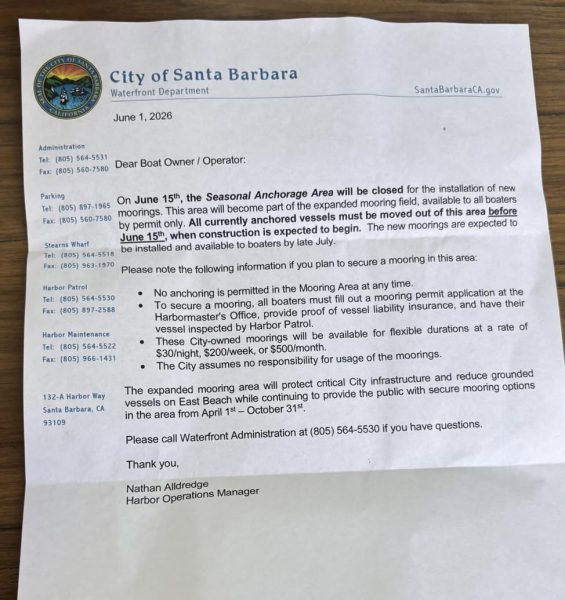
Santa Barbara boaters were told in June to clear out of the city’s Seasonal Anchorage to make way for a new field of paid moorings.
The change had been under consideration for two to three years following concerns from the city’s Public Works Department about anchoring near underwater infrastructure. But the June 1 notice made the city’s plans concrete: Boats had to leave by June 15, and roughly 20 city-owned moorings were expected to take their place.
But the conversion hit a snag. Environmental surveys found eelgrass in the proposed mooring field, delaying installation while the city redesigns the layout. Boats are currently allowed to drop the hook without a fee, with the moorings now expected to be installed this fall. Once installed, the moorings will cost $30 a night, $200 a week or $500 a month.
Though Santa Barbara will still maintain a large anchorage, part of which is free year round, another piece of the California coast is set to become a little more regulated and considerably more expensive.
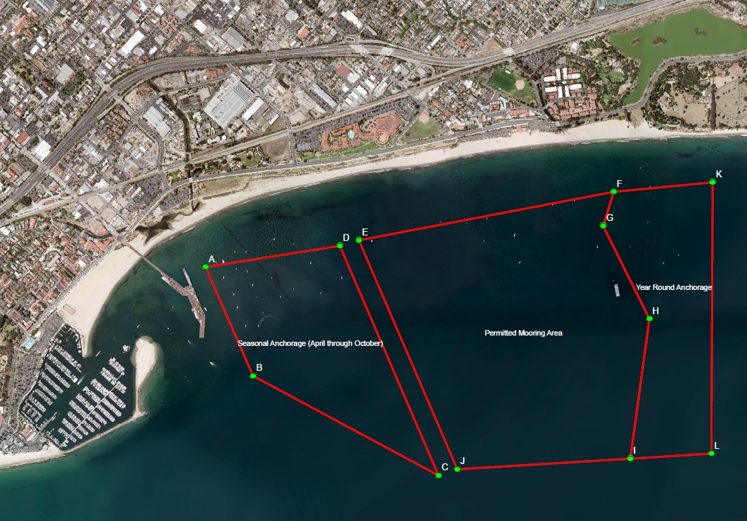
The waters east of Stearns Wharf include several areas where boats can anchor or moor. Closest to the wharf is the Seasonal Anchorage, where boats have traditionally been allowed to anchor for free from April through October. Farther east is an existing permitted mooring field, followed by the year-round anchorage commonly known as Fools Anchorage, where boats can still drop the hook for free. The city’s plan would effectively extend the mooring field into the Seasonal Anchorage, replacing free anchoring there with paid city-owned spaces.
The city said it does not track use of the Seasonal Anchorage, but Santa Barbara Waterfront director and harbormaster Mike Wiltshire estimated that roughly a dozen or more boats are anchored there on average. “It is a mix of transient and local/liveaboard, but the majority is likely liveaboard and/or unattended vessels,” Wiltshire told Latitude 38.
As of January 1, Santa Barbara began requiring liability insurance for vessels in city waters. Wiltshire said the requirement has already helped the city recover cleanup costs after two or three vessels came ashore earlier this year. “Those vessels were insured, and we successfully received insurance claims from them,” he said. (A staunch opponent of the city’s plan to install moorings told Latitude that requiring insurance was “probably a good idea.”)
Wiltshire said most vessels that break free and wash ashore on East Beach originate in the Year-Round Anchorage during winter storms; vessels that have gone aground are usually anchored rather than moored, he said.
In 2023, Latitude reported that Public Works raised concerns about the potential for anchors to damage the desalination intake line and wastewater outfall pipe beneath the area. The city had installed a large buoy marking the infrastructure and directing boaters not to anchor nearby, and was still looking for ways to protect the infrastructure while preserving free anchoring.
Public Works has since asked Waterfront to prohibit anchoring in the Seasonal Anchorage altogether, citing past damage to the underwater infrastructure that it attributed to anchors — though no specific anchor strike has been confirmed.
“They had already spent a pretty significant amount of money with damage to their undersea infrastructure that they assumed or thought was from anchors dragging over it,” Wiltshire told Latitude. “I don’t know if that’s actually the case.” Public Works later told Waterfront that the damage was “consistent with anchor strikes,” he said.
Public Works nevertheless considers the risk significant. Wiltshire said the department is concerned about not only repair costs and downtime, but the potential for wastewater leaks or spills.
Wiltshire said he sees the new moorings as a compromise. “It would be unfortunate to have no use of the space. In my opinion, having mooring balls is better than no access at all,” he said.
The installation is expected to cost $250,000 to $300,000, with annual inspections estimated at another $15,000 to $20,000.
“I have my doubts that it will be profitable,” Wiltshire said. “A success to me would be if there’s enough demand and interest in it [that] it can essentially sustain itself in the long run, where we generate enough revenue to pay for maintenance and upkeep of the mooring balls.”
Wiltshire said the conversion has gone through a two- to three-year permitting and public process, including review by the city’s Harbor Commission and approvals from the California Coastal Commission and US Army Corps of Engineers.
The plan has drawn opposition from some boaters, who have questioned the need to eliminate free anchoring in the Seasonal Anchorage, the cost of the project and the city’s justification for the change. At least one opponent has also challenged the city’s permitting and environmental review, arguing that converting a longstanding public anchorage into a paid mooring field represents a more significant change in use than city filings acknowledge, and questioning whether the project received sufficient review under the California Environmental Quality Act.
The city maintains that it has received the necessary approvals. Latitude has not independently evaluated the project’s compliance with CEQA and did not contact the California Coastal Commission for this story.
From Latitude’s Northern California perspective, it’s worth noting that Santa Barbara will still have something that is increasingly rare on the California coast: a large and partially free year-round anchorage. Replacing a historic Seasonal Anchorage with moorings costing as much as $500 a month, however, is no small change.
Whatever the merits of the city’s compromise, the Seasonal Anchorage is set to become a fundamentally different place.
An Incredibly Close C420 Pacific Coast Championship
The Club 420 is perhaps the most popular doublehanded dinghy for junior sailors, with many generations of the country’s best junior sailors competing in the class. On August 29 and 30, the San Francisco Yacht Club (SFYC) hosted the class’s 2026 Pacific Coast Championship.
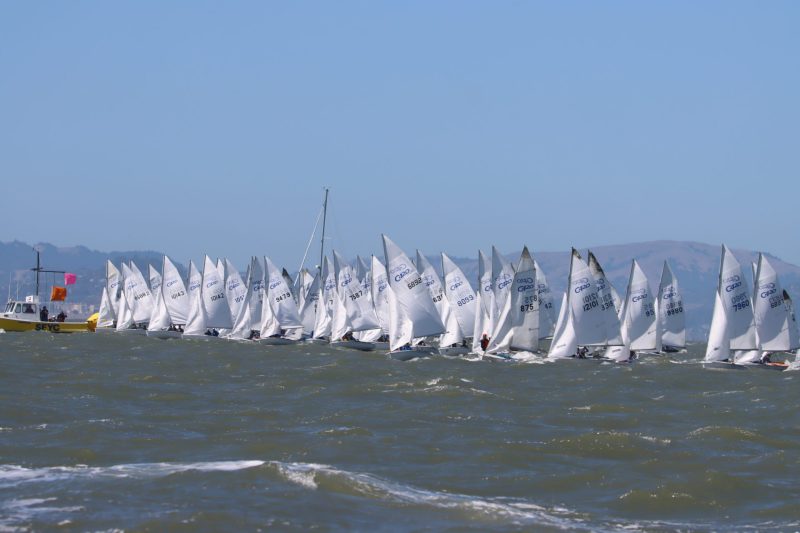
Of the 61 teams registered from up and down the West Coast, 58 competed in at least one race in breezy conditions on the Berkeley Circle. The regatta was eventually won by a duo from San Diego Yacht Club (SDYC): skipper Sean Kaseburg and his crew Kylie Peterson.
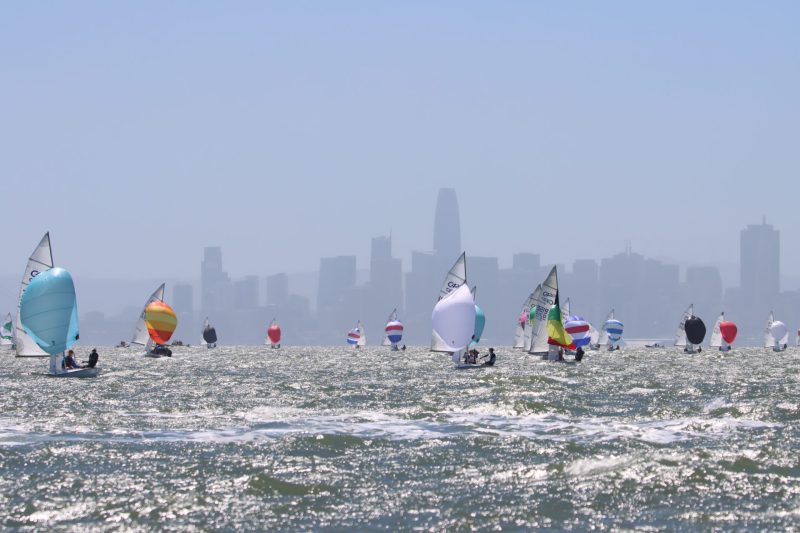
The SoCal duo recorded a net total of just 12 points. (Each boat was allowed one drop from six races.) After finishing 18th in the first race of the event — a score that would become their drop — the duo never finished worse than fourth in races two through six.
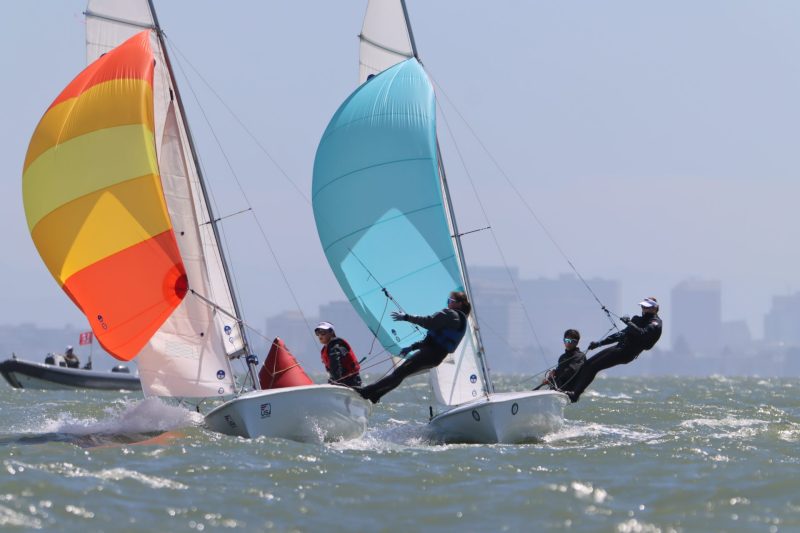
After a scoreline of three-two-three-four in races two through five, Kaseburg and Peterson punctuated the Pacific Coast Championship with a bullet in the final race of the event.
It was incredibly tight racing at the top. The SDYC duo needed that bullet, as they were just one point ahead of the second-place duo of Carter Newhauser and Luca Mejia-Young from Peninsula Youth Sailing Foundation (PYSF). Newhauser and Mejia-Young would have won on total points. They won three of the first four races, and never finished worse than seventh. In the end, the difference was keeping a sixth-place finish, while Kaseburg and Peterson kept nothing worse than a fourth.
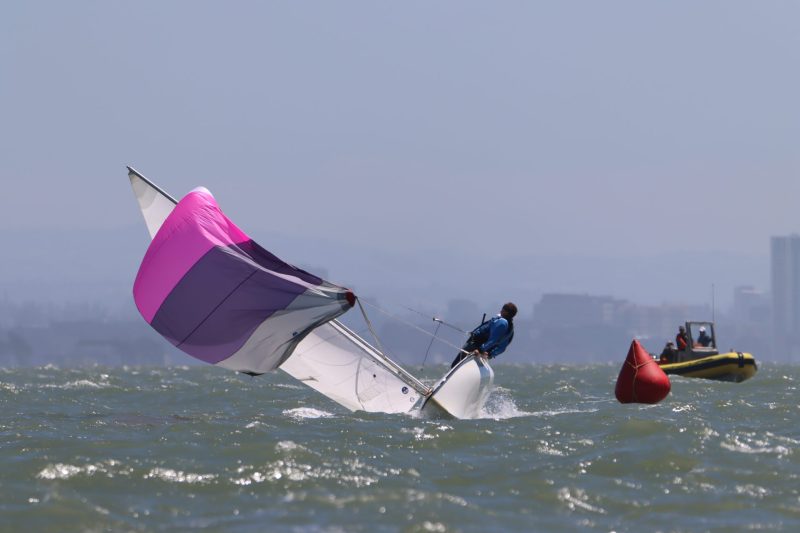
The podium was rounded out by Otto Wehner and Benjamin Benahmed, who were racing under three burgees: Alamitos Bay Yacht Club, Bahia Corinthian Yacht Club and Long Beach Yacht Club. Wehner and Benahmed were just as close to winning, as they finished with a net total of 14 points, meaning that just two points separated first from third. The SoCal duo had won races three and five, but were undone by a 36th-place finish (their drop) in the final race that forced them to keep a fifth.
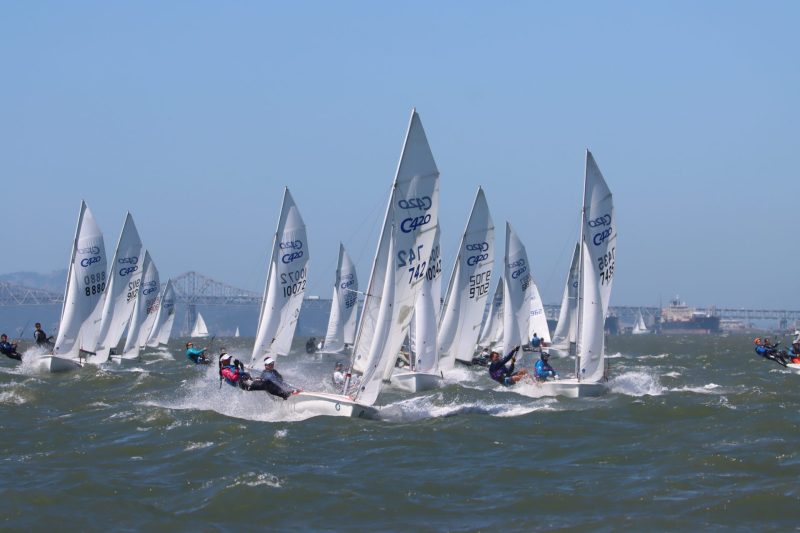
When the scores are so tight, there is no margin for error. The future of sailing on the West Coast appears to be bright.
Find the full scores from the 2026 C420 Pacific Coast Championship here.
Westwind Yacht Management — Washing, Waxing and Varnishing
Westwind Yacht Management: Premiere Yacht & Fleet services for the San Francisco Bay Area.