
Eight Bells — Sailor Ted Turner Passes at Age 87
We have great memories of the swashbuckling, larger-than-life character Ted Turner, who left his mark on sailing and so many other aspects of our lives. Turner Enterprises announced that the philanthropist and environmentalist died peacefully this morning, surrounded by his family.
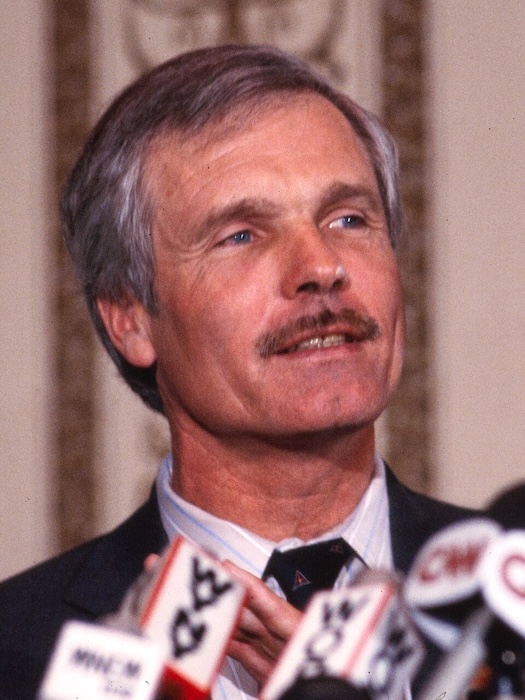
We remember hearing him speak at the Coast Guard Academy in New London, CT, in the early ’70s, his winning the America’s Cup with Gary Jobson as tactician aboard Courageous in 1977, and his winning the tragic 1979 Fastnet race aboard Tenacious.

Yes, he went on to just a few other noteworthy things in life, but it’s the sailor we remember most. The rest of his “Time’s-1991-Man-of-the-Year” life has been and will be written elsewhere.
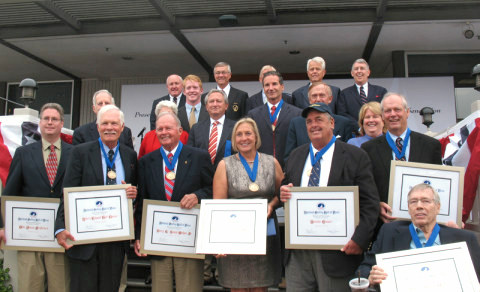
So, without writing all the stories of his epic life, we wanted to ask Latitude 38 readers, “What are your memories of the sailor, Ted Turner?” The America’s Cup? Courageous? Tenacious? Anything else?
Share your memories in our comments below.
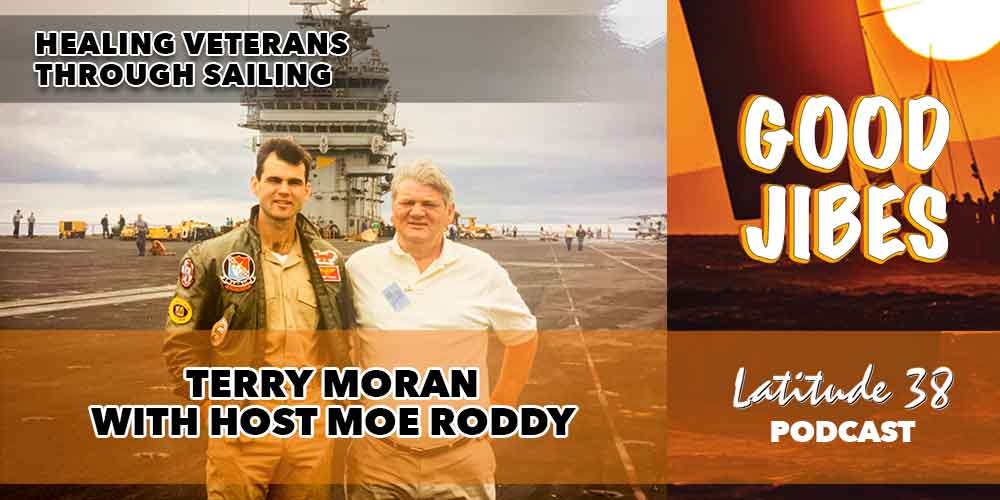
Good Jibes #242: Terry Moran on Healing Veterans Through Sailing, With Host Moe Roddy
Welcome back to Latitude 38’s sailing podcast Good Jibes, where we bring you the world of sailing through the eyes of the West Coast sailor. This week we chat with Terry Moran — a sailor and Navy veteran who flew F-14 Tomcats and accumulated nearly 300 aircraft carrier landings. Terry now supports veterans as the founder and chairman of VetsBoats. Tune in as Terry chats with Good Jibes host Moe Roddy about restoring health, well-being and community for military veterans and their families through sailing.
Hear why the sea is in Terry’s blood, the similarities between flying planes and captaining boats, what it’s like landing planes on an aircraft carrier, why the sailing community is so impactful to veterans, and the value of teamwork on and off the water.
Here’s a small sample of what you will hear in this episode:
- How watching his father fight for PTSD recognition after Vietnam drew Terry into veteran healing work
- Why Terry chose the Naval Academy and aviation over following his father to sea
- How the program accommodates veterans with disabilities, including wheelchair users and blind sailors
- How VetsBoats (originally Wooden Boats for Veterans) came together
- How carrier aviation made Terry a better sailor through meticulous preparation and responding positively to setbacks
Listen to the episode on Apple Podcasts, Spotify, and your other favorite podcast spots — follow and leave a 5-star review if you’re feeling the Good Jibes!
Learn more at VetsBoats.org.
Check out the episode and show notes for much more detail.
Support your company, West Coast sailing and Latitude 38 when you Sponsor an Episode of Good Jibes!
Register for San Francisco Yacht Club’s Elite Fleet Regatta
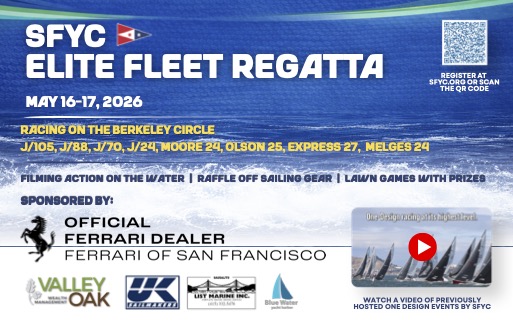
If you’re part of one of the Bay’s many one-design racing fleets invited to compete, the San Francisco Yacht Club’s Elite Fleet Regatta (May 16–17) is not to be missed.
With the support of its event sponsors, SFYC is pulling out all the stops this year. The regatta will feature two racecourses on the Berkeley Circle to accommodate an expanded lineup of classes, along with professional on-the-water videography on Saturday. Shoreside, competitors can enjoy lawn games, a sailing gear raffle during the Saturday social, and a highlight video showcased at Sunday’s awards. As always, the regatta will be complemented by hosted food and beverages after racing, set against the warm climate and welcoming community over at SFYC.
This year’s Elite Fleet Regatta is serving as the Pacific Coast Championship for the Moore 24 fleet, so we expect to see a large and competitive contingent of the mighty Moore sailors trading tacks and jibes over the race weekend.
As is typical for SFYC weekend regattas, guest docking will be available from Friday through Monday on a first-come, first-served basis. In recognition of ongoing access challenges due to silting at the San Francisco West Harbor marina entrance, the club is extending the guest-docking window: May 11–19 for competitors with vessels based there. Those interested in requesting extended berthing should contact SFYC Race Office administrator Helen Galli at [email protected] in advance to ensure availability.
In the meantime, check out the event promo video above, then head over to SFYC.org to register before the May 13 late fee takes effect.
The Upwind Newport to Ensenada Race
Between deliveries, skipper Andy Schwenk slipped in another race on Dan Merino’s Express 37 Juno in the upwind sail down to Ensenada and sent us his take on this year’s race.
Anytime the phone rings and the voice on the other end is asking you if you would like to sail L.A. to Mexico, the sailor inside you has to be saying, “Damn straight!”
Joe Negron and the Newport Ocean Sailing Association, along with the City of Newport Beach and the Gobierno de Ensenada, pulled together to stage the 78th annual Newport to Ensenada Yacht Race. April 24–26 this year saw vessels from cruising boats, with a given time allowance for motoring only and planning to go as far as San Diego, to fully turbo-rocket sleds vying for finish line honors 90 miles over the horizon.
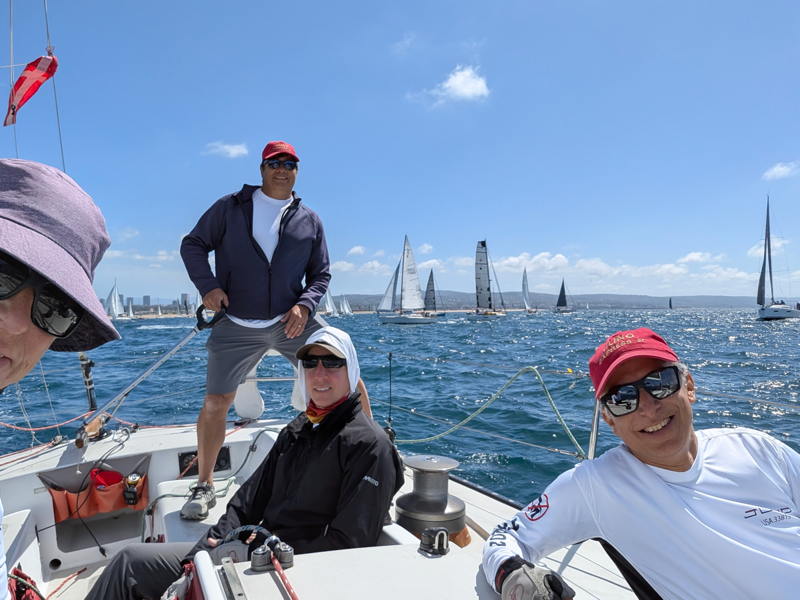
Two starting lines are set just offshore near the piers, and it gets busy in a hurry. Generally the slower boats start first, with inhalations from the lead-bellied carbon compensators, while the fleet with unobtanium sails dive in and out trying to “ping” the line ends for sophisticated navigational software purring belowdecks. The starts roll through on the inshore and offshore lines, with the RC in the center looking concerned and trying to get skinny as the racers pour through on a 12-knot southwesterly.
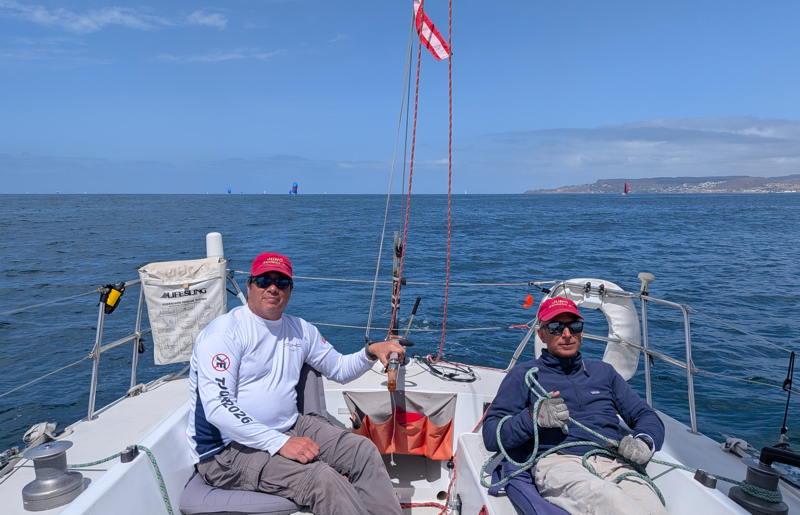
Wait a minute — the tour brochure says Mexico is downwind.… Well, not right then it wasn’t. A westerly shift was forecast by some sources, so early boats tended to head offshore to find it. A dead-on-the-wind beat found most folks wearing foulies and wondering if tacking left would be quicker.
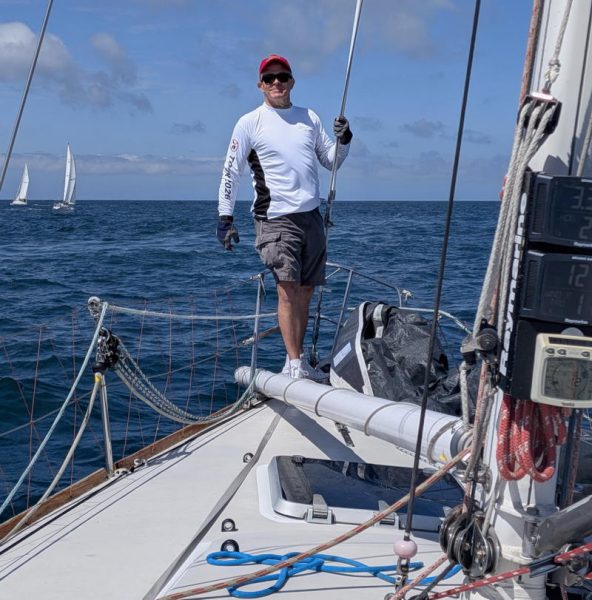
The bimini- and dodger-festooned crowd with the pretty white sails played blockers and screens for the hard-core racer types playing through, fully hiked out, while yacht rock drifted across the water and cocktails were served and spilled by the more civilized yachties.
Within a few hours, everyone was on starboard tack. Spinnakers were deployed and doused. Staysails were set and stowed. Anything to get this vessel to do more than hull speed on a reach. The wind was just a bit too much, say an average of 16 knots true with a few stinger puffs rolling through, for a conventional kite to be held on a starboard beam reach. Some vessels learned and relearned this lesson as the fleet made good time in a southerly direction.
Night fell, and sundowners were served before the moonrisers could be concocted; if you had a spinnaker, you had it flying. The wind tapered off, and optimistic ETAs and dreams of making last call at Carlos’n Charlie’s were put to bed.
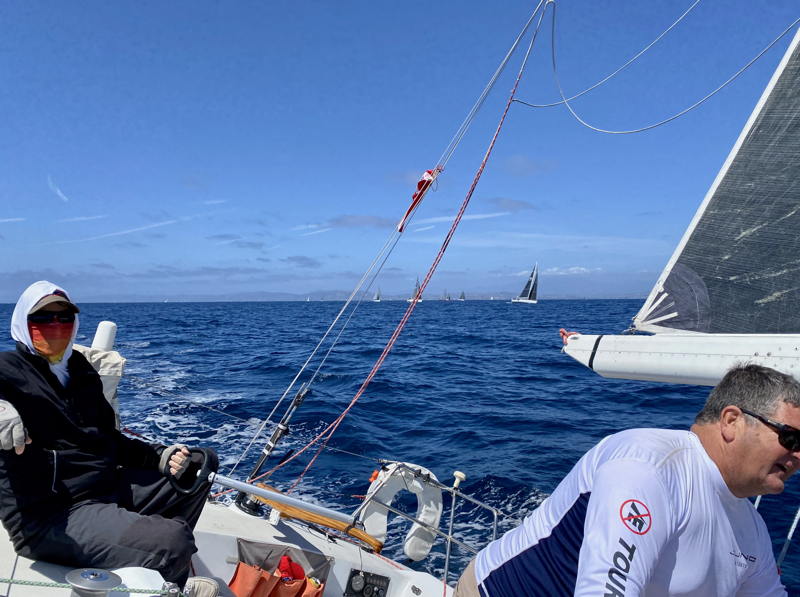
And it got lighter, quite a bit lighter. If you weren’t across the finish line by daybreak you had some decisions to make:
Fire up the iron genny and go have some fun in Ensenada and say, “There is always next year.”
Swap between the light kite and the windseeker and your lightest headsail and do it all again … and again.
Sheet the mainsail hard to the center, point the boat where you want it to go, and see if the roll will paddle it forward. Or hey, we could all just sit and enjoy the sunrise. Oh, like that’s gonna happen?
Eventually, the sun came up, the wind came up, the mariachis did their thing, and all was well in a sailor’s world again.
This is just a taste of what the world is like on the fun side of the wall. The Mexicans could teach any culture how to throw a fiesta and put a smile on an old salt’s face.
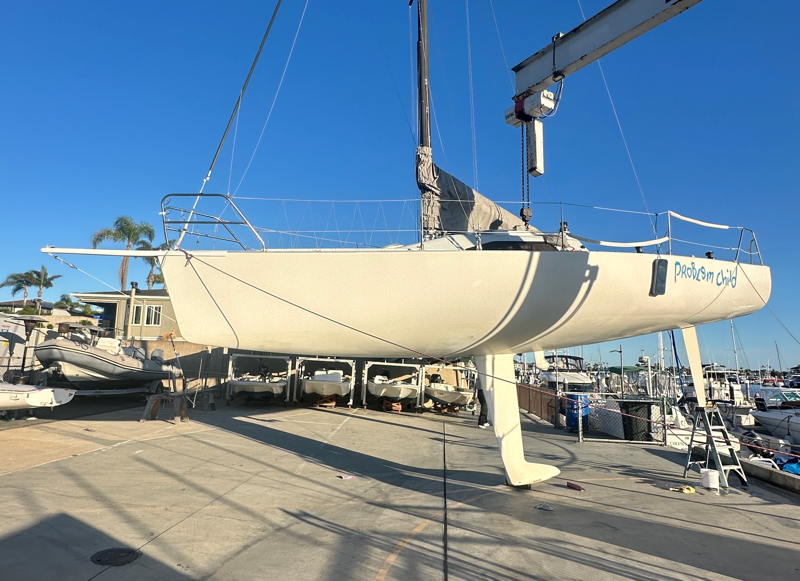
For some folks this race represents a family tradition, and each race entrant is issued another burgee to fly from the spreader. Some vessels will need to get taller rigs or more spreaders to accommodate the swag. Other folks just turn and burn and do their own thing and are back in America before it is even great again.
Whatever way you choose to compete and return, the answer to that aforementioned phone call is always a hearty, “Aye, captain; what bottle can I bring to fill out the captain’s locker?”
Andy Schwenk is a busy surveyor and delivery skipper. He wrote this while bashing north on a delivery to San Francisco after a gorgeous start in La Paz.
Where Are Baja Ha-Ha 2025 Cruisers Now?
Registration is open for the 32nd annual Baja Ha-Ha. While some of last year’s fleet returned home shortly after the rally, most of the boats that headed south last fall have been cruising the coast of Mexico all season. They’ve cruised the Sea of Cortez, sailed the Banderas Bay Regatta, or done Sailfest in Zuhuatanejo. Now some, including the Hylas 63 Malilia, are off to the South Pacific with the Pacific Puddle Jump.
Malilia — Hylas 63
Nick Green and Franziska Moritz
San Pedro/England
For as long as I can remember, travel has been woven into the fabric of my life. From Europe to Asia, North America to Latin America, I’ve always believed that life rewards those who work hard, possess a bit of acumen, and embrace luck — which is often the byproduct of relentless effort.
This philosophy has guided me through a lifetime of experiences, culminating in the greatest adventure yet: sailing around the world with my family.
Our journey began not with grand plans, but with a shared dream between Fran and me — a love for the water and a yearning to explore the world at a pace that allows true connection with our surroundings. Sailing offers that unique rhythm: 6 to 8 knots, perfect to witness the unfolding beauty rather than just skim past it.
Starting from Ontario’s lakes, where winter’s grip was harshest on Fran, we honed our skills through chartered trips in the Caribbean and crewing on smaller boats. The jargon of sailing — port, starboard, mainstay — became part of our daily language, blending humorously with Fran’s German-English mix. This new lexicon was more than nautical; it became a metaphor for navigating life’s complexities together.
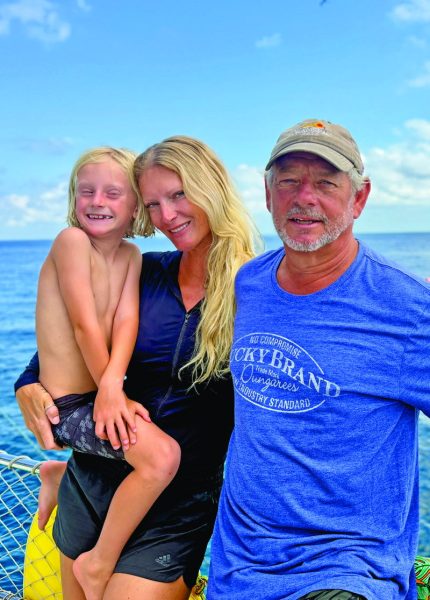
We bought Malilia six years ago. Between trips along the US East Coast, the Bahamas, sailing to Catalina Island over long weekends, and an attempt to sail to Hawaii in the 2023 Transpac (a story better shared over a cold beverage in person), we got to learn Malilia inside out, and made her our full-time home.
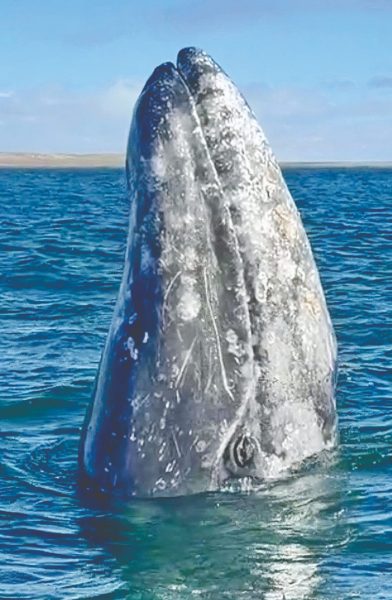
Our journey started with the Baja Ha-Ha in San Diego last November. And since then, into the Sea of Cortez, a region rich in natural wonders and cultural history. We anchored in bays like Los Frailes and Bahia de Los Muertos, where crystal-clear waters revealed vibrant marine life and serene beaches offered respite. One unforgettable morning, whales sang beneath our hull — a hauntingly beautiful alarm clock that reminded us of nature’s profound presence.
Continue reading in the May issue which you can also pick up here.
And, if you’re still out cruising from a prior Ha-Ha, send us an update on where you are now to [email protected].

Open House at Oakland Yacht Club!