

The Upwind Newport to Ensenada Race
Between deliveries, skipper Andy Schwenk slipped in another race on Dan Merino’s Express 37 Juno in the upwind sail down to Ensenada and sent us his take on this year’s race.
Anytime the phone rings and the voice on the other end is asking you if you would like to sail L.A. to Mexico, the sailor inside you has to be saying, “Damn straight!”
Joe Negron and the Newport Ocean Sailing Association, along with the City of Newport Beach and the Gobierno de Ensenada, pulled together to stage the 78th annual Newport to Ensenada Yacht Race. April 24–26 this year saw vessels from cruising boats, with a given time allowance for motoring only and planning to go as far as San Diego, to fully turbo-rocket sleds vying for finish line honors 90 miles over the horizon.
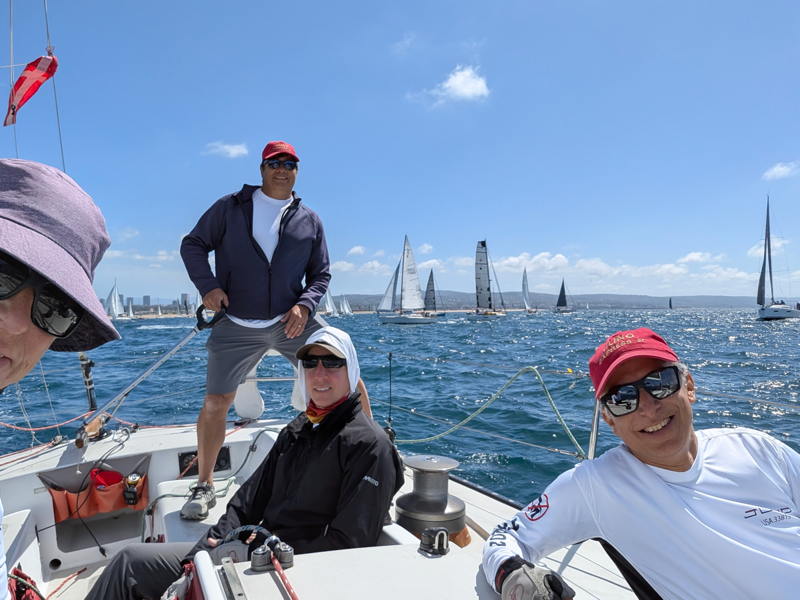
Two starting lines are set just offshore near the piers, and it gets busy in a hurry. Generally the slower boats start first, with inhalations from the lead-bellied carbon compensators, while the fleet with unobtanium sails dive in and out trying to “ping” the line ends for sophisticated navigational software purring belowdecks. The starts roll through on the inshore and offshore lines, with the RC in the center looking concerned and trying to get skinny as the racers pour through on a 12-knot southwesterly.
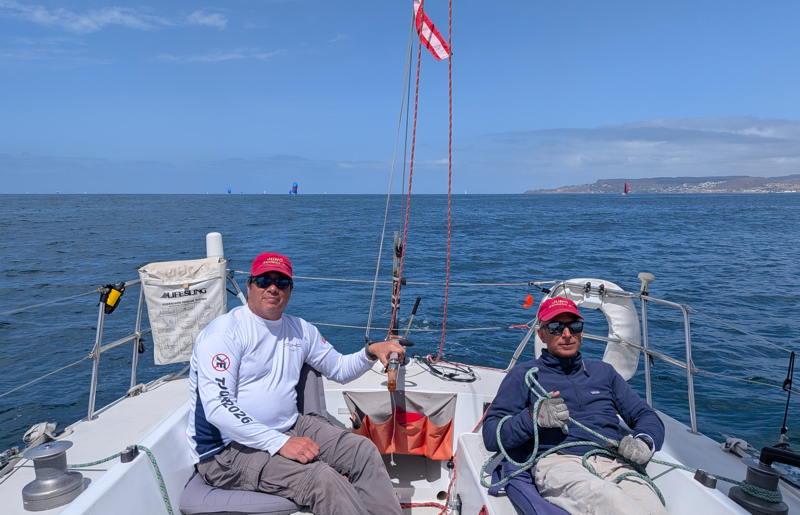
Wait a minute — the tour brochure says Mexico is downwind.… Well, not right then it wasn’t. A westerly shift was forecast by some sources, so early boats tended to head offshore to find it. A dead-on-the-wind beat found most folks wearing foulies and wondering if tacking left would be quicker.
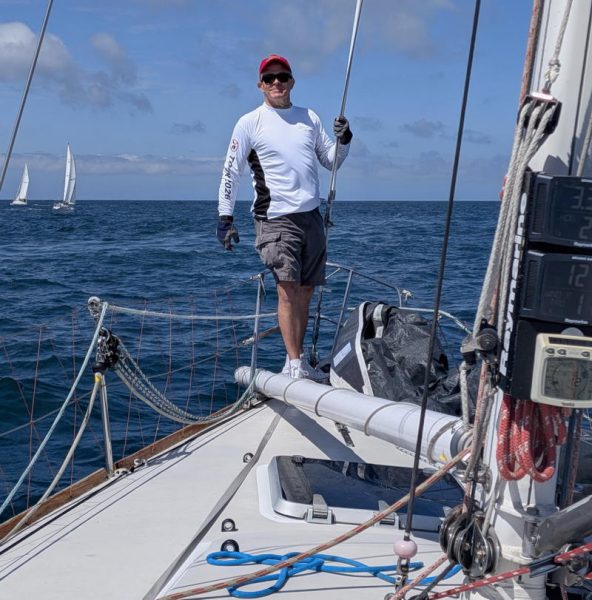
The bimini- and dodger-festooned crowd with the pretty white sails played blockers and screens for the hard-core racer types playing through, fully hiked out, while yacht rock drifted across the water and cocktails were served and spilled by the more civilized yachties.
Within a few hours, everyone was on starboard tack. Spinnakers were deployed and doused. Staysails were set and stowed. Anything to get this vessel to do more than hull speed on a reach. The wind was just a bit too much, say an average of 16 knots true with a few stinger puffs rolling through, for a conventional kite to be held on a starboard beam reach. Some vessels learned and relearned this lesson as the fleet made good time in a southerly direction.
Night fell, and sundowners were served before the moonrisers could be concocted; if you had a spinnaker, you had it flying. The wind tapered off, and optimistic ETAs and dreams of making last call at Carlos’n Charlie’s were put to bed.
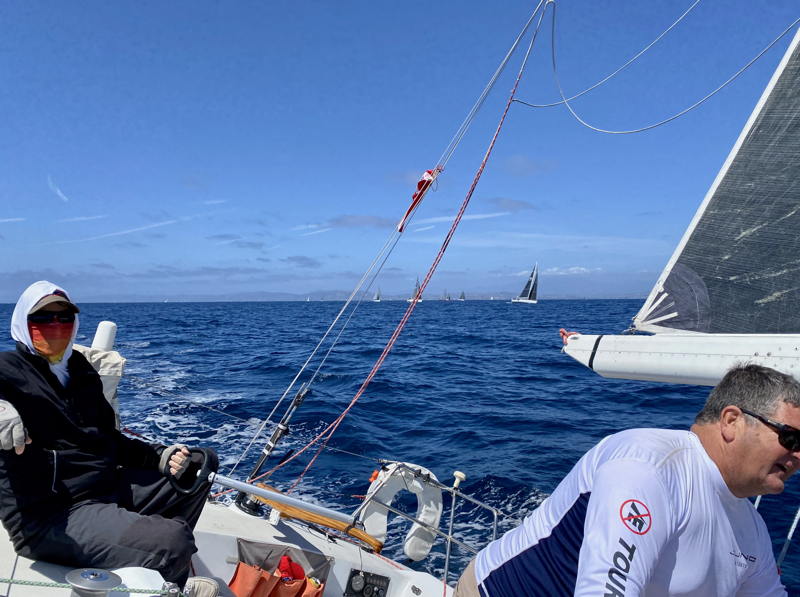
And it got lighter, quite a bit lighter. If you weren’t across the finish line by daybreak you had some decisions to make:
Fire up the iron genny and go have some fun in Ensenada and say, “There is always next year.”
Swap between the light kite and the windseeker and your lightest headsail and do it all again … and again.
Sheet the mainsail hard to the center, point the boat where you want it to go, and see if the roll will paddle it forward. Or hey, we could all just sit and enjoy the sunrise. Oh, like that’s gonna happen?
Eventually, the sun came up, the wind came up, the mariachis did their thing, and all was well in a sailor’s world again.
This is just a taste of what the world is like on the fun side of the wall. The Mexicans could teach any culture how to throw a fiesta and put a smile on an old salt’s face.
For some folks this race represents a family tradition, and each race entrant is issued another burgee to fly from the spreader. Some vessels will need to get taller rigs or more spreaders to accommodate the swag. Other folks just turn and burn and do their own thing and are back in America before it is even great again.
Whatever way you choose to compete and return, the answer to that aforementioned phone call is always a hearty, “Aye, captain; what bottle can I bring to fill out the captain’s locker?”
Andy Schwenk is a busy surveyor and delivery skipper. He wrote this while bashing north on a delivery to San Francisco after a gorgeous start in La Paz.