

Episode #242: Terry Moran on Healing Veterans through Sailing, With Host Moe Roddy
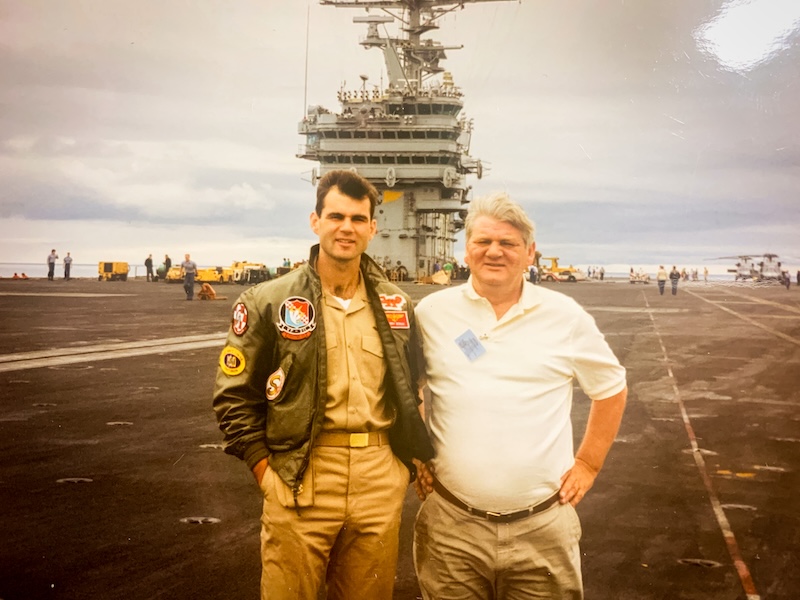
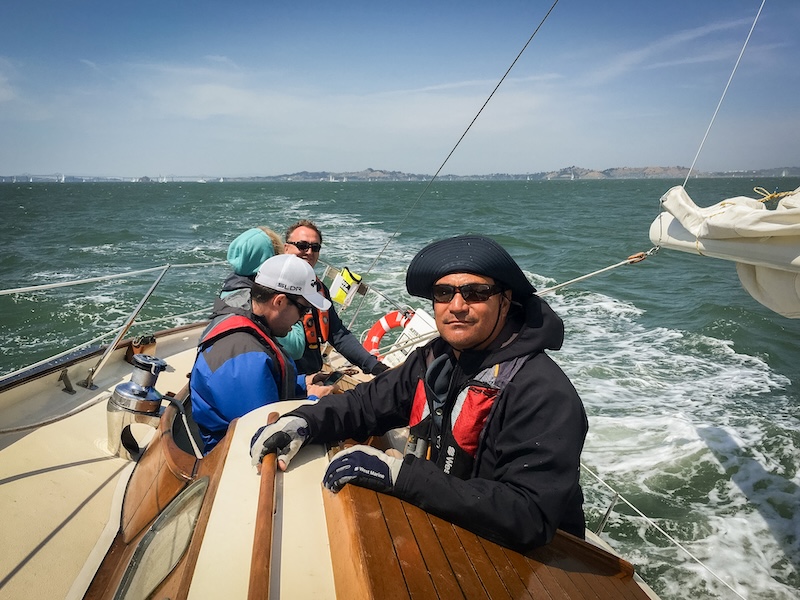
Welcome back to Latitude 38’s podcast, Good Jibes, where we bring you the world of sailing through the eyes of the West Coast Sailor. This week we chat with Terry Moran — a sailor and Navy veteran who flew F-14 Tomcats and accumulated nearly 300 aircraft carrier landings. Terry now supports veterans as the founder and chairman of VetsBoats. Tune in as Terry chats with Good Jibes host Moe Roddy about restoring health, well-being and community for military veterans and their families through sailing.
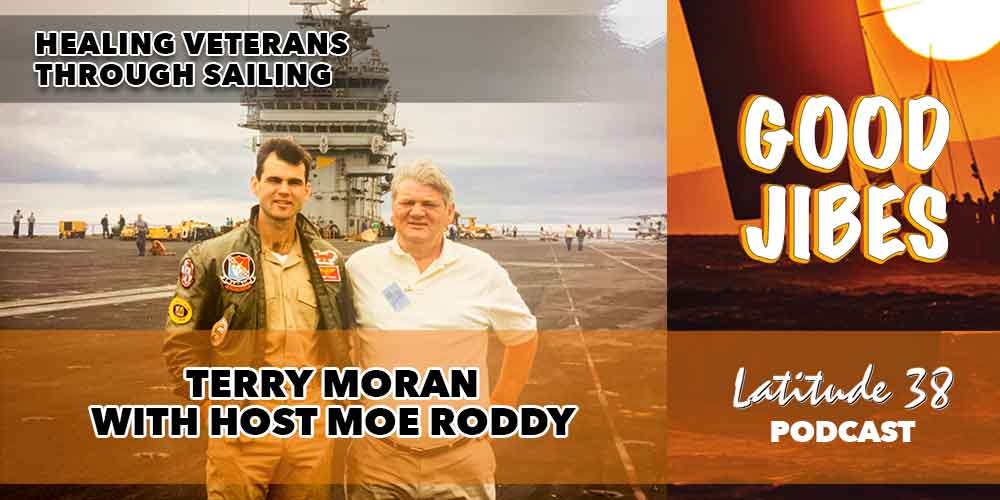
Hear why the sea is in his blood, the similarities between flying planes and captaining boats, what it’s like landing planes on an aircraft carrier, why the sailing community is so impactful to veterans, and the value of teamwork on and off the water.
Here’s a small sample of what you will hear in this episode:
- How watching his father fight for PTSD recognition after Vietnam drew Terry into veteran healing work
- Why Terry chose the Naval Academy and aviation over following his father to sea
- How the program accommodates veterans with disabilities, including wheelchair users and blind sailors
- How VetsBoats (originally Wooden Boats for Veterans) came together
- How carrier aviation made Terry a better sailor through meticulous preparation and responding positively to setbacks
Listen to the episode on Apple Podcasts, Spotify, and your other favorite podcast spots — follow and leave a 5-star review if you’re feeling the Good Jibes!
Learn more at VetsBoats.org.
Check out the episode and show notes below for much more detail.
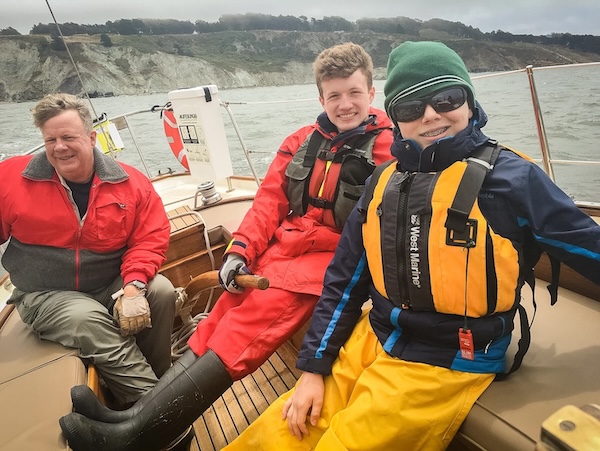
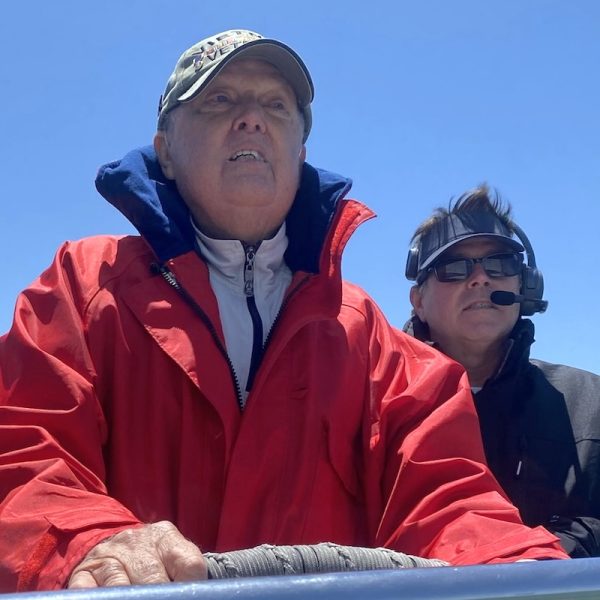
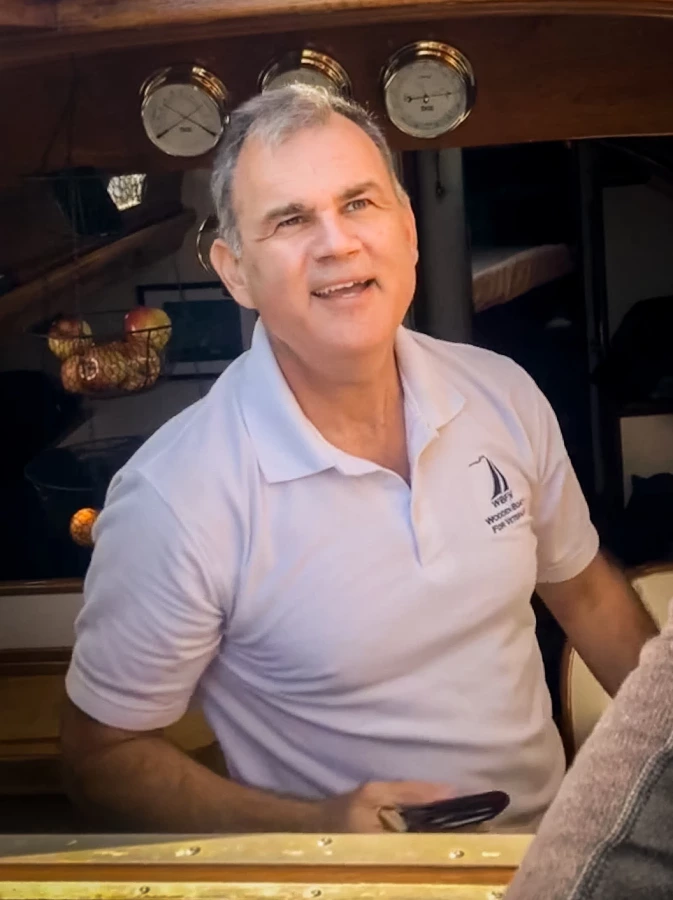
Show Notes
- Terry Moran on Healing Veterans through Sailing, with Host Moe Roddy
- [0:14] Welcome to Good Jibes with Latitude 38
- [1:07] Welcome aboard Terry Moran, Naval Academy grad, F-14 pilot, and founder of VetsBoats
- [1:50] Terry’s origin story being born in Wellington to an Irish ship captain father, nearly born at sea
- [5:07] Growing up on a 48-foot Alden in Sausalito in the 70s, shoeless with a rowboat and the run of the waterfront
- [9:29] Why Terry chose the Naval Academy and aviation over following his father to sea
- [11:27] Getting nominated by Barbara Boxer and attending St. Ignatius College Prep, which sent four students to the Academy in the same class
- [13:50] What drew Terry to flying
- [16:12] The biggest lesson from Annapolis: trust is the foundation of any team, and discipline follows from it
- [18:08] What it’s actually like to land a tailhook aircraft on a carrier
- [21:05] The shift from young hotshot pilot to understanding you’re an extension of national security and part of something larger
- [23:27] How carrier aviation made Terry a better sailor through meticulous preparation and responding positively to setbacks
- [23:52] Check out our Classy Classifieds at Latitude38.com
- Serving Veterans
- [24:25] Retirement in 2016, reserve service, commanding a drone unit, and deciding he wanted to stay connected to veterans
- [25:53] How VetsBoats (originally Wooden Boats for Veterans) came together
- [27:51] How watching his own father fight for PTSD recognition after Vietnam drew Terry into veteran healing work
- [30:45] What resonates with veterans in the program: community, giving up control, and opening up “like flowers” on the water
- [33:13] How the program accommodates veterans with disabilities, including wheelchair users and blind sailors
- [34:42] Corporate and community support
- [36:10] Terry’s personal reckoning: realizing he was also a recipient of the medicine he wanted to give others
- [37:25] The vision for VetsBoats is 1,000 veteran touches in the current year, franchising the model, and scaling safely with Coast Guard standards
- [39:48] The story of the boat Clover: falling in love with a vessel about to be scrapped, and a decade-long restoration
- [43:37] Veterans who’ve taken the program and run with it
- [44:30] Join our Crew List at Latitude38.com
- Short Tacks
- [45:33] Love for Master & Commander by Patrick O’Brian and The Sun Also Rises by Ernest Hemingway
- [46:57] Terry’s favorite harbor: Drakes Bay
- [47:25] Does a carrier landing or docking Clover take more precision?
- [48:21] Terry’s most important lessons: from naval career, “get mad and get over it”; from sailing, “respect your limits”
- [49:21] Advice for anyone taking on a wooden boat project: it’s supposed to be hard, and share the journey
- [50:19] If you can turn your passion into service for others, that’s true success
- Connect with Vets Boats at VetsBoats.org or [email protected]
- Check out the May 2026 issue of Latitude 38 Sailing Magazine
- Make sure to follow Good Jibes with Latitude 38 on your favorite podcast spot and leave us a 5-star review on Apple Podcasts
- Theme Song: Pineapple Dream by SOLXIS
Transcript:
Please note: this transcript is not 100% accurate.
00:03
If you’re going to do anything in life, it has to be done with a team.
00:14
Welcome everyone to the Good Jibes podcast brought to you by Latitude 38, the sailing magazine for West Coast sailors since 1977. I’m your host today, Moe Roddy, and I’m so glad you’re here. Each week, we bring you the stories and the adventures and voices of the people who make sailing on the West Coast so special, whether it be about racing or cruising or exploring and everything in between. So settle in.
00:43
Drop your anchor and join me for another great conversation.
00:50
Today on Good Jibes, we’re honored to welcome a man whose life story bridges service, skill, and the sea in a truly remarkable way. Terry Moran is a U.S. Naval Academy graduate, a former F-14 Tomcat fighter pilot, yes, the kind you’ve seen in Top Gun, and a seasoned leader who has taken the precision and discipline of carrier aviation and channeled it into something deeply meaningful here on the water.
01:20
As the driving force behind VET boats in Sausalito, is helping veterans reconnect, heal, and rediscover purpose through sailing. What started as a passion has become a powerful community, one that brings together seamanship, camaraderie, and the therapeutic rhythm of the sea. From landing jets on pitching carrier decks to guiding veterans across San Francisco Bay, Terry’s journey is one of service that never stopped, just changed course.
01:50
Today, we’ll talk about flying, sailing, leadership, and the moments that shape a life. And we’ll explore how the water can both be a challenge and a refuge. Terry, welcome to the Good Jibes podcast. Thank you, Moe. It’s great to be with you. It’s nice to finally meet you. I always like to start this interview off with the beginning. And I don’t really know if you have a background.
02:18
you know, as a young person growing up in sailing. So how did, how, where did you start in life? Tell us a little bit about your early years. Well, I was born in Wellington, New Zealand, uh, to Irish parents and my father was a ship captain. Uh, and, uh, both mom and dad grew up in the same small town in Ireland and rural Ireland during World War II. And, um, he, uh, went into the British merchant Navy as a cadet.
02:47
and finished up his career as a ship captain. He was posted down in Auckland when I showed up. In fact, I was nearly born at sea. In those days, mom traveled with dad and officer’s wives were allowed to do that until they had small children. And uh the ship was due to sail from Wellington Harbor. The morning I decided to come three weeks early, she was just gonna…
03:14
ride the ship back to Auckland and then get off and go back home. so I was nearly born at sea. They emigrated to San Francisco and it didn’t take them long to get a sailboat. we, I started sailing at an early age with both mom and dad. That’s amazing. I didn’t realize that about you. So they went from Ireland to New Zealand to here. And when they got here,
03:43
Did he stay a ship captain? mean, what kind of ships did he navigate, pilot? Well, they were both amazing people. He started off in tankers and then he finished up in break bulk, uh actually refrigerator ships, which were sort of like the speed boats of the merchant Navy. This is before containerization. So the entire hold of a ship would be refrigerated. And they were bringing goods, perishables like
04:12
in those days, Chinese gooseberries, which are kiwi fruit, to the West Coast. uh He swore up and down, he brought the first kiwi fruit to San Francisco. And bring in Pampers and lawn mowers the other way, goods that New Zealanders needed. And um he decided to, what they call, swallow the anchor. He decided to come ashore.
04:39
And he worked in the waterfront for over 50 years in terminal operations, first as a stevedore and then as a terminal operator. And he finished his career actually heading a team that reopened the port of Um Qasr in Iraq. So he traveled the world and was sort of a legend amongst the waterfront in the port of San Francisco when it was still a working port. And then he finished up uh
05:07
bringing that lifetime of experience to reopen the port there in Iraq and reestablish commerce. Wow. So the sea is in your blood, basically, isn’t it? Yeah, I had no chance. I grew up with a love of the sea. My father, one of the finest man I ever knew, taught me a lot of life lessons, mostly on the water. And we actually lived on board a 48-foot Alden
05:37
in Sausalito for about five years in my growing up. we had a, we had a marvelous growing up in the seventies in Sausalito without shoes and my own little six foot rowboat I’d disappear in until the church bell rang at 6 PM and it was time to go home for dinner. And it’s just amazing. Amazing when I look back. Yeah. Yeah. It actually sounds pretty magical. There was a whole wonderful scene going on here in Sausalito, wasn’t there?
06:07
was such amazing personalities, especially on the waterfront. There were still vestiges of shipwrights applying their trade and fishermen. The mackerel season would be taking place right out in front of the bridgeway, things like that. It was a great place to grow up. Wow. Do you have a memory of your first experience on a boat?
06:36
Yes, we bought, they bought a 32 foot uh Lapworth Dasher that Hank Eason had built. He built six of them. And we had Shearly and we went up the Delta. I don’t remember the we had a few shakedown sales before then. But we went up the Delta. And that was just magic. That’s a whole nother world when you’re eight years old.
07:04
There’s a picture of me somewhere where dad had me up the mass in a Bosons chair, you know, and I’m dangling from the Bosons chair and child protective services would have called many times over. ah But yeah, wonderful, wonderful experience to when we came back, there’s a picture of him and me somewhere, which I really treasure where I’m on, I’m on the tiller and you know, he’s, he’s there guiding me. And it was a very, you know, evocative picture.
07:33
I was going to ask you a question about em who inspired you most, your love of the water. But it sounds like it was maybe your mom and your dad. Yeah, were both, know, growing up in Ireland in the 40s, you know, it was a poor country. It was neutral, but it was poor. But they didn’t realize they were poor. don’t think, you know, resilience doesn’t begin to describe them. They were very pragmatic and resilient people.
08:02
and very positive people. uh so they were naturally drawn to the water and sailing. yeah, both of them were why I got into the sea. Were they from like Cork or Galway, some place, you know, with a lot of Westport, some place with a lot of uh boating? Danette’s family was from Dublin, moms from Mayo, but they grew up in a small town on the Barrow River.
08:32
called Carlo oh market town, everything for them happened on the river. So there was swimming and rowing and diving. And as soon as dad turned 17 and got his leaving certificate, he split, he joined the British merchant Navy, which was something that was not easily done as a young Irish lad from the country. uh You had to break in and there was uh definitely a class system that he had to navigate and overcome.
09:02
which he did first with his fists and then with his head. Sounds like my dad. He’s been known to one of his commanding officers once told me he had a shamrock up his, you know what, someday it was going to fall out and he wanted to be there when it did. Because he was so, no other way to discipline him. oh When you look back now, is there a moment when you realized that?
09:29
sailing was always going to be a part of your life because we’re going to transition after we talk about your schooling years, but you went from water to air. And I want to get a better feeling of the water part first. Sure. It was a natural, I mean, I can’t give you a specific time. I think just, you know, I grew up around sailor men and I mean, seagoing men, others who had come ashore uh that were in the waterfront business, you know, and
09:59
the living room would be alive with people, know, with Dutch and Norwegian and British and Swedish guys that had been former merchant officers who knew the world and just very interesting people. And then of course, just, you know, if I was going to see dad on the weekend, I’d have to go to work with him and he was a workaholic. So I’d go aboard these ships and
10:28
So I was in and around the waterfront with the commercial trade with merchant shipping as well as in sailboats. So it was just a natural thing that I wanted to go to see. I thought, well, I’m going to look around and find what’s the most interesting and neatest thing and something I could put my own spin on that was going to be uniquely me. And so I landed on uh trying for the Naval Academy.
10:56
Okay, well, let’s talk about that because that’s in my eyes a big deal because it’s you only each congressman only gets two recommendations, right? So something like that. mean, here I think they had a total of five or six that could be either in the Academy they had nominated or in the pipeline to nominate. So there was a finite number for representatives. I think a few more for senators and yeah, it was
11:27
It’s tough. Barbara Boxer nominated me. Very nice lady. Had a wonderful interview with her. ah I had an alternate spot, which meant, well, you could try again next year, or we could put you in Naval Academy prep school. I was kind of stubborn. I said, no, if I’m not going this year, I’m not going. That could have really gone another way.
11:54
know, fortunately, I was very lucky. I was very lucky the whole way through to get to get in and make it through and get to where I got. Yeah, I know. And because it’s one of the service academies, you basically get to go to school for free. mean, the and that’s a that’s a big deal. I think that’s why it’s so hard to get in. I mean, you just don’t apply and get into one of the service academies. It’s a big deal. So well done.
12:22
Well, then for you. place. I was prepared well by going to St. Ignatius College Prep in Sunset. In my class at the Academy, there were four of us from St. Ignatius. Just think about that. From one school in America, there were four of us from the same school in the same class. uh So that kind of speaks to the quality of SI. And of course, SI
12:51
all about service, service to God, to the Jesuit tradition. So that really deepened my character formation and helped me prepare to be, you know, to enter the Academy. Wow. Academy is a great place. I could go on for a lot, but I’ll just say briefly, I think about them a lot, especially today. mean, you know, those young midshipmen are very soon going to go into a very dangerous and frightening world.
13:20
And they’re learning their crap, not just academically, but they’re learning to be leaders of men and women. That’s a really heavy responsibility for a brand, you know, a young 22 year old is a brand new officer and they put out a great product. Yeah. Yeah. Pretty amazing. I have a couple of friends who also went, when did you decide you wanted to fly? Where did that come from? Gosh, let’s see.
13:50
Movies probably had something to do with it. think the officer, an officer and a gentleman came out. That’s, that’s, that’s, I don’t think I could make that. Well, maybe I can, maybe I could get through that. The right stuff. I don’t know if you remember that. I do. Boy, I was sold. thought, well, even if I don’t make it, it’s, you know, worth the attempt. So, and I, and I knew at that point I had my own sort of independence streak. I wanted to go to sea. I wanted to join the Navy, but.
14:18
I wanted to try something different from my dad and make my mark in aviation. it such a well, I know my brother is a pilot. My and he says it’s very similar to sailing. em I’ll go anywhere on the planet on a boat. But I have literally panicked the back of a commercial jetliner um taking off from Texas.
14:46
So I do not like to fly, but I do love to get on a boat. To me, it’s just for you to make a decision to fly instead of being on an aircraft carrier as a captain of the boat was just like, how did you do that? How did you make that transition? It’s just… One bite at a time. You start off in small aircraft and it is very much akin to sailing.
15:16
To understand the principle of lift is the same, whether it’s an airfoil that’s set up this way or this way, it still acts in the same manner. And a light touch on a tiller translates to a light touch on the yoke. Principles of navigation are the same and things like that. So it’s a normal reaction, I think, for folks to.
15:43
be a little uncomfortable, my advice would say, yeah, sit up closer to the front of the airplane. Less bumpy? A little less bumpy. It doesn’t fishtail as much. I’m embarrassed. It’s like, difference between that is like on a boat, I’ve got the tiller. I have control of this thing. When I’m on a plane, it’s like, you you want to say to the pilot, did you fight with your wife before you came? Did you get a good night’s sleep?
16:12
Those are the things that go through my mind. What do you think is one of the most profound or one of the biggest lessons you learned from your time in Annapolis? the value of trust and its importance. If you’re going to do anything in life, it has to be done with a team. And in order to function in a team, you have to first earn their trust. You have to be able to place your trust in them in each of the
16:42
team members, especially if you’re going to aspire to some very complex endeavor. It’s all founded back on trust. And that unlocks a lot of behaviors that you realize you must have. You must have discipline. You must have consistency. You must expect that of yourself if you’re going to expect that from others. Interesting. I write that down.
17:10
Was it difficult to get into the aviation program? I was fortunate. Again, it’s a recurrent feeling I have when I have to talk about myself. And that is I came along at a good time in the 1980s, late 80s and 90s. We were building up the Navy to 600 chips and adding air wings. And we needed aviators. And so my math was good enough.
17:39
Class standing was good enough and I got in and then once I got the opportunity, I was fortunate to get into flight training that I paid for myself before going to flight school. So I had a great first flight instructor who’d been a B-24 pilot in World War II and he prepared me. And so I could already land an airplane and talk on the radio before I went to the Navy flight training and that stood me in good stead.
18:08
Nice. So you were what we all know of as a tailhook pilot, right? Yes. So tell our audience what that is and what it’s like landing on the moving aircraft carrier bouncing around on the open ocean in how many feet do you have to stop? About 400. Oh, God. The tailhook aviators is what’s
18:38
commonly referred to as oh a fixed wing naval aviator who flies carrier-based aircraft. So in today’s world, that’s the F-18 Super Hornet, uh the E-2 Hawkeye, the E-18 Growler. You’re trained to put that aircraft in a pretty precise location. There’s four wires that go across the deck, and you’re aiming for that third wire.
19:08
Oh, and I should say another airplane, of course, is a Joint Strike Fighter that they have now. Magic airplane. Magic airplane. Wonderful. But anyhow, some of the numbers you’re looking for, when you cross the deck, at least in an aircraft, in a Tomcat, when your hook goes over the ramp, it’s about 10.5 feet off the ramp. So you’re coming in at a three-degree glide slope. you need to, if you’re going to catch all four wires,
19:37
or one of the four wires, then the hook has to be 10 and a half feet. That’s not a lot of clearance, especially if the ship is pitching and heaving and things like that. Fortunately, you have landing signal officers. These guys that are really highly trained, they’ll talk you aboard. And when the weather is really bad, they’re indispensable. It’s one thing that separates us from the Air Force, not to take anything away from my Air Force brethren, who may be out there. Love you guys.
20:07
But in our business at sea, there are going to be times where you’re presented with conditions that go below your minimum criteria. So we all have minimum criteria. If the weather, the visibility is below, say, a quarter mile or the ceiling is below 100 feet, then certainly commercial aviation uh and the Air Force, you can’t land at that airport.
20:35
Well, when you’re at sea and the aircraft carries your only option, you just got to make it work. That’s your place to land. And so one guy used to say, that’s where the food is. So you got land there. And so that separates, you know, us, I think as a sea service from the other services where we really have to be able to work in that environment and make things happen. I can still do that. Yeah. Yeah. Does anything stand out in your years of
21:05
flying those jets that really just meant something to you that changed you somehow? Oh, sure. There’s, of course, the process you go through when you go really impressed with your own importance as a young fighter pilot, and then you gradually acquire the understanding you’re part of the team. And em you’re there.
21:30
And in years, it takes years, but you look back and you realize you’re really an extension of national security. You’re an expression of the will of the United States. You’re put in uh that carrier uh as a weapon system, and you’re there to further the goals of the national security. You’re speaking for the American people. That’s what’s going on right now.
22:00
with the battle groups Ford and Nimitz. They’re flying amazing. They’re producing an amazing number of sorties. They’re doing it superbly. It’s taxing. They’re going into their fourth week, sustaining the level of operations that they are. It takes a lot of effort from everybody.
22:30
The average age of the folks on the flight deck is 19, 20 years old. They’re the ones that are really the ones that are the unsung heroes. uh So the things that stand out to me are the people, the fact that I was privileged to be part of that community and a profound appreciation for the folks that are doing it today. Do you see a parallel between your situational awareness
22:59
are flying, let’s say, and sailing. It me a much better sailor. It did. Preparing in a much more meticulous fashion, particularly on the restoration end of things. So we’ll probably get into a boat. That takes quite a lot of planning and preparation. then responding to
23:27
the setbacks that inevitably happen and responding positively. So yeah, absolutely. It helps me a lot. We will be right back. You are listening to the Good Jibes podcast. Hey, Good Jibes listeners and Latitude 38 readers. If you looked in our classy classifieds lately, it would be impossible for us to know how many boats have sold to new owners over the last 45 plus years of publishing Latitude 38.
23:54
But we’re sure they have helped countless people realize their sailing dreams. Every month there are new boats listed that will fill someone’s sailing adventures. If you have a boat you want to sail or are looking for that next boat in your life, the pages of Latitude 38 will surely have something to suit your fancy. Pick up a magazine at a local marine business or visit our classy classified pages at latitude38.com to find boats, gear, job opportunities and more. Then tell us your next sailing story.
24:25
Welcome back. You are listening to the Good Jibes podcast where my guest today is Terry Moran. So when did you retire? 2016. 2016. Okay. So what was that like? Because now you have to come back into a civilian world and you came back to, I’m going to guess, Sol Solito? I did. Yes. I transitioned early into the reserves, but I served
24:55
Fairly frequently as a reserve officer, I was mobilized a couple of times, went to Iraq, finished up commanding a drone unit and flying MQ-9s, rather large drones, and finished up pretty proudly in preparing folks to go overseas to operate these aircraft. But I knew I was going to miss it. I didn’t want to retire.
25:23
I wanted to keep going. I’d do it all over again in a heartbeat. So I wanted to stay in touch. By then, my oldest son joined the Marine Corps, who I’m immensely proud of, who hopefully is going to put on gunnery sergeant here any day now. I thought, well, I like the people. I want to do something. And I don’t know exactly how the idea formed, but it came together as I’m good at sailing. I know sailing is good for people.
25:53
I want to help veterans. I’m to start something that ties it all together. And that’s how First Wooden Boats for Veterans was born. Yeah, that’s, think, what I remember it as, Wooden Boats for Veterans. Yeah. Well, let’s talk about that. I’m going to go right into it then. What inspired you seriously to start the program? Because PTSD is sort of a, it’s a newer diagnosis since the Vietnam War. We always knew
26:22
veterans came home from wars with problems. My grandfather was gassed in World War I with mustard gas and he came home with, you know, braces on his legs for the rest of his life. I never knew him without braces. And my father, obviously, was in World War II, Korea, Vietnam, three times in Vietnam, and he had issues. And he would always say, there are those of us who have wounds that you can’t
26:52
and he was describing what became PTSD. He couldn’t get anybody to listen to him. This is in the m early, late 70s. And he finally threatened the VA hospital in Boston that he was going to drive his car through the front entrance if they didn’t pay attention to him. And he went to bat for all the veterans that he could with Congress and stuff to get
27:21
you know, to get them paid. I can’t think of what I’m looking for. When you, you know, when you have an, you lose an arm or a leg, it’s easy to see you have a disability to get looked at as a disability. So you see this, you saw this, you see these kids coming home, these men and women who have these scars and issues that we don’t see, but they’re there, you know, so.
27:51
What brought you into this? What was it? What did you see that made you feel like you needed to do something? Oh gosh. Well, I think I’ve always, you know, had a a bent or a sort of an awareness of just human issues, you know, you know, maybe some level of empathy for others. I think that I was born with that. It was nurtured by my parents and, you know, by
28:21
my faith and um again, my education at the SI, that a worthwhile life is a life uh in service to some good. I didn’t know this then when I started, but I think um when you’re pursuing uh service along some line of excellence, then you’re going to become happy. There’s plenty other people that pursue other things.
28:50
and are quite successful at those other things. But if you’re missing an element of service, then you’re just not going to be happy. And I’ve lived long enough to know that that’s true for myself and just watching others. So there was just, I guess, something in me recognized that the people I had grown up with, they were great models. I mentioned earlier sailors, seagoing,
29:20
men and women, super resilient, super positive, uh wonderful people, uh they’re survivors, they’re uh also open-hearted and generous people. Something about the sea makes us that way. ah And so if I felt, if I could bring just even for a few moments that awareness or that feeling,
29:49
to those that really need it, those that have acquired injury in the service of their country, and I’m gonna try and do that. And I’m continually reminded, as you grow, you must uh establish good metrics, you must show progress and impact and those kinds of things. But I’m continually reminded that you gotta do this kind of work one person at a time. That’s how you grow.
30:18
And that’s that’s it’ll ripple out from that. So that’s a long winded answer to your question, but I just think that I knew in my bones just from growing up around the sea and around seafaring people that that’s a healthy life. And if I could try and transmit that to those that really need to really needed that, then a worthwhile thing to do.
30:45
So when you say to those that really needed it, you chose a particular group that really needed it in your eyes, which were veterans. And I guess it’s natural since you were in the military as well. But do you see what is it about this program that resonates with these veterans who are part of the program? I think it’s the community aspect of it. ah There’s a there’s a sort of a
31:16
that kind of catches them by surprise when they get out. Of course, it takes a lot for them to, for many of these folks to sign up and show up. If they’ve done that, they’re, you know, more than halfway, you know, toward being very receptive. You know, they’ve, they’ve done the hard thing. They’ve going and to your point about control, they’re going to give control over to someone else. They’re going to do an activity that they’ve never done before with people they haven’t met. And so, you know, we,
31:46
We see in that process is they get out on the water and they start engaging with other veterans and they might see a whale, might take the helm, the boat heels over, eyes get a little big, all these things. And they open up like flowers. I just think there’s magic in that. And there’s few opportunities.
32:15
You know, sadly, you know, social media takes the place of community for this day and age. And so just good old fashioned, you know, salt water in your face and sharing that by the end of the sale. A lot of these people, they’re sharing phone numbers. They’re making plans there. They come back. We’ve had folks come back. Now they’re volunteering with us to take veterans out. We’ve had one veteran.
32:45
get a boat of his own and start taking veterans out as well. So that’s the real pleasure for me is to when they see this and they make the experience their own and then they in turn share it. That’s great. So how does, if I’m a veteran and I want to go sailing and I’ve never been sailing before and let’s say I lost my leg, I’ve got blown up by something and I’ve lost my leg.
33:13
Can you accommodate me? Yes, yes. We have about eight boats in our network now. We’re going to be adding to that. Our principal boat for folks with uh disabilities like that is the Derrick M. Bayless, operated by Wiley Charters. They’ve been a partner for us for many years now. Wonderful boat, a cat boat catch, which you’ve probably seen on the water and would recognize with the uh
33:43
unstayed masts and the wishbone booms and she’s a lovely craft and has a drop-down transom. So uh it’s easy. We’ve gone to the wheelchair regatta for a few years. That’s run out of Ensign Al Yacht Club in the fall. And we’ve also accommodated blind sailors, which is another, you know, these are veterans that lost their sight in adulthood.
34:12
as a result of their service. And so they had sight, now they don’t. And now they’re out on the water and they’re experiencing sailing in a way we can’t necessarily. That’s pretty amazing. But yes, we accommodate veterans with any kind of disability. Do you feel, the sailing community in general supported the program, do think? Absolutely. We enjoy
34:42
Support from several corporate sponsors and partners over the years. uh I’m going to miss a few. So let me just mention a few. We’ve had long time support from uh Matson Foundation and Pesha Group, from Chevron, from uh Foss Tugs, now Saltchuk. And that has really helped uh quite a bit from some other nonprofits on the water as well called the Zee Foundation.
35:10
We count proudly in our network of boats and we’ve taken large groups out on their um hands-on training on board the Matthew Turner and that’s been really exciting for our more able-bodied veterans. uh And Bay Area Association of Disabled Sailors was quite helpful in helping us getting our start, especially since they have such a depth of experience handling a disability. So yeah, we’re very fortunate. We have a very
35:40
caring and I think vibrant community here uh on the Bay. When we’re done with this, I’m going to throw out a few names to you that to introduce you to them. Is there a moment since you’ve been doing this that affected you profoundly that stayed with you? I mean, look at something, a moment where you said, I’m so happy I did this. I’m so happy I started this because I see something so important happening. Yeah. Yeah.
36:10
I don’t know, I’m perhaps the number one beneficiary. I think that uh it took a while for me to realize that, you know, I had been also affected by my service. You know, I’d seen some, I’d lost some friends, I’d had some setbacks in my military career. uh You know, I’d had a failed marriage as a result of, you know, just not being present and, you know,
36:40
the stress of military life certainly played a big factor. I kept going back to boats. I wound up buying my own sailboat. That’s how I found my way back to Sausalito and restored that boat with my father and my boys. And I realized that later that I was the biggest recipient of uh the medicine I wanted to give others.
37:09
came to that insight. And now, you know, I’m happy to talk about that. think that’s a lot of what philanthropy is about. You know, when you are serving others, you are filling a need in yourself.
37:25
that purpose. think human beings need purpose. Otherwise you don’t you’re miserable. What where do you see vet boats going in the future? What’s your vision? Well, we’ve been in operation 10 years. This year, we plan on 1000 veteran touches. Last year, we were over 600. So we have a plan to get to 1000. So this is combination of sailing events, community events, volunteer work days on clover.
37:54
that we have on a schedule, 28 sailing outings, 10 events, and 10 major work days. Major work days are where we have a group of 10 or more working on clover or boat. We have people constantly coming in, one C2C, that work on the boat. But that’s our plan. And uh we have a plan to sort of franchise this out, where
38:20
We’ve gotten a lot of interest from boat owners that want to participate. So we’ve been thinking through the standards that would be necessary to have them partner with us. We’re very fortunate on our team as an active duty Coast Guard captain. And so barring from Coast Guard auxiliaries, vessel and skipper inspection policies, we’re creating something that’s going to pass muster so that we can ah have partners in this work.
38:50
that can competently and safely introduce veterans to sailing. We’re very excited about that because if it’s a good enough idea, then it’s gonna scale and it’s gonna expand. Beyond that, uh we’re making inroads in other areas as well. There’s lots of pockets of sailing communities around the country that are doing work taking veterans sailing. And I enjoy talking and meeting with these folks.
39:19
Sometimes there’s a focus on racing or, you know, there may be in a sail training and smaller boats or what have you, but I always learn a lot. So in turn, if I can help get a small group going, I like to think after 10 years, we’ve got, we’ve made a lot of mistakes and we can help avoid making those mistakes. And so that’s where I think, you know, Vets Boats is going.
39:48
I think when I first heard of uh wooden boats for veterans, you had two boats. This is back before you rebranded. I should make sure that everybody knows it’s vet boats. Vets. Vets. That uh you had two wooden boats that you were uh rebuilding. What happened? Clover is one of them. And is she all done? No. So the first boat we started with was my own boat, a Sparkman Stevens 45 foot sloop.
40:18
Oh, I would like. Yeah. And then we acquired the clover about 10 years ago. As you do, you step aboard an old beauty that’s pumps are running constantly, is going to get broken up in about three weeks and you fall in love. said, well, we can make this. Now it’s 10 years ago. And along the way, I realized, you know, either my sole focus on restoring that bow.
40:47
as well as growing this nonprofit. So, Soul Valiant, which was my boat. Yeah, along the way, we tried out uh working, know, chartering other boats. We took in donations of boats and then found a new home for those boats as well. For right now, I think we’re in a good spot. We have this network of boats that we partner with and we charter.
41:15
that understand our mission that are just super supportive of that while we finish clover clover presently is getting outfitted with new electrical system and plumbing system and uh her. What’s complete is a new deck. About a quarter of the frames and planking have been replaced. Just about all the floors have been replaced.
41:43
uh a new deck, I think I said, and a new engine. And so we’re operating her for the first time under power this year, which is a big milestone. Next year we’ll start on the rigging and the spars. Yeah. Any marine electricians or marine plumbers out there listening to this? I will make sure you get Terry’s contact. If you want to help the veterans, this is your opportunity.
42:09
So Terry, if there were any mentors that you’ve had who are sailors, I mean, a mentor, not your dad, because obviously you, I would assume he did more than anybody, but who took you under their wing to really teach you how to sail? Otherwise your dad, wasn’t it? shouldn’t. Yeah, guess first and foremost, yeah. But I’ve had the good fortune to be around some wonderful people who know a lot about sailing and restoring.
42:39
couple of shout outs I’d like to make. Ellen Olson was very supportive, very supportive in the beginning. As I sat down and I was very candid with him, I said, I’m a duffer. I have a 45 foot boat, really not much was wrong with it. I’ve polished it up and made it good. Now I’m thinking about taking this 50 ton, 68 foot, 90 year old gaffer and bringing her back to life. Am I just nuts?
43:08
And he said, just, you know what he said, he said, build a community around her. And speaking of community around her, have you have any of your vets stayed with the program and, you know, have become seamen in their own right? Yeah, we have one young fella, Jason, who we sent to courses actually, because he had such an aptitude. Jason was a former Marine and he is very active in uh the veteran community. He was on the
43:37
San Francisco Veterans Commission, very energetic young man. And uh we had gotten Sunda from Bob Rogers, who’s himself a Vietnam veteran, loving care of Sunda for about 35 years, generously donated the boat to us. And we fixed her up and uh put her in Jason’s care. And Jason’s a…
44:03
young man I mentioned who’s taking veterans out sailing aboard her. So that’s our shining example. And we had others as well who are taking classes and now sailing regularly and have made it their own thing. One couple have just returned from chartering a sailboat in Croatia. Wow. And they got introduced to sailing through this program.
44:30
I think that we, yeah, certainly the wife and, um you know, got more more interested and may I say comfortable with the idea of going off and doing something like that. We will be right back. You are listening to the Good Jives podcast. Hey, Good Jives listeners. Are you looking to sail more? It’s the biggest mismatch on the California coast. There are thousands of boats not sailing because they need crew.
45:00
thousands more sailors or soon-to-be sailors who want to sail but can’t find a boat. For over 45 years Latitude 38 has been connecting boat owners with sailors to sail, or race the bay, or travel far over the horizon. Some connections have turned into thousands of blue water cruising miles, or race winning cruise, or long-term relationships, or just happy days of sailing. If you have a boat or want to crew add your name to the Latitude 38 crew list at latitude38.com
45:28
You don’t know where such a simple act will take you.
45:33
Oh, we’re going to do I’m going to take a little tack here and do something we call the lightning round. Well, you know, it helps people to get to know who you are a little better than just, know. But anyway, what’s your favorite book about sailing? Love the Patrick O’Brien series. Oh, yeah. Aubrey, Mature and. Yep. You know, all up. I read all those two, believe it or not. Very few women did. What’s your favorite book um about not sailing?
46:02
The sun also rises. Oh, another good book. that. I it, started reading it as a teenager and I come back to it every few years. Nice. Favorite place in the world to sail? The Bay Area. Really? Yes. I love how many people say that. Favorite place in the world to fly?
46:27
Up and down the coast of California. Why? I can pick out every point and cliff and relate it to sailing. If I haven’t, if I’ve been there, then it brings back some memory. If I haven’t been there yet, it reminds me I want to go there. Oh, that’s nice. So your choice between a sunset sail or sunrise sail. Sunset. Tiller or wheel? Tiller. Favorite harbor or anchorage in the world?
46:57
I’m going to say Drake’s Bay. OK. That’s that says a lot to us because you’ve been all over the world. If you could have coffee with anybody in history, who would you have coffee with? Or in your case, Irish being tea, would you have a cup of tea with? JFK. Nice. He’s probably on my up there too. So carrier landing or docking a boat in a tight marina.
47:25
Which requires more precision? Well, I’m about to find out with Clover. But um yeah, I guess I’m going to go with carrier landing on it. OK. I’m glad you said that. So an F-14 or a sailboat, which gives you the bigger smile? Oh, gosh. I’d crawl in an F-14 today if I could. They’d let me.
47:55
Yeah, sure. But they’re not around, so I’ll go with the sailboat. Yeah, well, it’d be F-16 now. Is that what it would be? Well, the Super Hornet is the Blue Angels fly those. So that’s the magic airplane. Yeah, yeah. Yeah, now, if you said Super Hornet, I’d have to think really hard and probably go for the Super Hornet. Sweet. So who’s inspired you most in your life?
48:21
Yeah, it may sound boring. My father certainly has. Yeah, it doesn’t sound boring. It sounds wonderful. Actually, not everybody’s been so lucky to have such a father like that, that they can look back and say, very, very lucky in that regard. Yeah, I can relate because I love my dad the same way. What’s the most important lesson you learned from your naval career? Get mad and then get over it. It’ll look better in the morning. Nice. And what’s the most important lesson you learned from sailing? What’s sailing taught you?
48:51
respect your limits. Ooh, very nice. And what’s the one question that I didn’t ask you that you wish I had? Well, you’re such a great interviewer, Mo, that that’s a really tough one. I’m Irish, you know. uh Maybe what advice I would have if anybody is thinking about taking on a wooden boat project.
49:21
Tell us the answer. What advice would you give them? ah That it’s supposed to be hard. And you’re supposed to gnash your teeth and look around for a five gallon can of gasoline and a couple matches at some point. To burn it? Yeah, if you’re not, then it’s not really a worthwhile project. Sometimes the projects that we take on in life are the ones that make no sense to anybody else. uh
49:51
just stick with it and share it, share the journey with others who will be similarly inspired. That’s what I would say. Great. Good answer. And what, is there something you could leave our listeners with? Your thought about sailing or community? What would it be? What do you want our listeners to take away from this that’s important to you? Hopefully, you know, your listeners have already found this secret. I came to it later in
50:19
If you can turn your passion into a service for others, uh that’s true success in my book. Yeah. Yeah. And where can people learn about Vets Boats and get involved? And how do they get involved? Website, vetsboats.org is a good first stop. We’re on social under the same name, easy to find. And I’m always available.
50:47
You hit me at TBMoran at vetsboats.org. It may take a day, but I’ll get back to you. But yeah, I’d love to talk to anybody who finds that they resonate with this mission. Cool. Okay, I’m going to spell that out one more time for everybody. It’s vets, V-E-T-S, B-O-A-T-S, dot org. So I just want to say thank you, Terry, for sharing your time.
51:15
and with us today and for all you do for all the men and women who have served this country. It’s a gift and I appreciate it. Just like when I see the wreath on the graves at Arlington National Cemetery and both my parents are there, it’s just one of those things where it just touches your heart somehow. So thank you for doing that. And thank you as well because you’re, you you
51:44
grew up in a military household and I just want to add, I can’t help it, that a lot of sacrifice is borne by the families as well. So thank you. Oh, thank you for saying that. Thank you for this interview. So if you enjoyed this podcast, please visit Latitude38.com and subscribe not only to the Good Jibes podcast, but to Latitude38. Until next time, take the word impossible out of your vocabulary and dream big.
52:13
This is Moe Roddy and I’ve been your host today!