

Measure X Defeated, but the Future of Sausalito’s Working Waterfront Remains Unsettled
The contentious Measure X working-waterfront zoning issue on the ballot in Sausalito appears to have been defeated by the town’s voters. While we opposed Measure X, its apparent defeat does not resolve the underlying issues that many on both sides agree need attention: What does a zoning update that protects and supports Sausalito’s working waterfront look like? Measure X succeeded in raising the visibility of the underutilized land along Sausalito’s waterfront and clarifying the issues that voters and boaters care about.

We wrote that neither yes nor no on Measure X was a good choice for Sausalito voters, but given that choice, voting no was the better option. This gives concerned Sausalito residents the ability to create a shared community vision, which we hope continues the marine heritage and opportunities that the working waterfront industry has contributed to Sausalito’s maritime culture. That means land dedicated to growing art, industry and marine-trade businesses that will contribute to a thriving waterfront while supporting affordable access for waterfront businesses, and public access to the Bay.
The Sausalito waterfront offers a unique ability to grow the Bay Area blue tech economy and support the marine trades that have been a growing focus for venture capital and federal, state and local support. The entrepreneurial dynamism that already exists on the Sausalito waterfront includes manufacturing, electric boats, electric charging stations, fishing and marine-trades classes, alongside numerous other innovative businesses.

Flooding caused by sea-level rise along the Sausalito waterfront remains another issue for which neither side had solutions, though both hope increased economic vibrancy will help generate tax revenues to fund the necessary upgrades.
Assuming the no vote holds, it still leaves the work of creating a thriving working waterfront ahead. Well-intentioned people on both sides will have to come together to create a plan that resolves differences and creates a vision for a thriving working waterfront that includes industry, diversity, amenities and tax revenues to preserve and grow Sausalito’s unique character and beauty on the Bay shoreline.
Corinthian Yacht Club Hosts 2026 Lipton Cup
The Sir Thomas Lipton Regatta (Lipton Cup) is an annual interclub challenge held at Bay Area yacht clubs, with this year’s host being Corinthian Yacht Club. The event, whose mission is to foster camaraderie and collaboration among clubs, is sponsored jointly by Pacific Inter-Club Yacht Association (PICYA) and the host club(s).
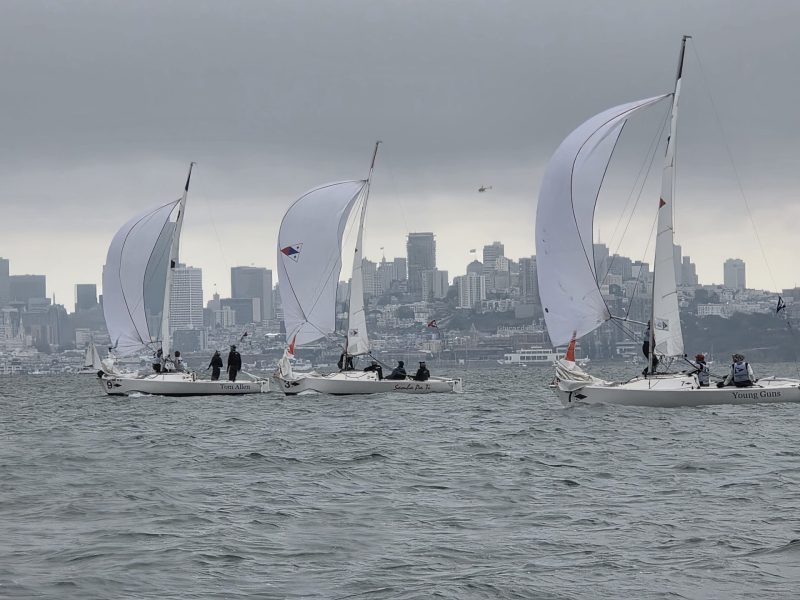
PICYA has been the sponsor and benefactor of this event for many decades, and the keeper of the splendid perpetual trophies that the winning clubs have the honor of displaying for a year. PICYA engraves the winning clubs’ names on the trophies, provides identifying placards for the mainsails, and provides regatta hats for all participants and volunteers. For the past six years, the Lipton Cup has been held in the one-design J/22s owned by St. Francis Yacht Club.
On Oct 9–11, eight yacht clubs entered the fray: Encinal, Inverness, Richmond, South Beach, Sequoia, San Francisco, St. Francis and Tahoe. Teams of four sailed under the following rules: Friday, the driver must be over 60 years old; Saturday’s driver must be over 25; and Sunday’s driver must be a woman. All sailors must be a member of the club they represent, and no driver may be a Group Three competitor. The regatta is limited to 12 club teams.
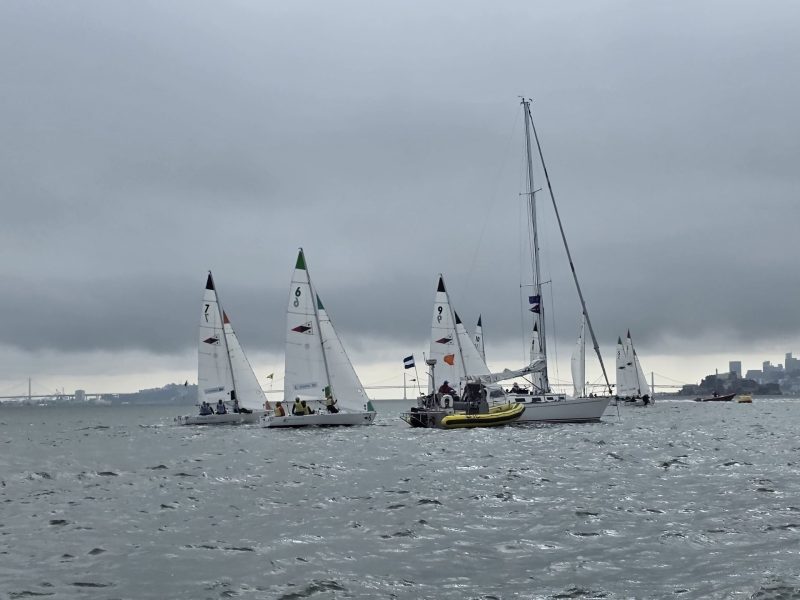
Following the early-morning competitors’ meeting, Friday’s three races were sailed in the Knox area on two short courses followed by a long-distance race. After the first race, the wind exceeded the stipulated limit for using spinnakers, so the other two races were sailed under main and jib. First place went to Richmond Yacht Club, winning the daily Admiral’s Cup prize, with second place going to South Beach Yacht Club, who earned the Valhalla Cup. The fleet returned to Corinthian Yacht Club for food, drink, camaraderie and the daily awards presentation.
Saturday’s format called for up to seven races, all short-course races. The morning competitors’ meeting was augmented by the chief umpire, who explained the umpired-fleet racing rules. The race committee got off five races under difficult circumstances, setting up the course to weather of Angel Island in rough conditions. Once again spinnakers were restricted after the first race was completed.
After the second race the committee boat got off-station after dragging her anchor, so the support boats stepped in and ran the races, which came off smoothly. This day there was a team of umpires for the fleet racing, and boats could hear their scores after each race without waiting for protest meetings after the finish. The winner this day again was Richmond Yacht Club, who won the Sir Thomas Lipton Challenge Trophy, with the second-place Treasurer’s Cup going to St. Francis Yacht Club.
Sunday was again a three-race format. The venue moved to the Southampton area to avoid the rough conditions. All three races were held using spinnakers. The final distance race went around Angel Island to Little Harding, then to the finish line in front of the Corinthian clubhouse in an exciting spinnaker run to the finish amid cheers from the lunch crowd at the club. The first-place Larry Knight Trophy was won by Sequoia YC, with the second-place Treasurer’s Cup going to St. Francis YC.
The overall Lipton Pacific Coast Perpetual Challenge Trophy was won for the second year in a row by defending champion Richmond YC.
Many volunteers made this year’s event a success: PRO Michael Moradzadeh, race chairman and Corinthian YC commodore Marcus Canestra, PICYA staff commodore Larry Mayne, Lipton Committee representative Kim Desenberg, chief umpire John Christman, and many others on the water including the race committee, umpires and volunteers from the clubs who transported the fleet over on Thursday and back on Monday morning.
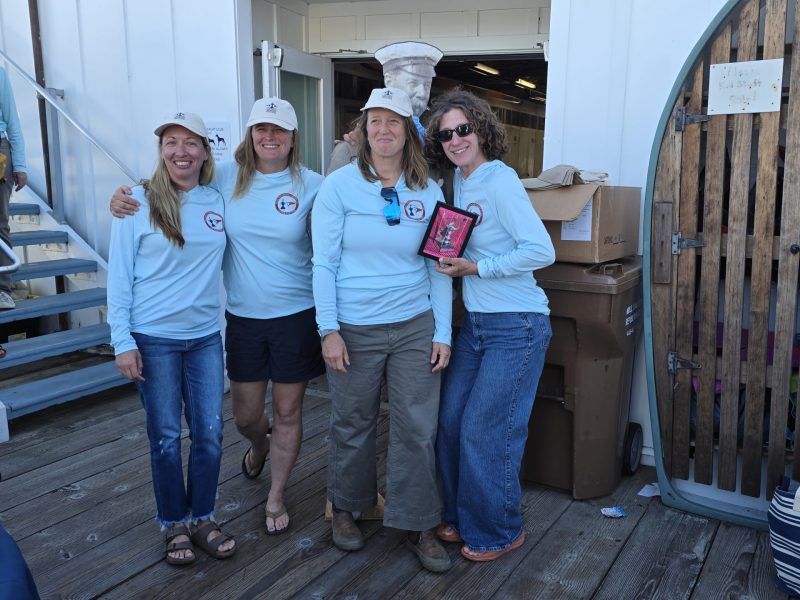
Thanks to St. Francis Yacht Club for providing the J/22 fleet along with a bosun and a helper in a RIB carrying spare parts to keep the fleet in sailing condition. San Francisco YC provided umpire signal flags and a RIB for the event, Richmond Yacht Club had a RIB, PICYA had a Whaler for towing the fleet, and Corinthian Yacht Club members provided their boats for the race committee. Congratulations to all the competitors representing their clubs, and of course the winners of the event. The racing was close and exciting, with the competitors sailing competently and cleanly.
Richmond Yacht Club team member Mike Quinn summed up the regatta. “We saw heavy winds and steep chop throughout the event. As a result, aggressive boat handling and consistent crew work were the keys to success. On Friday, we were able to carve out large holes at the start, enabling us to sail free and fast to the favored side of the course. Passing lanes were in short supply. As a result, the rich got richer as each race progressed. The Lipton Cup is always a high point of the year, and RYC can’t wait to return in 2027!”
Quality Yachts With Premium Service From Swiftsure Yachts
Swiftsure Yachts offers exceptional service, quality brokerage boats and new yachts for world cruising. Visit our website swiftsureyachts.com.
BCDC Meets Tomorrow Regarding Closure of Gashouse Cove Fuel Dock
Increasing restrictions to affordable and convenient public access to the Bay continue as San Francisco seeks to close the Gashouse Cove fuel dock and replace it with the industrial fuel pier at the end of Hyde Street. The boating public has the opportunity to speak up for well-managed access to the Bay at tomorrow’s BCDC meeting at 375 Beale St., San Francisco, in the ground-floor boardroom from 1 p.m. to 5 p.m. You can see the full agenda with the fuel dock as item 8 here. If you can’t make the meeting you can submit a public comment here.
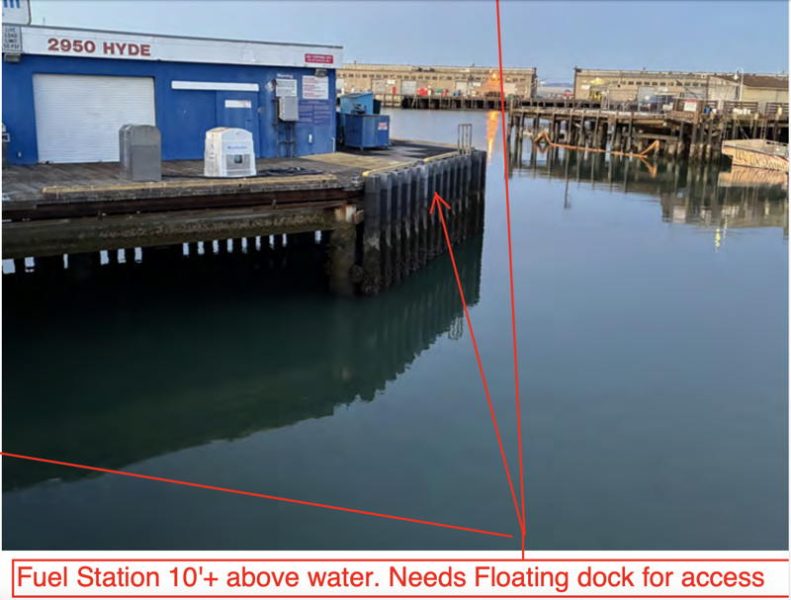
The agenda says it will “improve public access by establishing a shallow water basin in the southern section of the East Marina for kayaks and small boats that can be accessed from the shore by a community dock; improving the Bay Trail at East Harbor; and constructing Bay viewing and gathering areas.” We’ve often seen Bay trails and Bay-viewing and gathering areas included as Bay access, though to boaters, access means facilities that help them actually get off the land and onto the Bay. Removing slips and a fuel dock and replacing them with a community kayak dock, trails and park benches replaces facilities that support Bay access with more of a water theme park.
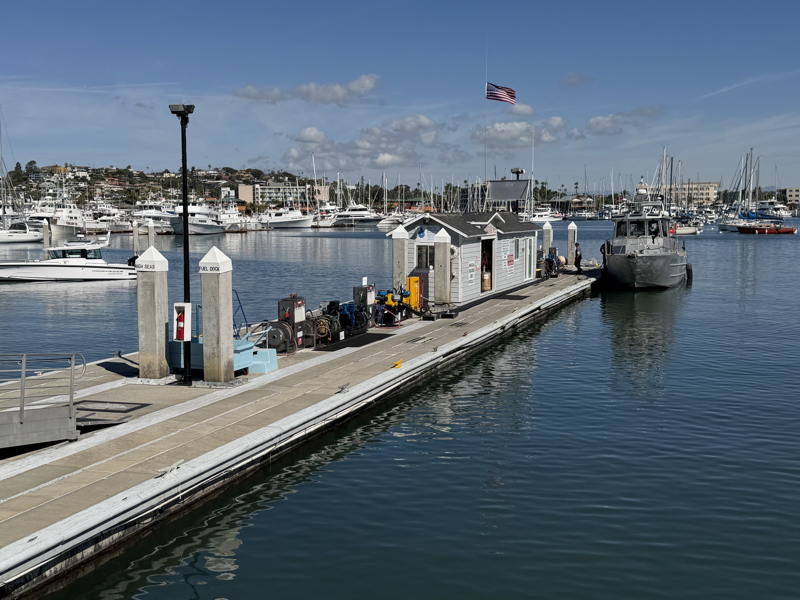
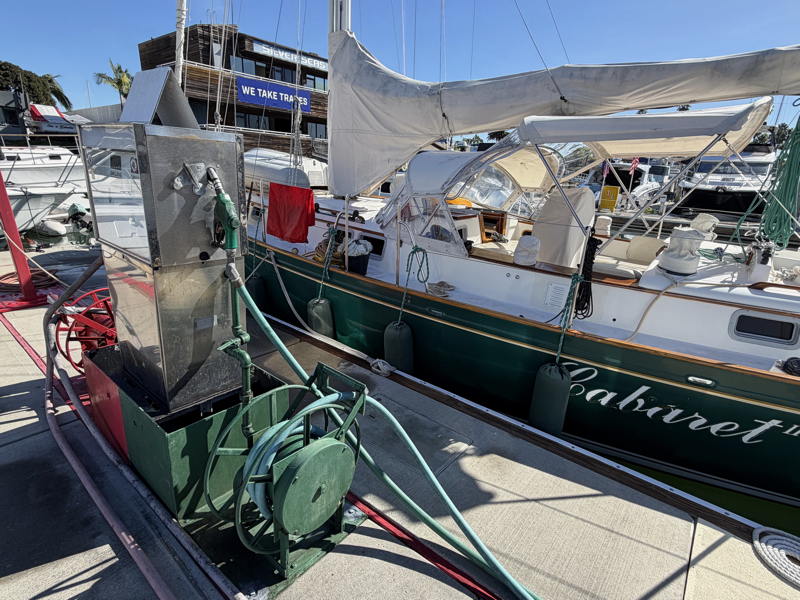
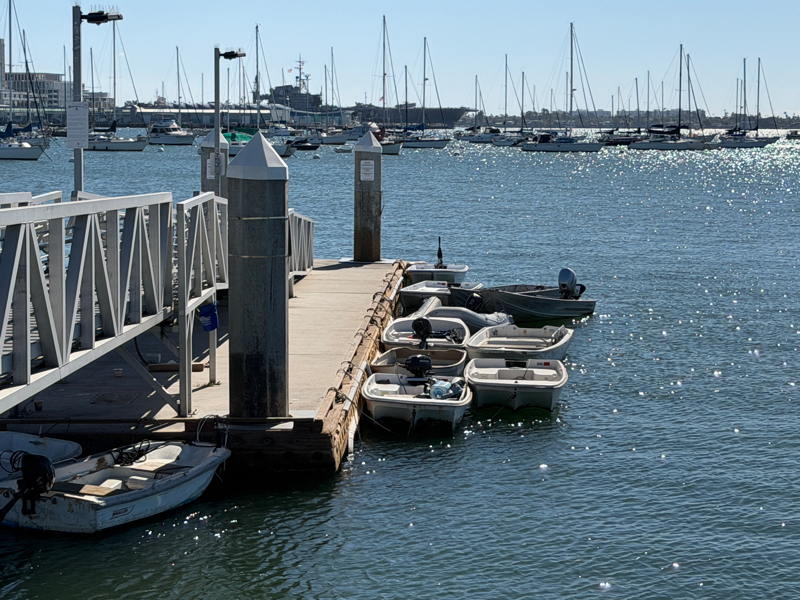
Contrasting recreational boating in San Francisco with the facilities available in San Diego is like comparing the Third World with the First World. We’ve just returned from our trip to San Diego Bay to send off the annual Baja Ha-Ha cruising fleet. This always gives us an opportunity to see the sharp contrast between the two port cities — San Diego has multiple, easily accessible, well-maintained fuel docks that welcome the Baja Ha-Ha fleet to their Bay. In addition, San Diego also provides anchorages, mooring fields and dinghy docks for both visiting and local boaters. While San Diego harbor geography does provide easier-to-manage conditions, it’s easy to see how San Francisco could be far more welcoming and supportive of the boating community.
The people who most want to protect the Bay are those who are able to actually access and use the Bay. San Francisco’s East Marina has been valuable public infrastructure, giving ordinary working-class families and youth access to the Bay. The small-boat harbor has been the launching point for generations of San Francisco Bay boaters and a critical resource for first responders.
The city of San Francisco is well-known for being 7×7 miles, meaning 21 miles of its 28-mile perimeter adjoin water. Supporting facilities to access the Bay should be a prime vision for this waterfront municipality. The Bay and ocean are prime features of the Bay Area, but access is limited by the space and facilities on land that are the “trailheads” to getting onto or into Bay Area waters. The Surfrider Foundation works to preserve valuable access to surf breaks along the coast, along with preserving a healthy, sustainable ocean. The Golden Gate Salmon Association works hard to preserve healthy marine fisheries. Boaters of all kinds also need to join these groups to preserve both the access and health of the Bay and surrounding waters for future generations.
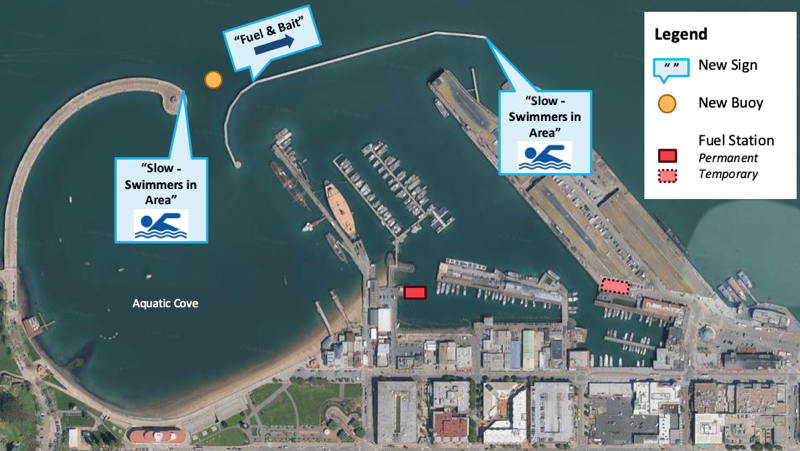
Over the past year or so, we’ve shared a couple of updates to the ongoing discussions about the proposed redevelopment at Gashouse Cove. It appears the time for final decisions is drawing closer, so if you want to support and save accessibility to boating facilities on the Bay, speak up now!
You can review the BCDC agenda here, add your public comment here and see the proposed Hyde Street fuel pier here.
‘Gitana’ and Francis Joyon out of Route du Rhum
The high-wattage Route du Rhum fleet electrified the crowds and bolted out of St. Malo, France, to race across the Atlantic to Guadeloupe. While the fleet departed in comfortable North Atlantic conditions for November, this didn’t prevent the event from quickly losing several of its high-profile participants in the first couple of days.
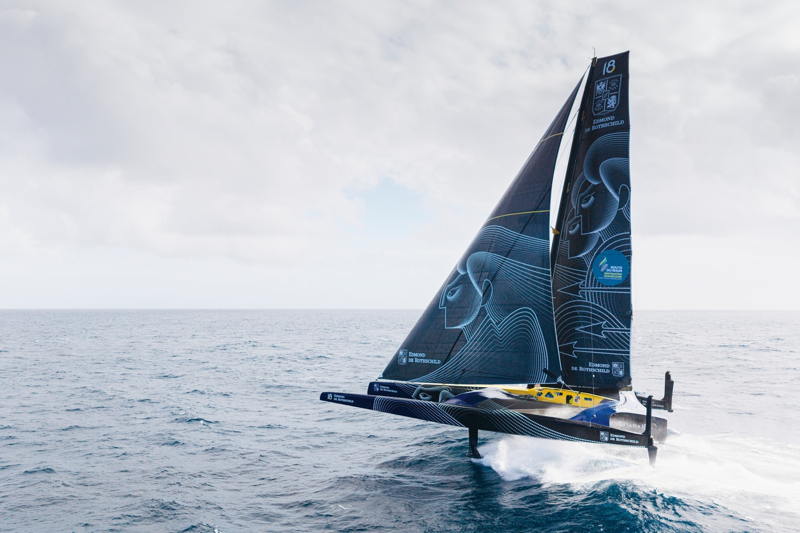
Charles Caudrelier, sailing the recently launched 105-ft Ultime trimaran Gitana 18, got off to a slow start but was rapidly gaining on the leaders when his port foil failed. Anthony Marchand, skipper of Actual Ultim 4, has also dropped out after something struck his main rudder while he was traveling at 40 knots. Then, Armel Le Cléac’h on the 100-ft Ultime Maxi Banque Populaire XI capsized this morning around 0530 (UTC) while sailing 550 miles northwest of the Azores. Le Cléac’h is safely inside, awaiting rescue operations to begin.
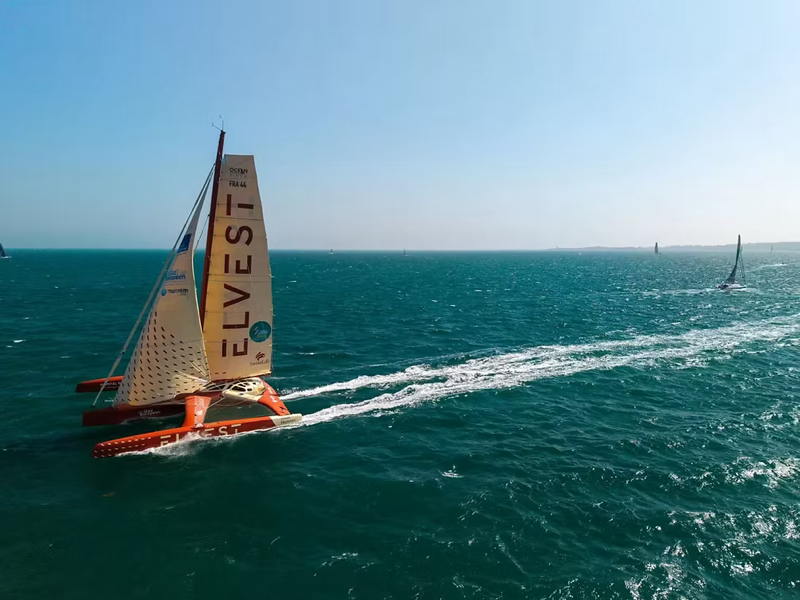
Earlier in the race, French superstar Francis Joyon, sailing an older trimaran, Oceans, in the Classic Multihull class, capsized his boat and was rescued by a nearby tanker. And last night the Ocean 50 trimaran Elvest capsized.
They’re navigating unusual conditions, with most boats passing to the north of the Azores for this year’s every-four-year event. Typically, the boats would be sailing south looking for the trade winds. But this year’s conditions (impacted by El Niño?) are creating a more complicated path for the weather routers and skippers.
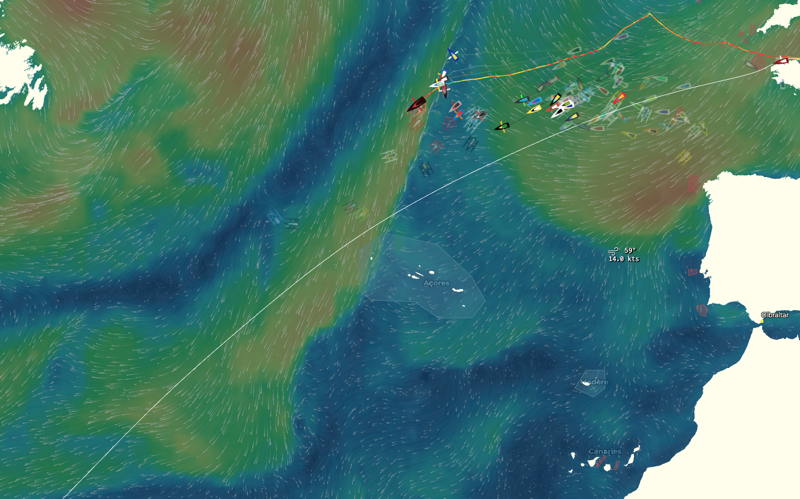
These boats are all meant to be pushing the limits, and the carnage so far demonstrates they are at the extreme end and sometimes over those limits. Meanwhile, the remaining boats in the seven fleets continue on this singlehanded challenge across the Atlantic.
The Captain Ron Phenomenon — Pop Culture Goes Sailing With a Cult Classic
There are sailing films that make you want to cross an ocean. There are sailing films that make you check your life insurance. Then there is Captain Ron, which makes buying a neglected boat and hiring a man you would hesitate to lend your lawn mower seem like a good idea.
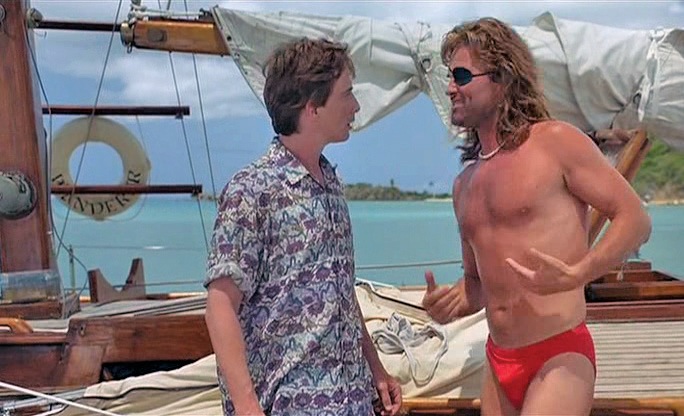
Somewhere between the first questionable decision and the last narrow escape, the sensible objections lose their authority. The boat needs work. The captain needs investigating. The family should probably go home. Yet home begins to look suspiciously like the least interesting outcome.
And that is how it gets you. You start researching boats and end up buying one, but the adventure is not included. So, Captain Ron to the rescue. You watch the movie again during a costly refit to remind yourself why you started. One day, you’re ready to sail away. When Captain Ron tells Martin Harvey he is the captain now, it feels as if he’s talking to you. Your spouse may wish to discuss the resemblance if you have already donned your Speedos.
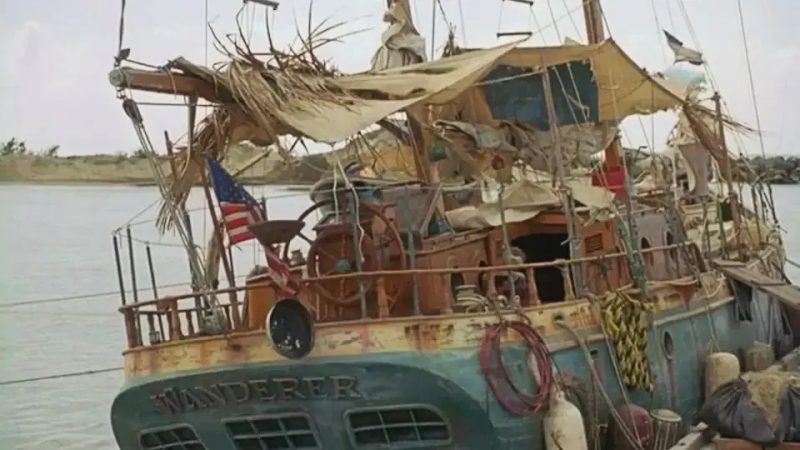
That is quite a sales pitch for a film whose initial reception gave little or no indication it would still be revered at docks, marinas and anchorages more than three decades later. Released in 1992, Captain Ron earned about $22.5 million at the domestic box office against a reported $24 million production budget. Those figures hardly suggest a hit, although they don’t tell us what it earned over the years.
Try getting that result from a yacht brochure. Boatbuilders, brokers, marinas, sailmakers and the fellow charging $90 for a little stainless-steel thing could hardly have asked for more. Hollywood sold the dream; they got to invoice the moviegoers turned boat owners.
Where the critics saw a flop, a marine electrician might have seen repeat business. Others found inspiration.
In Latitude 38‘s 2017 retrospective, reader Wayne Cederquist credited the movie with encouraging him to learn to sail, own boats and skipper Caribbean charters. There is at least one man whose ticket price proved wildly misleading. And I suspect there have been plenty more Waynes since. It would be a stretch to attribute a generation of cruisers to Kurt Russell in an eyepatch. But it is worth asking what this scruffy comedy offered that survived the bad reviews. For a start, it made adventure feel available to people who had done very little to deserve it. Before YouTube sailing channels, here was an ordinary family stumbling into a world where plans fell apart, strangers became important, and the next island might require a change of clothes, allegiance or transportation. Nobody needed to build an audience first. The voyage could be a complete shambles without anyone worrying whether they had filmed the shambles horizontally.
There was something wonderfully tempting about that. The sea offered access to a life in which things happened.
Westwind Yacht Management — Washing, Waxing and Varnishing
Westwind Yacht Management: Premiere Yacht & Fleet services for the San Francisco Bay Area.