

‘Mr. Peabody’ Wins 2026 Ultimate 20 North Americans
The 2026 Ultimate 20 North Americans were sailed at Richmond Yacht Club between October 2 and 4. The event featured 12 boats, with eight races sailed. Each team was afforded one drop. The ultimately (pun intended) victorious team was Donna Womble’s Mr. Peabody (Monterey Peninsula YC), who tallied a net total of 14 points to claim the North American title. Womble and team came on particularly strong to close out the regatta, winning the final three races and sealing the championship.
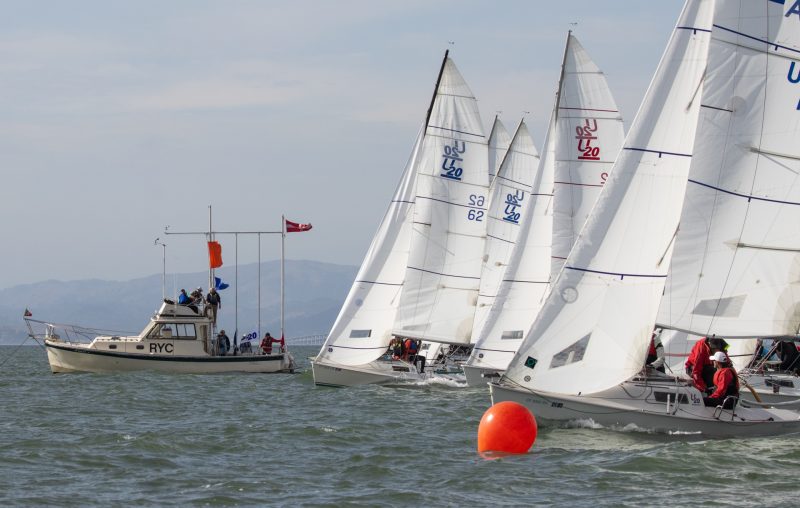
Womble and team finished three points ahead of second-place John and Jennifer Andrew and their team on Cinderella Story (Santa Cruz YC). Womble shares her thoughts on the event:
The Ultimate 20 North Americans turned out to be an extraordinary weekend of great racing. We expected to see high winds and big chop, but were pleasantly surprised to sail in moderate to light winds with little to no current. We had onshore postponements on every day of racing, but were fortunate to get out and race later each day.
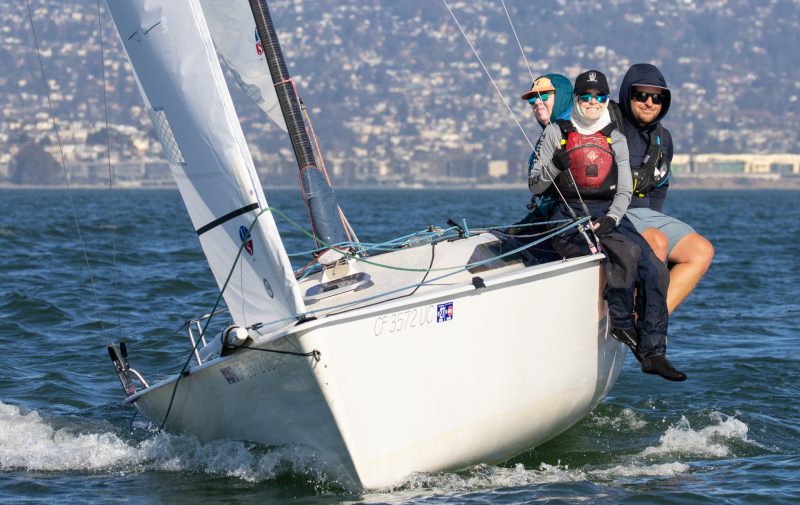
There was a small amount of rough water, especially near the start of each race. We found that footing slightly off the line really helped to get bow-forward relative to the fleet. We tried to always start in a position that allowed us to do that. Having a clean start with clear air off the line was key to pulling ahead.
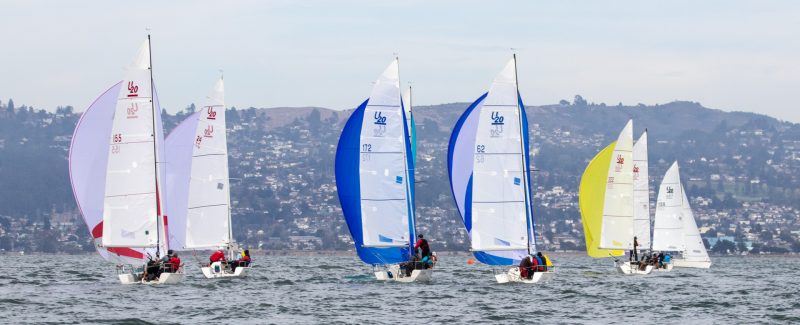
Having good crew work was also essential in these conditions. The sometimes very crowded mark roundings meant that everything needed to go as planned without a lot of prompting. I am grateful for the great teamwork shared with Brian Hoover and Callie Jepsen. I was able to focus mainly on boat speed while Brian called tactics and Callie managed all the other details.
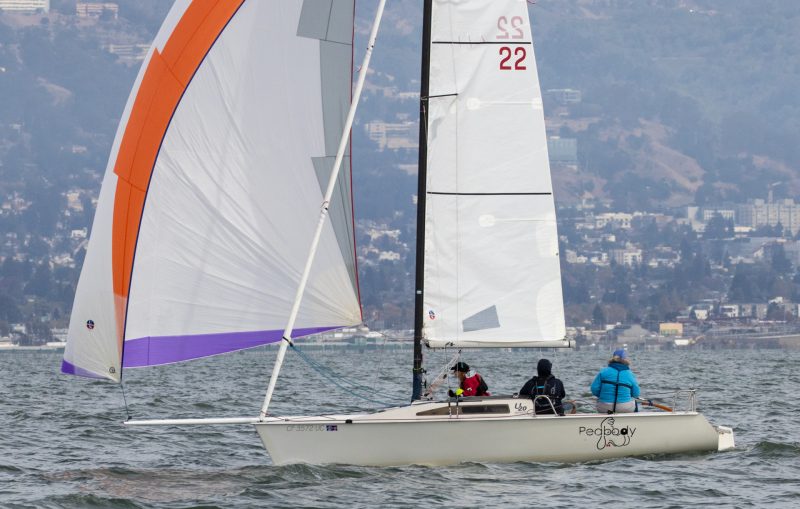
Special thanks to Mike Josselyn for organizing an excellent event at Richmond Yacht Club. Kudos to our PRO Ian McClelland and his team for managing the races in these conditions.
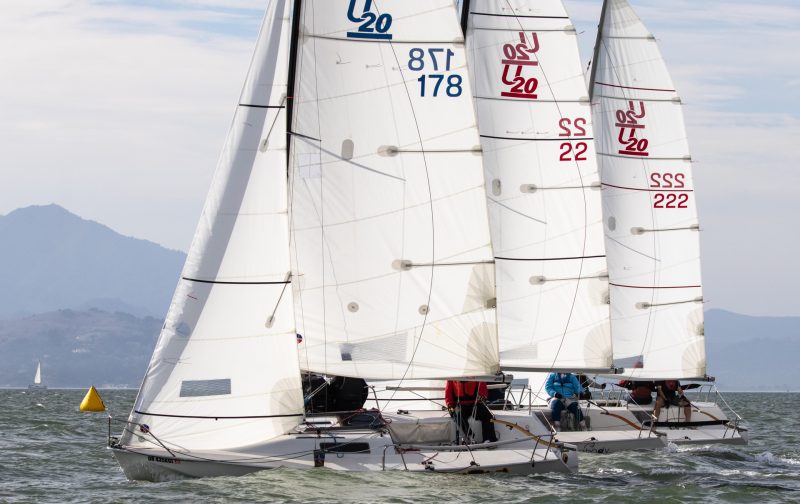
Of note, the regatta was sailed in conjunction with the 2026 Express 37 Nationals, also won by a MPYC boat: Mark Chaffey and Heidi Hall’s Loca Motion.
You can find the full results of the 2026 Ultimate 20 North Americans here.
Caption Contest(!)
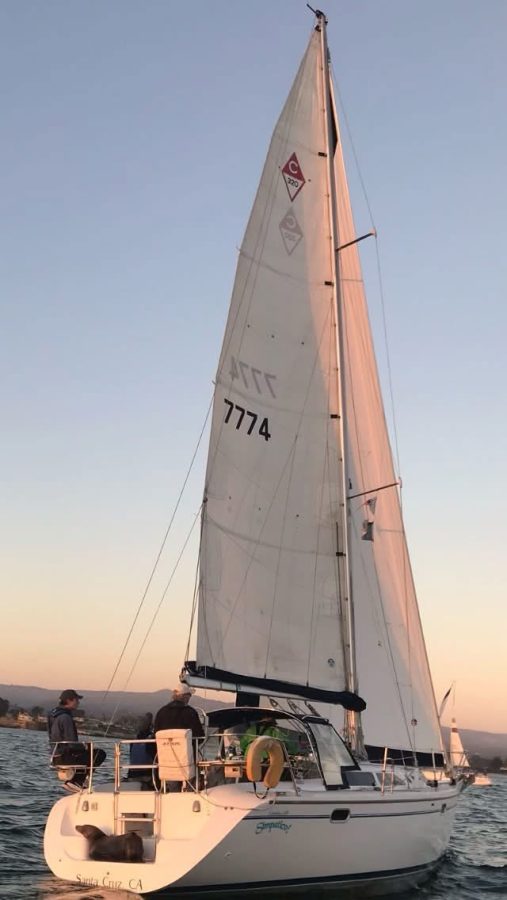
This photo is just too good not to share again. Last Monday, we posted the story of this eager sea lion joining a recent Tuesday night race in Santa Cruz. Full story here.
While you’re pondering your captions, perhaps you can also think of a name for this drop-in crew member.
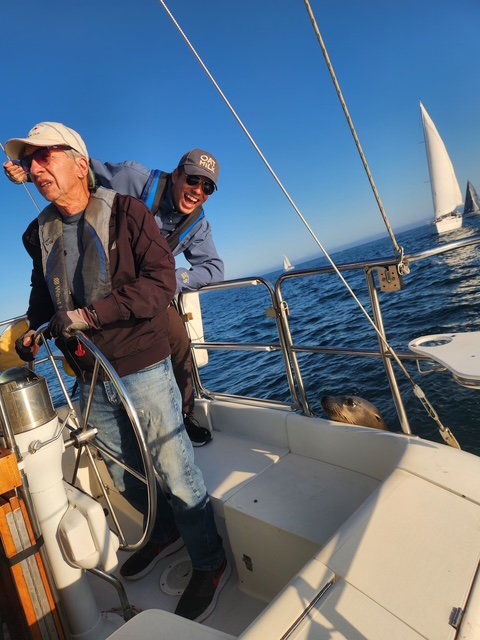
And here’s the other photo, just to prove that this newest crew did indeed complete the race.
You can see last month’s winners and top 10 in October’s Latitude 38, here.
Navigate to Novamar for Your US and Mexico Yacht Insurance Needs
Beer Can Season Ending, Blue Angels Flying, Simon Churning
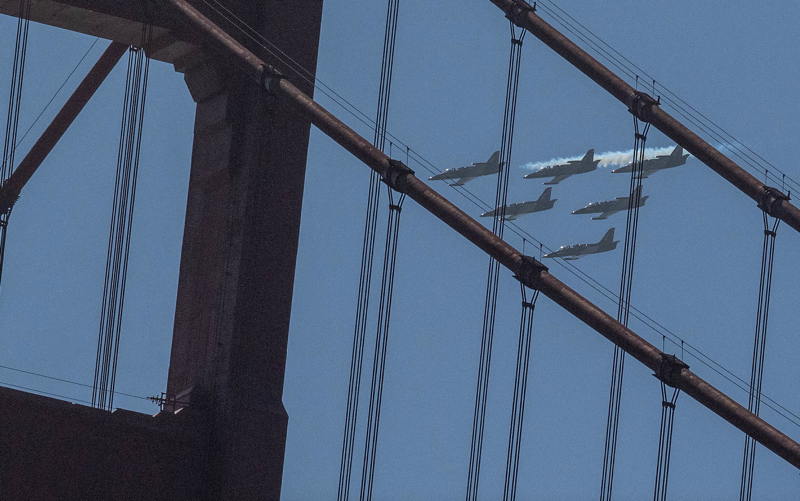
Lots of signals are in the air as we shift to some of the best seasonal sailing of the year. The Blue Angels had a great Fleet Week weekend that was cool but with bright blue skies, sunshine and fresh breezes. Jeff Berman of the Tartan 4000 Maverick joined hundreds of boats on the Bay to capture shots of the weekend air show as the planes ripped above the Bay.

The Blue Angels stood out despite the “blue-on-blue” coloring in the sky. Like racers on a starting line, they keep their wings trimmed for speed and their formation tight.
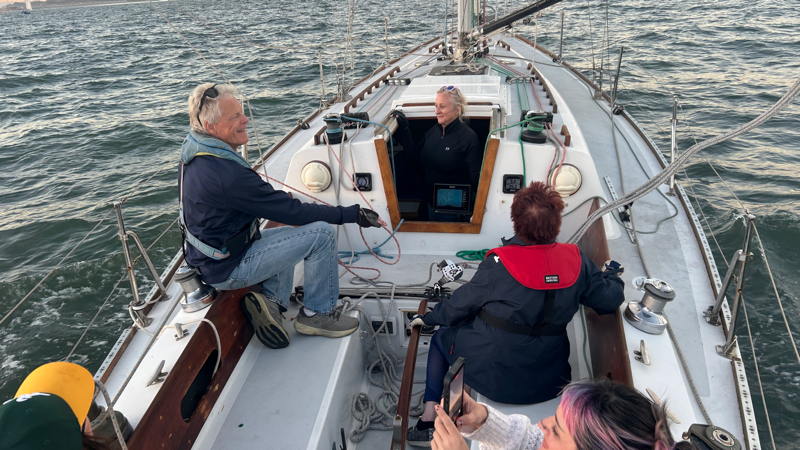
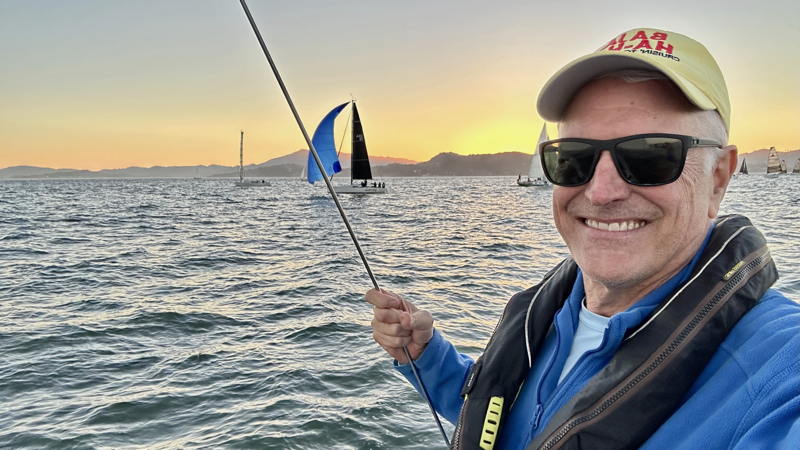
In other news: A couple of weeks ago, Greg Clausen joined the rest of the Richmond Yacht Club fleet to cruise the Bay on their last Wednesday night beer can race of the season. He joined owner Chris Case on his Cal 40 Fugu for a perfect warm, light-air evening to say a fine farewell to another summer season on the Bay.
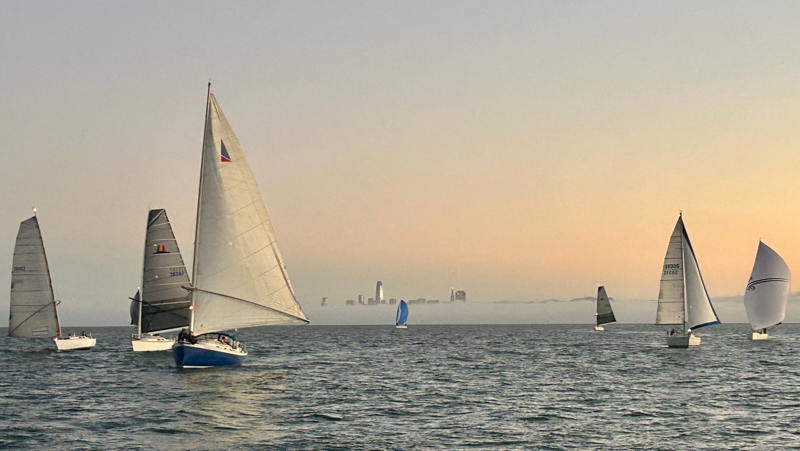
The shorter evening had the boats finishing the short course with their running lights on.
Beer can racing may be over, but midwinter racing will be starting soon. You can find a midwinter series near you here. Sign up for something and you’ll find yourself sailing more often. Check out the events and races happening this coming weekend.
Meanwhile, farther south, Hurricane Simon is still tormenting the west coast of Mexico. Some of the wide variety of projected storm tracks showed it moving toward the coast south of Banderas Bay, while others had it staying west. At this point, the western track has prevailed, leaving the marinas and beachfront hotels in Banderas Bay mostly unscathed.
It looks as if Hurricane Simon still intends to hit a segment of the Mexican coastline hard when it makes landfall. It’s moving slowly as it heads north with a projected landfall somewhere near Mazatlán. It will continue to create heavy swells and dangerous surf along the coast as the conflicting weather models attempt to determine its final course.
After a tense weekend of waiting in Banderas Bay, the waiting game moves north while Hurricane Simon churns offshore, with its future landing now not expected to happen for five more days. The hurricane is not supposed to intensify, but wherever it lands, they will surely feel the impact.
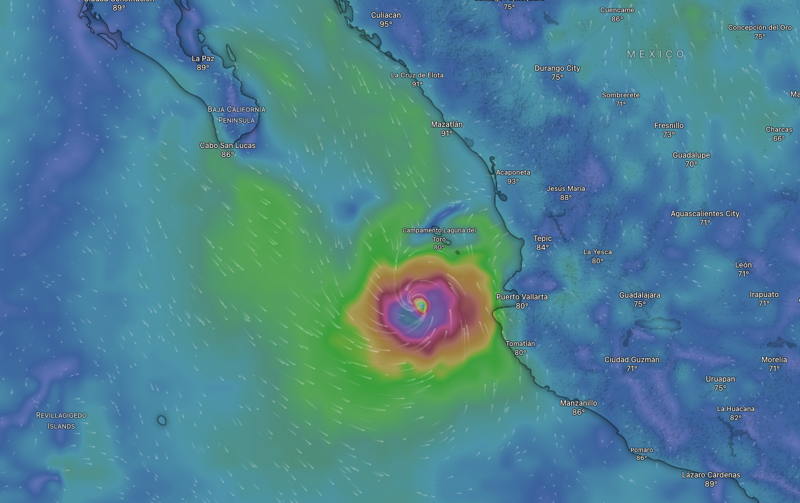
And … there’s no rest for the weary. Much farther south another system is forming and will likely turn into another hurricane with a track heading north along the west coast of Mexico.
The offshore storms in Mexico have caused flooding and damage in Newport Beach, Long Beach and other Southern California harbors. Conversely, San Francisco Bay hasn’t felt much impact from the larger forces at work from El Niño, the Kelvin wave and whatever other mysterious weather cycles are about to unfold in the months ahead. If you’ve been on the Bay over the last few weekends, you will have savored some of the best seasonal sailing ever.
We hope for favorable outcomes for all sailors and sailing communities up and down the entire West Coast.
Lifejackets and a Broader Discussion of Boating Safety
In the September issue’s Letters, a reader suggested there was an unspoken question surrounding the Volare tragedy: Should the passengers have been wearing lifejackets, and would wearing them have prevented any loss of life?
“Why is no one talking about the elephant in the room: life jackets?” a reader asked. “As a former Bay sailor and racer (Santana 22) and an expired US Coast Guard captain’s license, I insisted each person on board wear the latest in self-inflating life jackets. And I supplied them. I realize boating in the Delta can relax your concerns, but being in the middle of the Slot with a fully loaded boat changes everything. Only ‘carrying’ life jackets, one per person, is required by law. But wearing them should be the norm. I grieve for the family, and I hope the rest of us will learn from their very hard very sad lesson.”
Another reader responded to that comment, suggesting that lifejackets won’t likely be the norm on certain vessels, and that whether lifejackets would have helped was debatable. “It’s great to encourage people to wear PFDs, but it’s also important to remember that this was a 50-ft trawler, not a 22-ft sailboat. It’s a very big difference. Wearing a PFD while sitting in the salon of a big trawler enjoying canapés isn’t going to become the norm. And it seems that the majority of the fatalities occurred because people were trapped in the boat, so PFDs are somewhat of a moot point.”
We agree and disagree with both comments, but we see a larger question emerging that goes beyond the often knee-jerk reactions surrounding lifejackets. Are we treating lifejackets as a universal antidote, oversimplifying the complexities of seamanship and overlooking other risks? In the aftermath of a tragedy, are we too quick to embrace a convenient narrative rather than question our own assumptions?
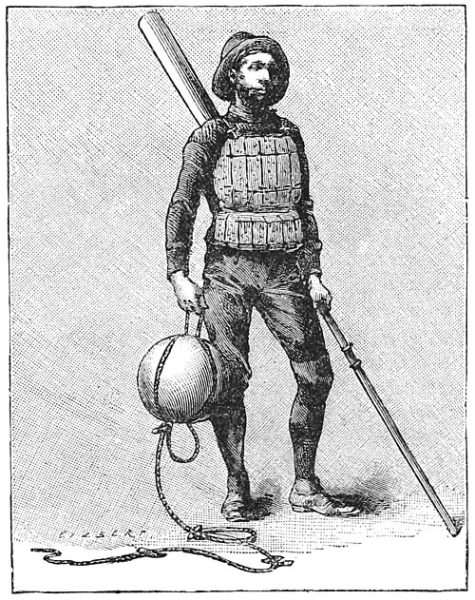
The first reader makes a reasonable argument that Latitude 38 supports: Lifejackets are generally a good idea and will probably make you safer on the water, especially in smaller boats in challenging conditions. But we’re troubled by the suggestion that there’s an obvious lesson to be learned from the Volare tragedy. What lesson, exactly? We don’t know whether lifejackets would have prevented any loss of life, and we think it’s premature to suggest that the absence of lifejackets was a contributing factor.
The second reader makes an important distinction between a 22-ft sailboat and a 50-ft trawler. Different vessels present different risks, and we can’t imagine that wearing a lifejacket while relaxing inside the salon of a motorboat will become the norm. But we think we should be just as cautious about dismissing the potential value of lifejackets as we are about assuming they would have saved lives.
A few years ago, we wrote that “sometimes sailors don’t wear lifejackets,” and explored the often-absurd knee-jerk reactions to photos of boaters without PFDs. But wearing a lifejacket is only one part of staying safe on the water. An easily deployable boarding ladder may be just as important as a flotation device. Then there’s hypothermia, exhaustion or entirely different dangers, such as being trapped inside a sinking vessel.
In our zeal to embrace the obvious safety benefits of lifejackets, do we risk becoming myopic about other dangers?
Some Common Misconceptions About Living Aboard a Sailboat Full-Time
If you’re scrolling any type of social media these days, I’m sure you’ve seen a bunch of reels/TikToks/etc. of some cute young couple or individual selling everything to move aboard a boat. While this is nothing new, the influx of social media clips has been overwhelming, at least my algorithm, often showing people who are completely new to the world of sailing. (Nothing wrong with this, by the way; everyone’s gotta start somewhere.) However, it’s easy to be swayed by some aesthetically pleasing video with trending audio. Boat life can be extremely rewarding and a great lifestyle, but as with anything in life, it’s probably a good idea to have an understanding of what you’re getting yourself into. So, as someone who’s been living aboard sailboats under 40-ft full-time for the past eight years, I put together my top takeaways and want to bust some common misconceptions of landlubbers.
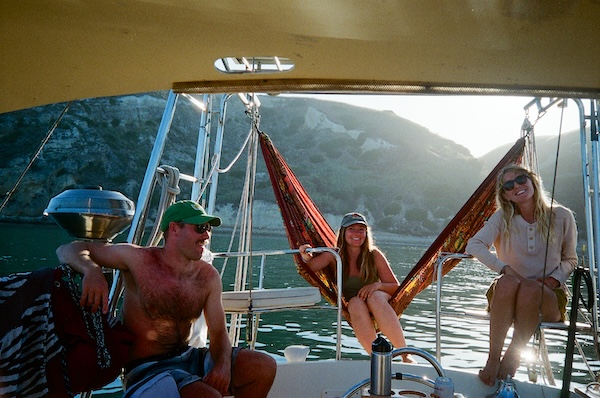
Disclaimer: I’m obviously very biased, as I’ve only lived aboard sailboats under 40-ft, in California. Other parts of the world are going to be much different, as well as other types of boats and personal situations, but as a liveaboard in Southern California who has bounced around the state, I have years of experience pertaining to this specific context.
No. 1: It’s Cheaper — OK, there are definitely circumstances in which boat life can be substantially cheaper than living in a house on land. For example, let’s say you live in an expensive city in California, like Los Angeles or San Francisco. With housing costs in places like this being astronomical, the thought of purchasing a boat under $100K and living on it for five to 10 years does sound much cheaper.
However, some folks new to the sailing world might not grasp just how much maintenance a boat requires, especially while living aboard. Also, the maintenance largely depends on the vessel you purchase. Let’s say, for argument’s sake, a 30-year-old 40-ft boat is selling for $50K–$80K. Chances are it’s going to need A LOT of work to be livable and in functioning shape. Most older boats are going to need updated electrical work, plumbing, rigging, mechanical and in some cases structural work in order to just be a comfortable living space.
Another factor is marina space. In crowded, sought-after cities, marina space is going to be hard to obtain. Lots of marinas have long waitlists for “liveaboard” slips. If you’re lucky enough to score one, you still need to make sure your vessel passes the approval of the marina, and that you can afford the slip fee every month.
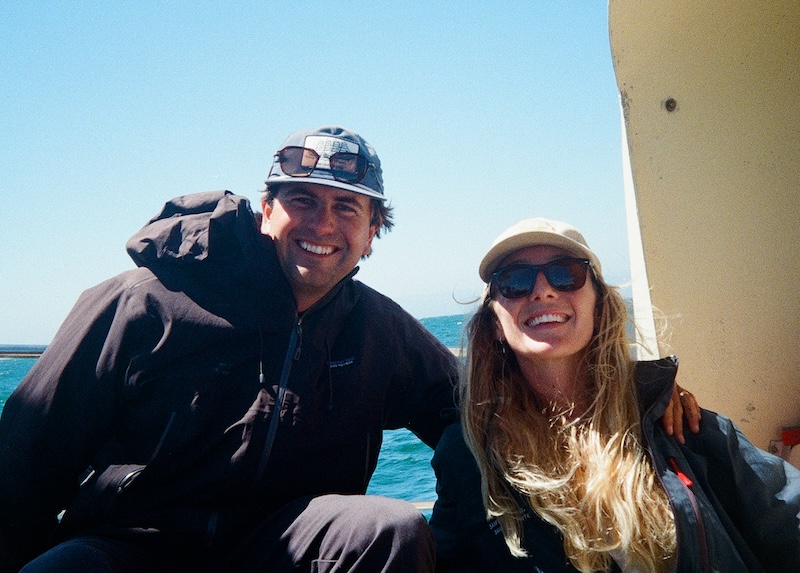
San Francisco on the Bay: Dock, Dine, Stay, Play

The List: Dine, Drink, Smoke, Stay, Play and Shop. Discover San Francisco Bay and all that inspires those of us who live or visit here.