

Lifejackets and a Broader Discussion of Boating Safety
In the September issue’s Letters, a reader suggested there was an unspoken question surrounding the Volare tragedy: Should the passengers have been wearing lifejackets, and would wearing them have prevented any loss of life?
“Why is no one talking about the elephant in the room: life jackets?” a reader asked. “As a former Bay sailor and racer (Santana 22) and an expired US Coast Guard captain’s license, I insisted each person on board wear the latest in self-inflating life jackets. And I supplied them. I realize boating in the Delta can relax your concerns, but being in the middle of the Slot with a fully loaded boat changes everything. Only ‘carrying’ life jackets, one per person, is required by law. But wearing them should be the norm. I grieve for the family, and I hope the rest of us will learn from their very hard very sad lesson.”
Another reader responded to that comment, suggesting that lifejackets won’t likely be the norm on certain vessels, and that whether lifejackets would have helped was debatable. “It’s great to encourage people to wear PFDs, but it’s also important to remember that this was a 50-ft trawler, not a 22-ft sailboat. It’s a very big difference. Wearing a PFD while sitting in the salon of a big trawler enjoying canapés isn’t going to become the norm. And it seems that the majority of the fatalities occurred because people were trapped in the boat, so PFDs are somewhat of a moot point.”
We agree and disagree with both comments, but we see a larger question emerging that goes beyond the often knee-jerk reactions surrounding lifejackets. Are we treating lifejackets as a universal antidote, oversimplifying the complexities of seamanship and overlooking other risks? In the aftermath of a tragedy, are we too quick to embrace a convenient narrative rather than question our own assumptions?
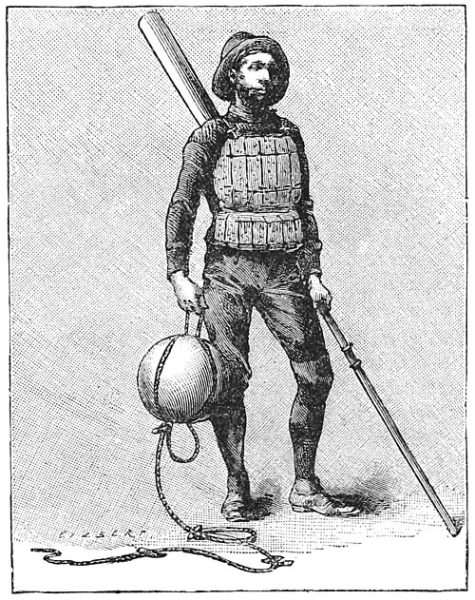
The first reader makes a reasonable argument that Latitude 38 supports: Lifejackets are generally a good idea and will probably make you safer on the water, especially in smaller boats in challenging conditions. But we’re troubled by the suggestion that there’s an obvious lesson to be learned from the Volare tragedy. What lesson, exactly? We don’t know whether lifejackets would have prevented any loss of life, and we think it’s premature to suggest that the absence of lifejackets was a contributing factor.
The second reader makes an important distinction between a 22-ft sailboat and a 50-ft trawler. Different vessels present different risks, and we can’t imagine that wearing a lifejacket while relaxing inside the salon of a motorboat will become the norm. But we think we should be just as cautious about dismissing the potential value of lifejackets as we are about assuming they would have saved lives.
A few years ago, we wrote that “sometimes sailors don’t wear lifejackets,” and explored the often-absurd knee-jerk reactions to photos of boaters without PFDs. But wearing a lifejacket is only one part of staying safe on the water. An easily deployable boarding ladder may be just as important as a flotation device. Then there’s hypothermia, exhaustion or entirely different dangers, such as being trapped inside a sinking vessel.
In our zeal to embrace the obvious safety benefits of lifejackets, do we risk becoming myopic about other dangers?
There are not a lot of conditions that I can conceive of where wearing a lifejacket increases the likelihood of death in a boating accident. You’ve identified the #1 reason above: entrapment either under a trampoline e.g. PlayStation, or entrapment in an inverted cockpit e.g. Wingnuts, or entrapment in the cabin of a boat e.g. Volare. Peter Isler did not wear a lifejacket when he swam from the inverted Rambler 100 because the buoyancy would likely have prevented him from swimming the 12 or so feet to the lifelines and then swim down and under the lifelines to get to the surface.
I don’ t know much about the accident involving Volare other than what was reported in Lat 38 so it’s difficult to estimate how many lives might have been saved by having everyone wear a lifejacket. Of the individuals who are on the upper deck and who fell into the water, I don’t think there’s any question that they would have been able to stay alive far longer while waiting for rescue than without. That’s one of the principle benefits: lifejackets extend the amount of time that the wearer has before they begin to aspirate water and begin to drown. Many people think that hypothermia is the main cause of death when people are unintentionally immersed in water, but it turns out that hypothermia takes quite a while to kill someone (perhaps 30 minutes to several hours) while drowning can happen in a few minutes.
I think the arguments against wearing lifejackets are highly analogous to the arguments of wearing seatbelts. Yes, we can conceive of instance where wearing a seatbelt is more dangerous than not, generally based on the issue of entrapment in a burning car or a similar accident, but that’s a tiny percentage of the accidents compared to being thrown violently inside (or outside) of the car.
Water temperature is a huge factor in being able to survive a man overboard situation, as is having a skilled person at the helm. No 2 overboard situations are exactly alike.