

Making Love and Money Work on the Sausalito Waterfront
“What you don’t have is love,” said a French member of the Master Mariners. We were discussing the exodus of classic wooden boats leaving San Francisco Bay for restorations in France, and about the world’s last remaining, beautiful M Class sloop Pursuit, which used to grace the Sausalito waterfront before a Frenchman bought her to have her restored in a French boatyard for a life on the Med. He described speaking to a Bay Area local who said, “Oh, the French have so much money with which to restore old boats,” to which he replied, “You’re crazy. Americans are rich and have all the money. What you don’t have is love.”
We remembered this conversation while attending the Sausalito waterfront meeting a few weeks ago at the Spinnaker Restaurant, hosted by the Richardson Bay Maritime Association (RBMA), which is “dedicated to the preservation and revitalization of Sausalito’s working waterfront and its maritime heritage and tradition.”
The meeting’s purpose was to bring the Sausalito community together to help inform voters with a discussion of various visions for the waterfront from Gate 5 Road toward downtown, with much of the conversation focused on the Arts, Industrial & Maritime Preservation and Improvement Initiative (Measure X) on the November ballot. The meeting was attended by residents of Sausalito, members of the RBMA, the Sausalito Working Waterfront Association, the Sausalito Sustainable Waterfront Association and many interested parties. (Voters and others can help inform themselves with the links at the end of this story.)
Many viewpoints were shared, with many speaking up for a thriving waterfront. But visions vary widely on what thriving looks like. Proponents of change talked of new businesses that would include more amenities such as restaurants, brewpubs, fish markets, coffee shops, bakeries and retail. Proponents of the maritime trades spoke up for increased boatbuilding, marine and industrial trades, makers and maritime services.
After the meeting, one attendee reminded us that Sausalito’s working waterfront used to stretch from Nunes Brothers Boatyard (builder of the 118-ft schooner Zaca) in Whaler’s Cove (now Portofino Apartments at the south end of Sausalito) all the way to Gate Five Road to the north.
One point of broad agreement is the sentiment that change is needed. As always, the devil is in the details. The issue arises as national interest is focused on reshoring industry, interest in trade careers grows, and the need for a growing maritime workforce arrives alongside state and federal funding to foster new manufacturing businesses and support the maritime trades. The New York Times video below talks to young people looking for reliable career paths and expressing a desire to live IRL (In Real Life), which could bode well for hands-on careers in the maritime trades. Marine trade schools are growing with the Spaulding Marine Center’s apprentice program and the Working Waterfront Coalition school on Mare Island.
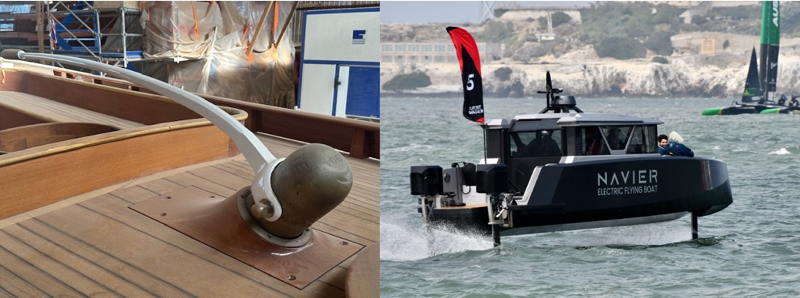
Cal Poly Maritime in Vallejo recently received a grant from the state as part of the effort to grow the maritime trades. Growth in arts, industry and maritime trades could create opportunities for young people like the kids from San Rafael in the video above, who are imagining careers as welders and craftspeople building and repairing sailing ships, workboats or electric foiling ferries. Spaulding Marine Center in the Marinship was ahead of the curve and has run the apprenticeship program in the Marinship for about five years.
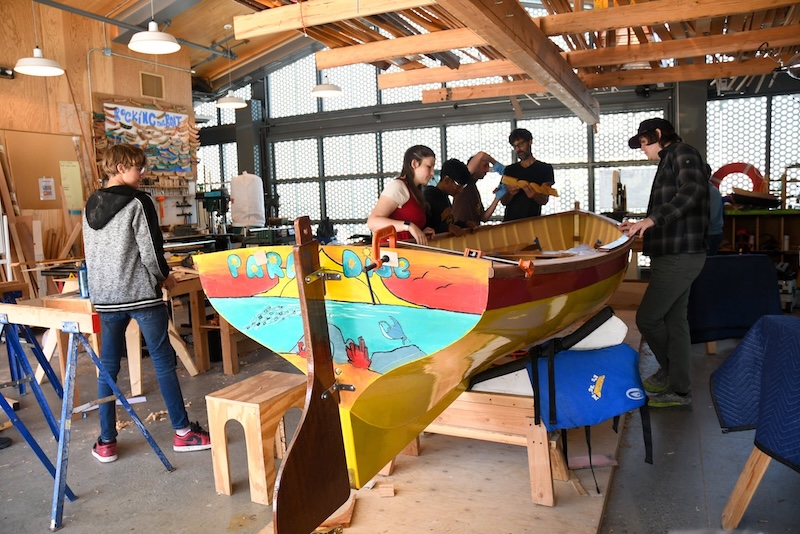
As we noted on Labor Day, we recently shared two stories about youth who have built and launched boats on the San Francisco Bay waterfront. Mayor Daniel Lurie attended the Rocking the Boat launch party to show his support for the maritime trades, hands-on learning, and a waterfront that works for San Francisco.
One thing apparent from the RBMA meeting is that many people share a desire to improve the working waterfront. There’s no doubt many sailors and residents would love to see a modernized working waterfront that expands the marine trades and the innovative craft, artisan, maker and trade jobs that come with them. In fact, outside of marine concerns, change is already happening in the area with the planned 300-unit, six-story apartment building at One Harbor Drive across from Mollie Stone’s.
The RBMA meeting at the Spinnaker Restaurant showcased the tough choice facing Sausalito. Measure X supporters argue more flexibility is needed to attract investment, while maritime advocates worry whether the changes will help the working waterfront thrive or whether more lucrative uses will eventually crowd out the maritime trades the measure aims to preserve. Is there a Goldilocks middle ground where an innovative, vibrant working maritime/industrial zone could grow alongside more flexible uses? Unfortunately, a middle ground is not on the ballot, with only a yes or no vote possible.
We’ve talked with quite a few people on different sides of this issue and asked ChatGPT to help us wade through some of the initiative’s language and City documents. We know both AI and humans can misinterpret complicated material, so we can’t claim we’ve got this right. The brief Sausalito city attorney’s summary begins with, “The Arts, Industrial & Maritime Preservation and Improvement Initiative, An Initiative Revising Zoning Standards in the I and W Zones, Repealing the Marinship Specific Plan, and Revising Ordinance No. 1022 to Allow Future City Council Modifications to Zoning Outside the Downtown Historic District: This measure would revise Ordinance No. 1022, known as the Fair Traffic Limits Initiative, which enacted certain land use standards for commercial and industrial districts and prohibited further changes to zoning without voter approval.”
We’ve included links below to the City of Sausalito’s official Measure X documents and to groups advocating different positions on the initiative. There’s a lot of material to absorb, in addition to asking questions and talking with dock and land neighbors and the people who work on the waterfront. We sense that all parties want to find a win/win with a thriving zone of art, industry and maritime functions that provides economic growth and solid jobs for all companies and people in the area.
Sailors and Sausalito residents love the unique culture that surrounds the marine heritage of their waterfront. Sausalito voters will need to decide if this initiative will help balance love and money to create an economically viable waterfront with vibrant maritime businesses alongside the community heritage and amenities that serve workers, boaters and residents.
You can read more at Yes on Measure X, the Sausalito Working Waterfront, the NoOnX page, the Sausalito Sustainable Waterfront page, City of Sausalito’s Measure X page.