

- General Sailing
- Repair & Maintenance
- Current News
- Environmental News
- Commentary
- Wings & Foils
- Working Waterfront
What Happens on Innovative, Pioneering Working Waterfronts?
This isn’t your grandfather’s working waterfront, and this isn’t simply an exercise in maritime nostalgia. Today’s working waterfront isn’t about freezing an old-fashioned maritime economy in amber. It’s where some of the technologies shaping the maritime economy of tomorrow are being built.
As the conversation has grown about revitalizing Sausalito’s industrial marine trade zone, we asked ourselves what’s happening on working waterfronts around the world. The answer is pretty thrilling, and some of it is already local.
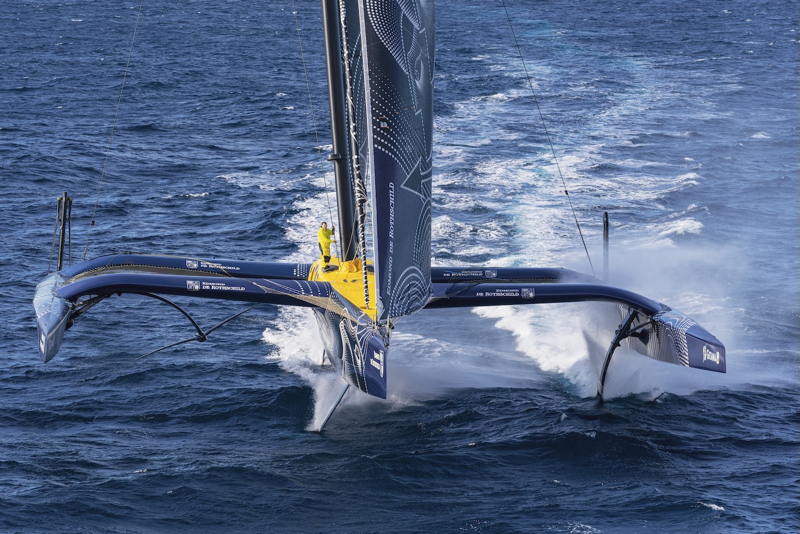
New Zealand’s Core Composites built the wings and foils that helped win the 2013 America’s Cup on San Francisco Bay, and now builds boats and wings for SailGP. French yards are building 100-ft foiling Ultim trimarans capable of sailing around the world in about 40 days. Meanwhile, in stodgy old places like Maine, innovators are 3D-printing boats.
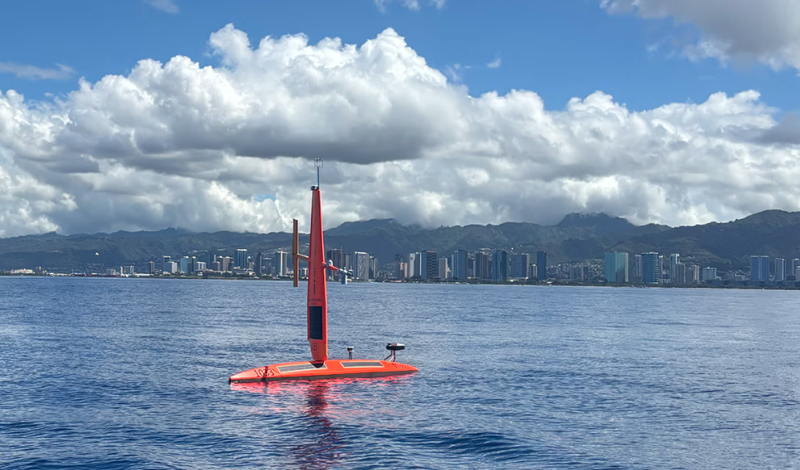
But it’s not just sailing. Working waterfronts are also home to a growing blue-tech economy spanning autonomous vessels, aquaculture, energy, ocean exploration, underwater robotics and wave power. In Sausalito’s Marinship, Universal Sonar Mount builds systems for deploying sonar and other equipment beneath vessels; across the Bay in Alameda, companies such as Navier and Saildrone are developing electric foiling boats and autonomous vessels.
Saildrone founder and CEO Richard Jenkins is a sailor and former world land-speed sailing record holder who founded the Alameda company in 2012. What began with autonomous, wind- and solar-powered sailing vessels collecting ocean and weather data has grown into a much broader business spanning fisheries research, ocean mapping and maritime intelligence, including defense work. Saildrone’s uncrewed vessels have now logged more than 2 million miles and 60,000 days at sea.
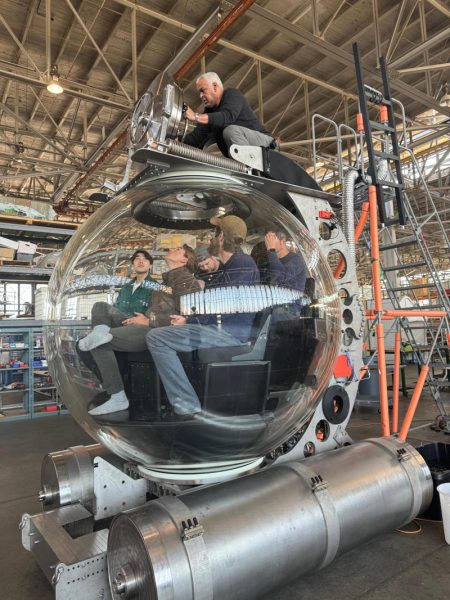
At the Port of Los Angeles, the nonprofit AltaSea has transformed former cargo facilities into a 35-acre campus where ocean-focused businesses, researchers and educators can develop and test new technologies. Through partnerships such as the Scripps Institution of Oceanography’s StartBlue accelerator, the campus supports emerging companies working in fields ranging from wave power and underwater infrastructure to weather intelligence and autonomous systems, while also providing education and workforce training.
Around the Bay, DOER builds deep-ocean exploration vehicles; Bedrock maps the seafloor with autonomous underwater vehicles; Reefgen develops underwater robotics for marine restoration; CalWave is developing technology to generate electricity from ocean waves; and Wildtype is growing seafood from cells. Sofar Ocean uses a network of ocean sensors to provide maritime intelligence; and Terranova is lifting land, like the Marinship, out of flood zones.
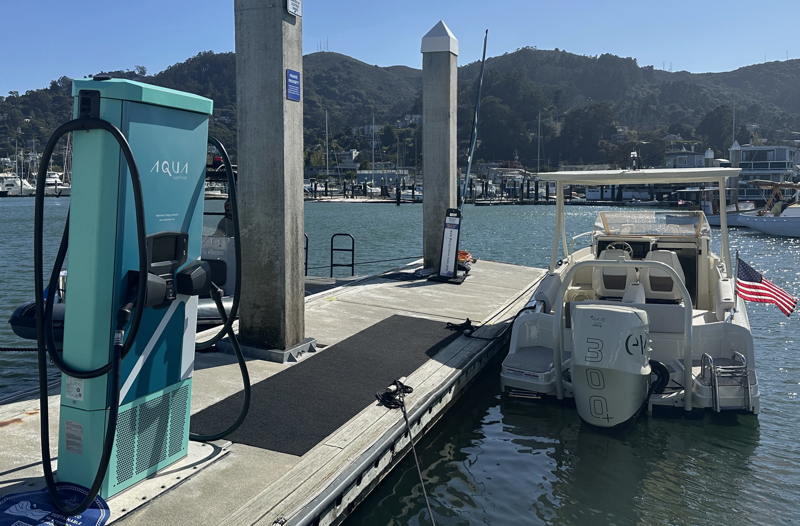
Clipper Yacht Harbor in Sausalito has installed the Bay Area’s first dockside EV charging station for the growing number of electric boats on the waterfront. Some of those advances will be on display — and available for demo rides — at next weekend’s Sausalito Boat Show, where exhibitors include Saildrone, Vita Power, Sea Watts, RAD Propulsion, ARC and others. (Come see us at Booth #203, and use code L38 for a $5 discount.)
Before becoming Safe Harbor Sausalito/Richmond, KKMI was known for investing in environmentally sound boatyard practices; its Point Richmond yard became the first Bay Area boatyard to earn Clean Marine certification. Berkeley Marine Center has installed the Bay Area’s first fuel-cell auxiliary system in a sailboat and converted numerous sailboats from diesel to electric auxiliary propulsion.
Labor capital
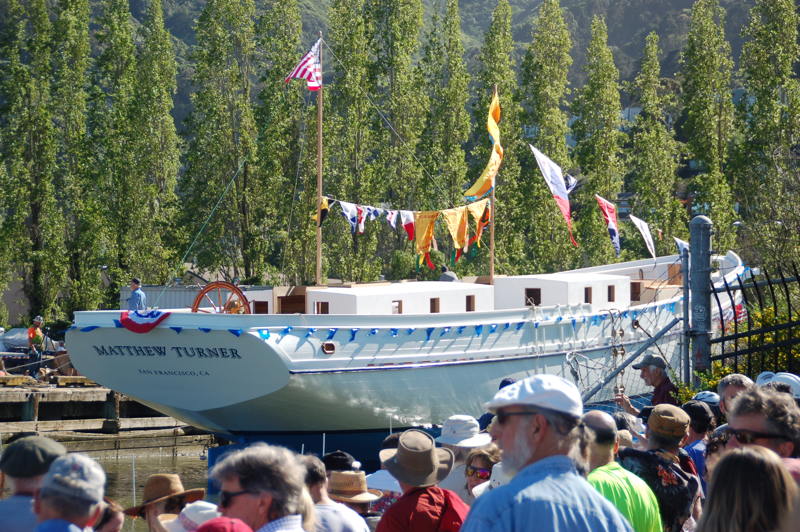
Hundreds of volunteers contributed labor, skills and money to build the tall ship Matthew Turner, embodying the kind of community that can grow around a working waterfront. While it looks traditional on the outside, Matthew Turner broke the mold with a modern auxiliary power system using a BAE regenerative power plant.
Working waterfronts also accumulate something less visible: generations of skills and knowledge passed among the people who build, repair, and operate boats and develop the technologies around them. Many lament the lack of hands-on skills in younger generations, but those skills have to be learned somewhere — and working waterfronts are one place that happens.
Imagine finishing job training at Spaulding Marine Center and walking into a Marinship where a 100-ft carbon foiling multihull is being built; an autonomous deep-sea submersible is taking shape; new aquaculture and oyster-restoration technologies are being developed; commercial fishing boats are coming and going; boats are being 3D-printed; and an electric foiling ferry is hauled out for repair. And amid all that new technology, there might still be a classic wooden boat like Yankee, launched by Stone Boatyard in 1906. You might bump into a recent Cal Poly Maritime graduate who just raced the Pacific Cup aboard Oaxaca.
To us, that sounds much more thrilling than walking down a waterfront with more food, retail, breweries and coffee shops. Those uses could add activity and amenities to the district, but would they help sustain the arts, industry and maritime trades that make the Marinship a working waterfront?
The Marin working waterfront needs change to reach its potential, but we believe Measure X is the wrong initiative to achieve it. A no vote now is not a vote against change; it’s a vote to protect the working waterfront we already have while making room for something better.
More on Measure X, please.
Great article- I agree a no on X , is yes for something better. Fort Bragg’s Noyo Harbor has done a great job revamping their waterfront area into an amazing economic pillar. Also, this x measure runs down the front of Sausalito’s waterfront , it’s more than just the Marinship area.
I wholeheartedly agree! This ballot measure and subsequent gentrification via rezoning would jeopardize our working waterfront, the heart and soul of this town. Areas like the Marinship are becoming few and far between and we need to preserve its integrity. Yes, we should revamp it and collectively decide on a vision for its future, but we do NOT need Measure X to do so. The current zoning is not inhibitive, we just need to shift our mindsets around what progress means and incite change that cultivates the maritime, arts and industrial businesses here into something thriving.
YES ON X MEANS NO TO YOUR VOTE.
Buried inside Measure X is a rather remarkable little idea: apparently, the residents of northern Sausalito… homeowners and renters alike… can no longer be trusted to vote on major changes affecting their own part of town.
Which is fascinating.
Southern Sausalito keeps its voting rights on these proposals. Northern Sausalito? Apparently we’ve been sent to the children’s table, where we can have some apple juice and quietly watch the grown-ups make the decisions.
Because nothing says “local democracy” quite like telling one part of town, “Thank you for voting… and congratulations! You’ve just voted to make your future votes matter less.”
If there’s a compelling reason why northern Sausalito residents should have less say over major changes affecting their own neighborhoods, that deserves to be explained clearly… not tucked into a ballot measure like the terms and conditions on a software update.
The idea that we somehow can’t be trusted with a vote on the future of our own town seems more than a little out of place.
Before voting on X, understand exactly what voting rights it changes… and for whom. NO ON X