
Canadian Sailor Rescued From Dismasted Sailboat off Oregon
A Canadian sailor was rescued on Friday after being dismasted and injured almost 500 miles off Tillamook, Oregon. The 74-year-old was singlehanding en route to British Columbia (B.C.) from Hilo, HI, aboard his 29-ft sailboat Alice when he ran into trouble amid gale-force winds and 30-foot seas: Alice was dismasted, the unnamed sailor suffered a shoulder injury, and the boat’s engine was incapacitated (it is unknown if this was prior to, or as a result of, the sea state and weather conditions). Fortunately the sailor was able to use his handheld satellite communicator to reach the US Coast Guard. The USCG’s Northwest District watchstanders launched a rescue operation, monitoring the mariner’s position while maintaining contact with the vessel.
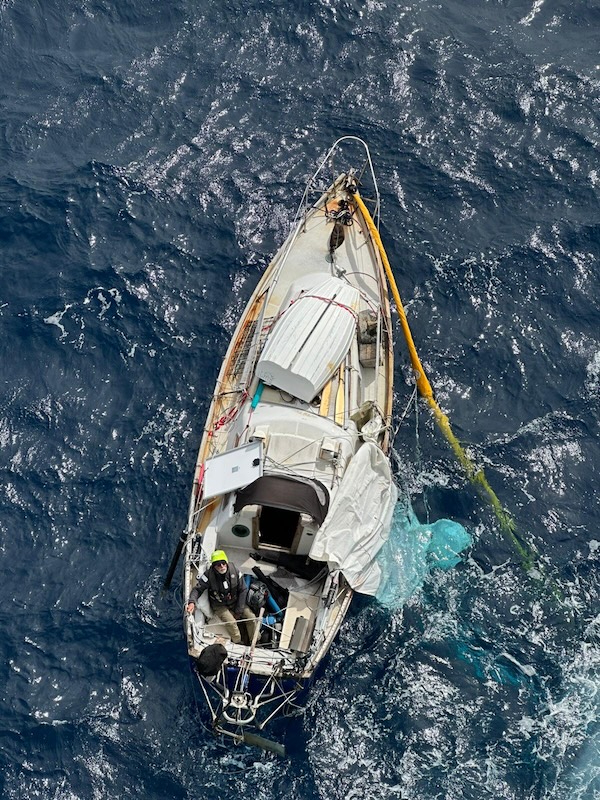
The Coast Guard deployed a long-range C-27J Spartan fixed-wing aircraft from Sacramento, California, to reach the scene and provide aerial overwatch. Meanwhile the AMVER (Automated Mutual-Assistance Vessel Rescue) system was activated, enabling watchstanders to locate the nearest participating vessel and hail them for assistance. The 388-passenger cruise ship Silver Whisper was sailing from Tahiti to Vancouver and diverted its course 120 miles to reach the stricken Alice. A second C-27J air crew was launched from Sacramento to provide overhead communication and supervision.
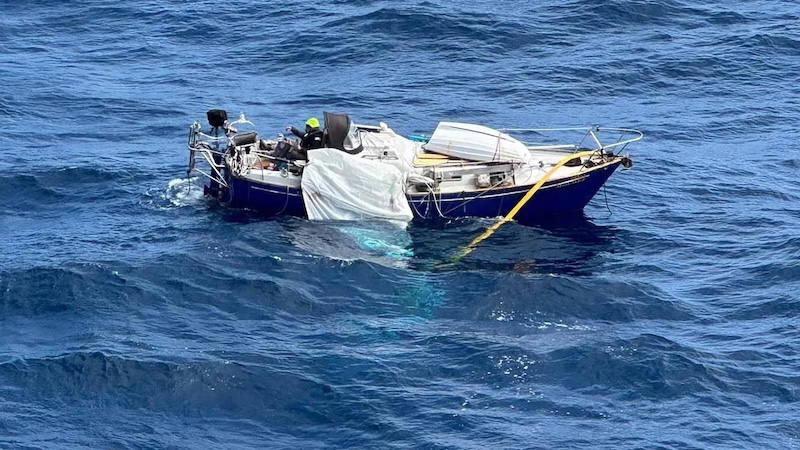
Upon reaching the disabled vessel, Silver Whisper’s crew maneuvered into position to tie the sailboat alongside. A crew member then boarded Alice and helped the injured sailor aboard the cruise ship. The sailor was attended to by the ship’s medical team until their arrival in Vancouver.
The Coast Guard reports that the sailor had successfully completed the passage between B.C. and Hawaii four times previously. They praised the mariner’s preparedness, saying that he was equipped with sufficient food, water, a life jacket, life raft and a satellite communication device. “His foresight to bring a satellite communicator averted a tragedy,” Coast Guard Northwest District Search and Rescue Program manager Scott Giard said, expressing his thanks and appreciation to the Silver Whisper and her crew for their assistance in rescuing the injured man.
This video was shared, courtesy of the Silver Whisper:
Latitude 38’s June issue will be on the docks tomorrow. Go check it out!
International 110 National Championship Regatta Returns to Tomales Bay
If you’ve been watching the one-design racing scene and wondering where the action will be this August, look no farther than Tomales Bay. The 110 class — whose iconic double-ended sloop holds the distinction of being the world’s first purpose-built sportboat — will be hosting its national regatta August 8–12 at the Inverness Yacht Club, home waters for local Fleet 56 and a venue that needs no hype from us.
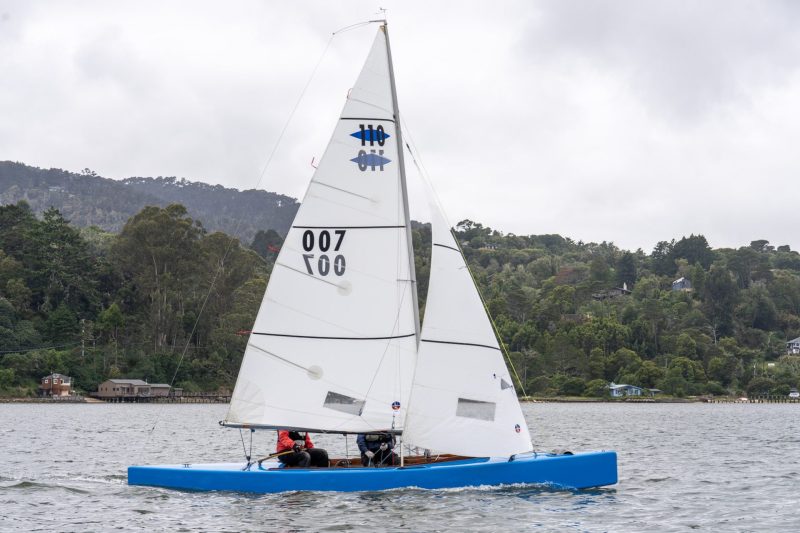
Tomales Bay is the kind of place that makes visiting sailors forget to check the weather forecast. Sheltered by the rolling hills of Point Reyes National Seashore, the bay offers a near-perfect racing environment: steady afternoon breeze funneling through the coastal gap, glassy mornings giving way to crisp, pressurized sailing by the time the first warning gun fires. Calling it sailing in paradise isn’t hyperbole — it’s geography.
A Class in Motion
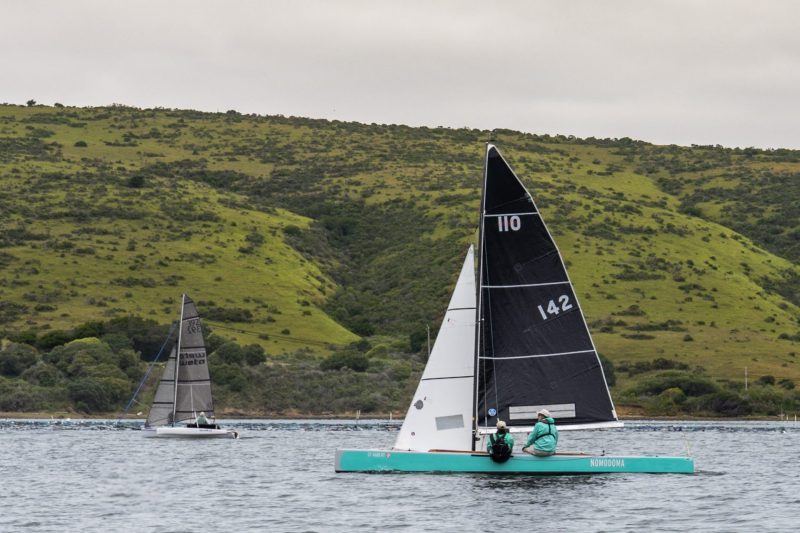
The 110 class arrives at this year’s Nationals with some fresh energy from the revived Fleet 19 in Seattle, and follows a pair of rule proposals that passed nearly unanimously at a special membership vote on May 13. The most talked-about change opens an experimental period allowing inboard jib leads with a smaller headsail: a #2 genoa of approximately 140% overlap as an alternative to the class’s traditional massive, overlapping #1 genoa.
The debate is one that any performance sailor can appreciate — old-school power and driving area versus modern efficiency and crew ergonomics. Traditionalists rightly point to the #1 genoa’s proven upwind authority. That enormous overlap has been pulling 110s through chop for decades, and there’s a reason it became the standard. But proponents of the smaller sail argue that inboard-sheeting geometry changes the equation significantly. With a tighter sheeting angle, they contend, the #2 can match the #1’s upwind output despite the reduction in canvas.
The practical advantages of the change are harder to argue with: easier trimming, faster tacking, cleaner sightlines for the helmsman, and perhaps most importantly for the class’s future, the ability to race competitively with a smaller crew. That last point matters. One of the persistent challenges facing established one-design classes is keeping the boats accessible to sailors across different stages of life and crew availability. A sail plan that demands less horsepower on the foredeck is a sail plan that invites more people into the cockpit.
The two-year experimental window means this debate will play out on the racecourse before any permanent decision is made. Expect animated conversations at the dock in August.
Come Sail With Us
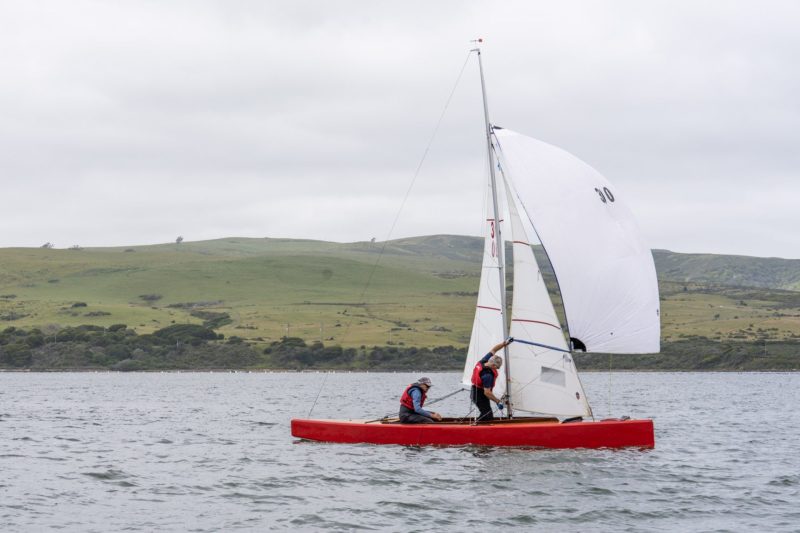
Here’s the part where we speak directly to you, the Latitude reader who’s been eyeing your August calendar: Fleet 56 is rolling out the welcome mat for visiting sailors, and that includes boats available for charter during the regatta.
The 110 is a rewarding boat to race — athletic and responsive, the kind of sailing that keeps you sharp. The fixed keel means you can push hard without lying awake at night worrying about an unplanned swim. But make no mistake: This is performance one-design racing that will demand your full attention and a reasonable level of fitness. If that sounds like your kind of fun, Tomales Bay in August is where you want to be.
With visiting teams from the East Coast and the Pacific Northwest, Fleet 56 has a tradition of providing charter boats. Depending on out-of-region attendance there may be an opportunity for a local S.F. team to join in the fun. To find out about charter availability and what it takes to get on the starting line, reach out to class president Milly Biller and the local Fleet 56 organization through the class website.
August 8–12. Inverness Yacht Club. Tomales Bay. Some things are worth rearranging your schedule for.
Latitude 38′s June issue will be on the docks tomorrow. Go check it out!
Sign Up Now for the 32nd Annual Baja Ha-Ha
Get off the fence and down to the docks for the greatest fun you’ll have all year — the 2026 Baja Ha-Ha Cruisers Rally to Mexico. The thousands of sailors who’ve done it before you can’t all be wrong. Sign up, join the fleet and get ready for a fun cruise south this November.
Ancient Mariner Sea Scout Regatta Test of Skills
Blustery winds and cool temperatures welcomed West Coast Sea Scouts to the Ancient Mariner Regatta held at the Cal Maritime Academy at the mouth of the Carquinez Strait in Vallejo, California. Attending this three-day event on May 23–25 were 165 Sea Scouts from as far south as Dana Point, California, and as far north as Portland, Oregon, with the crews competing in a total of 26 maritime-skill competitions for awards that emphasized the teamwork necessary on a crewed vessel.
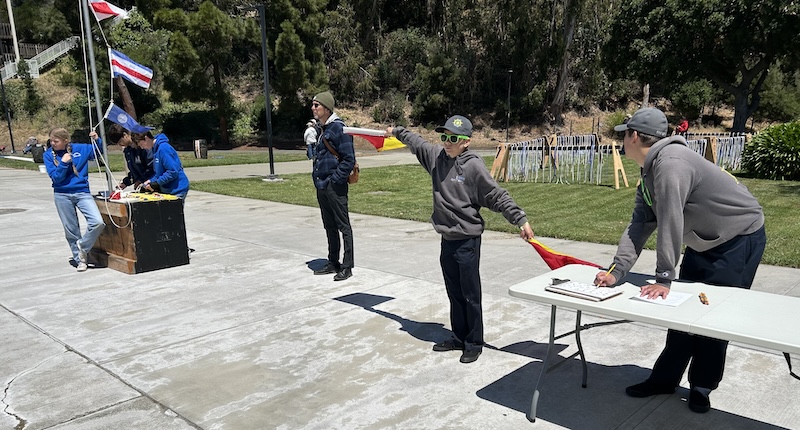
The temporary closure of the boat basin at the Academy shoreline prevented on-water sailing competition, so those events were replaced by sailboat rigging, which required individual Scouts to rig and de-rig the mainsail and jib on a Capri 14, coupled with a 25-question multiple-choice quiz. Attention to detail was an important component of this competition, which required precise tensions for halyard, outhaul, downhaul, vang and mainsheet lines, as well as proper sail shape.
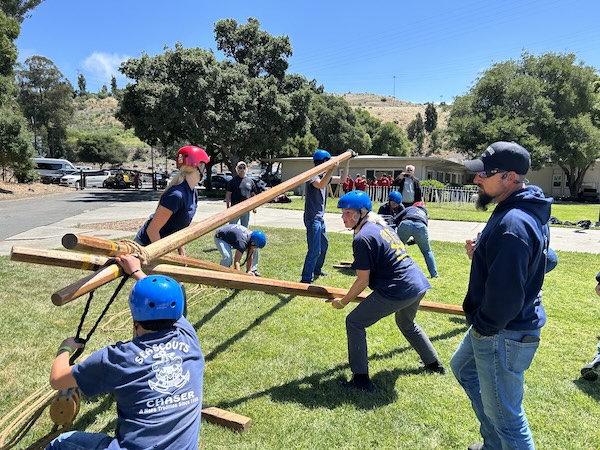
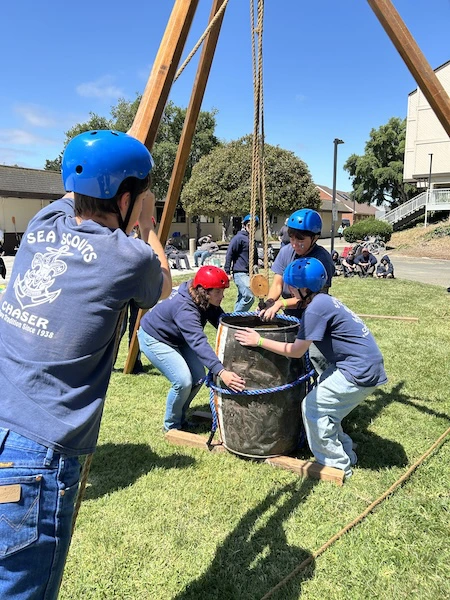
The teamwork necessary on any crewed vessel was perhaps best demonstrated by the Breeches Buoy competition, which was historically used by US Coast Guard rescue teams on shoal-bound coastlines like the Outer Banks of North Carolina, where rescue of passengers and crew from ships aground was necessary. Sea Scouts are organized as “Ships” with each Ship led by a bosun, who provides the leadership for both the event logistics and then the timed execution of the rescue of a crew member from a 17-foot-high tower with a crow’s nest.
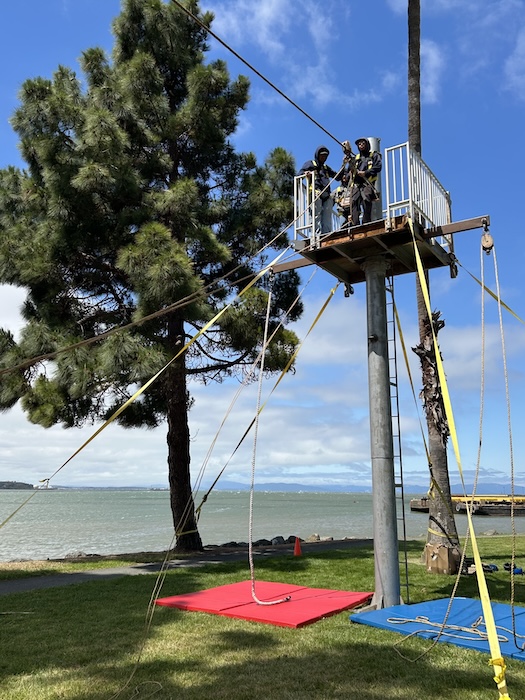
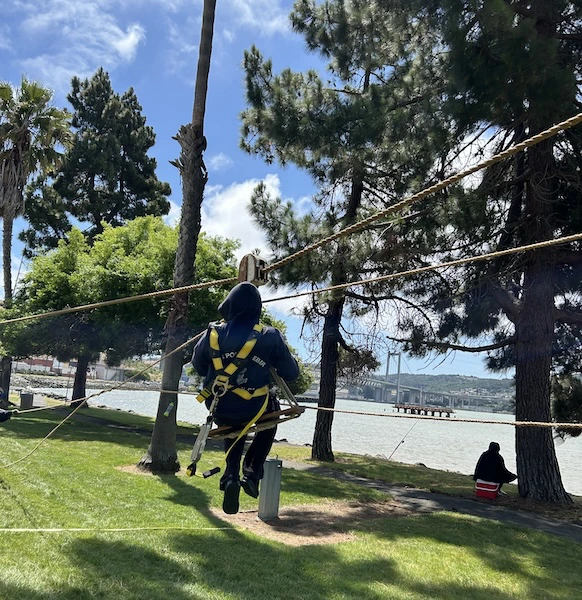
In many ways, the strangely named gear required to effect a Breeches Buoy rescue seems dauntingly complex, but no more so than the standing and running rigging on any large sailboat, which become understandable if broken down into their functional parts. Components like the shot line, endless whip tail block and hawser are laid out on the “shore,” and the “onboard” crew take their positions in the crow’s nest before the timed competition begins. Latitude 38 witnessed a very impressive start-to-finish rescue time of just over six minutes without miscue or penalty points assigned!
Other maritime skills were tested in knot tying, marlinspike work, heaving-line toss, compass and relative bearing, along with physical tests of stamina in the obstacle course, swimming and rope climb. The competitive challenge for each Ship is to participate in as many events as possible over two days, with scores of Satisfactory or higher. Awards are set up to recognize the success of each Ship that performs at the highest level in the most events.
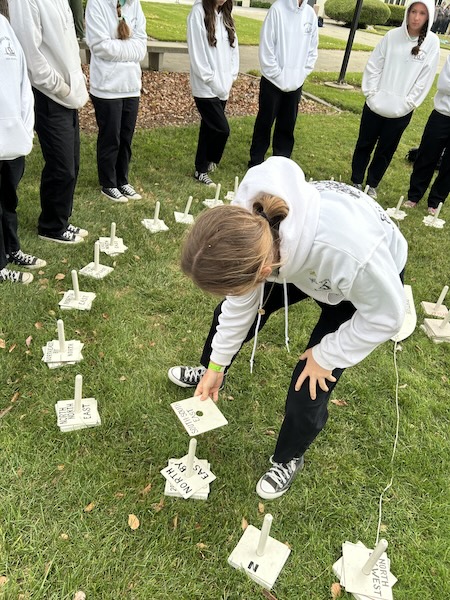
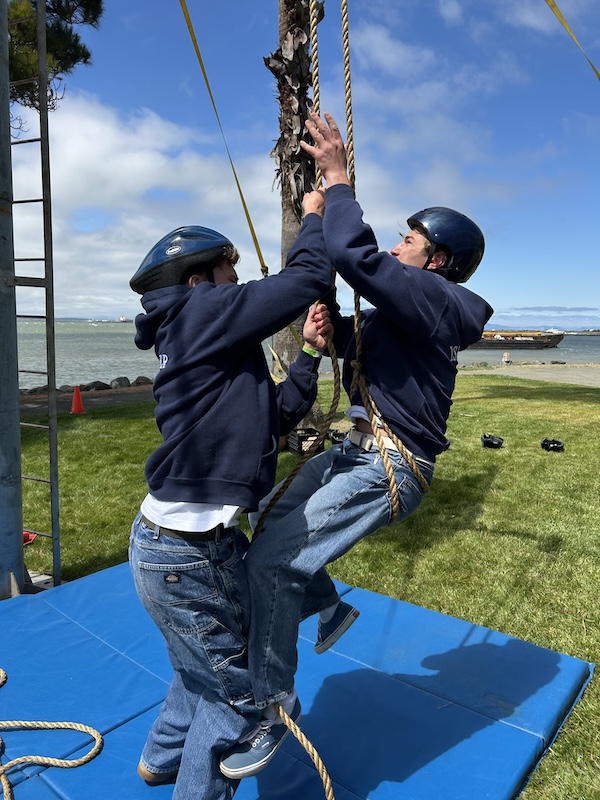
This year’s Clipper Class award went to eight Ships for completing events with an average score of 75% or higher:
MSS Tradewind, Redwood City
SSS Shasta Kraken, Redding
SSS Gryphon, Redwood City
SSS Terrapin, Palo Alto
SSS Chaser, Napa, teamed with SSS Albatross, Martinez
SSS Sea Fox, Alameda
Mariner Tea, Dana Point
Latitude 38‘s June issue will be on the docks tomorrow. Go check it out!
St. Francis Yacht Club Wednesday Night Racing Returns
On Wednesday, May 20, St. Francis Yacht Club’s (StFYC) Wednesday Evening Series kicked off. The elephant in the room is that the series started three weeks later than initially planned, due to the previously unnavigable nature of the West Marina harbor entrance. Now that (most of) the sand has been cleared, racing is back on.
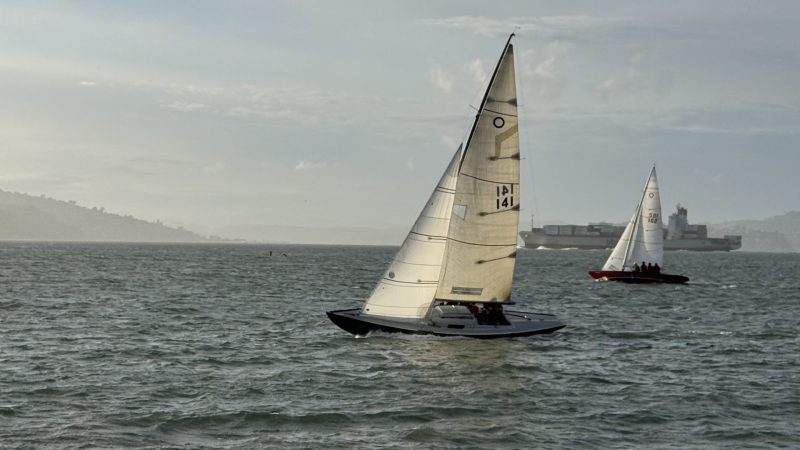
This racing editor has been competing in the Knarr fleet for a decade now, with his dad Hans Baldauf, and Chris Perkins and his sons aboard boat #141 Three Boys and a Girl (StFYC). We didn’t race in the May 20 race, but did get #141 out on the water on May 27. With the first two regattas of the season having been canceled due to the dredging, and only two more on the calendar before the 2026 International Knarr Championship (IKC) in Oslo, Norway, we wanted to get time on the water, and to have a good time on Wednesday night.
Ten Knarrs made it to the starting line off the StFYC race deck. With a flood current and boats expected to be playing the left upwind, it was a two-lap, starboard-rounding race. We were only a team of three last Wednesday (Knarrs typically race with four in the Bay): Chris driving, Hans trimming the jib, and me on bow blocking the waves for the older generation.
We made the decision to start down the line, and got a clean start, but it was going to be a tough first tack and likely a sea-room call off the line. Thankfully (and somewhat luckily), our lives were made a lot easier by a boat that had been OCS, slowing down the boats just to windward of us and giving us an easy tack up course. On the first leg, we protected the left side in a race to the top mark with Randy Hecht’s Niuhi (SFYC). We rounded in first, about three lengths ahead of Niuhi, with Mark Dahm’s Benino (StFYC) close behind them.
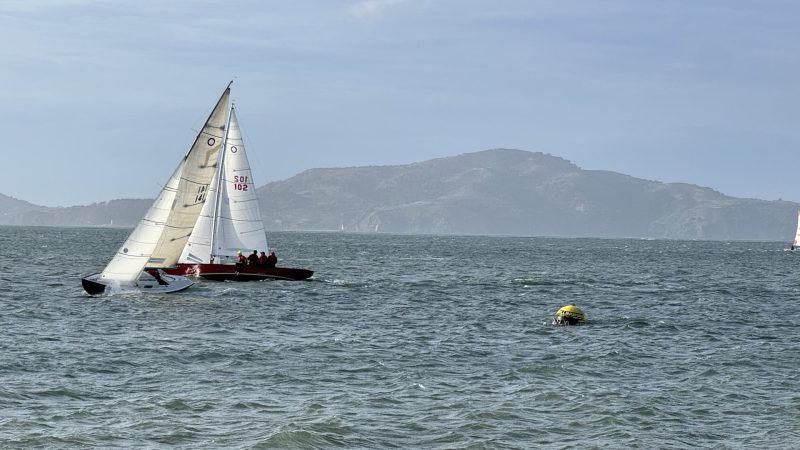
We held our lead on the first downwind, but on the second upwind it became a close battle with Benino for first. While we and Niuhi were sailing with three people on board, Benino had four and had a tick of extra speed that we didn’t have upwind. Benino passed us about three-quarters of the way up course after several close crosses. We were still within reach of the win, however, as they overstood the starboard layline. Niuhi rounded right behind us. With a big gap behind them but not even a boat length separating first from third, it was going to be a battle downwind.
With Niuhi and Benino initially both fighting high, we soaked down and were able to clear our air and remain overlapped with Niuhi to the left of us. With it being a starboard rounding, it was looking as if we might slip to third place with the two boats inside us, but since they hadn’t broken the overlap, Chris was able to employ some match-racing tactics, sailing the other two boats into the far bottom corner of the course before jibing and taking the whisker pole down, and then executing a jibe rounding at the leeward mark. Exciting stuff!
After that rounding, we covered Benino and Niuhi all the way to the finish. It was a delayed, but fun and rewarding return to Wednesday night racing.
Latitude 38’s June issue will be on the docks tomorrow. Go check it out!
Freedom Is the Difference Sailing San Francisco Bay Makes
Another spectacular weekend on and around the water once again reminded us of how important freedom and liberty are to the human spirit. It may explain why people continue to head out on the water aboard one of the oldest and slowest forms of transportation, sailing. Sailing is estimated to be about 4,000 years old, and even though early sailors didn’t have Gore-Tex or carbon fiber, we’re pretty sure it still felt great.
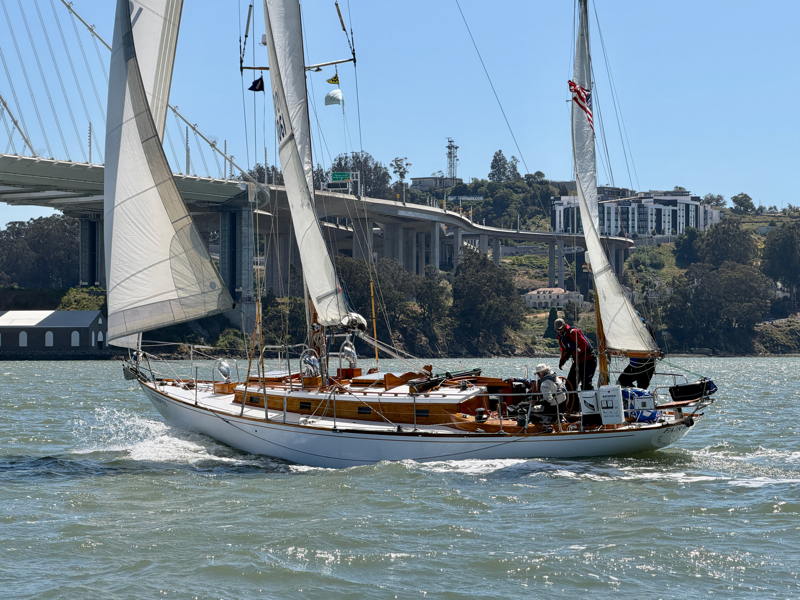
The shot above from the Master Mariners weekend reminds us why we like to be on the water and why access to it is so important. Similar to trees and parks on land, a day on the Bay or ocean reconnects you to the important things in life. The people driving over the bridge have no idea how close they are to sailing the Bay. Of course, most of them don’t have a boat, but that’s true of most people sailing the Bay. People sailing the Bay for free as crew far outnumber the people who own boats. Many started crewing by signing up on the Latitude 38 Crew List.
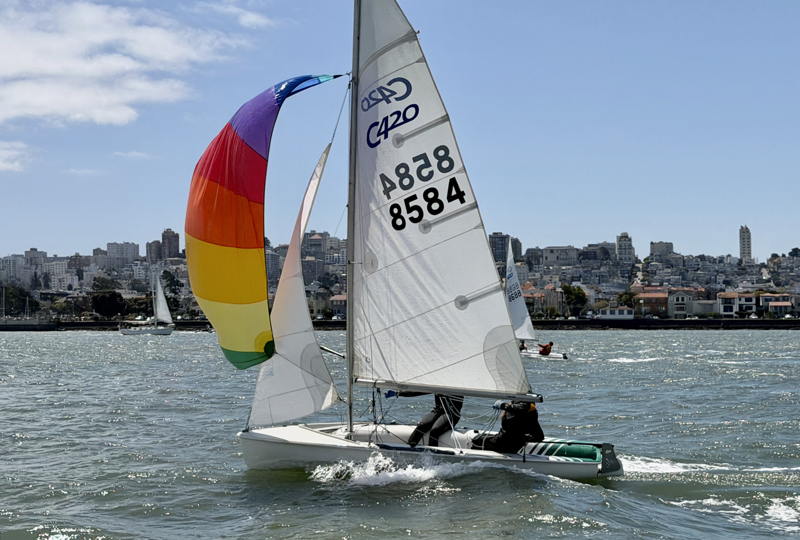
Access to the Bay also comes in the form of junior programs with club-owned boats. The ferocious reputation of the Bay’s sailing conditions is regularly tamed by kids under 10 years old. Ask most youth sailors what they like about sailing and you’ll get an answer similar to the most experienced sailors’. It’s the freedom, liberty, escape and adventure just offshore from a congested, tense metro area. That “aaaaaah” comes quickly after you cast off the docklines. The Bay’s youth programs give kids a sense of freedom and accomplishment.
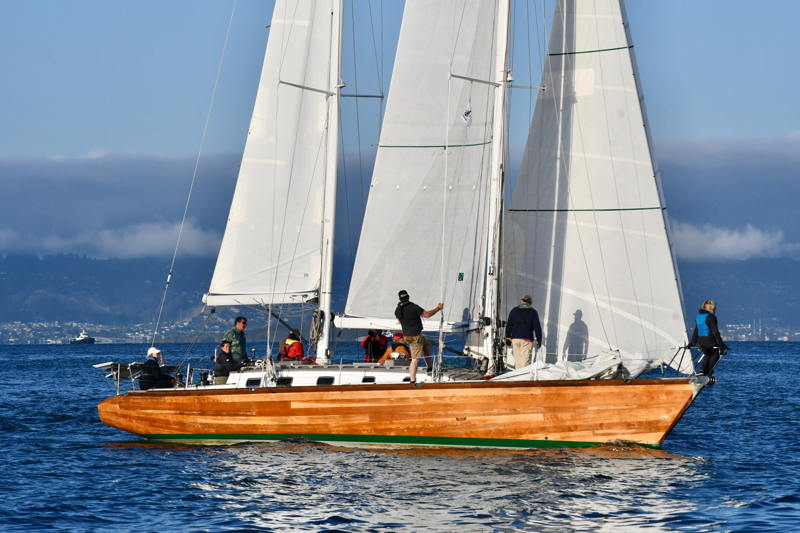
Beer can series are often the gateway drug to sailing the Bay, but there’s no reason people can’t go sailing just for the fun of it. A starting line and starting time seem to motivate people to sail when they otherwise wouldn’t, but neither is required. Still, that starting time and line give many people the nudge they need to invite some friends and get down to the water to hoist their sails.
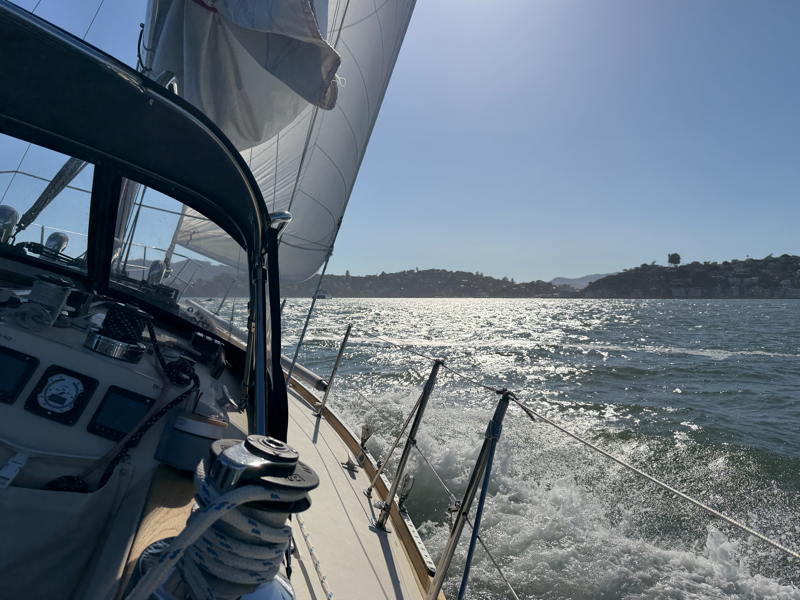
A sunny day and breeze, combined with a quick glance at the headlines, are often all it takes for us to want to get onto the Bay. There are thousands of sailboats in slips ringing the Bay, though the water can be remarkably empty on these sunny summer days.
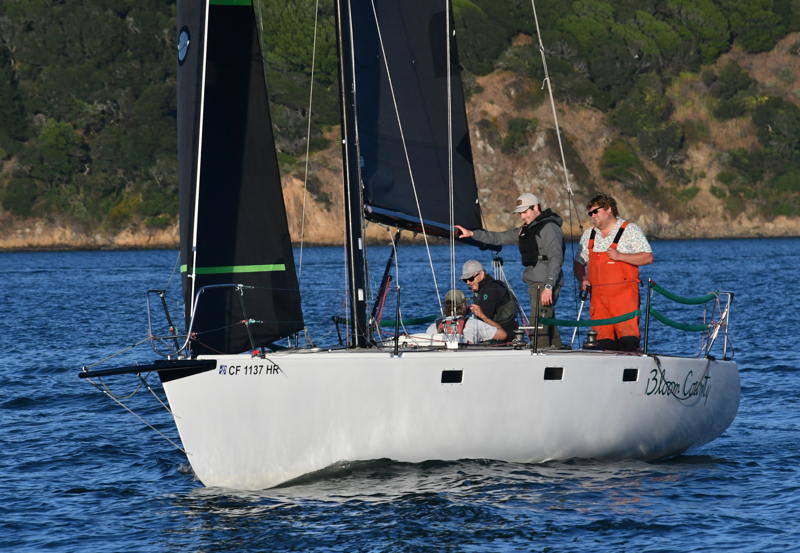
The summer solstice is coming up on June 21, along with Summer Sailstice weekend. There will be plenty of starting lines and starting signals that weekend for those (like us) who get motivated by them, but, like all the other summer weekends, it’s a great weekend to go sailing for the fun of it. Summer Sailstice adds some motivation for everyone to start their summer as part of a global celebration of sailing. Why not? That one stumps us. You can connect with others by adding your plan to the Summer Sailstice map here.
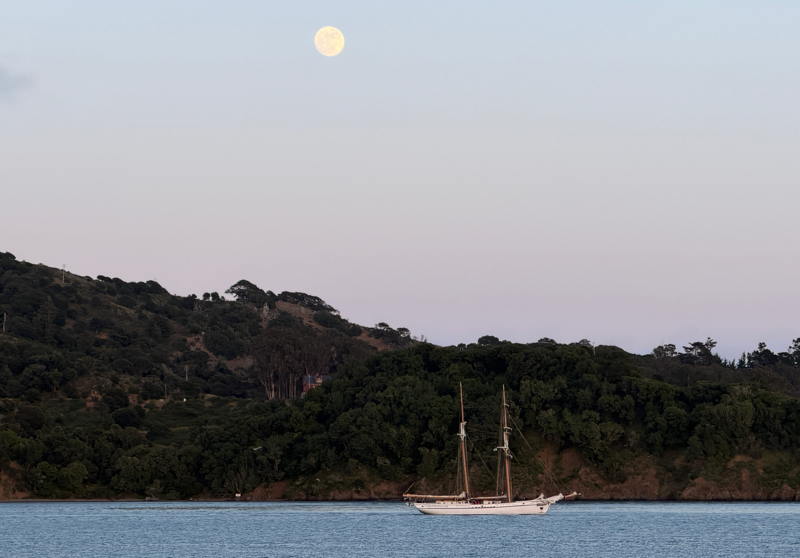
A lot of boats don’t go out because they can’t find crew (remember the crew list), and many people don’t go out because they don’t have a boat (remember the crew list). But there are also numerous clubs, schools and community sailing programs or volunteer organizations where you can sign up to sail for an evening, a weekend or a lifetime. You can sail on the Matthew Turner, pictured above, the schooner Freda B or the Adventure Cat out of Pier 39. There are actually dozens of options, and we try to keep all charter/school organizations listed here.
Sailors are lucky to know how much life improves from sailing under a bridge rather than driving over it. The deck of the Golden Gate Bridge is only 250 feet above the water, but it’s a world away. Right below that deck are wingfoilers, Spinnaker Cup and Duxship racers, whales and harbor porpoises.
Today is June 1 and a reminder that the days are long and the summer short. We hope you can capture the freedom of sailing San Francisco Bay soon.
Latitude 38’s June issue will be on the docks tomorrow. Go check it out!
- Maritime History
- Community Sailing
- Environmental News
- Safety
- Hurricanes
- West Coast Sailing
- General Sailing
- Commentary
- Racing
- Cruising
- Events
- Sponsored Post
Like What You Read in Latitude? Help Us Share More!