

Can You Name the Biggest Park in the Bay Area?
Can you name the largest park in the Bay Area? If you guessed San Francisco Bay, you’re right. The Bay Area is blessed with numerous beautiful parks on land, but the biggest single park in the middle of the Bay Area is the Bay itself. It almost wasn’t so. Can you believe it?
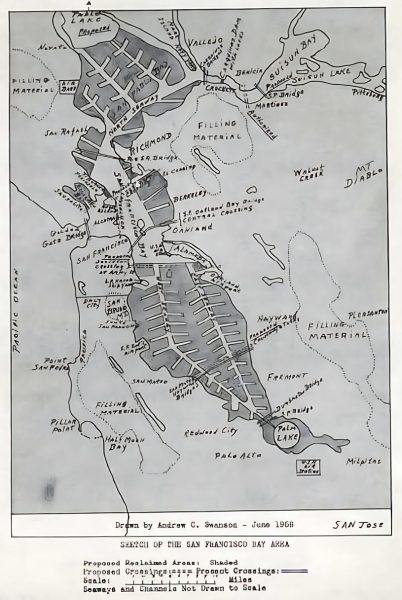
The drawing below shows one of the imagined, future visions of the Bay, which would have essentially filled ~90% of it to make room for development. The south end of the South Bay was imagined to be a freshwater lake, and all those little spurs would have been small canals between offices and housing, so the entire Bay might have looked like Foster City. Foster City is a great place to live and sail, but the Bay Area wouldn’t be the Bay Area if this plan had been followed.
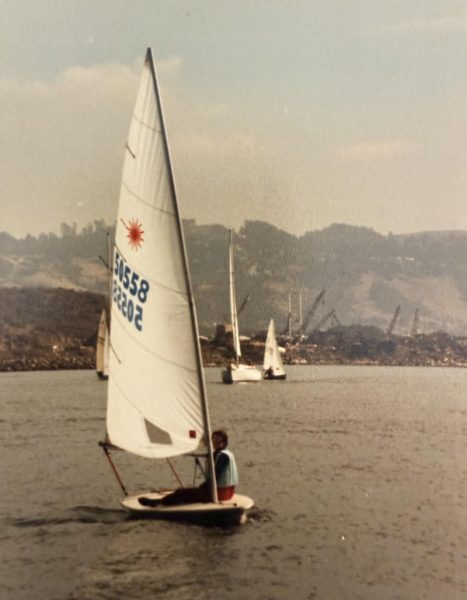
Thankfully, the preservation of the Bay allowed it to remain the biggest “park” in the Bay Area — one that continues to be used by sailors, swimmers, paddlers, surfers, fishermen, wing-sailors, Sea Scouts and, of course, lots of commercial activity. We learned more about the health of this watery park when we recorded a Good Jibes podcast with Peter Molnar, who sent us the photo below of him sailing a Laser in the Richmond Channel in the ’70s. It was a very dirty Bay/park back then. All those cranes and steel scrap piles were part of a very industrial shoreline that has been cleaned up over the past decades. Numerous individuals, agencies, government offices, nonprofits and the BCDC can take credit for saving and cleaning up the Bay.
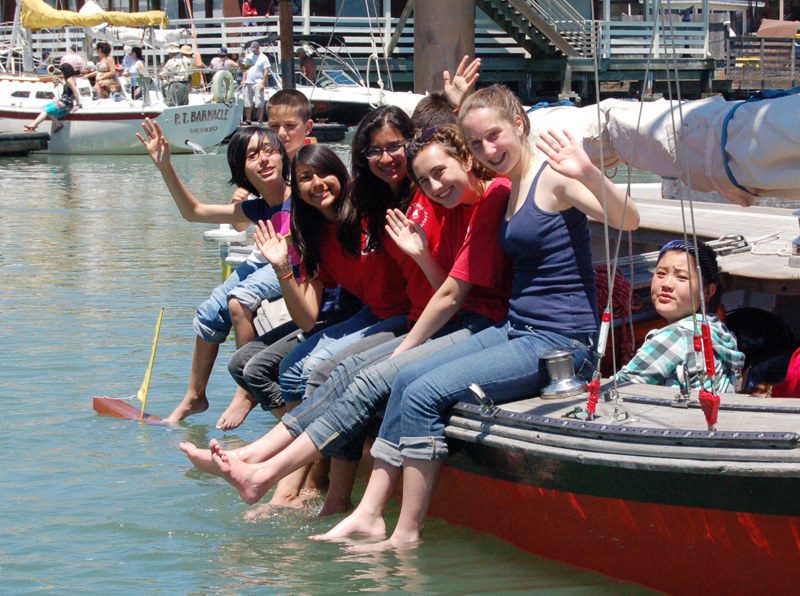
One of the disturbing trends for our Bay park in the middle of the Bay is the reduction of access to the Bay. Over the years, marinas have closed, channels have silted up, launch ramps have deteriorated, and waterfront facilities have been converted from maritime use to alternative real estate development. While the BCDC has been an ally in cleaning up the Bay, it has often been an impediment to preserving access to the Bay. It’s currently actively doing the right thing by helping the enforcement of an Oakland Estuary cleanup, but it also seems to focus more on bike paths around the Bay rather than ramps, docks, marinas and facilities that support access to being on or in the Bay. That’s a terrible loss for the Bay Area community, and especially kids.
The original 1968 Bay Plan that formed the BCDC certainly envisioned providing access to the Bay and its shoreline when it wrote, “The Bay is the most important open space in the Bay region. The Bay and its shoreline provide unique recreational opportunities. Participating in recreation activities on the Bay and along its shoreline can inspire an appreciation of the Bay and can motivate people to participate in the responsible management and protection of the Bay. In 1963, only about four miles of the approximately 1,000-mile Bay shoreline were being used for waterfront parks. Since then, increased interest in the Bay has resulted in development of additional parks, marinas, and other forms of water-oriented recreation. But the full recreational potential of the Bay has by no means been reached.”
One of the conclusions reached in “Uses of the Bay” in the San Francisco Bay Plan says, “The most important uses of the Bay are those providing substantial public benefits and treating the Bay as a body of water, not as real estate.”
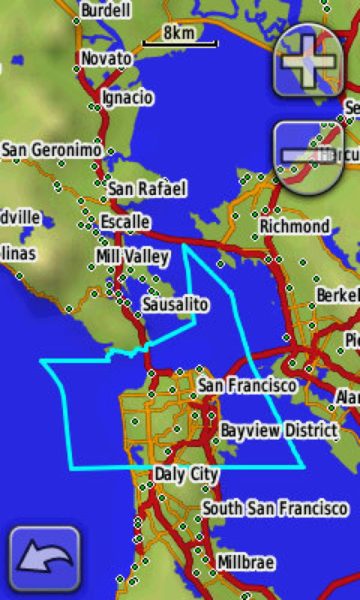
Looking at the map above, you can see that you might race most of the Three Bridge Fiasco within the true boundary of the city of San Francisco — it includes all the water inside the blue line. We continue to think the Bay is the most underappreciated “park” in the Bay Area, and it will continue to be more difficult and expensive to enjoy if the waterfront is primarily seen as a real-estate development opportunity, rather than a community-access opportunity. It is clear that development is necessary to maintain much of the shoreline’s deteriorating infrastructure, but the development needs to be balanced with preservation of both the recreational and commercial benefits of a thriving maritime culture. The Bay is more than something to look at or drive over. Beyond sailing, there is rowing, swimming, fishing and all the commercial traffic that provides international and local trade to the region.
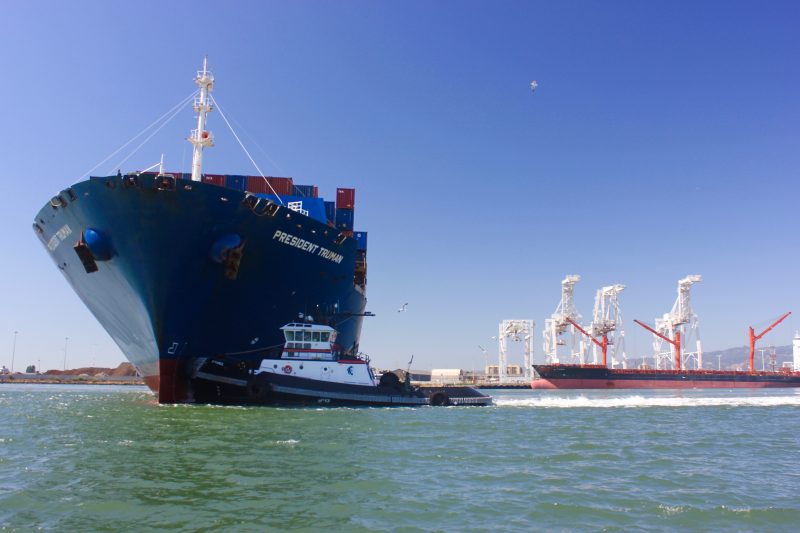
While we continue to applaud the BCDC’s Bay cleanup efforts, we also continue to worry about the narrowing spaces that are available to launch a boat, store a boat, or get a kayak or SUP into and out of the water. Plus, both commercial and recreational boats need industrial space along the shoreline so boats can be serviced and maintained. The Bay is a miraculous resource that should be kept affordably accessible for the eight million people in the Bay Area. All current current and future users of the Bay need to stay attentive to the agencies and municipalities that have the ability to preserve access for all.
Good Jibes #243: Josh Kali on Finishing the McIntyre Mini Globe Race, With Host John Arndt
Join us this week as we chat with third-time guest Josh Kali about finishing the McIntyre Mini Globe Race 2025. Josh is a mountain climber, sailor and professional marine technician who built his 19-ft one-design Skookum over the past few years and has now sailed it around the world.
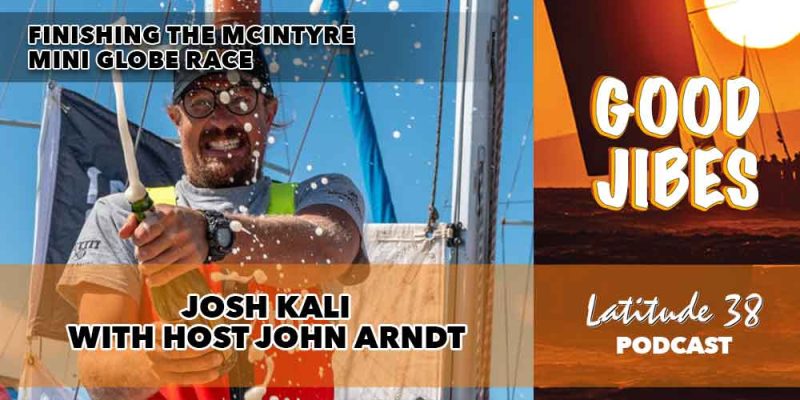
Tune in as Josh chats with Good Jibes host John Arndt about his favorite and least-favorite moments from the race, his favorite stop along the way, secrets to designing a boat to race around the world, how he managed all things food and fresh water, and what he hopes Skookum’s legacy will be.
Here’s a small sample of what you will hear in this episode:
- Arriving in Antigua among the superyachts
- Who really becomes a sailor?
- Did anyone catch fish during the Mini Globe?
- Josh’s food philosophy at sea
- The Globe 580 class
Listen to the episode on Apple Podcasts, Spotify, and your other favorite podcast spots — follow and leave a 5-star review if you’re feeling the Good Jibes!
Learn more about Josh at JoshKaliOceanRacing.com, on Instagram @JoshKaliOceanRacing, and here: “Josh Kali Finishes First-Ever McIntyre Mini Globe Race”
Check out the episode and show notes for much more detail.
Join Shearwater Sailing On a Two-Week Adventure to Hawaii
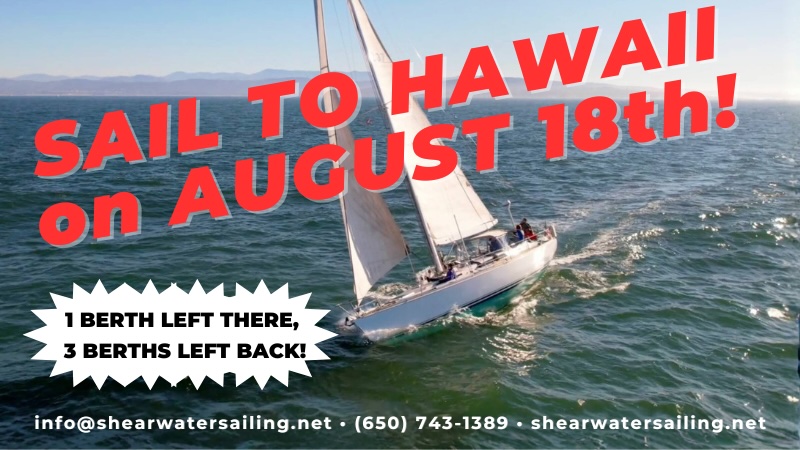
If sailing across the Pacific Ocean is on your bucket list, we invite you to sign on as crew with for this epic adventure on the sleek and beautiful Farr 53, Atalanta. Whether you are looking to improve your ocean voyaging skills, simply take in the vast expanse of this watery planet, or a combination of both, this trip is one you won’t want to miss! Listen to a Good Jibes podcast with skipper Kevin Wasbauer.
Coyote Point Yacht Club Hosts Frank Ballentine Memorial Race
On Saturday, May 2, six boats set out under a gray sky and a steady westerly. It was the kind of day that asks for clean lines and keeps a quiet ledger of every choice. Their purpose was to compete in Coyote Point Yacht Club’s Frank Ballentine Memorial Race. The race is part of CPYC’s regatta series, which runs from January 1 through November 7.
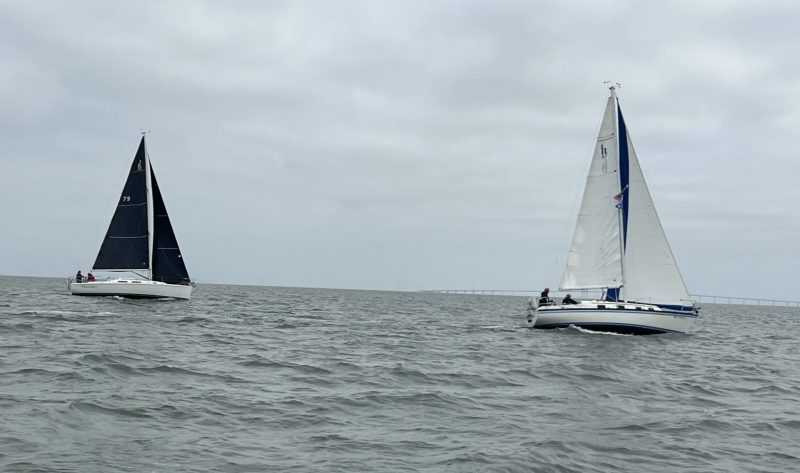
Svea, Surprise!, Will O’ The Wind, Paradigm, Vita e Bella, and Sweet Grapes took their starts in pursuit, each chasing the same horizon from a different minute.
The early order held together through C and on to A, the fleet stretched but connected, like a thought still forming. Sweet Grapes, delayed at the start by a fouled halyard, worked to rejoin, the fix coming just in time to keep the race alive.
At 6, the shape of things began to change. Will O’ The Wind carried her lead, but Paradigm pressed close, then slipped ahead at the second rounding of A with a move that felt both patient and inevitable.
Down the course, sails rose and fell with intent. Svea set a spinnaker and found pace. Sweet Grapes followed, passing Will O’ The Wind on the way to Z, then lost ground in a stubborn douse that carried her wide and long before settling back into the race.
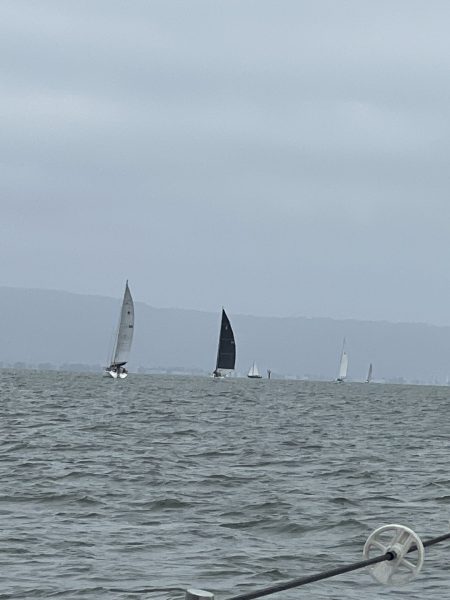
From C to 8, the fleet drew tight. Svea led. Paradigm advanced. Surprise! held steady, with Vita e Bella closing in, each boat within sight, within reach, within the same small margin after miles of water.
On the final run, Paradigm found the line and took it. Svea held second. Surprise! secured third, with Vita e Bella pressing just behind.
After more than 10 miles, the front four arrived nearly together, separated by yards, not minutes.
A pursuit race that, in the end, came down to presence.
Simon and Lisa Lilley Reflect on Life, Post-Baja Ha-Ha
Simon and Lisa Lilley from Seattle joined the Baja Ha-Ha Cruisers Rally to Mexico aboard their Hallberg-Rassy 42F Capricorn. They had a fun ride south, then the rally was over and their crew all went home. Now what?
How is life post-Baja Ha-Ha? Where does one begin? Lisa and I were both Ha-Ha first-timers from the Pacific Northwest, and ours was a flurry of novel experiences — anchoring by rustic villages, bazeball with the local muchachos, parties on the beach, and a hazy night or two in Cabo. Our last official event was a party in La Paz, with Mexican cuisine, culture and dancing. And then, just like that, the events were over, our crew went home, and we were left to our own devices.
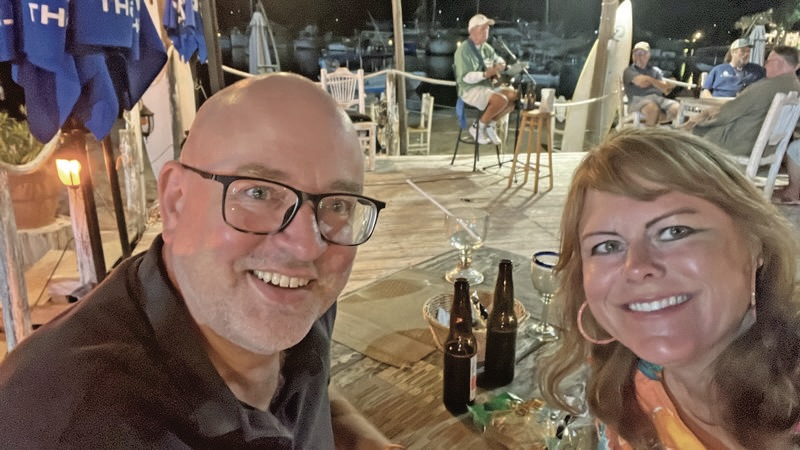
Our first post-Ha-Ha trip was to the pristine island of Espiritu Santo. Never in Puget Sound had I been in water so clear that I could see my anchor on the sand below. I remember lying in the warm, velvet sea next to the boat, face down with a snorkel for what seemed like hours, surrounded by a kaleidoscope of tropical fish. Truly this was the pinnacle of relaxation! Sadly, the moment was short-lived.
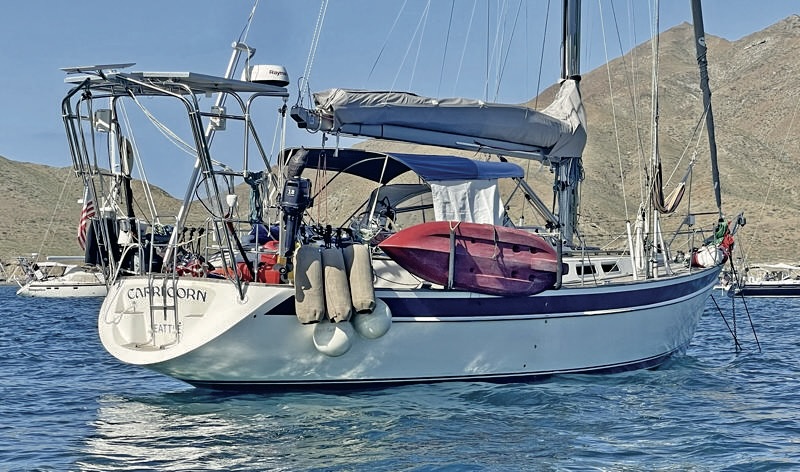
A wrong move while retrieving the anchor resulted in a slipped disc, and an unforeseen two-month stay at Marina de La Paz. Mercifully, Neil and the fine people at the marina were able to accommodate us, and we soon adapted to La Paz culture. The mornings started with yoga for Lisa followed by coffee at Club Cruceros, the local cruising club and hangout that we quickly joined. Lisa often volunteered to serve meals, and it was a good opportunity to catch up with the goings-on with the commodore, MaryJo, our cruising friends from the marina and anchorage, and various other local characters.
During the day, we braved the heat to get some exercise and take in the culture at the local museums, grab an amazing taco at Tacos de Felix (any flavor you want, so long as it’s carne asada), or go in search of limes for an afternoon chelada. The period just before sundown was marked with the sound of lawn chairs being unfolded on the dock, and the start of another informal happy hour with dock residents and fellow transients. Afterward, there were many fine places to choose from for dinner, whether at Estrella del Mar listening to the tropical guitar of Captain Wayne; the spectacular mariscos at La Baja Crudos; or the hip spots downtown just a short walk down the malecon.
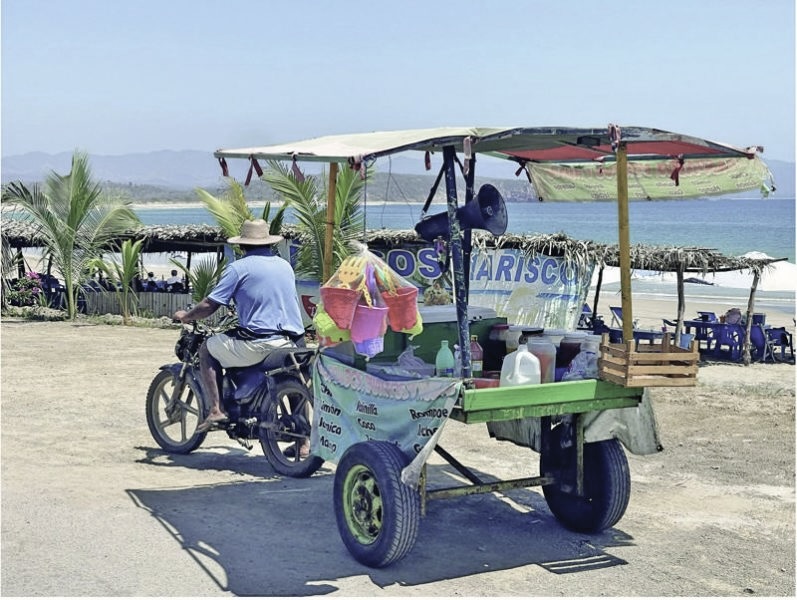
Easy as La Paz life was, by the end of January, my back was healed and we were ready to start moving again. We had perfect conditions with a following wind and a full moon, so after a brief stop at Bahia de los Muertos, we made our crossing to Mazatlán and arrived at first light with a rising tide.
Steering the Dream With Hydrovane
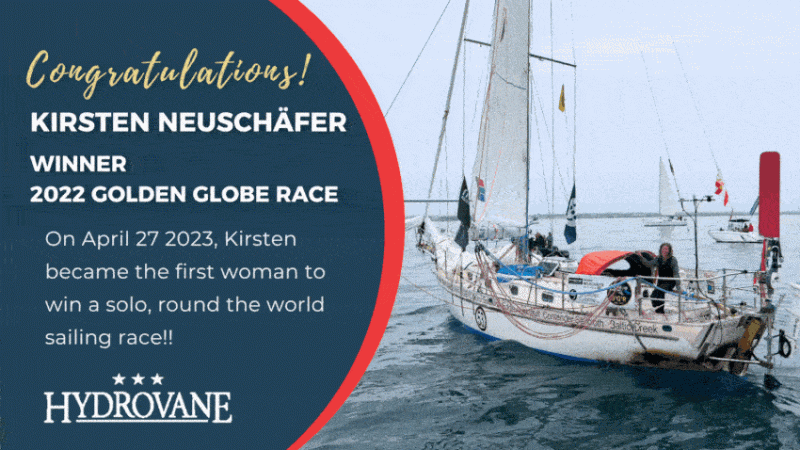
Hydrovane is your best crew member: an independent self-steering windvane and emergency rudder/steering system … ready to go!