

Episode #243: Josh Kali on Finishing the McIntyre Mini Globe Race, with Host John Arndt
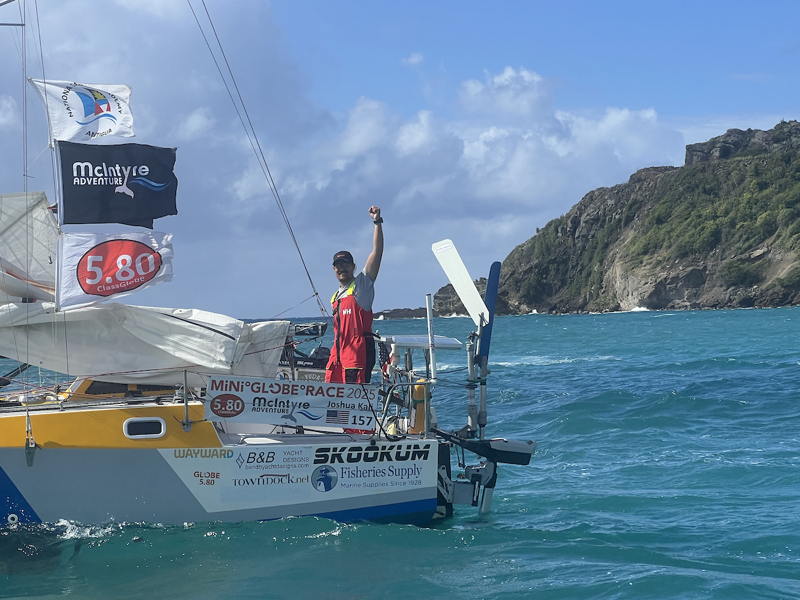
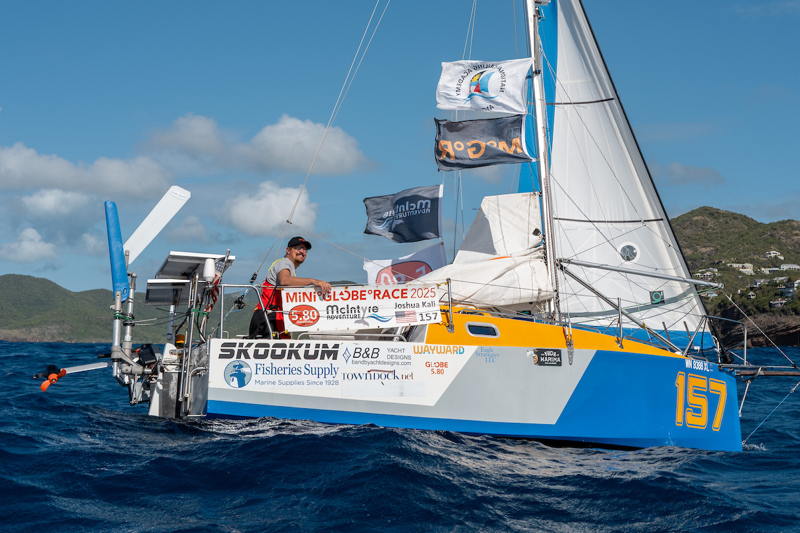
Join us this week as we chat with third-time guest Josh Kali about finishing the McIntyre Mini Globe Race 2025. Josh is a mountain climber, sailor, and professional marine technician who built his 19-foot one-design Skookum over the past few years and has now sailed it around the world.
Tune in as Josh chats with Good Jibes host John Arndt about his favorite and least favorite moments from the race, his favorite stop along the way, secrets to designing a boat to race around the world, how he managed all things food and fresh water, and what he hopes Skookum’s legacy will be.
Here’s a small sample of what you will hear in this episode:
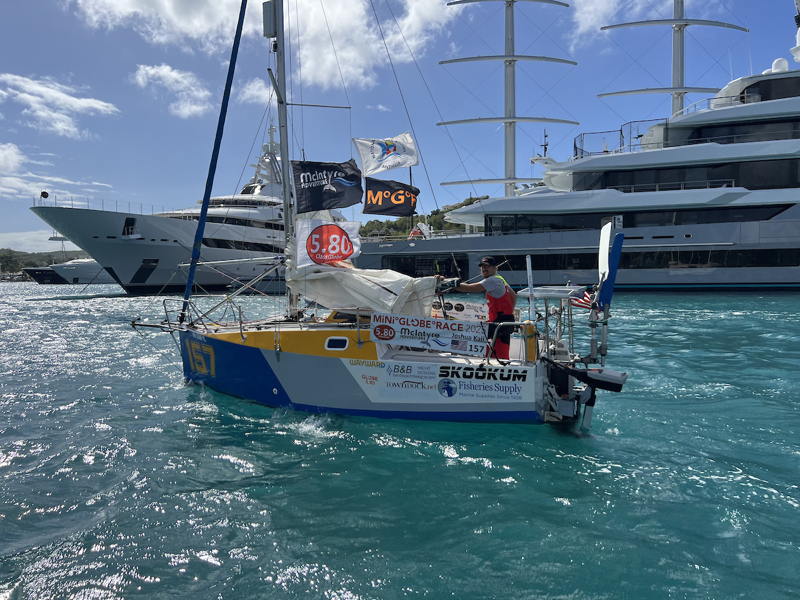
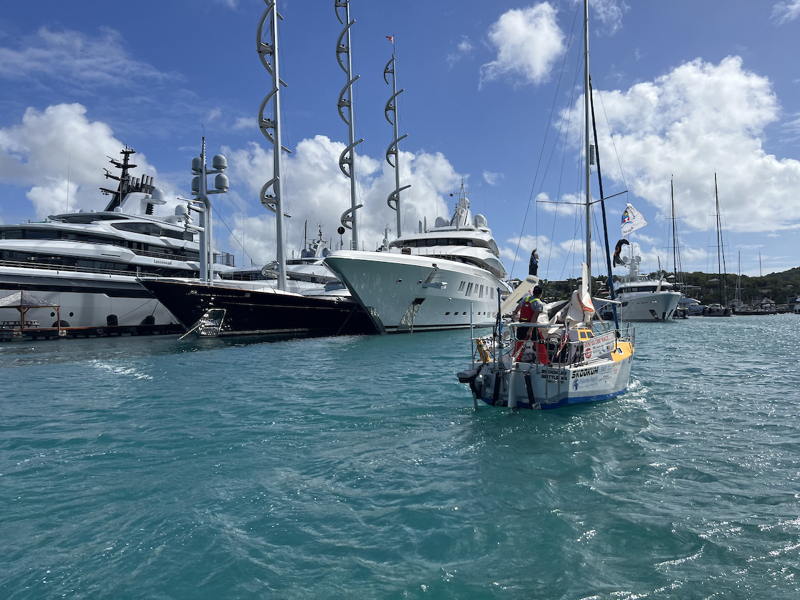
- Arriving in Antigua among the superyachts
- Who really becomes a sailor
- Did anyone catch fish during the Mini Globe?
- Josh’s food philosophy at sea
- The Globe 580 class
Listen to the episode on Apple Podcasts, Spotify, and your other favorite podcast spots — follow and leave a 5-star review if you’re feeling the Good Jibes!
Learn more about Josh at JoshKaliOceanRacing.com, on Instagram @JoshKaliOceanRacing, and here: https://www.latitude38.com/lectronic/josh-kali-finishes-first-ever-mcintyre-mini-globe-race/
Check out the episode and show notes below for much more detail.
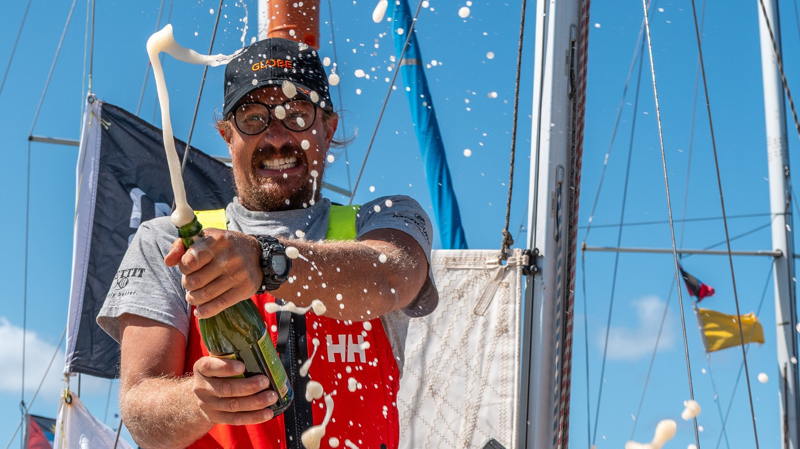
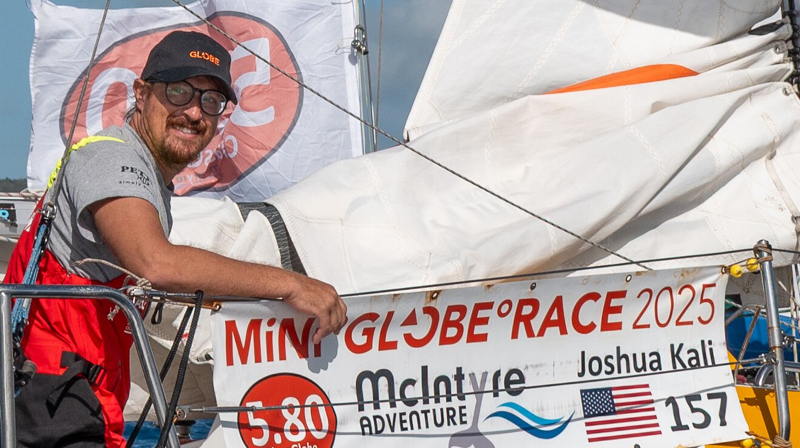
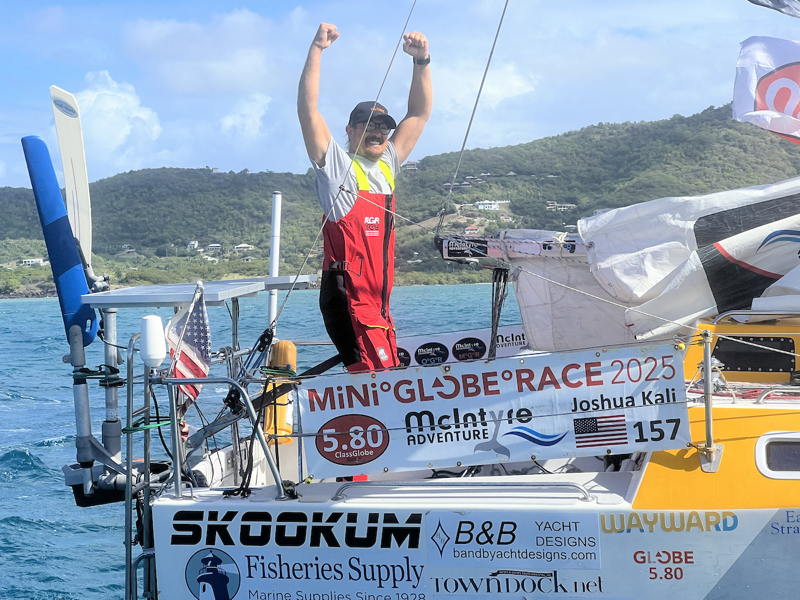
Show Notes:
- Josh Kali on Finishing the McIntyre Mini Globe Race, with Host John Arndt
- [0:14] Welcome to Good Jibes with Latitude 38
- [0:47] Welcome aboard Josh Kali, Pacific Northwest sailor and marine technician who just completed a circumnavigation
- [1:16] Overview of the McIntyre Mini Globe Race — 15 starters, 11 finishers, 377 days aboard a 19-foot homemade plywood boat
- [2:15] Why small boats proved themselves
- [3:38] Best and worst moments like nearly running out of money in the Marquesas, and the unbeatable camaraderie between skippers
- [5:06] The standout stop: Cocos Keeling
- [6:27] How Don McIntyre shaped the event, and why the fleet ran faster than anticipated
- [7:52] Boat speeds that surprised everyone
- [8:51] What made the winner Renaud Stitelmann the “Swiss Machine”
- [9:49] Josh’s own racing style
- [10:48] Gear failures along the way
- [12:13] Why Josh won’t do the race again
- [13:37] The Globe 580 class: 330 sets of plans sold, ~100 boats floating or under construction worldwide
- [16:54] Check out our Classy Classifieds at Latitude38.com
- Life During The Race
- [17:23] Modifications Josh would make for the next owner
- [19:42] Food philosophy at sea
- [21:35] Water management — no watermakers allowed, carrying up to 180 liters for the 4,300-mile Panama-to-Marquesas passage
- [23:28] The full route: Panama, Marquesas, Tahiti, Tonga, Fiji, Thursday Island, Cocos Keeling, Rodrigues, Mauritius, Durban, Cape Town, St. Helena, Recife, Antigua
- [24:19] Routing around weather
- [27:35] Why Josh was the only skipper without Starlink and why he preferred it that way
- [28:31] Self-routing only, no external weather routing allowed, and why AI is going to change that for future editions
- [29:29] Traditional seamanship vs. technology
- [31:21] Did anyone catch fish?
- [32:45] 200Ah battery limit, 200W solar, and why rigid panels beat flexible ones every time
- [35:49] Join our Crew List at Latitude38.com
- What’s Next
- [36:19] Mountain climbing vs. ocean sailing
- [39:09] Who really becomes a sailor
- [40:07] Arriving in Antigua among the superyachts
- [41:04] Josh started sailing in 2020
- [42:02] Josh learned how to sail by buying a cheap boat and teaching himself singlehanded
- [43:22] The case for 20-foot starter boats
- [45:16] The biggest lesson from the whole experience: just go for it
- [46:13] What’s next: delivery skipper, charter work, or crewing on an adventure vessel like 59 North
- [47:36] One more sail home
- [50:27] Go for it, have patience, and be accepting of what comes
- [52:17] Josh may be the first American to circumnavigate in a boat under 20 feet and speaking at the Port Townsend Wooden Boat Festival in September
- Check out the May 2026 issue of Latitude 38 Sailing Magazine
- Make sure to follow Good Jibes with Latitude 38 on your favorite podcast spot and leave us a 5-star review on Apple Podcasts
- Theme Song: Pineapple Dream by SOLXIS
Transcript:
Please note: this transcript is not 100% accurate.
00:02
It doesn’t matter what it is that you bring to eat necessarily, as long as you want to eat it.
00:14
Ahoy, it’s time to cast off on another audio adventure with a West Coast sailor who’s just finished a circumnavigation. I’m John Arndt, publisher of Latitude 38 and the host of today’s episode of Good Jives. It’s a podcast to help you experience the world of sailing through the eyes of the West Coast sailor. And each week we bring you stories from West Coast sailors sailing along the coast or sailing around the world. This episode is brought to you by Latitude 38, the sailing magazine for West Coast sailors since 1977.
00:47
Today’s guest is Josh Kali. Welcome aboard, Josh. Yeah, hi. Thanks for having me. Great to have you here. Great. Well, Josh is from the Pacific Northwest Seattle area and he’s a mountain climber turned sailor and professional Marine technician. We did a good jobs podcast with him a year ago, just before he set sail from North Carolina on his home built one design 19 foot ocean going plywood boat. That’s a long mouthful there to enter the McIntyre
01:16
mini globe race that was starting in Antigua. And since then, he’s sailed for 377 days and completed the race with 11 of the 15 race starters. And so we’re just catching up with them now back in Falmouth Harbor and Antigua. So very exciting race. We’ve followed you on the tracker around the world. Great to see all the stops you made and uh you seem to be smiling in every picture I saw. So it sounded like and looked like it was a great trip. Yeah, I’m actually smiling now.
01:46
Yeah, it was. really was, you know, uh when we set off, you know, everybody had their reservations about how well we were going to do in 19 foot homemade plywood boats. Yeah. And, you know, me included, but the little boats like prove themselves like above and beyond what I expected. You know, we kind of proved that bigger is not necessarily safer. Yeah.
02:15
Or smaller is not necessarily more dangerous. And so yeah, the little boats just made the entire thing possible. Yeah. had to, once I learned that I could trust the little boat and put my complete faith in it, it never failed. It never let me down. That’s really what made the whole thing possible was a credit to the designer and to the design of the boat to be so, so seaworthy uh even for being so small.
02:40
And I think you’re being a little modest there because one other important component is the builder, which was you. You had to build it right. Yeah. And I tried when I was building it to, um, you know, put, put as much positive energy into it as I could, cause I figured if I gave it, you know, my heart and soul, that it would give it back to me. And it absolutely did. There were so many times when, you know, it was rough and all you really had to do is reduce the sale and, and go down below and, and, and it would just do, do the rest, you know, they say small.
03:10
Yeah, that’s great. Like a cork in a bottle, they stay afloat. It’s the big ships and sometimes that have more problems than a cork in a bottle or a 19-foot boat. think as long as it’s well sealed and secure and well built, you’re probably just as safe as that bottle. Yeah, there would be times when the waves would be towering over the transom and we’d think, oh gosh, what’s going to happen?
03:38
Little boat would just rise to meet it, you know, every, every time I, uh, I uh eventually just learned that, that we were perfectly saved. So, yeah, great. Well, I was like, before we get into a few more detailed questions, I wanted to ask maybe what, do you have a best moment or a worst moment in the race where, uh, you know, your just favorite memory from the race or maybe a point where you thought, uh, what most challenging can I do this? Well, for me, the biggest challenge was, uh, financially was having enough.
04:07
contributions to be able to keep going. So there was a few times when I was nearly out of money and I thought, oh, I can’t carry on. know, like I got to the Marquesas in uh the South Pacific and I was thinking like, okay, this is kind of the point of no return from here. can sail back to Hawaii and I can like make my way back to the States. But it always all worked out. So that ended up being okay. But that was the most challenging part. My favorite part besides, you know,
04:36
being at sea, is obviously, you know, enchanting, was just the camaraderie between the skippers. I think that was what really made this event special beyond the fact that it was the world’s first and, you know, being on such little boats and everything. But being able to spend time with people who have become some of my best friends in life in all these amazing places, uh it’s kind of hard to pin down one in particular. think everybody kind of agrees that Cocos Keeling was our favorite stop. Yeah. In the Indian Ocean.
05:06
Yeah, that’s like Robinson Caruso desert island paradise. The perfect white sand beaches, crystal clear water, and there’s nobody there. there’s hermit crabs crawling around, and you can just pick coconuts up off the ground and drink the water. so yeah, Cocos was really special. And it’s the sort of place where the only people that got there, that are there, got there.
05:31
you know, if they don’t live there by sailing there. you really get serious. The only people who are there are serious sailors. Yeah, well, that made that makes a very tight bond, tight community and obviously a close connection between everybody who shows up in a remote place. So that sounds really, really beautiful. thinking of the race itself, because all your buddies, but actually I’m going to be having dinner in a couple of weeks with Don McIntyre, who’s going to be in the Bay Area.
05:59
We have a fundraising regatta for Parkinson’s that’s happening April 12th and he’s coming out for the dinner and so I’m to get to have dinner with him and hear more about the mini globe race and the ocean globe race. But maybe tell us a little bit more about the mini globe race because this is the first running of it. I think 15 boats started, 11 finished. um But really impressive to see these, as you say, these little boats make it all the way around the world.
06:27
But how was the whole event uh as a event to participate in for you? Oh, it was really cool. It delivered everything that I had hoped for, know, for it because I wanted to go sailing every day as much as possible. I’d always wanted to do a circumnavigation and I saw this as like a unique way to do it that was still within my budget. And I enjoy racing and stuff like that. So it’s cool. Don McIntyre really like is an enabler for people.
06:55
Caution when you get near enablers, you’ll end up in a small boat around the world, right? He really did a lot to put the whole thing together and kind of make it all happen. And yeah, being a world’s first, were kind of pioneers in the whole thing, kind of figuring it out as we went. We were uh faster than they anticipated. They factored for 100 miles a day and we were all doing more than that. And so they had to kind of add stops to try to slow us down because they didn’t want us to get
07:23
into down to South Africa too early. Right, right. Yeah, no, I think that was the interesting thing. The boat speeds for 19 foot boats were impressive. mean, daily runs. It seemed like 120, sometimes 150 miles in a 24 hour run, I think. And I was really amazed because I think most voyagers are in 30 to 40 foot boats are pretty happy to hit 125 or 150 miles in a 24 hour run.
07:52
if they’re cruising and you guys you’re racing, but these are small boats and those seemed like pretty good average runs. Or do you know what your average run was? Yeah, for me it was probably 120 a day. So then like the leaders would were doing like 130, 140 and everywhere that we went, everybody was so impressed. They’re like, what kind of speeds do you do? And I said, well, I think the fleet average is five knots. And so typically doing, you know, a little bit more than that or less if there’s no wind, but as long as you’ve got the wind.
08:22
then the little boats go great. So yeah, everybody was always really impressed with how just how quick they were. Like we we I think were some of the fastest around the world in a boat so small also. It definitely proved itself. Yeah, yeah. No, I thought it was really incredible, incredible speeds for that size boat. And I guess I was looking to I don’t know how to say his name, Renaud Steidelman, who was the winner and I think maybe one every leg. What was his secret?
08:51
What was made him a click faster than everybody? you think? for him, it was all about discipline. Yeah. A really strong racer. He’s won a number of races. He’s like the grand champion on the lake there in Switzerland where he lives. And he’s raised all kinds of different boats and all kinds of different. He’s done the mini 650 and everything. So for him, it was just rote discipline. Basically, he was the most dedicated. If he knew that
09:20
there was light wind coming in three days, he would just stay awake and hand steer for three days. Yeah. So we called him the Swiss machine because yeah, it’s like the Terminator. Like he’s just absolutely relentless. Yeah. Got a hundred percent focus and discipline and he’s willing to push himself to the absolute limit. And I think that was the difference. Yeah. Yeah. Well, that’s often what it, yeah, what it is, is those little micro adjustments, making them all the time and being consistent.
09:49
That that keeps you up front. What about yourself? Like what was what was your style of sailing and or or the fleet? I mean it was some of this kind of cruising for you or were you pretty on it as far as racing or getting more competitive as time went by? For me, I was never really concerned about where I placed. I just want to. It was just having done it is what really what I was wanted to do was just to complete it. So I I was a lot more relaxed. I sailed a lot more for comfort than speed.
10:19
Uh, and I just tried to take care of the boat. think for me, I was like really cautious. Yeah. Decisions that weren’t necessarily the fastest from a racing standpoint, but my priority was taking care of the boat. And so, uh, the other people were kind of willing to push a little bit more and maybe like break something or blow out of sale or something like that. Whereas I never wanted to do that. And every stop my boat always needed the least amount of maintenance. I never really had, I never.
10:48
major issues. I broke a spreader in the Great Barrier Reef going through the Great Barrier Reef because the way the rig is, it’s really when you let the mainsail all the way out downwind, it puts a lot of pressure on the spreaders. So if you have like an accidental jive, then the spreader and they’re kind of weak at the point where they attach to the mast. a number of skippers had spreader failure. Yeah. And so I got that repaired and that was fine.
11:16
After that, kind of knew how to take care of it a little bit better. And then I blew out my main sail on the Indian Ocean because it was UV damage. think at least half the fleet, would say probably seven out of 11 had main sail failure. And so for the next edition of the race, they have like an upgraded sail set that’s made of heavier material. So that was just something we were kind of figuring out.
11:44
But beyond that, I had no major issues. Right. Worked perfectly. it was partially because I sailed conservatively and tried to vote a little bit more because I wanted to be able to sell it after it was done. And I didn’t want to have any major failures or anything. So for me, it all worked out perfectly. Yeah. Yeah. Well, that was, guess, maybe leads to another question. The next race is they’re going to do it again in 2029. Would you do the race again? But it sounds like you’re interested in maybe selling the boat.
12:13
maybe to a future racer? Yes. um No, I wouldn’t do it again just because it’s such a long time to be away from home. I’ve been away from home for nearly two years now. Yeah. And so it’s just, it’s hard on the personal relationships. Yeah. So while it was a great achievement. Yeah. You’ve done it. I’ve done it. So, so yes, I have, the boat’s actually sold already. Oh.
12:42
that somebody is going to buy it from me once I get back to the United States. It’s got more adventures in its future, which is really what I wanted. built the boat to a quality standard that I didn’t want it to just be a throwaway, like a one and done. You could build it really light and make it around and most likely be faster. uh
13:07
time, the boats pretty well used up by then. So I wanted to see it still racing in 10 years or longer if possible. So the next owner is planning hopefully to do this event, the MGR in 2029. We’ll just have to see how it works out for them. Yeah. Oh, fantastic. Well, that’ll be great to see it sailing again. So the boat stood up really well. mean, any, like what are the secrets to the boat? Again, a 19 foot boat. This is relatively new design.
13:37
and it was designed for this purpose, right? So it was intended to sail around the world and it’s a one design class. Everybody had the same boat. They either built it from a kit or built it from scratch ah or you could buy a boat complete or is that not the case? Yeah, yeah. So you could buy a boat secondhand or you could have one made for you by a professional boat builder, but you would definitely save more money by doing the work yourself.
14:05
you put your labor into it instead of paying for it. But it’s a lot of work taking two and a half years to build it. Big commitment, time commitment. Yeah. Yeah. So this has been, yeah. You’ve, and you’ve been gone for about two years. So this has been a five year project for you. Yeah, absolutely. When I first heard about the event, it was late 2021. So in October of this year, it’ll be four years, but yeah. Or yeah, five now. I lost a year there.
14:35
Yeah. a big commitment, you know. um Yeah. But so now you have the option or people have the option to buy boats secondhand. think about half the fleet that made it to the finish was boats that were built and raced previously that then had second owners that were racing them. Oh, great. Yeah, it was about half and half home builders and half people that had purchased them. So that’s that’s pretty standard.
15:05
Yeah, well, do you know how many of these 19 footers exist? Is there a model number? I forget what the type of boat is called. So it’s called a class globe 580. There they’ve sold over 330 sets of plans, and I think there’s something like 100 boats like either floating or under construction. Wow, that’s a lot. It’s growing quite fast. There’s many builders.
15:34
ah in you know on every continent pretty much now and so yeah, it’s definitely growing like there’s but Everybody that has done the race is then most there’s only a couple people who aren’t planning to sell their boats because it’s kind of a The boat is really just good for doing these races like McIntyre adventures You could you could use it as like a little pocket cruiser, but really it it’s got long legs and it wants to go far It’s not super comfortable
16:03
wouldn’t really use it as like a day sailor. uh There’s more uh demand for boats than there are boats available right now. So it’s kind of like if there’s one for sale and you wanted one, then now’s the time to get it because as it gets closer to 2029, there won’t be any available for sale. Yeah, yeah, interesting.
16:24
Hey good Jibes listeners and Latitude 38 readers. Have you looked in our classy classifieds lately? It would be impossible for us to know how many boats have sold to new owners over the last 45 plus years of publishing Latitude 38. But we’re sure they have helped countless people realize their sailing dreams. Every month there are new boats listed that will fill someone’s sailing adventures. If you have a boat you want to sail or looking for that next boat in your life, the pages of Latitude 38 will surely have something to suit your fancy.
16:54
Pick up a magazine at a local marine business or visit our classy classified pages at latitude38.com to find boats, gear, job opportunities and more. Then tell us your next sailing story. What changes would you make or just new owner if he’s going to do it in 29 and now you’ve sailed 377 days, any tweaks or would you move hardware or different equipment you’d put aboard or what other thoughts would you do as far as making
17:23
Modified slight modifications or larger modifications to the boat within, I guess they’re one design. So you’re limited by the rules of the boat, right? Yeah, they’re all the same holes, but the equipment that you choose, like as far as your deck hardware and layout and everything is totally up to you. If I was going to make one major change is I would probably switch to a different wind vane because the wind vane I had was a South Atlantic, which is basically like a copy of a wind pilot. It’s a servo pendulum unit.
17:53
Yeah. It wasn’t strong enough. You know, there was only two of us in the fleet that carried on using that because all the boats had the South Atlantic wind vane when they first launched because that was the one that was kind of accepted or promoted by the class. Yeah. And then most people came to the conclusion that they weren’t, they just weren’t strong enough. And so basically everybody switched to the hydro vein.
18:17
And you could carry a lot more sail with a hydro vein. You had to reduce sales sooner and carry less sail with the South Atlantic because it just wasn’t strong enough. The boat just wanted to round up too easily. So I would switch to a different wind vein, know, vein or maybe an Aries. And the Aries, think is the ideal uh one for it. And then uh I would switch all the lines to smaller. Like I used all like
18:45
not necessarily big boat stuff, but stuff that would be acceptable for like a 25 to 35 foot boat as far as like pulleys and lines and stuff. you could switch to a lot. You could go a lot smaller on all the lines because the forces just aren’t that big and you could save quite a bit of weight that way. Yeah. But beyond that, I think the way that I set it up was at least perfect for me. The owner, the new owner might have his own taste, but I was really happy with how it formed.
19:13
Yeah, fantastic. Well, it sounds like you built it robustly and maybe oversized a few things except the the wind vane or the self steering vane. But otherwise uh you made it and everything was solid. That’s that’s step number one. What about food and eating or any uh advice for somebody on the next race or doing small boat long distance cruising that what kind of food did you eat or how did you cook or did you have cooking uh in mind like a stove and how did that work?
19:42
Yeah, I accepted the same ethos that I used in the mountains. Basically, it doesn’t matter like what it is that you bring to eat necessarily, as long as you want to eat it. You could have all these really healthy meals and if they taste terrible and you don’t want to eat them, then you won’t. And then it kind of compounds. And then if you just bought like a box of like Twix bars and that was all you wanted, but you ate them, you would at least be, you know, having some calories and stuff. yeah, important thing is to bring food that you actually want to eat.
20:11
I had a single burner, a origo, dimble, alcohol stove. And so I was able to do proper cooking. You I would make like spaghetti bolognese, or I would use like a can of tuna and some instant rice and some tortillas and make like four man’s fish tacos. Or I would do like, you know, quinoa and out of port, can bring…
20:36
fresh vegetables for the first like week or two, as long as you get stuff that doesn’t necessarily need to be refrigerated, like bell peppers and onions and potatoes and that kind of thing, eggs. so for the first week or two, I would typically have fresh vegetables and I would incorporate those. But after a while, it just became all dried. So either pasta or rice or some type of grain and then some type of canned protein. And some of the other skippers just did the jet boil and freeze dried.
21:05
It was probably about half and half. Half of us had actual cookers and made real meals and half of the people just ate freeze dried. But I had eaten enough freeze dried in my life to know that I wouldn’t want it. So you don’t want to eat it. It’s not going to get to give you the calories. That’s right. So, you know, you can definitely save weight that way because like the freeze dried food is super light. You don’t have the extra weight of the stove and everything. But for me, it was worth it. It’s good for morale after a hard day sailing to like have a nice hot meal in the cockpit, like as the sun goes down and
21:35
Yeah. I always really look forward to that. Like, oh, if I, if I just hand steer for another three hours, I can make dinner. Like my carrot at the end of the stick. So for me, it worked really well. Yeah. Yeah. That’s great. Yeah. Well, so if you’re doing freeze dried or even what you’re doing, what was the fresh water? Did you have water makers? Did everybody have water makers or how did you? uh No, you’re not allowed a water maker. You can bring one, like a small manual desalinator, like the kind you would find in like a life raft or something. Yep.
22:03
You can’t you can’t use it. has to remain sealed. Got it. So you take a time penalty if you use it. And so you have to carry all of your fresh water. We were required by the rules to leave port with 110 liters, 100 drinking water and 10 liters of emergency. Yeah. You know, if it was a shorter passage and you knew you weren’t going to drink that much water, you could just pour it out or use it for, you know, taking baths and washing clothes and stuff. But for the most part, we had to carry all of our water.
22:30
So the longest passage was Panama to the Marquesas. was 4,300 miles. so I took 180 liters because I was factored for three liters a day and 50 days potentially with a little extra built in. And that worked out just fine. I think I ended up with like 20 or 30 liters left by the time I arrived. So I never had, nobody ever really had water issues. One of the things that people did
22:58
Was they had one tip that I would offer is like smaller containers, you know, maybe 10 liter water containers that you can then move around because stacking that stuff on the high side really makes a big difference. Got it. Got it. Using the water. Um, well, no water maker. guess we should remind people that this is not a nonstop race. A lot of circumnavigation races are nonstop, but this is actually has stopped so you can replenish water at each stop. But how many, how many stops did you have?
23:28
ah I can’t ever remember. was like 14 or 15. We stopped in Panama, Marquesas, Tahiti, Tonga, Fiji, and then Thursday Island at the north end of Australia, then Pocoskeelung, Rodriguez, Mauritius, and then from Mauritius to Durban, and then we worked our way around the south coast of Africa.
23:52
Um, and eventually to Cape town and then from Cape town to St. Helena St. Helena to Recife in Brazil and then back to Antigua. So we, although we were gone for 377 days or whatever, uh, about half of that almost five months was stops. Oh really that much. I total he was like. Two hundred and thirty or 40 days, something like that of sailing time. Yeah. Yeah. Yeah.
24:19
And also a lot around the world races go around the capes, which you did well. guess you were in the the trade winds and the more uh tropical latitudes and you went through the Panama Canal. So the only Cape you actually went around was Cape of Good Hope in South Africa. Yeah, that’s right. Because I mean, for obvious reasons, but yeah, and I think it’s a great it’s an excellent choice of route. Don did a really good job of kind of thinking that grew.
24:47
because we never really, nobody had any really serious weather. think Dan Turner, the Australian, he was the one that got the worst weather. He like a cell move over just north of the two of motos and he had like 60 knot winds for like 24 to 36 hours. And, uh, but beyond that, never really had any serious conditions, nothing over 40 knots and no waves over 15 or 20 feet. That still sounds pretty sizable when you’re in a 19 foot boat, but yeah, that’s
25:17
That’s one of the interesting things. think, of course, we write a lot about cruisers cruising around the world. And so many people see that as a very treacherous, uh dangerous activity. But I think if you follow the weather patterns correctly and mean seasonally, as well as you have good communications and uh stay in those warmer, more comfortable latitudes, uh you’re pretty likely to have a reasonable trip, which sounds like most of you did.
25:46
Yeah, there was no major failures like so that we started off with 15 like you said, and we finished with 11 but before that retired retired for personal reasons either financial or uh they had like some lingering health concerns or one guy was just homesick. He just missed home and he’d been away for too long. So yeah, there was nothing nobody retired from any uh major mechanical or, you know, failures with the boat. But
26:12
The thing that made it, think the most possible or reasonable is the modern forecasting. Forecasting has gotten so good that you can really can trust it for, you know, three days at least. So you kind of, you can see, then being able to be in connected and being able to get forecasts that see mid ocean, uh, made all the difference. Cause you could really make your decisions based off of that. And so like the most difficult part from that.
26:40
perspective was the South coast of Africa, obviously the wild coast and everything. But uh we were able to just, cause we had, we along South Africa, we had 16 days of weather stops. from the time when you get to Durban, that was an eight day stop. And then after that, you can pull in anywhere East London, you know, Port Elizabeth, St. Francis, Mossel Bay. And so you just, you’re really only making two day trips.
27:06
because the trips are, because this ports are about 250 to 300 miles apart. And with the egos current, you can really make up some ground. So the modern forecasting, think really played a big part in making it safe or reasonable from a safety standpoint. Yep. Yep. And so did you all have Starlink or how are you getting your weather reports? So I was the only one that did not have Starlink. All the other skippers had Starlink but me. Okay.
27:35
more of a budgetary thing for me than it was anything else. But I also enjoyed the fact that I was not super connected all the time and I was able to kind of connect with the environment. Yeah. And everything that was the sailing was why I was doing it. Not for any other reason really. So I had a Iridium executive. Yeah. Which is like a mobile Wi-Fi. It’s just not very fast. It doesn’t have a lot of bandwidth, but I was able to get the forecasts through that.
28:03
WhatsApp messages to my team manager to check in that I was okay and everything. So yes, I was able to, know, forecast every 12 hours or whenever they came out. Yeah. Were you able to communicate or allowed to communicate with off the boat weather routers or this all the weather routing and all your planning had to be done by the skipper aboard? Yeah, that’s correct. There was no external weather routing allowed. So you couldn’t use like
28:31
predict when, example, because it has like a weather routing function in the the offshore version of the app. And you couldn’t use any, any third party weather routing at all. So it was all based on your own decisions. So you’re, yeah, you’re allowed to look at the weather systems and the weather forecasts. And, then you have to decide your routing from what you’re looking at and not, cause this of course is also coming up now that AI is impacting so many things. If you are having connections, you can really ask AI.
29:01
how to route things and obviously it’s going to learn and get better and be able to tell people I probably some pretty good routes and when to sail and when not to sail. Yeah, because it and that’ll factor in currents and everything else, you know, because the currents were like, I would say at least as important as the wind. Yeah. Being in the good current or out of it like made a huge difference one way or the other. So yeah, you had to watch the currents just as carefully. And like you said, like the
29:29
You know, computers are getting so sophisticated. can factor that stuff in too. So yeah. And for me, I’m like a traditional seaman. like, I enjoy seamanship. And so to be able to look at the sky and look at the waves and kind of determine what’s going to happen is a big part of, you know, sailing successfully. Yeah. Yeah. No, that’s, uh, yeah, that’s a skill. Of course there’s, uh, uh, the South Pacific is the Polynesian navigators who could sail the world to sail the South Pacific.
29:57
really by just watching the reflection of the waves off the islands, the sea birds or the land birds and the stars. it’s really a lost art though that they are trying to really revive and preserve those uh South Sea navigators and the skills they learned and used for centuries. And you learned it probably, you probably have a pretty good sense compared to using Starlink and downloading all of that information. Yeah.
30:23
You know, people nowadays, they become so dependent on things so fast. It’s like, oh man, if my star link goes down, what do I do? Like, how do I gather? How do I know what’s going on? And I’m like, well, what did people do for, 4,000 years sailing around in the ocean? Oh, I guess there was a lot more shipwrecks, but yeah, that’s true. That’s true. Yeah. Learn the swell patterns. You know, like you said, the Polynesian navigators, could tell like where they were based on which way the waves were.
30:52
heading and that sort of thing. So yeah, it really was an engaging part of ocean crossings for me was focusing on the weather and kind of just being in tune with it. Yeah. How about fish? Did you guys have a fishing contest or anybody catch fish for protein and food? um I did not fish. I’m a pretty good fisherman. I can catch them. I just don’t like to kill them. it’s like, I didn’t fish.
31:21
not only for that, it’s such a small boat. makes such a big mess. It’s like hard to clean it up. uh several people did catch fish. Yeah. Jacob, the Polish Irish guy, he caught a few. And I think Dan Turner, if we had had a fishing contest, Dan Turner, the Australian, he would have won that because he caught many. Really? Yeah. That seems like with a small boat and not a lot of storage and dietary options probably out there, fish would be a nice one if you’re if you’re into eating fish.
31:49
Yeah, absolutely. have some to have something fresh after having eaten just dried and tin stuff for so long. Yeah. Again, like I said before, it’s really good for morale. But then at the same time, we have no refrigeration or anything. So you have to eat it all at once. Right. Or, you know, guys would dry it on the solar panels and turn it into jerky and stuff like that. it’s
32:15
Because after you’ve caught it and killed it, you don’t want to waste any of it. So that was a challenge for sure. Yeah. Yeah. So guess also electronically, you had solar panels. You’re a small boat, so you can’t spread out a lot of solar panel and generate a lot of energy. But you weren’t using a lot of it without because you didn’t have refrigeration. You didn’t have star language. I guess you use quite a bit of power. But how was your power system and what kind of batteries did you use?
32:45
So yeah, we’re limited by the rules to 200 amp hours of battery. Okay. And if you want to use an electric tiller pilot, you have to have them separate. So you get a hundred amp hours for the house and a hundred amp hours for the tiller pilot. And it was plenty. I mean, I was a Marine electrician before, you know, I did a lot of electrical work and battery work before. So my system was pretty flawless. I wait, it running everything, the chart plotter, the AIS, the VHF radio, the nav lights at night, charging my phone and
33:15
running a little 12 volt fan. I was drawing like three and a half, four amps. Yeah. And you’re we’re also limited to 200 watts of solar. And at least 50 of that has to be on a portable panel that you can keep down below for emergencies. And so I had 270 watt panels on the stern. And it was always plenty even on a cloudy day. I never had any power issues. I would go down to about seven.
33:41
25 % overnight and then be back to full by noon the next day. So it worked really well. I had ample power, no problems. But if you run the Starlink, it draws about as much as my whole boat draws. So yeah, you would definitely like double your consumption. Yeah, interesting. Well, and I guess you’re sailing in the trade winds and the closer to the equator. So you’re in a more sunny uh part of the Earth, most of your sail around the world. So maybe that’s also a help in your solar.
34:11
solar panels and power generation. Yeah, I think the most I had where I didn’t see the sun was maybe three days. Yeah. Maybe four days and after that it would come back out. So even when it was cloudy, I never had any problems. A couple people had problems because they were trying to run those lightweight flexible panels and I’m not a fan of those. don’t, they’re not as durable. Mine are rigid. My panels are rigid like proper.
34:38
uh metal frame solar panels and I think that’s the way to go. They’re definitely more robust. Robust and yeah and more efficient or more generally more power? It seemed like it yeah. No interesting. More fine like I got closer to what was advertised than the people with the flexible ones so yeah. Yeah, well that’s I mean it’s a small boat but it’s rigged as a uh as an ocean crossing cruising or adventure vessel so it’s got to have.
35:06
all the same stuff as a bigger boat, just in a smaller framework and generated enough power and had all the systems working. So that sounds like a really incredible boat and made it work.
35:20
Hey good Jibes listeners, are you looking to sail more? It’s the biggest mismatch on the California coast. There are thousands of boats not sailing because they need crew and thousands more sailors or soon to be sailors who want to sail but can’t find a boat. For over 45 years, Latitude 38 has been connecting boat owners with sailors to sail, or race the bay, or travel far over the horizon. Some connections have turned into thousands of blue water cruising miles or race winning crews or long term relationships.
35:49
just happy days of sailing. If you have a boat or want to crew, add your name to the Latitude 38 crew list at latitude 38.com. You don’t know where such a simple act will take you. want to switch gears or a little better. Just ask about the comparison between your mountain climbing years and your sailing years. Cause I think when we talked before you left, you’d never seen palm trees, I think before. And you’d spent most of your mountain climbing years on the side of.
36:19
icy mountains in small tents. So I was marveling that you’re sort of in the luxury of a 19 foot yacht, which to most sailors seems incredibly small, but to you is a great upgrade from uh a small tent on an icy mountain. But maybe just what’s your picture now of cruising and sailing around the world versus the time you spent uh on other challenges like mountain climbing? I think I told my sister at one point that compared to the
36:48
the things that I had done previously in the mountains, like sailing across the ocean was like playing frisbee in the park on Sunday. But the overlap there is huge. Like if you were to draw a Venn diagram between like mountain climbing and offshore sailing, they would pretty much overlap because it’s, you know, you’re handling ropes, you know, you’re, you’re completely self reliant. You can’t, you can’t count on outside assistance in any way. So you have to have that mindset. Yeah.
37:18
least in the case of these small boats, you have to be comfortable with suffering or comfortable with discomfort, you know? Yeah, you don’t have any of the creature comforts like air conditioning and and the little boats always healing over and you to kind of tiptoe around like because where your body weight is in the boat like affects its course. you can if you want to go down below, you have to time it to where like you won’t go down below as you’re coming up a wave and then round up or whatever. uh So, yeah, I would say that
37:47
Ocean cruising and big mountain climbing are definitely very similar. But the nice thing is I also said that it’s basically like being in the tent, but the tent is like on the moving sidewalk at the airport. yeah, but you’re not just sitting there. The tent is actually going somewhere. So yeah, it was nice. You’re when you’re when you have a boat any size, you know, from 19 feet all the way up to 60 or whatever, you’re far less exposed.
38:14
than you are in the mountains when you’re climbing. It’s just you and your partner and the rope and you’re on the side of the cliff. And what comes is going to, you’re to have to take the full force of it. Like even if you have a tiny little thin lightweight tent, it doesn’t offer much protection. So you feel a lot more out there exposed. Whereas with the boat, and once you set the boat up right and you can have put 100 % of your faith in it.
38:41
Yeah, you can just, you know, if the weather gets bad and the waves get big, you just reduce sale and go down below and read a book. Yeah. Yeah. Well, that’s a, yeah, I’ve thought about that a lot because it seems when I look at all the way sailing is promoted, a lot of sailing promotes the luxury of sailing and the, and the lifestyle of sailing. But it seems to me that the people that really connect well and that you probably meet in Cocos Keeling or any of these other remote places.
39:09
the people that really become sailors are the people that love to get with nature. And they’re really adventurers and explorers and not really people searching for luxury um as their goal in life. And so that’s what is kind of interesting. I always do talk about camping or hiking or getting outdoors in nature as really where more sailors might come from as opposed to people who are attuned to luxury. Yeah, it definitely… uh
39:38
speaks to a more adventurous mindset. And not only that, but you have to be innovative because you have to be able to problem solve in real time. So that’s part of uh what appeals to me about it is the encountering a problem and having to think your way around corners to solve it. So it definitely takes a certain degree of ingenuity as well. Yeah. Well, one of the pictures I saw of you finishing in Antigua there,
40:07
You are sailing by about six enormous mega yachts that are all about luxury. Your boat looked like it would fit easily in one of the cruise cabins, probably, of the mega yachts. But it seems like that’s the luxury world of sailing. But yeah, how are all these little boats fitting into Antigua and the mega yacht world that you landed in? Yeah, I figured that my little boat’s probably like
40:36
At least as big as if not half the size of their Tinder. Yeah, but honestly, everybody is really impressed like you know the people who run those boats and who own those boats like are blown away by what we are what we were able to achieve with so little you know and that’s always what I’ve said is it’s not about what you need. It’s about what you don’t need right right yeah and now super obviously incredibly impressive what you did again starting.
41:04
building your own boat and then doing this. And how long had you actually been sailing uh prior to actually taking on this adventure? So I started sailing in 2020, so only five years. I’ve been boating my whole life. So I had done a lot of offshore trips a week out of Hawaii. And so I had plenty of offshore experience, but never on a sailboat. ah What kind of boats were you doing offshore trips on?
41:32
We just had a like my dad ran a little 42 foot forward cabin tuna boat. And so we would go out and fish for yellowfin. We would go out for a week, a week straight out and then fish for a couple of days and then a week straight back. like anywhere from 50 to 500 miles offshore. Yeah. So you did have good fishing experience. Yeah. Yeah, exactly. Yeah. But I realized that I wanted to, you know, be a sailor, learn how to sail. And I looked at
42:02
how much sailing lessons were. I thought, heck, for that price, I can just buy a boat and teach myself. So that was what I did. I bought a cheap old boat. the first time I ever went sailing, I was single handed. And I just put up the mainsail and banged around in light wind until I was comfortable with that. And then put up the jib until I was comfortable with that. And then just started going out in stronger and stronger winds. And so I was pretty confident that I could do it. Yeah.
42:27
Yeah, and you had, think you said the same boat you had was a San Juan 24, is that right? It’s a CNC 24. little, basically a San Juan 24, but a little nicer. Yeah. Okay. Yeah. No, I mean, this is something we’ve been writing a little bit more about. We actually did a story recently called Stories in Your 20s and asking people to write in and sort of a double entendre because a lot of people learning to sail in their 20s are in the
42:55
A lot of fun stories when they’re in their 20s as far as their age, but also of course, 20 foot boats is where a ton of people sailing bigger boats today started their life. And then a lot of people continue their life sailing 20 foot boats. And there’s so many of them, like a CNC 24 or Ranger 23, Columbia 26. mean, there’s zillions of them in slips all over the country that are old ah and maybe needing a little refreshing.
43:22
but I think available for people to do just what you did is buy it inexpensively and knock around, learn to sail. And what do you think about that as an aspect? I think one of the big challenges though is finding Marina slips that will take them Marina slips, but also insurance. I don’t know how you, was that a barrier at all for you as far as being able to start up in a San-124? Sorry, CNC-24. Not really. I was fortunate that I worked.
43:50
on boats and so the boat yard where I worked had like a slip at other facility that was unused. Nobody ever put a boat in there so I was basically able to keep my boat for very little cost if not free and that so that that worked out. The insurance was no problem you just got to kind of poke around a little bit until you find that you can pretty much always find somebody that’ll insure you for one way or another it might cost a little bit more but that was never a problem. Yeah great well that’s good to hear because I
44:19
Some of these boats are heading off to the dump and gonna get crushed because there’s nobody to take care of them. There isn’t a next owner, but I do feel like before all of them go away and leave empty slips behind that younger people or people that are looking to get into sailing should see that as an option and a great way to start if they can find the boat. um But not to go into it um delusional. They gotta be aware that insurance and slips and repairs can cost money.
44:48
And I don’t know, were there any surprises as far as buying a boat or things that you were like, oh my gosh, maybe this is more than I wanted to take on? ah No, I was pretty careful. I knew pretty much the kind of boat that I wanted and the size of both that I wanted. So I shopped around and I waited until the right one came up, which I think is important, you know, not to go into a headstrong or not to fall in love with the first boat that you go to see. Right. But yeah, a big part of what I hoped to achieve
45:16
from doing this was encouraging people to just go for it. Like if it’s something that you’ve been, you know, always dreaming about, but never willing to maybe make the plunge like you absolutely should. It’s rewarding in every sense of the word. Yeah, no, it’s great. Well, I hope, I hope lots of people do find those boats. mean, one, it’s a shame to lose them from the inventory of boats available to sail. There are a lot of them out there and I think it would be a shame to have them go to the dump if there is someone.
45:43
who wants to take them on and become a sailor. So hopefully we’ll find to get rid of the ones that need to be disposed of, but also find owners for the ones that are available and in good enough shape to get sailing again. So I guess what’s next? You’ve sold your boat, you’ve sailed around the world, 377 days. Where are you gonna go from here? So I’m gonna definitely take some time at home to
46:13
catch up with family and friends. That’s kind of the most important thing on the list right now. The boat is sold out. Make a couple stops on my way back to the West Coast to see some people that I know along the way and then do a little bit of work to try and kind of get back on my feet. But ultimately I would like to be able to find, you know, another to be able to keep sailing one way or another, whether that’s like delivery skipper or charter skipper or, or even just like crew on a like a adventure.
46:41
tourism boat like kind of like what 59 North runs. Yeah, right, right. Yes. If there was somebody out there that needed a skipper for an open 40, I think that would be like the dream come true. Yeah. All right. Well, well, you know, if there’s somebody listening that wants to get you on board, how do they reach you? Email is the best way to go about that. That’s J O S H K A L I one five seven at gmail.com.
47:10
But that yeah, or Instagram, Josh Kaley Ocean Racing. It’s pretty easy to find. Yeah, Josh Kaley Ocean Racing. Great. And you’ve sold the boat. Are you sailing it somewhere? Where’s the new owner picking up and how are you getting home? Yeah, so I’m going to sail back to the East Coast. I got one more. And I’m really looking forward to it because there’s no pressure. know, all the pressure from the event is off. I can just kick back and enjoy the sailing and.
47:36
So I’m going to be leaving at the end of the month. It looks like a pretty good weather window to make the trip and sail it back to East to North Carolina, right back to Oriental, the little town and there on the coast where I left from the community there really embraced me and kind of made me feel like one of their own. So it would be really cool to have like final closure and sail right back to where I started from. All right. 1,350 miles, which is like a short hop.
48:03
10 days, 10, 12 days. No problem. Yeah. I think most of us would imagine a short hop on a 19 foot boat. mean, of course that’s a well traveled route, but it is still for so many people. That’s, that’s a big trip to head from the Caribbean to the East coast of the U S uh, regardless of the what size boat you’re on. But yeah, you you’ve got the miles under your keel now to make that just a quick, quick run down the road. Yeah. Yeah. Great. Well, um,
48:33
I guess any other last thoughts or things I should have asked for people listening as far as if they’re dreaming of doing the the mini globe race in 2029 or just dreaming of going cruising. You’ve you’ve now spent a lot of time with palm trees versus icy slopes. I don’t know. Would you I guess that was the other question. Would you go back to mountain climbing at all? Is that or your sailor now? No, definitely both. Like I have. There’s some plans that I’ve made with another of the skippers to.
49:01
to maybe climb a mountain in a couple of years, because he wants to make the switch from sailing to climbing. I was like, ah. Interesting. But yeah, I definitely keep a foot in both worlds. I do love the mountains. I think that there’s something, like you said, getting outside and reconnecting with nature kind of just makes better people all the way around. I have found that it seems like places that are sunny most of the time and have a close proximity to the ocean seem to have people who are more
49:30
laid back and easy going. yeah, well, that’s I think that’s a big shift when you get off the land right here in the Bay Area. Once you get out of a traffic jam and get to the dock and onto the Bay is a whole different feeling than being in that traffic jam. Yeah, yeah, it used to feel that way too on my last boat. Like you would you get off work and you’d be all stressed out and you’d get to the dock and you’re like, should I go sailing? I don’t know. It’s such a pain. I got to
49:58
you know, untie the lines and like do all that just and put the sails up and everything. And then as soon as you get off the dock and round the corner into the lake, uh Lake Union there in Washington, uh everything melts away and everything is immediately better. Best thing I can, the best advice I can offer or what I’ve learned from this whole experience is to just go for it, you know, and to have patience and to be accepting of what comes. Yeah.
50:27
Yeah, well, think that’s yeah, I’m sure you learn that too on the side of a mountain or uh yeah out in the ocean, but it’s definitely something you learn while you’re yeah, you need your own resilience and abilities when you’re faced with things you can’t control so. And you learn humility out there as well. Absolutely yeah. Well Josh fantastic really uh great to catch up with you. I mean it’s so cool thinking from when we first talked and connected when you’re.
50:53
where your boat was in Seattle and you still had to tow it to North Carolina, sail it to Antigua to make the start line, and then you’ve taken off and sailed around the world. I mean, it’s amazing in this kind of adventure and what you’ve done starting with a few pieces of plywood and now heading home. So congratulations on the success and the great work and a boat that worked the whole way with you around the world. must be a little bit, it’s gonna be a bit emotional parting with it.
51:22
Yeah, it’ll be a sad day. mean, obviously, the old joke is the two happiest days in the boat owner’s life, right? ah But the day that I sell my boat is not going to be a happy day. It’s like that’s my best friend. You know, it’s got my tears in it I’ve got it’s blood and sweat and tears in me. So it’s going to be hard. at the same time, I mean, I know that I won’t be able to keep sailing it in the way that it’s built to be sailed and to see it be able to do what it’s made to do.
51:49
That’s what really makes me happy. Like I hate to see like, you know, a beautiful classic car that never gets to leave the garage or like these like beautiful, you know, old Sparkman and Stevens or something like that, that never leave the dock. Those things are made to go. They want to go. So to be able to see it used for what it was intended for, that for me is ultimate satisfaction. Yeah, that’s it. Well, that’s like the quote, right? A ship in a harbor is safe, but that’s not what ships are built for, right? Yeah, exactly right. Yeah.
52:17
So I think I’m actually the first American to circumnavigate in a boat under 20 feet. I’m trying to get confirmation on that, but uh that also is point of pride for me. Yeah, congratulations on that. Well, I think the other person that would come to mind for everybody would be Robin Lee Graham and Dove, although he started on a 24 foot, oh, under 20 feet, said. Yeah. That’s right. So he started a 24 foot boat, but finished on a 32 foot boat, I think, or something like that.
52:45
But yeah, there aren’t many Americans. The other one I would think might be Webb Chiles, but ah yeah, that has got to be quite an accomplishment. way, whether you’re the first or whether you’re the second, it’s a pretty short list. Yeah, absolutely. Yeah. Well, Josh, great. Thank you so much uh and great to have you on the show and would love to see you or if you’re in the Bay Area or when you get back to the West Coast.
53:15
See if we can connect and see what you do next with sailing because it’s pretty impressive your start in sailing 19 in 2020 and now having circumnavigated the globe. Yeah, yeah, I appreciate it. I obviously thanks for having me on and I’m happy to share my story if there’s anybody out there that is looking for like guest speaking opportunities. I’m going to be speaking at the Port Townsend Wooden Boat Festival in September. So if you want to come out and see.
53:44
here up in Washington and listening and you want to come out and see the slideshow presentation, that would be cool. And I’m obviously available for any of that sort of thing. Cool. Great. Well, and they can reach you again at joshcallen at, sorry, joshcallen157 at gmail.com. Yeah. Great. All right. Well, thanks, Josh. And great. And I guess we’ll call it there and say, yeah, really great. Again, congratulations. So impressed with what you’ve done and also just your uh
54:12
spirit of adventure and your connection to nature. mean, it’s something at Latitude that we really try and uh remind people about. And it’s certainly one of the things that’s kept me so enthused about sailing all this time, because it’s just such an important aspect of, I guess, living on Earth and appreciating the Earth. And I think staying, to me, staying sane in a crazy world. Absolutely!