

Latitude 38 October Issue Out Today
Welcome to October, the month of Richmond YC’s Great Pumpkin Regatta, StFYC’s Fall Dinghy Regatta, Club Náutico Baja’s Regata Todos Santos, San Diego YC’s International Masters Regatta and the Lipton Cup, the El Toro Stampede, the Jessica Cup … there’s lots of racing coming up and you can find it all in the October issue’s Calendar. We also bring you a boatload of great stories. Here’s a preview.
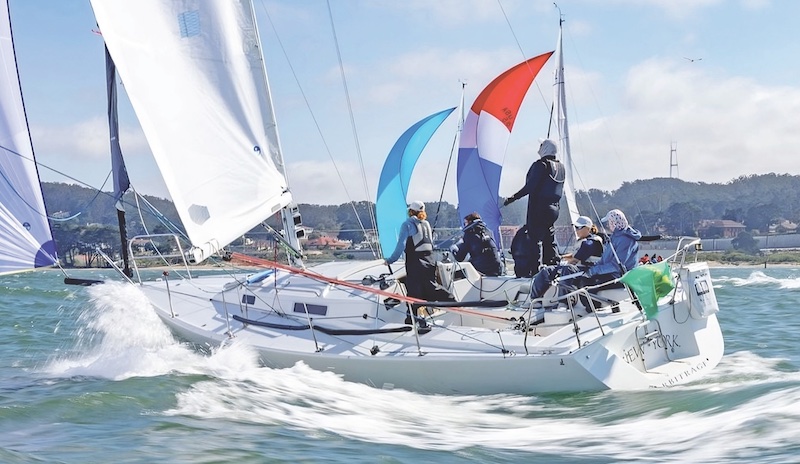
Rolex Big Boat Series Recap
While the wind steadily built throughout last year’s RBBS, culminating with a Sunday Bay tour that saw gusts in the high 30s, this year’s Big Boat Series was much more of a light-wind affair. Thursday’s racing saw breeze around 10 knots for most of the day, building into the low teens during the Bay-tour race. Friday was even weirder, with the buoy race sailed in well under 10 knots of breeze that once again only built into the mid-teens. Both Thursday and Friday’s racing was almost exclusively in flood. With the light wind and adverse current, upwinds were long wars of attrition, where patience and focus were paramount.
Singlehanded Sailor Rescues Crew
The urgency in the distress caller’s voice had me reaching to turn up the volume on my VHF as a reflex — “Mayday, mayday, mayday … we are taking on water fast!” There was an unmistakable note of panic in the caller’s tone that was more than compelling. “This one sounds legit,” I thought. I studied the screen on my VHF as if it could offer more details of the mayday.
Pacific Puddle Jump: Planning Versus the View From the Trip
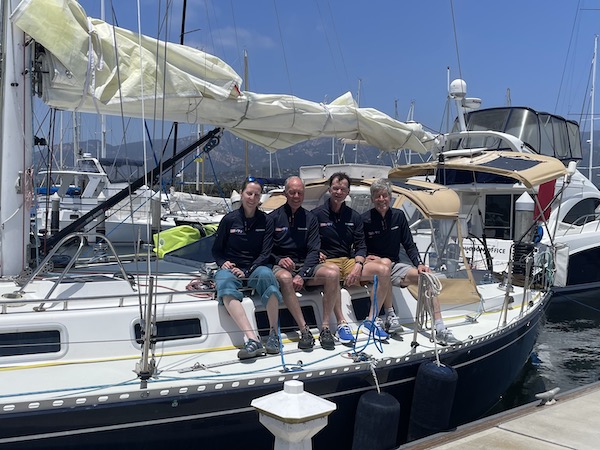
The good news is the bolts to the Hydrovane are tight on the inside of the hull. The other side of the coin is that I am hauling along through swells in the middle of the Pacific Ocean and I am not sure how I will extract my body from the lazarette! Maybe more interesting is how I got into this situation ….
Also in this month’s issue:
Letters: I’m Dropping Everything and Doing the Ha-Ha Take Two (Eight Years Later); Local Youth Sailors Shine in Benicia Thursday Night Race; Want To Live on the Water? Prove That You Know How To Sail; and many more readers’ letters and comments.
Sightings: A Wylie West Coast Build; Dock Neighbors and Pier Profanity; The Commodore’s Last Sail?; Notice to Mariners; and more stories.
Max Ebb: “Lee’s Time Turner”
Racing Sheet: Late August and early September are a fast and furious time for racing along the West Coast. While StFYC’s Rolex Big Boat Series (see the features section) is the main attraction, there was plenty of other exciting racing, including the Phyllis Kleinman Swiftsure Regatta, the YRA Drake’s Bay Offshore Regatta, the 55th International Knarr Championship, the Snipe Hemisphere and Asia Championships, and much more. Read all about it in the Racing Sheet, and see regatta results in the Box Scores.
Changes in Latitudes: With reports this month on the start of Iwa’s trip from Alaska to Mexico; Alegria’s departure from Mexico after six seasons there; how the owners of John Muir finance their cruising as they go; and a bucketful of Cruise Notes.
All the latest in sailboats and sailboat gear for sale, Classy Classifieds.
We appreciate all readers and all our supporters — you keep the wind in our sails. Please show your appreciation by supporting the advertisers who have made this issue possible: Shop here.
Find all our distributors here.
Good Jibes #211: Women’s Match Racing w/Betsy Alison, Allie Blecher, Nicole Breault, and Molly Carapiet
This week’s host, Moe Roddy, is joined by women’s match-racing legends Betsy Alison, Allie Blecher, Nicole Breault, and Molly Carapiet to chat about the past, present and future of the sport. Betsy is a five-time Rolex Yachtswoman of the Year, Allie is a four-time winner of the US Women’s Match Racing Championship, Nicole is the number-one-ranked women’s match racer in the US today, and Molly is a five-time All-American sailor.
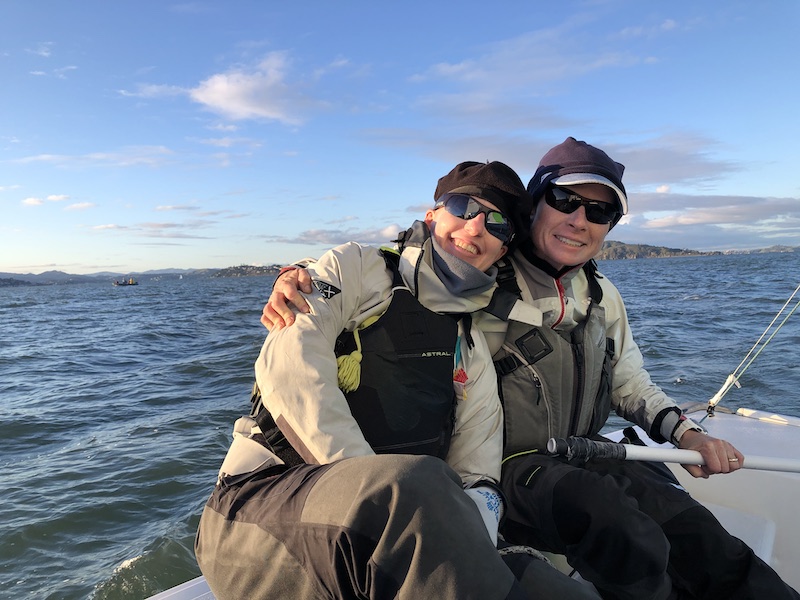
Hear the history of women’s match racing, how it compares to other forms of racing, how we can inspire more women to become match racers, the differences in match-racing grades, and about the mentors who have inspired them the most.
Here’s a sample of what you’ll hear in this episode:
- How Betsy discovered her aptitude for competitive sailing
- What are the transferable skills from team racing to match racing?
- The evolution of women’s match racing
- The match-racing grade system explained
- Why Simone Biles is Molly’s role model
Learn more at WomensWMRT.com and USSailing.org
Listen to the episode on Apple Podcasts, Spotify, and your other favorite podcast spots — follow and leave a 5-star review if you’re feeling the Good Jibes!
Steering the Dream With Hydrovane
Hydrovane is your best crew member: an independent self-steering windvane and emergency rudder/steering system … ready to go!
S.F. High School Student Introduces New Environmentally Friendly Plug for FJs
Tennis balls being used as dinghy plugs have been a staple for most sailors for years, particularly in the FJs and 420s competing in both high school and college sailing. A local junior sailor is trying to change that through a high school project.
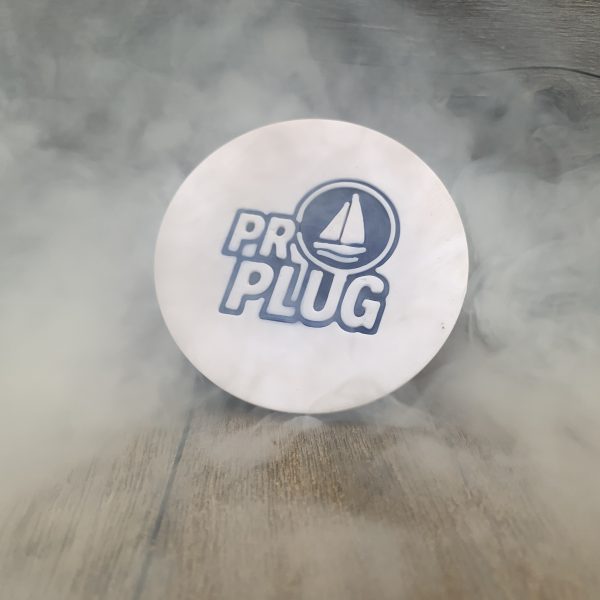
Gus Gossett, 16, is a junior at The Bay School of San Francisco and a skipper on the school’s sailing team. He first came up with the idea of working on a new plug design for FJs as a freshman, in the school’s “creative process” class, but then shelved the idea for two years before picking it up again as a junior and refining it. Gossett has now introduced a plug design that he calls “ProPlug.”
“Most CFJ sailors are familiar with the tennis ball,” Gossett tells Latitude. “It works … sort of. But it always bugged me that such a well-designed boat relied on something so sloppy to keep water out. The CFJ is such a well-designed boat. That’s why I’ve always had a problem with the tennis ball that comes stock from the factory on CFJs from Zim Sailing. It always felt like a temporary fix that nobody ever bothered to improve.”
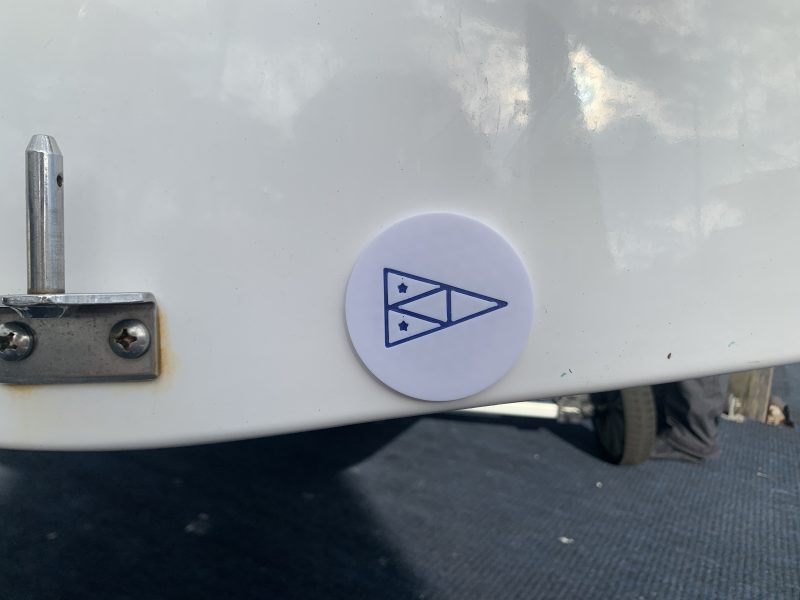
Gossett’s plug has gone through multiple iterations, with his two stated primary aims being to produce a plug that is more environmentally friendly than a tennis ball, and unlike the tennis ball, is specifically designed for the FJ.
“I designed the first ProPlug using tinkercad.com,” Gossett continues. “It came out looking super-bulky and unattractive. It was a start, though. Now, after 50+ iterations, I finally have a ProPlug I feel confident enough to sell. The goal was simple: Make a plug that’s lighter, cleaner, and actually designed for the boat. Every ProPlug is made from 100% recycled ocean plastic. It’s a small product, but it represents a bigger commitment to keeping our waters clean. The ocean gives us everything as sailors. It didn’t make sense to create more plastic waste when we could turn trash into gear.”
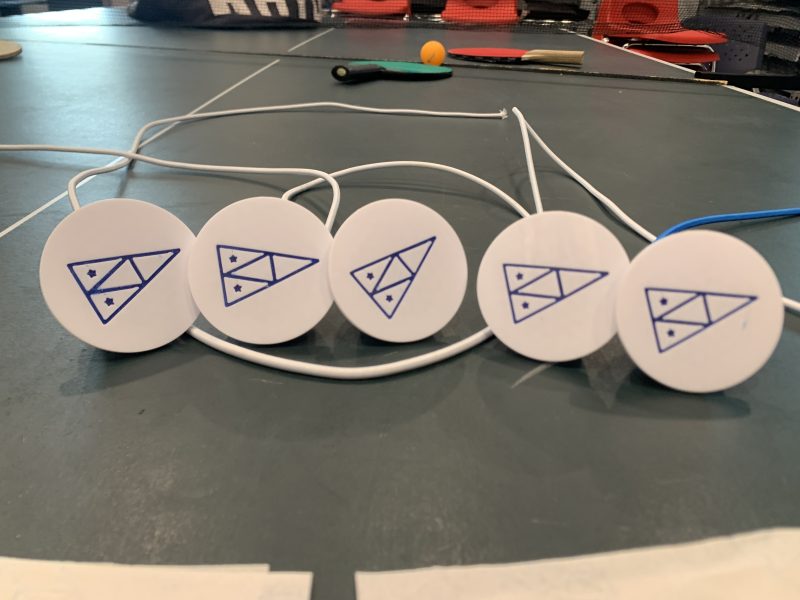
Gossett describes the design of the ProPlug, relative to a tennis ball. “I engineered the ProPlug so it’s 73% lighter than a DRY tennis ball, let alone a wet one. I also noticed that the tennis ball actually dips below the bottom edge of the hull, creating a small amount of drag that prevents the hull from moving through the water seamlessly. I wanted to solve this problem with a fully flush fit that didn’t stick out from the back. Early versions didn’t always lock into place when pulled from inside the hull. To solve this, I redesigned the plug with a conical shape, and after multiple rounds of testing, ProPlugs now snap in with a single pull. Another hurdle was durability — the painted steel hooks on the bungee fittings would rust over time. I upgraded them to stainless steel, eliminating the issue.”
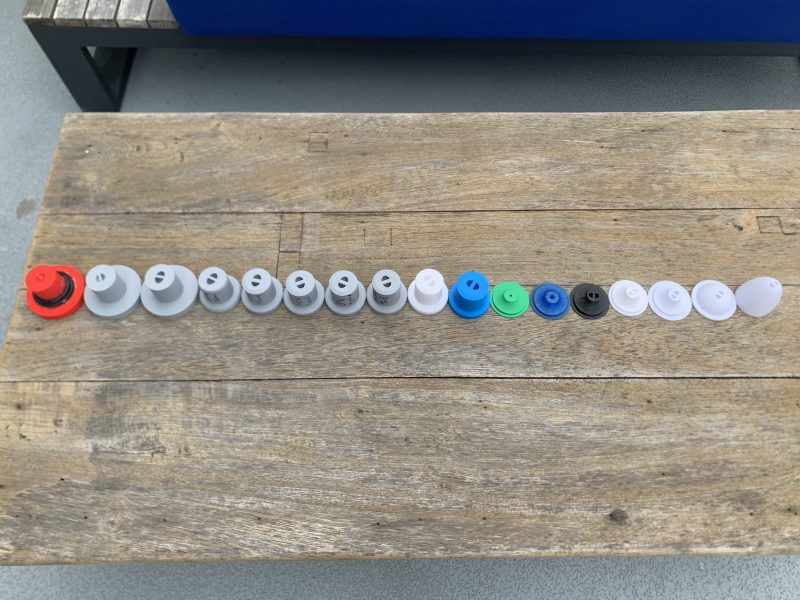
“I get it — tennis balls feel like the go-to solution,” Gossett admits.”They’re cheap, and on the surface, there’s nothing ‘wrong’ with them … if you’re OK with extra drag, added weight, the environmental cost, then sure, stick with it. I designed ProPlug for teams who want more: better hydrodynamics, more speed, a cleaner environmental footprint, and a sleeker look on the water. Every day, I’m working to get FJ fleets around the world to adopt ProPlugs. St. Francis Yacht Club just converted their fleet of FJs to ProPlugs. I am also seeking high school and college sailing teams that are interested in switching. I have been using social media to market the plugs. I have been making lighthearted content that connects with sailors like myself, and explains the environmental detriment that comes from using tennis-ball plugs and the advantages of ProPlug. You can find us on Instagram @proplug_usa.”
Yes, You Can Still Sail at Lake Merritt
Bob Bodnar, friend of Latitude 38 and one of the amazing team that delivers the magazines to the Bay Area outlets each month, was in the East Bay recently and had a chat with the folks over at Lake Merritt. Bob was happy to learn more about the lake’s active sailing programs.
We’ve covered the closure of the Lake Merritt Sailing Club, in both the June 6 ‘Lectronic Latitude and the July issue’s Letters. But there are still opportunities to sail on the lake, including lessons for beginners.
For decades, the City of Oakland’s Parks and Recreation Department has offered sailboat lessons for children and adults, and rentals for those with some sailing experience, at the Lake Merritt Boating Center. Their Youth Sailing Camps just wrapped up for this season, but two sailing classes for adults 18 to 99 commenced on the weekend of August 23–24.
Madeleine Loh, a sailing instructor with the City who holds a 50-Ton USCG Master License, describes Lake Merritt’s sailing classes as “unintimidating, accessible, and affordable!
“I recommend them for anyone looking for gentle exposure to sailing basics,” Madeleine says. “The classes are perfect for beginners with no sailing experience. You just have to know how to swim. There are no other prerequisites.”
The City offers two adult classes, Basic Small Boat Sailing, and Solo Small Boat Sailing. You can complete each class in a single weekend. The classes are scheduled in succession a week apart, so if you’re keen, as sailors are, you can complete both classes in two weekends. Students receive a textbook and classroom instruction about points of sail, sail trim, knots, and boating terminology, in addition to actual practical experience on the water with certified instructors.
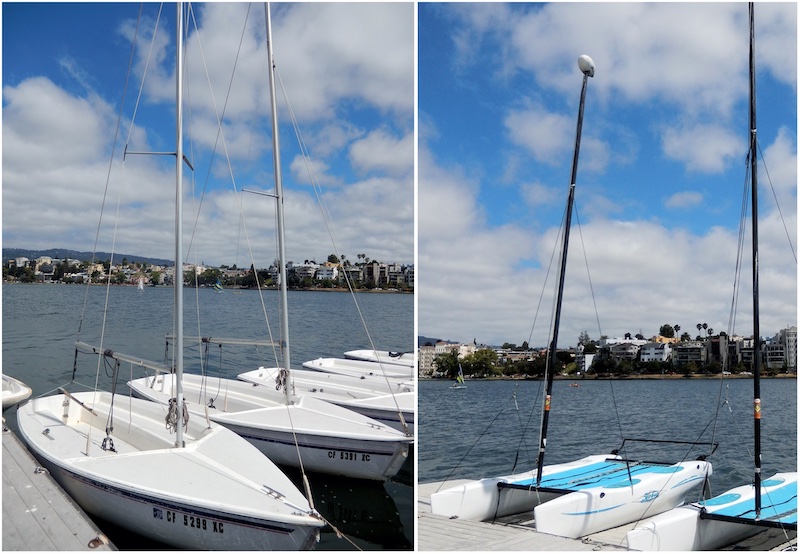
Adult sailing classes are mainly taught on a Catalina 14.5 [also known as the Catalina 14.2], a stable keelboat. But other class boats include a Hobie catamaran, Sunfish, Qubas, and one Catalina Capri 16.5 keelboat. Capsize recovery drills, which are optional, are taught on a Sunfish. Madeleine describes the fleet as “aging but adequate to learn sailing basics in a protected environment like Lake Merritt.”
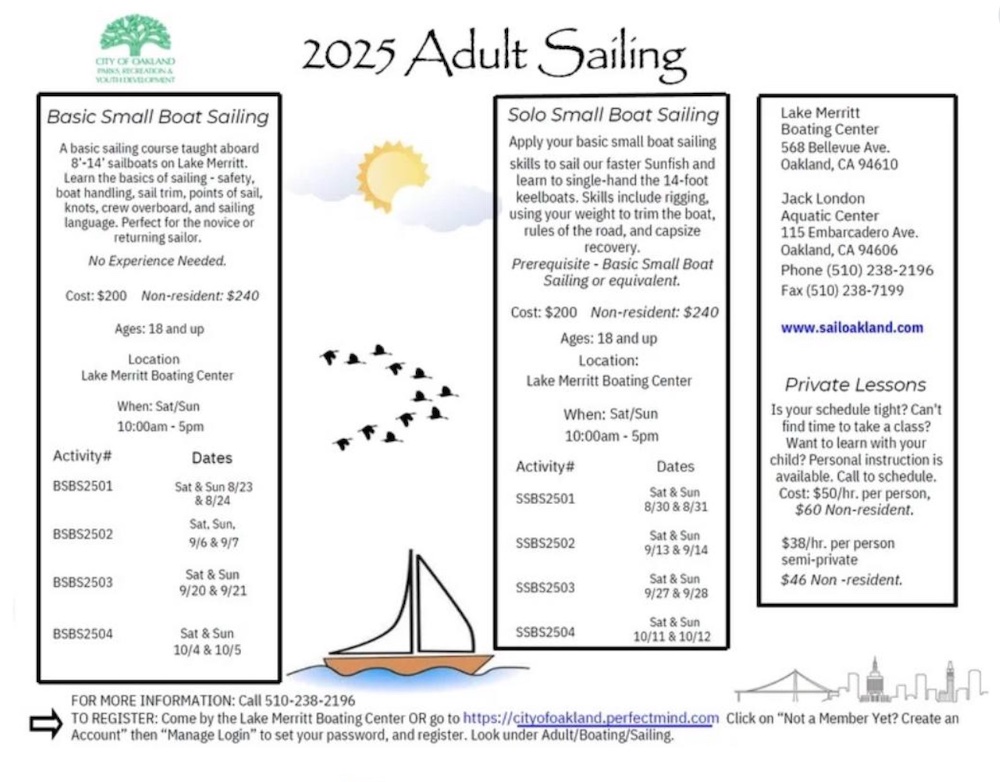
Upon successful completion of the Basic Sailing written and practical skills test you receive a skills card. Once you’ve completed Basic Sailing, or an equivalent, you can proceed to the Solo Small Boat Sailing classes. This year’s Basic Small Boat Sailing and Solo Small Boat Sailing classes began in August. Although the summer is over, there’s still opportunity to complete these two classes, starting with the “Basic” this weekend, on October 4–5. Each class is $200 for Oakland residents and $240 for nonresidents.
As someone who went through the City’s program 25 years ago on the El Toros, Sunfish, and Lasers that they had at the time, I can attest that, besides its being generally much warmer than the Bay, you do feel safe in the lake. One instructor told me, “If you fall out of the boat, you can probably just stand up.”
But sailing on the lake has a few challenges that can make you a better sailor, too. The buildings surrounding the lake alter the wind direction and intensity in various places, so you have to trim the sails actively. Otherwise you might find yourself head to wind drifting toward the bird sanctuary, though staff will tow you back to the dock if necessary. Many notable people, including Paul Cayard, got their start ailing on Lake Merritt. So can you.
To register for classes online, go to https://cityofoakland.perfectmind.com. Sign up for an account, then click the Program Registration button at the top, the one with a picture of a calendar. That takes you to an Adult Activity section, where you will see Boating as the first choice. When you click that, navigate to Sailing to register for available classes.
You can also register for classes in person. Just stop by the Lake Merritt Boating Center, which is located at 568 Bellevue Ave. in Oakland. Their number is (510) 238-2196.
And if you already have sailing skills, you can rent a Sunfish or Catalina 14.5 at the lake during the Center’s open hours, Wednesday to Sunday, 11:00 a.m. to 5:00 p.m. (The Center is closed on Mondays and Tuesdays.) To rent, you just have to pass a simple quiz and demonstrate that you can rig the boat. Rentals are $15–20 per hour, and the rental window takes only cash.
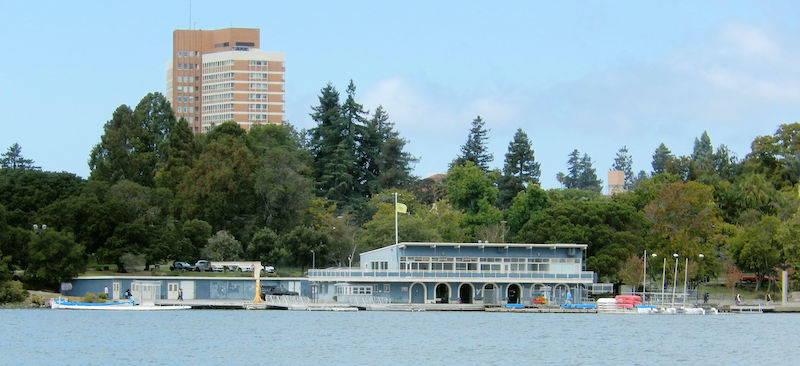
More information is available on Oakland’s rather Byzantine website if you know where to look. It’s far easier to start at sailoakland.com, where you will be redirected to the Lake Merritt Boating Center page. Then click on Boating, and then Boating at the Center, for additional information about classes, sailboat rentals, and launching your own small boat at their ramp.
See you on the water!
Read sailors’ comments about the Lake Merritt Sailing Club in the July issue’s Letters, starting on page 25.
Westwind Yacht Management — Washing, Waxing and Varnishing
Westwind Yacht Management: Premiere Yacht & Fleet services for the San Francisco Bay Area.