

San Francisco YC Duo Wins F18 North Americans in South Carolina
The West Coast duo of Charles Froeb and Pablo Volker won the 2026 F18 North American Championship last week in South Carolina. The duo were racing under the San Francisco Yacht Club burgee. The championship is Froeb’s third in four years. Volker shares his reflections on the regatta:
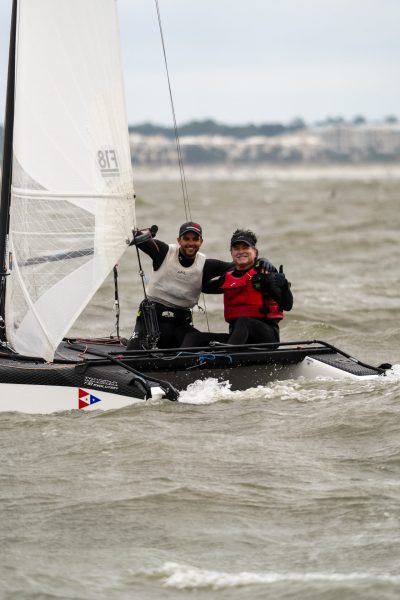
Overview and Schedule
The championship took place over four days of racing, running from Tuesday, September 22, to Friday, September 25 (preceded by a practice race on Monday). Throughout the entire event, the breeze consistently blew from the north-northeast sector, shifting slightly more to the north-northwest by the final day.
Day One: Squalls, Delays and Big Shifts
The practice race on the eve of the championship was marked by light winds. However, day one of the official racing kicked off with high drama, right on the starting sequence, as a series of squalls rolled through the course. Race management had to postpone the start until the storm passed and the breeze re-established itself, resulting in a two-hour delay.
We finally got underway in medium winds. On the first downwind leg, a massive 40-degree shift hit the fleet, accompanied by a significant increase in wind pressure. The race finished in a bit of a procession, with the second beat turning into a single-tack fetch and the final downwind leg too tight to even hoist the spinnaker. However, since the major positional changes had settled by the time the big shift rolled in, it felt like a fair shake overall rather than a lottery.
Day Two: Shaking Off the Rust and Figuring Out the Course
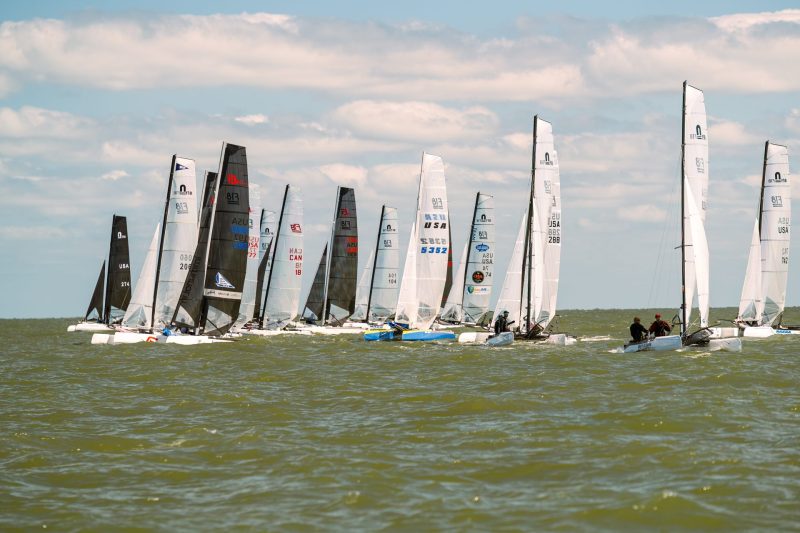
Conditions on day two delivered medium breeze, building slightly toward the end of the day.
Teaming up with Charles [Froeb] again after not sailing together for over three months meant we felt a bit rusty during day one and the early part of day two. We were definitely missing that razor-sharp boat-on-boat synergy at first.
Other top contenders, Matthew and Liam, had started the regatta very strongly with a first, second and third in the opening races. However, in the third race of day two (race four overall), a communication error led to a serious collision with another boat. We heard over the radio that it was a heavy crash, and they unfortunately missed two races. By the end of day two, it was clear they were out of the running, leaving John Casey and Dalton Tebo out in front with a solid lead.
By the third and fourth races of day two, we started clicking and got a much better handle on the course logic. Generally, the left side paid off. But there were specific shifts that rewarded those who played them rather than blindly committing to the left corner. By the final race of the day, we finally put it all together: We secured a bullet (first place) and managed to beat our direct rivals.
Day Three: Heavy Breeze and Strategic Focus
Day three (Thursday) brought the strongest winds of the event. After a brief postponement, a large portion of the fleet hit the water, and we managed to sail a much cleaner, more consistent day.
Charles Tomeo and Matthew Whitehead joined the fight on this day. Racing on an Akurra and showing incredible speed in the heavy breeze, they stole the first race of the day from us. However, our main objective was clear: We needed to consistently beat John and Dalton, especially since we had dropped the first four head-to-head encounters against them. Our strategy was to stay clean, keep tabs on John and Dalton, and chip away at their points. We executed this plan well on day three, securing three bullets and a second.
Final Day: Closing the Deal
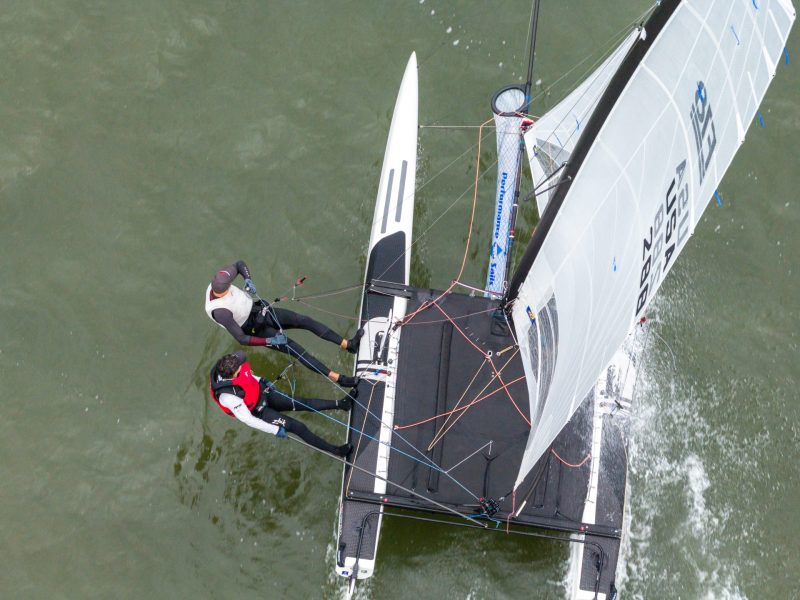
Entering the final day, we were ahead on points. We knew there would be a bit less breeze — conditions where John and Dalton matched up more evenly with us — so we went out highly focused and disciplined, playing the correct side of the course.
In the first race of the day, we were leading the fleet, but in the final downwind leg, our focus on covering John and Dalton allowed Tomeo and Whitehead to slip past us to take the win. Dropping that position didn’t hurt us, as our primary goal was strictly covering our main rivals. In the following race, we led from start to finish, which mathematically sealed the championship and gave us some breathing room.
Although we had already secured the title, we decided to race the third and final race of the day (and the last of the championship) purely for the enjoyment, shedding all pressure. John and Dalton led that race until the very end of the final downwind, but they overstood the layline, allowing us to sneak past and take the win.
Final Thoughts
Looking back, while the final standings might make the victory look dominant, it was far from a blowout. Every single race was fiercely contested, with constant lead changes; you had to fight for every inch.
A major tactical challenge throughout the event was the windward mark, which was always set very close to the coast. This made the approach and the exit quite tricky, especially dealing with the shifts and gusts right near the mark. The first part of the downwind leg required maximum concentration and precise jibing until you broke through into the more stable pressure closer to the middle of the course. Once Charles and I wrapped our heads around that dynamic, that’s where we were finally able to make the difference.
Latitude Readers Are Handy With the Camera
Latitude 38 readers have had their cameras at the ready and shared some great footage from around the Bay.
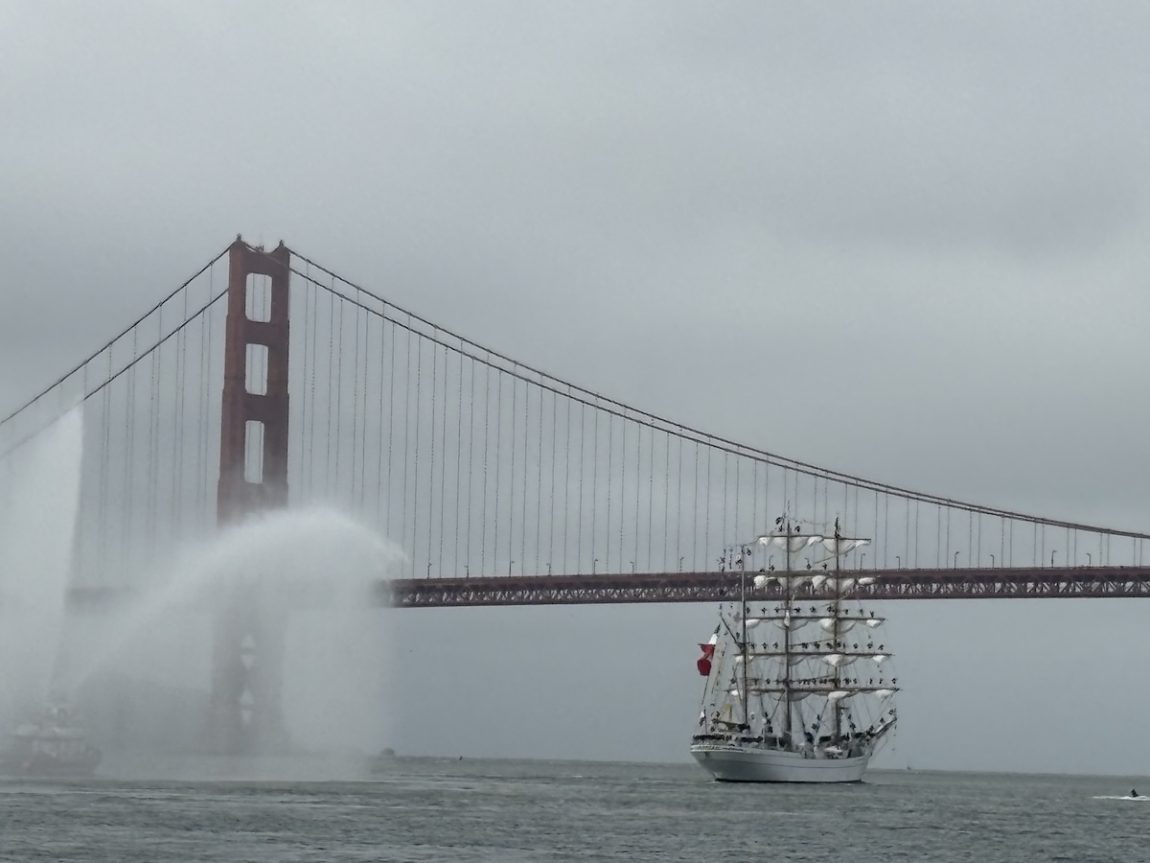
Gareth Selfe of the Golden Gate Yacht Club was riding his bike on Sunday when he saw Cuauhtémoc approaching the Golden Gate Bridge. “Because I was on my bike, I said to myself, ‘I bet I can make it in time and get an aerial shot of the ship leaving the Gate.’ So I booked it and made it just in time to capture this video.”
Also on the Bay on Sunday, Aleta George was sailing aboard Call of the Sea’s brigantine Matthew Turner as they accompanied Cuauhtémoc out of the Bay.
Aleta’s grandchildren Olen George and Brady Clark were among the guests aboard Matthew Turner.
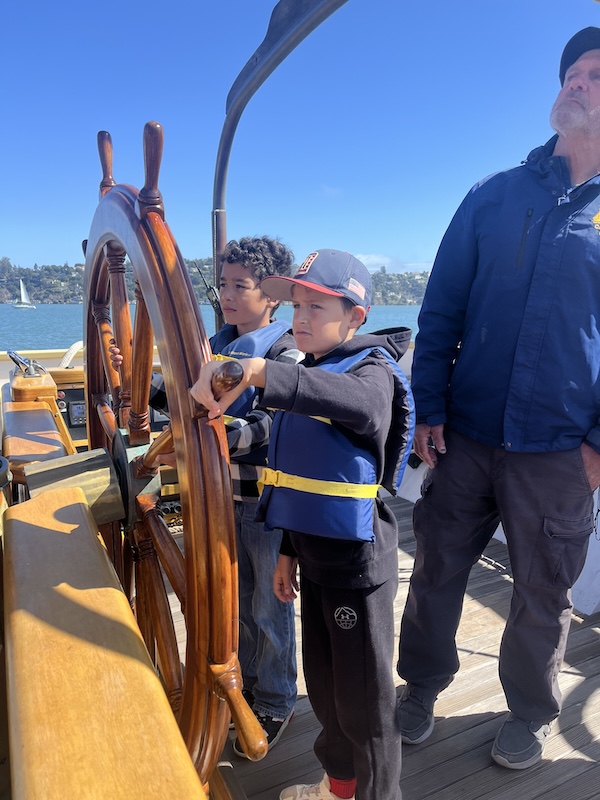
This was Olen and Brady’s first time being on a sailboat.
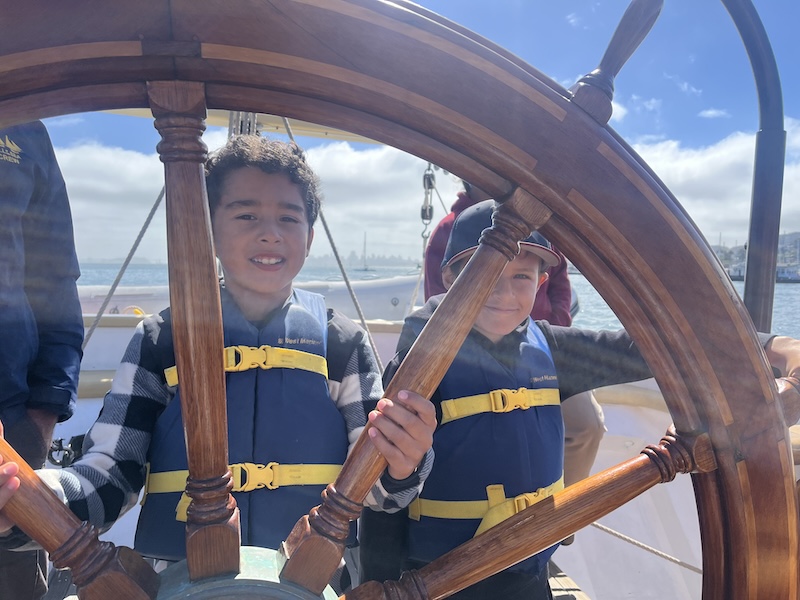
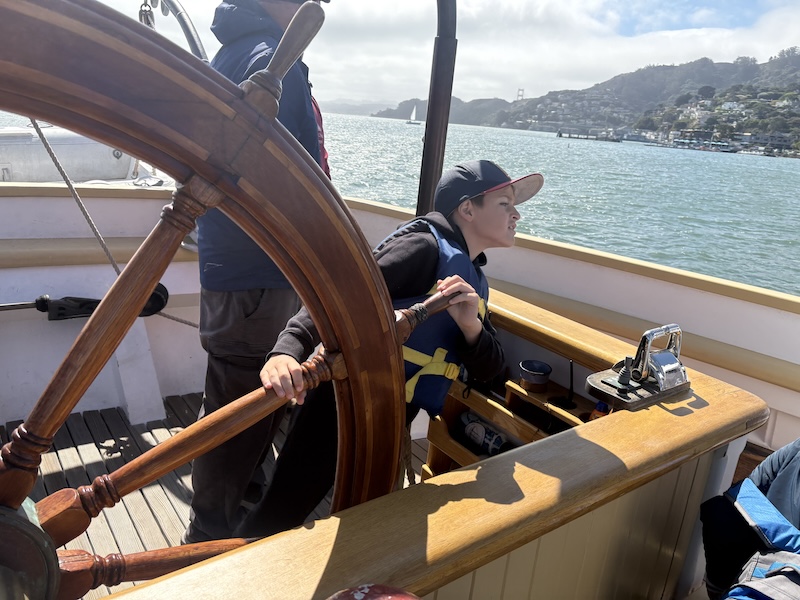
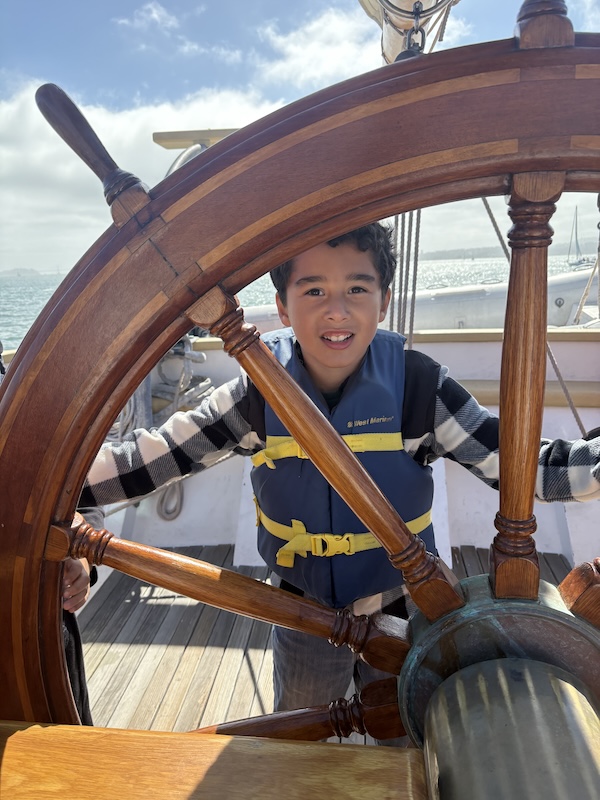
Aleta adds, “The regular crew aboard Matthew Turner climbed the rigging and hung out on the yards in solidarity with the other crew.”
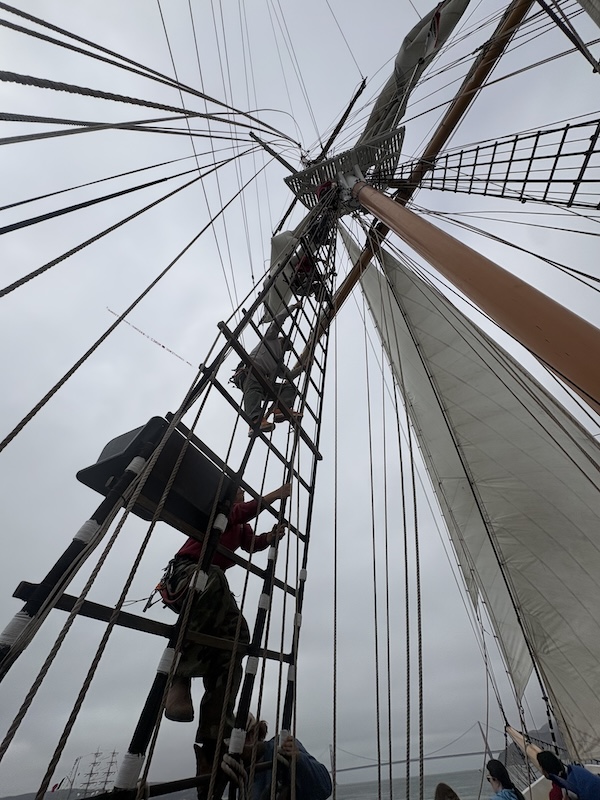
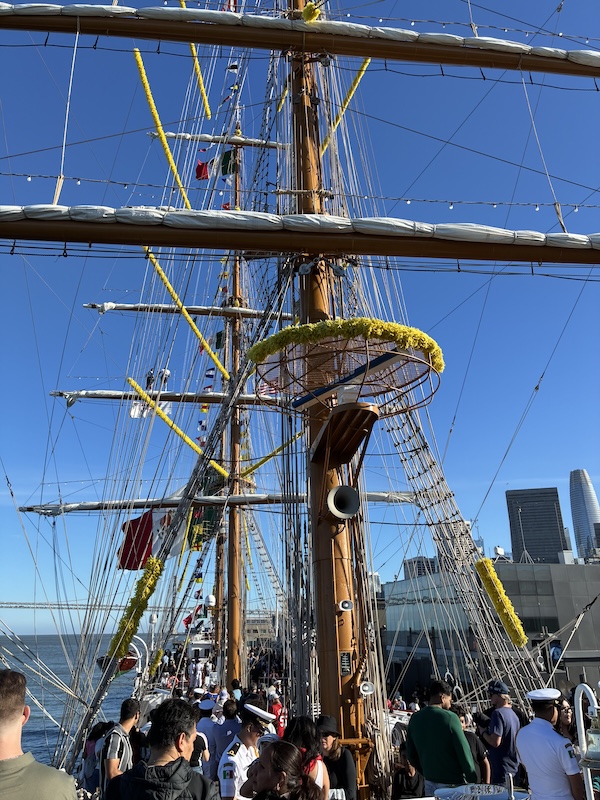
As for Cuauhtémoc herself, Aleta tells us that her friends stood in line for 45 minutes to see the training ship.
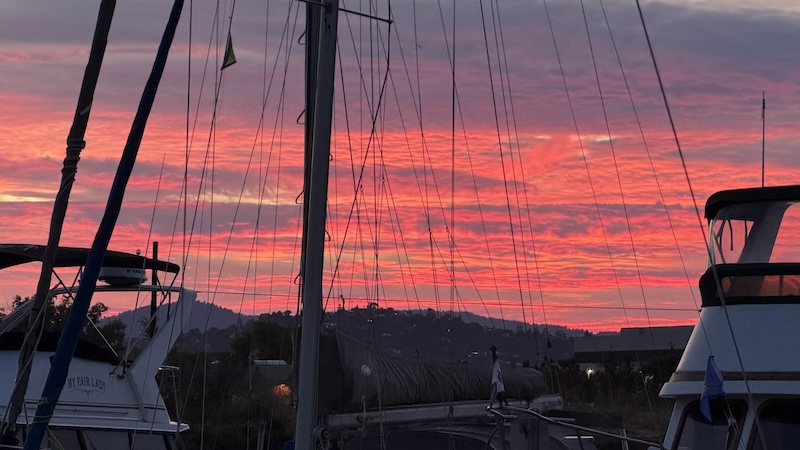
And now for something completely different.… We leave you with this sunset, captured by Steven Klein from the deck of the Sequoia Yacht Club after the Wednesday evening beer can races on September 8.
Visit Antioch Marina, the Gateway to the Delta

Jason Hite Updates Us on Hurricane Polo in Mexico
Hurricane Polo looked devastating as it traveled north along Mexico’s west coast. Fortunately, it turned out to be much less severe when if finally turned east across Baja as a weakened storm. Mexico cruiser and yacht broker Jason Hite gave us an update.
I live in Banderas Bay. We expected some weather from Cat-5 Polo, yet its closest point of contact came and went. That night, despite the predictions of rain, it was quiet. A day later, we got a pretty good storm. Nothing unusual, just a decent storm. The next day I woke up, looked out the window at the bay, and was shocked at the waves I saw. The waves usually appear close to shore when they break, yet today I saw 10–12 sets back from the beach, many of them breaking. Ten sets off the beach! There were reports of numerous people drowning, and one large motorboat sank over by Bocas.
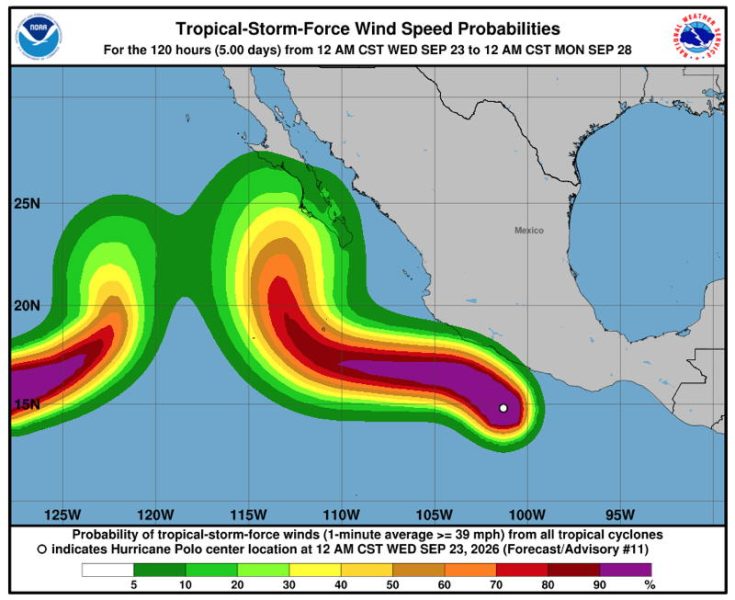
The hurricane made landfall in Baja as a Cat 2 hurricane. In past seasons, cooler water had a tendency to help these storms fall apart. Then the Baja terrain helped some more. Finally, cooler temps in the northern Sea helped prevent them from intensifying further. This storm was forecast to be exceptionally dangerous, coming to shore as a major hurricane, then hitting the mainland at hurricane intensity. The major cruising areas in Baja that were in danger were Puerto Escondido (Loreto) and Santa Rosalia.
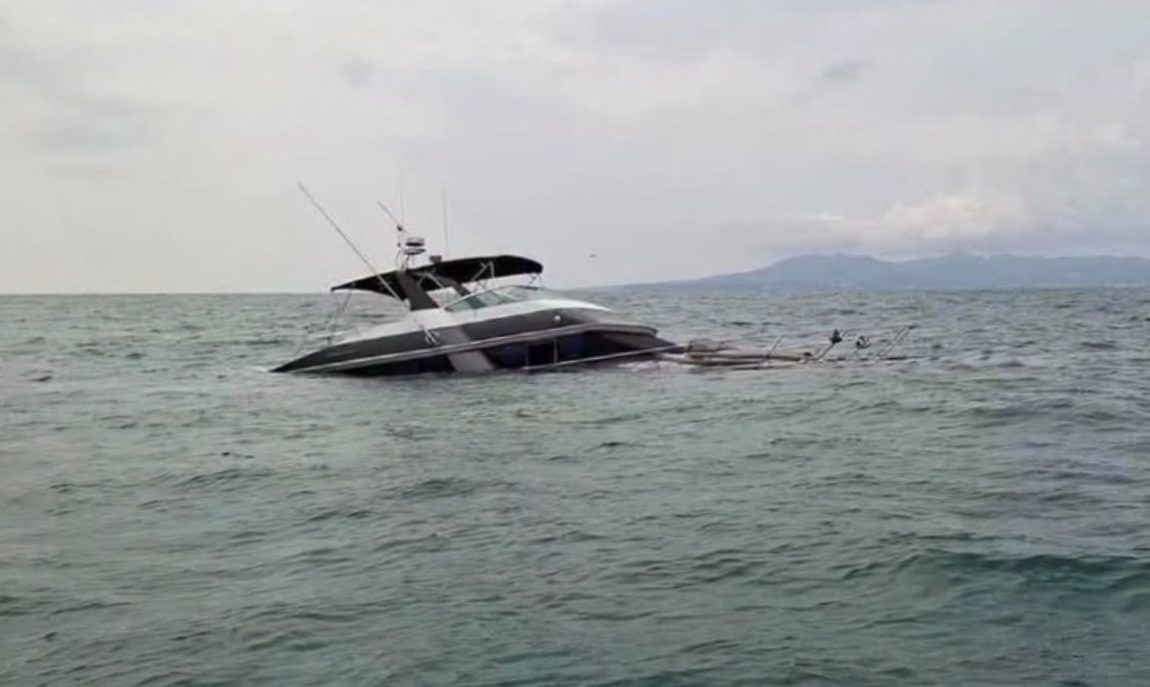
Checking in with friends in both of these ports, I was so happy to hear it was a non-event. One cruiser reported 35-knot max winds in Santa Rosalia. My friend Michael, who keeps SV Sea Dream in Puerto Escondido, told me, “All good. Nothing like Hurricane Kay … Kay made her presence known. This one felt incredibly polite and gently knocked on the door. I felt like I was waiting for it to hit all night. Gusts reached 64 knots at the end of A dock; my instruments showed a max of 49 (when I was watching). Felt like 50 at times. I walked the marina; everything held well. I took extra precautions in my slip, and tied it to the building. After a short nap this morning, I took the dinghy around the moorings … found one sailboat on the rocks in the north window. Radioed for help, and we were able to pull it off the rocks. No water in the bilge, seems OK. It was high tide. That’s about the only casualty.”
The community then held its breath for San Carlos/Guaymas. Every cruiser’s fear there is a bad storm that knocks over boats on stands, and they fall like dominoes. Cruisers were posting photos and videos of the rain, another case of the storm not hitting as hard as predicted. No docks were destroyed; all the boats were still standing in dry storage.
The worst direct damage from the storm was in Mulegé; there was a fire in their sacred palm grotto right before the storm that wiped out a lot of their palms. The storm hit Mulegé exceptionally hard and flooding caused a lot of damage. Overall the community and the Mexican authorities did a great job; the Mexican navy staged a relief ship with a helicopter, food and water in Mazatlán ready to respond if needed.
We’re happy to hear that Baja escaped what could have been severely damaging. Hopefully Polo marks the end of this year’s Pacific hurricane season.
Webb Institute — Free Tuition and Great Career
Our interest in the working waterfront and careers in the marine trades gave us extra interest in a press release from the Webb Institute in Glen Cove, NY, announcing the college has returned to US News‘ Best Colleges Rankings at No. 3. Bay Area naval architect Jim Antrim and marine engineer Paul Kamen are both graduates of Webb Institute’s excellent program. They also graduated without student debt because all 100 students currently enrolled get a full scholarship.
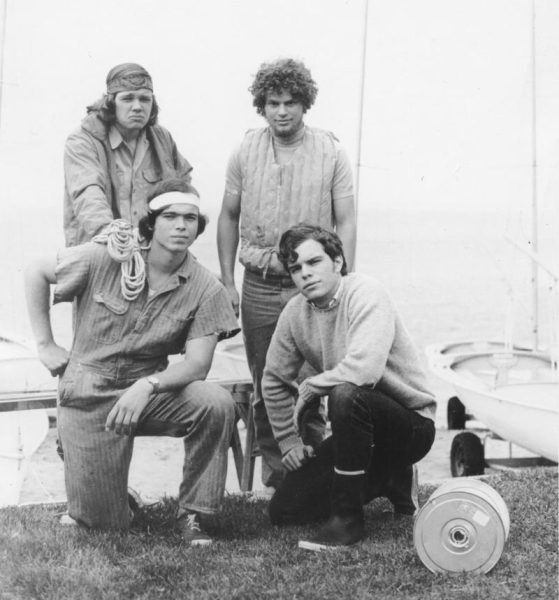
Antrim commented, “Attending Webb (then named “Webb Institute of Naval Architecture”) was one of the best decisions I have ever made. It was tough — very hard work. It was tiny — incoming class then was 24 students. You knew everyone. It was cheap, i.e., no tuition. Room and board was $500/semester when I started and $600 when I finished. I loved the sailing program. The required Winter Work periods were invaluable and fun. They had a strict honor code — no cheating, etc. The world today could benefit from some honor and integrity.”
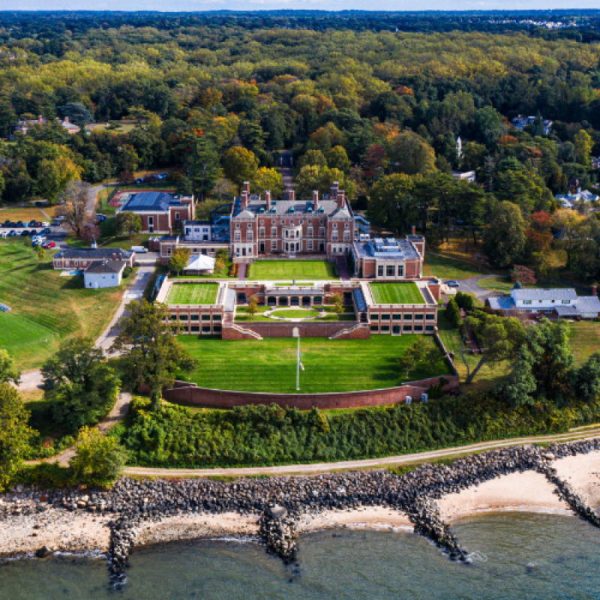
“The naval architecture/marine engineering curriculum was ship-based, but the basic principles learned made for a very small step to my dream of being a yacht designer. Many Webb graduates went directly into other engineering fields.
“Paul (Kamen) and I overlapped. He was one class behind me. I’m attaching a couple sailing team photos that are favorites of mine. See if you can find us.”
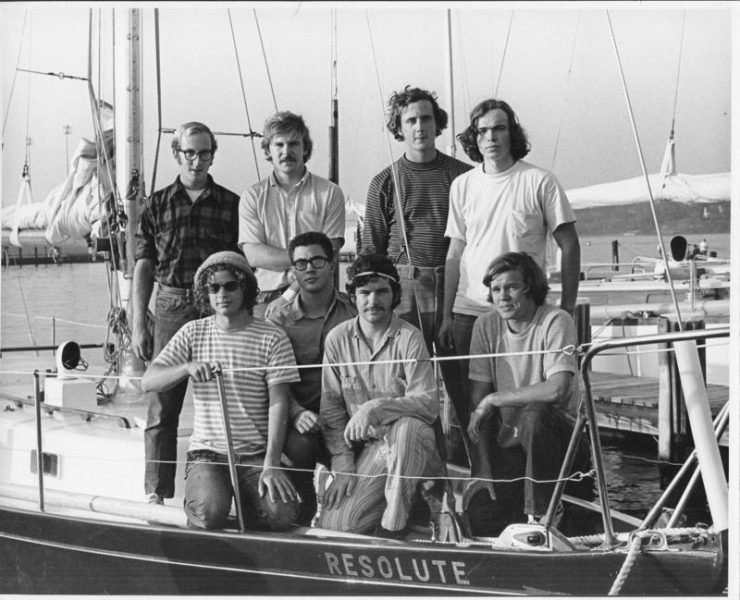
Mark Martecchini, president of Webb Institute, stated, “Our students receive individual attention, a full-tuition scholarship and substantial experience in the field before they graduate. Our return to the US News rankings isn’t because Webb changed its model; it’s because the broader higher education landscape is finally measuring what matters most: student success and real-world outcomes.”
The 2027 rankings also give greater weight to student outcomes. More than half of an institution’s overall score is based on measures including graduation and retention, social mobility for low-income students and postgraduate earnings. A new “Earnings by Major” measure evaluates earnings four years after graduation for employed federal financial aid recipients, comparing graduates within their fields of study.
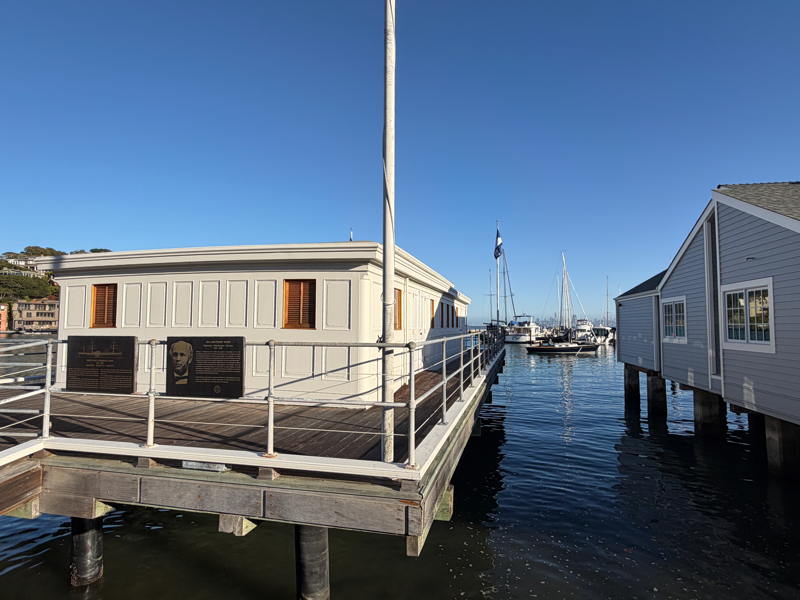
Bay Area sailors who’ve walked the Belvedere waterfront may also have noticed the China Cabin, which was removed from a scrapped sidewheel steamer built by William Henry Webb, who endowed and founded the school in 1889.
On Trim: The Pursuit of Fleeting Perfection
I first understood “trim” as a command, meaning to pull in the sail and synonymous with “sheet.” Later, I would think of trim as an equilibrium of forces, a perfect angle. Sailing on bigger boats, I discovered the idiosyncrasies of telltales and how to stream them evenly on both sides of the sail. Then came the travelers, vang, halyard tension, barber haulers, numerous tweakers and, in general, gazillions of lines lying in the cockpit like a pot of spilt spaghetti, all trying to exert their effect and manipulate every inch of sail to achieve perfect trim — though perfection was at best fleeting, a thing to be forever chased rather than achieved.
The mysterious forces of trim so intrigued me that for a brief time I sought out technical diagrams and terms. “Laminar flow” had a certain gravitas. I was drawn to diagrams where uniform arrows flowed neatly across a sail, depicting some ephemeral state of perfect alignment. But ultimately, science and racing weren’t my thing. When I started windsurfing, I came to understand trim purely through feel. Trim became an act of the body to balance forces, flex through waves, and chase an invisible harmony.
This past summer, I had an epiphany on trim — from my unique sailing niche at my unique spot under unique-ish conditions.
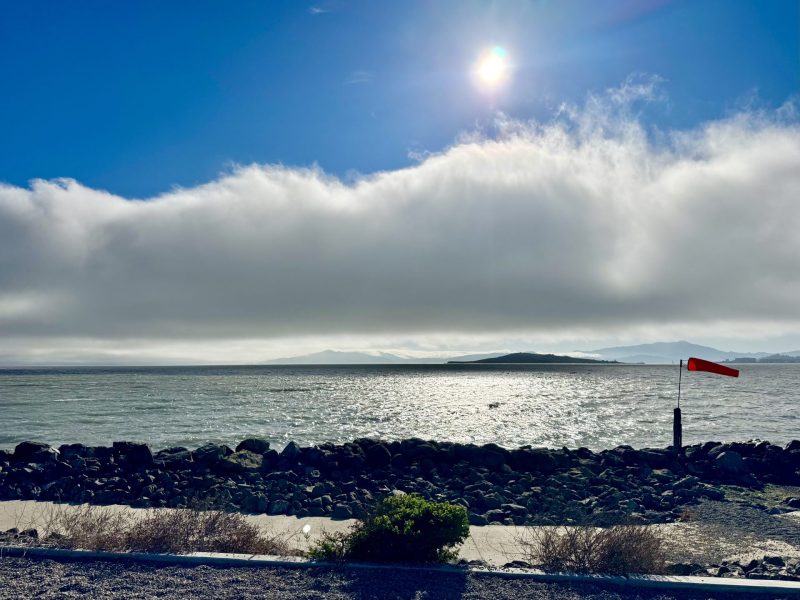
In July, the winds went southwest at Point Isabel, which lies south of Richmond Yacht Club, next to the Costco. A typical westerly wind will carry you in roughly north/south zigzags. But when it’s blowing from the south-southwest, you sail straight out to Brooks Island, to the west. This outbound port tack takes you straight into the waves, though it’s far smoother if you bear off a little and take the seas well forward of “the beam,” such as it is on a board. The return run, on starboard tack sailing east, means that you can be sailing on a tight-ish reach while going down-swell, through the peaks and valleys of the waves.
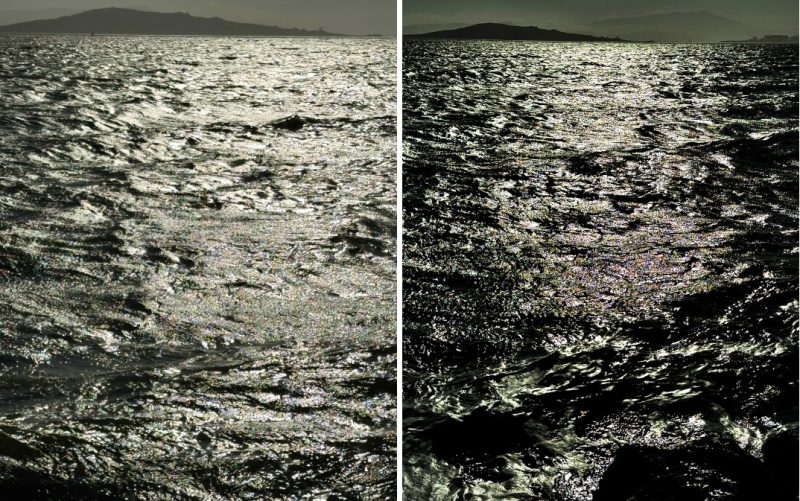
July 10 saw solid conditions — maybe 25 knots — at Isabel. I felt a little lit up, or overpowered, after my first run bashing inelegantly into the waves out to Brooks. I dropped the sail to the water and extended the boom so that I could tighten my outhaul in an attempt to depower. The subsequent down-swell run felt strange by comparison. My “window of power” was much smaller. (Depower successful!) Though on that first return run, I couldn’t find a satisfying angle and thought I might have over-outhauled. Over the next few runs, however, everything started to gel and the sail felt perfectly rigged for the conditions.
I realize that when I try to talk about the specifics of my unique sailing niche, I have no vocabulary for it. When I talk to other windsurfers, we might as well be speaking different languages. When I do attempt to describe specifics, I’m often surprised to find myself making hand and body gestures to demonstrate the various angles utilized through the varying conditions.
Once, when trying to describe windsurfing to a non-windsurfer, I was surprised to hear myself compare it to yoga, saying that you were essentially looking for the perfect pose — something that was both static and seemingly frozen in place, but also infinitely dynamic, with the body making hundreds of micro-adjustments as the board skittered across a heaving surface.
After making the outhaul adjustments and doing a few laps on the July 10 session, I started to think of the down-swell, starboard-tack run as a particular crouch. My body was a little more compact to adjust to the flatter sail. (Technically, I suppose, I was “hiking” less.) As I navigated my way through the undulating Bay, I was hyper-aware of my peculiar pose flexing and bending through the waves, everything in balance.
Suddenly, there it was: perfect trim.
But the sail is just one part of a multifaceted equation. Trim also applies to the board, and it is just as dynamic, if not more, than the sail. On the first few down-swell runs of the session in question, I kept plowing into the backs of waves and losing speed. But for every clunky, mistaken motion in windsurfing, the opposite and ideal motion is a tiny, near-imperceptible adjustment away. Instead of slamming into the backs of waves, I flexed my knees and accelerated over the tops, then dropped into the subsequent face, going through the waves as though I were on a roller coaster.
As I’ve written before in this magazine, I used to find these kinds of minute, crucial adjustments to be nothing short of transcendent, as if you could see the Matrix, use the Force, or were bestowed with superpowers. Though the conditions were better than average that day, and though I had found truly optimal trim, at best, I was merely sailing correctly.
“How was it?” a fellow windsurfer asked me as I returned to shore that day.
“Oh, man!” I answered. I put down my gear and, dripping wet, face smeared with white mineral sunscreen, snot lingering in my beard, head spinning from exertion and stoke, I put out my hands, crouched, and tried to describe that fleeting perfection — the equilibrium of forces, the flawless angles, the nirvana. The other windsurfer smiled politely.
“Cool,” they said.
But, for the first time, I understood it perfectly.
For More Great Sailing Stories, Tune In to Good Jibes