

San Francisco YC Duo Wins F18 North Americans in South Carolina
The West Coast duo of Charles Froeb and Pablo Volker won the 2026 F18 North American Championship last week in South Carolina. The duo were racing under the San Francisco Yacht Club burgee. The championship is Froeb’s third in four years. Volker shares his reflections on the regatta:
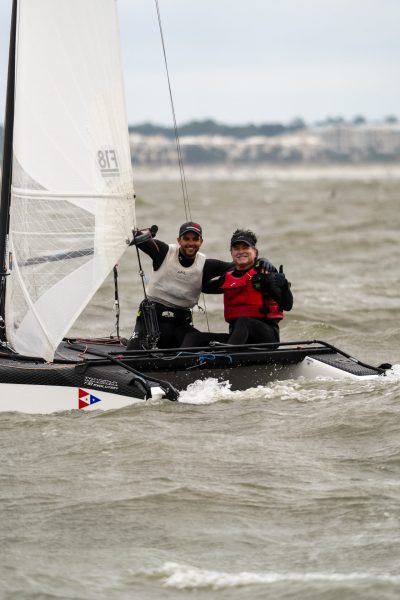
Overview and Schedule
The championship took place over four days of racing, running from Tuesday, September 22, to Friday, September 25 (preceded by a practice race on Monday). Throughout the entire event, the breeze consistently blew from the north-northeast sector, shifting slightly more to the north-northwest by the final day.
Day One: Squalls, Delays and Big Shifts
The practice race on the eve of the championship was marked by light winds. However, day one of the official racing kicked off with high drama, right on the starting sequence, as a series of squalls rolled through the course. Race management had to postpone the start until the storm passed and the breeze re-established itself, resulting in a two-hour delay.
We finally got underway in medium winds. On the first downwind leg, a massive 40-degree shift hit the fleet, accompanied by a significant increase in wind pressure. The race finished in a bit of a procession, with the second beat turning into a single-tack fetch and the final downwind leg too tight to even hoist the spinnaker. However, since the major positional changes had settled by the time the big shift rolled in, it felt like a fair shake overall rather than a lottery.
Day Two: Shaking Off the Rust and Figuring Out the Course
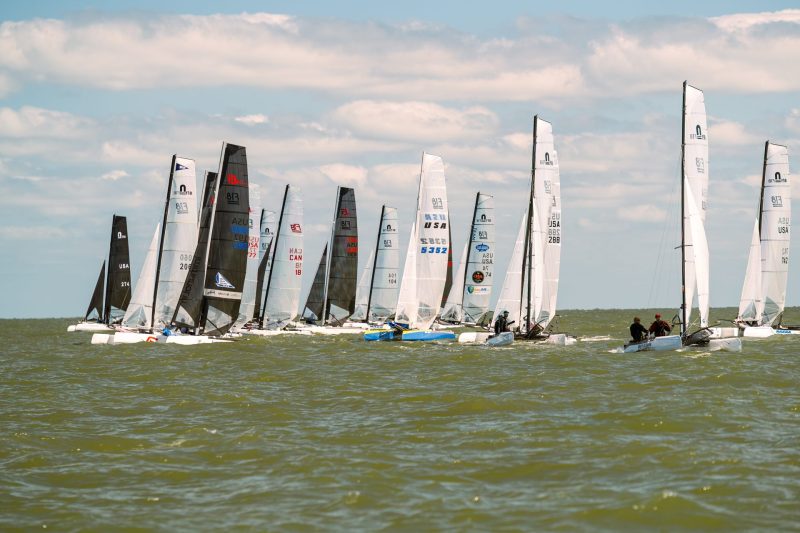
Conditions on day two delivered medium breeze, building slightly toward the end of the day.
Teaming up with Charles [Froeb] again after not sailing together for over three months meant we felt a bit rusty during day one and the early part of day two. We were definitely missing that razor-sharp boat-on-boat synergy at first.
Other top contenders, Matthew and Liam, had started the regatta very strongly with a first, second and third in the opening races. However, in the third race of day two (race four overall), a communication error led to a serious collision with another boat. We heard over the radio that it was a heavy crash, and they unfortunately missed two races. By the end of day two, it was clear they were out of the running, leaving John Casey and Dalton Tebo out in front with a solid lead.
By the third and fourth races of day two, we started clicking and got a much better handle on the course logic. Generally, the left side paid off. But there were specific shifts that rewarded those who played them rather than blindly committing to the left corner. By the final race of the day, we finally put it all together: We secured a bullet (first place) and managed to beat our direct rivals.
Day Three: Heavy Breeze and Strategic Focus
Day three (Thursday) brought the strongest winds of the event. After a brief postponement, a large portion of the fleet hit the water, and we managed to sail a much cleaner, more consistent day.
Charles Tomeo and Matthew Whitehead joined the fight on this day. Racing on an Akurra and showing incredible speed in the heavy breeze, they stole the first race of the day from us. However, our main objective was clear: We needed to consistently beat John and Dalton, especially since we had dropped the first four head-to-head encounters against them. Our strategy was to stay clean, keep tabs on John and Dalton, and chip away at their points. We executed this plan well on day three, securing three bullets and a second.
Final Day: Closing the Deal
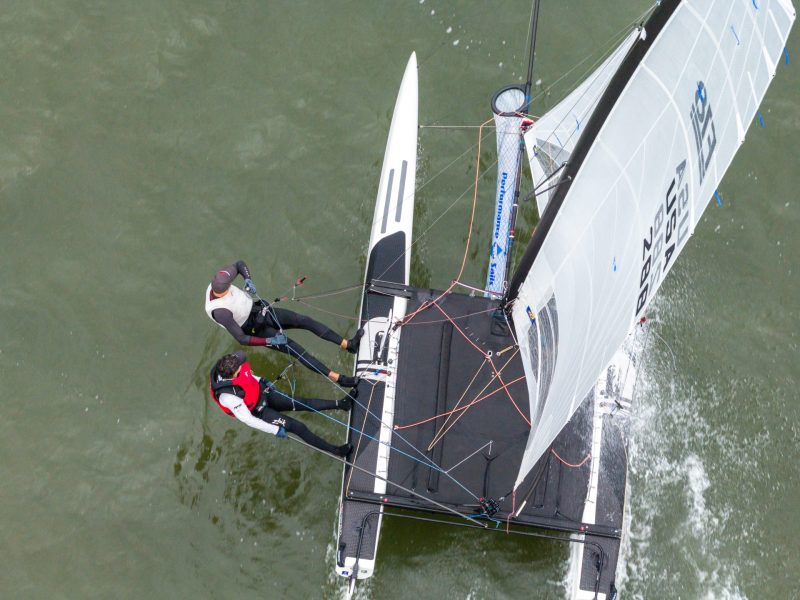
Entering the final day, we were ahead on points. We knew there would be a bit less breeze — conditions where John and Dalton matched up more evenly with us — so we went out highly focused and disciplined, playing the correct side of the course.
In the first race of the day, we were leading the fleet, but in the final downwind leg, our focus on covering John and Dalton allowed Tomeo and Whitehead to slip past us to take the win. Dropping that position didn’t hurt us, as our primary goal was strictly covering our main rivals. In the following race, we led from start to finish, which mathematically sealed the championship and gave us some breathing room.
Although we had already secured the title, we decided to race the third and final race of the day (and the last of the championship) purely for the enjoyment, shedding all pressure. John and Dalton led that race until the very end of the final downwind, but they overstood the layline, allowing us to sneak past and take the win.
Final Thoughts
Looking back, while the final standings might make the victory look dominant, it was far from a blowout. Every single race was fiercely contested, with constant lead changes; you had to fight for every inch.
A major tactical challenge throughout the event was the windward mark, which was always set very close to the coast. This made the approach and the exit quite tricky, especially dealing with the shifts and gusts right near the mark. The first part of the downwind leg required maximum concentration and precise jibing until you broke through into the more stable pressure closer to the middle of the course. Once Charles and I wrapped our heads around that dynamic, that’s where we were finally able to make the difference.
Nice write up, thx