
While Beer Can Racing Is Cooling Down, Fall Sailing Is Warming Up
This can be a difficult time of year for sailors. The days are getting shorter, the busyness of fall starts to accelerate, and most of all, most of the Bay Area’s weekly, evening beer can series are coming to an end. We have two left at the Corinthian Yacht Club, and Oakland Yacht Club’s Sweet 16 series finishes up tonight.
Richmond YC, Berkeley YC and Sequoia YC carry on toward the end of September, and Monterey Peninsula Yacht Club carries the torch all the way until October 7. However, most series end by Labor Day. We know many boat owners don’t live close enough to their boats to get through traffic in time to make the start, but for those who live close enough, joining a beer can series is a ritual you’ll never regret.
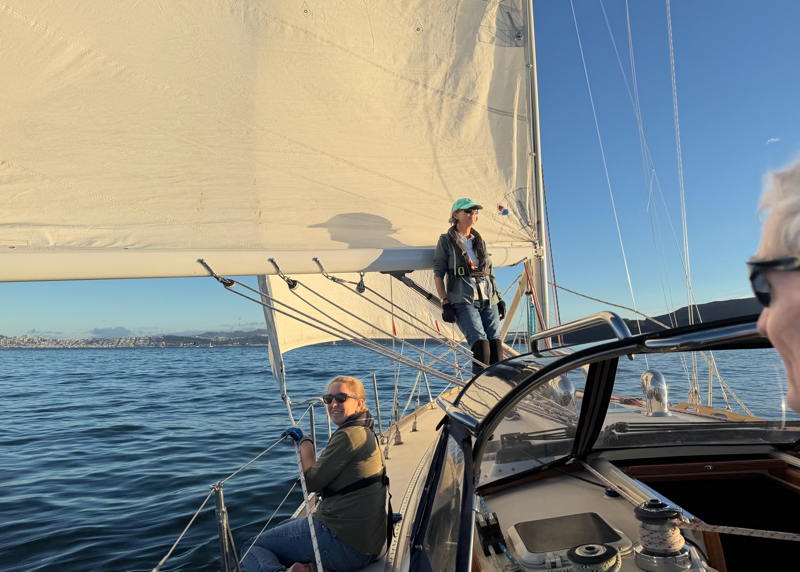
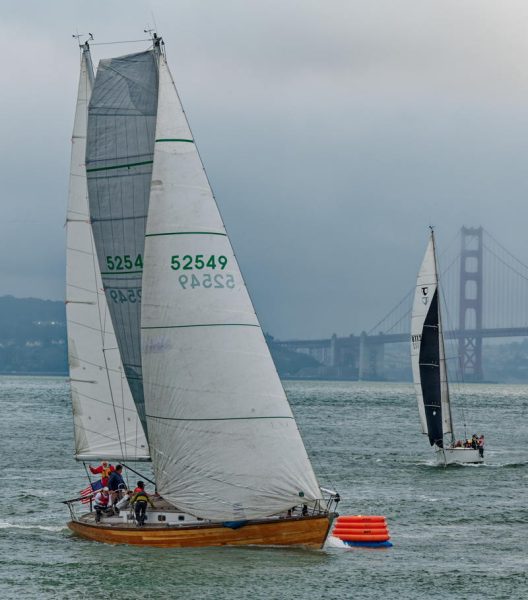
As the photo above shows, it’s the boats signed up for evening beer can races that are often the only boats on the Bay for some of the summer’s most beautiful evenings. We’d like to say there are no other boats in the photo in front of us because we were so far in front of the fleet, but that would be misleading. But our fleet position didn’t matter for such a beautiful night. The wind faded, the race was abandoned, but, regardless, everyone went home happy to have been on the water.
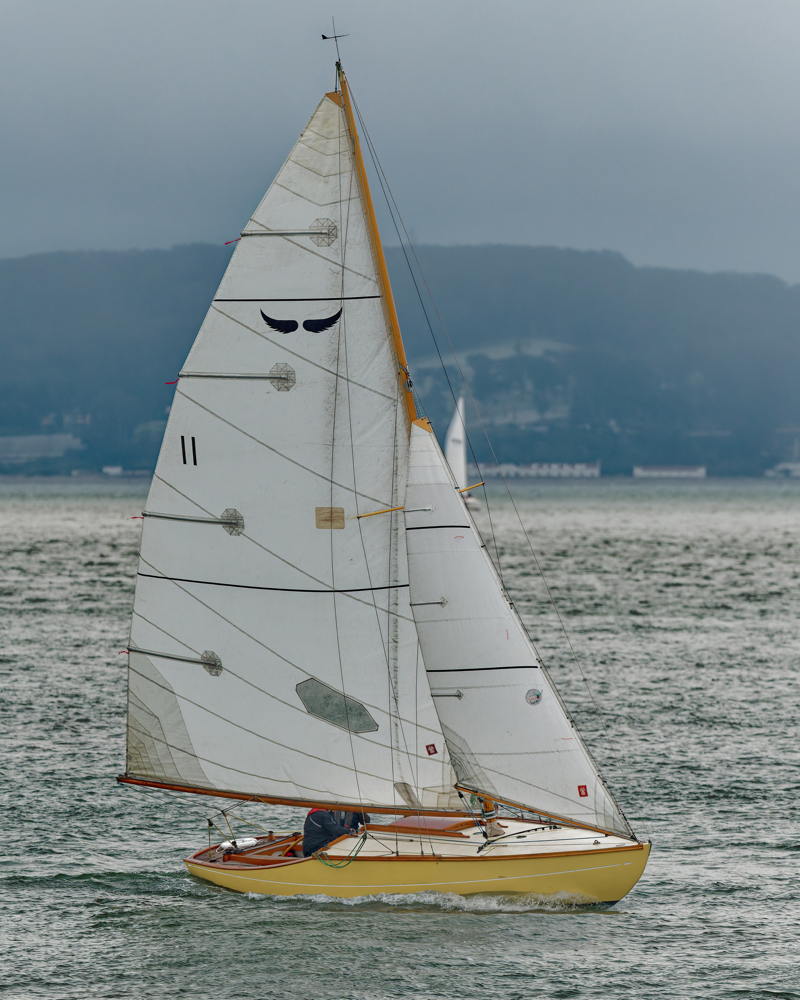
Remembering to sail with the spirit of Rob Moore’s “Beer Can Ten Commandments” has made many evenings better and is a spirit that’s worth remembering as you head into weekend battles on the race course. Friday night gathers the serious and not-so-serious for an opportunity to polish up sailing skills, socialize under sail, and continue to puzzle out the Bay’s ever-changing challenges.
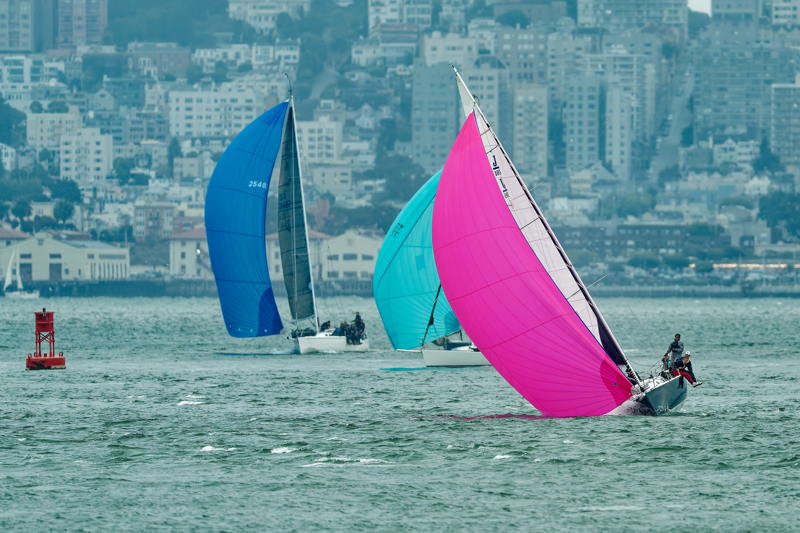
There are a couple dozen beer can series on the Bay, so there is surely one near your boat. Or, if you don’t have a boat, there’s most likely a boat looking for crew near where you live. Most races last an hour to an hour-and-a-half and land you back at a club full of smiling sailors who were happy to step off the land and break up their week.
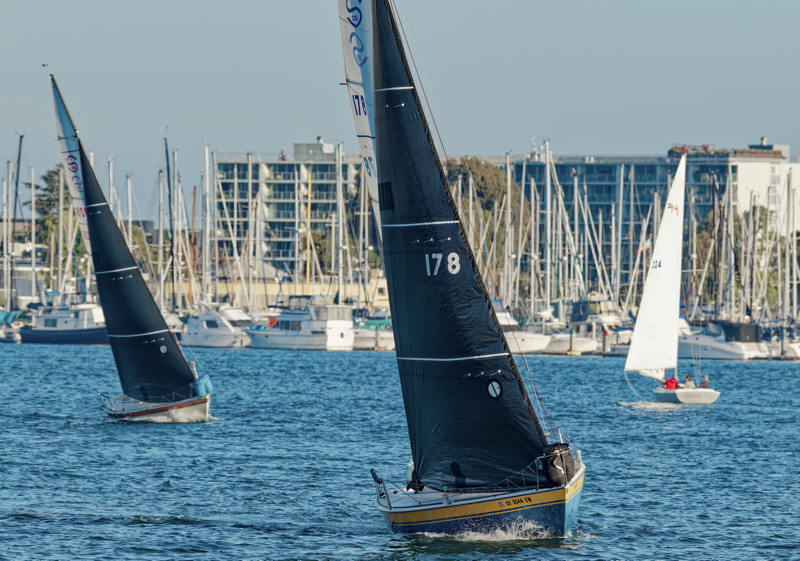
We wrestle with our paradoxical glass-half-full/glass-half-empty perspective when we see great photos like these of Oakland Yacht Club’s Sweet 16 series. We zero in on sail trim, the types of boats, the types of sails, the people on board and many of the elements of sailing captured in a shot. However, we also can’t help noticing all the masts in the background without sails hoisted that surely would also enjoy a good evening sail. We understand not everyone’s life circumstances make it possible to get out, but we’d guess most people’s lives would be improved if they could.
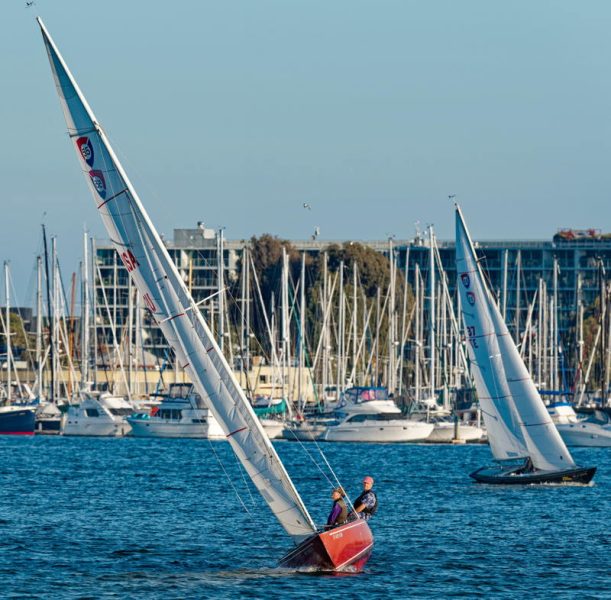
Finding a way to sail your boat regardless of your crew size also makes sense. Small boats sail more often because they don’t need as many crew and are easier to get out, but big boats can be set up to be easy to rig and sail shorthanded. If trophies are important to you then organizing crew can be a barrier, but if just getting out for the evening is the most important thing, the crew “problem” becomes easier to solve.
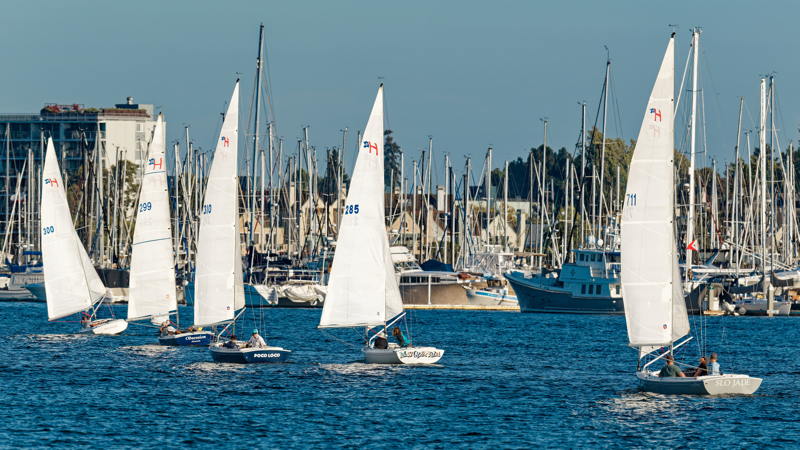
Luckily, while we lament the end-of-summer winding down of beer can racing, we’re also reminded that the fall is one of the best times of year for sailing on the Bay. While many regions of the country are thinking about getting their boats hauled and stored for the winter, California sailors are just adjusting their sails and schedules to get on the water for some of the best sailing of the year.
The Latitude 38 Crew List and September 10 Crew Party can help connect the boatless and the crewless so they don’t have to spend another day or evening ashore. While summer may be coming to an end, the opportunity to sail is with us all year long.
The YRA and yacht clubs are putting together the 2027 calendar now, so when spring rolls around, don’t forget to get to put a beer can series on your schedule.
“Sausalito Waterfront Royalty” Remember Sailboat Nirvana
Marina O’Neil, co-owner of Sausalito charter schooner Freda B, coined a wonderful term for a group of sailors who congregated in Sausalito during the 1970s and 1980s, and made the waterfront a veritable “Camelot for sailors.” Marina calls this eclectic group “Sausalito Waterfront Royalty.” The vessels these folks sailed, restored, rebuilt — and sometimes even built themselves — were legendary. Among them the pilot schooner Wander Bird [Elbe No. 5], restored by Harold Sommer; the schooner Spike Africa, built by Bob Sloane; Sterling Hayden’s Wanderer; David Crosby’s Mayan; the schooner Fair Sarae [Eros]; and dozens of other sailboats, large and small, together comprised an enviable collection of boats and characters on the Sausalito waterfront.
One of the central figures in that waterfront renaissance was young surfer, shipwright and sailor Billy Martinelli, who helped restore Wander Bird, as well as David Crosby’s schooner Mayan and many other boats on the waterfront. He then went on to build his own charter schooner, Gas Light.
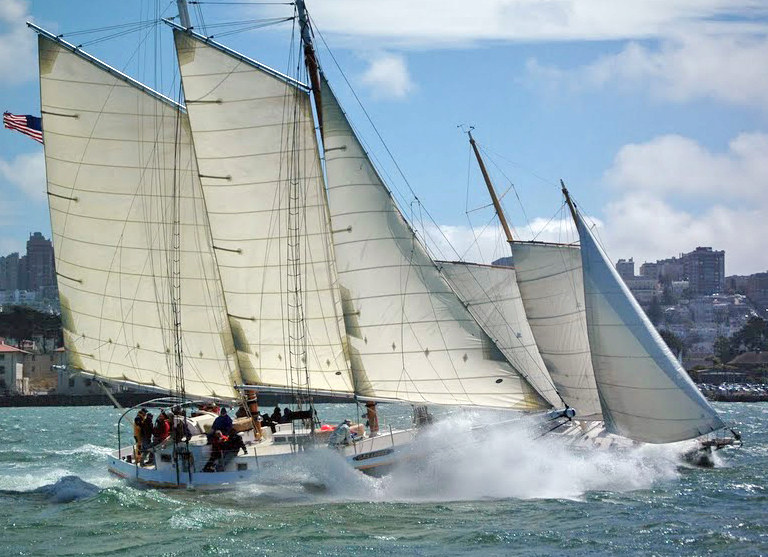
So when Martinelli turned 80, it was only natural that many of the original “Royalty” would show up to celebrate at a gathering hosted by Sausalito’s Mary Crowley, the “Queen” of the Sausalito Waterfront Royalty.
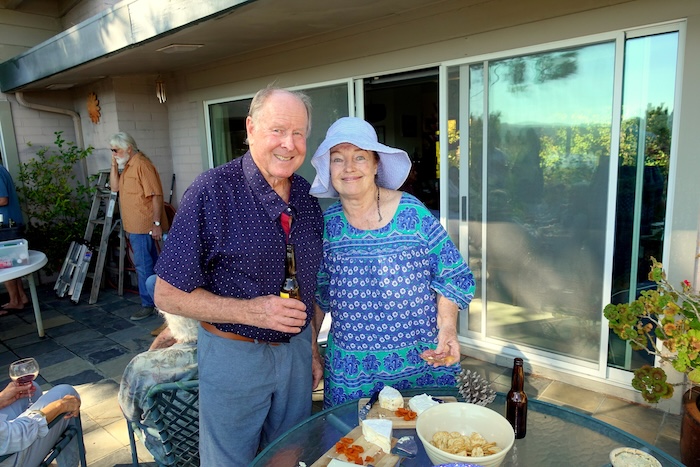
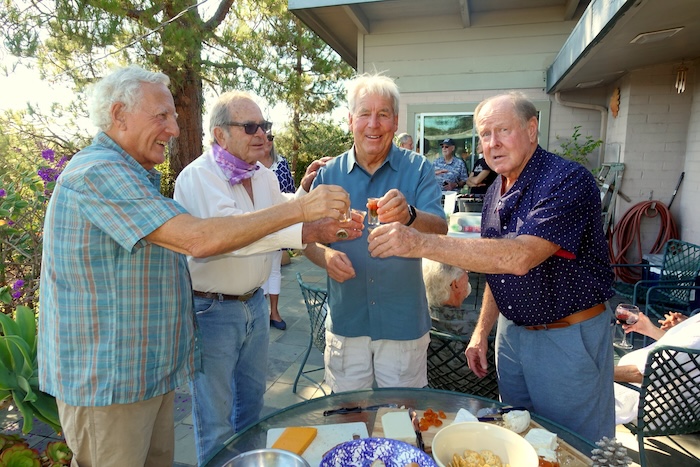
Many of Martinelli’s longtime sailor friends turned up for the event last Saturday, August 21. It was a real “who’s who” of the old waterfront, including Jim Linderman Sr. and Jr., Ross Sommer, mechanic and sailor Tom List, captain Paul Dines, shipwright Jeremy Fischer-Smith, Alice Merrill and dozens of others. For a few hours, it was almost like stepping back into another era of the Sausalito waterfront.
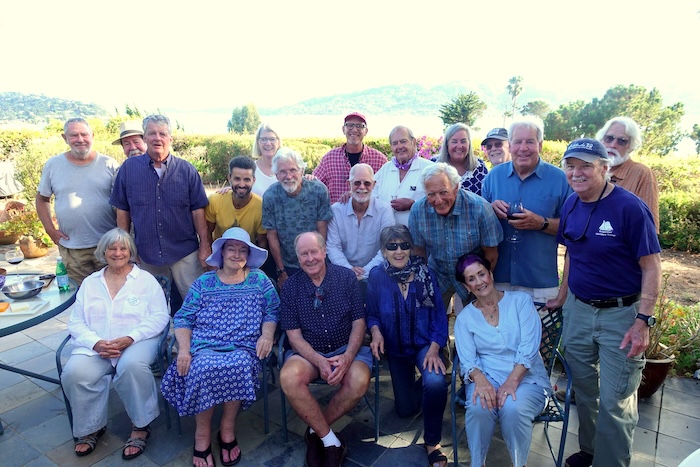
The party guests were entertained with some amazing original film footage that Martinelli had shot of Wander Bird racing Pride of Baltimore across San Francisco Bay toward Sausalito in 1983, just a few years before the Pride was knocked down and foundered off Puerto Rico in 1986. He also had footage of the schooner Spike Africa racing to Hawaii, blasting down trade-wind seas.
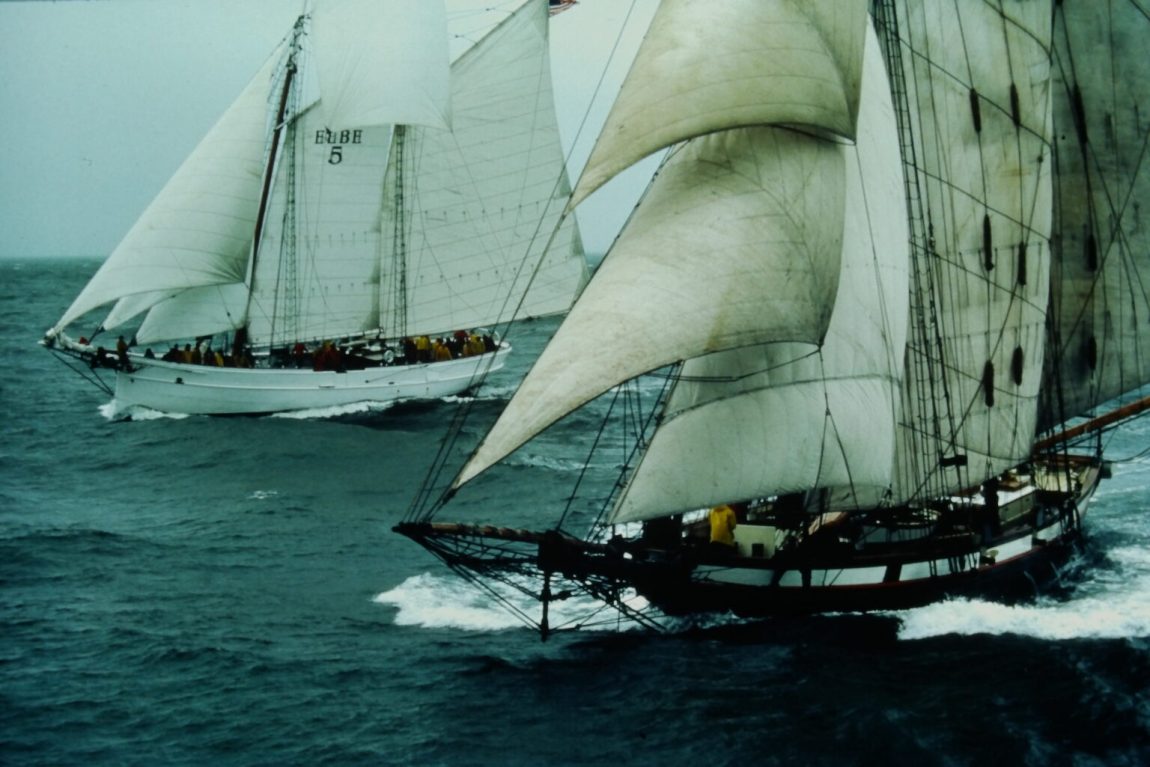
Watching those old reels, with so many of the people who had actually lived those days, made it a pretty special moment.
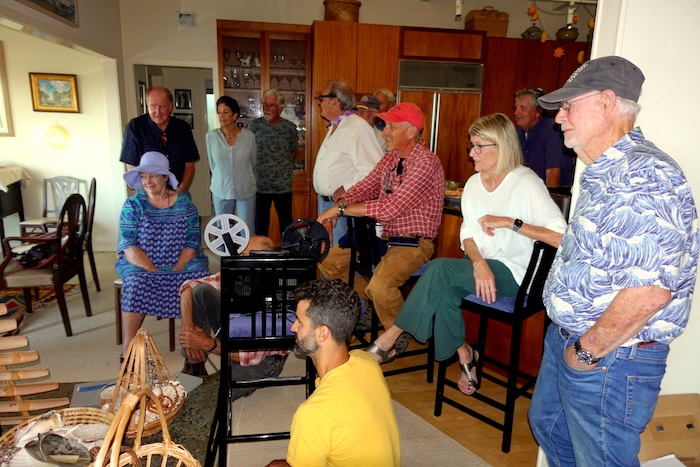
For a few hours, Martinelli’s films reminded everyone about the people, boats and stories from an era when the waterfront really was a “Nirvana” for traditional sailboats, and those who built, rebuilt, and most of all — sailed them.
Westwind Yacht Management — Washing, Waxing and Varnishing
Westwind Yacht Management: Premiere Yacht & Fleet services for the San Francisco Bay Area.
Bay Area Sailors Compete in IC37s in Rhode Island Regattas
Over the course of late July and early August, several Bay Area sailing teams competed in several different high-profile IC37 regattas in Newport, Rhode Island.
Thielman Wins IC37 Nationals, July 16–19.
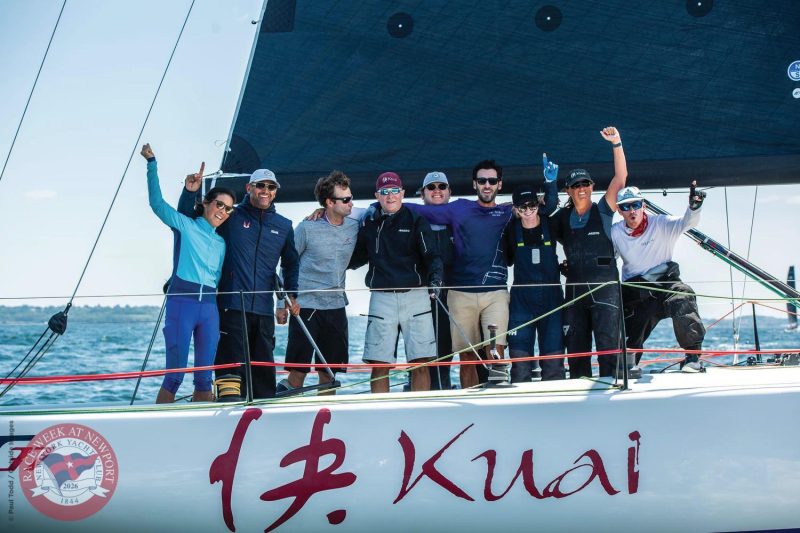
Daniel Thielman’s San Francisco Bay-based team aboard Kuai won the IC37 National Championship, hosted by the New York Yacht Club (NYYC) as part of Newport Race Week. The regatta was sailed between July 16 and 19, with 19 IC37s sailing eight races. Each boat was afforded one drop.
Thielman and his team never won a race, but they won the national championship with a net total of 33 points. After the Kuai team started the regatta with a 16th-place finish in race one, they found their consistency. After a fourth in race two, the team ripped off three straight second-place finishes to vault up the standings. A fifth and a seventh, in races six and seven respectively, allowed the team to hold on to the title after an 11th-place finish in the final race. Kuai edged out second-place SHAMAN, skippered by Carter Robinson, who finished with a net total of 36 points.
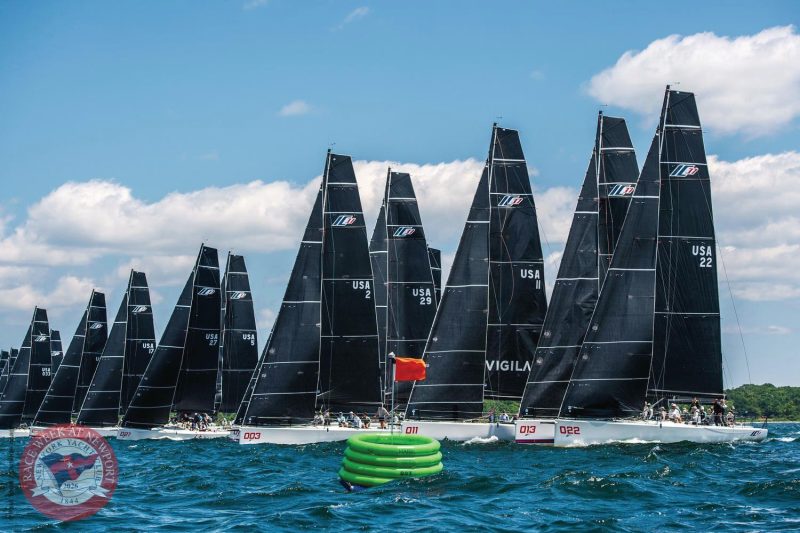
Peter Wagner, another elite West Coast sailor who runs the Skeleton Key program, finished fourth.
You can find the full scores for the regatta here.
Breault and the ‘She Wolves’ compete at Safe Harbor Race Weekend, August 6–7.
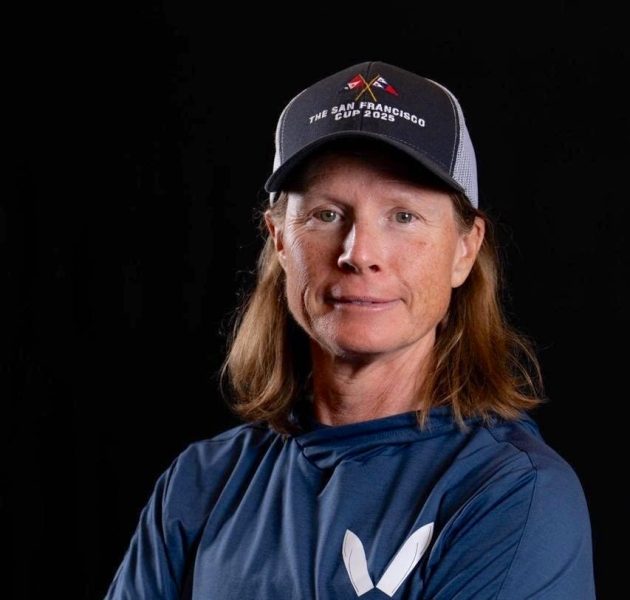
The 2026 Safe Harbor Race Weekend drew 18 IC37s. Several of the boats competing were all-women teams preparing for NYYC’s upcoming Women’s International Championship, which will be raced in IC37s from September 12–19. One of those teams will be Nicole Breault’s She Wolves team from the Bay Area, racing under the St. Francis Yacht Club burgee. We highlighted the She Wolves program in the June edition of Latitude 38.
Breault has put together an all-star team of Bay Area women sailors who are hoping to bring the inaugural Women’s International Championship home to the Bay Area. At Safe Harbor Race Weekend, they finished seventh and were the top finisher among the women’s teams preparing for the main event at NYYC in September.
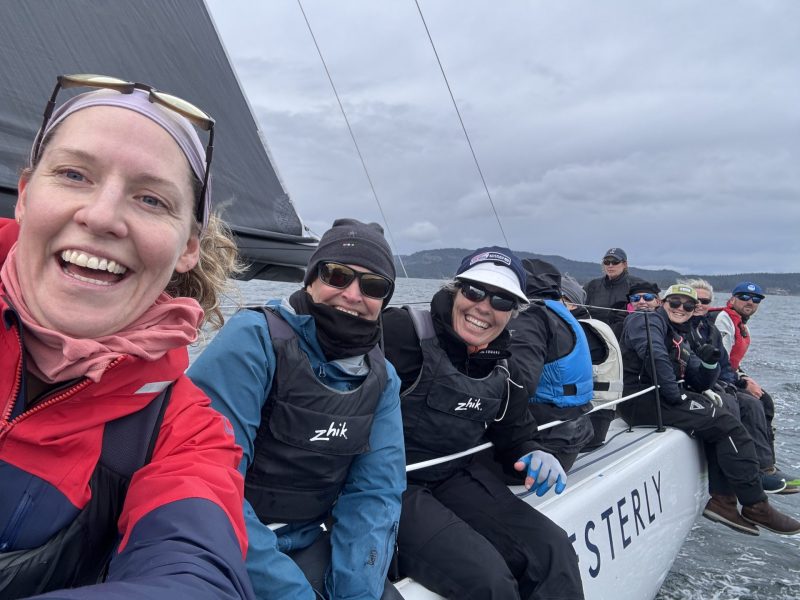
The She Wolves finished second in both the first and final race of the event, and finished with a net total of 42 points.
You can find the full scores for Safe Harbor Race Weekend here, and you can follow their journey at @she_wolves_sailing on Instagram.
The Resourceful Sailor — A Tankless Job
What do you do when you discover your integrated fiberglass freshwater tank has osmotic blisters? First of all, do not drink out of it! This happened on Sampaguita, a 1985 Pacific Seacraft Flicka 20. These are the same kinds of blisters that can turn up on your hull, so they’re often over-reacted to. I never felt the tank was structurally unsound, but the cracked-open, visibly oozing blisters were definitely taking the fresh out of my water.
I did not want to rebuild the fiberglass water tank of a 20-ft boat I was also living on. The tragic mess would be terrible. The grinding, the sanding, the epoxy, the horror! However, with a bit of creative thinking and good fortune, I could turn a bummer into an upgrade. Here’s how:
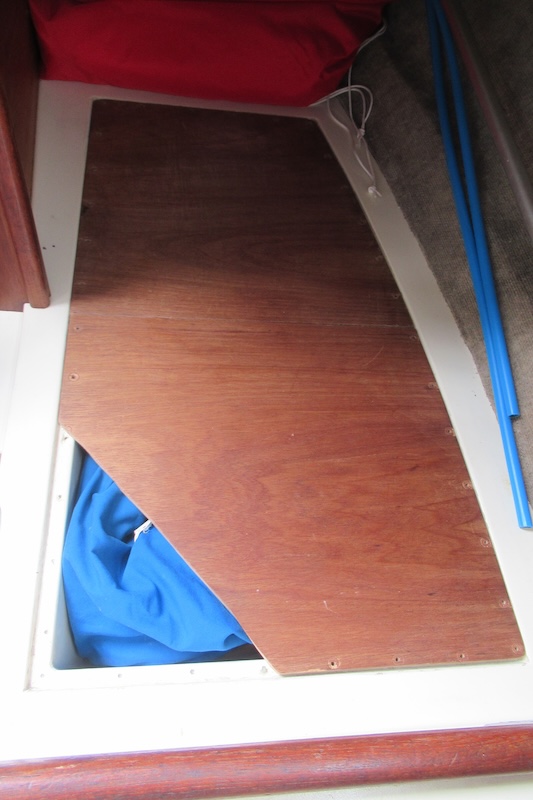
A friend was refitting his old-timey wooden boat with a custom-made polyethylene tank, so he gave me the 35-gallon (132-liter) Nauta flexible water bladder he was replacing. I decommissioned Sampaguita’s integrated tank by removing the linoleum-lined plywood top, sealed with silicone and fastened with about 40 screws. The factory tank was only 20 gallons, plus they’d built in a baffle dividing it into two sections. The size and the baffle meant the new flexible bladder would not come close to fitting into this space. However, the newly liberated space was not lost real estate. It would become dry storage. I cut the lid in half for easier handling and access. This allowed items to be stowed on top as they previously had been. If you are wondering about deck-fill plumbing, a Flicka does not have such a thing. The fill cap was embedded in the previously mentioned plywood lid.
Sampaguita’s diminutive size (and the bladder’s large one), design and weight-distribution considerations meant there was only one place the flexible tank could go. That would be in the space under the V-berth. This was not ideal, but a manageable compromise. It would keep the water as low as possible, though it put the weight a little far forward. (35 gallons of fresh water is 280 pounds.) This could be mitigated by other storage distribution and by not filling up the bladder completely.
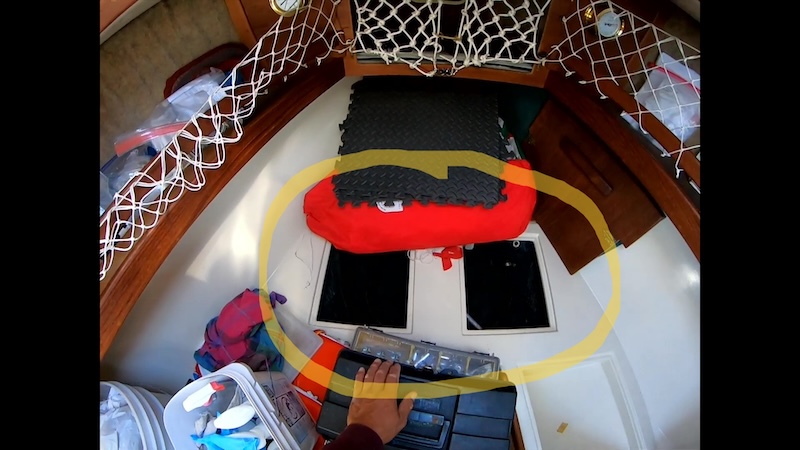
Plumbing was the next consideration. This was easy as long as I was willing to take an indirect route. The shortest one would have been under the ice box, and accessibility and drilling would have been difficult. Instead, I took the roundabout route, which had much easier access for drilling the three required holes through a bulkhead and the liner. Feeding the hose through was a piece of cake. (See the video.)
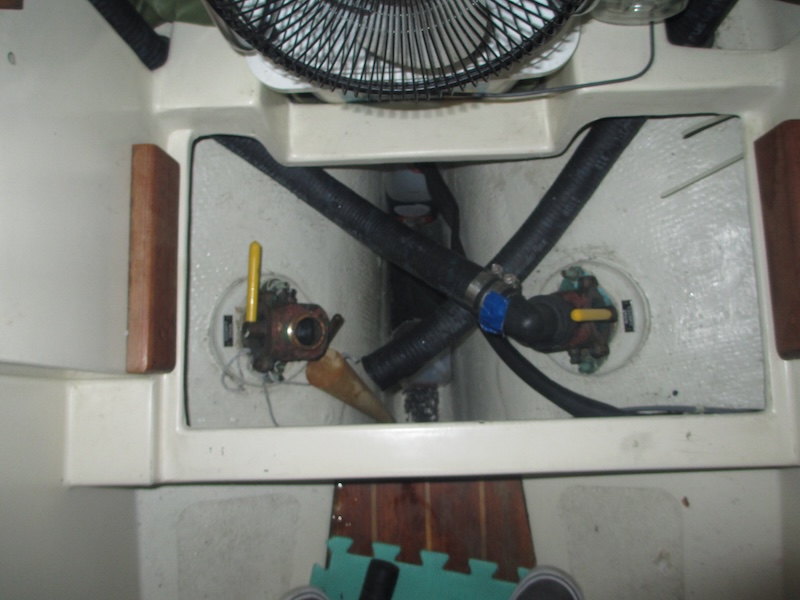
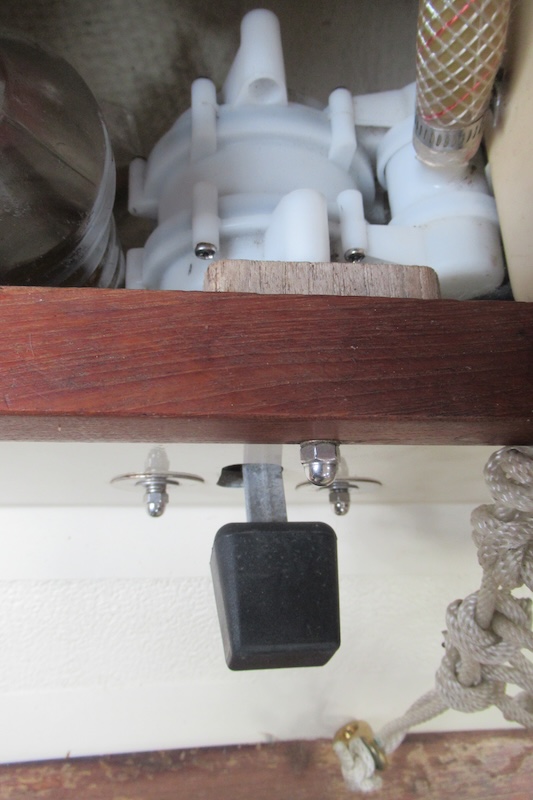
The Flicka 20 sink came with a Fynspray plunger-style hand-pump faucet whose operation was always awkward and tedious. (But great for water conservation!) I installed a Whale Gusher Galley foot pump below the sink, in line with the new plumbing, with no need to change the faucet. It was amazing! I only wish I had done it years ago. Now I could empty the water tank in minutes with no hands.
Filling the new tank, like the old, was still an in-cabin operation. I had no desire or necessity for extra plumbing or the production of cutting and sealing extra holes for a deck-fill. Avoiding a wet mess inside requires careful technique, the same as with the previous tank.
I have a mantra. “If it’s not broken, don’t break it fixing it.” Or maybe you prefer, “Leave well enough alone.” The blistered water tank was definitely not well. Since I already had the flexible bladder and had recently observed the galley foot pump installed in a neighbor’s Flicka, Koan, it became easy to envision a solution.
A Flicka layout, like all designs, is specific to itself. I wouldn’t expect this to translate precisely to other boats. As usual, the real aim of The Resourceful Sailor is to encourage a reader’s creative thinking. Remember, keep your solutions safe and prudent, and have a blast.
This video shows you the full picture:
Come See the Berkeley Waterfront Showcase!