

Mayhem in the Mountains With South Lake Tahoe Windjammers YC
On Saturday, June 6, the South Lake Tahoe Windjammers Yacht Club (SLTWYC) hosted our first-ever Mountain Mayhem Regatta — a doublehanded distance event where competitors got to choose which order to round the marks and which direction they wanted to start.
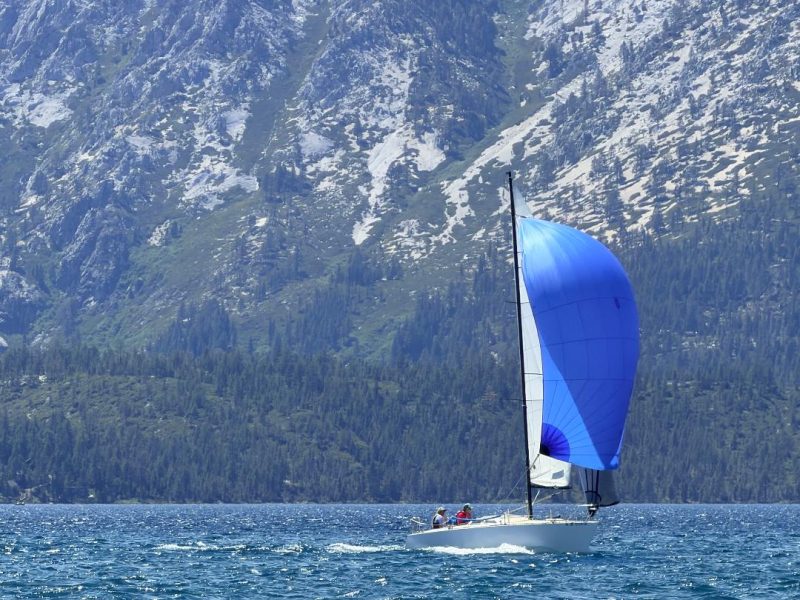
As with any good Tahoe doublehanded regatta, the wind showed up in full force. Our fleet of five boats, including four Express 27s and one Alerion 28 (which sailed down from Tahoe Yacht Club to compete), saw a consistent breeze of 15–17 knots with gusts up to 30 knots throughout the race.
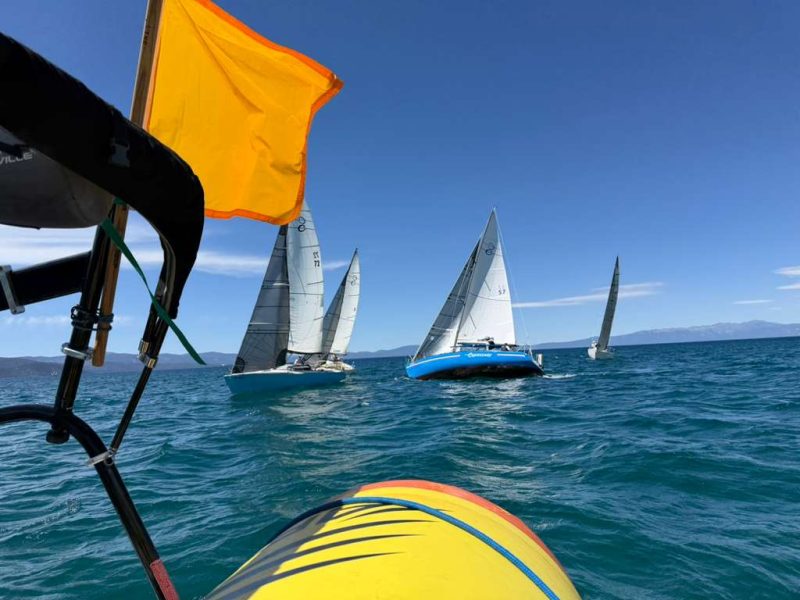
All our competitors ended up with a similar course, knocking off Tahoe Keys mark first, followed by a ripping downwind run to Zephyr Cove and a long beat back home around Edgewood and to the finish.
After two-and-a-half hours of racing, the local legends Steve Katzman and Randy Parker managed to turn a third place into a first by going against their local knowledge (bang the shore and get lifted to the finish) and opting to go for a better breeze farther from shore. Congrats to Dianne for their hard-fought win!
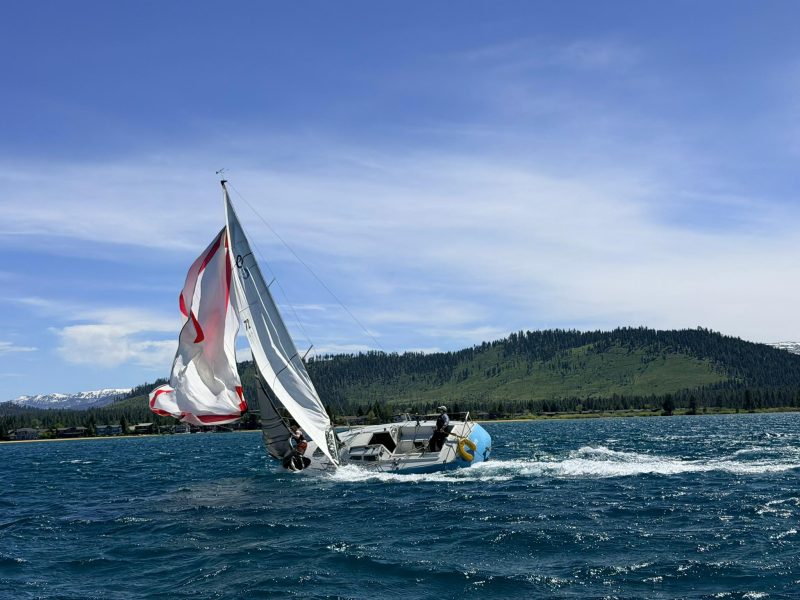
“Windy, warm day lived up to the forecast of gusting 30,” Katzman says of the race. “Tuning up, getting ready in the start area, there were a few gusts, but it was very warm. So we didn’t get dressed, thought we’d put on warmies going downwind. Didn’t happen. We were too busy surfing and planing, mixing it up with New Wave and Expressway.
“The Alerion Osprey was first to weather mark, had to keep a close eye on boats rounding both port and starboard,” Katzman continues. “We took a short jibe on port to get in more stable air and watched the polished work of Ashley and Eric set and leap out to a lead. Dianne set her chute and took off surfing and planing downwind.”
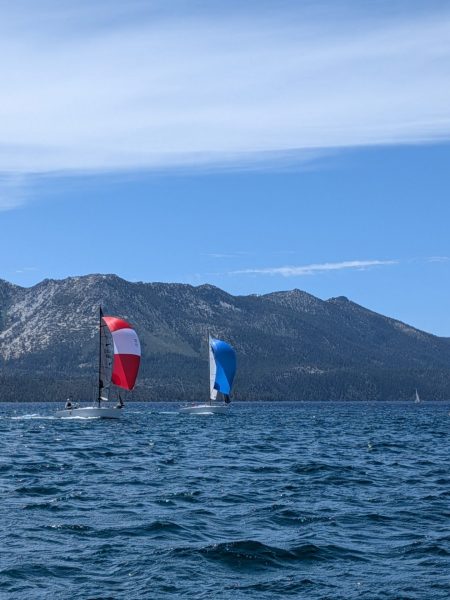
“Choppy waves cooling us, and we were wondering if we were going to get wet going back upwind,” Katzman adds. “Sam and Dave in Expressway pulled into a comfortable lead as we followed them looking for Edgewood mark. Dianne duking it out with Northwest until Eric and Ashley found another lane. We never saw Edgewood until it was behind us and to weather. In Dianne then we set about grinding them down on the beat. Randy Parker’s expertise in picking the shifts and coaching this helmsman brought us back into the hunt. New Wave had to slam-tack away from Dianne in a tight crossing. We caught Expressway and lee-bowed them, after a close match of ‘we’re close enough.’ Expressway tacked to starboard as Dianne continued being lifted on port. Dianne then prevailed in better wind on the right and finished in first.”
See the full results here.
Proposed Floating Dock System Gets Approval in Sausalito
The Sausalito waterfront is in the news again, this time regarding a proposal to upgrade (this might be an understatement) the dilapidated docks at Turney Street. Sausalito is lacking sufficient public dock space and boat launch facilities; new docks could therefore be a boon to the popular tourist town. Last month, the Sausalito council voted to approve a proposal that entails replacing the broken docks and silted slips with a reconfigurable modular floating dock system.
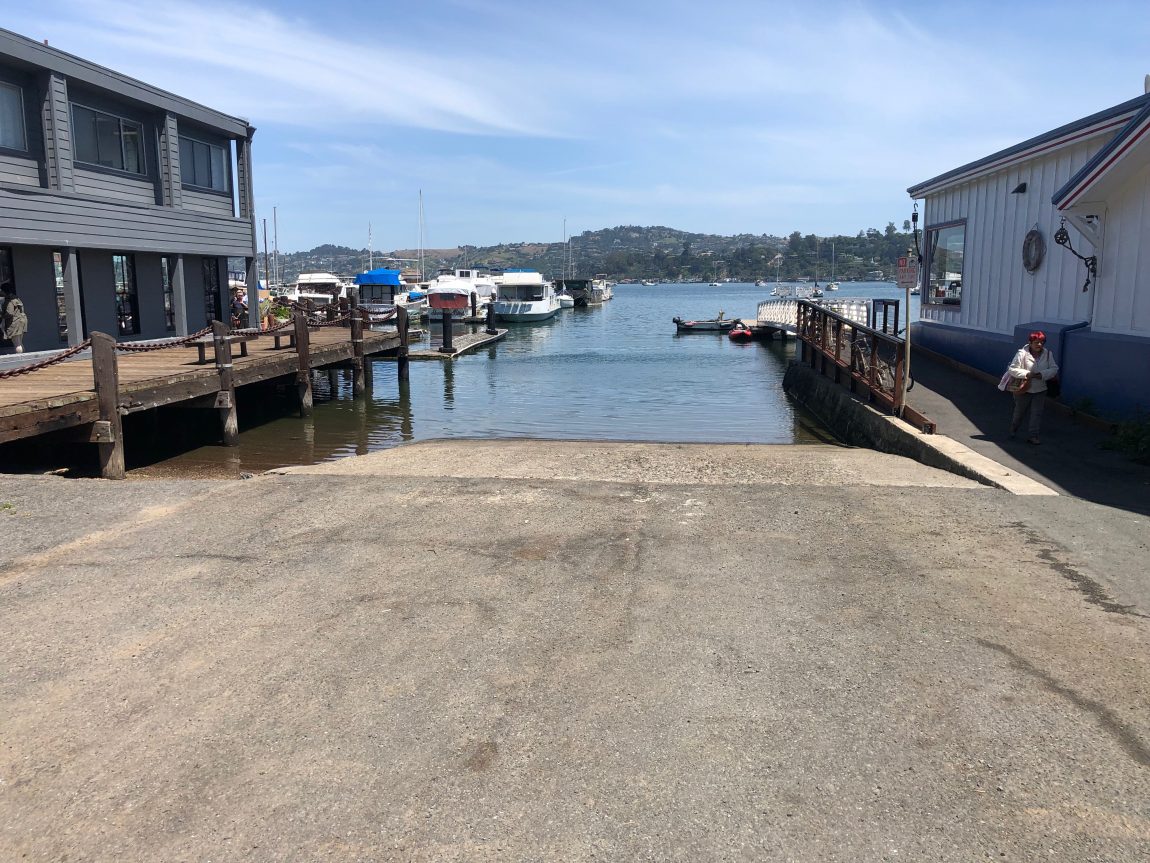
The new dock system has been given the go-ahead for a one-year pilot project. If successful, the developers stand to sign a 10-year lease.
On February 27, the council published a “Turney Street Floating Dock Improvement Project and Business Partnership Request for Ideas and Proposals (RFIP)” with a closing date of March 26. The RFIP stated, “The City owns the Turney Street land, waterfront, and water parcels, the finger pier, boat launch ramp, and adjacent floating docks. The floating docks are in poor condition and require repair or replacement. The current finger pier and boat ramp operate unmanaged on a first come first serve basis. The City views this site as an opportunity for a public-private partnership that can activate the waterfront, improve public access, and support maritime-oriented business operations that can help fund infrastructure improvements and provide an ongoing revenue stream to the City.”
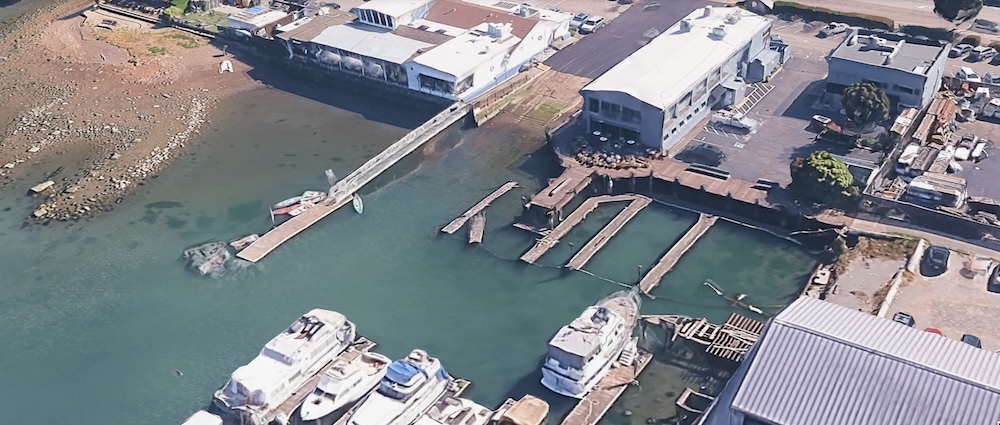
The long, white-roofed building in the photo above was once a wooden-boatbuilding facility, hence the name of the current business that resides within, Joinery, a beer and food hall. The deck outside Joinery and the adjacent timber boardwalk are solid, and relatively new. But the surrounding area, the space now designated to become the site of floating docks, is not only in disrepair. There is little water in that part of the foreshore, and low tide exposes all manner of cables, bollards and debris that would wreck a hull.
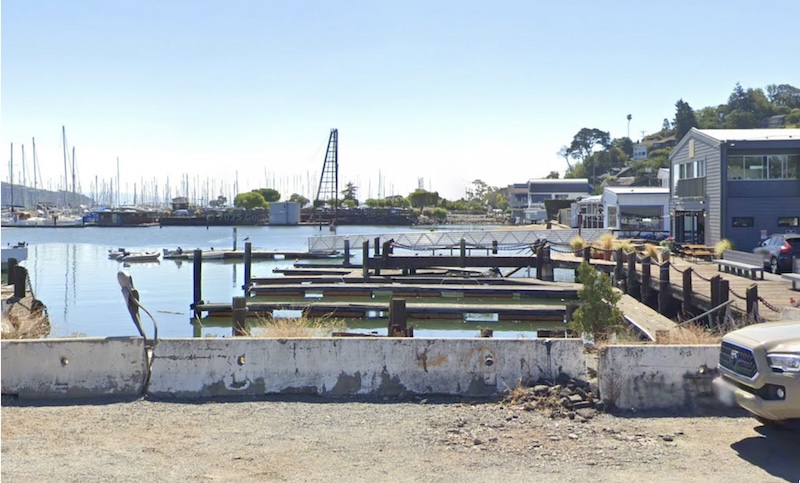
The city was looking for “an innovative project [that] could be in place by this summer and, if successful, become a waterfront fixture,” Marin Independent Journal (MIJ) writes. The proposals were to “complement Sausalito’s maritime character, improve public access,” and provide a place for visitors to reach Sausalito by water, while also protecting the surrounding environment including eelgrass, assistant city manager Brandon Phipps told MIJ.
Submissions were required to meet six criteria: “revenue generation to the city, benefits to neighboring businesses, benefits to residents, benefits to visitors, creativity and financial viability.”
Two proposals were submitted — one being the floating dock system, and the other, named Wild Life Parade, is described as “a temporary, site-responsive art installation consisting of colorful, life-size representations of local wildlife (seagulls, herons, river otters, seals, cormorants and other native species) installed on pilings, docks, and shoreline elements throughout the project area.” The installations would be visible at high tide, and would reveal more features as the tide receded. City staff recommended that the council adopt the floating dock proposal and refer the art installation to the Parks and Recreation Commission. As boaters, we wholeheartedly agree with this recommendation.
“They’re calling the concept the Turney Modular Maritime Access Hub,” Phipps told MIJ. “The physical strategy is straightforward. It’s removing the dilapidated docks, [retaining] the existing piles as the structural framework and [installing] a modular floating dock system that can be reconfigured over time.”
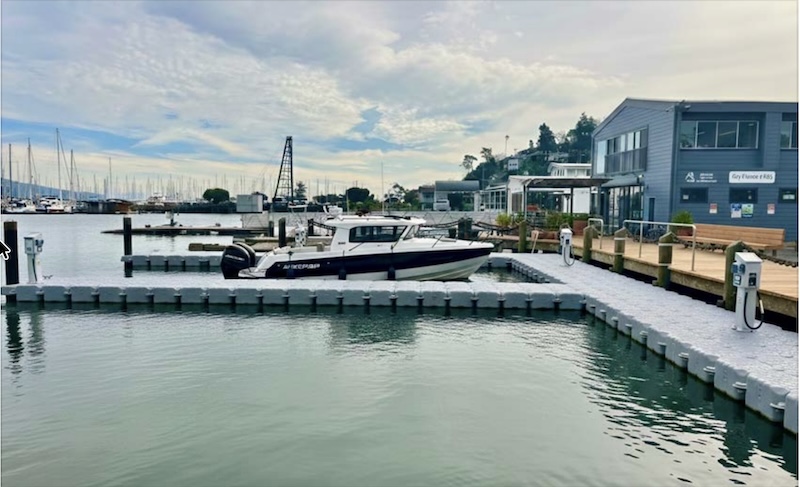
“The system is designed to evolve based on actual observed use,” he said. “The proposed use includes public landing and dinghy access, short-term boat parking, rental slips, water taxi and boat valet operations, charter staging and food delivery by water, with potential for additional maritime and commercial activation over time.”
While the dock proposal has been successful, it it now up to the developer to deliver. As they say of many new proposals, “Watch this space.”
Discover San Francisco Marina Small Craft Harbor
This Pacific Cup Weather Router Will Lead You to the Mai Tais
Ros de Vries is sailing with the Santa Cruz 40 Quiver in the Pacific Cup race to Hawaii, set to start from in front of the St. Francis Yacht Club on Monday, July 6. She’s built a tool for those of us staying home to watch from the mainland.
Pacific Passage is a free, browser-based Pacific Cup weather router for armchair admirals and actual crew — built by a foredeckie who kept forgetting how to drive the expensive stuff.
I should come clean about two things up front: I’m not a navigator, and I’m easily distracted. I sail foredeck on the Santa Cruz 40 Quiver, where my job lives up at the bow, but I’ve always had a magpie’s interest in what’s coming up next. Which is how I ended up tinkering with Expedition, but practically re-learning it from scratch every single time. The software is brilliant, and the pros make it sing. But for those of us who point at Hawaii once every two years, the learning curve quietly resets when we’re not racing outside the Gate.
The other thing that nagged me was how little of the weather picture reaches the rest of the boat. The navigator has it all in front of them; the rest of us sail on trust. Not for lack of caring, but because nobody wants to lean over the nav’s shoulder, step out of their lane, or pester them mid-thought. That always felt backward. Everyone aboard sails better when they can see why we’re dipping below the rhumb line into what may feel like entirely the wrong ocean.
So I built a small thing to scratch both itches. It’s called Pacific Passage, it lives at pacific-passage.com, and it runs in any browser, free of charge. Sure, it helps to know what the Pacific High is and see it using the isobars, but there’s nothing really in the app that should confound a curious sailor.
First, you pick your boat. There are presets (the Santa Cruz 40 one is built from Quiver’s own ORR certificate, since I had it handy), or you can upload a certificate pulled from regattaman.com and route on your polars. With that information added, the app pulls wind, waves and current forecasts, and draws the time-optimal route to Kaneohe (or Honolulu for the Transpac crowd), jibe points and all. There’s a “polar efficiency” slider so the ETA reflects real crew-and-seaway life, rather than a flat-water fantasy, and a “route from my location” button that hands you a heading and tracks you as you sail.
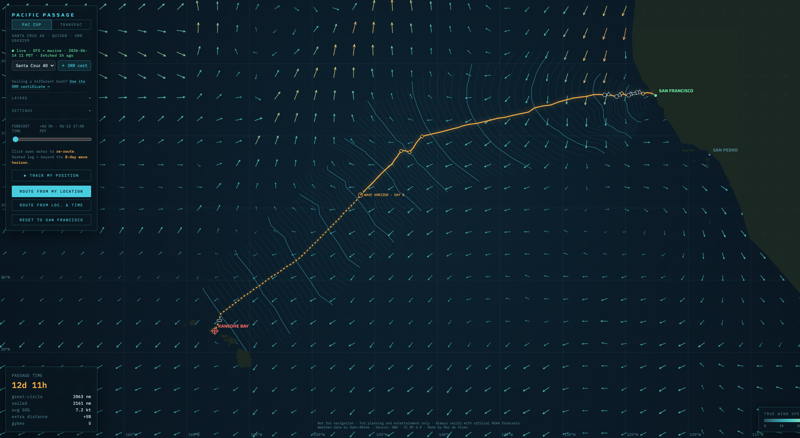
The part I’m quietly proud of: Once you’ve loaded a forecast, it keeps working with no signal at all. Simply grab the latest grid whenever you’ve got a few minutes of Starlink access, then route, re-route, and watch your heading offline for hours.
And for the armchair fleet, it’s a fun way to follow the Pacific Cup and Transpac races, and second-guess the leaders’ every jibe from the sofa.
Two honest caveats: This is a hobby project, not a product, and it is absolutely not for navigation. It’s for planning and entertainment, so always verify against official forecasts before you actually do anything with it.
If you take it for a spin, I’d genuinely love to hear what’s useful and what’s nonsense — I’m very much open to feedback.
Fair winds, and see you on the journey south in July.
– Ros de Vries, foredeck, SC40 Quiver (find me on Instagram, @yarrcat)
Making the Sails Work — From the Baja Ha-Ha to SoCal
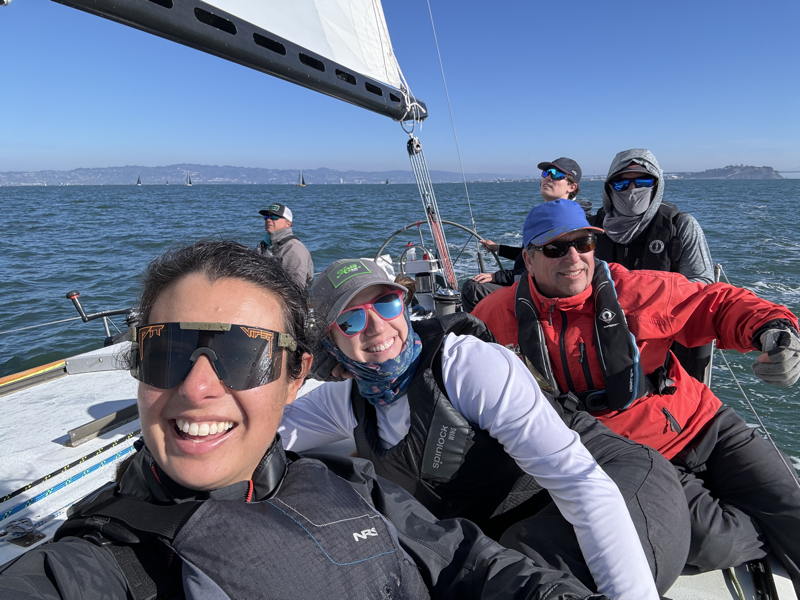
We always encourage sailors to head south in the fall, to join the Baja Ha-Ha fleet as it cruises its way to Mexico. We hear less about sailors making the return passage north, and when we do, their stories often focus on the “bash.” Joseph Harvard from Ventura, CA, and also Birmingham, UK, sent us his story on sailing northward from his completion of the 2025 Baja Ha-Ha in Cabo to SoCal, aboard his Beneteau First 36.7 Comedy Act. We think his boat is aptly named: His sense of humor seems to have stayed with him throughout the passage.
Mazatlán to San Diego, slip to slip, 11 days 10 hours, with a splash and dash in Bahia Tortugas for fuel that lasted 2.5 hours. It would have been shorter, but Ernesto and Maria were having lunch.
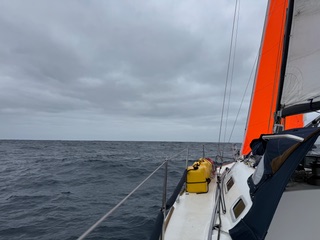
Along the way the furler drum parted intimate contact with the furler, and the halyard swivel shackle bail failed. Sail changes from this point involved stopping the boat, changing headsails and then getting going again.
But wait; there’s more: Our 20+-year-old Raymarine autopilot failed (encouraged by turning it on with the helm lock on, doh!). Then, surely in sympathy, the rest of the suite of Raymarine instruments failed except the speed and depth head.
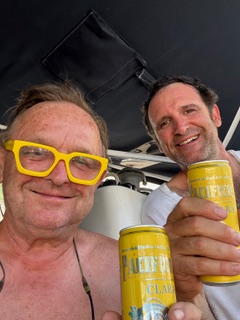
On the plus side we had cold-cold Pacificos, Topo Chico Agua Minerale, and Josh Chardonnay. Superb meals by Roger (I’ll crew at the drop of a hat) Casas. Called on Thursday, flew in on Saturday, left Mazatlán on Sunday [the] 31st at 10:30 p.m., a half-hour late, for crying out loud.
Paperwork clearance in Mazatlán by the incomparable Guille Hernandez, email [email protected]. The way this woman handles those pesky government officials is poetry in motion. Guille will turn you on to a rental car as well, awesome woman and resource in Mazatlán.
This was definitely not a Jim Elfers Baja Bash — thrash-the-auxiliary-and-trash-the-main style of return to CA along the West Coast of Baja California. We sailed home, took advantage of the lifts, took our headers in stride, and changed sails when the wind-pressure changes demanded. Yes, we used the engine to assist with an additional knot or two when wind pressure subsided, applied at low rpm to conserve the 110 gallons we had on board.
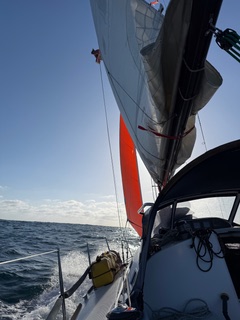
My biggest failing was not having my coveted #4 jib on board. It is so essential for offshore when working your way to weather. I contemplated using the storm jib for our first encounter with higher wind pressure off Cabo Falso, but went with a heavily reefed furler jib, about a #2 in size. It was so inefficient and encouraged the furler to fail, no doubt. After that we had no choice but to shorten sail; it was the storm jib, and it was a revelation. We immediately had a more manageable boat in the true wind ranges above 15 knots, plus it would point so much higher than the furler, just not comparable in performance. If you have one use it. Besides, the orange color is so cool.
We downloaded fresh weather and current GRIBs every day and updated our route with our current position. We utilized LuckGrib for our weather and route analysis, then ported our .gpx routes to qtVlm, our chartplotter software. Our route was updated every day with fresh weather data. It was fascinating to watch LuckGrib navigate between higher-wind-pressure areas and thread the needle through all the current variables to give us an edge as we beat to weather.
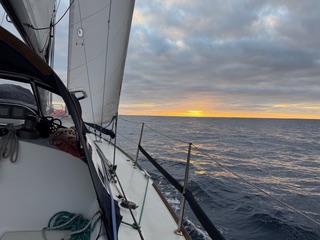
The decision to run for it when we did was predicated on mostly forecast medium winds with some light and some higher intensity for the probable number of days the transit would likely take. We went for it, we sailed it, and limited the motor-dominant aspect to a minimum. It was definitely a philosophical choice. It’s a sailboat; sail it, make it work, was our goal.
If you’re holding off doing the Ha-Ha because you’re worried about the bash back, don’t let that stop you. Joseph and Roger had fun. Besides, there are other options: Get a delivery crew together, or better yet, keep cruising, and don’t come back!
You can sign up for this year’s Ha-Ha here.
Mercurys Race in Shifty Conditions on the Estuary
The Encinal Yacht Club Spring Series concluded on a beautiful sailing day, with John Hansen securing the overall series win after a close, competitive finale. With the sun out and an opening breeze of about five knots, PRO Randy Smith and assistant Stuart Engle started the first race right on time.
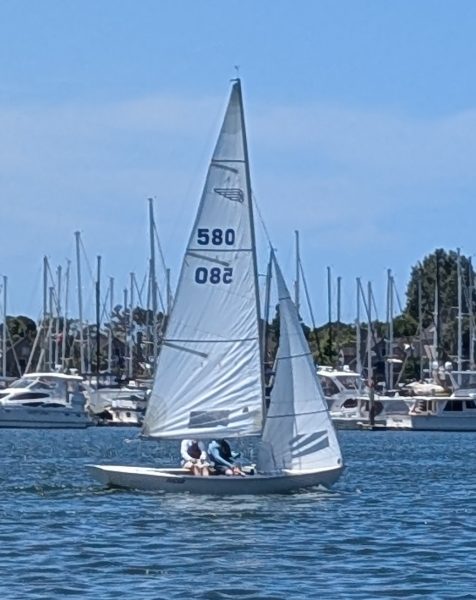
Randy set an appropriately short starting line, creating several tight starts and minor contact at the line. As is typical on the Estuary, the wind was shifty and puffy, with frequent position changes upwind. Local sailors commented that the conditions were especially unstable, even by Estuary standards, making smart shift management and course-side selection essential to strong finishes.
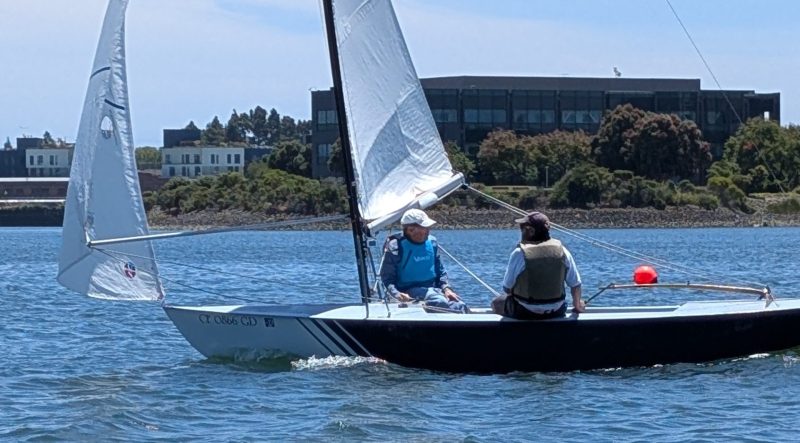
Among the race fleet were seven Mercury entrants. In the opening race, Mike Kennedy (skipper) and Melissa Ward (crew) edged John Hansen (skipper) and Scott Jenson (crew) by just a few feet in a dramatic finish. John Ravizza (skipper) and Chris Boome (crew) then established themselves as serious contenders by winning races two and three, with Hansen and Jenson finishing second in both. The order reversed in races four and five, as Hansen and Jenson defeated Ravizza and Boome to take first and second, respectively.
Another local team, skipper Chris Davis and crew Volker Frank, delivered consistent results and finished third for both the day and the series. Jim and Kathy Bradley secured fourth place in the series, although a jib halyard issue prevented them from finishing the fourth race or starting the fifth race of the day.
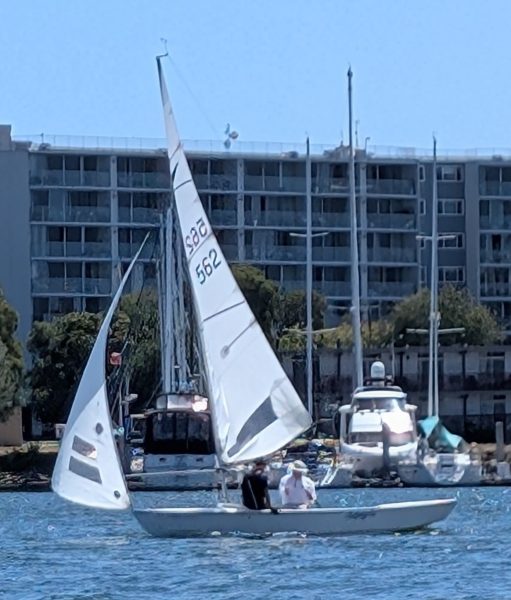
At the end of the day, John Hansen won the tiebreaker over John Ravizza and also claimed the overall Spring Series title through consistently strong sailing.
Thank you to Encinal Yacht Club for delivering another excellent day of sailing and a well-run series. Aaron Lee also did an outstanding job when he was PRO and provided strong organization throughout the series.
You can find the full scores to the regatta here. Two other fleets (Harbor 20s and Snipes) were also racing.
Westwind Yacht Management — Washing, Waxing and Varnishing
Westwind Yacht Management: Premiere Yacht & Fleet services for the San Francisco Bay Area.