

The 35th Annual Delta Ditch Run Set for Saturday
The Delta Ditch Run (DDR), co-hosted by Richmond Yacht Club and Stockton Sailing Club, is another of the Bay Area’s signature events that has elements of the Three Bridge Fiasco, an obstacle course and a marathon. 2026 is the 35th annual running of this downwind, upstream, 65-mile ride from the cool Bay to the inland heat of Stockton. The race starts in the morning with a favorable flood to help carry racers from the Bay to the Delta. The cruising division starts at 8:25 in the morning and the racing divisions kick off at 10:25 (read the race instructions). There’s still time to enter this typically downwind, Bay Area drag race. There were already 99 boats signed up when we last counted!
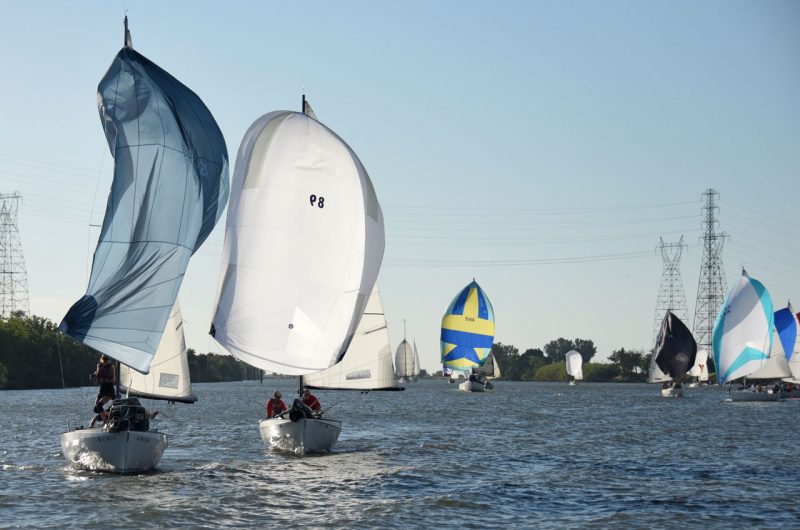
The typically dominant class in this regatta is the currently 25-strong Moore 24 fleet. (It’s a great opportunity for them to dial up their program in anticipation of the 50th Moore 24 National Championship in September. Race organizers expect upwards of 50 boats for this celebration, which is being held in Santa Cruz, birthplace of all 158 Moores ever built.) Many Moores have raced doublehanded to Hawaii, and Webb Chiles famously completed a solo circumnavigation aboard one. The 24-footers are often the Delta Ditch Run’s overall monohull winners, even recently, despite the design’s being over 40 years old.
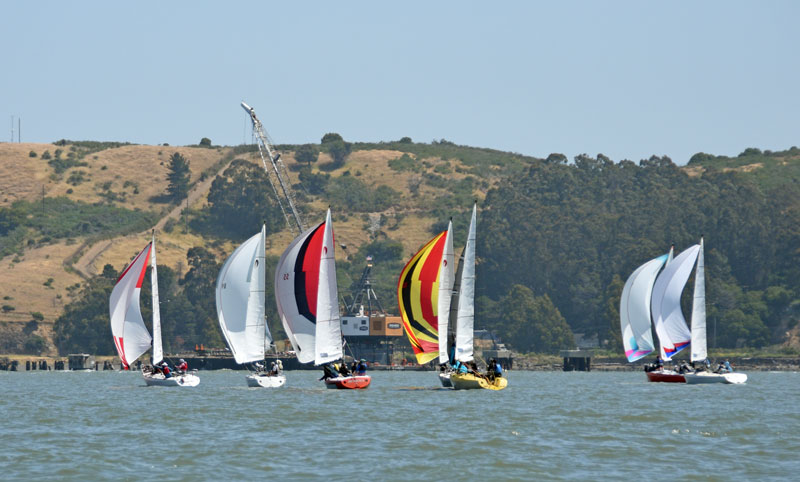
In the 2016 DDR, Bart Hackworth’s Gruntled topped the 22-boat Moore 24 fleet and corrected out to first monohull overall. He did it again in 2021. In 2019, the top four boats overall were all Moore 24s. Pete Spaulding and Daniel Roberts sailed Flying Circus to the overall win. In 2025, it was Melinda Erkelens who won the Moore 24 division aboard Flying Circus, while a Melges 24, Rufless, was the overall winner. With 25 boats in the Moore 24 peloton, there are lots of nearby competitors to push you to stay at the top of your game. Smaller fleets don’t benefit from the close rivalry of the Moores, but may also find clearer air.
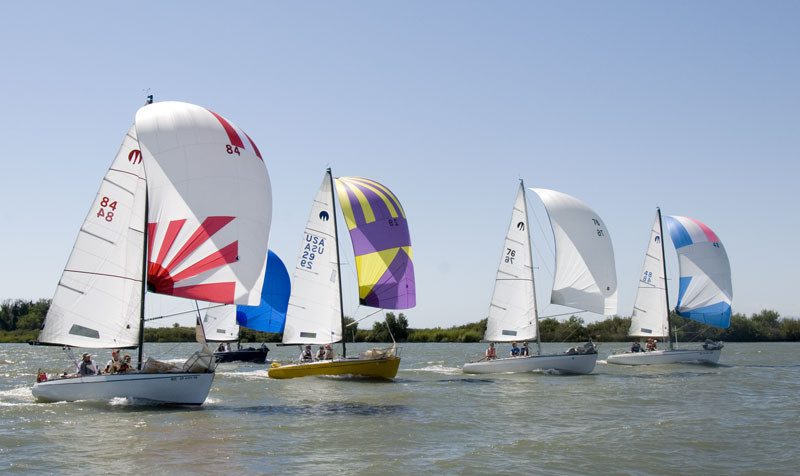
For racers pushing their boat to the max, the winding curves of the river and sudden wind shifts during this race create numerous opportunities to get overpowered or find yourself on a tight reach with the wrong kite up and little room to maneuver. Last year’s event featured three skippers overboard as round-downs, round-ups and a broken tiller extension took their toll.
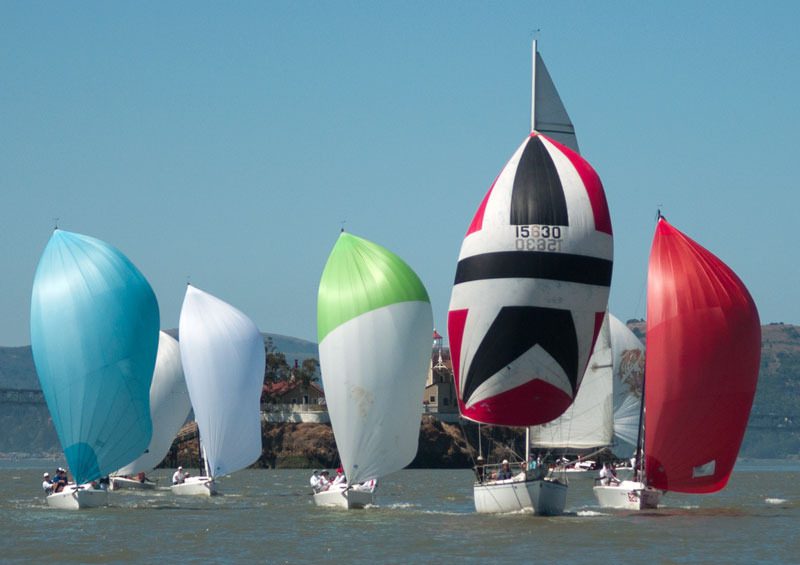
While the racing division can be intense, the Ditch Run’s cruising division often enjoys a much more relaxed pace while settling into the cruise-in-company nature of this portion of the event. Cruisers join in because June kicks off their Delta summer cruising, and the favorable current is a great opportunity to get your boat to the Delta for summer explorations. It’s also interesting for cruisers, leaning into comfort and control, to watch the dialed-up racers that started two hours behind play through the course with their boats on edge. Plus, the DDR rounds off with a party at the Stockton Sailing Club.
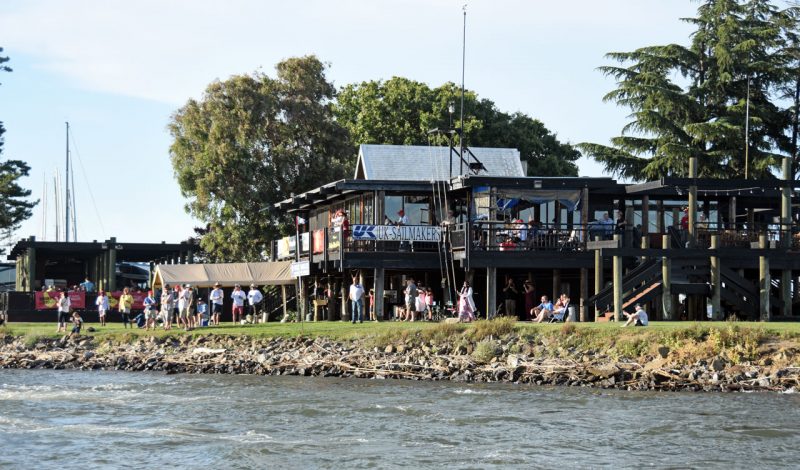
The 35th annual Delta Ditch Run promises challenge, fun, competition, and the struggle to get your boat to the top of the fleet. Among the 99 boats already signed up are 11 cruisers and 11 multihulls. And there’s still time for others to join.
The long-range forecast calls for an adventurous race, whatever the weather. You can sign up here.
Happy World Ocean Day
We know people save what they love. Sailors love the oceans because, more than most of the world, they have a front-row seat that gives them a view of the oceans that most of the world never sees. That’s why so many sailors are trying to save oysters in the Bay, removing plastics from the ocean, participating in Estuary cleanups, or helping whales, salmon or kelp recover from depletion.
As 2030 approaches, are we on track to protect 30% of our oceans, as set out in the Global Oceans Treaty that came into force on January 17 this year? The treaty, formally known as the “Agreement under the United Nations Convention on the Law of the Sea on the Conservation and Sustainable Use of Marine Biological Diversity of Areas Beyond National Jurisdiction,” or Biodiversity Beyond National Jurisdiction (BBNJ), was adopted in June 2023 after nearly 20 years of negotiations and planning. United Nations University explains the treaty as “a landmark global accord to protect marine life in the high seas and the deep seabed (the areas of the ocean that lie beyond any country’s national jurisdiction).” It applies to over two-thirds of the world’s ocean and “provides a legal framework to conserve marine biodiversity, promote sustainable use of ocean resources and ensure fair sharing of benefits from marine genetic materials found in deep-sea species.” On this World Ocean Day we’re reflecting on what the treaty means not only to the 89 countries that have to date ratified the treaty, but also to individuals, such as ourselves, who interact with the ocean on a regular basis.
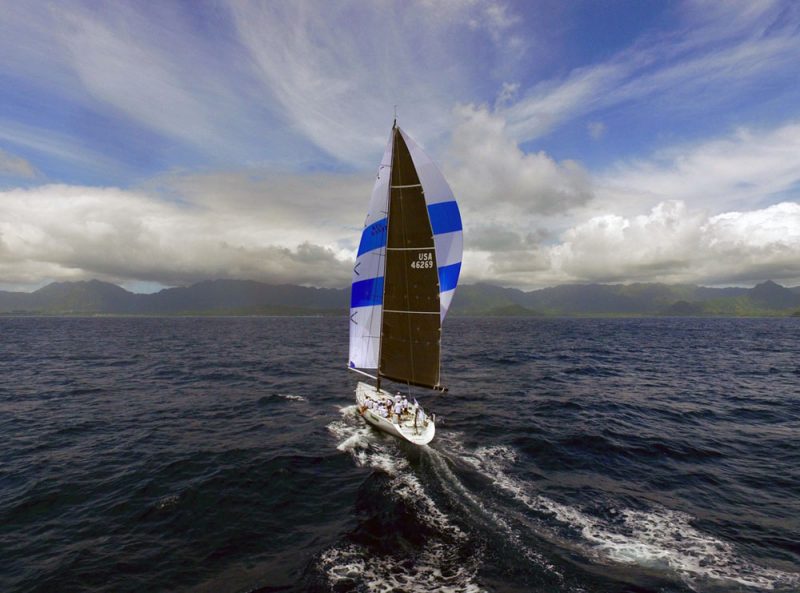
Regardless of whether you sail, or spend any time on or in the ocean at all, we’re all affected by its health. The oceans and seas support life by producing oxygen, regulating climate, and also providing food and livelihoods for millions of people. We think that makes the ocean pretty important, and worth looking after. Add to that the hours, days, weeks and months — for some people a lifetime — of joy we derive from the ocean, and it’s not hard to see why we need to step up and do our part.
Here are some ways we can help:
Reduce our use of plastic: According to Oceans Research News, approximately 8 million tons of plastic enter the oceans every year, which they estimate is “equivalent to dumping a garbage truck full of plastic into the ocean every minute.” That plastic, as we now know, finds its way into our food chain and into our bodies.
We can refuse plastic straws, cutlery and cups, carry reusable water bottles and coffee cups, recycle at home and at our workplace, participate in beach cleanups, use eco-friendly sunscreens, and avoid cosmetic products that contain microbeads.
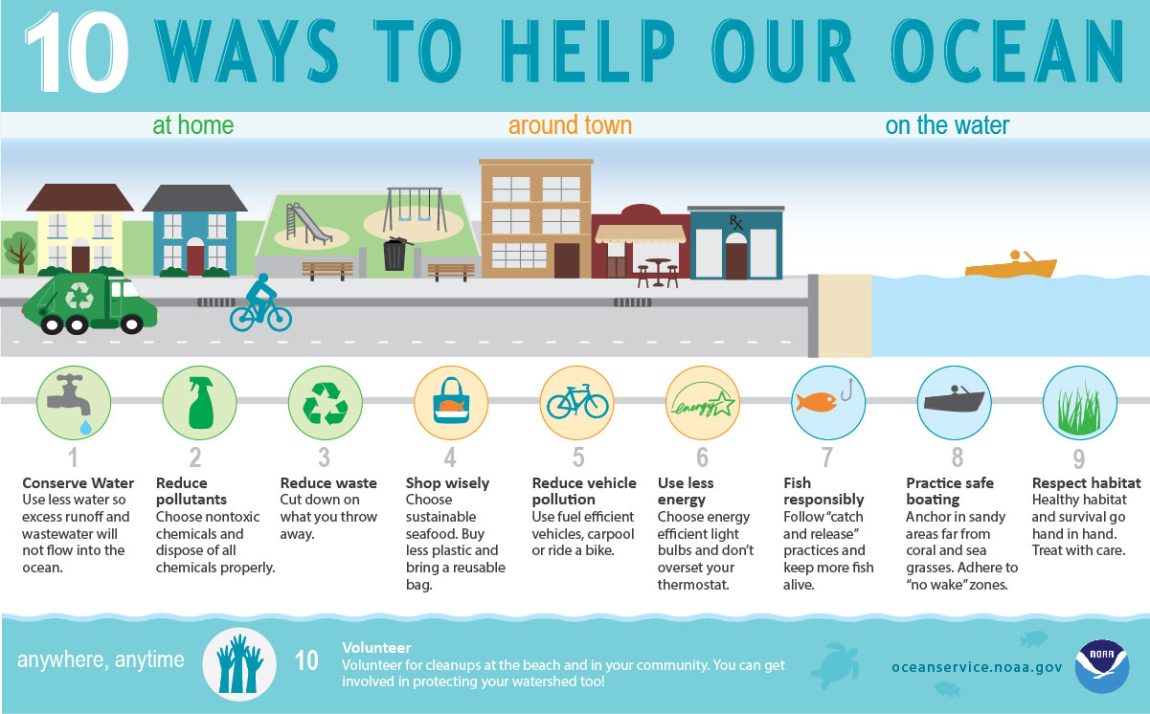
There’s a long list of practices we can adopt, which we won’t go into here. But we will leave you with some links to websites where you can learn more about what’s happening in the oceans and how we can help support our marine life, and ultimately ourselves.
Take action with worldoceanday.org.
Learn about sustainable fishing practices with Marine Stewardship Council.
Find ways to contribute, with Oceans Research.
Read about the first national association for marine mammal responders, launching today.
We’re only scratching the surface of what is being created in support of our oceans and how we can help. But we encourage everyone to take a moment today to think about what we as individuals can do. And when you’ve done that, make your own commitment and share that with your crew. Then, go sailing and put it all into practice.
Life Is Better With a Boat — Find Yours Today With Cruising Yachts
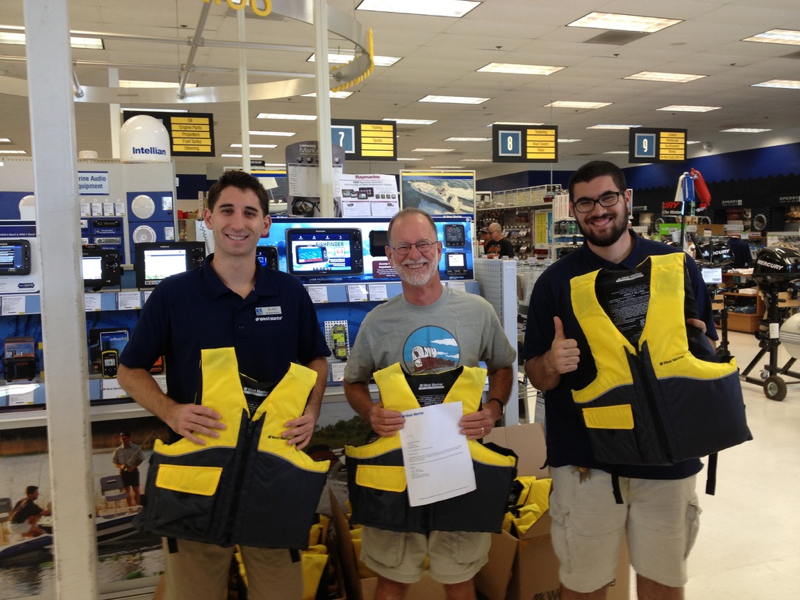
Boy Scout Troop One’s Camp Cody Received West Marine Donation in 2013
Many years, ocean miles, and mergers and acquisitions ago, sailing was a more locally driven, community activity, supported by the neighborhood businesses that built long-term relationships with their area’s sailors. It’s when people going to work in the sailing market were more likely to go to work in a foul weather suit or a bathing suit than a pin-striped suit. Times have changed.
We were reminded of that when reader Peter Detwiler wrote inquiring about West Marine’s declaration of Chapter 11 bankruptcy. Peter was reflecting on his time as a volunteer for Boy Scout Troop One (Sacramento), which has been running its summer camp at Cody Lake in the Eldorado National Forest every year since 1937 (except 1942 during WWII and 2020 due to COVID). We all know many sailors, such as Brigadoon owner Terry Klause, who started sailing with the Sea Scouts. Peter says, “Both the Sea Scouts and Boy Scouts of America (BSA), humorously known as dirt scouts, have introduced generations to the fun of sailing!”
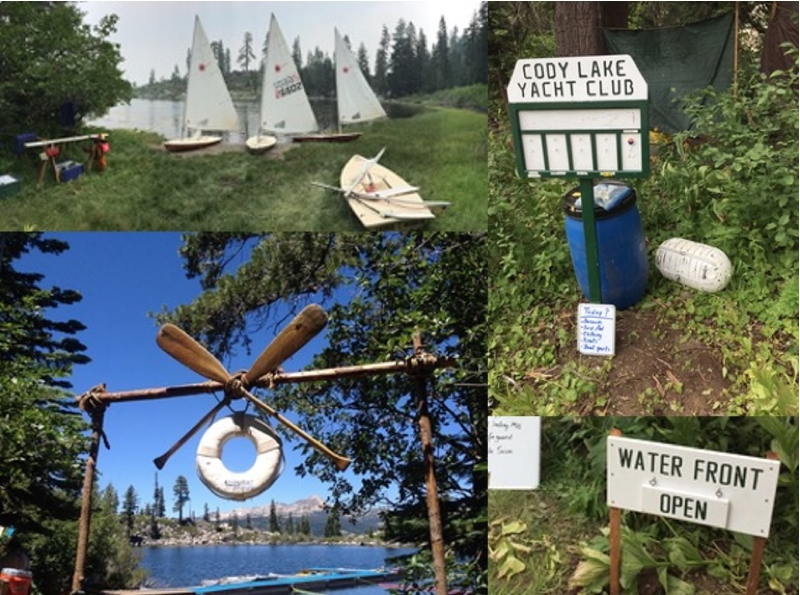
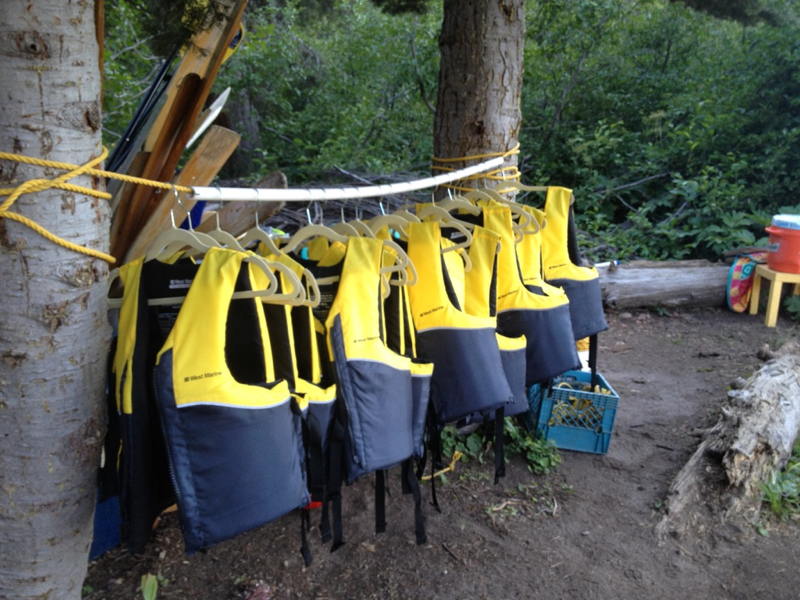
Peter continues, “I started teaching the Sailing Merit Badge in 1989. It’s a joy to see kids get new skills and find their confidence. West Marine’s donation was a big help to the Cody Lake Yacht Club. Back in 2013, West Marine awarded $500 to our Boy Scout troop’s summer camp waterfront program. We were able to replace almost all of our aging, sagging life jackets with brand-new West Marine-brand PFDs. The staff at the Rancho Cordova store were super-helpful, and that’s why I have been a big fan of Randy Repass.”
As outlined in our story on the West Marine bankruptcy, these are much harder times for big-box stores. The boating lifestyle has changed, and internet shopping has been growing for decades, accelerating during COVID. As the digital world disrupted close connections, it became harder for “local” retailers to keep the shelves stocked and maintain the loyalty of customers. In addition, given the enormous sums of money involved in West Marine’s private equity owners (it is private after all), L Catterton, it’s hard to know how much partner LVMN/Groupe Arnault returns impact the company, though it is widely understood that Bernard Arnault is currently building an approximately $650 million, 470-ft Feadship.
According to the West Marine bankruptcy filing, they are currently planning to close 60 stores nationwide. Though this may be good for some local retailers, it may be hard for those who have already downsized or gone out of business to step into the void.
Peter Detwiler shared a little more about the Boy Scout camp for kids, describing the location. “Cody Lake is about 7 miles south of Highway 50 at 7,260-foot elevation. That spot (which we lease from the Forest Service) lets us assert that the Cody Lake Yacht Club runs ‘Scouting’s premier alpine waterfront program,’ because we think our property has the highest elevation of any youth sailing program in California! There might be some other place in Colorado, but we haven’t looked!
“We’re honestly off the grid. The older scouts hike in all our food and supplies from the Forest Service trailhead. No electricity, no piped water, no sewers. We rely on spring water, propane and hand-dug latrines. It’s a rustic challenge for 11–17-year-old city kids.”
It can be hard for community sailing programs like Sea Scouts to get support from the vanishing number of local, small businesses, but Peter suggests his gratitude and loyalty to West Marine over the years is a direct result of their support of the Cody Lake Yacht Club youth sailing program. We wonder where those youth sailors are today.
Going Dutch — Huub’s Pacific Puddle Jump
Experience, it is said, is a harsh teacher: You get the test first and the lesson afterward. That was certainly how Huub van der Mark came to sailing and cruising. A bit over a decade ago, in his late 20s, he moved from the Netherlands to New York to study acting. Instead, he got exposed to sailing, and became almost instantly enamored with the romantic notion of sailing over far horizons. He jumped in with both feet, crewing on other people’s boats in the Baja Ha-Ha and Pacific Puddle Jump. One thing led to another, and just 10 years after he’d first stepped onto a boat, knowing nothing, he did this year’s Pacific Puddle Jump on his own 38-ft catamaran — singlehanded. Here’s his story of that journey.
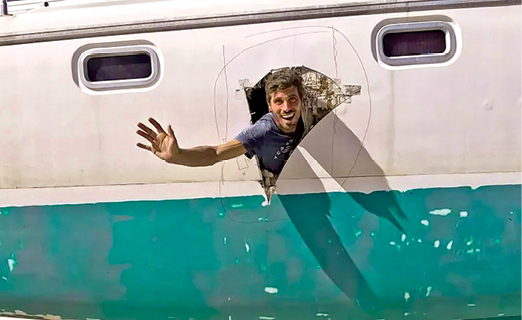
I remember that everything about boat life was so strange to me. I didn’t grow up near the ocean or boats. Starting as a crew member, or actually boat hitchhiker, sounded like a good way to start learning about it. I signed up as crew aboard the Abel Maramu 46 Kailani for the 2016 Baja Ha-Ha rally from San Diego to Mexico to see if I would even like the lifestyle. After the Ha Ha, I got rides on other boats all the way to Panama, where I signed on to a Vagabond 47 named Vagabond for the Pacific Puddle Jump.
Every night during my night shift from Panama, 39 days toward Hiva Oa in the Marquesas Islands, while looking at the stars, I would dream of one day understanding boats and doing such trips on my own boat. Everything broke on the boat during the crossing. The steering arm came loose from the steering mechanism. The light sail fell into the water and ripped into pieces. The halyard broke, which meant someone had to free-climb the mast (dangerous) to get a new one on. Water came inside the boat, and we didn’t find where it came from. And we did horrible shopping, so after week one, basically the other four weeks, we ate pancakes. I learned my lesson: Should I ever go on my own boat, I must be very over-prepared for such a trip.
As a boat hitchhiker, you stay shorter periods on boats. After Vagabond, I crewed on a variety of different boats and eventually arrived in New Zealand. I was able to make videos of those travels (as well as other land travel in Southeast Asia and Russia), which gave me a bit of an income.
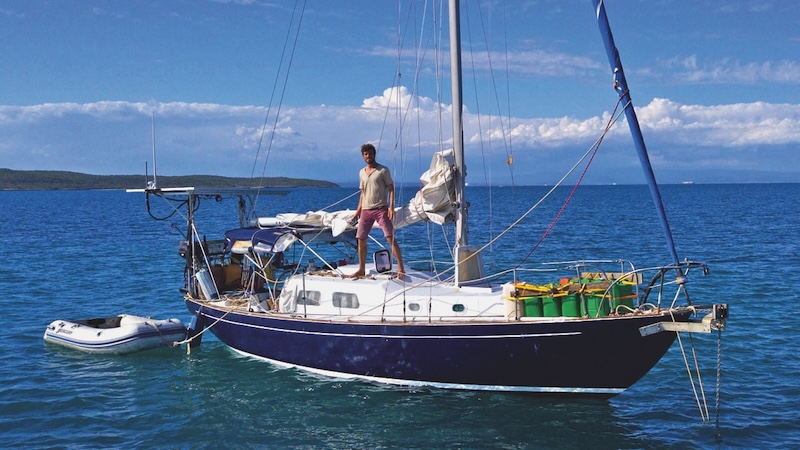
Fast-forward a couple of years: I finally had enough money to buy a small boat of my own: an Alberg 30 named Tait Tait that I found in Guatemala. Other Alberg 30s have sailed around the world, and after crewing across the Pacific, I thought I knew quite a bit about sailing. Well, I was wrong.
Spaulding Marine Center — Full-Service Boat Yard and Education Center
Repairs, painting, custom work, apprentice program, kids summer sea camps, event space for rent.