

Happy World Ocean Day
We know people save what they love. Sailors love the oceans because, more than most of the world, they have a front-row seat that gives them a view of the oceans that most of the world never sees. That’s why so many sailors are trying to save oysters in the Bay, removing plastics from the ocean, participating in Estuary cleanups, or helping whales, salmon or kelp recover from depletion.
As 2030 approaches, are we on track to protect 30% of our oceans, as set out in the Global Oceans Treaty that came into force on January 17 this year? The treaty, formally known as the “Agreement under the United Nations Convention on the Law of the Sea on the Conservation and Sustainable Use of Marine Biological Diversity of Areas Beyond National Jurisdiction,” or Biodiversity Beyond National Jurisdiction (BBNJ), was adopted in June 2023 after nearly 20 years of negotiations and planning. United Nations University explains the treaty as “a landmark global accord to protect marine life in the high seas and the deep seabed (the areas of the ocean that lie beyond any country’s national jurisdiction).” It applies to over two-thirds of the world’s ocean and “provides a legal framework to conserve marine biodiversity, promote sustainable use of ocean resources and ensure fair sharing of benefits from marine genetic materials found in deep-sea species.” On this World Ocean Day we’re reflecting on what the treaty means not only to the 89 countries that have to date ratified the treaty, but also to individuals, such as ourselves, who interact with the ocean on a regular basis.
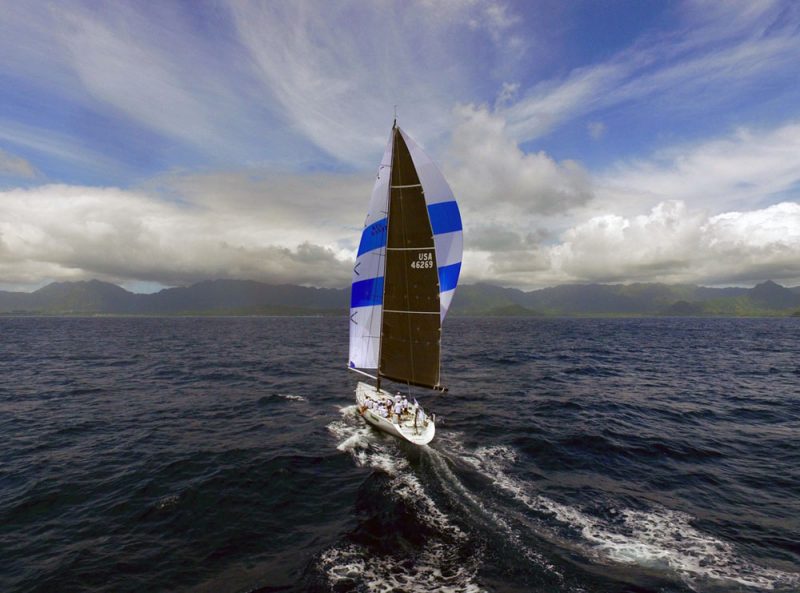
Regardless of whether you sail, or spend any time on or in the ocean at all, we’re all affected by its health. The oceans and seas support life by producing oxygen, regulating climate, and also providing food and livelihoods for millions of people. We think that makes the ocean pretty important, and worth looking after. Add to that the hours, days, weeks and months — for some people a lifetime — of joy we derive from the ocean, and it’s not hard to see why we need to step up and do our part.
Here are some ways we can help:
Reduce our use of plastic: According to Oceans Research News, approximately 8 million tons of plastic enter the oceans every year, which they estimate is “equivalent to dumping a garbage truck full of plastic into the ocean every minute.” That plastic, as we now know, finds its way into our food chain and into our bodies.
We can refuse plastic straws, cutlery and cups, carry reusable water bottles and coffee cups, recycle at home and at our workplace, participate in beach cleanups, use eco-friendly sunscreens, and avoid cosmetic products that contain microbeads.
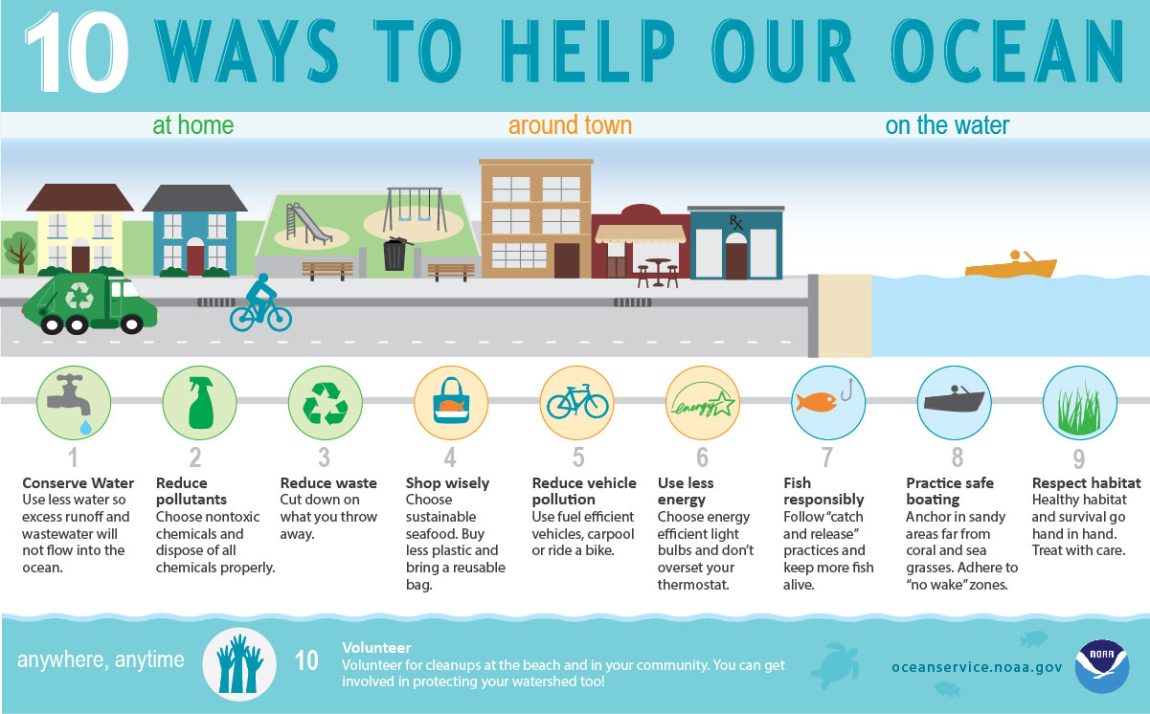
There’s a long list of practices we can adopt, which we won’t go into here. But we will leave you with some links to websites where you can learn more about what’s happening in the oceans and how we can help support our marine life, and ultimately ourselves.
Take action with worldoceanday.org.
Learn about sustainable fishing practices with Marine Stewardship Council.
Find ways to contribute, with Oceans Research.
Read about the first national association for marine mammal responders, launching today.
We’re only scratching the surface of what is being created in support of our oceans and how we can help. But we encourage everyone to take a moment today to think about what we as individuals can do. And when you’ve done that, make your own commitment and share that with your crew. Then, go sailing and put it all into practice.
Mexico dumps raw sewage into the Tijuana River and it outflows to the ocean and fouls the beaches of San Diego and Coronado, no swimming due to toxic sewage freely flowing from our neighbors to the south. Why do we put up with this? Why is the Mexican Government allowing this to happen.
Didn’t the USA build Mexico a sewage treatment plant? Everyone is an environmentalist until they need to point the finger at Mexico.