

What’s Going On in the May Issue Cover Pic?
The May cover of Latitude 38 features a photo taken by Erik Simonson of h2oshots: “SSS Round the Rocks racers seeking tide relief and breeze through Raccoon Strait.” It turns out that the boat closest to the lens was skippered by Lex Band. He sent us his story about the race.
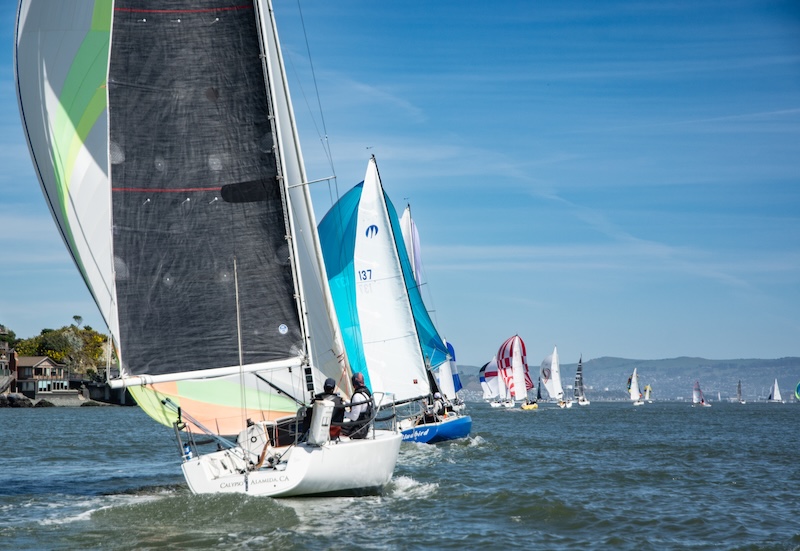
“That’s my boat, Calypso, J/92 hull #89, sailing out of Alameda. We’re flying our A3 spinnaker on a tight reach here, clawing our way back through the fleet after a costly equipment failure had stripped us of first place mid-race. A blown clew ring on the J3 was all it took.
“With the J4 badly undersized for the day’s conditions, we were left making the best of a difficult situation, pressing on with what we had aboard. Although my jib inventory was limited, my kite quiver was deep, and we ended up sailing upwind through that final stretch of Richmond Reach on my windseeker, passing heavier boats stuck in the punishingly light conditions.
“It was a race that could have easily ended in a retirement. Instead, after digging through the V-berth for a sail I’d never touched in a race before (the J4 — I use the windseeker all the time), we salvaged a hard-fought fourth place. Special thanks to my stalwart crew, Kevin Jennings, for keeping my spirits up when the day started getting expensive.
Next Goal — “Get Stuck” in the Sea of Cortez
“Imagine my happy surprise when I found this flyer in the April issue of Latitude 38!” This is what Charlotte Fedane wrote when she sent us the following photo of the Golden Ticket that was nesting inside her copy of last month’s magazine. She also told us she wants to “get stuck” in the Sea of Cortez.
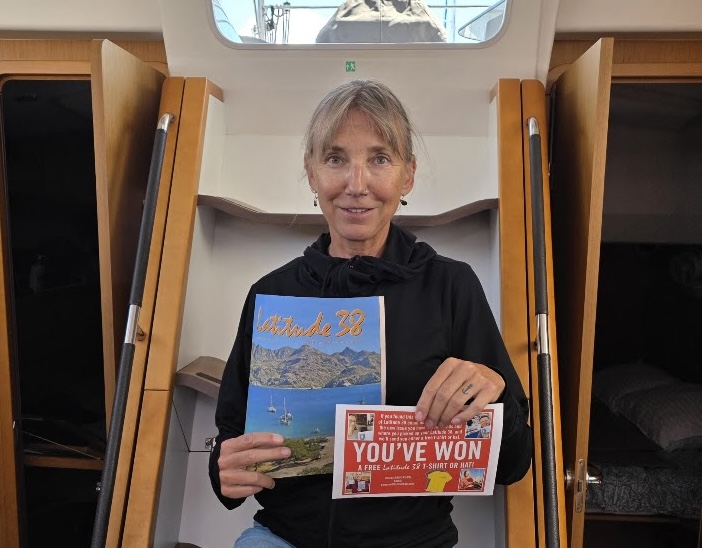
“I am the deckhand on our crew of two,” Charlotte tells us. “My husband [Brad Waldron] is the ‘captain.’ He learned to sail more than 30 years ago in L.A.’s South Bay. That was long before I met him. He taught me how to pull out the sails, jump off and tie off the boat, etc.”
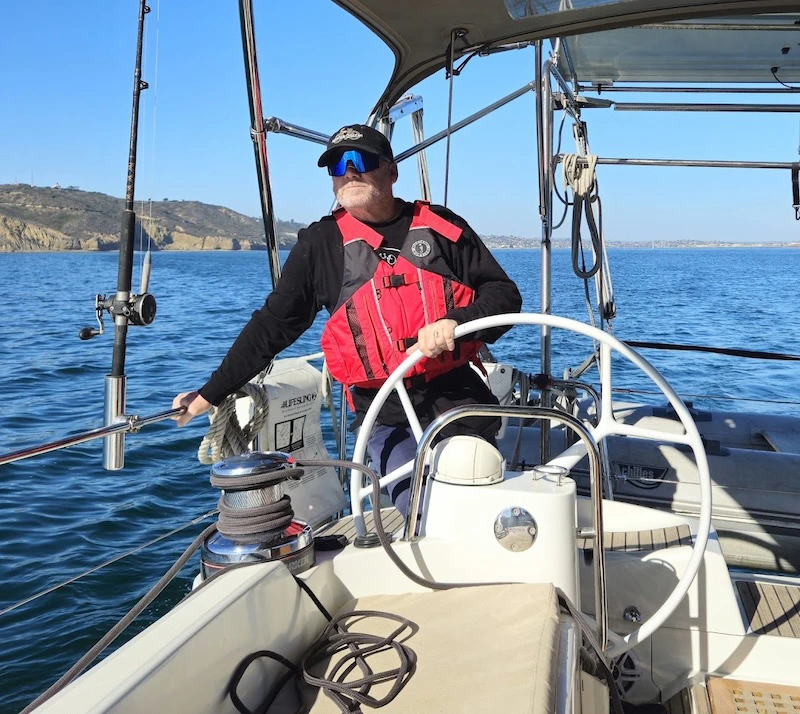
Over several years, Charlotte and her husband lived in the South Bay area and raised a family of four. She knew that sailing had been a great source of joy for her partner, so when all their kids were in high school, she suggested that they start sailing again. “We first bought a Beneteau 423, and I learned to tack going into and out of the Estuary from Marina Village in Alameda. It could easily take 15-20 tacks to get out.”
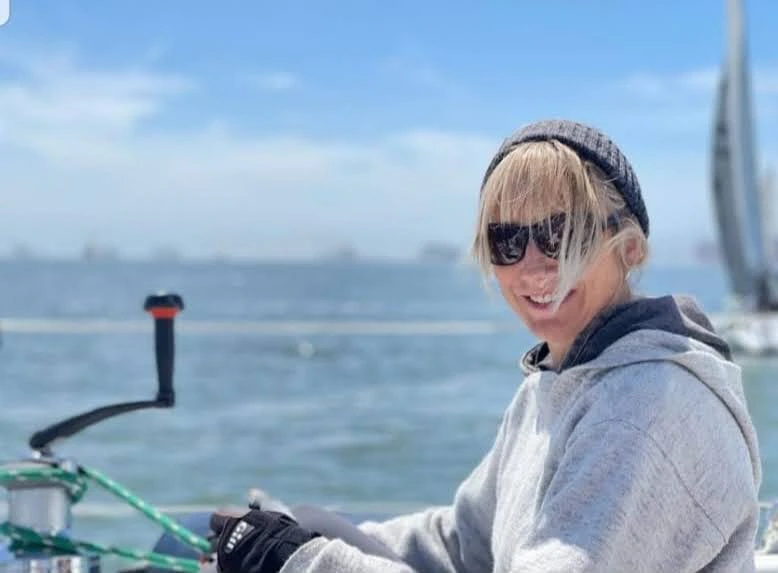
Later, when their youngest left for college, they went “full in.” Charlotte suggested they sell the house and start living full-time on the boat. “Living on the 423 felt a bit tight, coming from a house. With some extra money from the house sale, we decided to upgrade and ended up on a Jeanneau Sun Odyssey DS 50. It [was] named Incognito by a previous owner, and even though we are not sure it’s the best name, we haven’t been able to think of anything better.”
While living in L.A. the couple were members of the South Coast Corinthian YC in Marina del Rey. They thought it would be a good way to get to know some people in a new area. “We left when we decided to move to San Diego for a while. Now that we are back in the L.A. area we have not felt a need to join another YC, as we still have friends from SCCYC that we sail and hang out with.”
Charlotte says her favorite thing about sailing is the possibility of moving around and living in different places. In fall 2024, they left the S.F. Bay Area and sailed down the coast. “I loved the planning (checking weather: wind, waves, currents, visibility, etc.) for the different legs of the trip and getting into a new harbor to explore. We stayed in San Diego for six months before deciding to move back to the L.A. area, where we can more easily get to Catalina and other Channel Islands.”
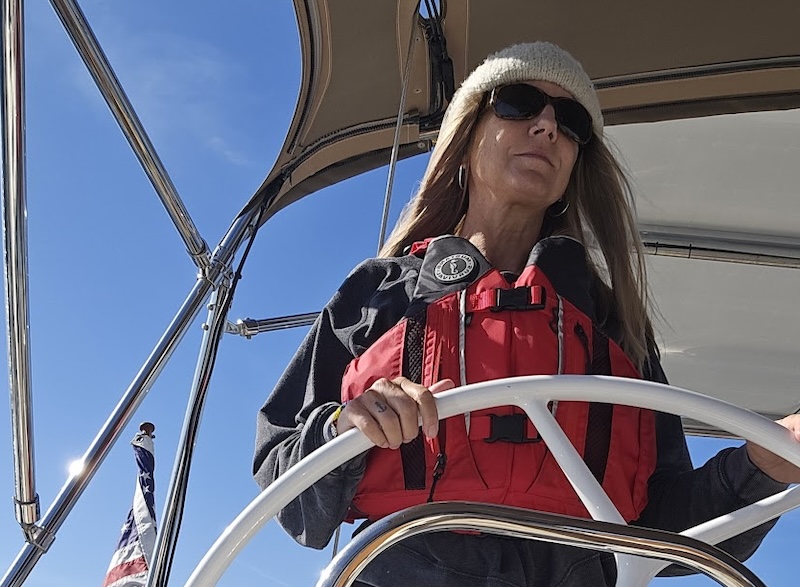
When we asked about her most memorable sailing moment, Charlotte took a moment to choose one that stands out. “[W]e were south along the CA coast, leaving Monterey at 4 a.m. to make sure we could get to San Simeon and anchor while it was still daylight. I was standing up front, after having kept a close eye as we sneaked out of the marina in the dark. Suddenly I see two bright things shooting straight toward the boat in the water. For a second I thought of old World War II movies where torpedoes are shot at a boat, and my heart jumped … until my senses came to and I realized it was two dolphins shooting toward us through bioluminescent algae in the dark water. They played around the boat for a brief moment — it was magical with the bioluminescence lighting their paths.”
Charlotte reflects that living on a boat is not for everyone. “You must seriously downsize,” she says, “among other challenges. But we feel so lucky we get to do this. Currently we are both working full-time, but we hope to reduce it within the next few years and start sailing farther south. We keep hearing of people sailing south and getting stuck in the Sea of Cortez, even though they planned to go farther. That’s our next goal — to ‘get stuck’ in the Sea of Cortez.
“Thank you so much for both a great magazine and a fun gift!” (We’re sending Charlotte a new Latitude 38 hat to wear on her way south to Mexico.)
Discover San Francisco Marina Small Craft Harbor
The Farallon Islands Need Your Help
Despite receiving a share of a federal grant this year, Point Blue Conservation Science (Point Blue) needs our help to maintain its research programs at the Farallon Islands. According to SFGate, House Speaker Emerita Nancy Pelosi announced in February that Point Blue was to receive $1 million of the $12 million Community Project Funding available to various community projects in San Francisco. Point Blue is a nonprofit that aims to promote environmental conservation through research, outreach and community partnerships, and says the funding will support upgrades for water, power and accessibility on the Farallon Islands. But with the slashing of the Farallon Island research program’s regular government funding last year, $1 million is a small drop in the ocean when one considers the vastness of the wildlife and ecosystems that the islands support.
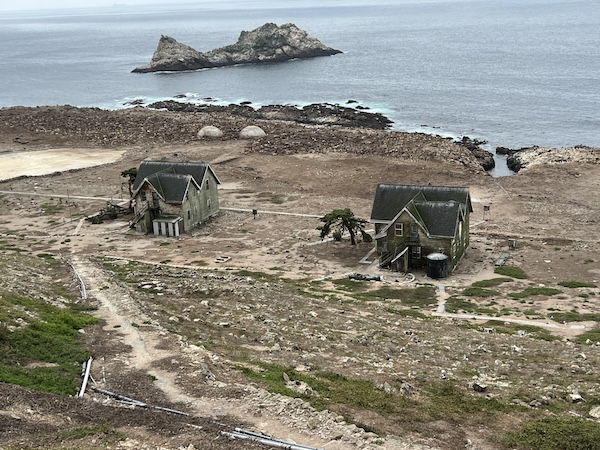
Latitude 38 friend and reader Winston Bumpus shared the following description of why and how our help is needed:
“The Farallon Islands National Wildlife Refuge is one of the most remarkable places on the California coast. Just 27 miles west of San Francisco, these rugged islands rise where the continental shelf drops into deep water, at the heart of one of the most productive marine ecosystems in the world. Many sailors know the Farallones as a distant waypoint, but few experience what makes them truly extraordinary. For nearly 60 years, Point Blue Conservation Science has maintained a year-round research presence on the islands, working in close collaboration with the US Fish and Wildlife Service to understand and protect this unique place.
“The islands support the largest seabird breeding colony south of Alaska, with more than half a million birds, including half of the world’s ashy storm-petrels. They are also home to thriving populations of California sea lions, northern fur seals, elephant seals and harbor seals. The surrounding waters host one of the most important white shark feeding areas in the eastern Pacific. Beyond the island, Point Blue leads ACCESS (Applied California Current Ecosystem Studies) in partnership with NOAA’s Greater Farallones and Cordell Bank national marine sanctuaries, tracking ocean conditions, krill, seabirds and whales. Together, these efforts represent one of the longest-running and most comprehensive marine ecosystem datasets on the West Coast!
“For the sailing community, this work connects directly to your time on the water, improving our understanding of whale distribution, changing ocean conditions, and the living system offshore. We invite you to be part of it. Through our Farallon Patrol Program, experienced mariners can help transport staff and supplies to the islands and contribute valuable observations from the field. You can also support this work as a Farallones Steward or through your annual giving. Whether you volunteer, donate, or help spread the word, you are helping ensure that this extraordinary place continues to inform science, stewardship and safe passage offshore for years to come.”
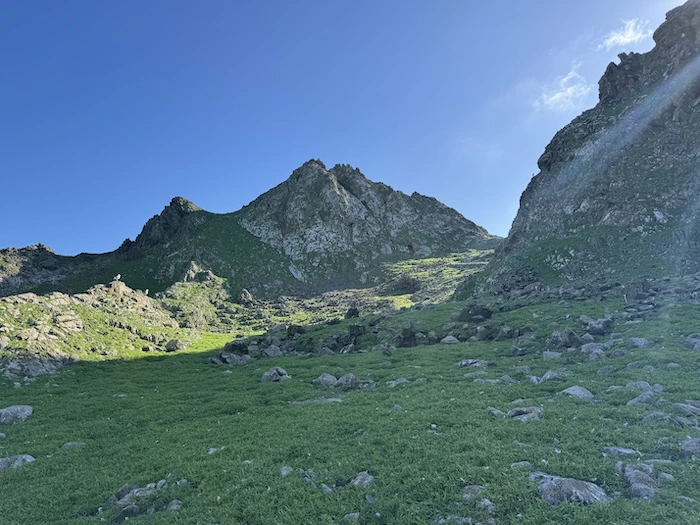
Skipper Larry Hall of the 1999 Beneteau Oceanis 461 Francesca is a volunteer with the Farallon Patrol, established by Charlie Merrill in 1972. In March 2025 we shared Larry’s story about what he called “a mission with a purpose.” His mission was to ferry vital supplies and research personnel to the islands.
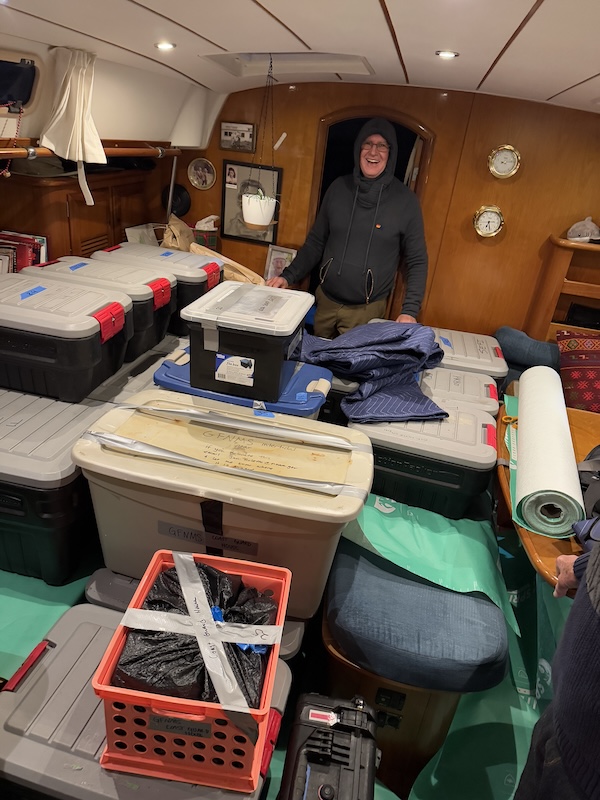
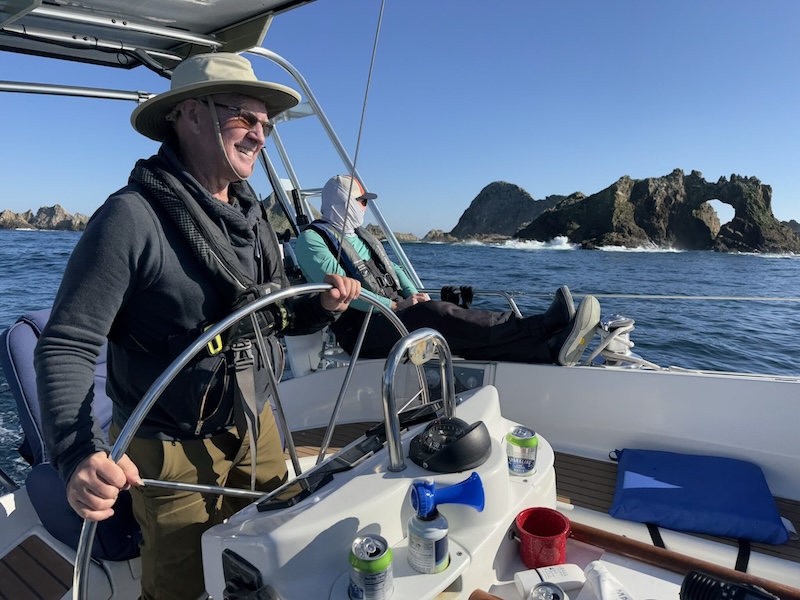
Three researchers from Point Blue Conservation Science were to trade places — the departing researchers would sail home with Larry and his crew, along with a cargo of waste accumulated on the island. A bonus of the day’s “work” was a circumnavigation of the island, which Larry described as “an awe-inspiring reminder of the island’s raw beauty and the untamed power of the ocean. [T]he beauty of the arches along the coast, which looked like massive keyholes carved by centuries of wind and water. The power of the sea was palpable as the waves crashed against the rocks, and we couldn’t help but marvel at the forces of nature at work.” This is only one of the ways you can help. Another is to engage in stewardship.
“As a Steward of the Farallon Islands, you play a vital role in protecting one of California’s most extraordinary wildlife refuges. Your commitment sustains year-round science, safeguards seabirds, seals, sharks and whales, and ensures that discoveries made here continue to guide ocean conservation across the West Coast.”
Stewards enjoy the following benefits:
- Visit the Farallon Islands on a Farallon Patrol supply trip to meet scientists and witness thriving wildlife.
- Join an ACCESS ocean research cruise with Point Blue’s team and take part in real field research.
- Attend the annual Stewards Dinner to connect with fellow supporters and Farallon biologists.
- Receive seasonal research and impact updates.
- Know that your support makes a lasting difference for the environment.
To learn more or become a Steward, contact Nancy Gamble at [email protected] or Bennett Smith at [email protected].
Or, to join the Farallon Patrol, go to www.pointblue.org/engage-with-us, under Volunteer.
If you’re still on that fence, check out this video by local filmmaker Omar Alami.
Looking for a ‘Good Old Boat’ for the Summer, or a ‘Classic’ for a Lifetime?
Has summer arrived and you don’t have a boat to sail? Thinking of making the leap from boat crew to boat owner? If you’re browsing the Classy Classifieds, it doesn’t have to be a big step. The boats below are a small sample of the choices on the menu of sailboats that could take you and your friends and family sailing this summer. Or it may be time to step up, step down, or step into a Master Mariners classic like the Yankee 30 below.
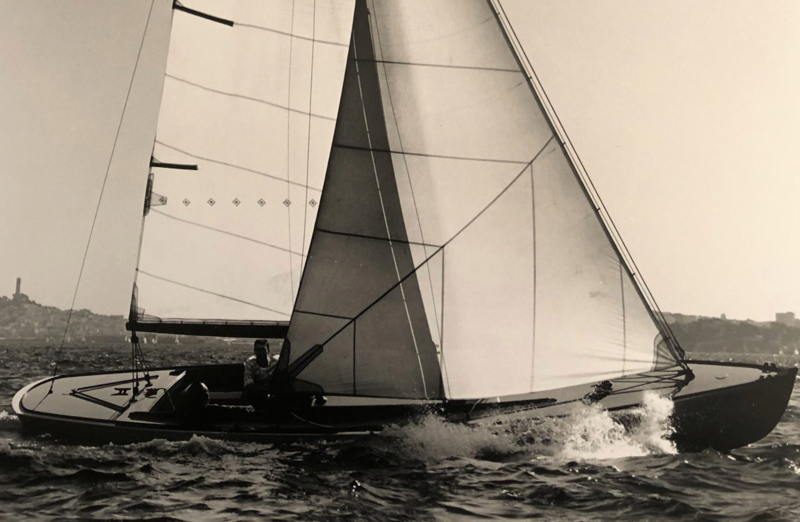
It’s not always about sailing. Being the caretaker for a Bay Area classic brings joy far beyond a day on the water. The Master Mariners Regatta is a week from tomorrow, and it’s where you’ll see many of the Bay’s classic beauties showing off their grace and style. They turn heads when out on the water and back at the dock. Many people think wooden-boat owners are crazy, but many regular folks go crazy once they step aboard and fall in love with wood. We don’t blame them. There’s just something about it that draws you in.
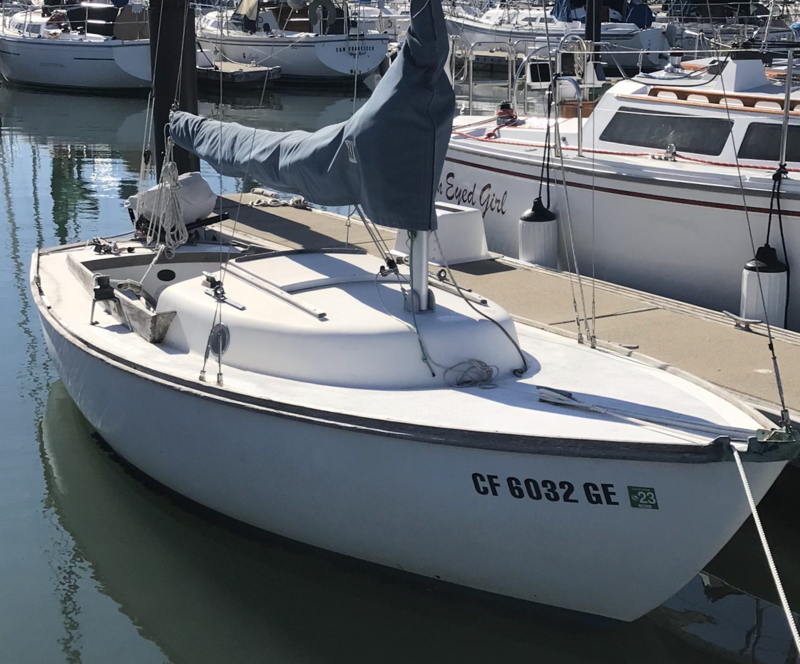
Sailing is pretty simple if you let it be. The 18-ft Alberg-designed Typhoon (pictured above) proves it. Pack the sandwiches and cooler, jump aboard, hoist, and sail. It’s simpler than flossing and brushing. No apps needed, no latest operating system, no Wi-Fi, no uploading or downloading — just talking with the crew and sailing. We all know there are lots of ways to make sailing complicated, but it’s nice to start with simplicity. You can always add the complications later if you feel they’re needed.
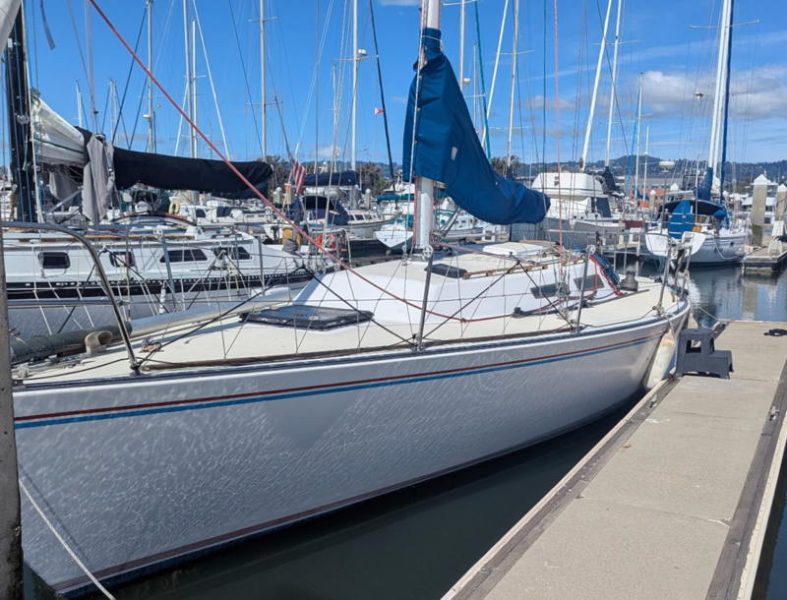
The J/35 is a legendary Rod Johnstone design, and Don Trask did a world-class job of building the West Coast fleet. The first one launched in 1983, and much has changed since then. However, J/35s are still winning races, or, when polished up after racing, can be simple, comfortable performance cruisers.
These are just a few of the boats that are currently available in the Classy Classifieds that you could be sailing this summer — maybe even next weekend.
If you’re ready to trade out of your current boat, today is the deadline to get your boat for sale into the June issue. Post your classified ad by 5 p.m. today, then you can start looking for your new boat here.
Talking About the Business of the Head
As we sail into summer we’re reminded of the “shitty” (can we say that?) part of sailing, aka the business of the head. There are various toilet systems aboard boats, from fully flushing to hand-pumping to bucket dumping — it’s this last one we want to address. As we all know, dumping our waste overboard is not OK. And unfortunately, not all boats come fully equipped to take care of this problem. But if you’re in Southern California, you may find yourself with a solution.
California State Parks and the California Coastal Commission are looking for three Southern California recreational boat owners who are interested in receiving a FREE marine composting toilet (MCT) in exchange for participating in a study. Sounds like you? Read on.
In exchange for your firsthand experience and knowledge of installing an MCT (or potentially converting from a previous system), and use of the MCT, you will keep the system for free!
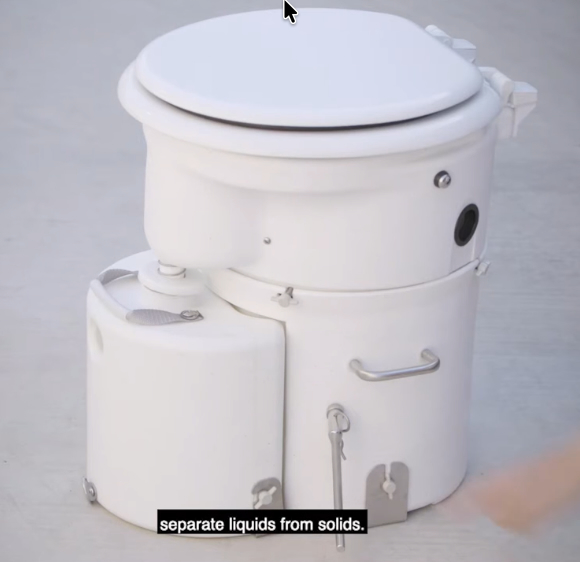
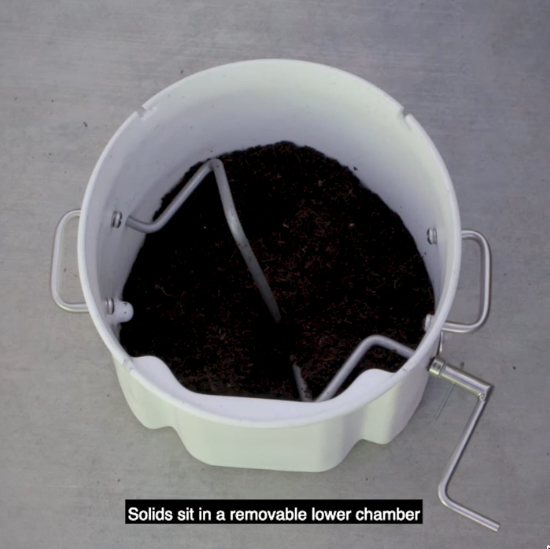
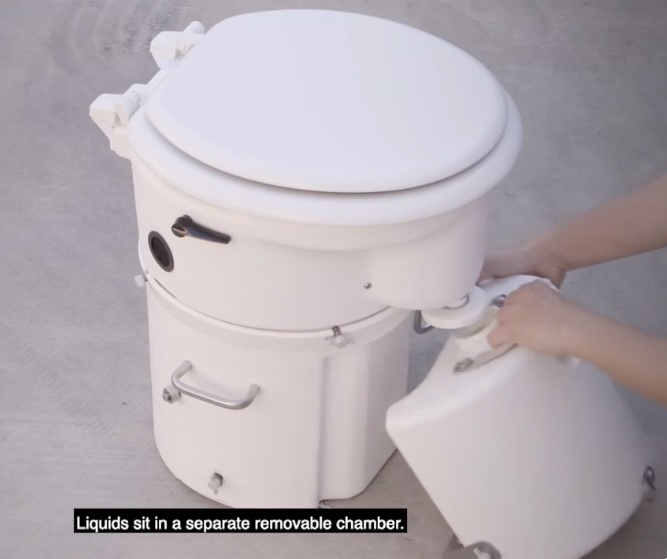
Here’s a link to the survey. Fill it in for your chance to be selected.
“Marine composting toilets are self-contained sewage systems that are low-maintenance and present zero opportunities for accidental discharges. To learn more about MCTs, check out this video and see why many boaters are considering them!”
While we’re on the business of the head, did you know you can also get a free deck adapter and Y-valve kits as part of the Sacramento-San Joaquin Delta Conservancy’s Clean Vessel Act Program? Here’s what they say about it:
“Y-valve Kits: Includes the supplies needed to direct boat holding tank waste to a pumpout station rather than overboard. The kit includes instructions and an information guide, opened and closed stickers, non-releasable zip-ties, dye tabs for leak detection and an enzymatic digester.
“Deck Adapter Kits: A deck adapter is a connector designed to screw into a boat’s deck waste fitting. To use the adapter, boaters remove the deck waste fitting from their boat’s holding tank and screw in the deck adapter. Once in place, boaters remove the nozzle head from the pumpout unit, clamp the hose onto the adapter, and enjoy a hands-free pumpout experience. Deck adapters are available in 1.25-inch and 1.5-inch diameters and include instructions and disposable gloves.”
Why does it matter? One toilet flush of untreated sewage from a boat can cause the same environmental impact as 10,000 flushes from a home toilet. Pathogens, waterborne diseases, fish mortality and habitat degradation are all potential consequences of improper sewage disposal.
Ordering is free and easy. Visit www.deltaconservancy.ca.gov/cvap and click the order link to receive the kits.
And with that, sailors, we call this “business of the head” closed for now.
For More Great Sailing Stories, Tune In to Good Jibes