

Mayday! Mayday! Latitude 38 May Issue on the Docks Today
Welcome to the May issue — a boat locker full of stories about circumnavigations; the pursuit of Olympic selection; cruising in the ’80s versus now; teak on boats; and other sailory pursuits. Here’s a preview of this month’s issue:
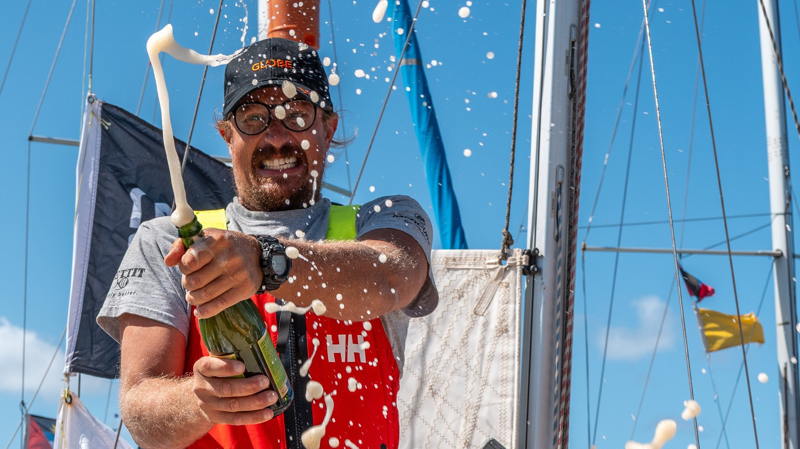
Josh Kali’s 19-ft Mini Globe Navigation
Before sailing, Josh had spent years ice climbing, mountain climbing and winter camping. Looking for a new challenge, he bought a $1,500 C&C 24 and taught himself to sail, step by step. First under mainsail alone, then with main and jib, and eventually in stronger winds and on longer passages. He’d also had some earlier time on the water offshore fishing aboard his dad’s tuna boat. Those beginnings led to a much bigger dream: building an Alma Class Globe 5.80 and taking on the Mini Globe Race.
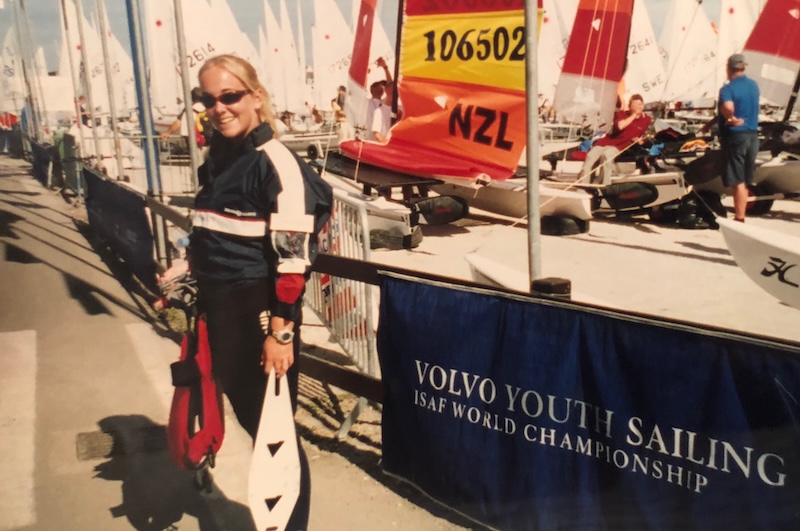
Lauren Wilson Vies for L.A. 2028 After Two Decades Away From Elite Sailing
Campaigning for the Olympics is a full-time job for anyone, but between family and work, Wilson needed to get creative with her training schedule. Among other things, this includes a hiking bench in the family living room next to her children’s toys: Children’s TV shows are the perfect time to fit in an Olympic-campaign workout. Stealing time throughout her day and evenings with Pilates, free-weight chest presses and bicep curls, Wilson says she’s like the typical millennial mom, “just trying to squeeze it in where I can.”
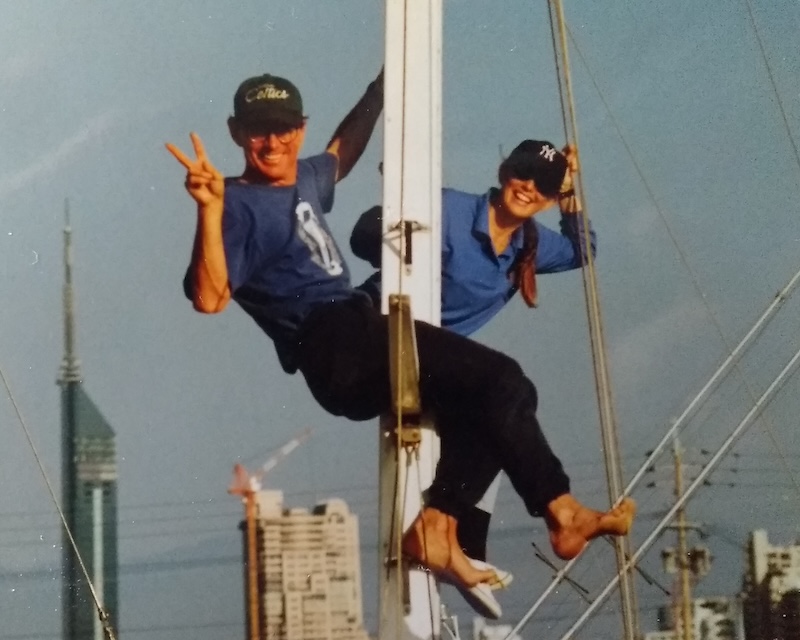
Cruising Then and Now — A Retrospective
Operating a cruising boat has never been more expensive. Moorage is more difficult now as fewer marinas are being built and living aboard is increasingly frowned upon. Marina fees are prohibitively high, especially for millennials and Gen Zs, who tend to be more focused on making rent or mortgage payments. While marinas are less welcoming to liveaboards, living aboard is not only cost-effective, it also facilitates the multitude of boat projects necessary to make a yacht cruise-ready. Plus, as the size of the average cruising boat has increased, so too are the boats more expensive.
Plus your favorite regular columns:
Letters: What’s Going on at Newport Harbor?; Doubled Over With Latitude Laughter; We Thought We Might Go a Whole Issue Without Debating the America’s Cup — The Discourse Changes Direction; plus many more readers’ letters.
Sightings: Reeves and Shragge: Closing the Around the Americas Loop; Into the Storm With Parkinson’s; Eagle Through the Ages; and other stories.
Max Ebb: “Coincidence?”
Racing Sheet: In this month’s edition of the Racing Sheet, we truly emerge from winter hibernation and jump into the regular season of sailing. The J/105, Mercury and J/88 fleets kicked off their seasons; 2v2 Team Racing made its 2026 debut on the Bay; Coyote Point Yacht Club’s racing program chugged along; college sailors duked it out in keelboats in L.A.; and two of the West Coast’s historical yacht clubs did battle for cross-Bay bragging rights.
Changes in Latitudes: With reports this month from Malilia’s meanderings in the Sea of Cortez; Capricorn’s life-after-the-Ha-Ha adventures; Legacy’s Spring Break guests; Ruthie’s trials and tribulations on their first cruise south; and some fun Cruise Notes.
Plus, see all the latest in sailboats and sailboat gear for sale in Classy Classifieds.
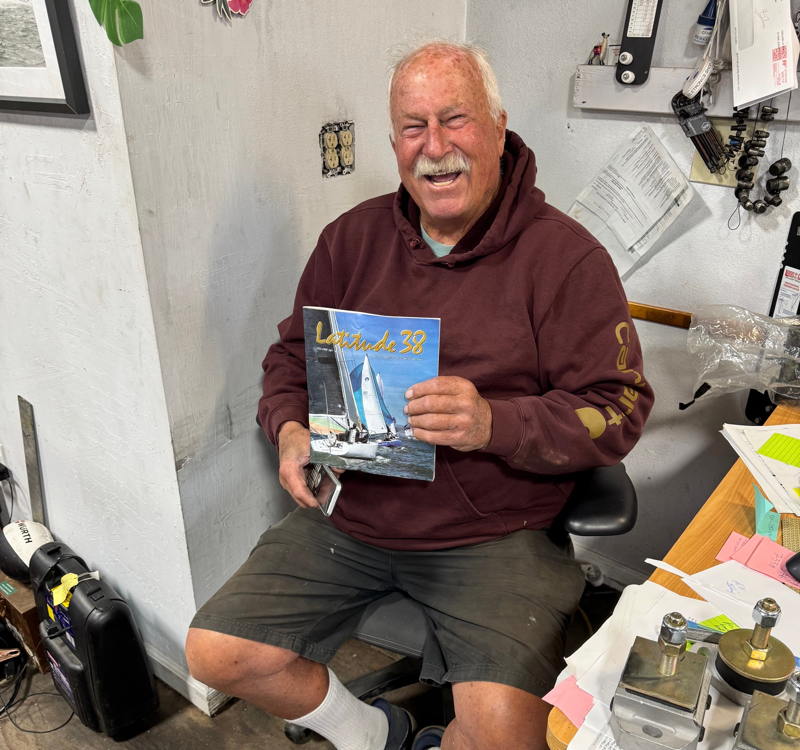
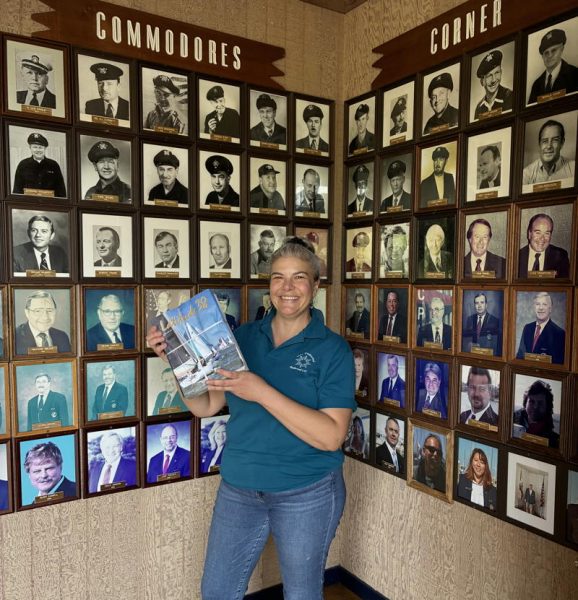
Find your copy here, or subscribe to have it delivered each month. Then enjoy a digitally detoxed weekend of sailing, racing to Vallejo, or relaxing and reading! Or varnish?
Richmond Yacht Club Beer Can Cup Goes Racing for the Fun Of It
We were lucky to get out racing in this past Wednesday’s RYC beer can series with Nick Grebe and crew on his Santa Cruz 37, Wildcard. Nick has done plenty of very competitive inshore and offshore racing with Wildcard, so it’s a pretty sporty, dialed-up boat. Nice sails, new, very light and thin jib sheets, and, on Wednesday, Brandon Mercer had a chute on the bow ready to hoist. It was pretty quick work getting set up for the regular Wednesday evening race, done just for the fun of it. In fact, isn’t almost all sailboat racing for fun?
There are plenty of wolves in sheep’s clothing amidst this fun-loving race evening. The Richmond Yacht Club (RYC) is full of competitive sailors, from its youngest members to its most decorated world-champion Olympic medalist sailors. Somehow the competitive juices that breed winners don’t stifle the fun of an evening beer can race. It is a race with official start times, but it’s kept simple with the same course every week. It’s up to the wind gods to determine if it’s a windward-leeward or just a reach.
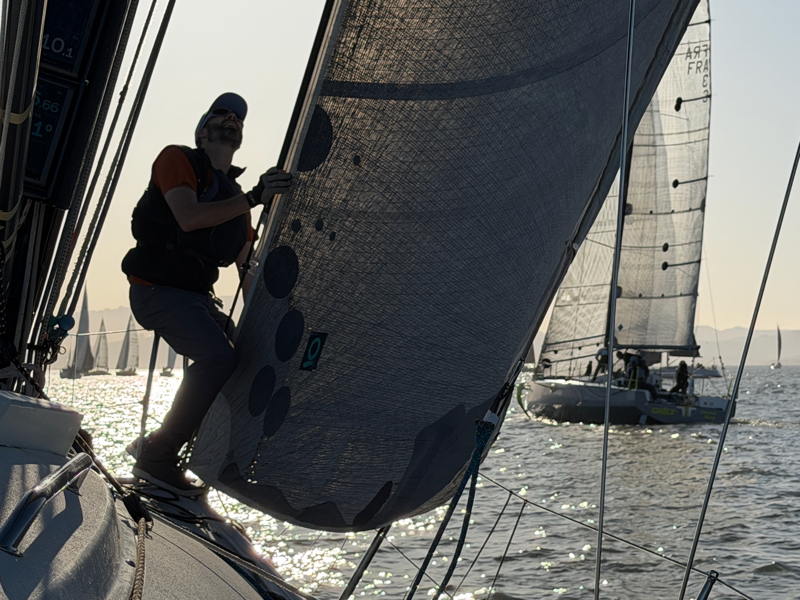
We couldn’t have been luckier with the weather, although regular RYC Wednesday evening racers swear it’s always like this on the “Richmond Riviera.” It was shirtsleeve sailing, with skipper Nick Grebe sailing the entire course barefoot and in shorts. In contrast, we were overdressed for our normally cooler weather over by the Corinthian Yacht Club’s Knox course. The sun was bright, the breeze warm and steady, and we don’t think a single drop of water got on the deck.
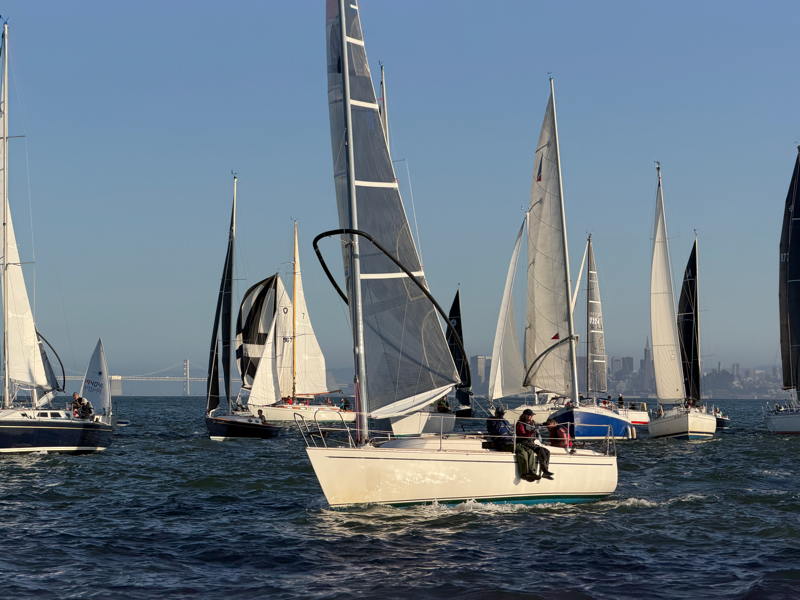
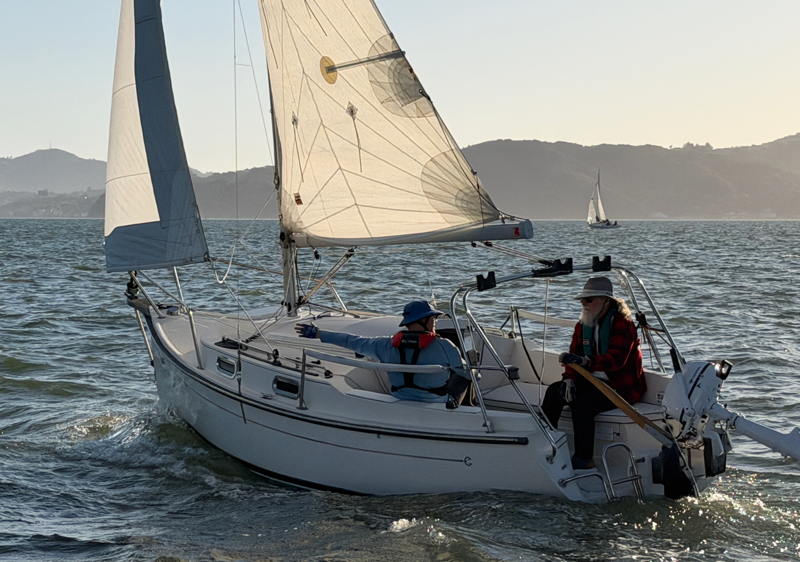
Though it’s casual, the boats are broken up into classes, with Lasers going first and then a very healthy Alerion 28 one-design fleet leading the big-boat starts. The Carl Schumacher design is a comfortable, elegant, stay-inside-the-cockpit craft, perfectly suited to a very civil evening of beer can racing.
To get a sense of casual, we give an excerpt of the Deed of Gift for the RYC Beer Can Cup, donated by the yacht LightnUp in 2004: “Any organized, semi-organized or disorganized Yacht of this or any foreign yacht club, incorporated, patented, or licensed, or whatever, by the legislature, admiralty, or other executive department, or Bob, having for its annual regatta on ocean, salt, fresh or other water course, except bottled, on the sea, or on an arm, leg, ear or torso of the sea, or one which combines all, shall always be entitled to the right of sailing a match for this Cup, with a yacht or vessel propelled by sails only and constructed on the planet to which the Challenging Yacht belongs, against any one yacht or vessel constructed on the planet of the Yacht holding the Cup.” They say no good deed goes unpunished, but this one continues to work.
Could casual fun be a way to grow participation in racing? The 85 boats signed up to race every Wednesday from April 1 (no foolin’) through September 30 suggest it is. It doesn’t matter what you bring to this “hump night” tradition. It could be something as hot as the foiling Figaro Castor or a pocket-cruising Compaq yacht or an ILCA/Laser. Because they don’t keep score, no one stresses over trying to figure out how to rate all these mismatched toys from the boatyard toy box. They’re all just bringing their favorite toy to the playground and going out to play.
It could be that using Norway’s rules for children, which focus on participation and fun rather than keeping score up until age 12, could satisfy more sailors’ inner 12-year-old than all the grand prix racing combined. It may be why the Baja Ha-Ha has 130–150 participants in classes like the “Burrito” division and the San Diego to Puerto Vallarta Race gets 25 to 30 boats. It’s nothing against grand prix racing, but clubs and classes need to think about the nature of their events and how they suit the desired audience. There are plenty of “grand prix” racers, like Wildcard, Velvet Hammer, Castor, etc. in the mix of RYC’s “casual” beer can series.
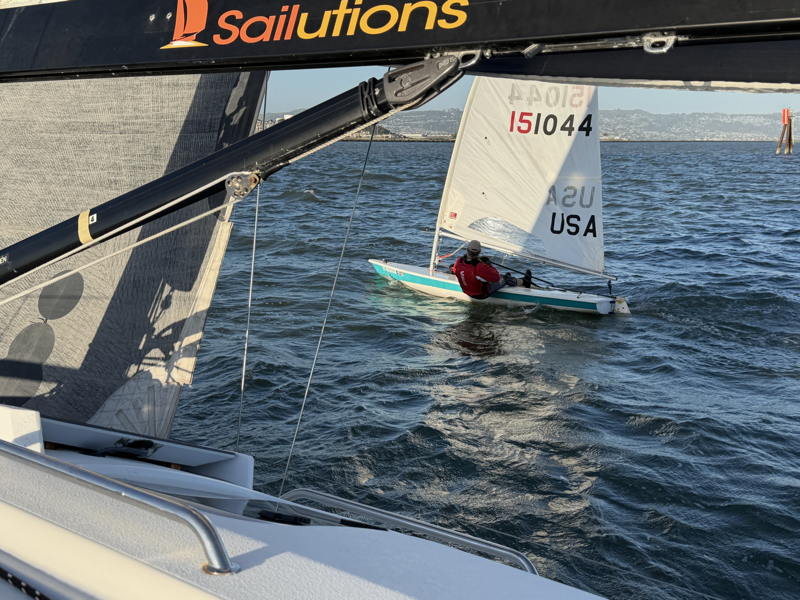
This past Wednesday, Mother Nature chose a warm-air reach out to the Bob Klein buoy and back. A somewhat cluttered pin-end start led the fleet toward the nearby breakwater, requiring some calls for sea room and quick tacks, before the fleet found their track and settled into a sunny groove to round the breakwater for a quick reach to the Bob Klein buoy. Light air at the port rounding had the fleet bunching up, with almost everyone landing in someone else’s wind shadow. The crowd made the boat with the fenders out look like the smart one. Again, the fleet cleared their air, found their lane, and tight-reached back to the breakwater. A slight bearaway (beeraway?) with acceleration toward the finish, and suddenly it was over way to soon. It was so nice we almost went around again.
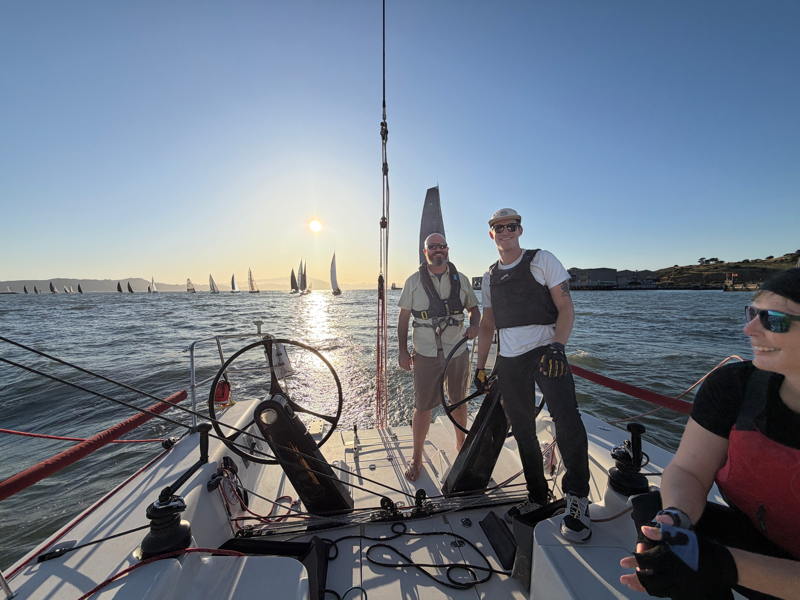
There are plenty of races to get into full-on battle gear, but this is not one of them. It might be a place to test a new sail, a new crew, a new brew or a new playlist. It reminds us again that it’s important to sign up for events like this because you sail when you otherwise wouldn’t. Tuesday night and Thursday night were also beautiful evenings for a sail, but the RYC Wednesday night was a “nothing-special but oh-so-special evening sail” with approximately 60 boats that have done this lap so many times they could do it with their eyes closed. But then you’d miss so much of all the good reasons to be there.
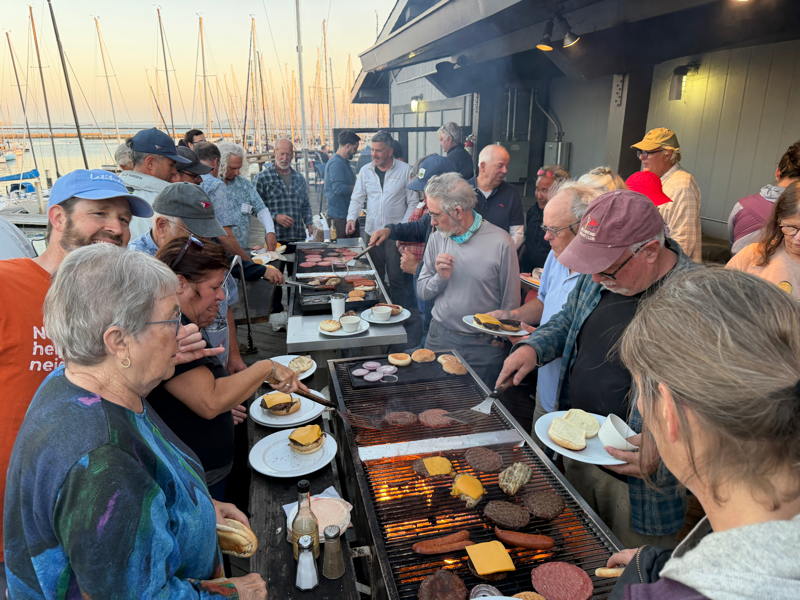
When asked, many sailors say they sail to “get away from it all.” You wouldn’t know it by the fleet size or the post-race party. The other side of sailing is that it’s all about the people. From pre-start banter to post-race ribbing, the vibe was lighthearted and experienced. This is not an event you want to miss. People have their reasons for missing it but they’re rarely justified.
Every event needs a booster, and RYC’s Eric Arens is one who helps keep the fleet connected and coming back. There are awards for most crew, young crew or most new crew, or awards that are new ideas each Wednesday. Some regattas have polished silver trophies that date from a century ago, while the RYC Wednesday beer-can awards may be invented on the spot and suddenly vaporize. What lasts is a tradition of a large crowd of boats and sailors who come out just for the fun of it. In word and deed the RYC Beer Can Cup indeed continues to succeed with the magic of non-competitive competition. Read about the winners — elsewhere. Which reminds us — it’s time to re-read the Ten Commandments of Beer Can Racing here.

For More Great Sailing Stories, Tune In to Good Jibes

A Bay School Account of the Northern League Championship Regatta
The 2026 NorCal Divisional Regatta began like a pretty standard high school regatta in Northern Calfiornia. It was a brisk, chilly and foggy morning when 20 teams arrived at the Peninsula Youth Sailing Foundation (PYSF) in Redwood City and began rigging around 8:00 a.m. We had all been granted the luxury of not needing to haul our own boats down, as PYSF maintains a fleet of well-kept CFJs all with almost identical rigs in terms of lines, sails, spars, and of course, the PYSF logo.
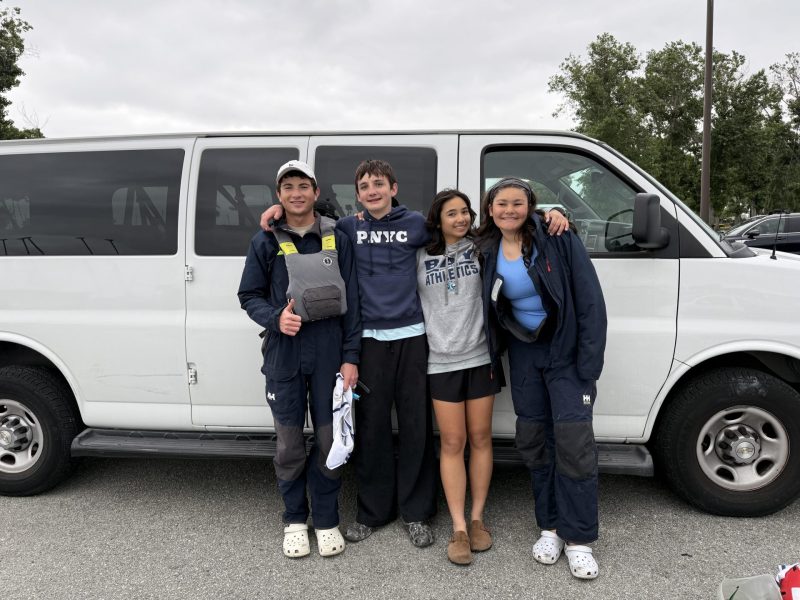
With our boats rigged, we moved swiftly into the competitors’ meeting hosted just under an upcycled sail shade structure strung between two shipping containers. PYSF executive director John Vandemoer led the meeting and instructed us on the plan for the day, including dockside logistics (please don’t dock downwind!) and the fact that rotations would need to be conducted from the main dock instead of a dock closer to the racecourse that had been used in previous years of the event. John also advised us that instead of following the “race-all-day” format of most NorCal events, we would be rotating, in a fashion similar to PCISA events.
We must have known this already, as the Bay School team had planned accordingly with four sailors ready to go. The one catch was that instead of rotating every two races, we would be rotating every three races to account for the inconvenience of having to sail all the way in to switch out. John introduced the PRO and race committee volunteers for the day and advised that they would be trying to run at least six, if not nine, races for A fleet, and 6 races for B fleet. With all the logistics out of the way, it was time to get sailing.
After we’d launched our boat, I got in a few practice roll tacks and roll jibes with my crew, since the wind was still light. Soon enough, after an impressively efficiently set course, our PRO gave the warning for the first race.
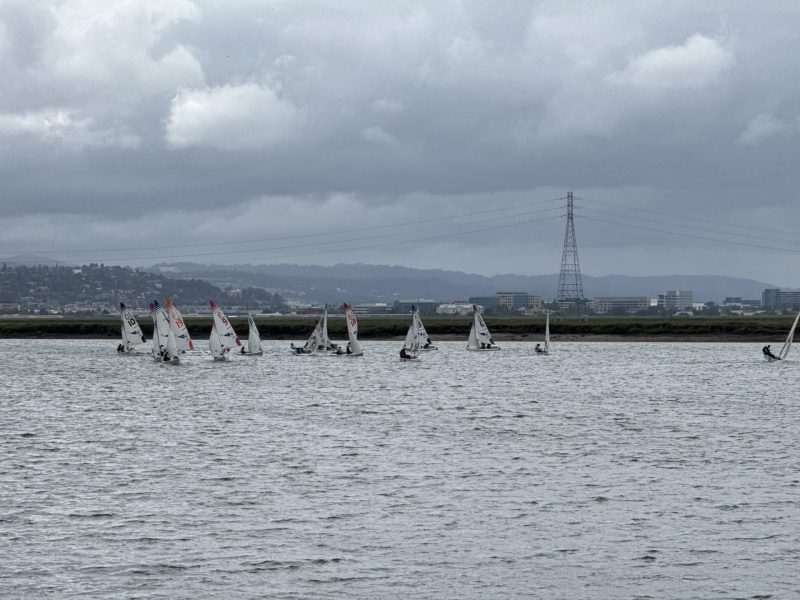
The starting line was compact and the breeze was patchy enough that boat positioning mattered more than raw speed. We got off the line cleanly in the middle of the fleet, with clear air and a slightly favored tack toward the right side of the course. Every shift felt slightly delayed but more consequential when it hit. And there were a lot of them.
Upwind, the main focus became staying patient. The pressure was not uniform, and small gains came from keeping the boat moving through the light spots rather than overtrimming or chasing every puff. Boats that overcommitted to one side tended to get stuck when the breeze filled in elsewhere, so the fleet stayed relatively compressed on the first beat.
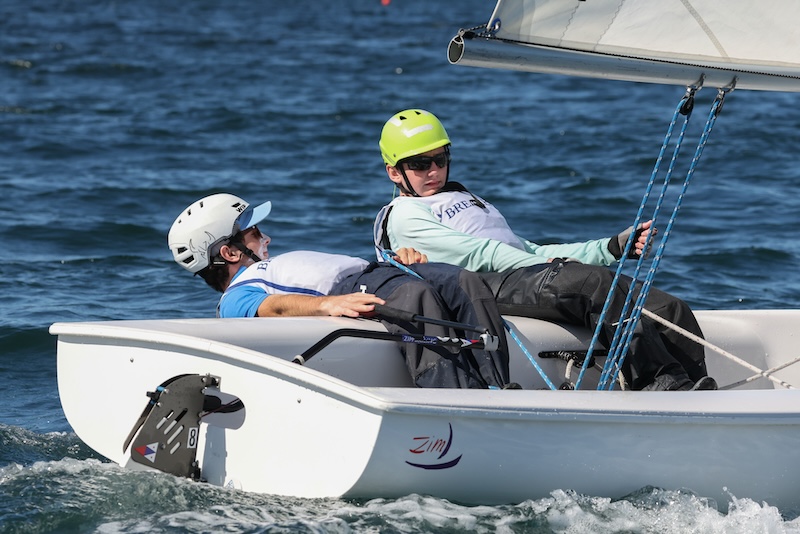
At the windward mark, rounding stayed tight across most boats, with minimal separation. The downwind leg opened things up slightly, but not dramatically.
By the time we approached the first rotation back at the dock, the breeze had started to fill more consistently, and the course became more tactical. Wind indicators became clearer on the water and the shifts became easier to read, but also faster to react to.
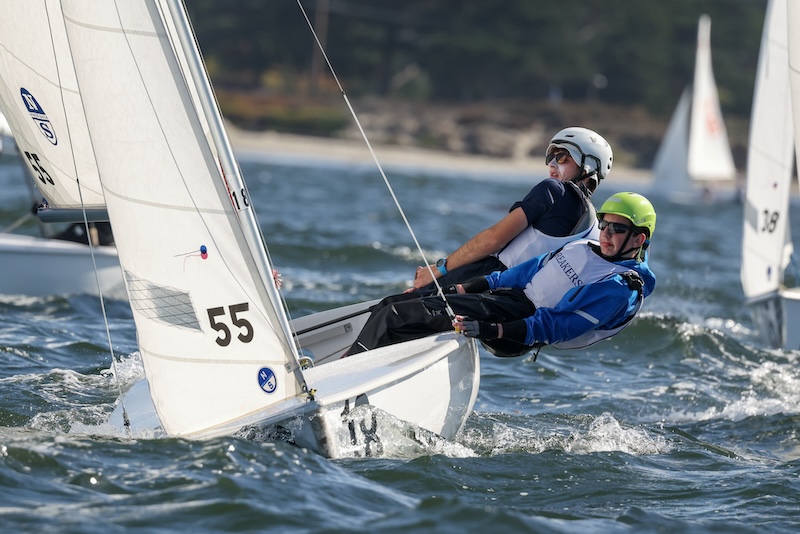
Across the fleet the racing stayed close. There were few runaway wins, and most finishes were decided within a few boat lengths. The conditions rewarded consistency more than aggression, and mistakes tended to be punished immediately due to the tight field and limited separation opportunities.
Overall, it was a great experience, a great regatta and a great venue (due to the amazing flat water). As John noted in the competitors’ meeting, “This was as close as we were going to get to a college-like sailing experience.”
A Local Mariner Aging Gracefully on the Bay
Latitude 38 reader Michael Konrad wrote to us recently to share some photos of his current life on the Bay as a rower.
The only thing worse than growing old is not growing old. As readers of Latitude 38 well know, there are many ways to enjoy our beautiful Bay, and one that gets you close to the water is rowing. In the first photo, taken in 2004, I am rowing a Maas Aero shell back from Point Diablo to the Golden Gate during the annual Open Water Rowing Center regatta. The finish line was just off the sea lion statue and the Trident restaurant, and then we cooled off rowing back to our boathouse in Schoonmaker Point Marina. I came in third from last but was happy just to finish.
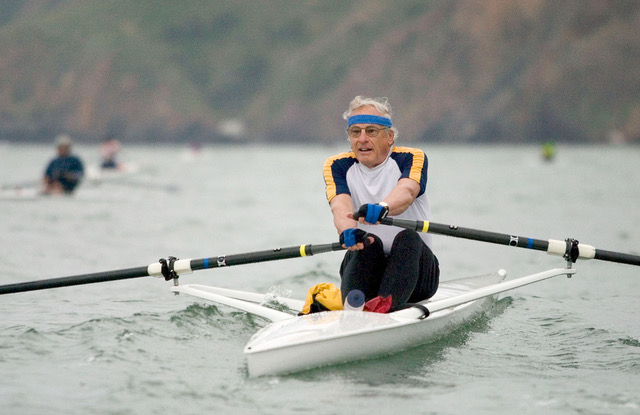
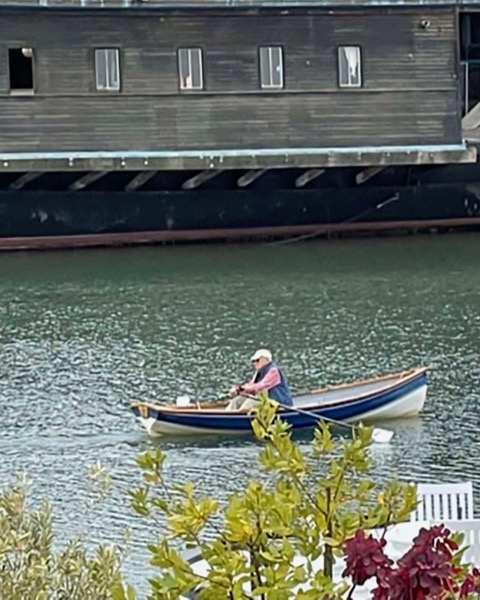
In the second photo, taken in 2024, I am rowing home at Waldo Point past the retired ferry Vallejo, built in 1879. Now I’m in a Gig Harbor Whitehall. It has a sliding seat just like the shell, and I’m using the same Concept lightweight fiberglass oars. Falling out of a shell, particularly in ocean chop, happens all the time, and you have to be able to easily pull yourself back in. That’s why the OWRC [Open Water Rowing Club] won’t let you out in one of their shells until you have demonstrated you can do this. Fortunately, I’m not very likely to fall out of this Whitehall in the calmer waters of Richardson Bay. It is still fun getting out on the water, just different now.
We wrote back and asked Michael to share a little more about himself and his life as a sailor.
• Where/when/how did you learn to sail?
In 1960, while a graduate student at UC Berkeley I bought a Higgins WWII landing craft that was being used as a houseboat in Sausalito and had it towed to Alameda, where I improved the inside modestly. There were no liveaboard berths near Berkeley then, so I used two outboards to take it to Point San Pablo Yacht Harbor and lived on it for a year.
Point San Pablo was quite funky then, and was only 200 yards from a whaling station. Whalers harpooned whales along the coast and towed them to the station, where they were butchered.
I had two other boats. One was a converted WWI 26-ft lifeboat with a one-cylinder Higgins engine that you started by hand. We went to Sausalito many times and had dinner once in Juanita’s restaurant.
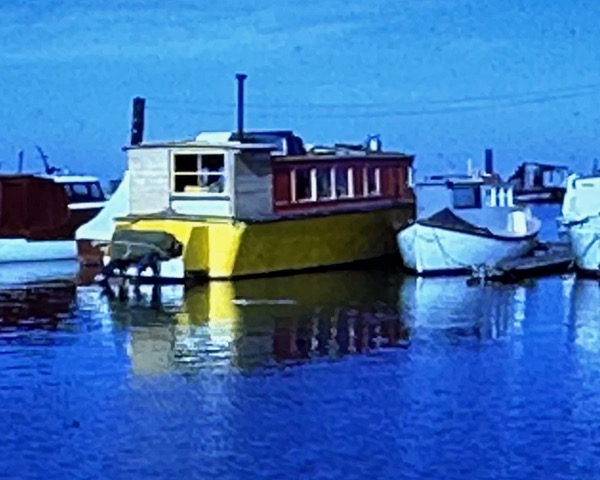
I also had a well-used 25-ft sloop that I bought for $500. I sailed it all over the north S.F. Bay. The most memorable sail was an ill-advised effort to sail around the Farallon Islands. We thought it would be clever to start early in the morning on an ebb, but about a quarter-mile before the Golden Gate realized we were in over our heads and turned back. The ebb was so strong that we barely made headway, but several hours later anchored at Angel Island and slept to noon. My wife became pregnant, so we sold the houseboat back to someone in Sausalito and moved to a Berkeley apartment.
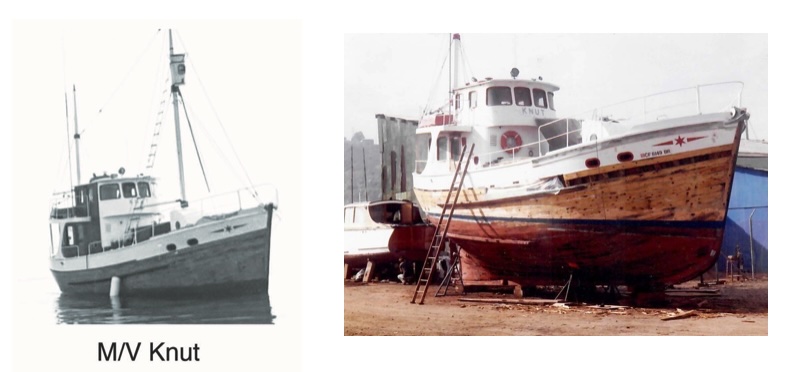
In 1978 I bought a 48-ft wood Romsdal fishing trawler, MV Knut, and lived in it for a year at Pier 39. It had sails, but they functioned mainly to dampen rolling. I later donated it to the Sea Scouts.
• Do you own a boat [aside from the rowing scull and the Whitehall]?
I live in and own a houseboat: HB Heron. It’s easier and cheaper to get a mortgage and insurance if you live in a house. Several years ago a resident of Waldo Point Harbor worked very hard to get Marin County to classify us as living in floating homes, but we all know they are houseboats.
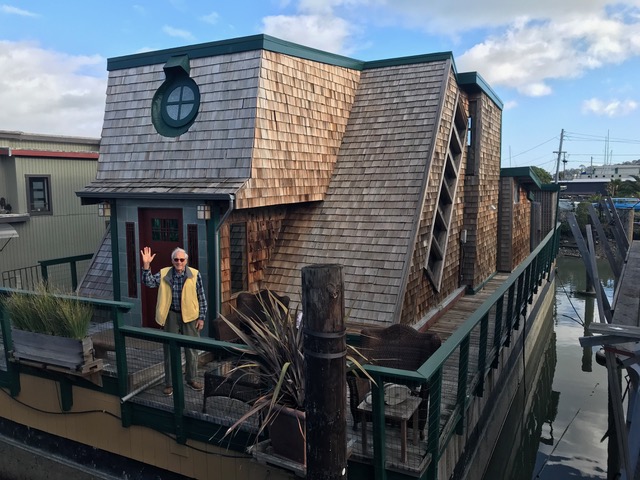
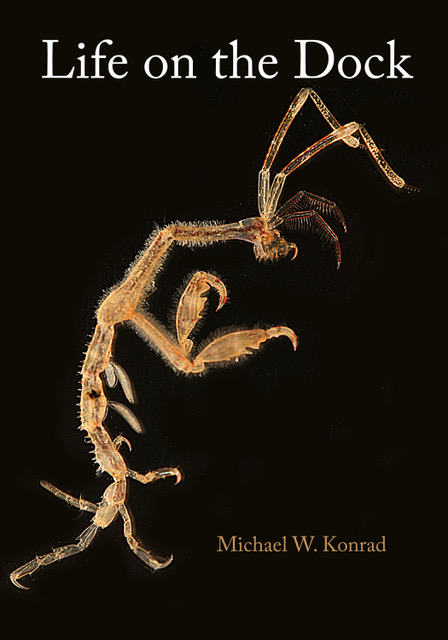
Michael is a retired biochemist and professor at UCLA, who later studied marine biology: “As a young man my hero was Doc Ricketts.”* In 2013 he published Life on the Dock and gave talks about the book at the Sausalito Yacht Club, Spaulding Marine Center, and Sausalito Books by the Bay.
You can see more about Michael’s work at http://www.scienceisart.com.
*Doc Ricketts is Edward Flanders Robb Ricketts (May 14,1897–May 11,1948). He was an American marine biologist, ecologist and philosopher, and renowned as the inspiration for the character Doc in John Steinbeck’s 1945 novel Cannery Row.
Konocti Cup Sailed on Clear Lake
Our 41st Konocti Cup was conducted on Saturday, April 25, on Clear Lake, and spring conditions prevailed. While the two divisions totaled only nine competitors, the Wylie Wabbits use this venue as part of their road series, and the four that came to sail are familiar and friendly faces.
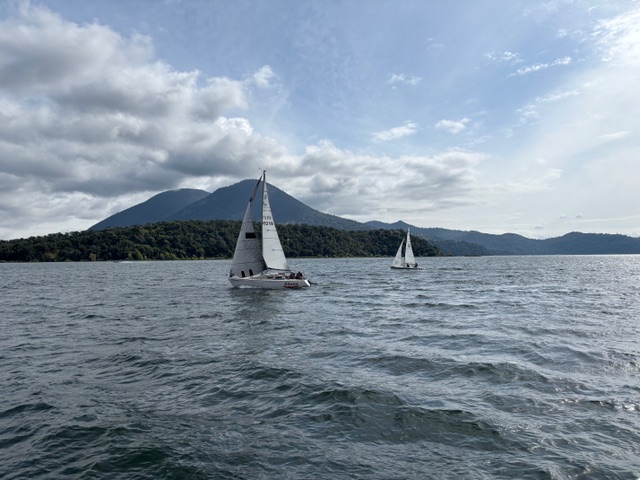
Long gone are the days of 60 boats, three divisions, sponsors, trophies, and even a darn committee boat. But our little podunk club loves to sail and celebrate the day as well. Spring sailing on our huge lake aways likes to present a variety of conditions, and Saturday was no exception.
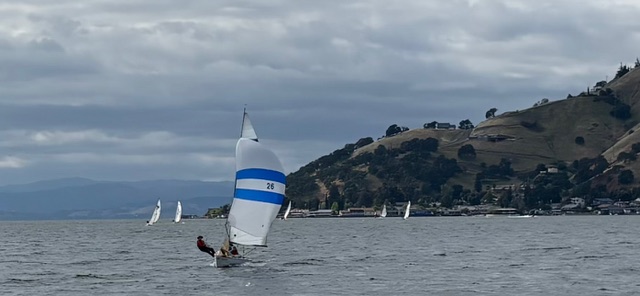
Leads changed often enough for everyone to feel they had a shot. In a practice run earlier in the week, my team completed the same circuit in a bit over two hours without any drama or strain. It took twice that on race day.
With fills and lulls throughout the day, the competitors would stretch out and regroup throughout the races. What is normally a 26-mile race was shortened to a Half Cup plus one mark, approximately 16 miles. It also was an uncommon east/southeast breeze, so local knowledge and typical tactics were useless.
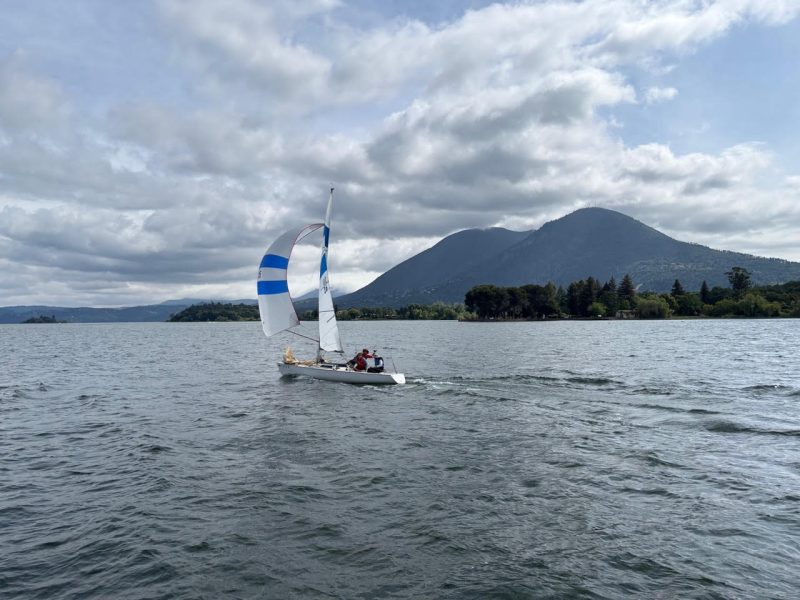
One racer observed that we had about four separate races, as the fleet would regroup at the next wind hole, then continue on. It was also shifty enough to emulate Grandpa’s stories of walking “uphill both ways to school” as the winds would fill from opposing directions.
The First to Finish Trophy was won by Richmond Yacht Club’s Kwazy, and Colin Moore then used the trophy for our salad bowl in the after-race festivities. Kwazy Wabbits! The close racing allowed some local boats to correct ahead, with the Olson 25 Ohana, helmed by Kim Desenberg, taking the overall win.
Reading Latitude 38 Is Good for Your Health!