

A Bay School Account of the Northern League Championship Regatta
The 2026 NorCal Divisional Regatta began like a pretty standard high school regatta in Northern Calfiornia. It was a brisk, chilly and foggy morning when 20 teams arrived at the Peninsula Youth Sailing Foundation (PYSF) in Redwood City and began rigging around 8:00 a.m. We had all been granted the luxury of not needing to haul our own boats down, as PYSF maintains a fleet of well-kept CFJs all with almost identical rigs in terms of lines, sails, spars, and of course, the PYSF logo.
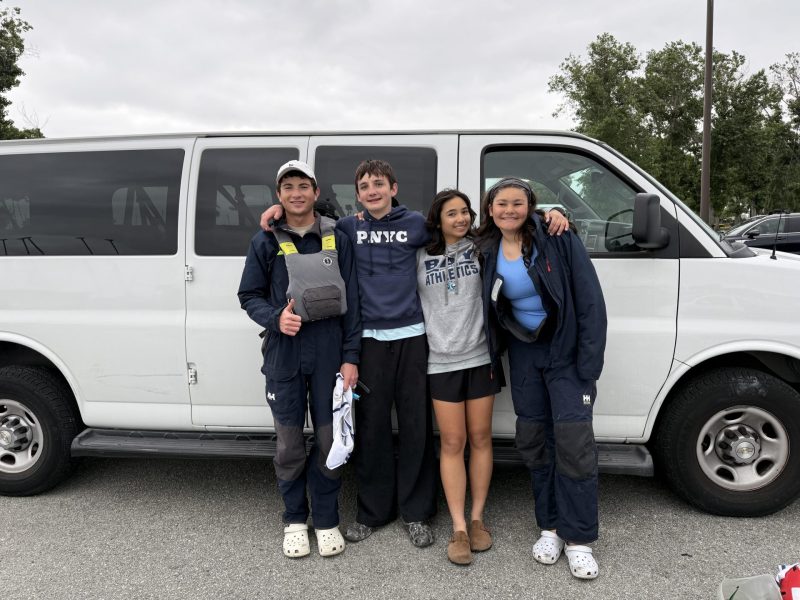
With our boats rigged, we moved swiftly into the competitors’ meeting hosted just under an upcycled sail shade structure strung between two shipping containers. PYSF executive director John Vandemoer led the meeting and instructed us on the plan for the day, including dockside logistics (please don’t dock downwind!) and the fact that rotations would need to be conducted from the main dock instead of a dock closer to the racecourse that had been used in previous years of the event. John also advised us that instead of following the “race-all-day” format of most NorCal events, we would be rotating, in a fashion similar to PCISA events.
We must have known this already, as the Bay School team had planned accordingly with four sailors ready to go. The one catch was that instead of rotating every two races, we would be rotating every three races to account for the inconvenience of having to sail all the way in to switch out. John introduced the PRO and race committee volunteers for the day and advised that they would be trying to run at least six, if not nine, races for A fleet, and 6 races for B fleet. With all the logistics out of the way, it was time to get sailing.
After we’d launched our boat, I got in a few practice roll tacks and roll jibes with my crew, since the wind was still light. Soon enough, after an impressively efficiently set course, our PRO gave the warning for the first race.
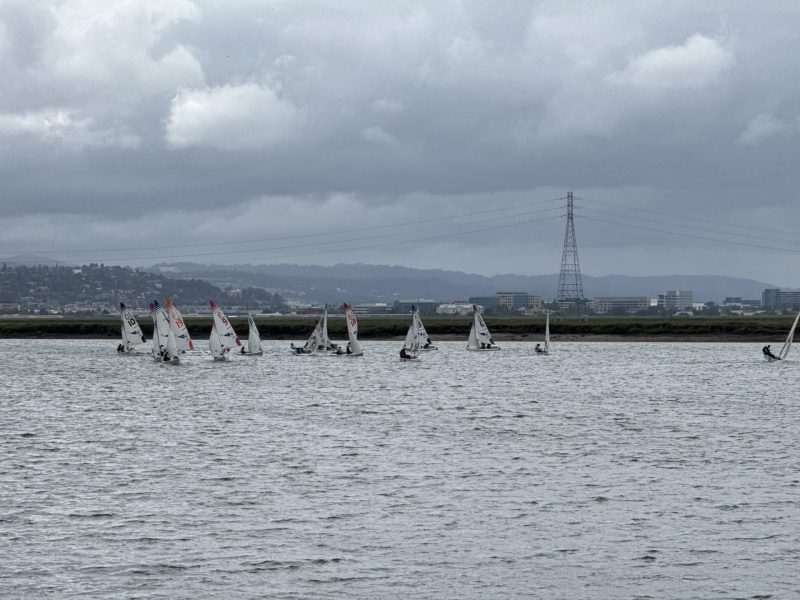
The starting line was compact and the breeze was patchy enough that boat positioning mattered more than raw speed. We got off the line cleanly in the middle of the fleet, with clear air and a slightly favored tack toward the right side of the course. Every shift felt slightly delayed but more consequential when it hit. And there were a lot of them.
Upwind, the main focus became staying patient. The pressure was not uniform, and small gains came from keeping the boat moving through the light spots rather than overtrimming or chasing every puff. Boats that overcommitted to one side tended to get stuck when the breeze filled in elsewhere, so the fleet stayed relatively compressed on the first beat.
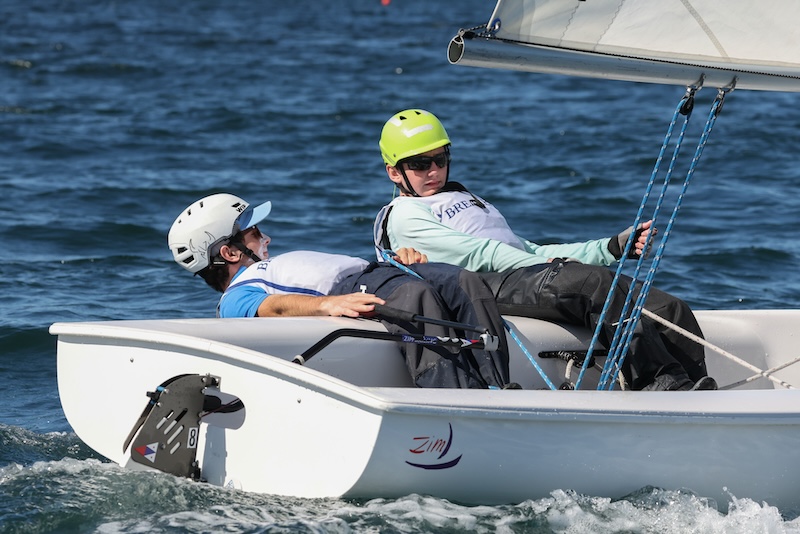
At the windward mark, rounding stayed tight across most boats, with minimal separation. The downwind leg opened things up slightly, but not dramatically.
By the time we approached the first rotation back at the dock, the breeze had started to fill more consistently, and the course became more tactical. Wind indicators became clearer on the water and the shifts became easier to read, but also faster to react to.
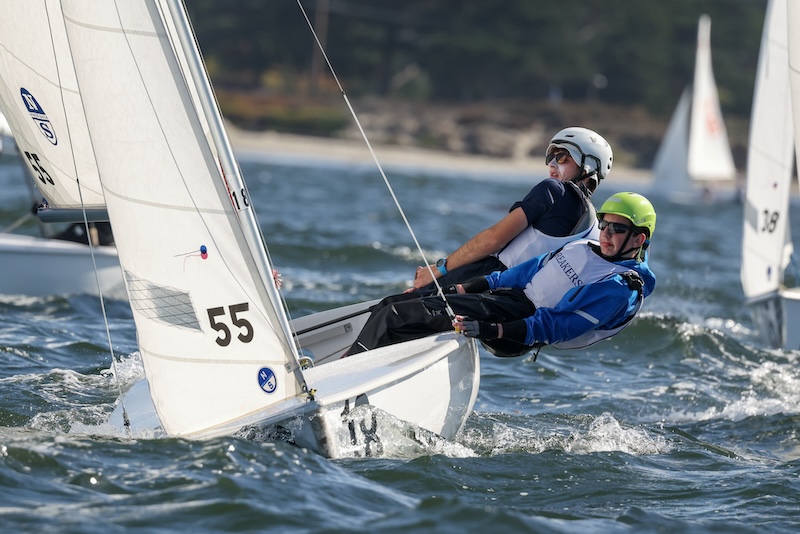
Across the fleet the racing stayed close. There were few runaway wins, and most finishes were decided within a few boat lengths. The conditions rewarded consistency more than aggression, and mistakes tended to be punished immediately due to the tight field and limited separation opportunities.
Overall, it was a great experience, a great regatta and a great venue (due to the amazing flat water). As John noted in the competitors’ meeting, “This was as close as we were going to get to a college-like sailing experience.”