

A Whale of a Stormy Sailing4Parkinsons Regatta
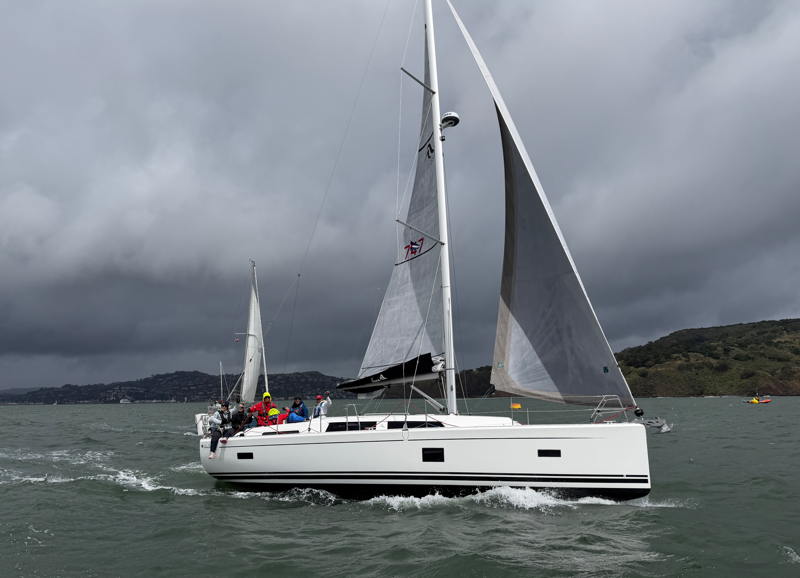
We sailed Sunday’s stormy Sailing4Parkinsons regatta with about 30 of the 48 boats that had signed up to compete. It was an iffy forecast, making every skipper question whether they should go out. The race story is a story for another day, but everyone survived, with one highlight for many being the sighting of a gray whale between Raccoon Strait and Southampton Shoal. We actually heard it blow before we saw it, and, as always, we were excited to see Mother Nature on display.
Our sighting was not unique, as it seems everyone has been excited to see whales over the past few weeks while they migrate north. So it was disappointing to read in the New York Times this morning that instead of being a sign of the health of the whale population, their presence may be a sign of the threats facing the population.
The NYTimes reported on a study that said between 2018 and 2025, about 18% of the gray whales entering the Bay died here. Of the confirmed deaths, at least 40% were caused by ship strikes, and researchers say the real number is likely higher because many carcasses are never found or are too decomposed to examine. Scientists think they may be searching for food. Gray whales normally migrate between Arctic feeding grounds and Baja calving lagoons, but climate change is reshaping the Arctic food system that sustains them. With less prey available up north, some whales may be probing the Bay mud for a meal. Evidence includes mud plumes seen near whales and stomach contents found during necropsies.
Beyond the challenge of finding food, they come to a Bay that is crowded with ferries, commercial ships, marinas and fast-moving traffic, leaving little space for slow-moving whales that may already be thin and exhausted. Programs such as Whale Safe, which focuses on the Santa Barbara channel, and Blue Whales Blue Skies are working to alert mariners and encourage slower speeds. It’s part of the tension when nature meets commerce in crowded urban environments.
According to the story, the gray whale population near North America has been declining, with the population estimated to be half of what it was a decade ago. So, like all sailors, we are excited to see whales visiting the Bay but distressed to find these visits are another canary in the coal mine regarding the impacts of human-enhanced climate change on our shared planet.
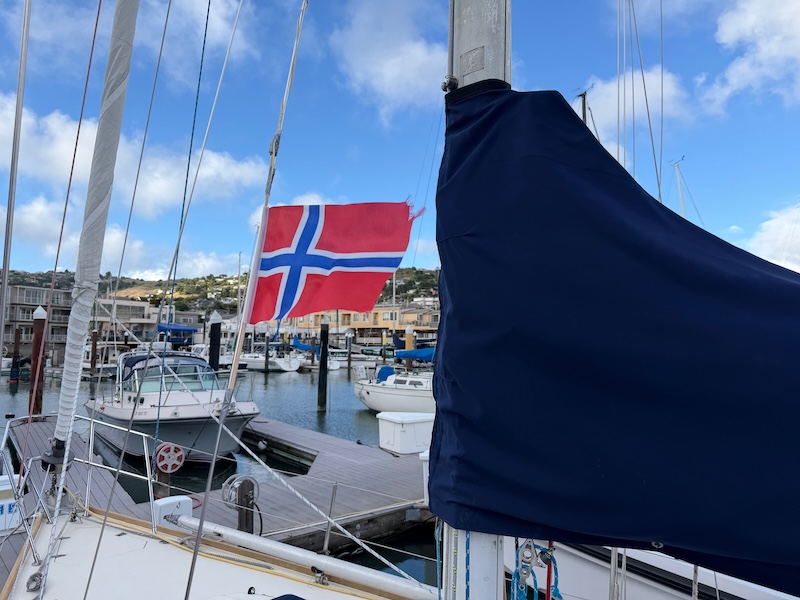
We’ll share news on the regatta and its results later this week. Until then, we’ll leave you with this photo of the Norwegian flag looking a little worse for wear after the wildish weather on the course. The flag was flown aboard Latitude publisher John Arndt’s 1989 Sabre 38 MkII Finistere to represent the Norwegian grandmother of our resident Viking, Latitude sales manager Maddy Garcia. Maddy’s grandmother is one of the many people throughout the world who have passed away from Parkinson’s disease.
Blue Water Foundation Practices Five-Minute MOB Recovery
The Blue Water Foundation (BWF) was founded in 1992 as an all-volunteer nonprofit for the purpose of giving at-risk and underrepresented youth an opportunity to experience the joy, wonder and collaboration of sailing on San Francisco Bay. Using the sea as a mentor, learning opportunities are designed to enhance self-confidence and develop sailing competencies with a strong emphasis on teamwork, while aboard one of the foundation’s three bluewater sailboats. Captains and crew serve as models for the more than 500 kids who are drawn from youth programs, school districts, law enforcement and probation in the Bay Area each year. Crew training, therefore, requires each boat to successfully complete a competency checklist. Recognizing that the behavior of high-energy, easily distracted kids on a sailboat for the first time could put them at risk for going overboard, the MOB procedure has been carefully crafted by BWF over the years to achieve a recovery in five minutes or less.
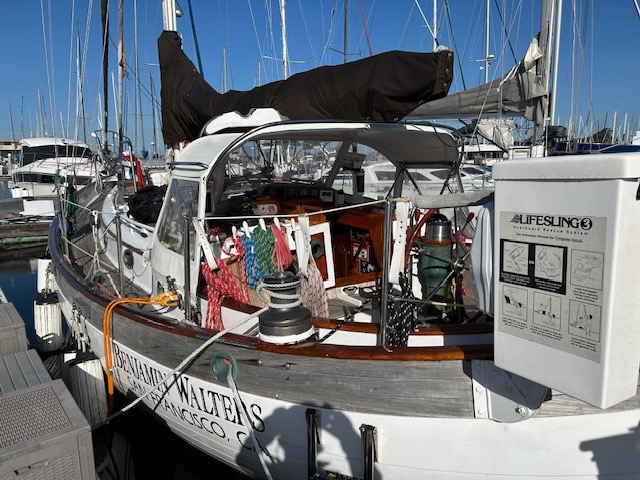
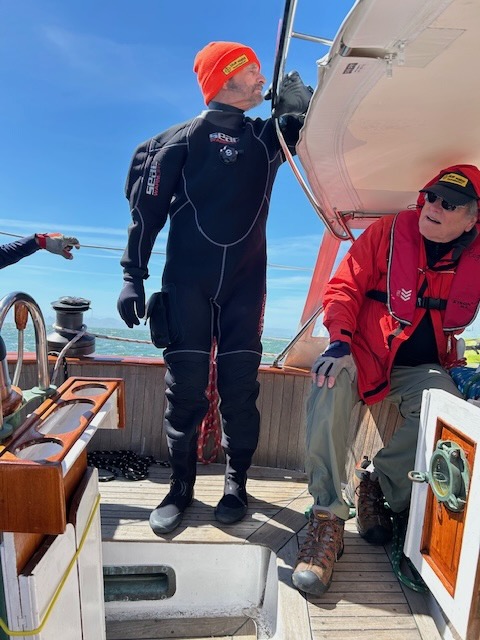
Latitude 38 was invited to join a crew certification sail aboard Benjamin Walters, BWF founder Lee Stimmel’s Hans Christian 43 cutter, in which four crew became certified in MOB recovery. Lee donned a drysuit and wore the Foundation’s orange watch cap to fall overboard four times, while volunteer Renata Zakhvatkina enthusiastically played the part of a teenage girl in distress by falling overboard twice! Thus the crew participated in a total of six live MOB drills.
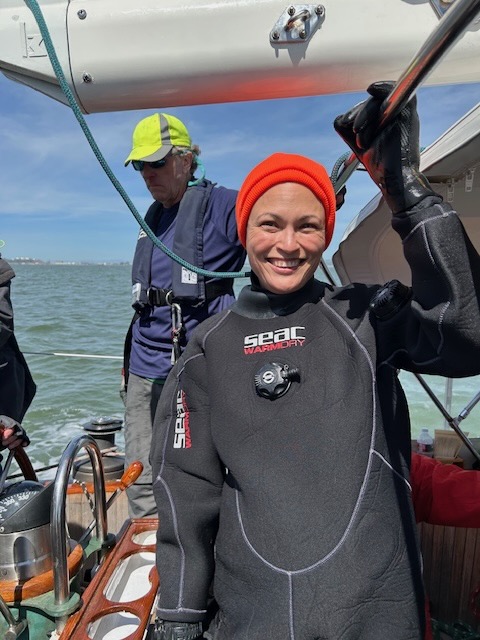
The Blue Water staff for each trip consists at a minimum of five crew — a first captain, second captain, and three certified crew members whose roles are precisely defined in each MOB drill. At the core of this procedure is the proper deployment of the Lifesling horseshoe and the yellow propylene line connecting it to the boat. The inference is that the sling is being brought to kids who are panicked and shocked by the water temperature. So encouragement is shouted out first, followed by instruction later.
It’s a testament to the high regard Lee Stimmel has for his crew and BWF’s MOB procedure that he would put himself at risk by repeatedly falling overboard in the choppy, busy waters off Berkeley Marina. What is their procedure that allows for such a rapid MOB recovery?
It begins when any of the crew shouts, “Crew overboard,” which causes the first captain to issue a series of commands:
- A spotter is appointed to maintain visual contact with the MOB and continuously point at the MOB location.
- As the first captain brings the boat head-to-wind to stop the boat, the second captain leads a crew member onto the foredeck to assist in the furling of the jib, executed by other crew in the cockpit.
- The first captain then directs the engine to be started, after which he directs the mainsail to be dropped and begins the turn back to the MOB location.
- The Lifesling is then deployed from its aft location and is trailed behind the boat during the approach to the MOB location, while the foredeck crew prepares a 5:1 block and tackle with jam cleat attached to a spare (spinnaker) halyard.
- The first captain approaches the MOB location, and circles so as to bring the yellow line alongside the MOB. Instruction is shouted out by the spotter to the MOB to ensure the proper fit-up of the horseshoe to the MOB.
- Once the fit-up is complete, the foredeck crew rapidly draws the MOB alongside the boat, attaches the block and tackle to the Lifesling, hoists the MOB above the lifelines, and slowly lowers the MOB to the deck.
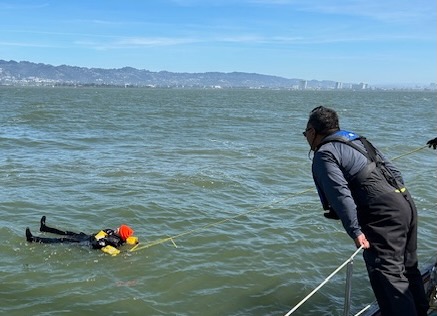
The first two recovery attempts were error-filled, and took eight to nine minutes to execute. After each attempt, a review session was held in the cockpit, with each participant making an assessment of corrective action needed for the next attempt. Errors included: halyard not properly secured, causing slippage during the hoist; block and tackle got caught in the shrouds and didn’t work; block-and-tackle angle was too shallow and required too much effort to hoist; the boat failed to go head-to-wind quickly and sailed too far away from the MOB; and current at the MOB location required the engine to be in reverse to maintain position with the MOB in the water.
Happily, all remaining MOB drills succeeded in being executed in five minutes or less, even though crew members changed their roles during each drill. At the end of this five-hour exercise, Lee Stimmel reminded the crew that the first priority for a MOB situation is to stop the boat, followed by the proper sequencing of each task. Collaboration by the crew corrected errors and allowed for successful and timely MOB recoveries.
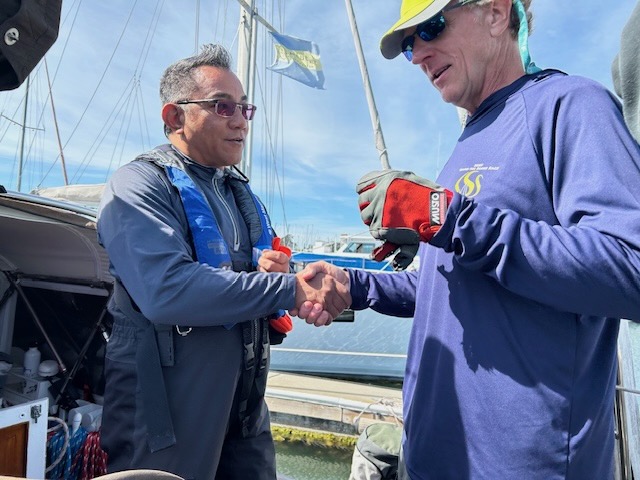
Few organizations place this emphasis on live MOB drills, but Blue Water Foundation believes that a kid in the water justifies the extra effort it takes to develop these skills! To get involved or to learn more, see here.
Join the Spinnaker Cup 2026!
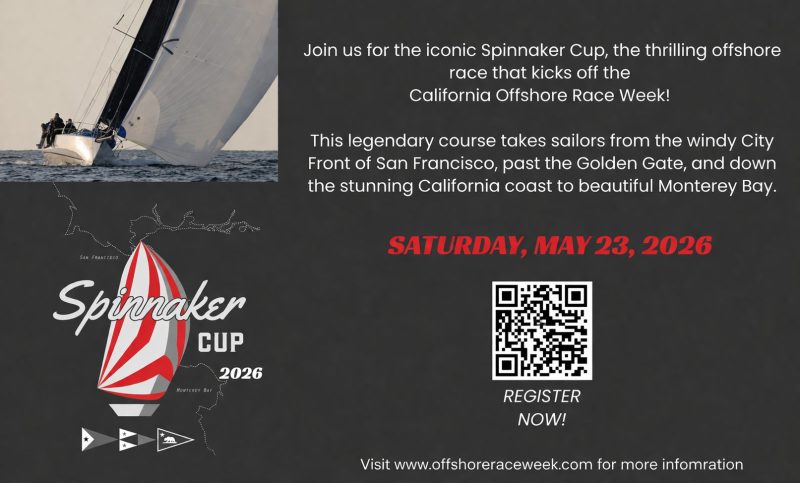
Join us for the iconic Spinnaker Cup, the thrilling offshore race that kicks off the California Offshore Race Week!
Cruise to Petaluma — and Don’t Forget Your Masts
“Bring us your tired, your poor, your huddled masses yearning to breathe free … and, oh, yeah — bring us your masts!”
Petaluma is one of the great locations that Bay Area sailors can cruise to without heading offshore. The Petaluma Yacht Club is readying for a busy cruise-in season and kicking off with this year’s PYC Memorial Day festivities.
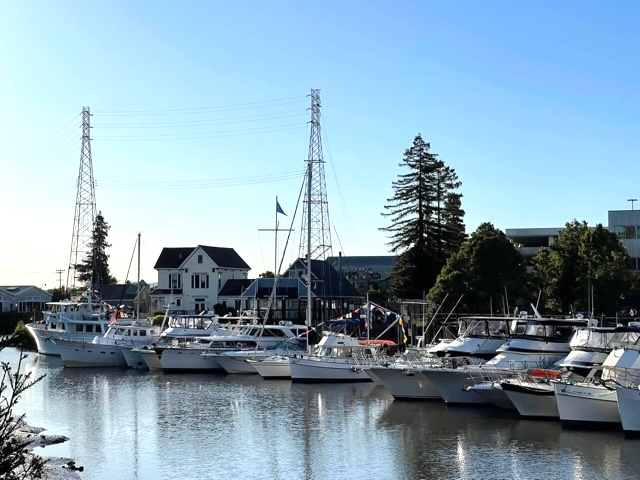
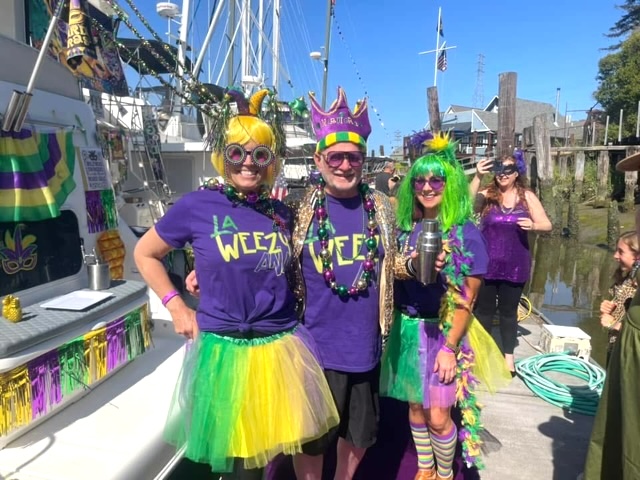
The Memorial Day Weekend, May 22–25, features a Western-themed, four-day “fun for all.” [This sounds perfect for a certain racing editor we know.…]
This year’s theme is “Hoe-Down in River Town!!!” All y’all, give an eyeball to the fun events planned:*
- Jig Juice Cocktail Contest – Friday afternoon on the dock
- Sundowner Happy Hour with PYC Vittles – Friday at sunset
- Hen Fruit Stir and Sowbelly Breakfasts – Saturday and Sunday
- Rhinestone Cowboy Costume Contest – Saturday evening
- Ace High Dinner and Honky-Tonk Line Dancing – Saturday night
- Wear your Denims and Diamonds!
- Build Your Bungo – Float Your Boat Contest on Sunday
*PYC reserves the right to modify the schedule, and we’ll do our best to keep you informed.
RSVP using this form and pay by May 8. Early Bird Deal: RSVP and pay by May 1 and receive five tickets good for beverages!
See more at petalumayachtclub.com.
Petaluma River depths are viewable on the US Army Corps of Engineers website.
Petaluma now has new docks with 30-/50-amp pedestals added on the north side of the Downtown Turning Basin, increasing the number of available side- or stern-tie options. Contact Petaluma Yacht Club for more information. (707) 765-9725.
Max Ebb — Cash or Crash
Ever since I volunteered to serve on a subcommittee of the local chapter of my professional society, I’ve had to schlep into the city one more day each month for the meetings. I was trying to figure out how to gracefully un-volunteer from this commitment, but that all changed when we settled on a meeting venue that’s much better than rotating it among various downtown offices. Now we meet for a late lunch in the plaza behind the San Francisco Ferry Building, over by the Gandhi statue.
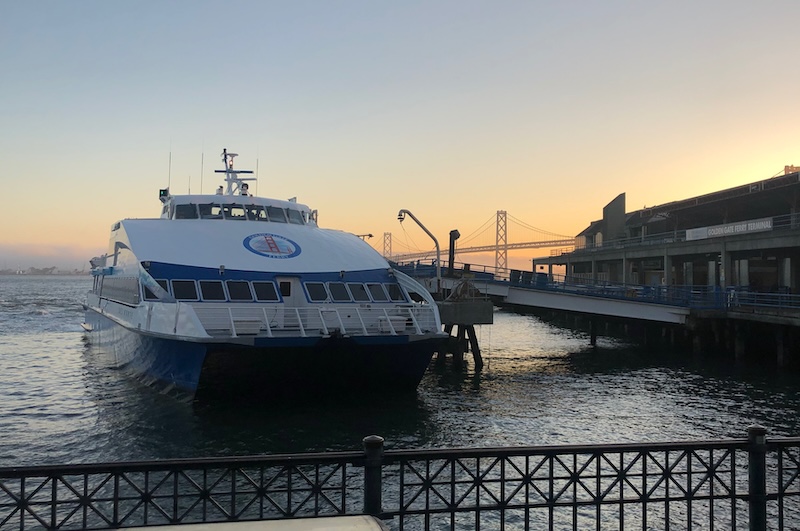
Our subcommittee members are scattered all over the Bay Area. The North Bay contingent takes the ferry from Sausalito, Larkspur or Vallejo, the East Bayers ferry in from Oakland, Alameda or Richmond, and the Peninsula folk get the short end of the deal, taking BART to the Embarcadero. One of our company analysts proved what we had already discovered, that the Ferry Building minimized total collective travel time for our group.
Better than that, the ferry ride is always a pleasure. The boat is never more than about one-third full, and it’s satisfying to watch the familiar islands, headlands and racing marks fly by at 30 knots plus. But not every passenger is sold on travel by sea. Last time I got in line to board the boat, an elderly woman in front of me in the line was visibly uncomfortable as we watched our ferry approach the dock.
“Uh, look at the way it rocks in the waves,” she said to her companion just before she swallowed a small pill. “I know I’m going to be seasick.”
Her friend tried to assure that it would be a smooth ride, but the concerned woman was already losing color. She reminded me of some landlubbers I know who feel ill just looking at a large bowl of soup.
My eavesdropping was cut short by the rapid clicks of bicycle gears rolling up behind me, and then a short screech of skidding tires. It was Lee Helm on her bike, coming in way too fast on a short final approach.
“What brings you to the city today?” I asked.
“Yo, Max!” she greeted me as she dismounted. “I like, have a consulting gig on the side. Cool project, can’t tell you what it is exactly.”
“I’m not surprised that you like the ferry ride,” I said.
“My Naval Architecture 101 prof started our first class session by asserting, like, without evidence, that ‘God intended people to travel by ship.'”
“I hear there’s a ferry terminal coming to our marina,” I said. “I’m really looking forward to making it part of my regular commute.”
“I’m fighting it as hard as I can,” Lee surprised me with her answer. “And like, so are most of the small-boat sailors, windsurfers, fishers, dog owners and parents of toddlers that I know.”
“What’s the problem?” I asked.
“Our marina is a city park,” she explained. “The ferry plans call for eight departures every weekday morning, with 400-passenger boats. Even if ridership projections are all wrong — and, like, they always are — and the boats are only half full, that’s 1,600 passengers, and at the usual ratio of 0.6 cars per passenger, we’d need parking for 960 cars. The Ferry Authority and the City can only come up with 250 existing spaces — maybe 400 if they reconfigure the lot and knock down a bunch of trees.”
Spaulding Marine Center — Full-Service Boat Yard and Education Center
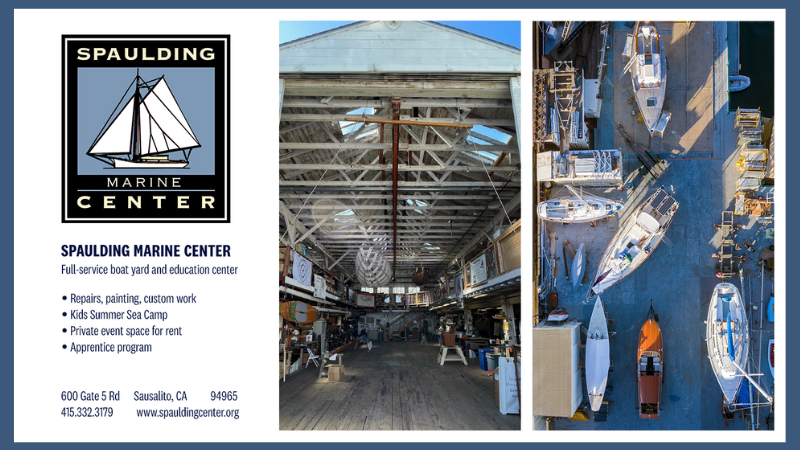
Repairs, painting, custom work, apprentice program, kids summer sea camps, event space for rent.