

SFYC Hosts Inaugural Women’s 2v2 Team Race
Nov. 8 and 9 saw the inaugural running of the San Francisco Yacht Club’s (SFYC) Women’s 2v2 Team Race Invitational, utilizing SFYC’s RS21 fleet. 2v2 team racing is a format that requires excellent boat handling and knowledge of the rules, and is designed for boat-on-boat engagement. Slightly different from traditional three-on-three team racing, two-on-two is quickly growing as a competitive format of higher-level racing in the US. As of this year, SFYC has established the only women’s two-on-two event on the West Coast.
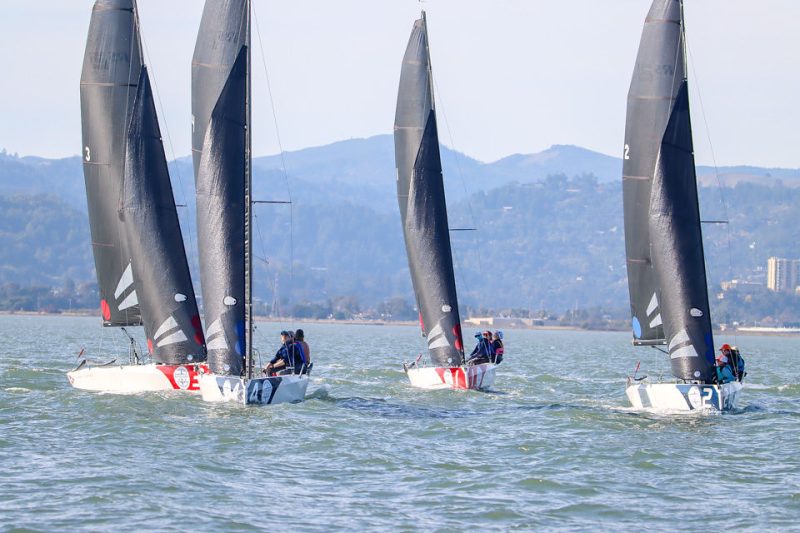
Six teams from around the Bay Area and Southern California, including visiting sailors from Long Beach Yacht Club (LBYC), California Yacht Club (CYC), Richmond Yacht Club (RYC), Encinal Yacht Club (EYC) and St. Francis Yacht Club (StFYC) came to compete in the regatta.
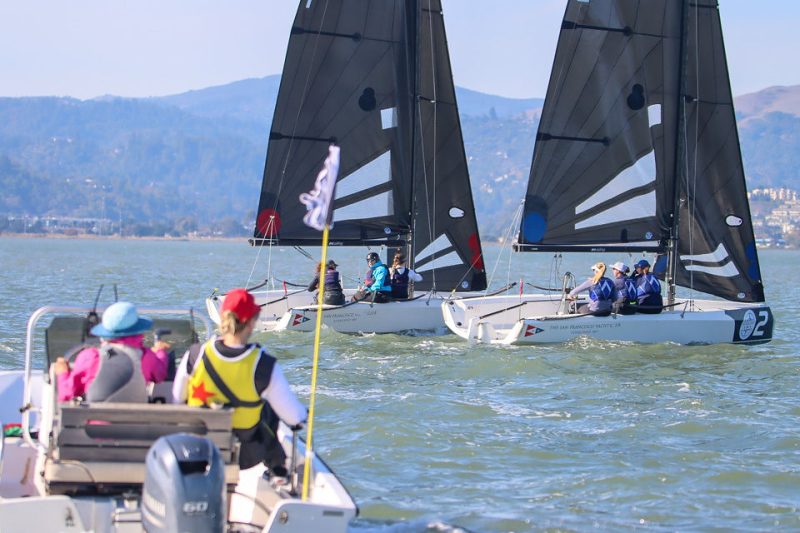
It was a beautiful weekend on the water. With light winds forecast, PRO Forrest Gay and his adaptable and impeccable race committee found the best breeze on the Bay in Richmond on Saturday — just enough wind to get through a full rotation.
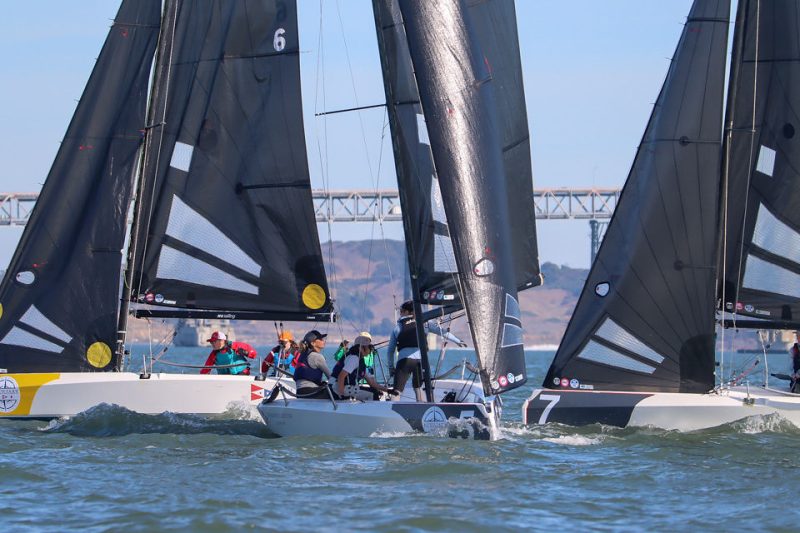
Regatta chair and competitor Molly Carapiet shares her reflections of the regatta: “We had competitive racing in perfect conditions, supported by outstanding umpires, a top-notch race committee, equal boats, exceptional volunteer support, and wonderful camaraderie.”
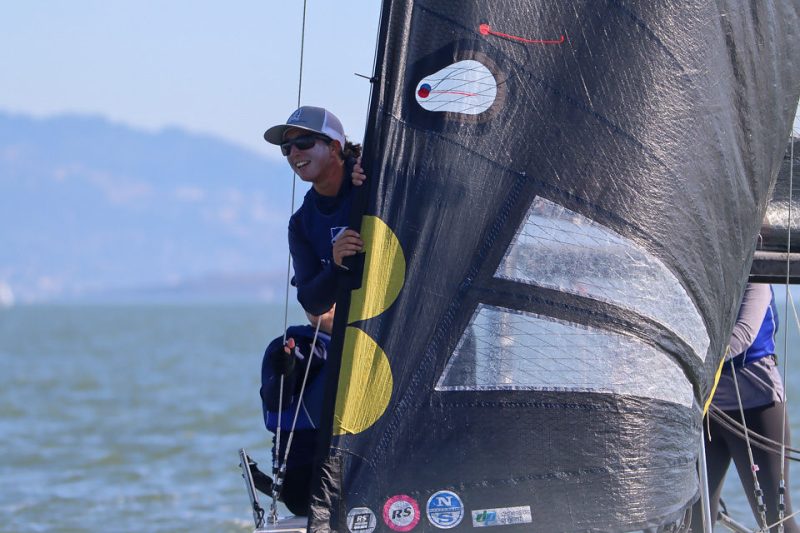
Sunday saw the fleet head to Paradise Cay in a brisk northerly in champagne conditions. Teams leveled up their skills from the day before, and there were a lot more passbacks, mark traps and lead changes as crews developed their boat handling and application of team-race tactics. Teams quickly rotated through and completed a second round robin with enough time to hold a final race series between SFYC and StFYC, and a petit final race series between RYC and CYC.
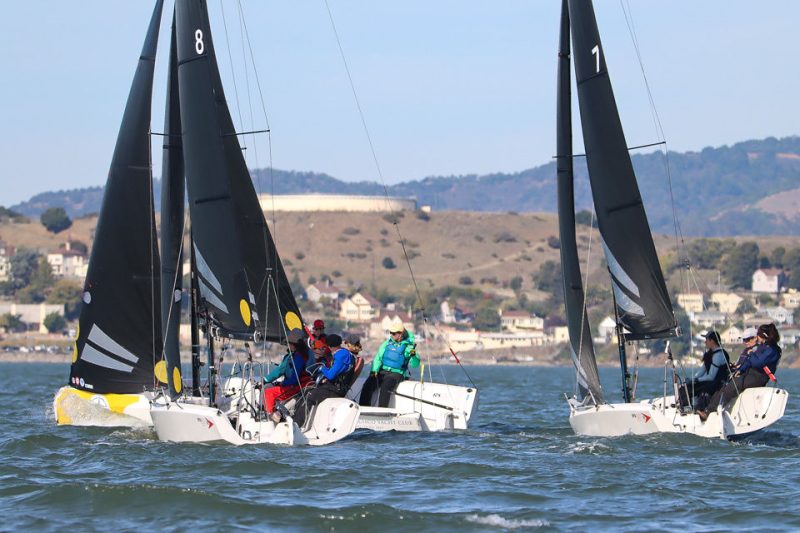
Team SFYC with Katie Maxim, Madeline Maxim, Amy Leenhouts-Harrill, Molly Carapiet, Melissa Purdy, Sammy Steele, Debbie Bennett, and Bianca Sills took the win over Team StFYC in the finals.
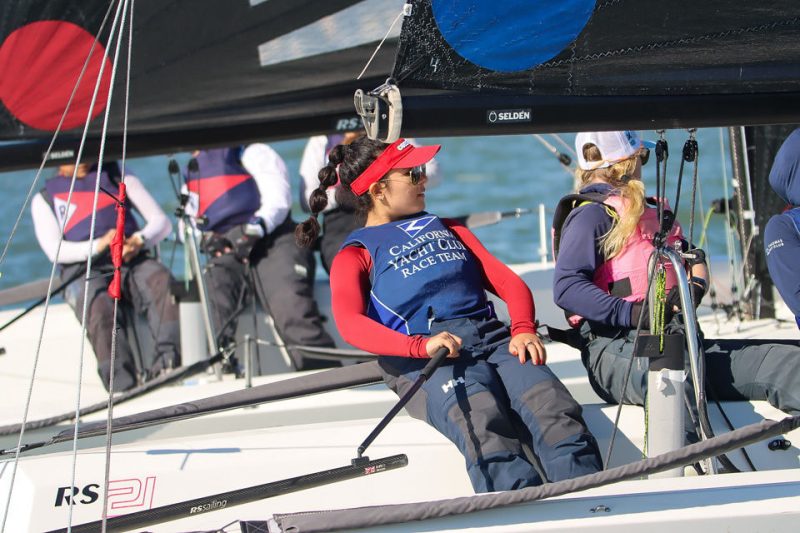
Massive thanks to chair Molly Carapiet, chief umpire Vicki Sodaro and director of sailing Forrest Gay, RS21 fleet manager Adam Corpuz-Lahne and their teams for a phenomenally run event. SFYC extends its greatest appreciation to Richmond Yacht Club for their partnership in lending their two RS21s for the weekend so that simultaneous races could be run.
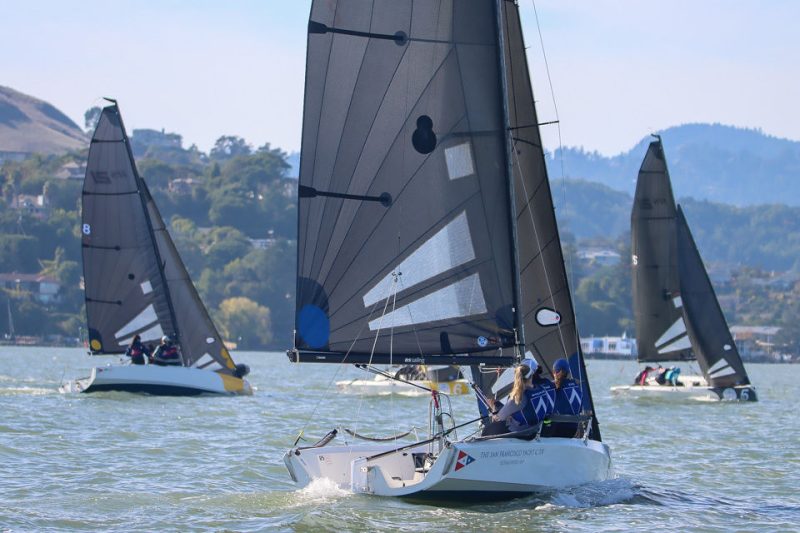
SFYC has a full slate of RS21 invitational regattas lined up for 2026, including both sprints, rapid short course racing similar to the popular European league-style events, and 2v2 team racing.
March 21–22, 2026: RS21 Sprint Invitational.
May 2026 (TBC): RS21 2v2 Team Race Invitational.
June 6–7, 2026: RS21 Women’s Sprint Invitational.
Oct. 24–25: Women’s 2v2 Team Race Invitational.
Randall von Wedel Visits ‘Pursuit’ and Announces Master Mariners Wooden Boat Show
We recently shared the story of Randall von Wedel’s visit to the former Bay Area classic yacht Grisette during his travels in Europe. On the same trip, he visited the former Sausalito classic Pursuit (owned for a couple of years by Randall’s grandfather), which is also being restored in Europe. Later, the 82-ft M-Class sloop was owned by Sausalito’s Ron MacAnnan for 55 years. She was a beauty to behold as you walked along Sausalito’s boardwalk, and even better if you got to see or be aboard her when she was sailing the Bay.
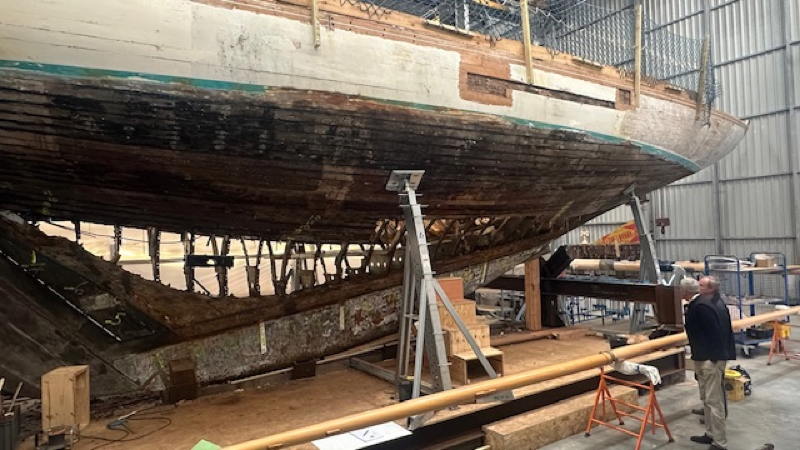
Pursuit (originally Avatar) is the last surviving M-Class yacht and was designed in 1927 and launched in 1929 by Abeking & Rasmussen. After decades of sailing on San Francisco Bay, the vessel fell into disrepair following the passing of Ron MacAnnan. A local effort was made to find a buyer/patron who would help restore her and keep her in the Bay Area. Unfortunately, a local buyer was not found. Fortunately, a French yacht enthusiast, Benoît Couturier, known for restoring classic yachts such as the Fifes’ 19 Metre Mariquita, arranged for Pursuit to be shipped to France for a comprehensive restoration at the Saint-Guénolé Classics Restoration shipyard in France.
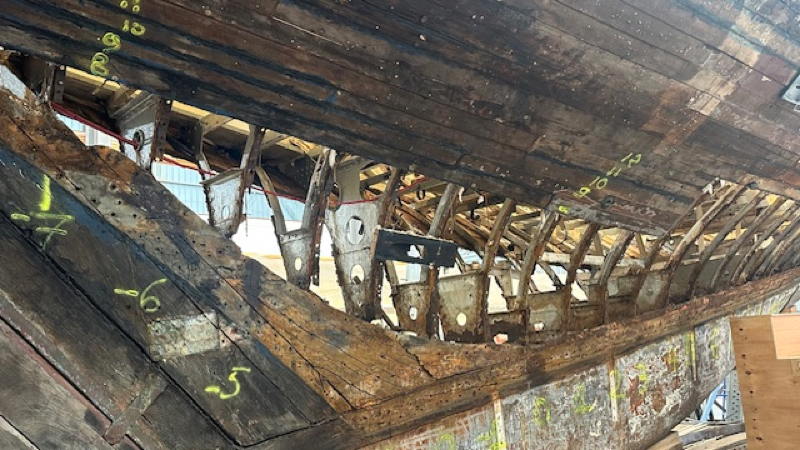
The local wooden-boat community is always sad to see the departure of these elegant ladies of the Bay, but the silver lining is knowing they are getting into good hands and will continue to sail the ocean blue. A short list of former classics that are now sailing Europe includes Viveka, Santana, Pursuit, Grisette, Wander Bird, and we’re quite sure, many more. That doesn’t mean the Bay Area has lost all its classics, as we are still home to Brigadoon, Yankee (now for sale), Birds, Bears, Folkboats, IODs, Farallone Clippers and many, many more.

Everyone who appreciates the beauty of these classics should put the annual Master Mariners Boat Show on their calendar for June 21, 2026, being held at the Corinthian Yacht Club in Tiburon. It’s an annual reminder of the beauty of wooden boats and why they deserve the care of owners and a supportive sailing community. The weekend celebration of Bay Area classics is also held at the Summer Sailstice global celebration of sailing, being held on the same solstice weekend.
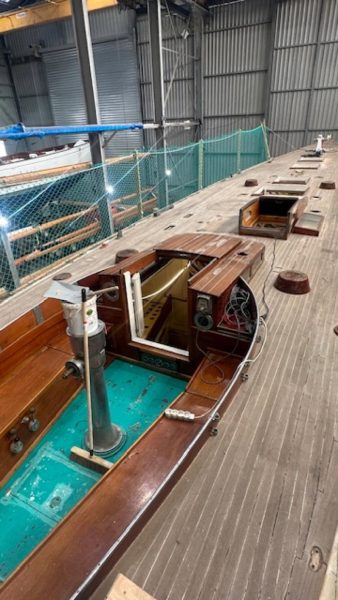
Caring for a boat like Pursuit, or any other classic, is a worthwhile passion for those whose heartstrings are tugged by the look, feel and smell of wooden classics. It’s hard to appreciate the difference until you step aboard or sail aboard a wooden boat. Although we advise caution before you do: Wooden boats are known to be habit forming.
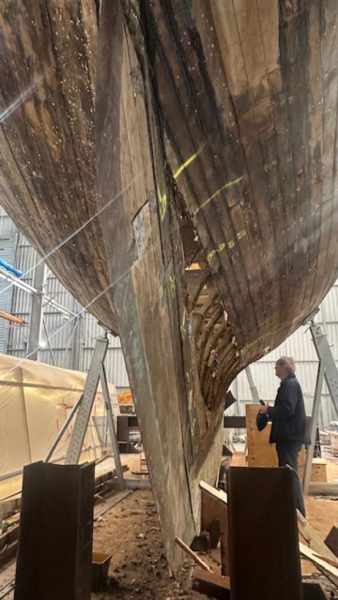
When relaunched, Pursuit will rejoin her former Bay Area wooden-boat neighbors as she sails the waters of Europe. If you are traveling overseas, the boatyard would be happy to show you the progress they’re making as they bring Pursuit back to life.
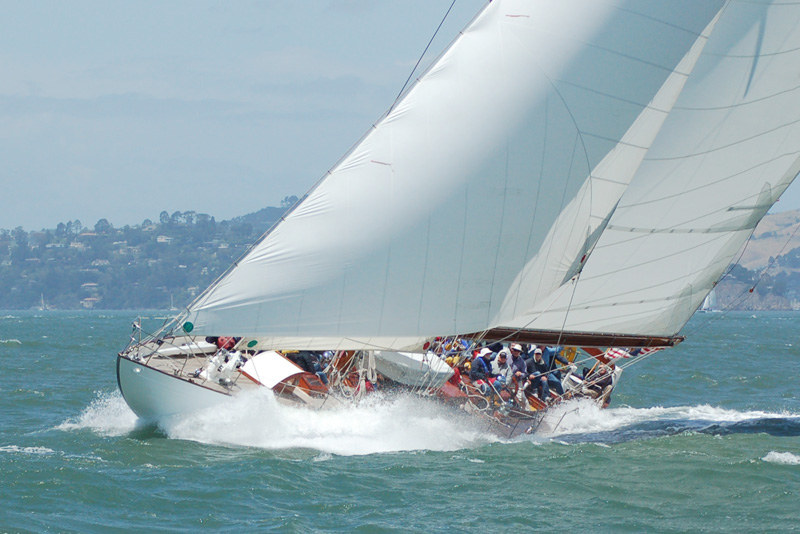
It’s hard to know the countless numbers of sailors who sailed aboard Pursuit over her 55-year residency on the Bay. We’re sure all of them are glad to see Randall’s photos and share the anticipation of her many more decades of sailing ahead.
Marina Riviera Nayarit — A Great Place To Visit
Agencies and Sailboat Adrift on the Oakland-Alameda Estuary
Who does the USCG call when they see a boat adrift?
In a surprise to no one, except possibly the agencies responsible for patrolling and safeguarding the Oakland-Alameda Estuary, a boat that was reportedly anchored off Coast Guard Island has finally joined the swelling ranks of wrecks along the Oakland shoreline. After several months at anchor near the island, the boat dragged anchor and came adrift a week ago Saturday night and has been drifting, dragging, and aground in the Estuary ever since.
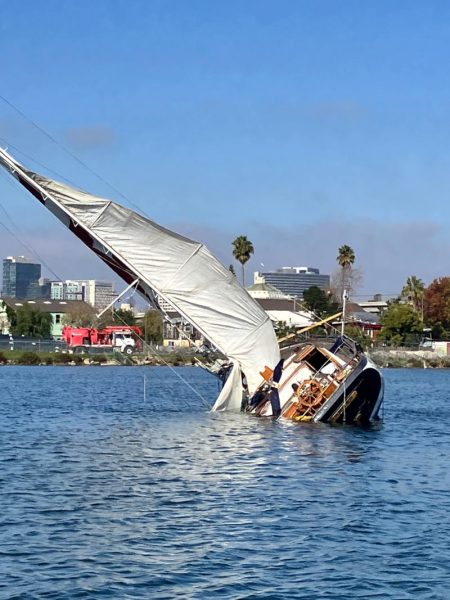
Michael Severson commented on our FB page, “The boat in the picture was anchored inside the buoys near Coast Guard Island. Either the storm or the owner moved it out into the middle of the channel last Thursday. On Sunday, she blew/drifted up into the shallows off Brooklyn Basin. She was still floating at high tide and [lay] over on her hull for four days. Yesterday [Friday] morning, she had swung around and grounded hard on the rocks. At 1545, after numerous patrols had raced by, a Coast Guard boat finally approached to within 50 yards and called out to the boat repeatedly over the loudspeaker. No appearance of anyone on deck.”
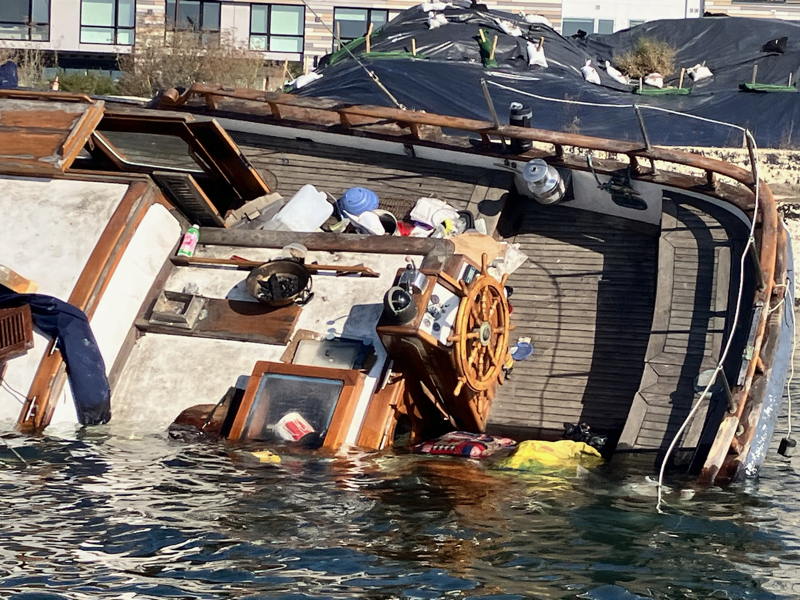
“This morning as high tide returned, she did not float, but had water over the rail laid over. She has now moved from a navigation hazard to an environmental catastrophe. Fingers will be pointed in all directions in a bureaucratic dance with no one taking responsibility. A sad commentary on our city, county, state and federal government and marine agencies.”
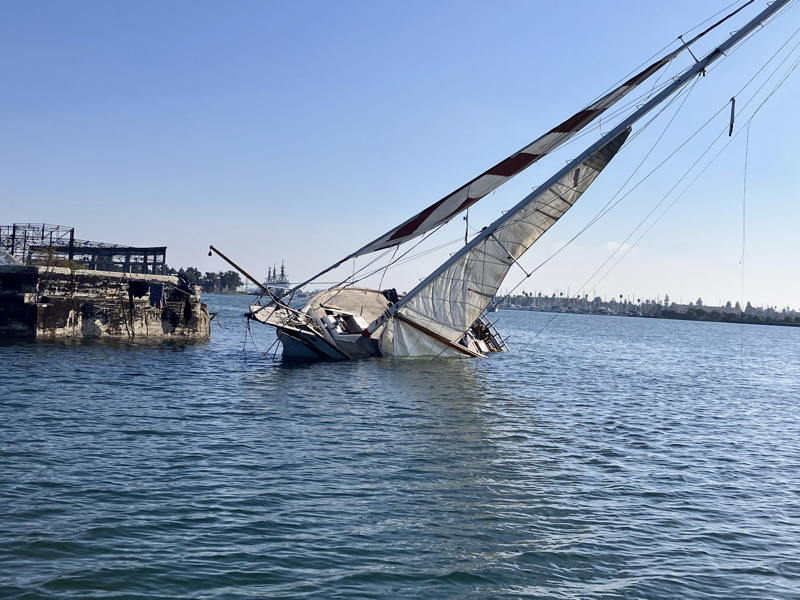
Another observer kept tabs on the abandoned boat’s track as she drifted around the Estuary. “This boat had been anchored off the west end of Coast Guard Island for several months. It pulled anchor and drifted into the center of the Estuary across from Encinal Yacht Club last Saturday night [a week ago]. It remained adrift with anchor still dragging in the center of the Estuary all day Sunday. After dark Sunday night, a contingent of Oakland firefighters ashore with several trucks and a vessel on the water with red lights appeared to move it closer to shore in the inlet at Brooklyn basin in front of the new apartment complex. The jib came unfurled sometime Sunday night in the wind and the boat went to shore Monday and grounded on her port side when the tide went out.
“Odds were she’d swing around and go starboard-side-down and fill with water with the next tidal cycle, but luckily that did not happen, and she remained afloat. She’s anchored far enough from shore to keep from going to ground at present. We’re not sure who her owner is, but there is no one on the vessel most of the time. The rigging is all broken and the starboard spreader is hanging down. Not sure what her fate will be at this point.”
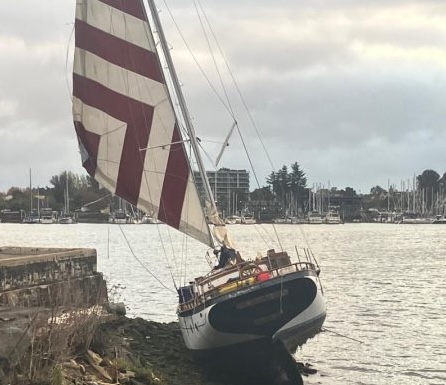
If we understand the bureaucracies, with the boat firmly sunk on the shoreline, the Coast Guard is free of any responsibility. When the boat was afloat, the Coast Guard did see it, and tried to contact the boat without success. For whatever reason, they don’t see it as their responsibility and wouldn’t know what to do with an unoccupied boat adrift on the Estuary. Also, like every other concerned citizen around the Estuary, they don’t know whom to call or how to address the problem. It is now up to the Port and City of Oakland to dispose of this new wreck, which was afloat for several months and adrift for days. This will dramatically raise the cost of disposal.
Like this sailboat that was afloat yet adrift on the Estuary, the various government agencies appear to lack a “captain” with leadership and the ability to prevent this easily avoided environmental and economic disaster. With clear weather and flat seas on the protected Estuary, any agency only needed to impound and secure a bow and stern line to prevent this sinking. It’s more easily said than done, but given the many years of these recurring sinkings, one would think a solution would be available.
Nationwide, there remains a large volume of abandoned fiberglass boats that former owners have left behind in marinas and other places without any system or funding to solve the problem. Imagine you were the “good Samaritan” and decided to take the boat in tow. What would you do?
PCCSC Hosts Inaugural West Coast Championship Regatta
On Nov. 8 and 9, the Pacific Coast Collegiate Sailing Conference (PCCSC, college sailing’s West Coast conference), hosted its inaugural West Coast Championship Regatta in San Diego. The event was officially classified as a regional interconference regatta, with seven of the 17 teams coming from conferences other than the PCCSC.
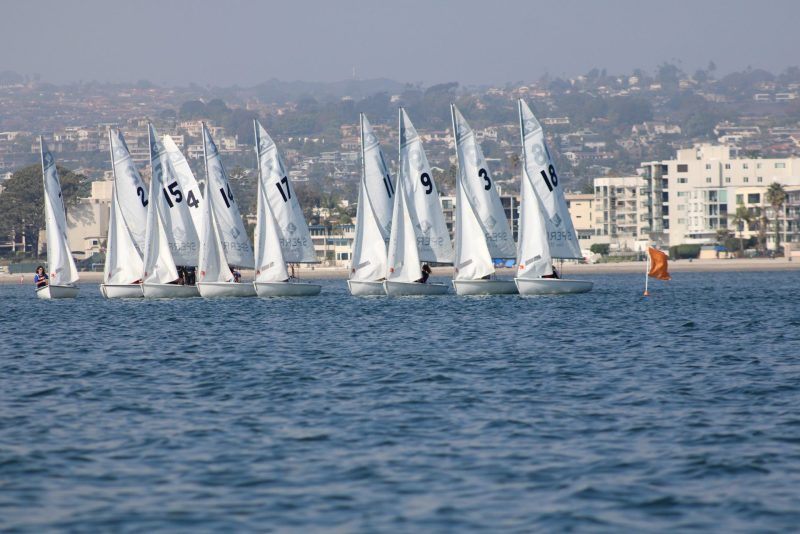
While there are plenty of interconference regattas hosted on the East Coast — college-sailing powerhouse conferences in New England (NEISA) and the Mid-Atlantic (MAISA), which often feature PCCSC teams making the cross-country trip — this was one of the first major interconference regattas to be hosted on the West Coast. The PCCSC hopes this trend continues to grow.
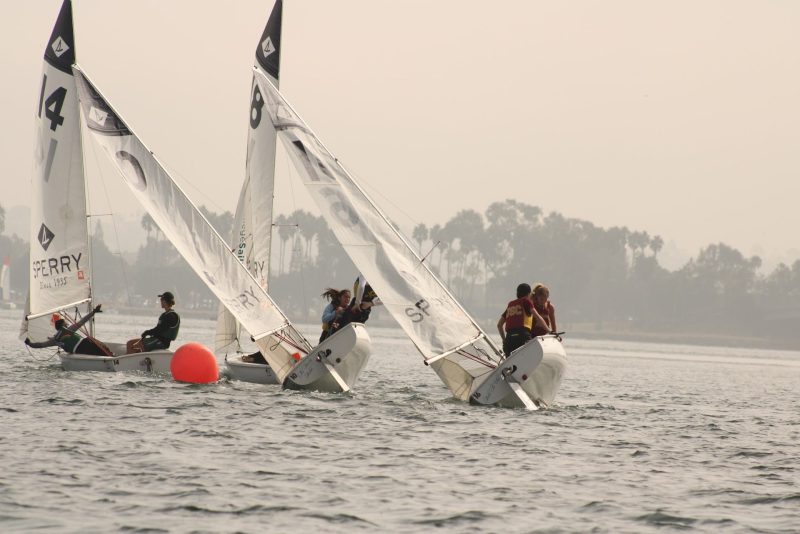
“The West Coast Championship is a regional interconference regatta,” PCCSC commissioner Brad Schaupeter tells Latitude. “It was the inaugural year and gave the PCCSC a chance to play off against some teams from other conferences on their home turf. It was filled with lots of camaraderie as our sailors bbq’ed for all the teams at the end of racing on day one. Doug Hart ran incredible racing as PRO. We essentially are building an event in one of the best racing venues in the country at a time when racing is shutting down everywhere else, but the West Coast has glorious racing conditions. The event will be a grade-two next year so we’re hopeful we’ll get even more interest.”
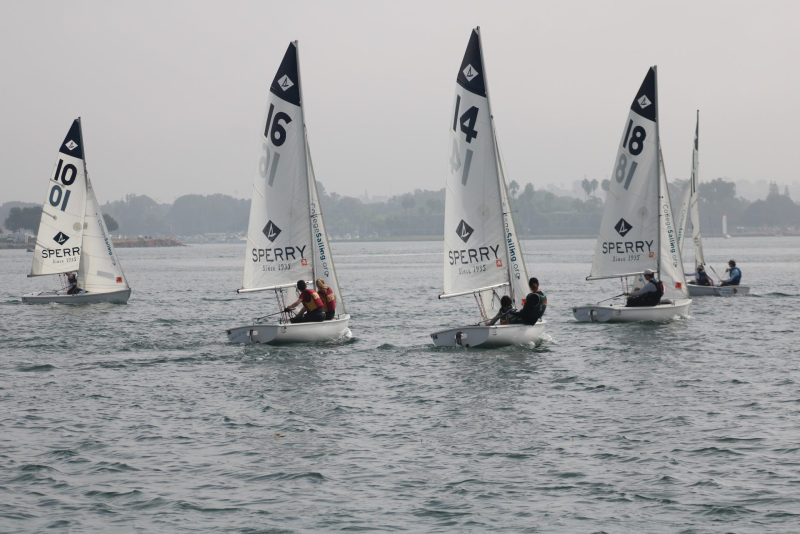
“The racing was incredibly competitive, with six different teams winning races,” Brendan O’Connor, a junior on the UC San Diego team (who officially co-hosted the regatta along with San Diego State) tells Latitude. “Saturday started off cloudy and foggy, and delivered an atypical light breeze in Mission Bay. Eventually, the fog burned off and the California sun came out. On Sunday, the sun came out and the sea breeze filled in, delivering Mission Bay’s perfect 10-knot westerly. SDSU and UCSD spent the weekend battling it out at the top, with Stanford and USC battling for third. This was some of the closest racing I have seen on the West Coast.”
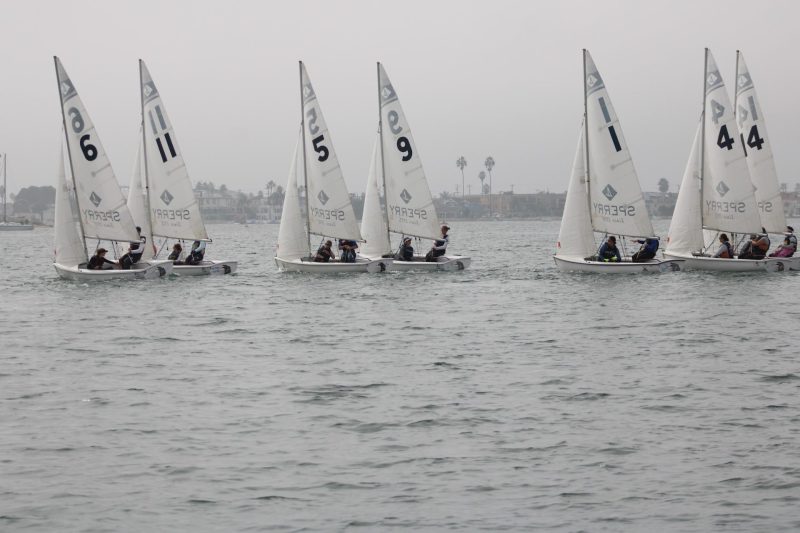
Eighteen races were sailed throughout the weekend, with nine each in divisions A and B. When the dust settled, it was San Diego State who took the win in the regatta with 61 points. Between A and B division, the Aztecs won eight of the weekend’s races, buoyed by the A division duo of skipper Ian Nyenhuis and crew Sadie Marinerstein, who won the final four A division races.
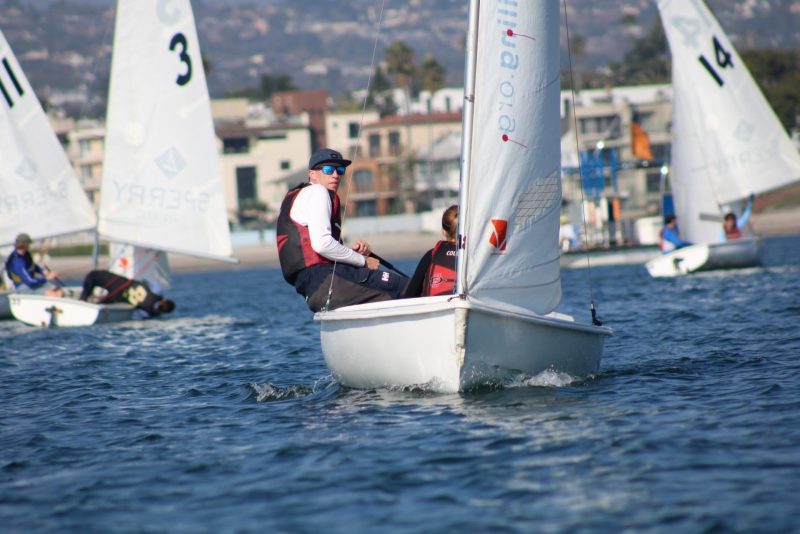
In second place, seven points behind the winners, was the other San Diego team, UCSD, with 68 points. The UCSD boats combined for five bullets, but were not quite able to match San Diego State’s consistency. The Stanford Cardinal were a distant third place with 92 points, seven ahead of fourth-place USC with 99.
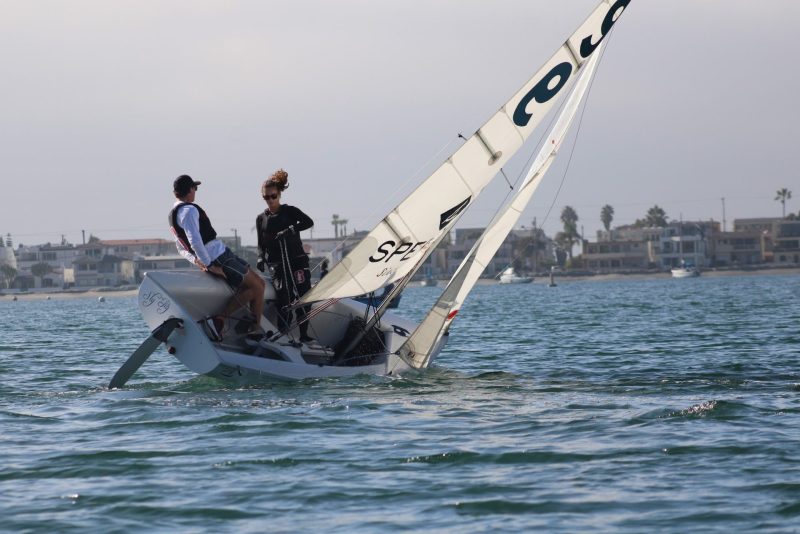
The event was dominated by PCCSC teams, with all of the top seven being West Coast teams. The first non-PCCSC finisher was the NC State Wolfpack in eighth, one of the better teams in the Southern Atlantic Intercollegiate Sailing Conference (SAISA) over the past few years. Also visiting from out of conference were the Clemson Tigers, Wisconsin Badgers, University of Chicago Maroons, Michigan Wolverines, Hope Flying Dutchmen and Texas Longhorns.
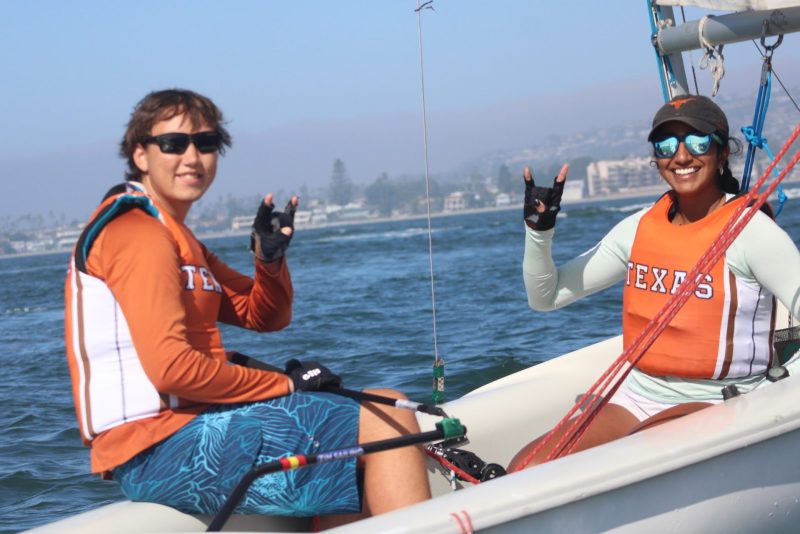
Time will tell if the West Coast Championship will catch on as a major college sailing interconference regatta, but it is off to a positive start. If the regatta can catch on, as the PCCSC hopes, it could help create more such regattas, making it easier for West Coast teams to showcase their ability without having to always fly to the East Coast to do so.
‘Detour’ to Alaska — 2,800 Miles From Hawaii
The pickup crew of SV Detour was ready to depart Honolulu on June 24. After braving the chaos of a busy Walmart and completing $1,200 of provisioning at the more peaceful Safeway, we were stocked for a 20-day passage from the tropics to frosty Sitka, Alaska. What followed taught valuable lessons through unexpected challenges.
We motored out of Ala Wai Harbor, but ominously, we soon heard odd noises from the propeller. Quickly anchoring just offshore, we snorkeled to investigate. We found a trash bag tightly wrapped around the propeller shaft. Our captain, Quirin, was concerned the plastic might have been drawn into the shaft seals, potentially allowing seawater into the saildrive. Fortunately, we caught it early. After carefully removing the plastic, we missed the fuel dock’s early closing time in nearby Kewalo Basin Harbor. So we returned to the welcoming Waikiki Yacht Club for an unplanned, though pleasant, extra night.
After fueling the next day, we set off on an overnight sail to Kauai, arriving just at sunrise. The sail was a gorgeous mix of broad and beam reaching, under the majestic Milky Way and a sliver of moon.
Detour is a well-maintained 1980s French CMPF Via 42 aluminum expedition boat with retractable keels. It was recently purchased in New Zealand by Quirin Grossman, a 34-year-old Swiss citizen, licensed captain, sailing instructor, and Ph.D. in systems engineering. A rotating cast of friends had helped sail the boat from New Zealand through French Polynesia to Hawaii. Our crew would take her to Alaska, and others would continue on to Europe.
Our crew of four consisted of Quirin, our capable captain; Tom Howard, a 33-year-old British adventurer and novice sailor whom Quirin had met during his travels in Thailand; Cecil Taylor, a 42-year-old Florida-based general contractor and surfer who excels at boat repairs; and me, Jim Immer, a retired 66-year-old OPB sailor and chef from Sacramento.
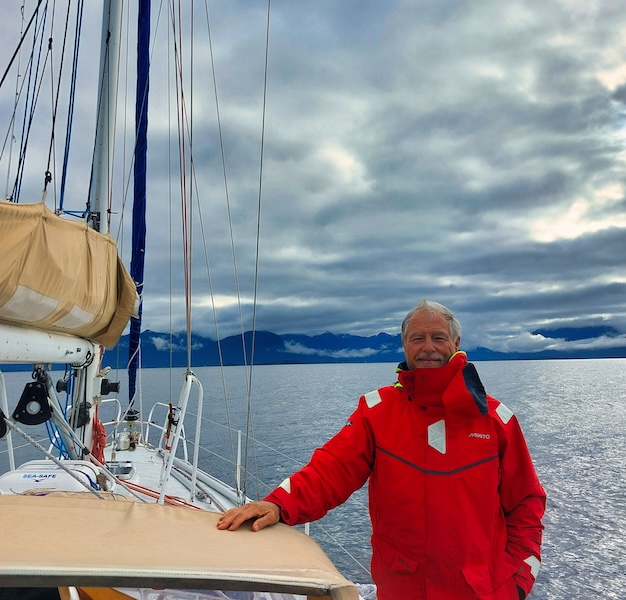
After securing Detour in a tight slip at Nawiliwili Harbor, we rented a car and toured Kauai’s Poipu and Waimea Canyon. Back at the dock, some generous local fishermen who’d heard of our Alaska plans gifted us three ahi tunas, which we promptly filleted and froze. That evening, we enjoyed a big roast chicken dinner from Costco, shared beers with friends from two other Sitka-bound boats, and had our last “normal” night of sleep. After a thorough hull cleaning, we departed the afternoon of June 27, hoping for an 18-day passage.
Give the Gift of Latitude This Holiday Season