

Cal Sailing Hosts Stoney Burke Intersectional Regatta
On October 18–19, the Cal Sailing Team hosted its annual Stoney Burke Regatta at the Marina Bay Yacht Club (MBYC). The Stoney Burke Intersectional was first inaugurated in 1989 and has been held at both Marina Bay and the Treasure Island Sailing Center since 2000. This year, we were joined in competition by 13 collegiate sailing teams, with representation from the Bay Area all the way to Evanston, IL.
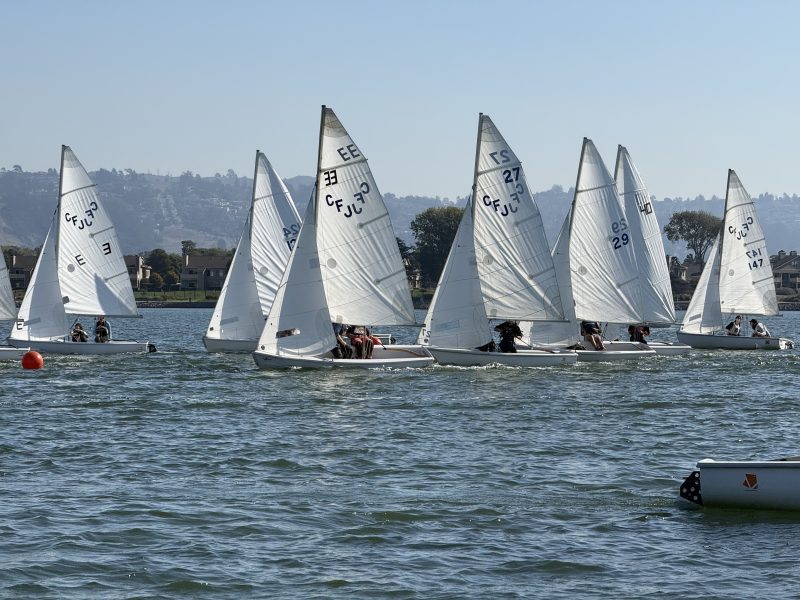
The Cal Sailing Team first arrived at the venue on Friday after towing 17 FJs from our home venue, Richmond Yacht Club, to MBYC. Upon arrival, we practiced with Cal Maritime Academy until our time was limited by both the extremely light winds and imminent regatta preparation. We were graced by a beautiful Bay Area sunset before we closed up the venue for the night.
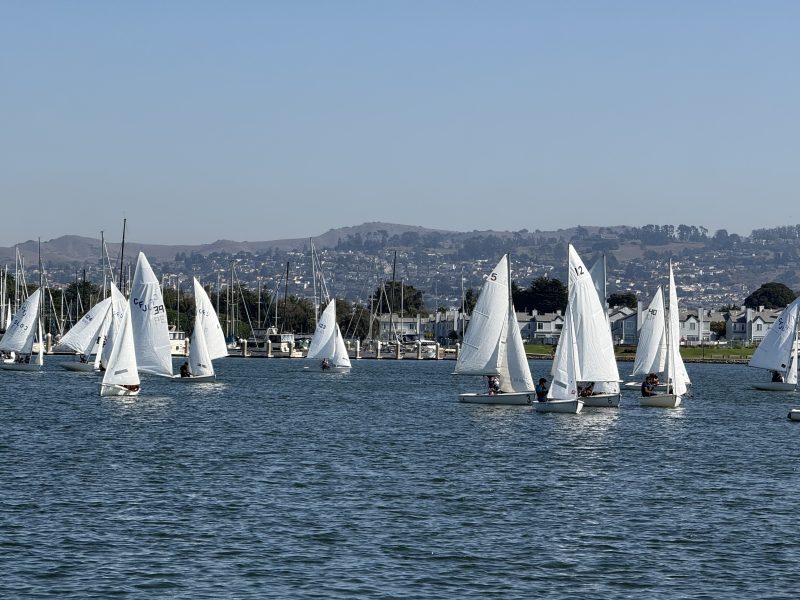
The next morning, the team arrived at the venue at 8:00 a.m. to prepare for the regatta. We organized charter boats for the other teams and set up the venue for a long and beautiful day of sailing ahead.
First start was at 11:00 a.m. The wind was relatively shifty, with a southwest breeze that capped out at 10–15 knots for the majority of the morning. Cal alum Nate Ingebritson led the regatta’s race committee for the weekend.
While the Golden Bears came in 11th place in the first Varsity A race, we rapidly climbed to the top six for the remaining 15 races. Our Varsity A boat was sailed by Wilton Lawton and Amelia Gassner, and Varsity B was sailed by Carsten Zieger and Aliyah Al-Khafaji for the entire first day. On Sunday, captain Alyssa Barkus stepped in as skipper, and later on in the day, Barkus subbed as the boat’s crew, while Nati Grinkrug stood in as skipper. Our Varsity B boat finished in the top three for four of their races, and finished in the top six for all races. Likewise, Lawton and Gassner finished in the top three for six out of their eight races.
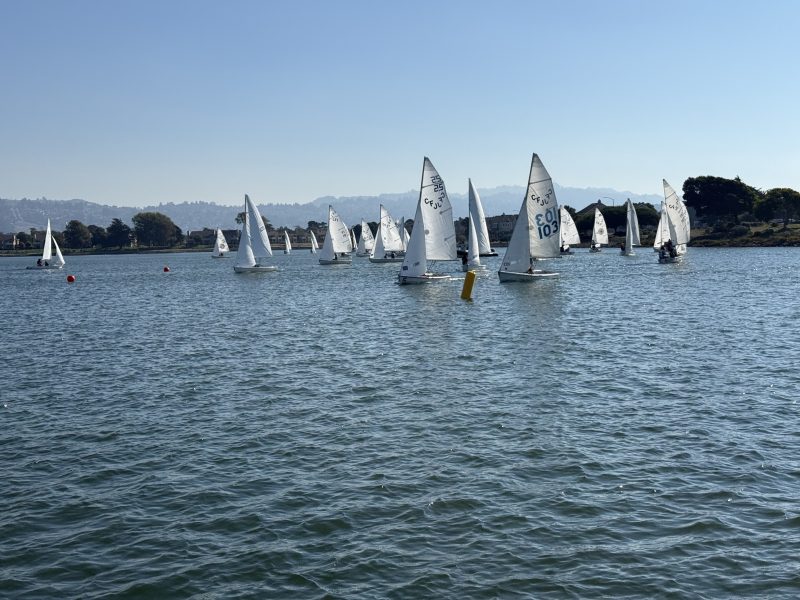
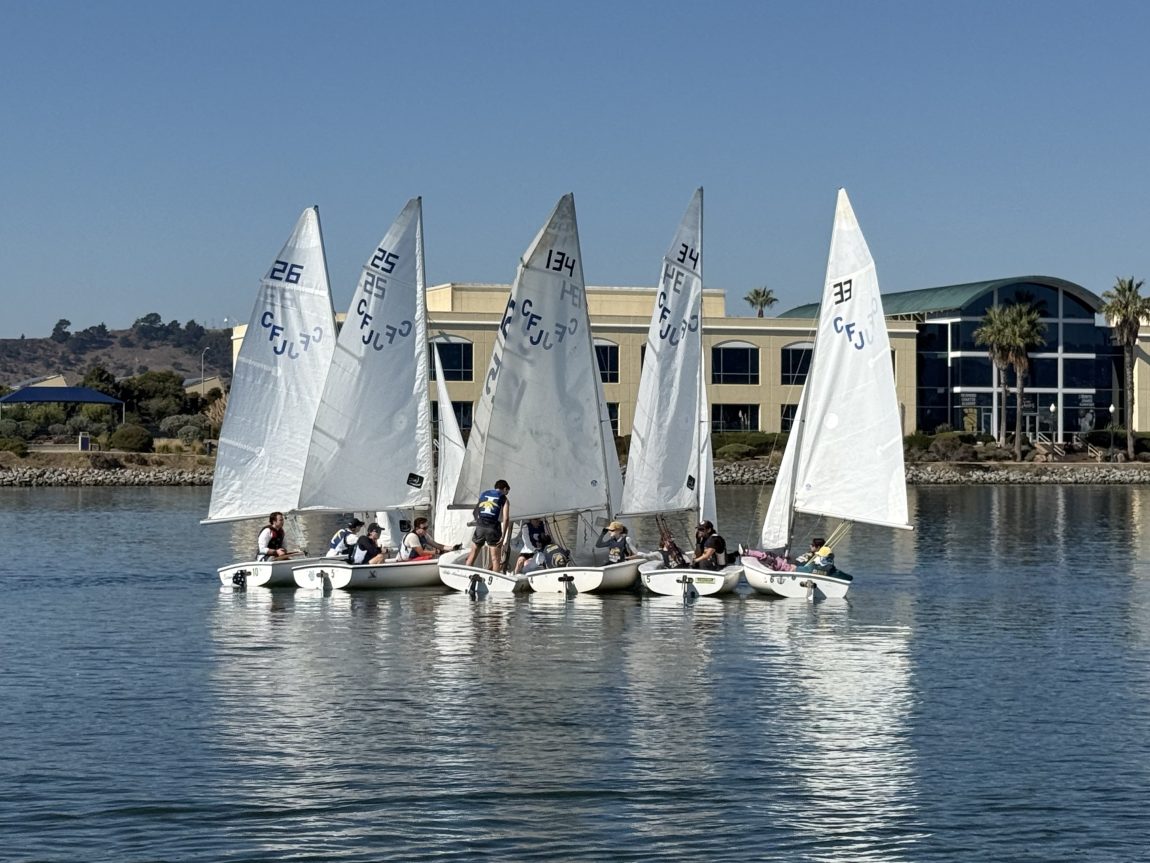
While Saturday saw multiple on-water postponements, the race committee continued to adjust the course for the shifty wind conditions. We Cal Bears did what we do best: rafting up and socializing with other teams during said postponements.
Cal finished third overall, 19 points behind the second-place USC Trojans, and 39 points behind our neighbors, the CMA Keelhaulers.
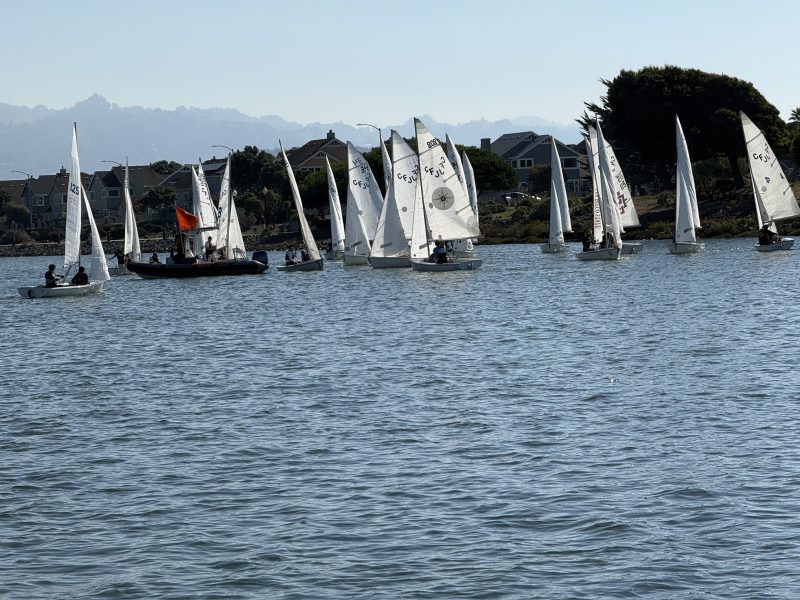
While only three teams competed in the Women’s division, the Bears came in second in Division A, and pulled through with a first place for Division B, winning by a single point over the Cal Poly SLO Mustangs.
In our JV division, Cal Bears finished in eighth place overall out of 22 boats. During one of Sunday’s races, the audience watched a series of hilarious JV mark roundings and finishes, including one where a massive gaggle of boats crossed the finish mark at the exact same time. Likewise, two Cal Bears flaunted an impressively unique start, where they misread the right-gate buoy for the pin and started their race nearly 20 boat lengths over. The RC said, “You were so far over I didn’t even see you,” and the boat was disqualified from that race.
Overall, the regatta went fantastically well, with over 130 guests in attendance. The Bears look forward to a great season ahead, including next weekend’s iconic Kiara Brody Memorial Regatta in Santa Cruz.
You can find the full scores from the Stoney Burke Intersectional here.
Good Jibes #215: “Stories From the Sea: Wooden Boats in Film & Fiction,” Part 1
In this week’s episode, Good Jibes host Ryan Foland goes on location at the Newport Beach Wooden Boat Festival, which took place June 13–14, 2025, at Balboa Yacht Club. This was the ninth annual Newport Beach Wooden Boat Festival, this time with the theme “Stories From the Sea: Wooden Boats in Film & Fiction.”
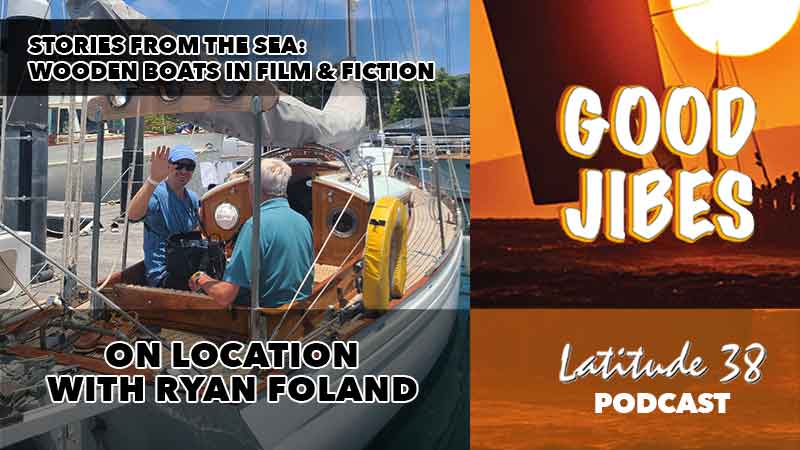
In this episode, you’ll hear from this year’s featured artist Steve Sandborg, hang out with wooden dragons, tour the coolest wooden boats out there, take in the history of John Steinbeck’s Western Flyer, and meet Captain Paul Tate in the pilothouse.
Here’s a sample of what you’ll hear in this episode:
- Steve Sandborg discusses painting wooden boats
- Exploring John Steinbeck’s legendary research vessel
- Exploring dragon carvings
- Interview aboard Josephine
- Interview with Captain Paul Tate aboard the Western Flyer
Learn more at NewportBeachWoodenBoatFestival.com and connect with Ryan at Ryan.Online.
Listen to the episode on Apple Podcasts, Spotify, and your other favorite podcast spots — follow and leave a 5-star review if you’re feeling the Good Jibes!
Marina Riviera Nayarit — A Great Place To Visit
Groundhog Day in the Oakland Estuary
If reading this story feels like Groundhog Day because you’ve read it before, you’re right. Boats keep sinking along the Oakland Estuary right under the nose of the USCG officers and staff on Coast Guard Island. The UCSG is responsible for patrolling federal waters, and are the folks who do vessel safety checks for registration and other vessel safety requirements to keep the Bay and estuaries clean and safe. Regardless of their proximity to the Estuary problem boats, they and the other responsible agencies (BCDC, Port of Oakland, City of Oakland, EPA) seem unable to work together to keep the Estuary clean and safe for the general public.
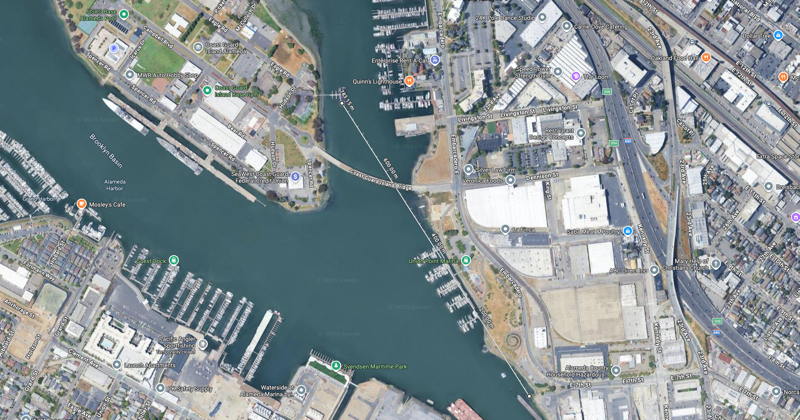
The growing number of illegal anchor-outs is actually relatively small. We texted tireless Estuary activist Brock de Lappe, asking him to guess their number. He responded from a BCDC meeting he was attending to say it’s probably under 30! It feels as if there are more agencies responsible for mismanaging the illegal anchor-out problem than actual anchor-outs. We know the agencies are often hamstrung by budgets and personnel issues, but when we look at the aerial photo from Google Maps above, we see a nicely watered, green baseball field on Coast Guard Island, two large Coast Guard cutters at the dock, and four spiffy, idle Coast Guard patrol boats at their small-boat docks. The Union Point Park across from Coast Guard Island apparently can’t afford the water to keep the grass green. The Coast Guard has a huge job doing Search and Rescue, drug and illegal immigrant interdiction, and other Homeland Security operations. When we spoke with their office a while ago, they explained that they have only 60,000 people in the USCG to manage their various responsibilities.
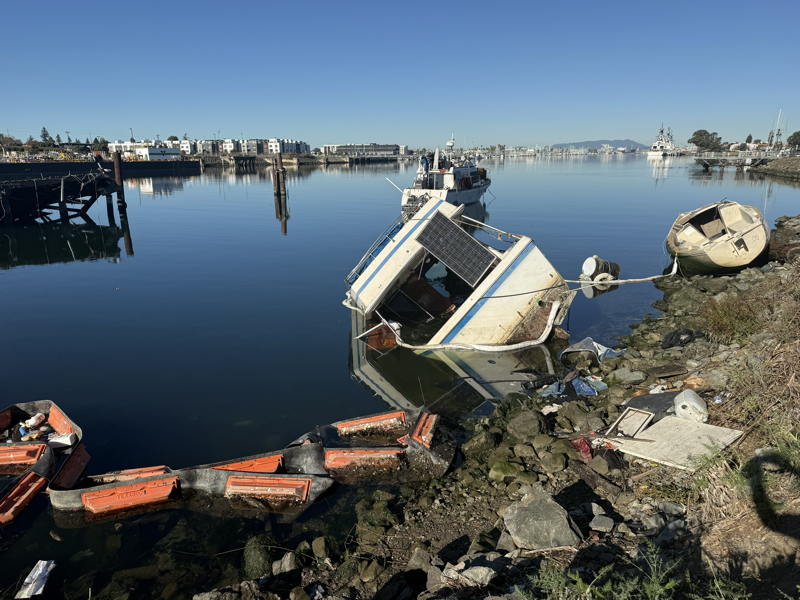
As a point of reference, we get almost weekly press releases from the USCG highlighting all the illegal immigrants they’re picking up offshore from San Diego and Southern California. You can imagine the time, people and budget required for all those USCG ships patrolling the open ocean to keep our shores safe. Therefore, it just doesn’t seem as if it should be that hard for the USCG and all the affiliated agencies to handle the problem in the calm, protected, nearby waters of Coast Guard Island. Compared to the work the USCG is doing off Southern California, it feels as if they could walk over and take care of the Estuary problem on their lunch break.
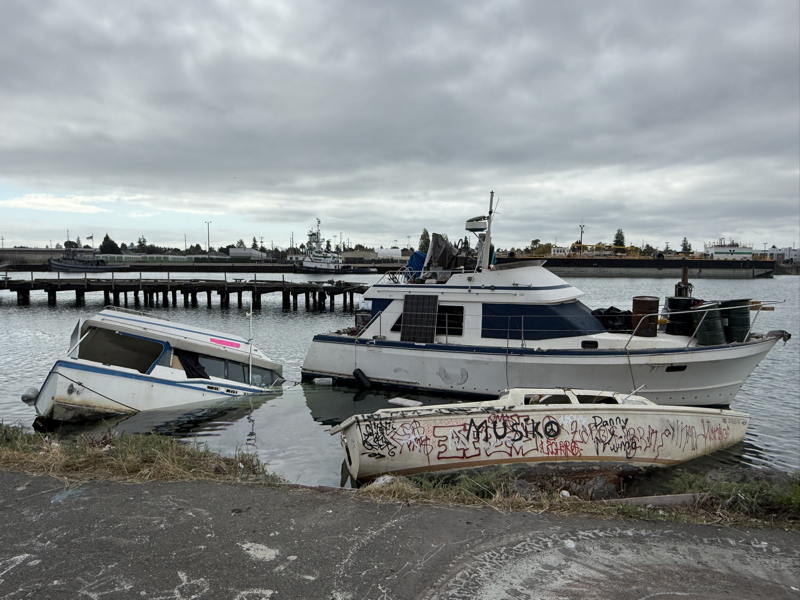
It wasn’t that long ago we wrote a hopeful note about the Coast Guard: “The Coast Guard says they will also be advising anchor-outs of federal anchorage regulations and how to contact harbormasters.” But that’s Groundhog Day again. We’ve written far more hopeful notes than reports of actual agency cleanup activities. We prefer and look forward to writing about progress sometime in the future. Soon? A cleanup costs millions; prevention costs thousands.
If people can swim in the Seine in the middle of Paris (population over two million) it feels as if you should be able to safely swim, row, sail or paddle in the Oakland Estuary (adjacent population 436,000). The anchor-outs are not the only reason it feels unsafe to swim in the Estuary, but they are very small and easy to visit, removing contributors to the problem. We love that people have found housing in boats, but if they’re not safe on the water and cause huge environmental damage to be cleaned up at public expense, they need to be on land. The same boat that’s a nuisance in the water could move 100 yards inland to a trailer park and perhaps be a perfectly good and safe home.
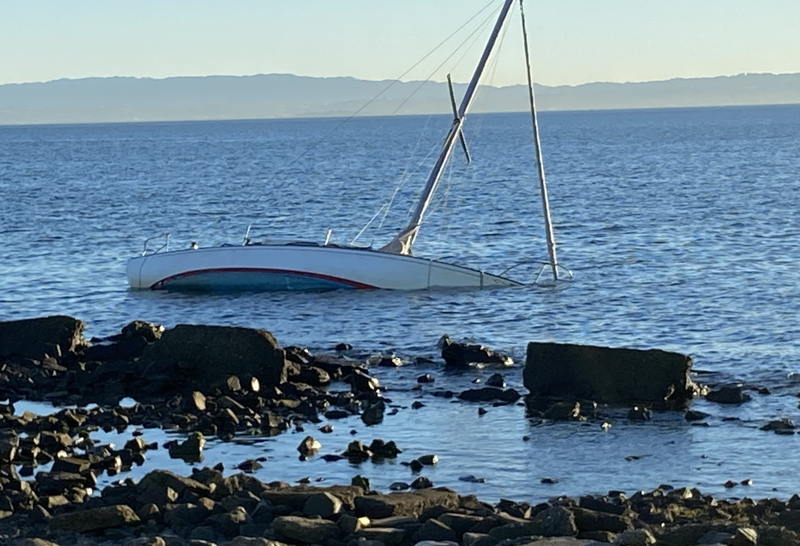
We certainly think these people need a housing solution. We’re not for “throwing people out on the streets” any more than we’re for throwing people currently living on the streets out onto the water aboard boats. The insane cost of housing, including the insane cost of what cities spend to build what they call “affordable housing,” needs a solution. We can tie a bowline, but we’re not sure we know how to solve the housing crisis. Though we’re sure repeatedly sinking, illegal anchor-outs will not be part of a good plan.
We know we and all our readers do continue to appreciate what the Coast Guard does to keep people safe. We just wrote about US Coast Guard Search and Rescue specialist (SAR) Douglas Samp, who will be in San Diego to help brief the 137 boats signed up for this year’s Baja Ha-Ha on safety protocols. That’s cool.
If you have some time to spare, you could watch this 15-minute video of the Oakland homeless problem, which includes a lot of coverage of the Estuary anchor-outs.
Magazine Deliverance — Reading to Relax
It may not surprise you to learn that we really enjoy relaxing while reading a magazine or a book. When magazines arrive in the mailbox and we get to sit with them, they offer deliverance from much of the strife in the world. Add to that all the great sailing publications, and it’s a lot of great reading.
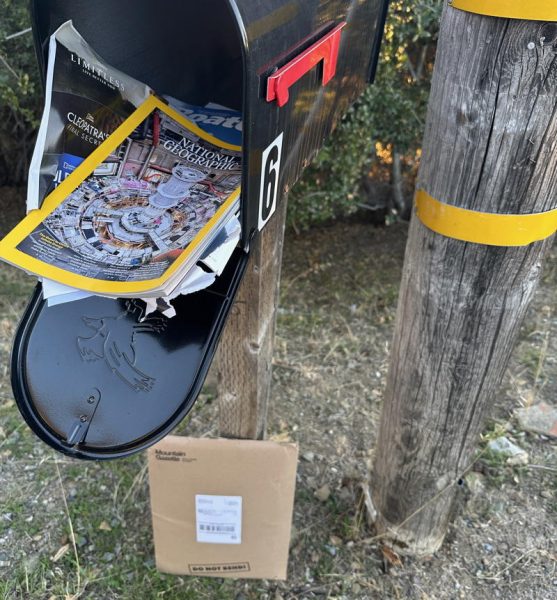
A favorite day walking to the mailbox includes the arrival of monthly National Geographic, which has been a fantastic magazine since it was founded in 1888. Amazingly, on the same day, Mountain Gazette arrived, and it publishes only two issues a year. Mountain Gazette was founded in 1966 and went out of print for a while until Tahoe City resident, publisher and Sierra skier Mike Rogge restarted it in the peak COVID era of 2020. He’s done an incredible job of revitalizing Mountain Gazette as a beautiful new coffee table magazine. As you can see, the issue that arrived yesterday starts with a stunning cover photo. One of our other favorite subscriptions is The Atlantic magazine, founded in 1857. As Mountain Gazette says, “Print Ain’t Dead,” and it lasts a long time!

A magazine subscription greatly improves our trips to the mailbox. If you subscribe to Latitude 38, perhaps we’ll be around as long as those above! It will surely make your or a friend’s trip to the mailbox better.
Getting a magazine like National Geographic once a month, or Mountain Gazette every six months, is a very different experience from the endless streaming of news on antisocial media. It’s the lesson of delayed gratification we try to teach our children. Luckily for you, the wait for the next issue of Latitude 38 is almost over. This Friday, the 31st, is delivery day (and Halloween) for our November issue. It includes a sailor having fun on the cover, stories on the sailing life of Don Trask, Cayard’s induction into the America’s Cup Hall of Fame, a junior sailing coach spotlight and … you’ll just have to see on Friday. Our delivery drivers are happy it will be a sunny day to drive.
Last week we spoke with a reader in Seattle who says he always looks forward to the next issue and visits the West Marine store in Bellingham, WA, as soon as it arrives on the fifth or sixth of the month. Bay Area deliveries and subscribers usually receive it by the first; farther out it takes a little longer. Picking one up will help you have a relaxing weekend.
Let us know in the comments below your favorite magazines, or what and how you read when you take a break from screens. What’s on your coffee or bedside table?
Subscribe to Latitude 38 here.
November Regattas Keep Racers on the Water
About the time the Halloween decorations come down, the midwinter yacht racing season begins in California. Lately, missives from organizers inviting us to join them for midwinter series have been sprinkling our inbox. Here we share with you a sampling.
Midwinter Series
Stephen Stickells, race captain for Sequoia Yacht Club puts it well: “Winter is right around the corner, and with it come some of the nicest sailing days on the Bay. Lighter winds and sunny skies make for great racing and even better times on the water. It’s the perfect season for anyone who’s been thinking about getting into racing — the courses are fun, the fleets are friendly, and there’s always room for new faces on the line.”
Some of our favorites kick off the month. Among them are Golden Gate YC’s Seaweed Soup Regatta on the Cityfront on Saturday, November 1. Sausalito YC’s Chili Midwinters will take to the Bay on Sunday the 2nd. Both series boast post-race complimentary comfort food.
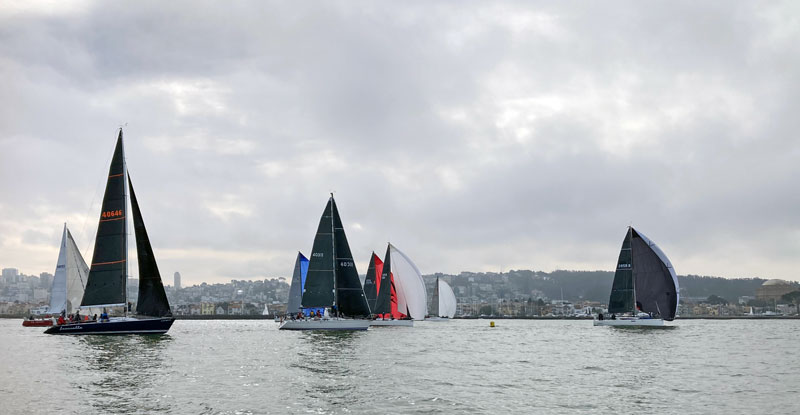
“The Winter Series kicks off Saturday, November 8, and we’re looking for skippers and crew to join the fun,” says Stickells at SeqYC in Redwood City. “Whether you’re a seasoned racer or new to the start line, this is a great time to get out and keep the fun going through the cooler months.” Register on Jibeset.
Berkeley YC will run separate midwinter series on Saturdays and Sundays through February, starting on November 8-9. On midwinterless Sundays, they offer beer-can-style Chowder races.
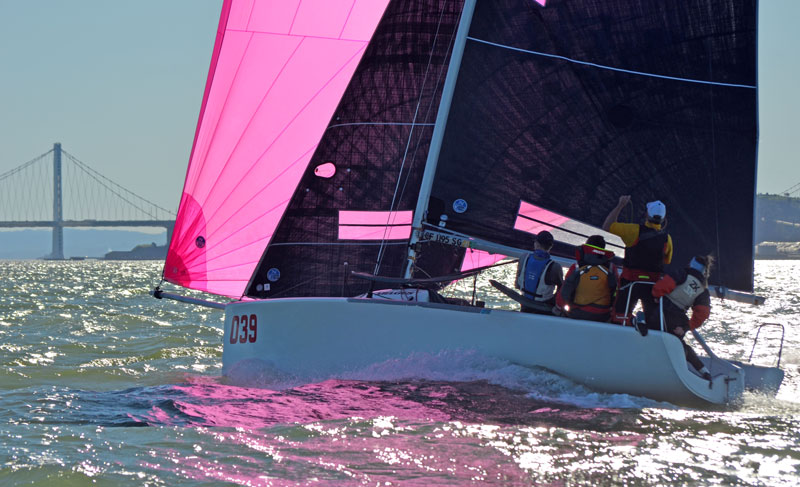
Our friends at the Yacht Racing Association write, “Join us for the Doublehanded Midwinters Series. Spinnaker and Non-Spinnaker divisions are available. One-Design fleets with four or more boats are welcome to join as well. We’ve even added a division for Multihulls this year.” The series will start on the Cityfront on November 16 and run one Sunday a month through February. Registration is open, and the NOR is posted here.
Island YC’s Island Days series will sail one Sunday a month on the Alameda Estuary, starting on November 16.
Our counterparts on San Diego Bay will be enjoying three helpings of Hot Rum on November 8 and 22, and December 6. See www.sdyc.org.
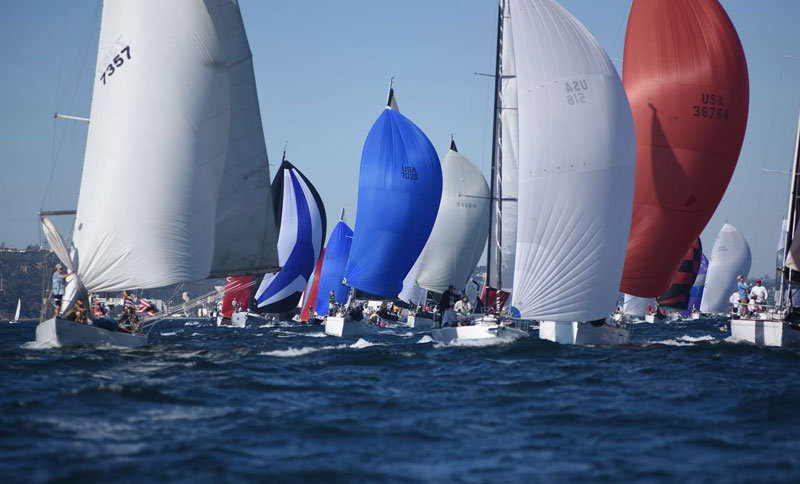
The midwinter series get their own section in the Calendar section of the November Latitude; don’t be afraid to check that out when the issue hits the docks on Halloween.
One-Offs
Thanks to Half Moon Bay YC, small-boat sailors need never say die. The Die Hard Regatta will sail in Pillar Point Harbor on Saturday, November 1.
Farther south, Mark Pastick of Elkhorn YC in Moss Landing writes, “Our fall tradition of Halloween/Day of the Dead-themed dinghy races continues. Bring your dinghy 14-ft and under or borrow one. Costumes encouraged. Multiple fleets for Lasers, Lidos, RS Quests, Walker Bays, El Toros, Fatty Knees, and more. A rowing competition takes place after the sailing is done.” The action will start with an 11 a.m. skippers meeting on November 1 on the club’s patio.
On Wednesday, November 19, a long-standing tradition, the Big Sail at St. Francis YC, will pit Stanford against Cal in the club’s J/22s. Expect cheerleaders and marching bands shoreside.
On Black Friday, November 28, Tiburon YC’s Black Friday tradition, the Wild Turkey Regatta, will provide an alternative to the frenzy of consumerism. Although it’s possible to spot some wild turkeys meandering around the neighborhood, no feathers were plucked to create the eponymous prize.
These are just a few highlights. Find more in our Calendar coming out online and in print on Friday, October 31.
The 2026 YRA Calendar Is Just Around the Corner
Here’s a reminder to all of you race organizers, event producers and yacht clubs to submit your 2026 race dates to Laura Muñoz at the YRA (email her at [email protected]). Sponsors, please get your ad copy in to [email protected] so that she can reserve your space and update your ad for Latitude 38’s 2026 Northern California YRA Racing Calendar. You can see your 2025 ad here: www.latitude38.com/issues/2025-yra-calendar-and-master-schedule. If you can’t find your club or class ad there, maybe you didn’t run one this year(!?). Contact Nicki to make sure you don’t miss a chance to promote your club, class or event for 2026.
Give the Gift of Latitude this Holiday Season