

Rolex Big Boat Series Kicks Off With Day One
When the gun for the first start of the 61st Rolex Big Boat Series sounded, the Bay was overcast with gray skies, light airs and a flood that lasted through the day. Everyone knows those conditions don’t last. The light-air first race was held in the flat water of a building flood. For the second race, everyone changed gears as the fog began to lift and the Bay returned to its usual bluster.
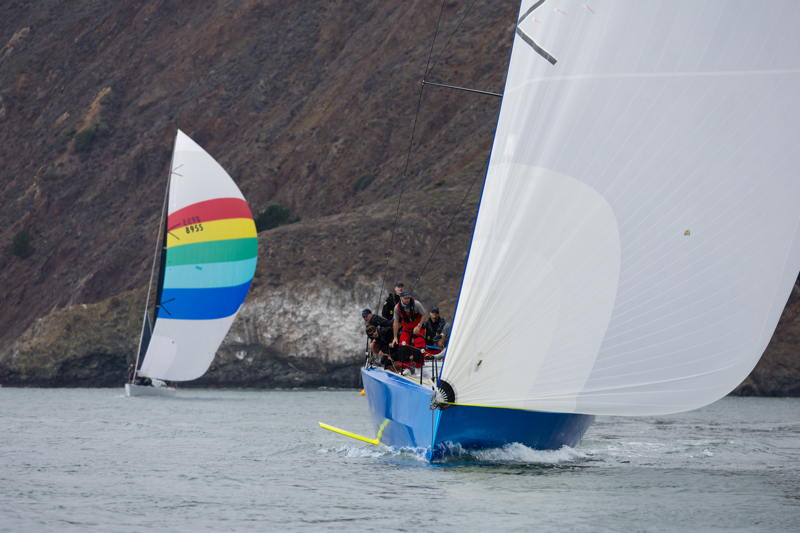
The large and notoriously competitive J/105 fleet finished the day with Bruce Stone and Nicole Breault aboard Arbitrage out front with a 7/1, followed by Beast of Burden with a 2/6 and Donkey Jack with a 5/3. It was a tough day to find consistency in the 27-boat fleet. Latitude 38 race editor Fritz Baldauf was out racing aboard John and Michael Rivlin’s Peaches, which finished the day with a 10/16. Fritz had this to say about yesterday’s racing: “It was really tricky racing in the light wind. Not your typical Big Boat Series day. Lots of reshuffles, especially in the first race — I think during race one alone at least four boats were in first at one point or another.” It was Ed Raff aboard J Tripper who took first in that race, though a ninth in the second race.
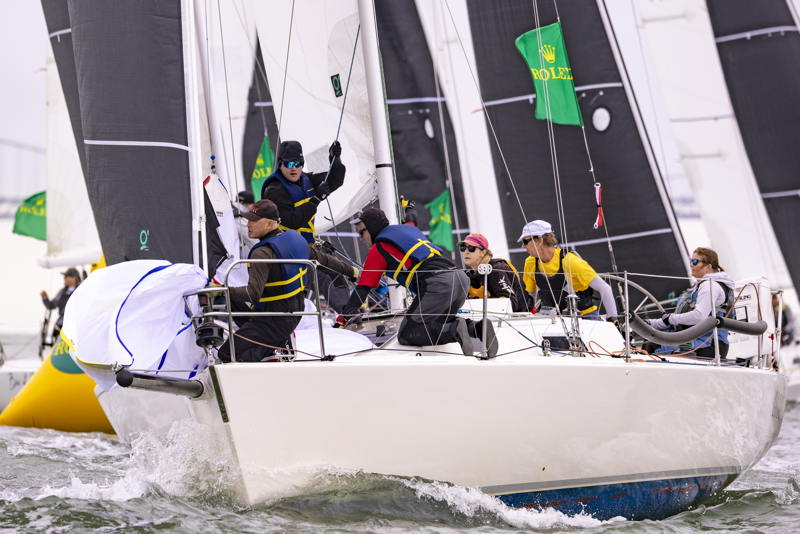
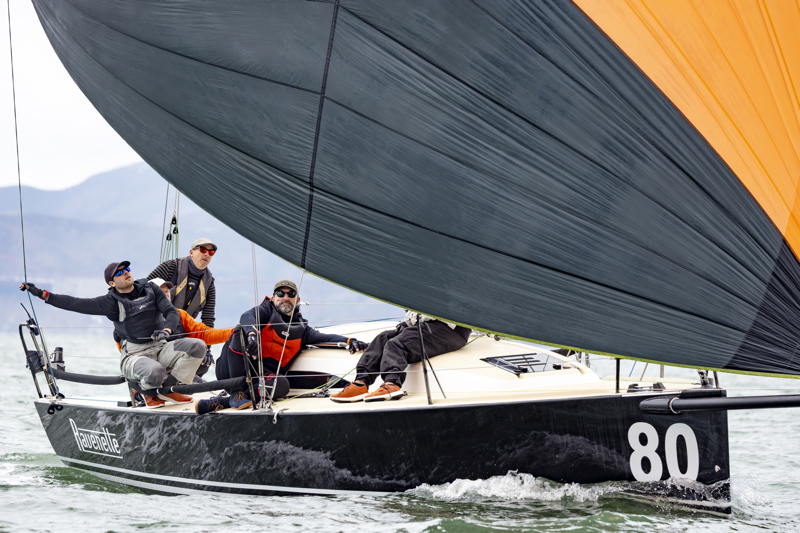
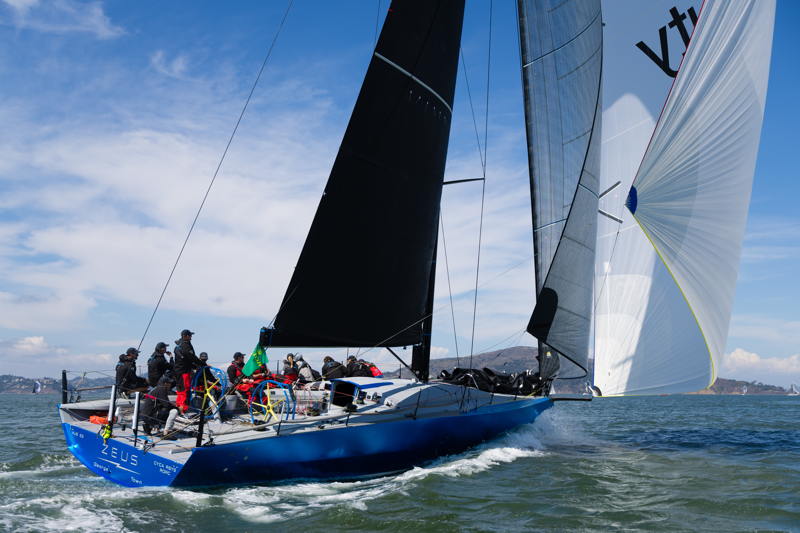
Double bullets were scored in all the other fleets, with Mark Chaffey’s Loca Motion doing it in the Express 37 fleet, Brice Dunwoodie on Ravenette pulling it off in the J/88 fleet, Michael Fermin aboard Zeus in ORC A, Peter Wagner’s Skeleton Key in ORC B, and finally Zach Berkowitz and the crew on Feather in ORC C. We’ll see which of these solid starts can last the full four days.
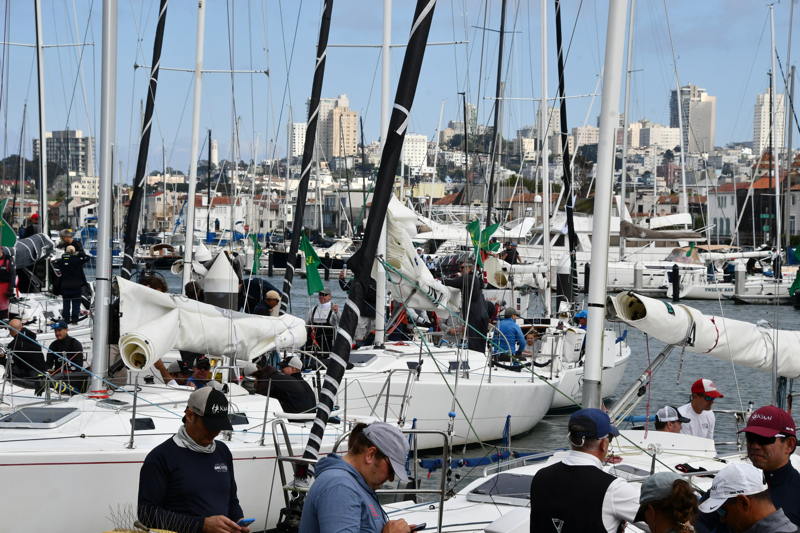
A few sails were hauled up the docks for repairs, and others are going to have high-contrast numbers applied to comply with the racing rules.
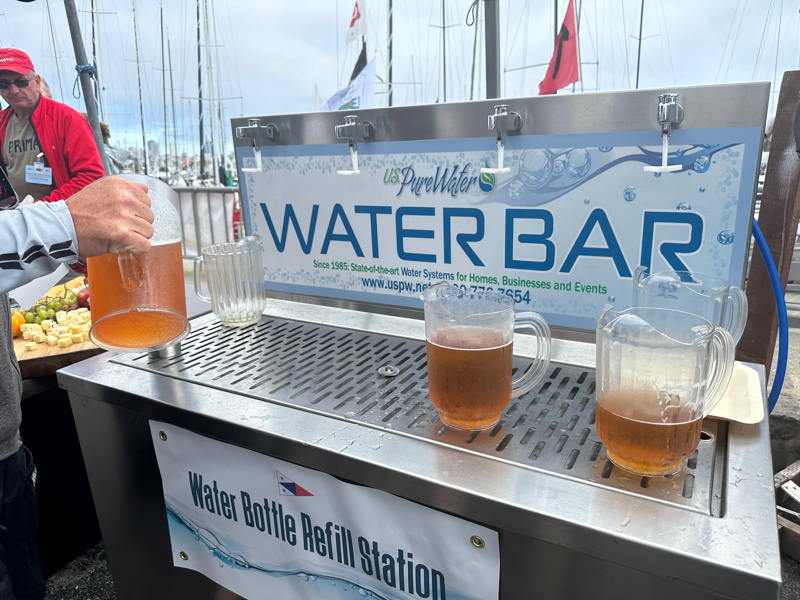
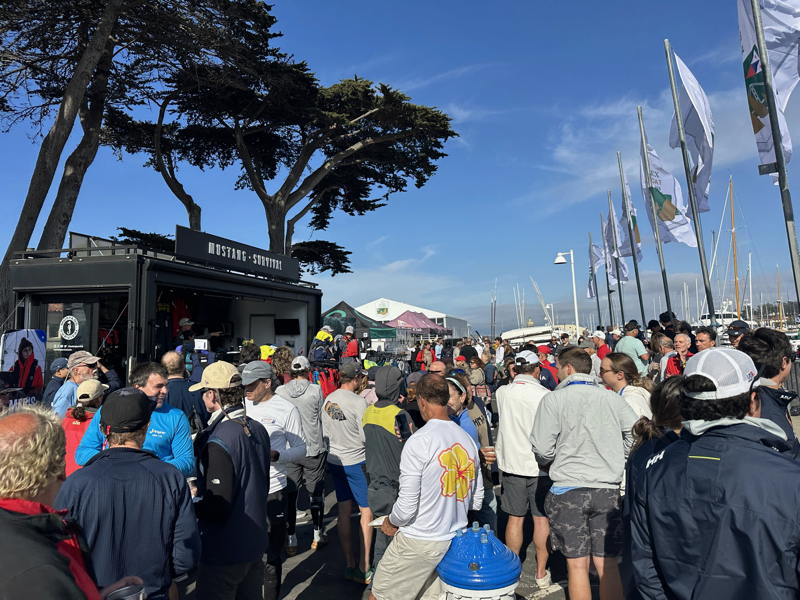
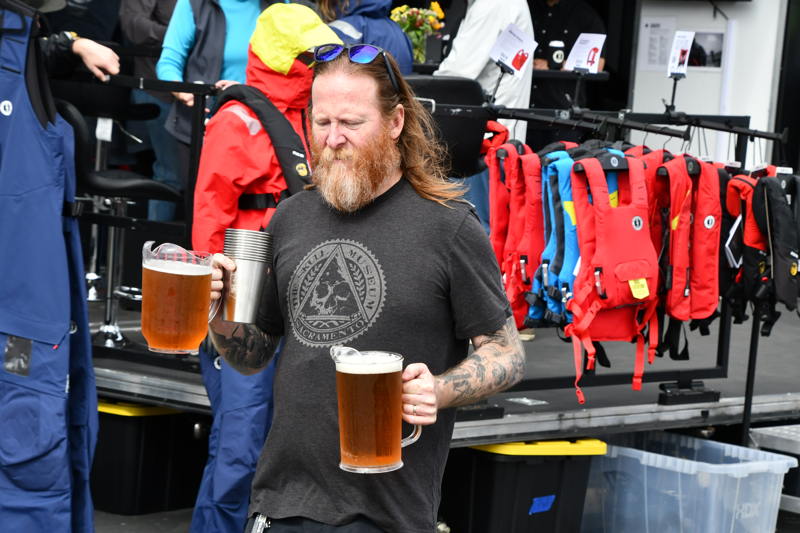
At the end of the day, there was a bubbling spring at the edge of the saltwater desert to make sure thirsty crews were going to be hydrated for today’s racing. They’ll be out racing today and throughout the weekend.
Maritime Youth and Leaders Fight to Save S.F.’s Gashouse Cove Fuel Dock
It takes a village — and sometimes just one person. How does the boating community help preserve Gashouse Cove for recreational use? Captain Maggie Hallahan, a leader, with the S.F. Sea Scouts’ Makani Maritime Explorers, is that one person, bringing the attention of the maritime community to the threat hanging over San Francisco’s Gashouse Cove fuel dock — the city’s last remaining marine fuel dock. Without the fuel dock, Gashouse Cove will have no gas.
“The San Francisco Recreation and Park Department (SFRP) is advancing a plan that threatens Gashouse Cove by falsely claiming the fuel dock must be removed for the PG&E cleanup” Captain Hallahan says. “In fact, the California Water Board has confirmed that PG&E’s cleanup does not require removing the dock. It can remain in place, saving taxpayers money.”
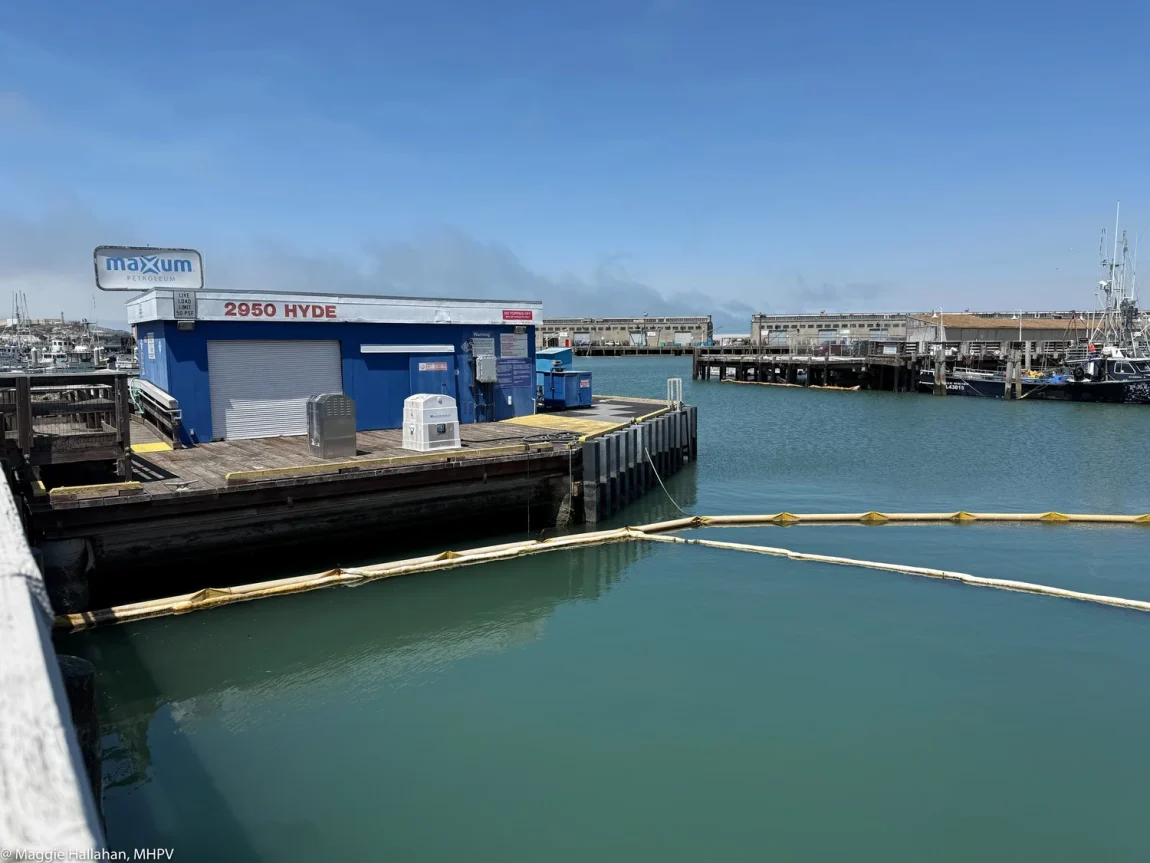
Captain Hallahan is calling on the community to have their say at a public hearing: One-Minute Public Comment (Hybrid Meeting), next Thursday, September 18, at 10 a.m. (PT), at City Hall, Room 416.
Following is some of the information Hallahan has shared in a press release:
“For 175 years, Gashouse Cove has been San Francisco’s safe harbor for small boats, youth training, and maritime access. Substantially upgraded with state funding in the 1960s, it remains a vital full-service marina — not a swimming hole or kayaking cove. The Laguna Street sewer outfall makes the water unsafe for paddling or swimming; local youth already call it what it is: ‘the cesspool.’
“Despite SFRP’s proposals for a recreational kayaking area, the sewer outfall will remain exactly where it is. Meanwhile, for fueling, launching, and loading boats, the existing setup has served the public effectively for more than 60 years — and no agency requires it to change.”
But the deficit would be greater still. The press release highlights several “critical consequences” to the removal of the Gashouse Cove fuel dock:
• Deprives emergency responders of a critical refueling site in San Francisco, forcing maritime police and fire department vessels to cross to Sausalito or Emeryville for fuel.
• Removes the only public boat lift available to launch and recover boats in San Francisco.
• Eliminates a key extraction site in San Francisco, forcing maritime police and fire department vessels to connect with emergency vehicles in less-than-ideal ways.
• Eliminates the last fuel dock in San Francisco, which includes underground gasoline and diesel tanks set in bedrock and upgraded by the State of California.
• Eliminates more than 200 small-boat berths and storage spaces on the deck near the boat lift.
• Takes away the fuel dock, depriving boaters of a critical refueling site when heading out under the Golden Gate Bridge or visiting San Francisco.
• Shrinks boating access by filling navigation channels leading to the Gashouse Cove Marina site.
• Encourages unsafe recreation by promoting swimming and paddling in waters polluted by the Laguna Street sewer outfall.
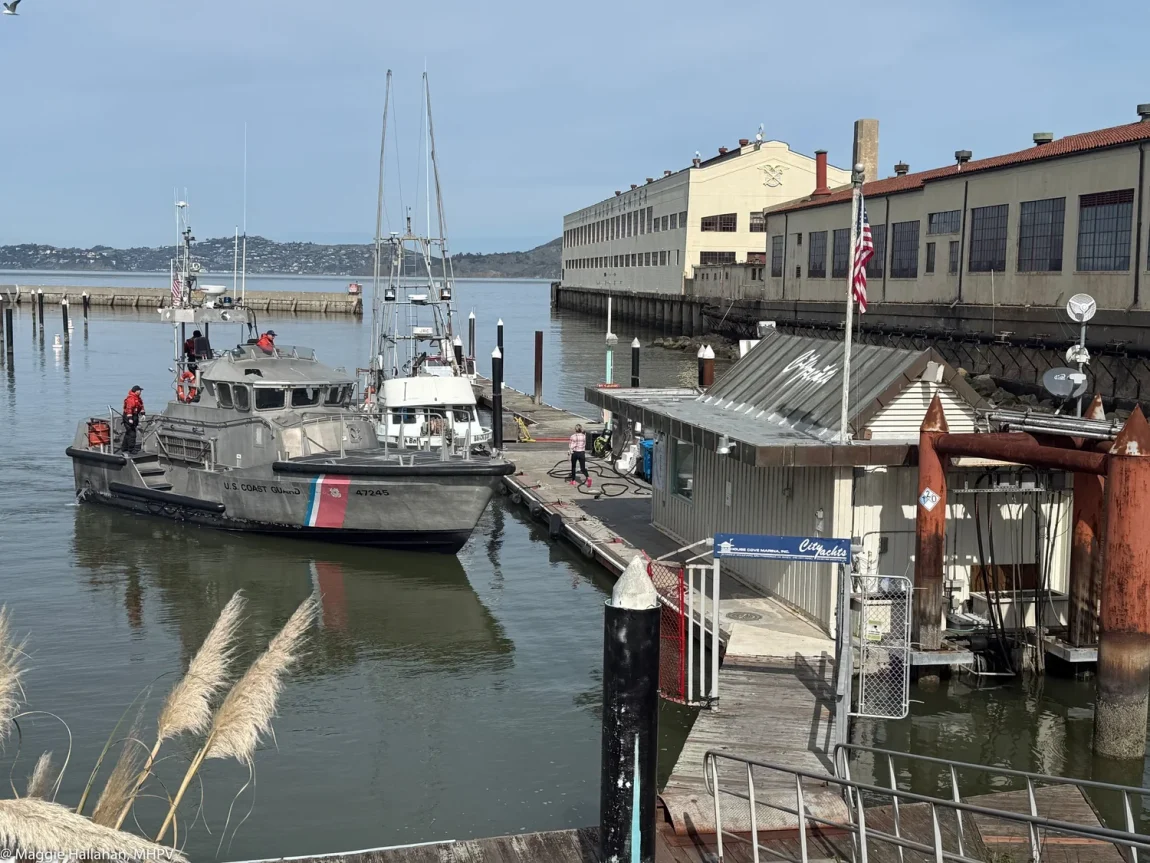
“As we all know, San Francisco Bay is a unique treasure for the boating community. It provides unparalleled opportunities for aquatic enjoyment: fishing, sailboat racing, leisurely cruising, etc. The majority of boats on the Bay routinely need access to fuel, and the ability to get that on the San Francisco waterfront is not only a necessity, but also a major attraction. Available fuel means that boaters can visit the marinas and patronize local establishments. Our clubs [comprise] recreational boaters, but in addition to our requirements, we are keenly aware of the need for marine emergency services and marine rescue units to have ready access to fuel. Police and fire departments should not have to go across the Bay to fill up, nor should support services like BoatUS Vessel Assist. Emergency response times on our sometimes dangerous San Francisco Bay should never be impeded by the need to detour for fuel,” said David Jackson, commodore, Pacific Inter-Club Yacht Association (PICYA), representing over 100 yacht clubs across Northern California.
“The youth maritime community, swimming and boating community, and ocean advocates call on the San Francisco Recreation and Park Commission to:
• Preserve the fuel dock and boat lift for youth programs, emergency services, and small-craft boaters.
• Tell the truth about the Laguna Street sewer outfall on SFRP’s plan drawings.
• Adopt a balanced plan that supports PG&E’s cleanup while maintaining maritime use.
• Ensure accountability through an independent review of SFRP’s flawed April 2025 S.F. Planning permit application.
“If SFRP’s plan proceeds, San Francisco will lose 30% of its water access while taxpayers face $4 million a year in debt for the next 30 years. By the end of 2025, the SFRP governing commission could approve the request to begin remediation of Gashouse Cove at S.F. Marina and decommissioning the only San Francisco fuel dock. These maritime youth advocates, swimming, canoeing, and boating communities, including boating clubs, water-safety organizations, maritime educators, and water groups committed to safe, equitable, and resilient aquatic sports access, call on you to give public comment at the upcoming meeting.”
The meeting is on Thursday, September 18, at 10 a.m. (PT), at City Hall, Room 416. Community members are urged to provide public comments and testimony to meetings on the calendar at https://mhpv.net/sfmarina. Learn more about the Gashouse Cove issue here.
Tomorrow the San Francisco Maritime National Historical Park Association will be running a Sea Festival in Aquatic Park from 11 to 5.
Join Naos at the Sausalito Boat Show
- Cruising
- Current News
- Chartering
- Community Sailing
- West Coast Sailing
- Commentary
- Working Waterfront
- General Sailing
- Racing
Sausalito Boat Show Gears Up for Next Weekend
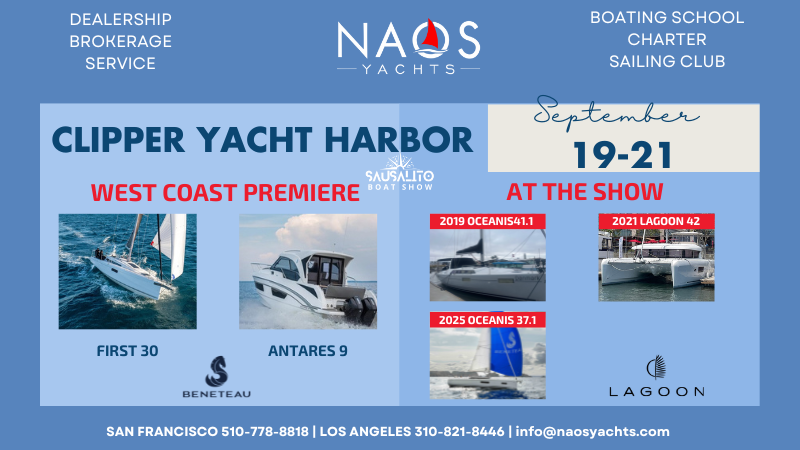
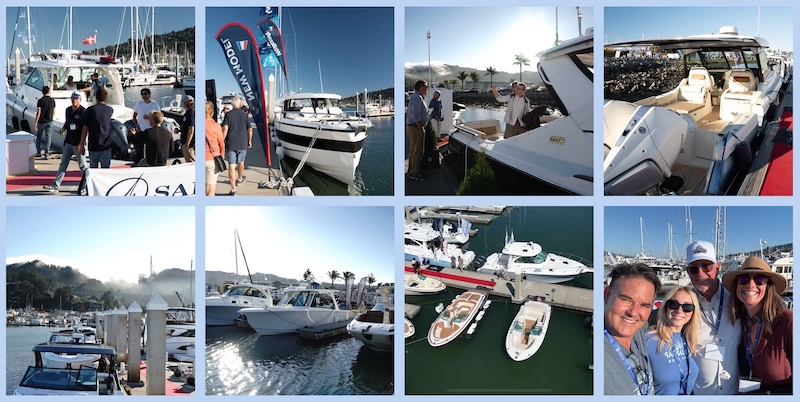
The third annual Sausalito Boat Show is getting ready to rock the docks next weekend, Friday, September 19, to Sunday September 21. The show takes place at Clipper Yacht Harbor, 310 Harbor Dr., Sausalito, with the gates opening at 11 a.m. Friday, and 10 a.m. on Saturday and Sunday.
How’s this for a lineup? …
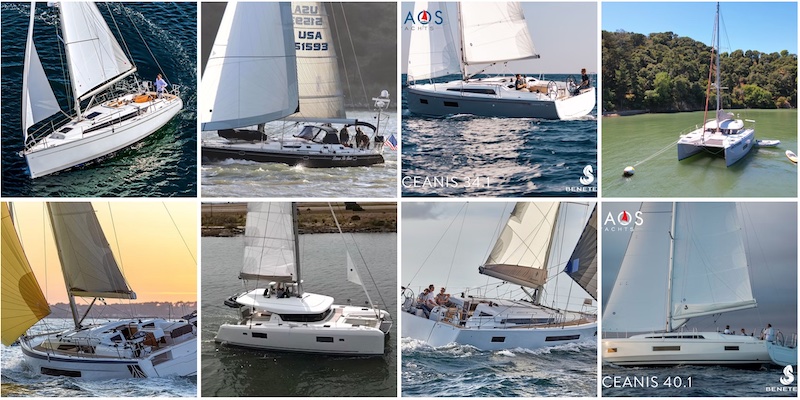
There will be sailboats and powerboats, trailerable boats and electric boats; vendors from near and far; educational experiences; entertainment for the kids; browsing and shopping opportunities for the adults; and opportunity to speak with experts in all aspects of boating.
BAE Boats (Bay Area Electric Boats) will be dockside to demonstrate the calm and quiet of electric boating aboard their 48-volt electric boats; Club Nautique is offering an Intro to Sailing ticket, which includes both a day pass to the show and a hands-on lesson on the Bay; there’s the Women in Yachting Breakfast sponsored by Mollie Stone’s and Latitude 38, hosted by sailor and Latitude sales manager Nicki Bennett; Friday Evening’s VIP Dockside Dining ticket, which offers a progressive culinary journey across three luxury yachts, complete with wine tasting, plus a weekend pass to the show.
Let’s not forget the seminars, which will deliver practical, relevant knowledge. The schedule includes yacht ownership as a business with Stephanie from Club Nautique; safe rigging with Tom Relya of South Beach Riggers; electric propulsion with Mike Gunning and Berkeley Marine Center; fiberglass repair at Spaulding Marine Center; navigation and safety with Ben Rifkin; cruising Mexico with Rich Brazil; cruising essentials with Brady Trautman of Cruisers Academy; marine electronics and mechanical systems with Shane McCormack of H&M Marine; and marine electronics with Wesley from Reliable Marine Electronics.
There’s so much going on that we’re thinking we might need to take Friday as an “out of office” day, just so we can be sure to experience everything on offer.
Show hours:
Friday, September 19 – 11 a.m. to 6 p.m.
Saturday, September 20 – 10 a.m. to 6 p.m.
Sunday, September 21 – 10 a.m. to 5 p.m.
Location:
Clipper Yacht Harbor, 310 Harbor Dr., Sausalito
Get your tickets here and use code L3825 at checkout for $5 off any ticket type. See you at the show!
My Voyage Aboard USCGC ‘Eagle’
This summer, I had the rare privilege of sailing aboard the USCGC Eagle, the Coast Guard’s iconic barque, from San Francisco to San Pedro. While I’ve been fortunate to sail on Eagle before — last summer I joined her from Halifax, Nova Scotia, to Portsmouth, New Hampshire — this voyage was different. It wasn’t just about the miles logged or the sails set; it was about the setting, the mission, and the remarkable people aboard.
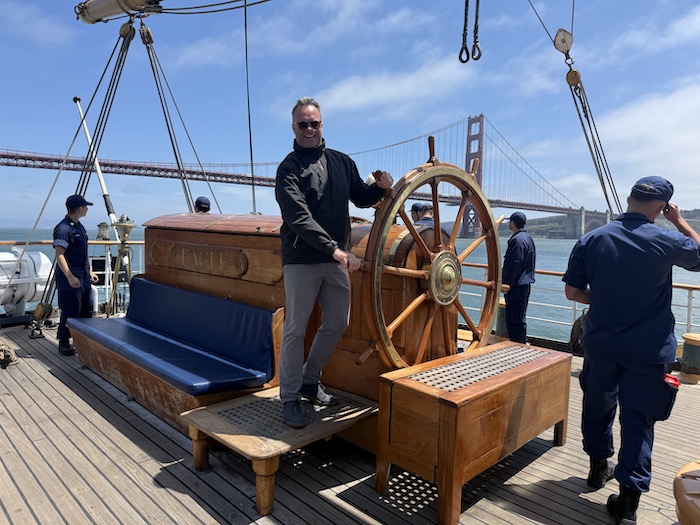
Eagle was on her 2025 West Coast tour, a deployment that carried her from the East Coast to the Pacific. This tour was historic in its own right: Eagle doesn’t often venture to the far side of the world. Her homeport is New London, Connecticut, and her missions typically unfold in the Atlantic and Caribbean. A Pacific voyage means thousands of miles under her keel, challenging conditions, and the chance for new audiences to see and step aboard “America’s Tall Ship.” For those on the West Coast, it was an opportunity to connect with a living piece of maritime history — one with a past as complex as it is inspiring. The leg I joined was part of “Swab Summer Shorts,” a unique training program for the incoming class of Coast Guard Academy cadets. These “swabs,” as they’re known, spend their first summer at the Academy in an intense indoctrination period: physically grueling, mentally taxing, and designed to forge discipline, resilience, and teamwork. By the time they step aboard Eagle, they’ve been living in a constant state of high alert, drilling, training, and learning the fundamentals of military life.
This weeklong sail offers them something different: a chance to breathe, to reset, and to channel the pressure of Swab Summer into hands-on seamanship. On Eagle, the classroom has no walls, the ceiling is sky, and the lessons are felt in the heave of the deck and the pull of the lines. For many, it’s the first time they’ve been at sea. They learn to work the rigging, steer the ship, keep watch, and, perhaps most importantly, to function as a crew: a skill that will serve them in every role they take on in the Coast Guard.
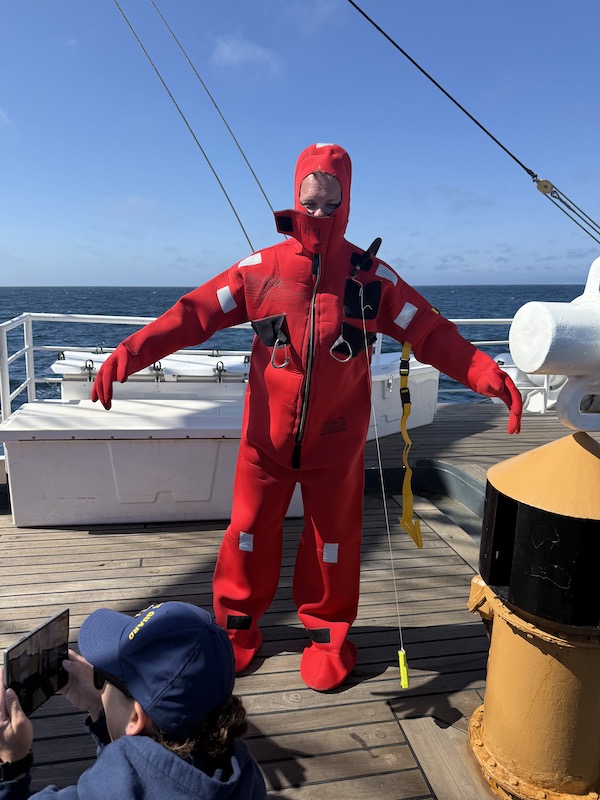
As one might expect of San Francisco, the breeze was pumping as we made our way under the Golden Gate Bridge in a scene worthy of a postcard. Only two hours into our voyage, the tone shifted to something more intimate and awe-inspiring: A pod of hundreds of humpback whales surrounded us.
The ocean boiled with their movement — tails slapping, blows sending mist into the air, massive backs breaking the surface in slow, graceful arcs in every direction. For nearly three hours, we slowed the ship and delayed setting the square sails, mindful of the risk of striking one of these giants. Conversations quieted, replaced by the sound of water and the occasional exclamation when a whale surfaced close by. In a way, it felt like a second departure — a blessing from the Pacific before we truly began.
San Francisco on the Bay: “The List”

Dine, Drink, Smoke, Stay, Play and Shop. Discover San Francisco Bay and all that inspires those of us who live or visit here.