

Eight Years Later: What Happened to Alameda Marina’s Working Waterfront?
As Sausalito voters consider a ballot measure that could have lasting implications for the city’s historic working waterfront, a recent example just across the Bay offers a cautionary tale. Alameda Marina was once home to a broad collection of boatyards, marine trades and maritime businesses. Its redevelopment came with the promise that housing and maritime commerce could coexist.
Almost a decade later, we went back to see what’s left of the working waterfront.
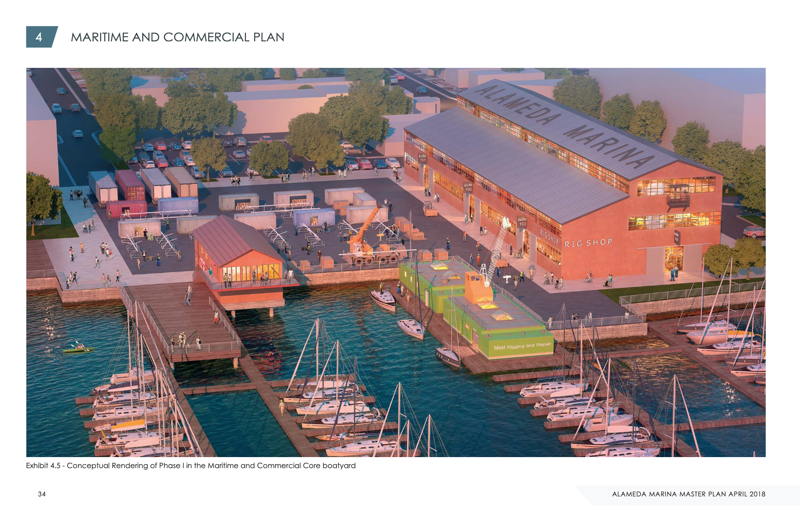
Though every situation is unique, Alameda Marina was an active commercial maritime property that was home to Svendsen’s Boatyard along with its chandlery, welding shop, workshops and a marine bookstore, Island Yacht Club, yacht brokers, naval architects, sailmakers, riggers, maritime electrical, ocean research consulting firm DOER and marine dry storage.
Somewhat underutilized and in need of capital investment to shore up its crumbling waterfront seawall, Alameda Marina was approved for redevelopment by Pacific Development. The plan drew opposition from Save Alameda’s Working Waterfront, which argued that despite the developer’s promise of a mixed-use development combining housing and maritime commerce, the project would ultimately displace the maritime trades.
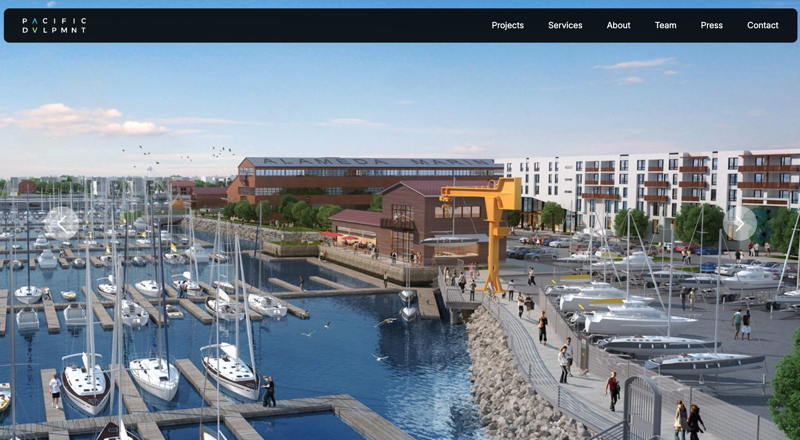
In 2018, the Alameda City Council approved a mixed-use redevelopment with 760 housing units while retaining a maritime-commercial core and working-marina facilities. Eight years later, the development is far from complete, though the large residential project is rapidly growing.
Very few people expect to ever see the commercial maritime facilities shown in the artist renderings.
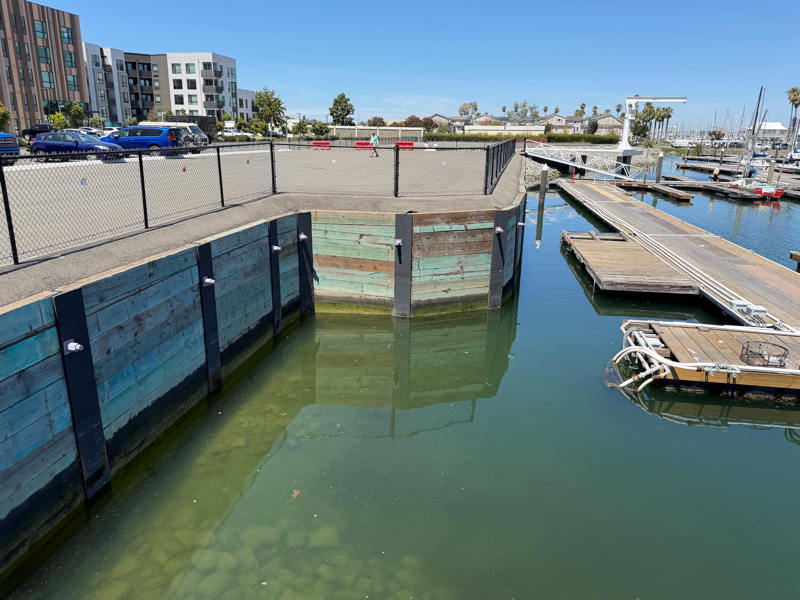
The photo below is of the dry storage area in the rendering above. Today, the hoist does not work and there are no boats in dry storage. The large yachts shown to the City Council in the developer’s rendering were certainly not going to be served by the hoist in the image.
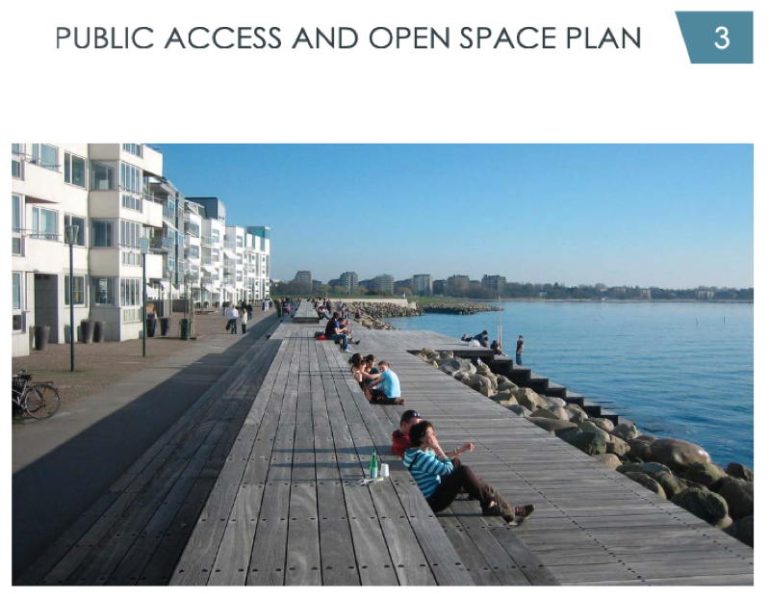
Reading through Pacific Development’s proposal, it was suggested that the former Alameda Marina did not allow public access — something its mixed-use project would expand. All boaters know, however, that the marina was as open to the public as any shopping mall. Everyone was welcome to drive in, walk along the waterfront, or do business with the many marine businesses on the property.
Today, much more of the property is occupied by private residences, though the development will include a public shoreline promenade with views of the water. Many municipalities, as well as BCDC, often appear to equate/confuse shoreline bike paths and walkways with public access to the Bay.
But access to the shoreline and access to the water aren’t necessarily the same thing.
The image below is possibly the most accurate artist rendering of the completed mixed residential/commercial maritime redevelopment of Alameda Marina. The entire land portion of Alameda Marina is perhaps 90% residential, with the former DOER building still visible in the proposed maritime commercial core area, though no actual commercial maritime businesses can be seen.
What used to be one of the core centers of the island of Alameda’s maritime culture and marine-trades businesses has been completely overwhelmed by the housing approved by Alameda’s City Council.
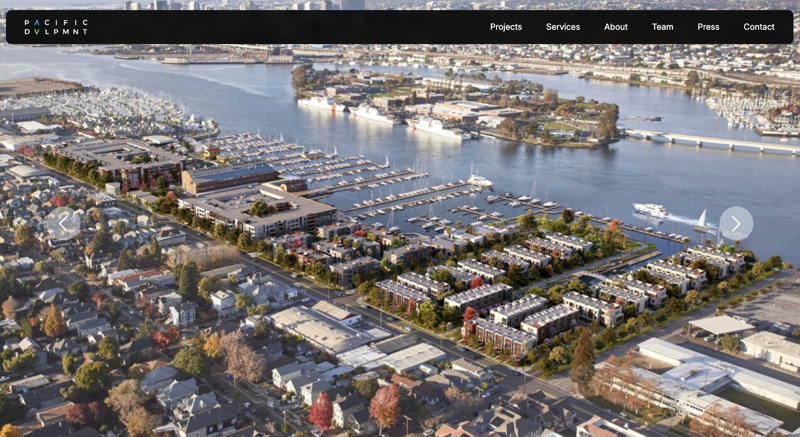
We reached out to Pacific Development to ask if they anticipated any marine-trades businesses returning to Alameda Marina, but did not hear back. Since the project is still under construction, we can’t completely discount the possibility that maritime businesses could return, though we’ve spoken with some former tenants who can’t imagine moving back.
Unlike the Alameda Marina redevelopment, Sausalito’s Industrial & Maritime Preservation and Improvement Initiative, or Measure X, does not change the city’s current zoning to allow housing in the Marinship. Instead, it would allow future changes to certain zoning and development standards to be made by the City Council rather than requiring approval from Sausalito voters.
Like many working waterfronts around the country, the Marinship has aging roads and infrastructure in need of maintenance, upgrades and investment. Measure X is intended in part to encourage that investment by giving maritime and industrial businesses greater flexibility to improve and develop their properties. But it would also leave future zoning decisions largely in the hands of the City Council — and the ultimate effect on the Marinship will depend not only on what the measure allows today, but on what future councils, property owners and developers choose to do with that flexibility.
A Bright and Sunshiny Day at the Jazz Cup
The pre-race debate at the docks is often around which spinnaker to fly, about rig settings, and whether to go inside for current relief or toward the channel for better breeze, but for the 66 yachts competing in the 38th annual Jazz Cup on Saturday, September 5, the bigger debate was over foulies or shorts and T-shirts. Those who opted for the latter were the real winners, regardless of corrected time, as warm autumn weather dominated.
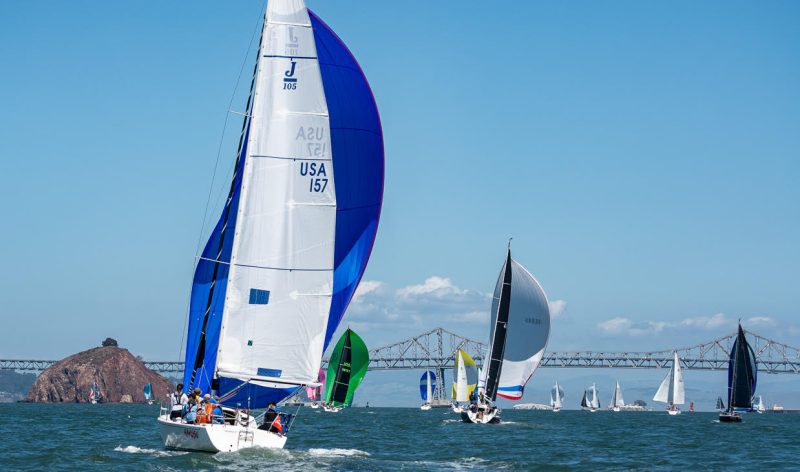
South Beach Yacht Club and Benicia Yacht Club’s signature regatta — with popular parties on either end — is a 26-mile downwind run from Southampton Shoal to Benicia. This year’s 70-degree temperatures came with light and variable breeze at the start. After the first two fleets, the race committee extended and squared the line, and the rolling starts got everyone off to the windward mark quickly, followed by a spinnaker set. Then the real tactics began.
The typical dance of squared-back poles on the slower boats, avoiding the wind shadows of the big asymmetrical boats jibing back and forth through the course, required an extra degree of trim attention this year. Winds varied from three knots to far more, requiring constant mode shifting while also seeking the best current relief.
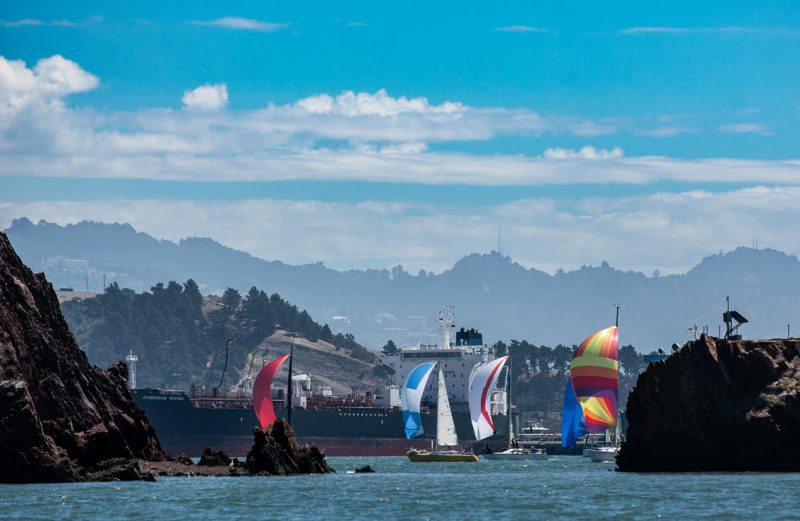
Entering the Carquinez Strait, winds ranged wildly from nonexistent to very gusty, and as boats navigated the turns, they alternated between reaching and running. In the final turn with the Benicia Bridge in sight, many spinnakers were doused in favor of genoas.
For our J/24 Tenacious Cuttlefish, we debated dropping the spinnaker, and finally decided to hoist the genoa. We then ended up sailing a beam reach with both up for a few minutes, while we made up our minds. We ended up dropping the kite and were happy for the maneuverability that provided. Moments later, the biggest gust of the day hit, pushing our J/24 to over 7.2 knots of boat speed. Competitors that had put more in the bank, going higher toward the Contra Costa shore, were instead able to turn down during the puffs and keep their kites up, which was a good lesson for next year. Finally seeing the line, we popped the chute back up, squared back the pole, and started thinking about finally eating those sandwiches we’d been too busy to enjoy during the race.
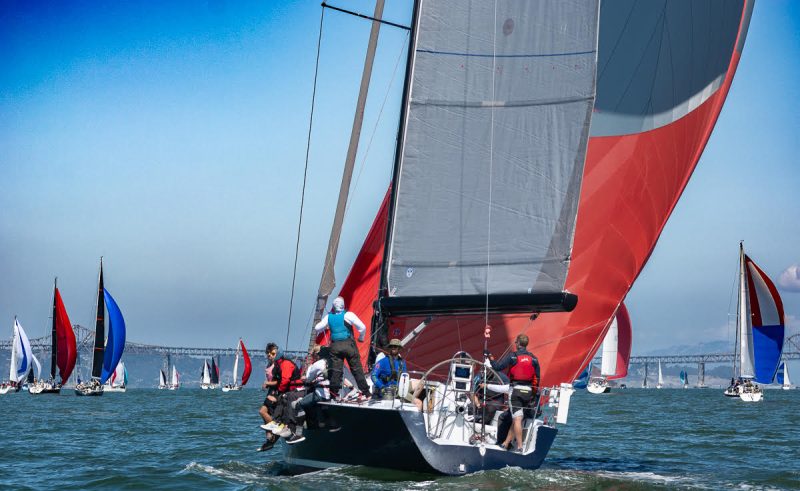
Ben Landon’s Flight Risk from RYC and CYC won the spinnaker fleet of 60 boats, correcting at just over four hours 18 minutes, followed less than three minutes later by Bloom County (SFYC) and Zeehond (SSS) over a minute later. This race often favors slower-rated boats, with this writer’s own J/24 Tenacious Cuttlefish (RYC) taking fourth place, enjoying our PHRF of 168. Tenacious was followed by Living Happy (rating 165) in fifth place — the first Benicia Yacht Club boat to finish.
Proving the point about high PHRFs, the Santana 22 Anemone, (Aeolian YC), rating 234, had a strong showing in sixth. Zhenya Kirueshkin-Stepanoff’s sportboat Greyhound (Encinal) was seventh, followed by another J/24, Darren Cumming and Melissa Litwicki’s Downtown Uproar in eighth place. Ninth went to John Ross’s Special Edition (RYC), and rounding out the top 10 for the spinnaker fleet was another Benicia boat, E Ticket, owned by Noble Griswold.
Premier Vessel Care at Safe Harbor

From the Sky to the Sea Baja Ha-Ha Crews are Gearing Up for Mexico
Are you among the 76 boats currently signed up for the 32nd Baja Ha-Ha? The latest boat to join the fleet is the Moody 42 Adagio. The boat’s crew, Ernesto and Zulema Corral, are from La Crescenta, Southern California. They’re in good company with this year’s sailors hailing from various ports and walks of life.
From the sky to the sea, Seattle-based commercial pilot Christian McLaughlin, 58, is swapping his wings for sails, cruising to Mexico aboard the Jeanneau 44DS Irish Goodbye. His crew Kevin Doggett, 59, is also a pilot; and crew Hakan Soderborn, 61, is retired from the tech world.
Christian says his longest passage to date has been crewing with 59 North from Bermuda to the Azores, and from Cartagena, Colombia, to Panama and through the Canal. He adds, “This year’s same captain and crew brought Irish Goodbye to San Diego on the Coho Ho-Ho rally in 2025.”
It’s always comforting to be flying with a pilot whose favorite quote is “Everything will kill you, so choose something fun.”
And what is an Irish goodbye? “It is the act of leaving a social gathering, such as a party or bar, without telling anyone or saying official goodbyes. It is a method used to avoid long, drawn-out farewells, prevent disrupting the event, or bypass drunken, emotional departures.” In the Caribbean and in the Northeast, the act is known as the “Newport Ditch” and was perfected by the former Grand Poobah of the Ha-Ha.
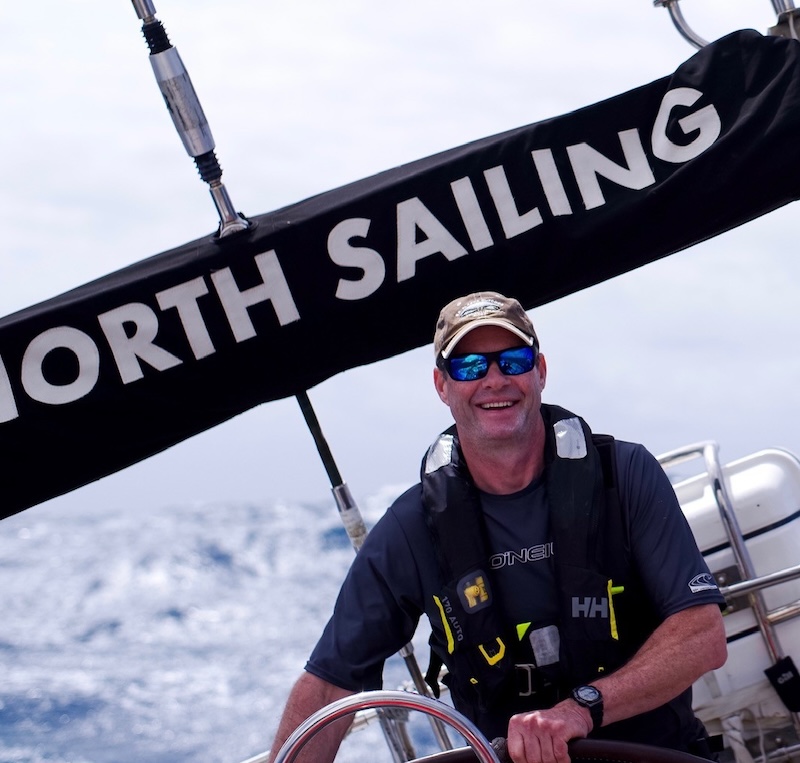
Mark Whitehouse and Tom Jacobs from San Diego and Cardiff and Heath, TX, are sailing south aboard the Elan GT5 43 August Bernhardt, named in honor of Tom’s grandfather.
Mark, 58, is a retired software engineer and co-owner. Tom Jacobs, 70, is a retired executive. Their crew will be Mark’s spouse Deborah (Debbie) Slee, a research scientist, and Tom’s spouse Dana Jacobs, also a retired executive.
Mark and Debbie were 18 when they met in college in England. They moved to California in 1994 and have been married for over 30 years. Mark has sailed for the past 20 years, mainly racing on other people’s boats. But as a couple they have sailed to Catalina and the Channel Islands many times. This will be their first Baja Ha-Ha and their longest cruise. After the Ha-Ha they plan to cruise the Sea of Cortez.
Tom and Dana live in Texas and have commuted to San Diego for the past 12 years. They met in Dallas in the mid-’80s and have been married for over 38 years. Tom was around 8 years old when he started sailing. Dana started in 1985 as foredeck on a J/24 on the Texas circuit. In addition to being members at Southwestern YC, Tom and Dana have been members at Rush Creek YC since 1980.
August Bernhardt is Mark and Debbie’s first boat. Tom and Dana have owned 12 boats over the years. “Our longest passage has been from Nanny Cay in the British Virgins to Newport, Rhode Island, via Bermuda,” the Jacobs tell us. That’s about twice as long as the Ha-Ha and much more challenging.
“We’ve also done a Newport Beach to Cabo Race and sailed from Civitanova Marche [Italy] to Lavrio [Greece] in Europe. Come to think of it, we’ve also sailed or powerboated in Sweden, the Med, the Adriatic, the Aegean and Tonga.” After the Ha-Ha they will fly back to Texas to host Thanksgiving.
“Our boat partnership is interesting,” the four sailors report, “as our views are quite diverse, being influenced by the cultures of England, the US and Texas.” For example, thanks to Debbie and Mark, Tom and Dana are learning how to speak the King’s English, especially around the galley, where tea at breakfast, at 10 a.m. and at 2 p.m. has become a brilliant addition. “While we come from different cultures and have different opinions, we share many common values and have developed a really great relationship. We are like family.
“The four of us love good food, traveling, having fun, and exploring different cultures, so we’re really looking forward to the Ha-Ha.”
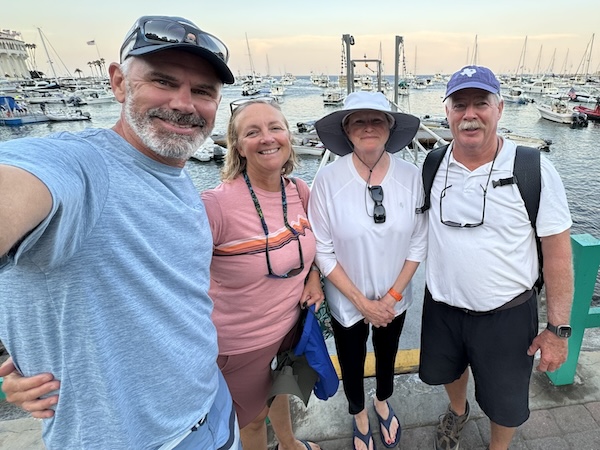
Charlotte and Elliott Metcalfe caught the sailing bug from their son. “We reduced our bank account by helping him refit his Hans Christian at Puerto Peñasco in 2020. It was after watching couple after couple launch their boats for the season that I got the idea cruising might be in our future, too,” Elliott explains.
The couple from West Hollywood/Modesto will sail their 1993 Catalina 42 Quixote. They bought the boat in San Francisco Bay, with the intention of relocating her in San Diego and refitting her in time for the 2026 Ha-Ha. And that’s what they’ve done.
Elliott, 60, a retired physician, and Charlotte, a sales director for Mary Kay Cosmetics, will doublehand to Mexico.
“We bought our first boat, a Catalina 30, in 2022,” Elliott continues. “We took a couple of lessons and made the typical early mistakes — a couple of groundings, docking misadventures, and sail trim shortcomings — while on San Diego Bay. But we enjoyed the ability to travel to fun places with fun people, and then squeeze into a really tiny V-berth at the end of the evening after having one or two too many drinks. Over the last couple of years we’ve sailed to Catalina and up the California coast.” Elliott has also cruised with his son on his Pacific crossing.
“What it means,” Elliott says, “is I have enough knowledge and experience to dream big, but enough respect for the ocean to start small.”
“The 42 is a fantastic upgrade after the 30,” they say. No wonder Catalina sold almost 1,000 of them under the ownership of legendary Frank Butler.
“We renamed our new boat Quixote after my favorite fictional character,” says Elliott. “He would have made a great boat captain, although a short-lived one. I hope to avoid his fate and achieve many years of happiness and adventure aboard Quixote with Charlotte, who is my Dulcinea.
“We are really looking forward to meeting our fellow Ha-Ha’ers and becoming a part of the cruising community,” the couple report. “Charlotte and I are quite social and plan on very liberal use of our dinghy for visits in anchorages. If you see us coming and are thinking about hiding belowdecks, keep in mind that we always bring wine and snacks, and we usually leave when those items are exhausted.
Elliott and Charlote plan on spending the winter in the Puerto Vallarta area after the Ha-Ha, and then going back up to Puerto Peñasco in the spring.
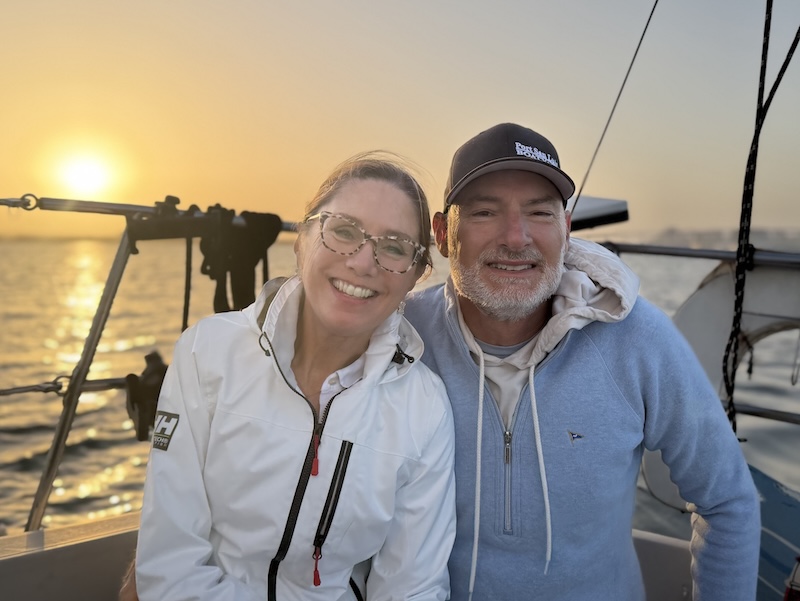
Matt Carey and Jessica England from San Diego will do the Ha-Ha aboard their Jeanneau 410 Sassafras. Matt, 39, is a major in the United States Air Force Reserves JAG Corps. This means he’s an attorney in the military, so watch your step. Spouse Jessica is a commercial litigator, so don’t mess with her either.
“We moved aboard Sassafras full-time in June 2025, just in time to turn our Ha-Ha into the ‘world’s longest, saltiest honeymoon.’”
“We tied the knot in March 2026,” Matt tells us. “Technically, we already did a transatlantic crossing for our ‘official’ honeymoon — but that was on a cruise ship with a spa. We’re pretty sure the motion of the ocean feels the same even when you have room service, so we’re counting it as heavy-weather avoidance training.”
By the time the fleet heads south the couple will be semi-retired. They are officially calling it a sabbatical: “We plan to keep it ‘indefinite’ for as long as we can get away with it.”
How do two attorneys deal with doublehanding? “We try to leave the litigation at the dock and promise not to file briefs against each other.” Although Jessica is considering a formal motion to suppress Matt’s unauthorized seizure of the snack supply. For his part, Matt pleads guilty to eating all the chips.
The couple generally enjoy doing their own boat maintenance, although Matt admits that his background as a former space-program engineer leads to some overplanning.
“But that engineering obsession has paid off,” he argues, “as we’ve successfully retrofitted a dishwasher into a 41-ft sailboat.” A dishwasher on a 41-ft boat?
“While we are ready for adventure, we draw the line at hand-washing dishes.”
After the Ha-Ha Matt and Jessica plan to spend a few years in Mexico before heading to Panama to “backward” through the Canal to the Caribbean. Matt will pick up military orders during the summers to top up the cruising coffers while avoiding hurricane season.
“Backward through the Canal?” Matt is referring to the fact that when you transit the Canal from the Pacific to the Caribbean, you are counterintuitively moving from east to west. That will often win a bar bet. So will the knowledge that parts of the Pacific Ocean are to the east of New York City.
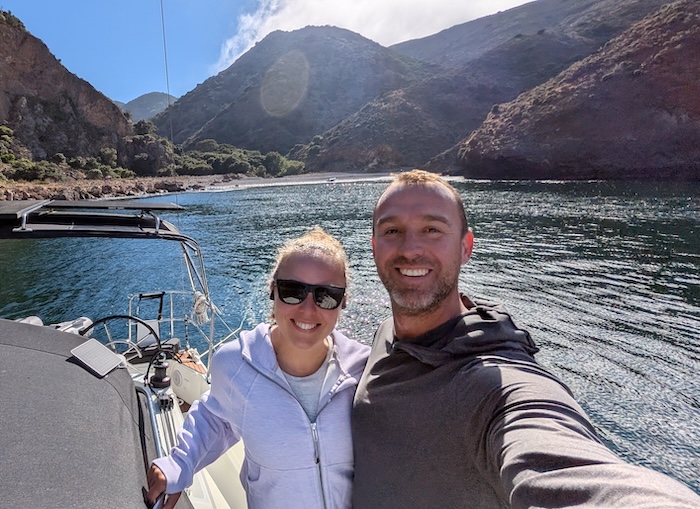
Keep an eye out for more 2026 Baja Ha-Ha bios. And if you haven’t signed up yet, do it now! Sign up here.
Champagne Sailing, Close Racing and Good Company
The Sequoia Yacht Club hosted a big Double Championship Weekend, combining the South Bay Championship with the 2026 Open 5.70 North American Championship. And, well … almost everyone showed up. Those who did were rewarded with some of the best sailing the Bay could offer. Five races over two days, great breeze, sunshine and the kind of conditions that make you wonder why anyone would ever choose to stay ashore. Champagne sailing at its finest.
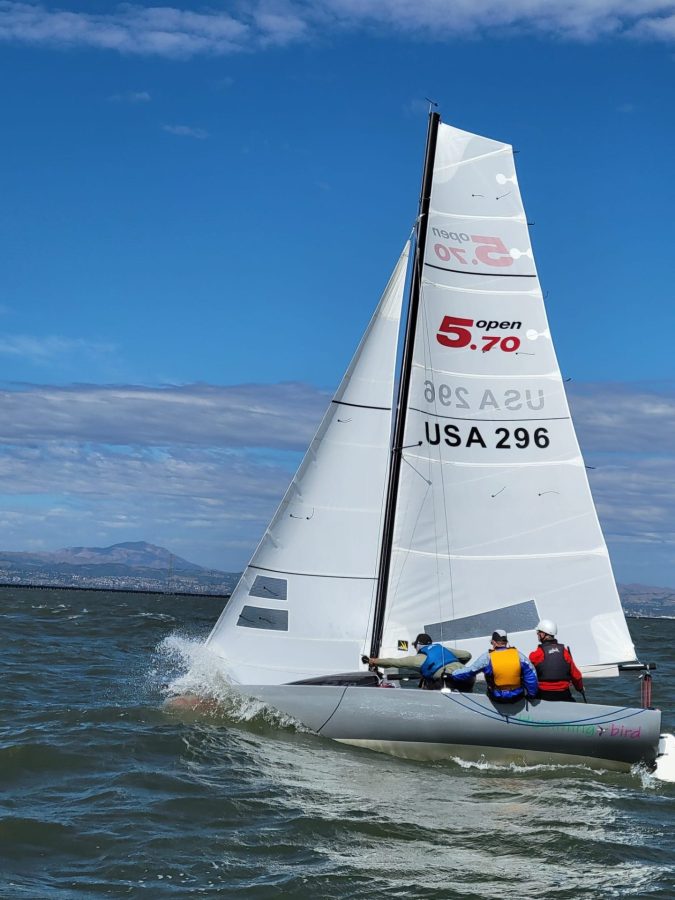
The Open 5.70s were right in the middle of it. With the fleet small but competitive, there was nowhere to hide. The boats are evenly matched, and every start, shift and tactical decision matters. A few boat lengths can make the difference between a good result and a disappointing one.
There was also a bit of new technology making its debut in the class. For the first time, the fleet raced with Velocitek’s RTK system, which can identify an OCS start instantly. A red LED ring on the RTK Puck gives the crew an immediate visual indication, while the OCS alert is also shown on the connected watch. A small addition, perhaps, but a useful one when the action at the starting line gets busy.
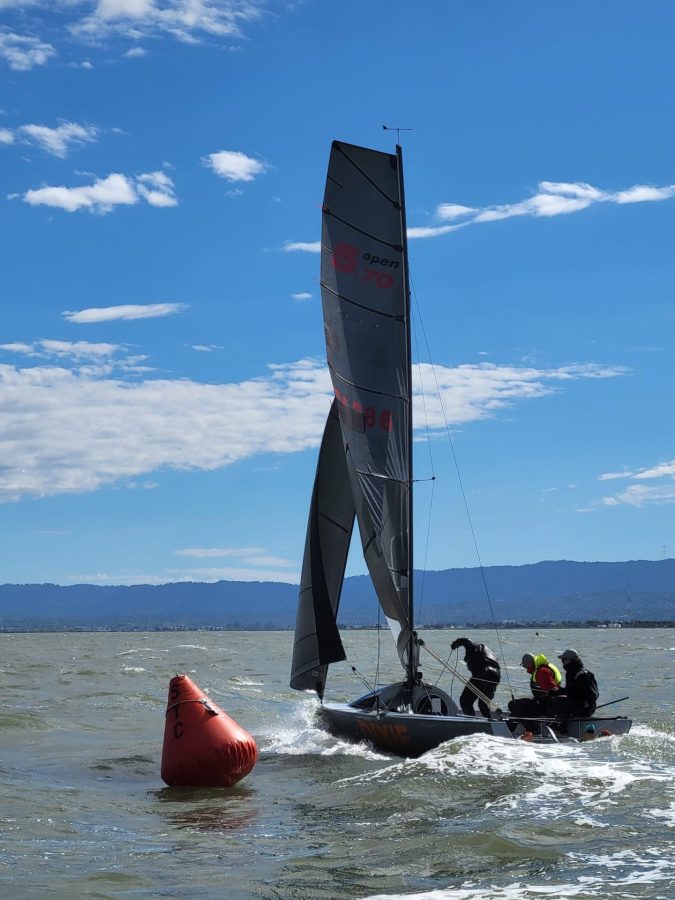
After five races, Felix Oehme and the crew of Dixie came out on top to take the Open 5.70 North American Championship, followed by Samantha Chiu on Altair and Andrew Lesslie on Hummingbird. But the results tell only part of the story.
One of the things that makes the Open 5.70 class so much fun is the combination of serious competition and genuine camaraderie. On the racecourse, everyone is fighting for every inch. Once the boats are back at the dock, the competitive edge quickly gives way to beers, stories, advice and plenty of laughs.
That atmosphere was on full display throughout the weekend. Stephen Stickells and his race committee team kept the racing moving and the sailors entertained, while the committee boat Voyager provided the perfect platform for getting five races into the books. And with good food and an excellent dessert waiting ashore, there wasn’t much left to complain about.
A big thank-you goes to the Sequoia Yacht Club for hosting the championship weekend, PYSF, Larry and Winston for the use of Voyager, Stephen and all the race committee volunteers for putting together a first-class event, and everyone who came out to race.
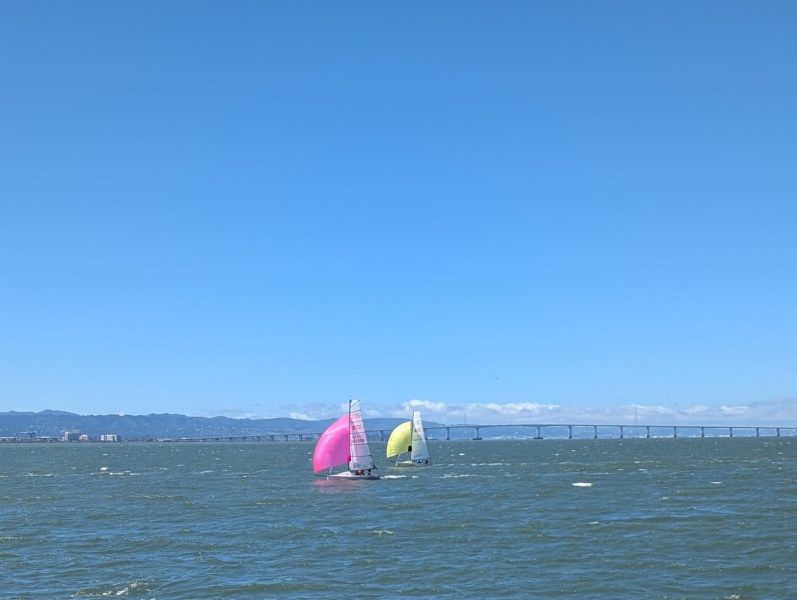
The Open 5.70 fleet may not have been the biggest fleet on the Bay that weekend, but it certainly made the most of it. Close racing, great conditions and a group of sailors who genuinely enjoy racing against and hanging out with one another.
That’s probably the best thing about the Open 5.70s: You can race someone as hard as you can, then help them tune their boat afterward.
If you missed this one, make sure you don’t miss the next one.
You can find the full results of the regatta here.
San Francisco on the Bay: “Trail Guide”

Dine, Drink, Smoke, Stay, Play and Shop. Discover San Francisco Bay and all that inspires those of us who live or visit here.