

Sailing in the 25- to 28-ft Sweet Spot
Here’s something we don’t often give much thought: The Latitude 38 Classy Classifieds has categories of boats broken up by size, such as 24 Feet and Under, 25 – 28 Feet, 29 – 31 Feet and so on. At one point, some bright spark must have suggested categories as great way to organize the “For Sale” ads, because it wasn’t always so. In the early days of the magazine there were no categories; ads were printed in the Classified section in the order they arrived in the mail.
We don’t know if they’ve spent much time in “warm waters,” but a couple of nice boats just showed up in the 25- to 28-ft category, reminding us of the variety of very sweet boats that come in that size. They’re inexpensive to own and maintain, usually quick to get off the dock for a sail, and are reasonably priced. Some of them are good for sailing the Bay and others for sailing around the world.
The three that caught our eye in that section today are shown below.
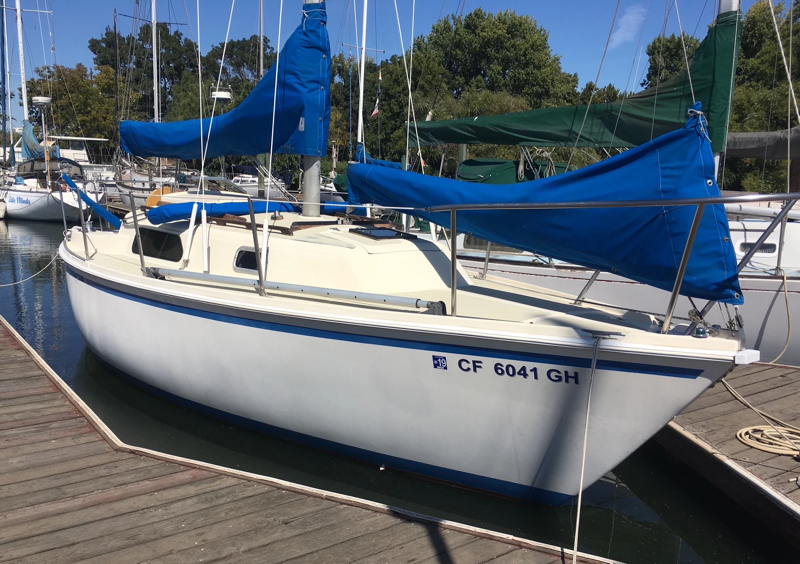
The Cal 2-25 is a Southern California Jensen Marine classic. The Cal 2-25s are comfortable pocket cruisers with reasonable headroom, an inboard engine and a head! The additional photos supplied with this boat, located in Stockton, make her look very clean and a perfect boat for sailing the Delta or San Francisco Bay. Latitude 38 founder Richard Spindler had a very basic, original Cal 25 that he trailered to Mexico for cruising in the Sea of Cortez. There were 392 Cal 2-25s built as an improvement over the older, very different Cal 25.
We’ve written about Albin Vegas many times, as so many people have cruised them all over the planet. One of the well-known voyages of Albin Vegas was by West Coast sailor John Neal. He and Barbara Merritt cruised the South Pacific aboard the Albin Vega Mahina. Mahina was recently restored in Seattle. Matt Rutherford solo-circumnavigated the Americas on an Albin Vega about a decade ago, which, of course, includes transiting the icy Northwest Passage! SailboatData says 3,450 were built. The ad for the Albin Vega pictured below says, “She has undergone a serious refit with the intention of cruising.” She’s located in Monterey.

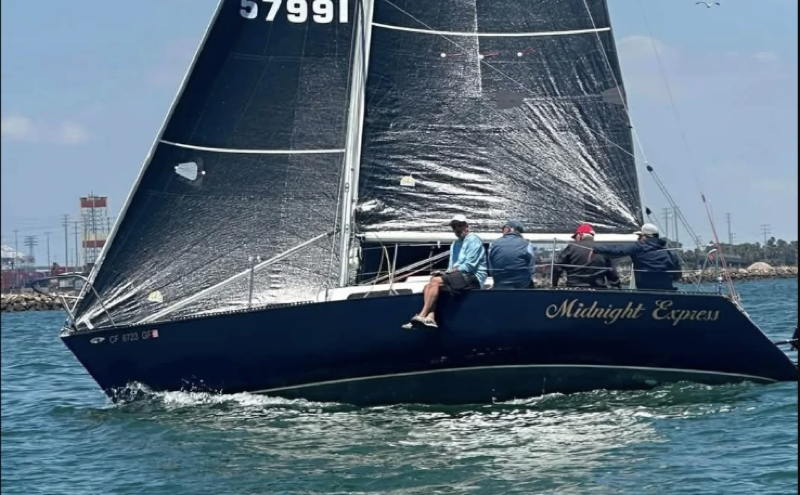
If you’re looking for racy in this size range, the Scott Kauffman-designed, Dennis Choate-built CF 27s were fast when they were built in the mid-’70s, and they’re still winning today. Midnight Express reports they finished second in the recent Long Beach Race Week. Now she’s available and has some new sails as well. Records show 36 CF 37s were built.
There are 11 boats total, including the three above, in the 25–28-ft section of our Classy Classifieds. It’s a great-sized boat if you want to race, gunkhole around the Delta, have fun with friends, or circumnavigate the globe. They also don’t need a large crew to sail and are quick and easy to get out for a sail, and buying new sheets or other boat bits can be far less expensive than the cost of caring for larger boats.
Who’s got a story of sailing one of these three types of boats?
P.S. If you want to sell your boat, list it in the Classy Classifieds before 5 p.m. Saturday, August 15, to be included in the September issue of Latitude 38 print magazine.
- West Coast Sailing
- Commentary
- Sailagram
- Pacific Cup
- General Sailing
- Racing
- Cruising
- Chartering
- Maritime History
Sailagram: A Snapshot of July Sailing
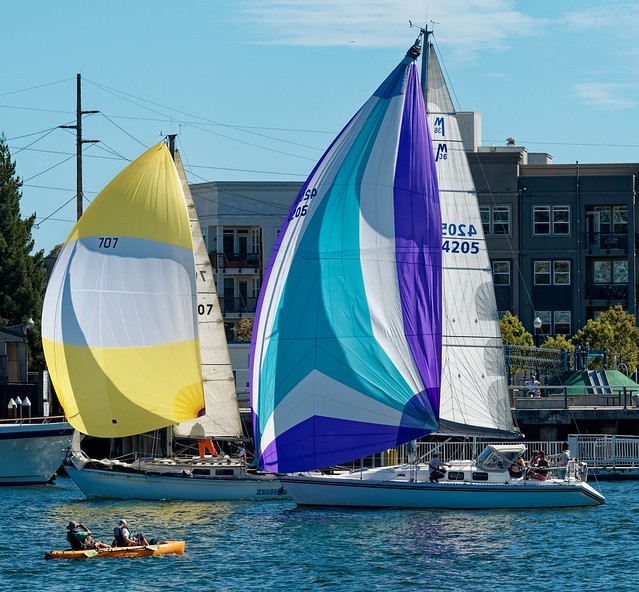
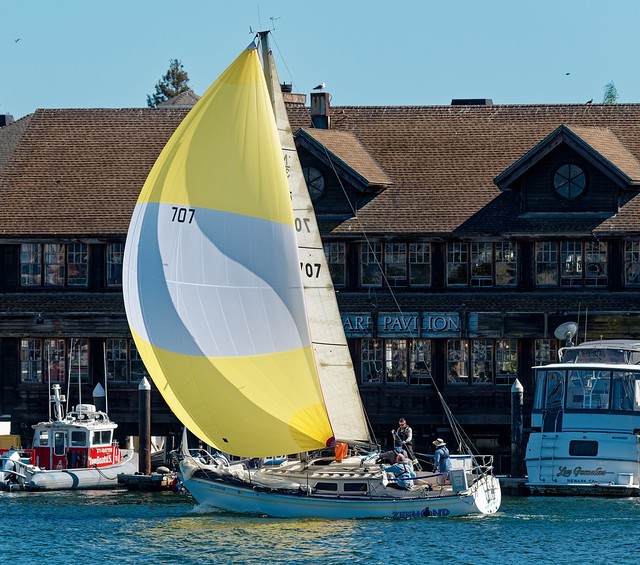
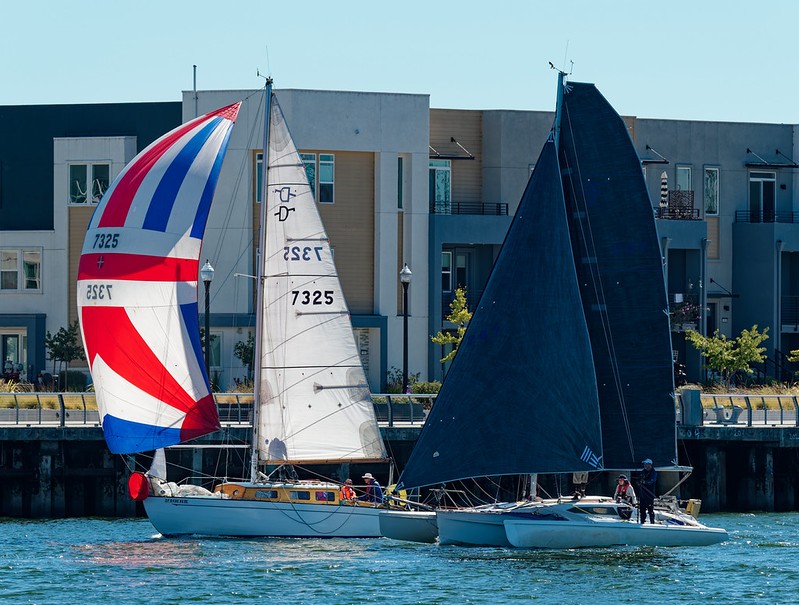
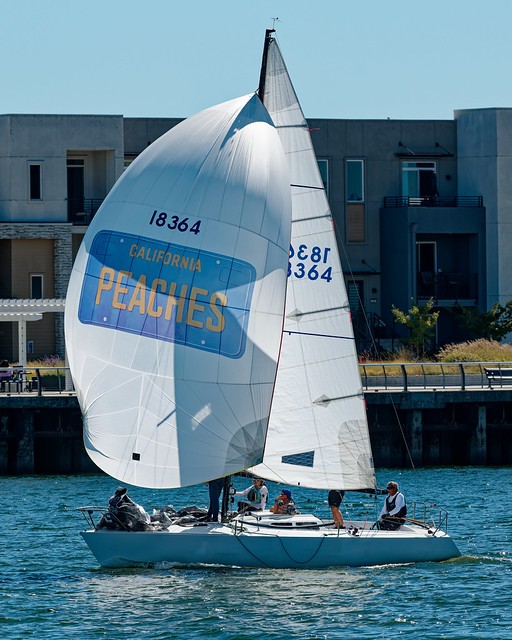
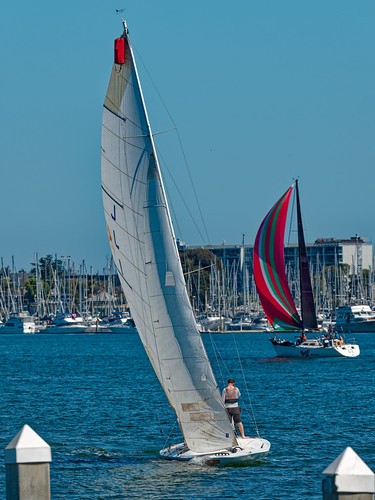
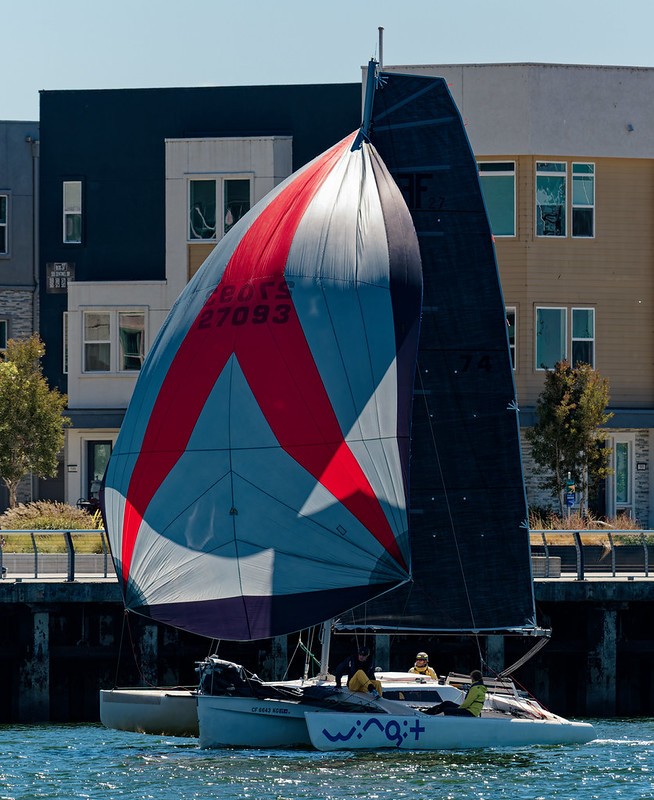
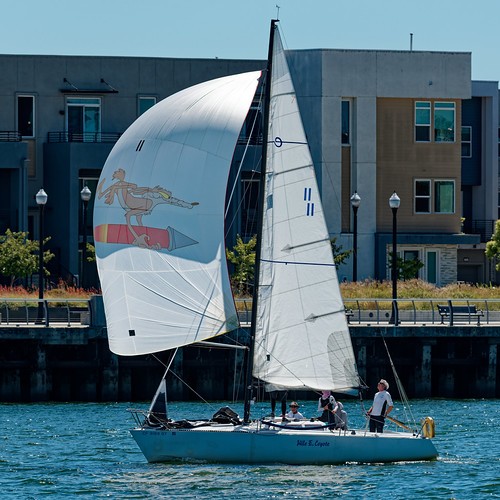
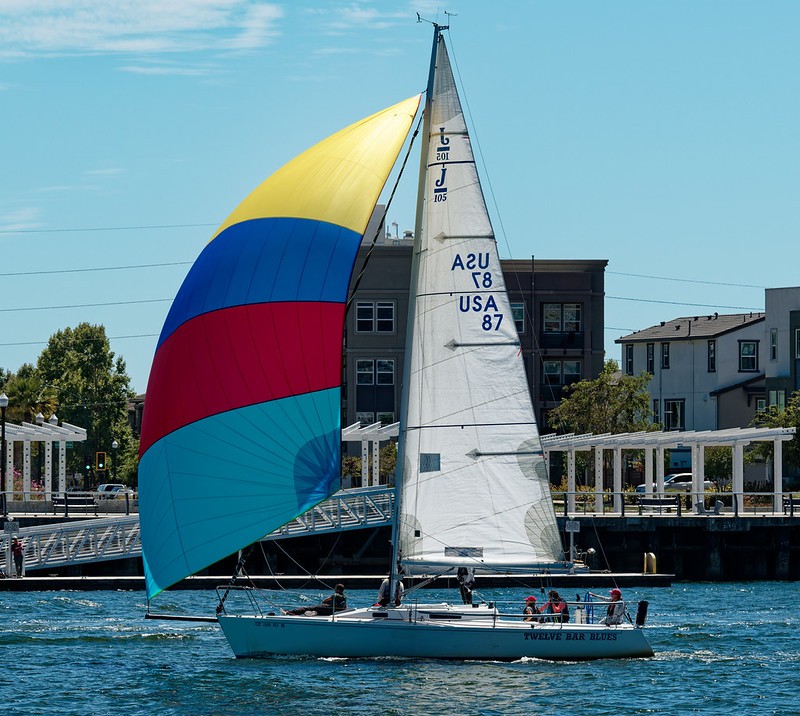
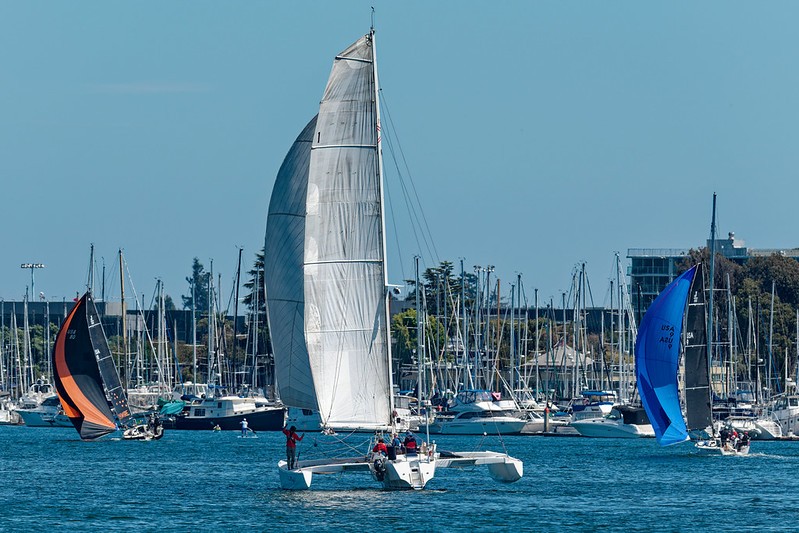
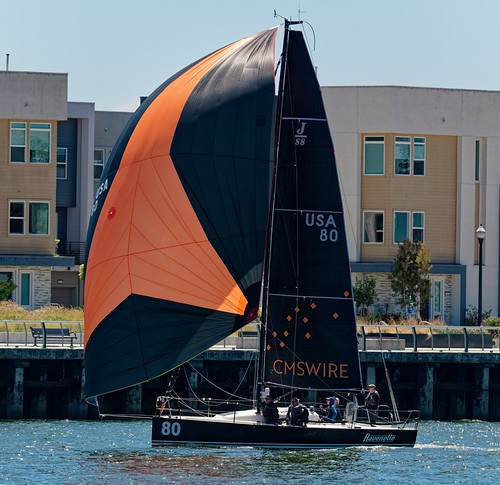
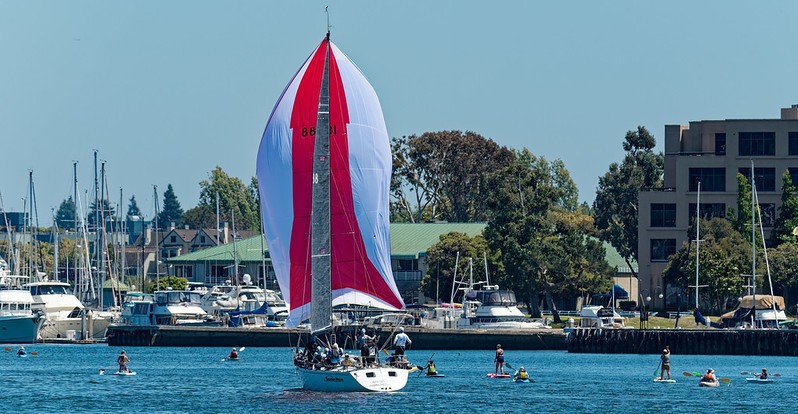
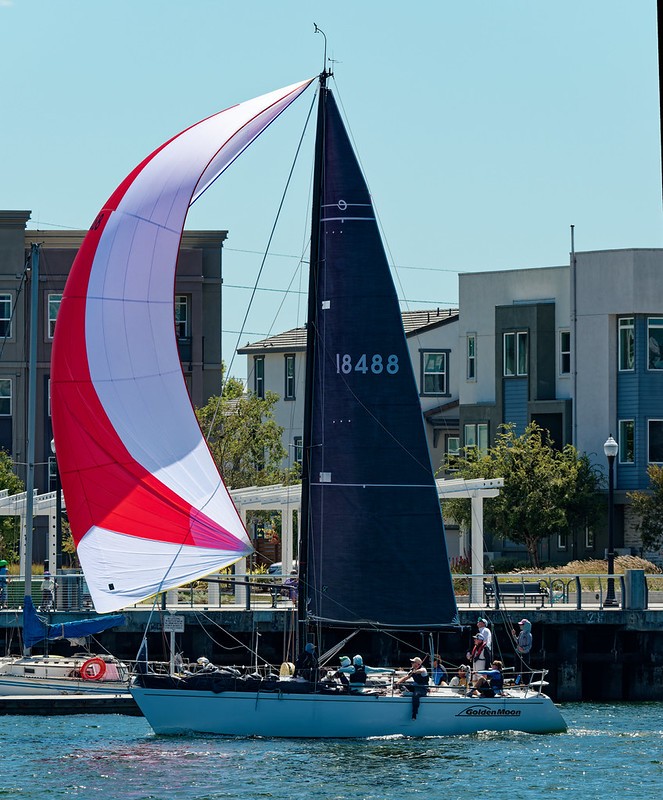
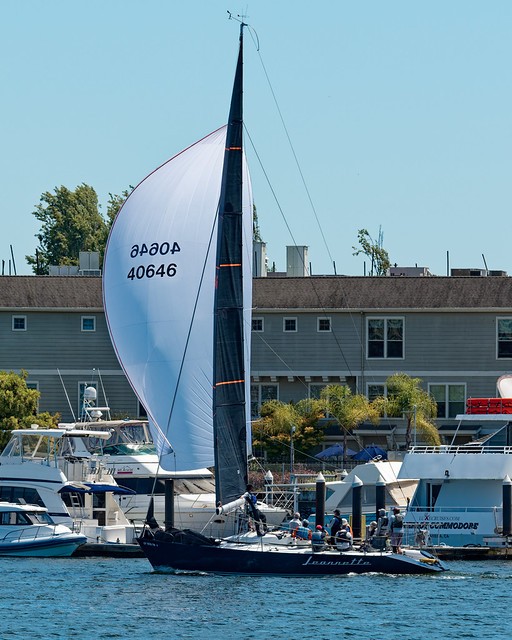
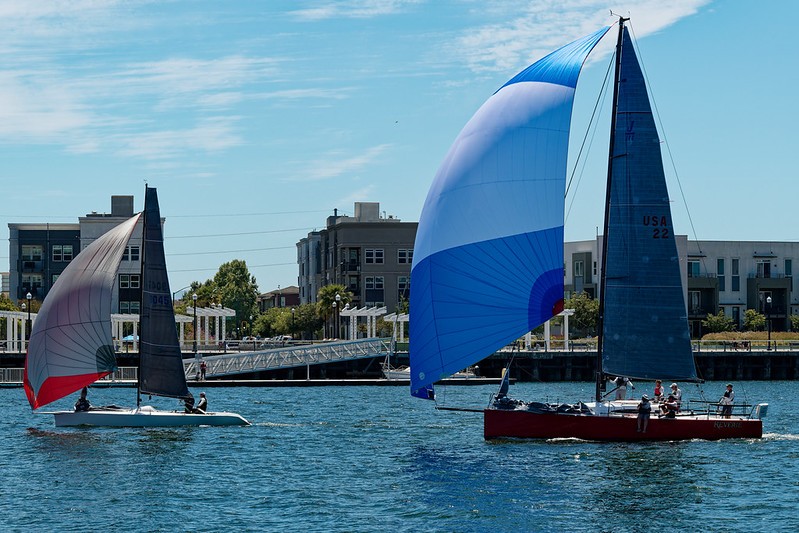
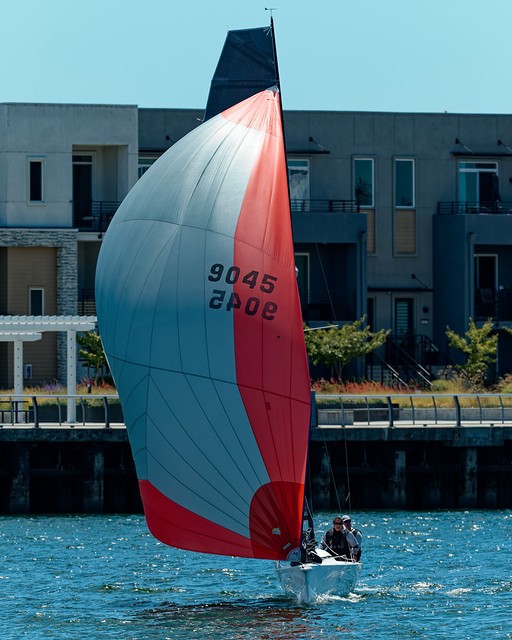
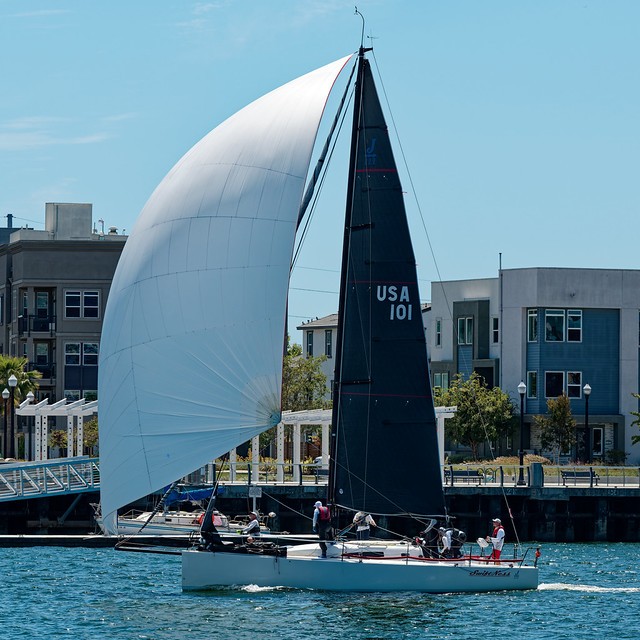
Welcome to July’s Sailagram. This month we share photos of sailors from up and down the West Coast, to Hawaii, and even a drop-in from France. We hope you enjoy this month’s gallery.





Quality Yachts With Premium Service From Swiftsure Yachts

Swiftsure Yachts offers exceptional service, quality brokerage boats and new yachts for world cruising. Visit our website swiftsureyachts.com.
The Resourceful Sailor’s DIY Winch Maintenance
Have you been thinking about doing your own winch maintenance on your sailboat? Maybe you want to, but haven’t found the time? Or maybe finding “the time” is really about finding the nerve? The unknown mechanical wizardry hidden below a winch’s sleek exterior can be intimidating. Are you afraid of losing valuable pieces? Are you worried about a mess? This Resourceful Sailor installment aims to demystify the process and inspire gumption and confidence by giving a few tips and insights to set you on the path to successful winch maintenance.
I won’t give a step-by-step approach to winch maintenance. That would be impractical and misleading. Winches of different manufacturers have different builds, and the larger and more powerful the winch, the more sophisticated its innards.
My examples for this installment are the Lewmar 8 and the Lewmar 16ST, which are small-boat winches. Their simplicity is a good introduction to the uninitiated. The 8s were on Sampaguita, a Pacific Seacraft Flicka 20, and the 16STs were on Mustang Sally, a 26-ft Thunderbird. Both boats were in the water during maintenance and were completed in an afternoon, a reasonable expectation for most sailors.
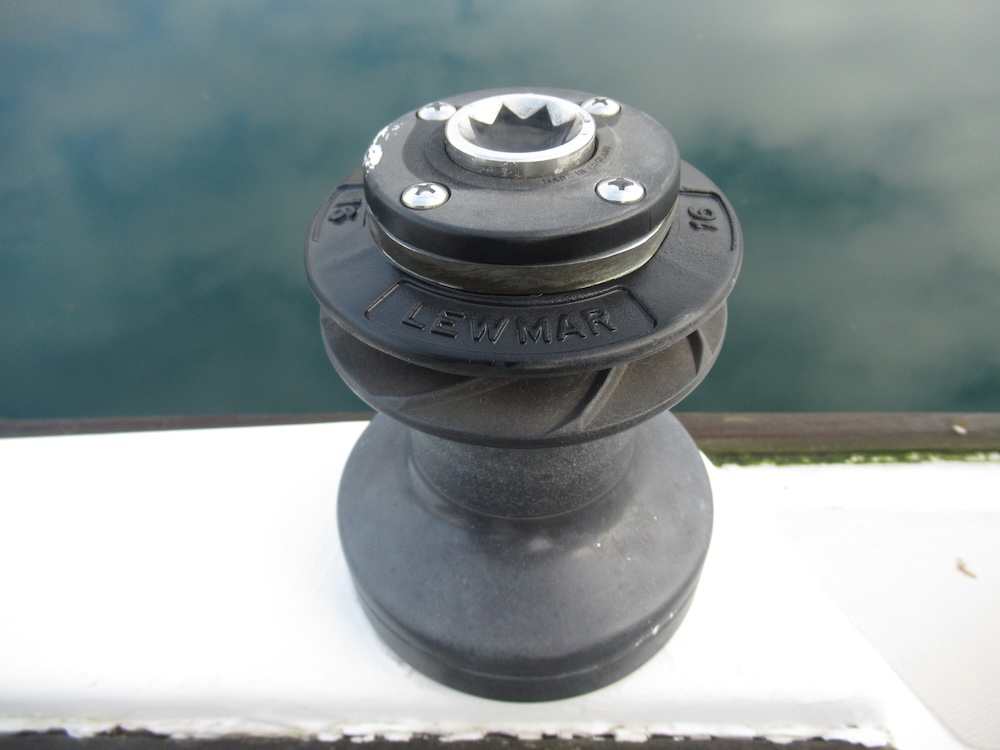
The above winches do not need removal for meaningful maintenance. Many do not. The crux is that winches are often “living on the edge,” installed on exposed cabin tops, cockpit coamings and masts. These positions lend themselves to winch parts inadvertently being lost overboard or down a drain. I think this is one of the main inhibitors to DIY winch maintenance. It is the pawls and the pawl springs that are most likely to be lost. These last are very small and difficult to handle, and easily “spring” away. It is also these pieces that are the ones most likely to need replacing. Therefore, I would recommend at least one manufacturer’s spare parts kit on hand for each winch model worked on. A plus is that many spare-parts kits cover a span of winch sizes. This kit may also include some plastic bits and bushings that may wear at a different rate than the metal pieces.
For example, Sampaguita had four Lewmar 8 winches, so I made sure I had one spare-parts kit on hand. It is also possible that the winch’s pawls and springs are in fine condition, with just a need for cleaning. That has happened far more than not in my experience. In this case, hold on to your spare kit for the next time. If you do change parts out, keep the old as spares. The Resourceful Sailor believes it is better to have a used part than no part at all.
Of course, not losing pieces at all is best, especially gears, bearings and spindles. These are replaceable, but I shudder to think of their costs, and they are not the kind of parts you are going to buy ahead of time. Enter your friends: a couple of repurposed cardboard boxes. They will serve two purposes. One will have a winch-sized hole in its bottom for placement over and around the winch. The box will serve as a basket to catch inadvertent stray parts, acting as a barrier between the winch and the water. It can improve confidence, which in turn can aid performance. The other box, with no hole in its bottom, is a protected area for holding and cleaning the disassembled winch and helps to keep the parts together and the boat clean. Preventing a mess is usually easier than cleaning one up.
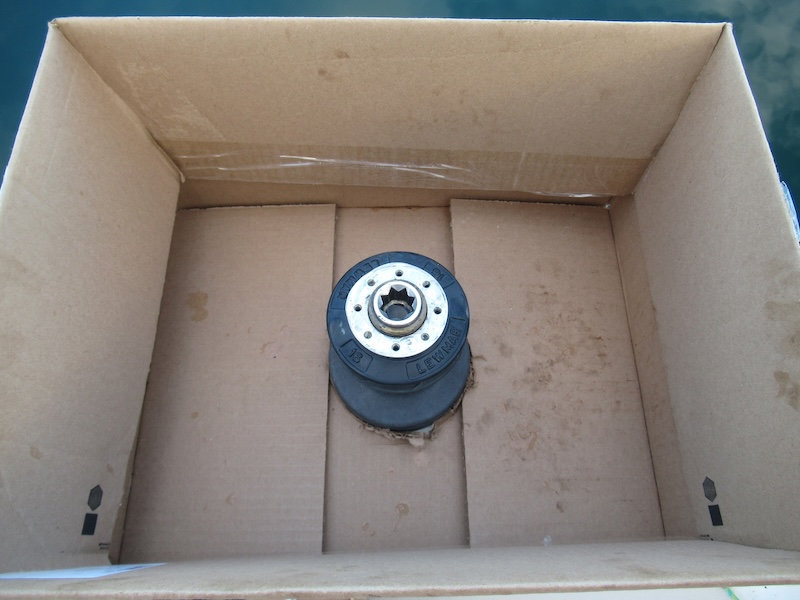
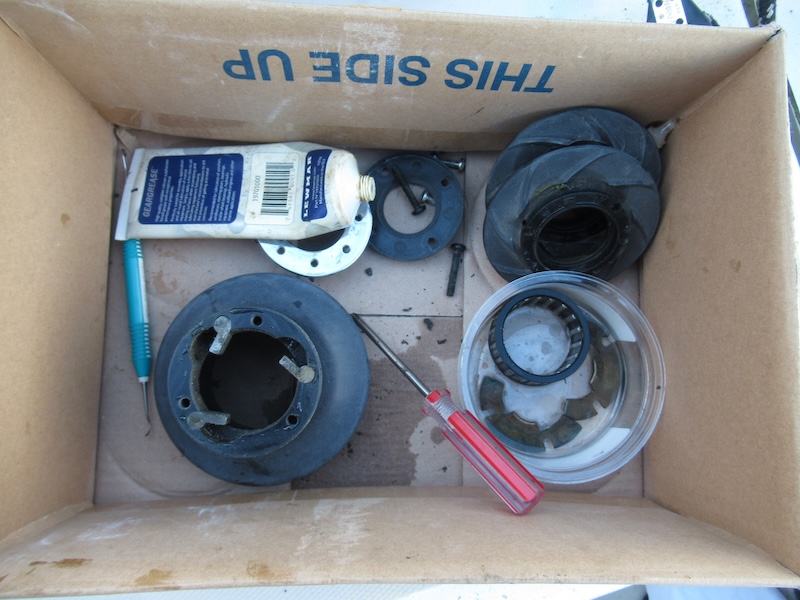
Neglected winches will have caked-on, sticky grease on almost every part inside. Cleaning the parts is the most difficult and time-consuming aspect of the chore. Once familiar, disassembly and reassembly of the winch may take only minutes. The cleaning will take considerably longer. A solvent will be helpful. Lewmar recommends mineral spirits because this is the least damaging to plastic pieces. Have plenty of rags and a dish for soaking pieces on hand. A toothbrush is an excellent tool for detailed cleaning of the many nooks and crannies of a winch, though be cautious about the bristles flicking dirty solvent around your boat. A deep cardboard box shines for this purpose.
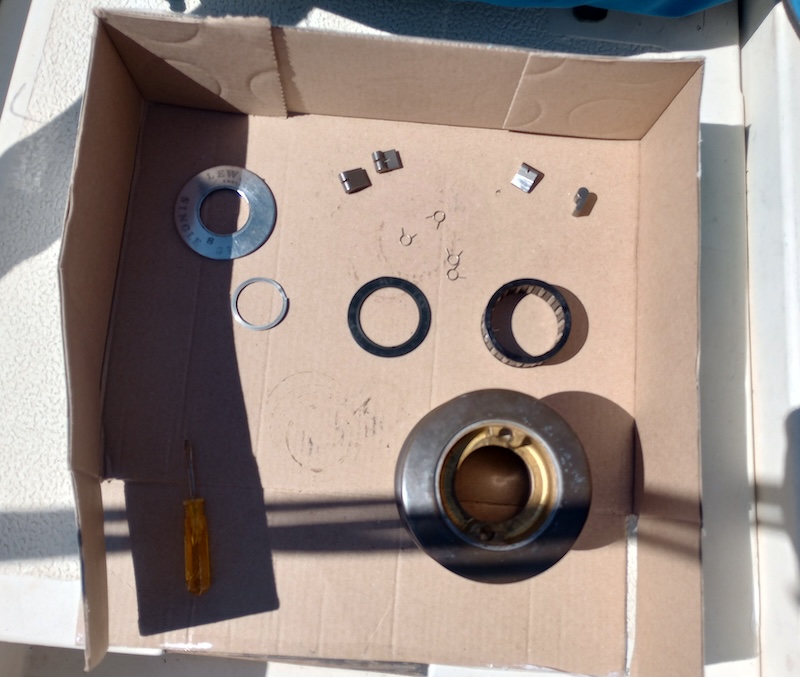
Proper reassembly is important, too. With the Lewmar 8 and the 16ST, this was easy and intuitive, lubricating the pieces as I went. I used a thicker grease for most parts, but the pawls and pawl springs required a lighter oil to prevent them from getting sticky and performing poorly. The winch manufacturers sell proprietary lubricants at a premium price. Only one’s wallet can go wrong with them. That said, they don’t have the market cornered on grease. There are alternatives, such as boat trailer wheel-bearing grease for the heavier lubes and something like 3-in-1 oil or all-weather bicycle chain lube for the lighter. Resistance to moisture, salt and corrosion are the properties to look for.
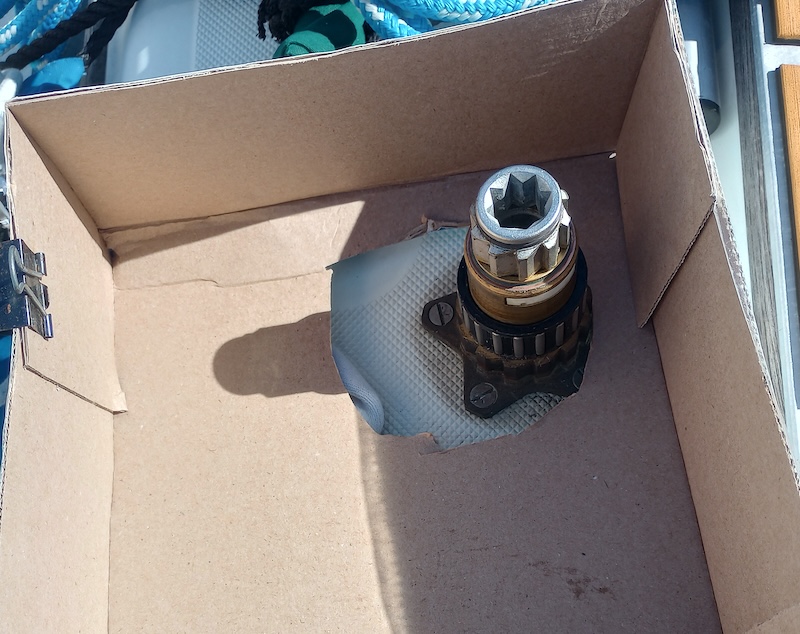
I used the Lewmar website to review their winch maintenance tutorials before my first go on each model. It gave helpful insight into each winch’s build. The clean, new winches dismantled in an indoor, controlled workspace were not a realistic maintenance presentation, but were still worth reviewing.
Winches are expensive and important sailing hardware, and it is prudent to maintain them properly. For the non-boat-owning racing sailor, it can be a way to contribute to an owner’s investment and elevate your own sailing experience. Once tried, the process may be much demystified. Additionally, the more often it is done, the easier and faster it goes, especially if you aren’t cleaning off years of crusty grease from a neglected winch. Use, environmental conditions and time will determine how often. In my experience and observations, winch maintenance is often delayed, and has never fallen into the “too much” category.
This video shows the process of stripping, cleaning, and reassembling the Lewmar 16ST.
Remember, keep your solutions prudent and safe, and have a blast.
And now for the bloopers …
A Surprise Victory in the Heineken Regatta
Living on the Peninsula in an adobe house is great in August but not so much fun in winter. That’s why we keep Sipsi in the BVI, mostly chartered out by Dream Yachts, but available for us when we need to escape. This year we were late and finally booked for the first two weeks in March, without even teeing up a crew in advance. With only four weeks to go, only Doug had signed up, so I was scrambling to fill the other berths when two of our usual suspects relented. Dave and John, both octogenarians, decided to come while still “able bodied with all faculties!” Then Shaun, erstwhile shipmate on our 2016 Clipper training, signed up with his son James. So, with a full boat and a two-week slot, we were hatching plans to visit St. Maarten when Doug noticed our trip coincided with the 2026 St. Maarten Heineken Regatta. I sought out the regatta rules and Notice of Race and procured sail numbers for Sipsi’s bare mainsail, then signed us up for the regatta’s Island Time Class, which seemed a good fit. And so it turned out to be.
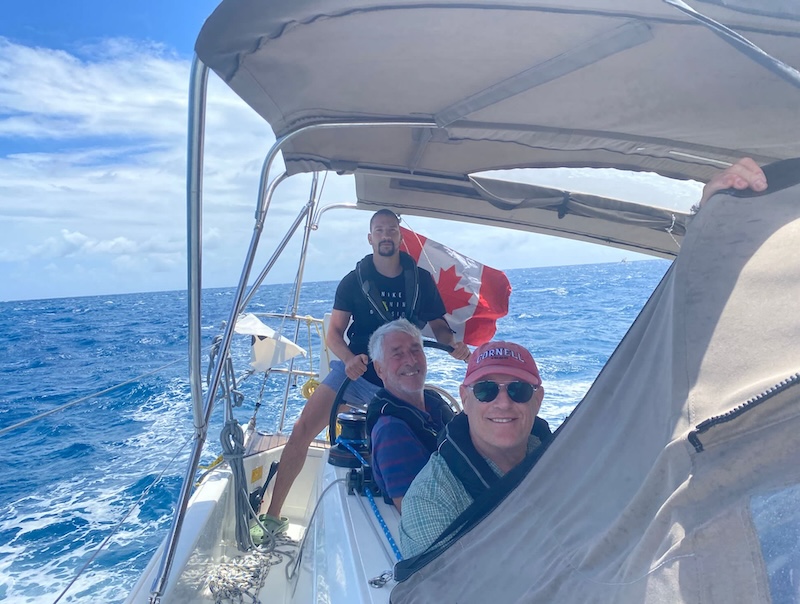
We left SFO on a redeye to BVI just as war was breaking out. Shaun, who lives in Qatar, left Doha for Paris on the last day planes were still flying, oblivious to what was coming. He denied getting tipped off, which I still don’t believe. Our upwind crew wanted a quick BVI tour, so we wafted down to Norman Island and dinner at Willy T, then headed back for a session with BVI immigration in Spanish Town — far more relaxed than the staff in Road Town.
Tuesday morning saw us cleared out and close-reaching up the west coast of Virgin Gorda with both of our two reefs. When we got around Buck Island and headed southeast, it got choppy. Sipsi hammered along, however, and I felt vindicated in choosing a twin-rudder boat. Not heading up in gusts more than compensated for the missing propwash nudge when maneuvering into a slip.
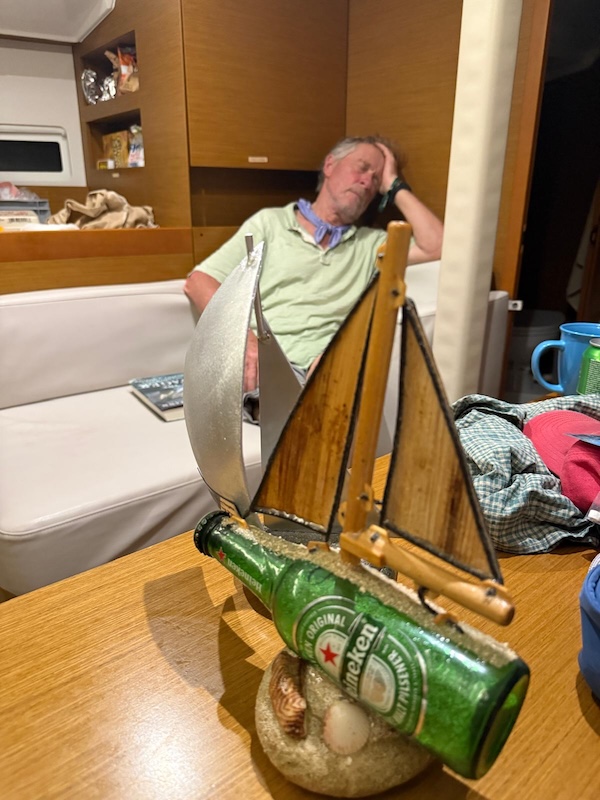
Then boo-boo No. 1. I went below to store up some sleep without first agreeing on a watch system. Nobody else would come down; only later did I find out that for most of the day, we were all feeding the fish. At 11 p.m., I went up again to insist — duh, no takers, they needed the fresh air.
Hand-Crafted Custom Captain’s Hat!