

Santa Barbara YC Hosts 2026 J/70 Nationals
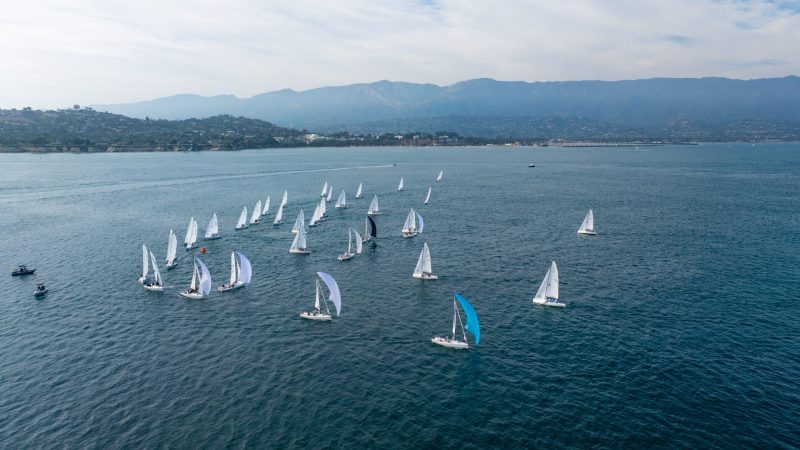
The 2026 J/70 National Championship saw 37 teams from both the West and East coasts descend on Santa Barbara from July 10 through 12 to duke it out in Southern California’s beautiful conditions. Of the 37 boats that competed, 25 of them were in the Corinthian division. When the dust settled, David Janetti’s Odd Racing (Breakwater YC in Sag Harbor, New York) took home the national title.
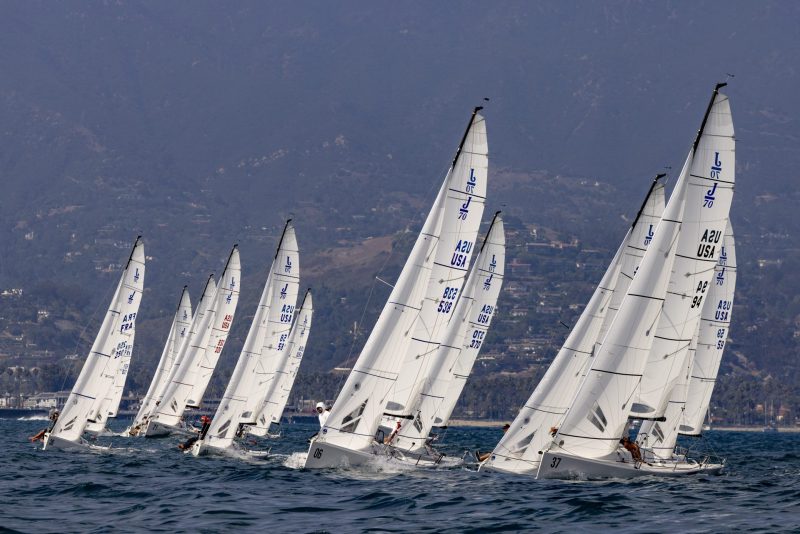
Janetti and his team of Willem Van Waay, Geison Mendes and James Golden finished with a net total of nine points from seven races. Odd Racing won three of the races, and finished second in three more. The team’s only finish outside the top two would be an 18th in race two, which would become their throwout.
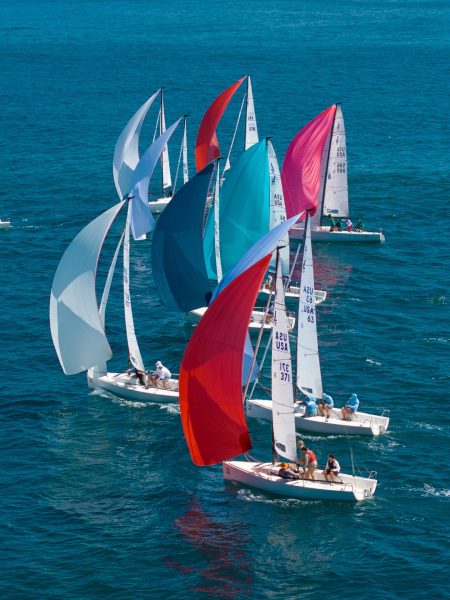
“It was a fight all weekend,” Janetti said of the racing, per the official regatta press release. “”The top teams sailed incredibly well, and Santa Barbara was amazing. We had a terrific time, and we’ll definitely be back”
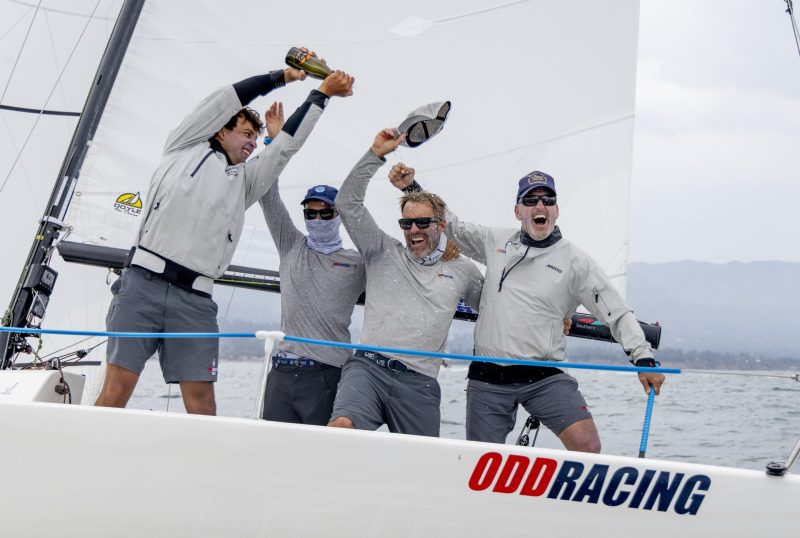
“Our goal was to get off the line clean, find space, tack to the right side, and manage the fleet,” Van Waay said of the racing, again per the press release. “Everyone stayed calm, trusted each other and just focused on doing their jobs.”
In second place behind Odd Racing was Andrew Loe’s Dime (Seattle YC/Corinthian YC of Seattle), representing the growing J/70 fleet of the Pacific Northwest. Dime never finished a race worse than sixth, and won the third race of the event.
Rounding out the podium and winning the Corinthian national championship (Odd Racing and Dime both had category three sailors on board) was another West Coast boat, Ventura Yacht Club’s DJ, skippered by Ryan Cox and his crew of RD Burley, Mike Uznis and Stanton Smith.
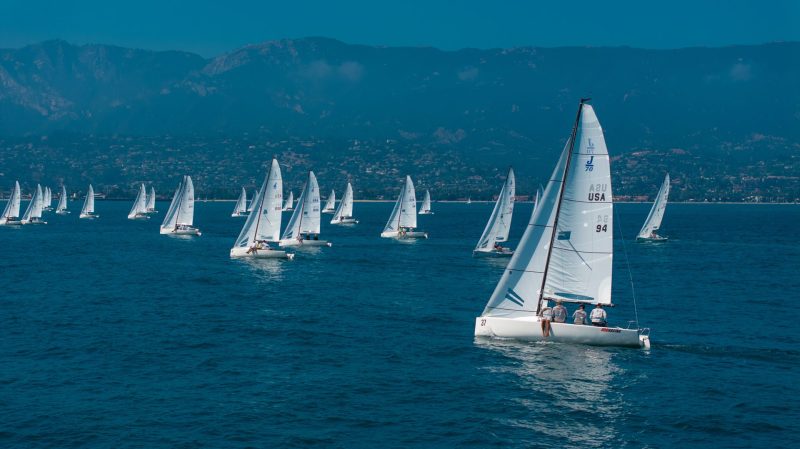
DJ’s net total of 21 points put them just behind Dime. The Corinthian team got off to a hot start, winning the first race of the event and finishing third in the second. From that point on they remained consistent, finishing between fifth and seventh in races three, four, five and seven (while also winning race six), but were not quite able to keep up with the dominance of Odd Racing, and narrowly finished behind Dime.
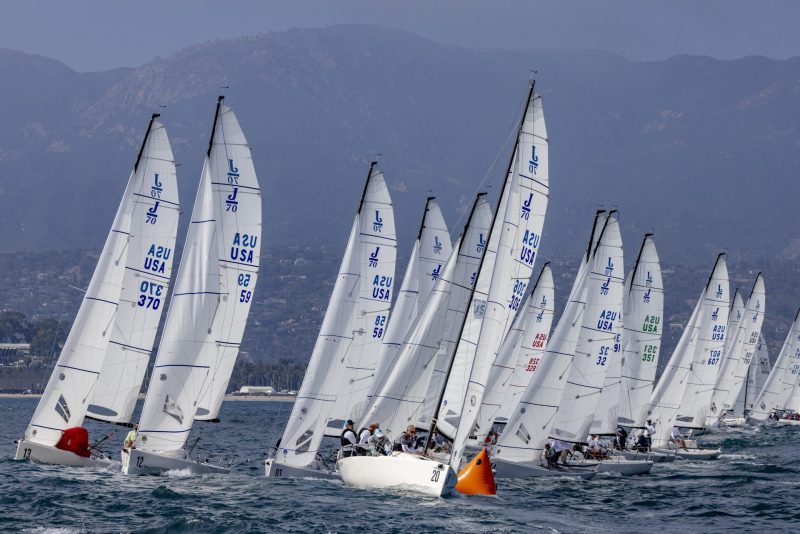
DJ narrowly edged out a professional boat (Jeff Janov’s Crester (CalYC), who finished with 22 points) for third, and finished three points ahead of the second Corinthian boat (and fifth overall finisher), Dalton Bergan’s Mossy (CYC/SYC).
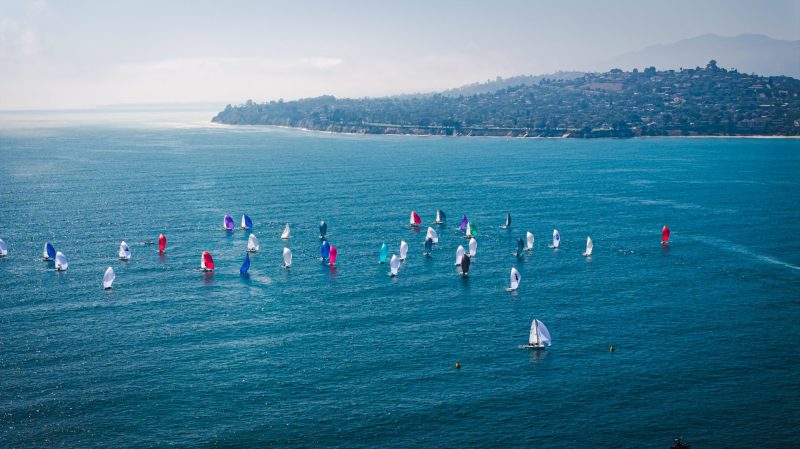
“I got a boat about five years ago,” Cox said after the regatta, per the press release. “I learned a lot sailing with Team Hedgehog, trimming before moving into the driver’s seat. The goal was always to qualify for Worlds, and now we’ve done that. We’re here quite a bit. They’ve got the best J/70 fleet in California. It’s really exciting to have a national championship so close to home.”
You can find the full scores from the 2026 J/70 National Championship here.
Treasure Island — A Treasure of an Anchorage
Treasure Island isn’t for everyone. Hit it wrong and you’ll end up stuck in the mud, wondering why anybody ever recommended it in the first place. Misjudge the tide and you may find yourself sitting still a lot longer than you planned. But maybe that’s exactly why I love it.
There’s something honest about an anchorage that demands your attention before it gives you comfort. Treasure Island has become my favorite spot in the Bay — not because it’s easy, but because it rewards people who actually know how to use a boat. You hug close along the docks as you come in, stay alert, and ease your way into one of the best-protected anchorages in the Bay Area.
Once you’re set, the holding is fantastic. The current softens, the wind drops away, and suddenly the whole Bay changes character. The city lights begin to glow around you while the Bay Bridge towers overhead like something out of a movie.
My first date with Jac happened there. I took her sailing, dropped anchor, and we pushed our luck a little too far at low tide. We knew we were flirting with disaster. Then suddenly: mud. Hard aground. Instead of panicking, I shut everything down, tossed out more anchor, cracked a beer, and smoked a joint, and we laughed ourselves silly while we made out and waited for the tide to come back.
Well, we weren’t exactly just waiting.
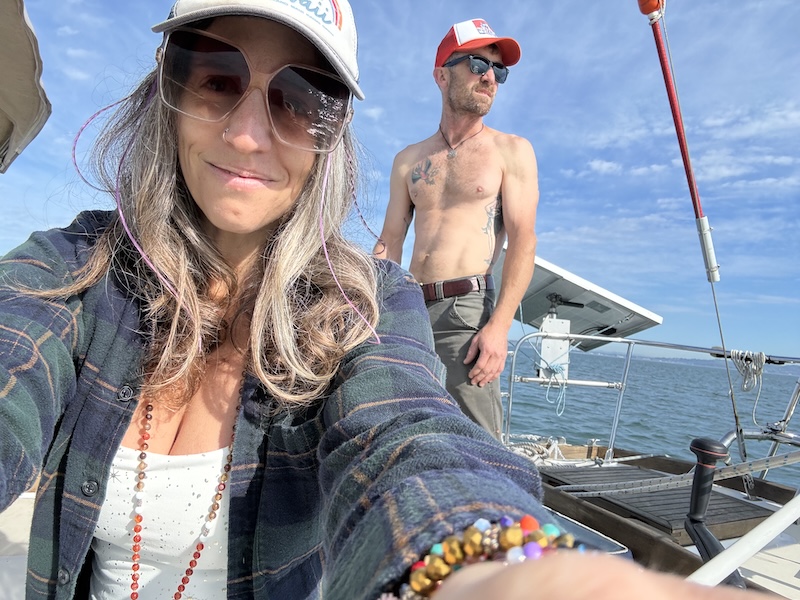
Anchorages are where cruising actually happens. The older I get, the more I think anchoring is one of the deepest metaphors in boating. Anchors can be viewed as a burden, a ball and chain, but out on the water, the anchor becomes freedom. It becomes safety. Rest. Pleasure. It’s knowing you can stop moving long. enough to actually enjoy where you are.
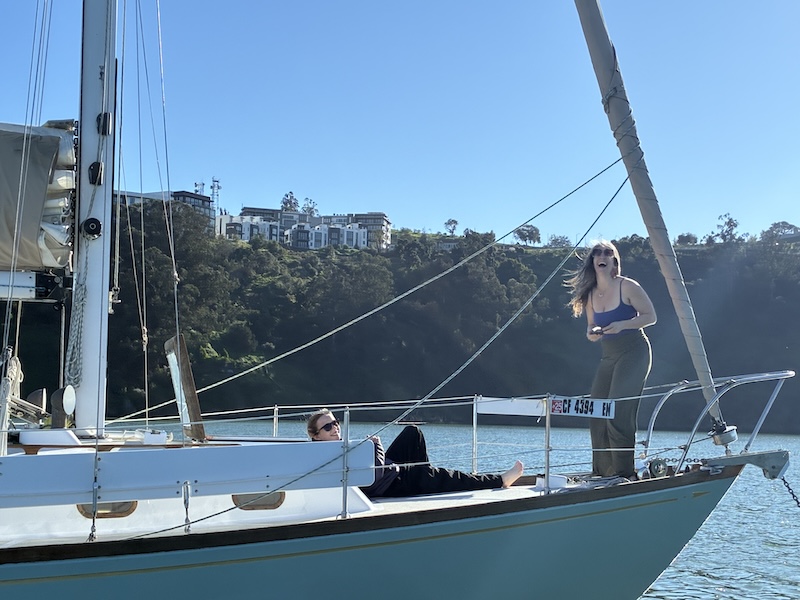
The other day, I was sailing toward Treasure Island with a woman I’d been teaching to sail when the engine suddenly died. One of my dock lines had wrapped itself around the prop. We were drifting in the Bay with no engine, no wetsuit and freezing water below us.
Premier Vessel Care at Safe Harbor
A Closetful of Latitude 38 Memories
“Dear Latitude 38,
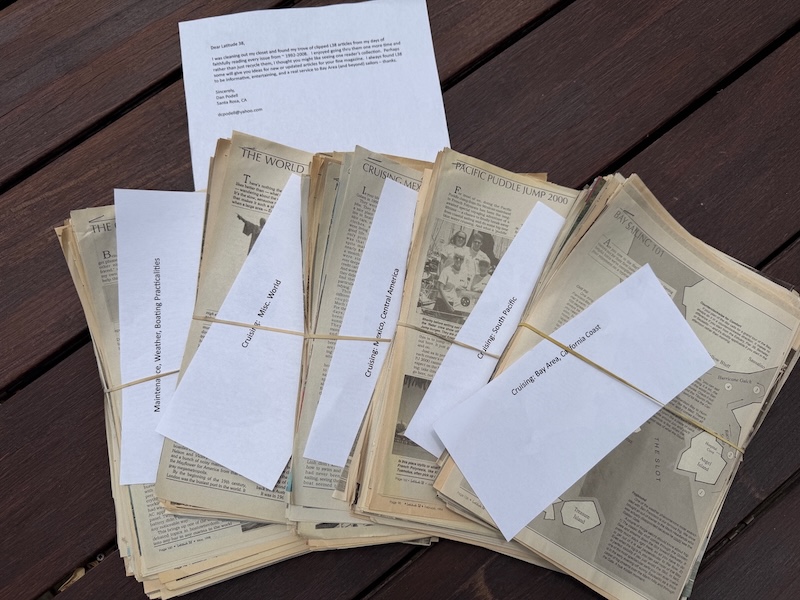
“I was cleaning out my closet and found my trove of clipped L38 articles from my days of faithfully reading every issue from ~1992–2008. I enjoyed going thru them one more time, and rather than just recycle them, I thought you might like seeing one reader’s collection. Perhaps some will give you ideas for new or updated articles for your fine magazine. I always found L38 to be informative, entertaining and a real service to Bay Area (and beyond) sailors — thanks.”
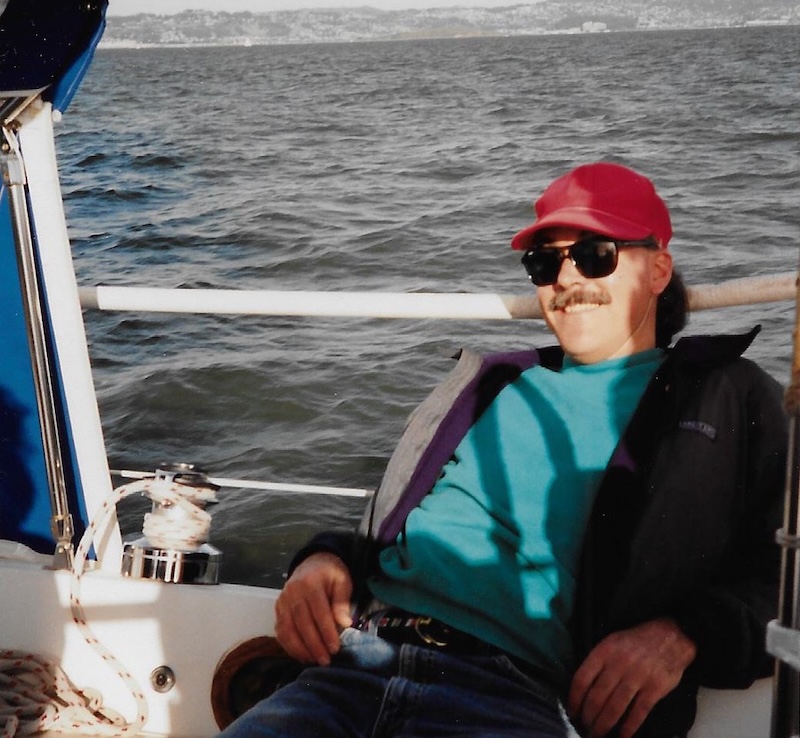
We received the above note from reader Dan Podell, who has been diligently reading Latitude 38 throughout his sailing life. Below is a follow-up he sent us, along with a photo of his younger self sailing his C27 on the Bay in the mid-’90s.
“I grew up sailing and racing my family’s Flying Scot and Pearson Ensign on Lake Michigan out of the Milwaukee Yacht Club. After moving to Northern CA in the 1980s I took up sailing again, exploring local lakes and reservoirs on a series of trailer sailboats I owned including a Catalina 22. Then from 1991–1996 I moved up to sailing the Bay on my Catalina 27 Kona Ku out of the Richmond Marina (bought and sold via L38 Classy Classifieds). No racing, just lots of great daysails and overnight adventures. I also spent three wonderful weeks crewing on a 50-ft ketch in the Sea of Cortez, crossing it twice sailing from Guaymas to La Paz to Puerto Vallarta with a couple I met through a Latitude Crew List party.
“After that I pretty much retired from sailing but enjoyed an occasional day charter on the Bay with a group of friends from work and kept in touch with the sailing world via Latitude 38.
“Regarding my trove of clipped articles: As you may have noticed, most of them deal with solid information on the practicalities of sailing and boat ownership — either “how to” or “destination guide”- type articles that I chose to save for possible future reference. But please know that I also thoroughly enjoyed reading all the great content in Letters, Loose Lips, Sightings, Max Ebb and feature articles each month — just didn’t save them. And I think it’s great that L38 still has the same organizational format and vibe after all these years.
“So, thanks so much for producing such a consistently great magazine for all these years. Keep going!”
Thanks, Dan, for the fun memories, and the great feedback. We love what we do and hope to continue for many year to come.
*Regarding the Crew Party Dan mentioned: What a great reminder of how sailors connect and get to begin or expand their sailing lives! Our next Crew Party is on Thursday, September 10. Come join us! Perhaps you’ll make some new sailing friends and set off on new adventures, just like Dan!
Seattle Sailors Jump the Puddle to the Marquesas Islands
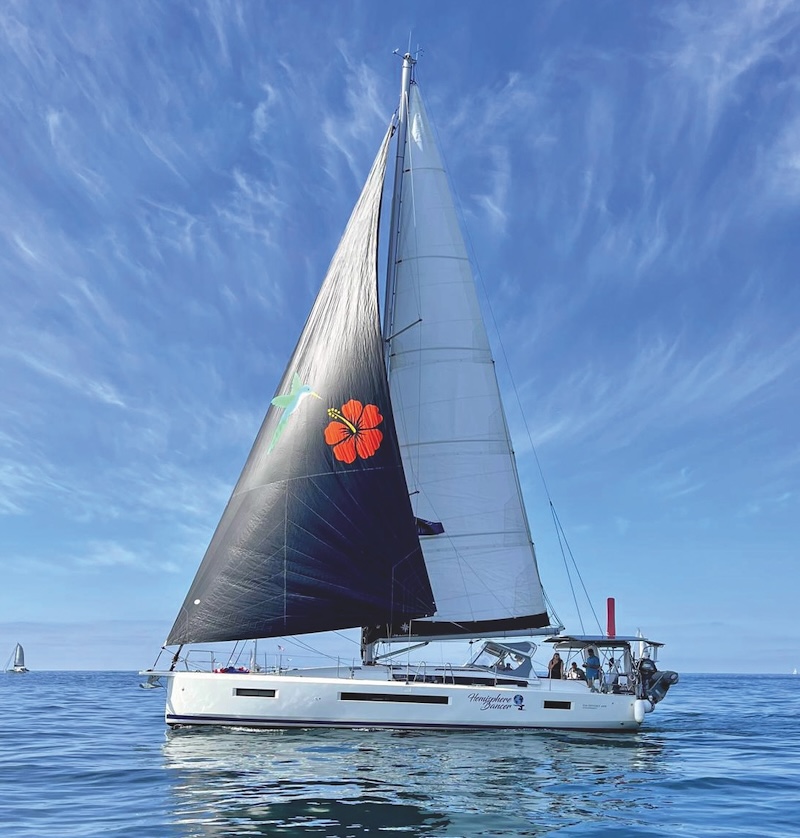
After a full-year forced delay, Deborah Bessolo and Doug Lobard felt ready to set off on their longest voyage yet aboard their Beneteau Sun Odyssey 490 Hemisphere Dancer.
The Pacific is the largest and deepest ocean on Earth, covering roughly one-third of the planet’s surface.
Years ago, sailors crossing the Pacific started calling it the “Pacific Puddle Jump,” a piece of tongue-in-cheek slang that intentionally minimizes the massive, daunting scale of the journey. At 3,000+ miles, the “Puddle Jump” is actually the longest nonstop bluewater voyage a cruising sailor can make, typically taking three to four weeks to complete.
Doug and I were determined to go on this adventure. We’d already sailed down the West Coast of the United States with the Coho Ho-Ho [an annual cruising rally from Puget Sound to San Francisco and San Diego — great for sailors joining the Baja Ha-Ha], and subsequently participated in the 2025 Baja Ha-Ha rally. We enjoyed a season cruising around Pacific Mexico and we felt ready. We began the effort of planning, preparing, and provisioning for our next adventure: sailing to French Polynesia! Our trip would have us travel approximately 2,700 miles to land in Nuku Hiva in the Marquesas Islands. Our excitement levels increased.
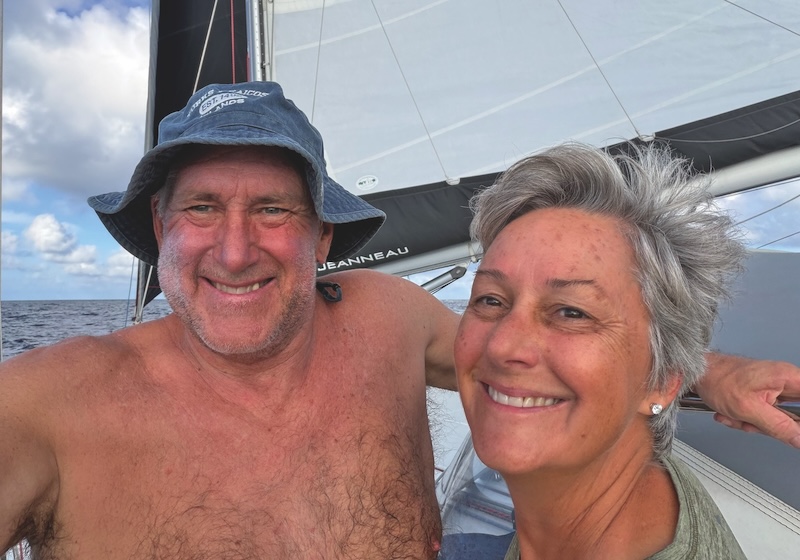
First, we organized crew. Doug’s daughter, Devon Lombard-Henley, had previously sailed from Hawaii to Seattle with her father, so she was an instant in. Her friend, Ari Marks, rounded out our four-person crew and made the night watches easier. We planned three-hour watches starting at 7 p.m. and ending at 7 a.m. Daytime would be more relaxed, without designated watch hours.
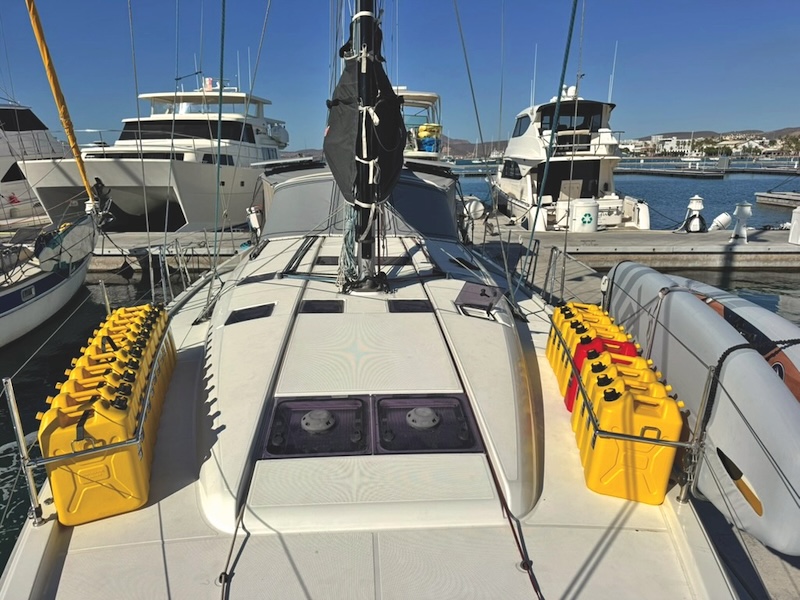
We evaluated the readiness of Hemisphere Dancer. After a setback in 2024 when our boat and several others were hit and heavily damaged by a 70-ft fishing boat that hit the docks at a Seattle boatyard — destroying our mast and setting our plans back a full year — Hemisphere Dancer was in great shape, with the necessary ocean-crossing hardware and software, tried and proven during our Mexico excursions. All that remained were a few final touches: getting the bottom cleaned and adding stainless steel racks to both the port and starboard rails for holding jerry cans full of extra diesel fuel. With 120 gallons of diesel in our main tanks and 100 more on deck, we felt we had enough to deal with the light and variable winds of the Intertropical Convergence Zone.
The ITCZ, as it’s commonly known, is a belt of low pressure circling Earth near the equator, where the trade winds of the Northern and Southern hemispheres meet. Sailors historically called this region the “doldrums” because the converging winds rise upward rather than blowing horizontally, leaving ships stranded for days or weeks with no wind. Additionally, as the warm, moist trade winds collide and are forced upward into the atmosphere, the constantly rising air creates a nearly continuous chain of massive thunderstorms, heavy rainfall and sudden, violent squalls.
We departed Cabo on April 1 at 9:30 a.m. It felt surreal to watch the hills fade away over a few hours, as we sailed into the great blue yonder toward French Polynesia.
For More Great Sailing Stories, Tune In to Good Jibes