
2026 ILCA Masters Worlds — The Spark Still Burns (and So Do the Quads)
This June, the Nautical Club of Kalamaki hosted back-to-back ILCA (aka Laser) Masters World Championships in Athens, Greece: the ILCA 6 Worlds (May 30 to June 7) with 159 sailors from 24 countries, followed by the ILCA 7 Worlds (June 8 to 16) with 86 sailors from 20 nations. A strong Northern California contingent made the trip, and several came home with top-10 world finishes.
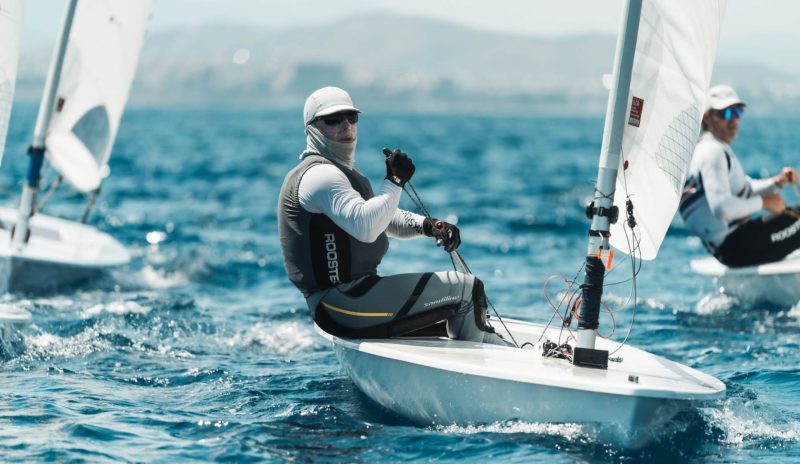
Athens served up the full menu. Most days, a southerly sea breeze of 5 to 12 knots built through the afternoon over chop, rewarding patient, shifty-water sailing. But the Meltemi, the region’s northerly, occasionally picked a fight with the sea breeze, producing shifts of up to 45 degrees. The ILCA 6 fleet lost a race to a mid-race wind swing on day four and sat ashore windless on the final day, ending that regatta at 10 races. The ILCA 7s had a race day cut short by thunderstorms, then made it up with a triple-race Sunday to complete all 12.
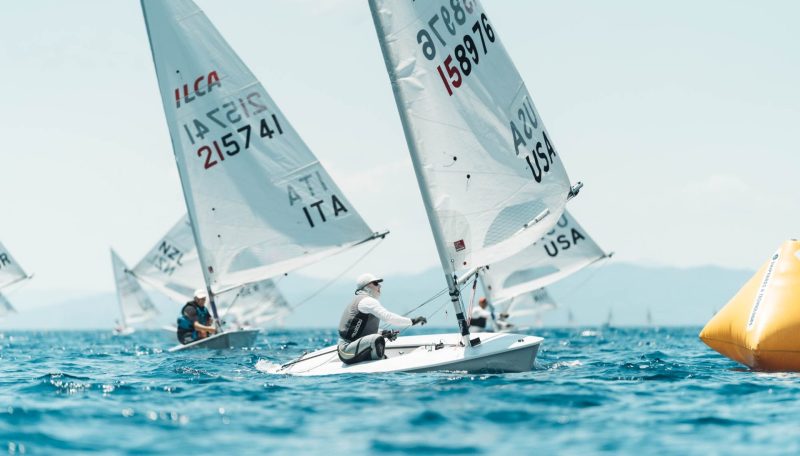
In the ILCA 6 event, St. Francis YC’s Jon Andron finished sixth of 18 in the Legends division (75 to 84), in a fleet dominated by American Bill Symes, who won eight of 10 races. Toshi Takayanagi of Richmond YC placed 10th of 47 Grand Masters and won race nine outright. In the 51-boat Great Grand Masters fleet, Chris Raab (a SoCal sailor and St. Francis member) took 10th, and Walt Spevak finished 30th. Occasional D24 regatta participant Robert Hallawell from the East Coast won the Grand Masters world title with a dominant 10-race series.
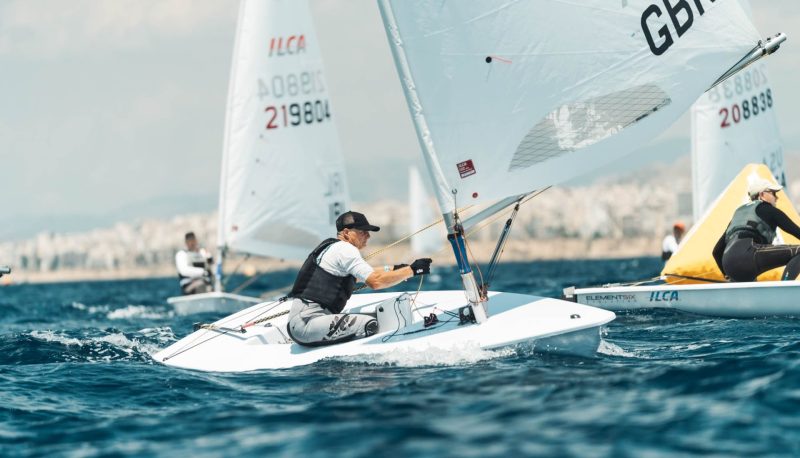
The ILCA 7 Worlds brought more Northern Californians into the fight. In the 33-boat Grand Masters fleet, arguably the deepest of the regatta, three of the top five finishers were past Masters world champions. Class president Mark Lyttle (GBR) won, Hallawell doubled up with silver, and Andrew Holdsworth, until recently a two-decade Bay Area fixture and now racing under the British flag, took fifth. In a neat bit of symmetry, Holdsworth had also finished fifth in the ILCA 6 Grand Masters the week before.
Al Sargent finished seventh, second American, two points out of sixth, with a race-two second among his keepers. His series featured everything Athens had to offer: trench-warfare starts, a light-air race where one bad beat cost a handful of places, and a final-day downwind where the breeze filled on the other side of the course and turned a fifth into an 11th in four minutes. As Al put it afterward, the fleet was simply that good; consistency, not speed, separated the podium from the pack.
In the ILCA 7 Great Grand Masters, Emilio Castelli was the early star, leading the division after day two before finishing eighth. Interviewed ashore after thunderstorms halted day three, he noted that the competition was stacked with past world champions and that “the spark still burns within us.” Raab, pulling double duty for the second straight week, finished seventh in the same fleet, one spot and three points ahead of Castelli.
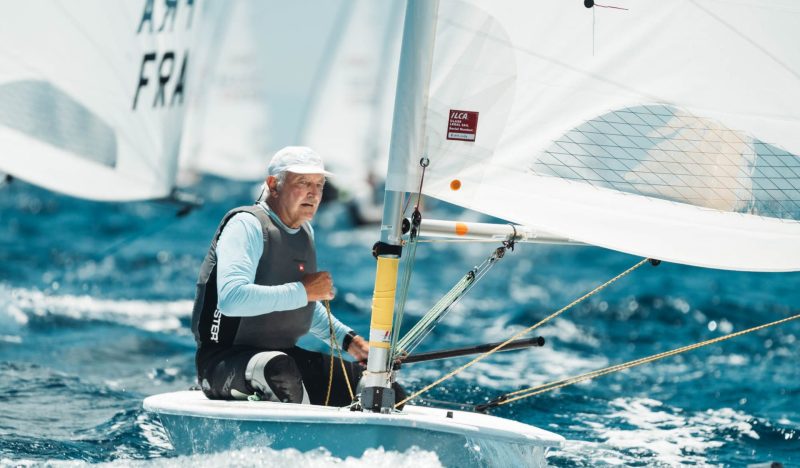
Beyond the results, the reviews were consistent: fair courses, an on-time race committee, warm hospitality, and enough pasta to ballast the charter fleet. Canada’s Allan Clark won the ILCA 7 Great Grand Masters, Greece’s Adonis Bougiouris took a seventh career gold in Masters, and the new Legends and Super Legends divisions proved the boat really is a whole-life class.
Next up: the 2027 ILCA 6 and ILCA 7 Masters Worlds in Vilamoura, Portugal, starting in late September.
Eight Bells: Michelle Slade
We are very sad to report that our very good friend, sailor, writer and lifelong energizer, Michelle Slade, has lost her heroic battle with colon cancer at age 64. We were very fortunate to connect with Michelle not long after we moved to the Bay Area in the mid-’80s, and before we both became so entwined in the sailing world.
We joined her ever-expanding global circle of friends while also sailing the Bay, seeing sunsets from Mount Tam, and living the Bay Area life, which remained the hub of her overactive traveling itinerary.
Readers have seen many of Michelle’s stories in Latitude 38, though her personal story extends far beyond our pages and West Coast sailing shores. Her boundless energy could power a couple of data centers, and we were often concerned that she alone was the source of climate change and the melting icecaps.
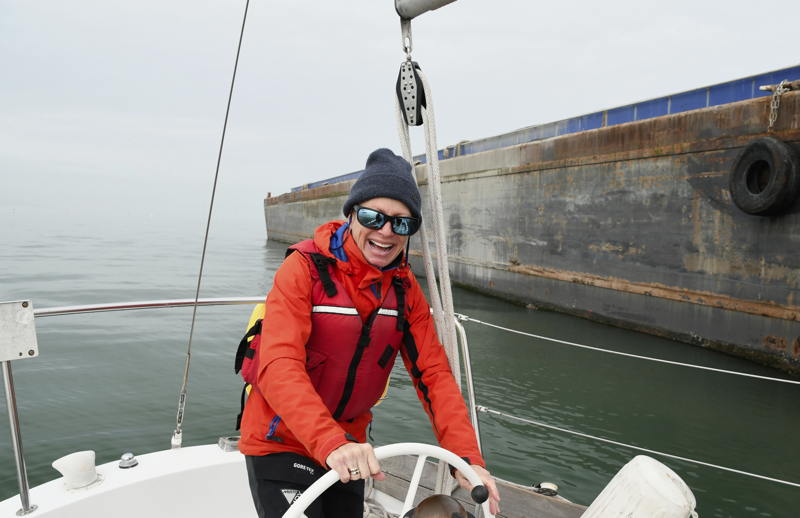
While she called the Bay Area home, Michelle was truly a citizen of the world. You never wanted to write down her mailing address in ink. She never sat still; she built a community at every place she inhabited, and managed to build and remodel numerous houses while also cooking and entertaining her many friends. In addition to writing, she was a scuba instructor, yoga instructor, and worked as a CAD creator with a sharp eye for design. She did all this between trips to writing gigs at a wide variety of sailing events around the world. She had friends at every stop.
Michelle was passionate about sailing, writing, and looking for ways to bring sailing to the people. She worked with a wide variety of America’s Cup campaigns and grand prix events with the likes of Russell Coutts, Paul Cayard, Gary Jobson, Craig Leweck and many others, to tell the story of sailing. She covered the BVI Regatta for years, and regardless of the task, she was on top of the story, yet never missed a beat when it came to joining the fun.
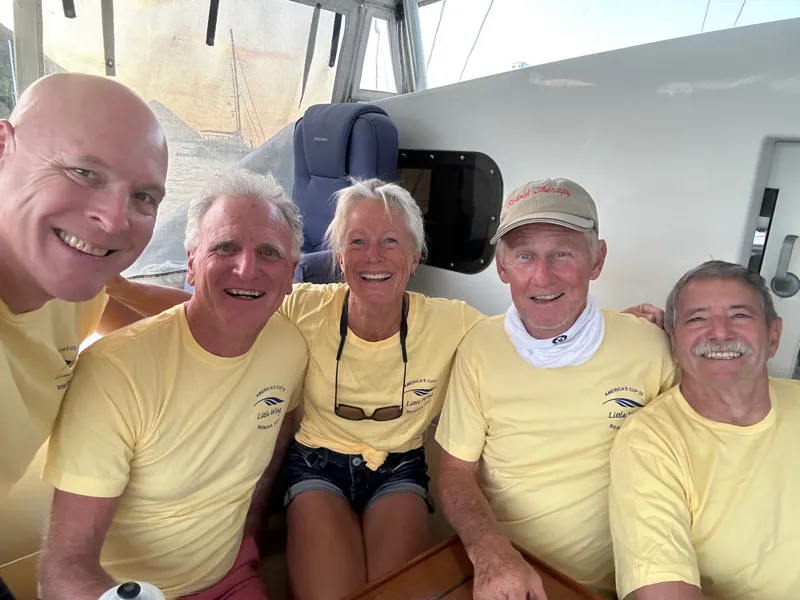
Meanwhile, her own sailing was often kept simple. She crewed for us and many other Bay Area racers. She was an active windsurfer, then kiteboarder and then wingfoiler. She and Scott Steele, her partner of the last few years, delivered a new-to-her Beneteau 40.7 from the Great Lakes to Annapolis last fall while they raced together on her Melges 15 — all this after she had been given her diagnosis.
Scott knew the bright light of Michelle’s life that all her friends knew. She was still running 50ks or up Mount Shasta, and we’d cross tracks while mountain biking or as she was running up Mount Tam. Just this past winter, while getting treatment in Germany, she and Scott were hiking mountain gorges and snowboarding in Austria before fitting in another Melges 15 regatta. She made the best possible of every day.
Her life was an endlessly scrolling Twitter feed of professional commitment, full-throttle adventure and organizing a social swirl of well-choreographed dinners, parties and events for her eclectic collection of friends.
Even at her light-speed pace, she would slow down to read in a book club, pause to do yoga, volunteer for the St. Francis Sailing Foundation, and do an occasional meditation at Spirit Rock before blasting off to her next engagement with the world.
Michelle’s long battle with cancer was also an inspiration on how to live every minute. She was a relentless warrior searching for a path to healing while also doing everything imaginable between treatments and setbacks. She never stopped looking ahead or planning her next adventure. No rock was left unturned and no opportunity for fun was ever missed.
We are going to miss Michelle, and the stories she wrote, but mostly we’ll miss the many stories she created with us all.
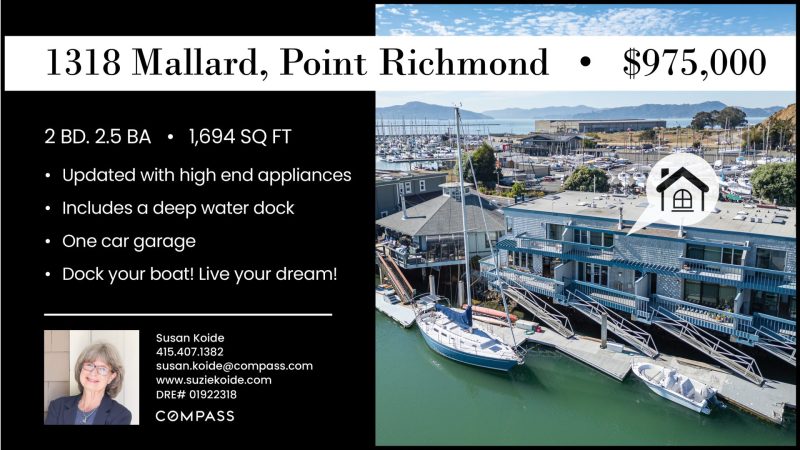
Dock Your Boat! Live Your Dream!
‘The Resourceful Sailor: 45 Essays’ Has a Winner!
A few weeks back we shared a post about The Resourceful Sailor’s new book, The Resourceful Sailor: 45 Essays. The Resourceful Sailor, aka Joshua Wheeler, has compiled 45 of his favorite and best DIY boating solutions. We thought it would be fun to share the news and offer readers a chance to win a copy — a signed copy, no less. (If you’ve ever met The Resourceful Sailor you’d think this is a pretty cool bonus.)
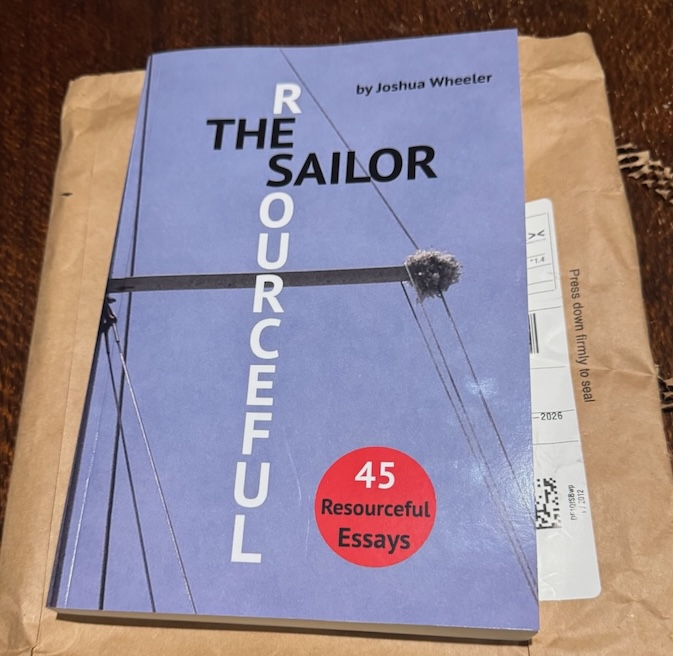
We posted a contest asking readers to tell us, “What is the one line that The Resourceful Sailor includes in every one of his DIY stories?”
We also said the contest closes on July 6. Well, between publishing ‘Lectronic, collating stories for the August issue, and a quick trip to New York to visit the 1939 schooner Eros, we kind of forgot to share the result of the contest.
Today, we are pleased to announce that Kim Dreher is the winner! Kim responded, “Remember, keep your solutions prudent and safe, and have a blast.” It’s great that she was able to answer the question, because when discussing this with The Resourceful Sailor, he was worried that he would get it wrong. (Never fear, Josh, we have it in writing.)
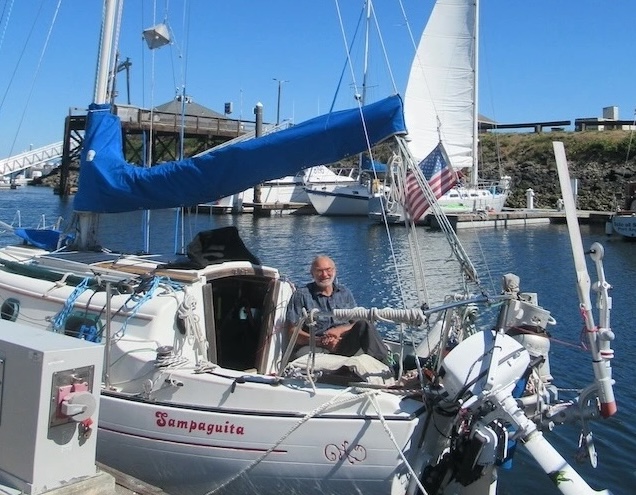
Thanks to everyone who shared their response here or on our social media pages. You didn’t all win, but you can purchase a copy of this Sailboat MacGyver manual for yourself, or, even better, as a gift for your DIY boat buddies. Thinking about it, right now, this would be a great book to take along on the Baja Ha-Ha. It is small enough to fit in your duffel or backpack, and big enough to hold a boatload of solutions that you might encounter along the way, or at any time.
Enough chatter. Go buy your copy here: The Resourceful Sailor: 45 Essays.
And Kim, congratulations. We’ll be in touch to get your copy to you
Tahoe YC’s Wednesday Night Beer Can Spring Series Wraps Up
Tahoe Yacht Club’s (TYC) Dick Ferris Wednesday Night Beer Can Spring Series final was July 15, ending seven weeks of racing with something Lake Tahoe sailors have learned not to take for granted this spring: nice weather.
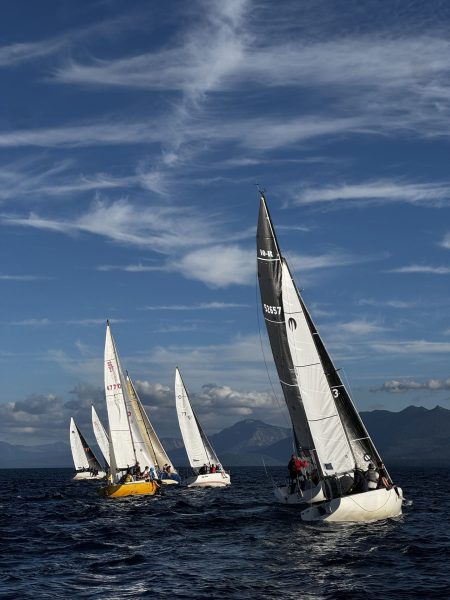
Coming just two days after the three-day Trans Tahoe Regatta weekend, where sailors encountered dramatically different and shifty conditions each day, the pleasant weather for the final July 15 evening of TYC’s Wednesday Night Beer Can racing was a welcome way to finish the Spring Series. Over the previous seven weeks, the fleet had already seen plenty of Lake Tahoe’s unpredictable side, including cold temps, hail, shifting winds, and one evening with so little wind that racing was canceled altogether.
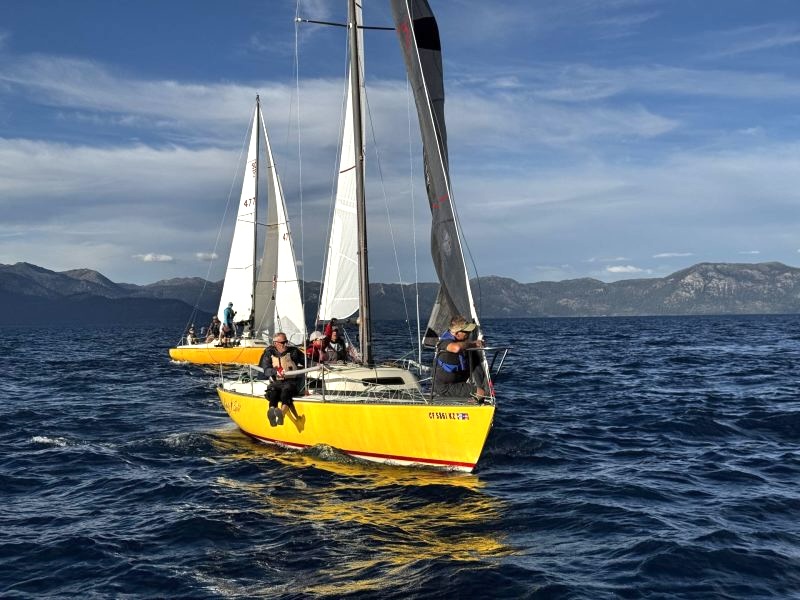
Since 1982, Tahoe Yacht Club has run Wednesday Night Beer Can racing for keelboats, with boats from around the North Shore converging off Dollar Point for the 6 p.m. warning signal. Three divisions bring together an interesting mix of boats and sailors, from the larger keelboats in Division 1 to a strong contingent of Melges 24s in Division 2, and a varied fleet rounding out Division 3. A special shout-out to Division 2 first-place winners, TYC’s Dan Hauserman and crew, who also came in first in the Trans Tahoe Regatta One-Design Melges 24 fleet.
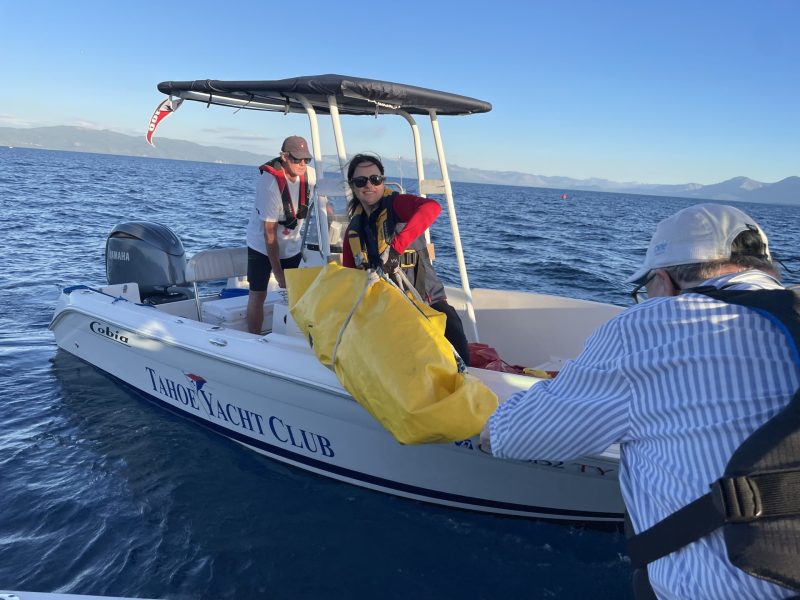
The competition can be serious, but Wednesday nights have always been as much about the camaraderie as the racing. After the final race of the Spring Series, sailors gathered at the TYC clubhouse for the awards ceremony, dinner and the usual post-race stories.
With the Spring Series complete, there isn’t much downtime. The Summer Series is already underway, and Wednesday night racing continues through September 2, with plenty more Lake Tahoe wind, weather and surprises still to come.
Congrats to Jim Yates for a first for Division 1, with Wicked (Melges 32); Dan Hauserman for a first in Division 2 (Melges) with Personal Puff; and a first for Division 3, John Morrison, Fired Up (Express 27).
You can find the full results here.
The Benefits and Features of the Baja Ha-Ha and Mexico — Part 1
While chatting with our sailing neighbors last night, the topic of the Baja Ha-Ha came up. Tim Prouty and Wren Herring took off with the Ha-Ha fleet in 2021 aboard their Ron Holland 43 Wren. They then spent the next four years cruising Baja and the Sea of Cortez. Apart from enjoying the beauty and inexpensive living in the beautiful southern locations, they found that being among the fleet came with organized conveniences, such as easy, and inexpensive, immigration into Mexico .
This is just one of the many benefits of cruising south with the Baja Ha-Ha. Over the coming weeks we’ll be outlining the various factors and features of the Baja Ha-Ha Cruisers Rally and Mexico as a cruising destination. We’ll start at the beginning with snippets from Latitude 38’s First Timer’s Guide to Mexico.
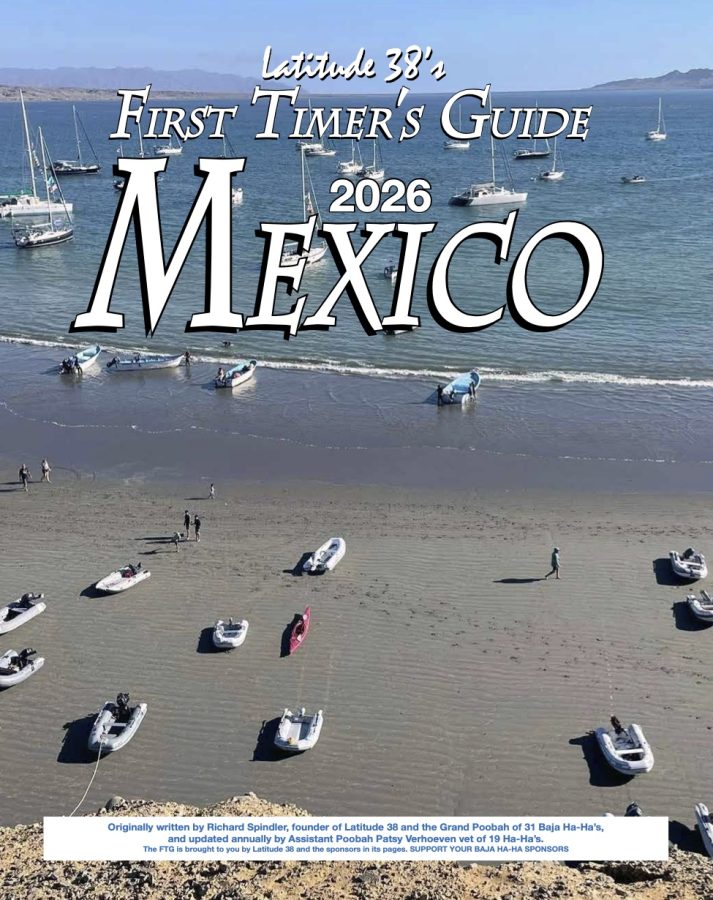
With more than 3,500 miles of coastline, the Pacific Coast of Mexico is one of the longest cruising areas of the world — more than four times as long as the rest of Central America and Panama combined. The cruising grounds of Mexico include everything from the unique desert-by-the-sea environment of the Sea of Cortez, to the never-ending jungle coastline of mainland Mexico, to the offshore islands and those in the Sea of Cortez.
There is also tremendous variety in the types of cruising available. There are countless remote anchorages that you can have all to yourself. But you can also enjoy the more cosmopolitan atmosphere of cities such as Los Cabos, La Paz, Mazatlán, Puerto Vallarta, Zihuatanejo, and Acapulco. And when you get off your boat, as all cruisers should from time to time, it’s easy to catch an inexpensive luxury bus to interesting inland destinations such as Guadalajara, Mexico City, Guanajuato, San Miguel de Allende, Oaxaca and the Copper Canyon
The greatest amount of sailing in Mexico is done in light to moderate conditions. Indeed, the most common complaint is not enough wind rather than too much wind. There are exceptions, of course. Sometimes it can be pretty breezy — 25 knots or more — for a day or so when sailing down the coast of Baja. Fortunately, the wind will almost always be from astern and there are plenty of anchorages in which to take shelter.
Mexico is one of the world’s least expensive places to cruise. The Temporary Import Permit (TIP) for your boat costs about $60 for five years. The immigration fee, good for up to 180 days, is only about $55. Like all prices in Mexico, it varies slightly with the exchange rate.
Medical and dental care are also very reasonable, often at a fraction of the cost in the States. Many US insurance plans will reimburse emergency care in Mexico, but verify your coverage before departure. Based on conversations with cruiser/patients who have had everything from heart problems to cancer surgery to giving birth, the care is excellent — and more personal than in the States. But you have to choose the right hospital. If you go to the top hospitals, you’ll be stunned at how clean they are and what modern medical equipment they have.
Transportation, by both local chicken bus and luxury long-distance bus, offers big bang for the buck. And you rarely have to wait long for a bus. Rideshare apps in Mexico work much like those in the US and Canada. Depending on the location, the most common services are DiDi, Uber, and inDrive. Domestic flights in Mexico can be incredibly inexpensive, like under 500 pesos ($30 USD) on Volaris and Viva Aerobus.
Food is inexpensive at both markets and in restaurants that don’t cater to well-heeled tourists. As long as you avoid the Drunken Shrimp Tourist Trap and similar restaurants, you’ll find countless places with deals. Fellow cruisers will be happy to clue you in. Be careful, though, as some restaurants include all the tequila you can drink with $12 fresh fish dinners. Tacos on the street are a cruiser favorite, and it’s common for groups of cruisers to head to favorite spots en masse. Beer is cheap in Mexico. You can have a couple of store-bought beers every night for a month for not much more than a single bottle of vodka would run you in French Polynesia.
There are, however, three budget busters for cruisers:
Tourist bars and restaurants: When you eat with the locals, the food is less expensive — and the experience is usually more fun.
Marinas. These offer lots of comfort and convenience, but most are more expensive than in the US, if available at all. Fortunately, there are free anchorages in the vicinity of most marinas in Mexico.
Paying for others to do your boat work. If you’re on a tight budget, you should be prepared to clean your own bottom, maintain the teak, wax the hull, and fix mechanical problems. That said, boatyard work is often less — and sometimes much less — expensive in Mexico than in California. The other good news is that many cruisers are happy to help those who are just discovering the mechanical mysteries of their boats.
While there is no limit to how much a month you can spend cruising in Mexico, if a couple avoids marinas, they can pretty much cruise like kings and queens on $3,500 a month. Frugal couples can have a great time on as little as $1,500 a month.
Naturally, it’s easier to get by on less money in the Sea of Cortez, where there are fewer places to spend money than around big cities with lots of attractions, such as Puerto Vallarta.
Stay tuned for the next installment of snippets from the First Timer’s Guide to Mexico.
Note: If you want to join the Ha-Ha but don’t have a boat, check out Latitude 38’s Crew List for opportunities. Then come to the Fall Baja Ha-Ha Crew List Party on September 10, at Spaulding Marine Center in Sausalito, and meet other cruisers heading south.
Life Is Better With a Boat — Find Yours Today With Cruising Yachts