

Seattle Sailors Jump the Puddle to the Marquesas Islands
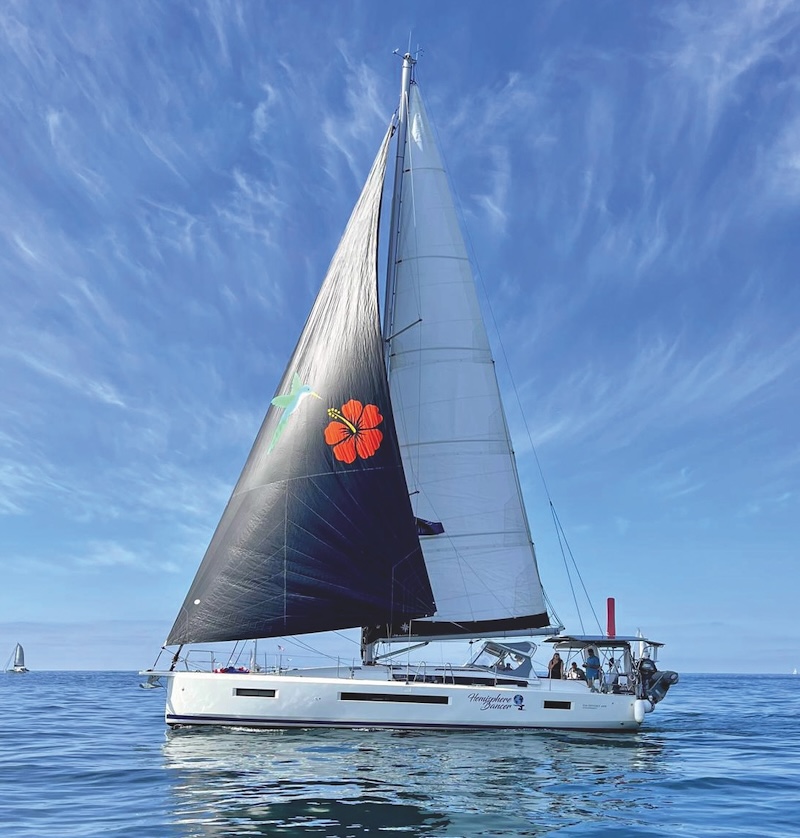
After a full-year forced delay, Deborah Bessolo and Doug Lobard felt ready to set off on their longest voyage yet aboard their Beneteau Sun Odyssey 490 Hemisphere Dancer.
The Pacific is the largest and deepest ocean on Earth, covering roughly one-third of the planet’s surface.
Years ago, sailors crossing the Pacific started calling it the “Pacific Puddle Jump,” a piece of tongue-in-cheek slang that intentionally minimizes the massive, daunting scale of the journey. At 3,000+ miles, the “Puddle Jump” is actually the longest nonstop bluewater voyage a cruising sailor can make, typically taking three to four weeks to complete.
Doug and I were determined to go on this adventure. We’d already sailed down the West Coast of the United States with the Coho Ho-Ho [an annual cruising rally from Puget Sound to San Francisco and San Diego — great for sailors joining the Baja Ha-Ha], and subsequently participated in the 2025 Baja Ha-Ha rally. We enjoyed a season cruising around Pacific Mexico and we felt ready. We began the effort of planning, preparing, and provisioning for our next adventure: sailing to French Polynesia! Our trip would have us travel approximately 2,700 miles to land in Nuku Hiva in the Marquesas Islands. Our excitement levels increased.
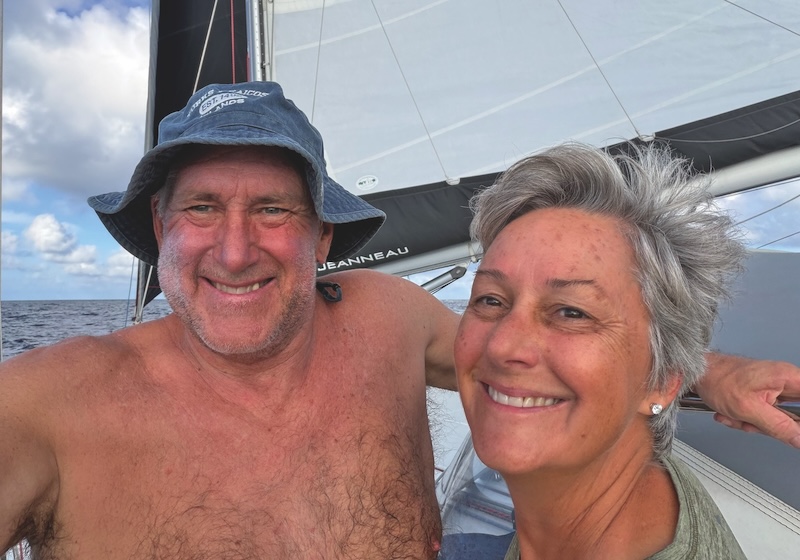
First, we organized crew. Doug’s daughter, Devon Lombard-Henley, had previously sailed from Hawaii to Seattle with her father, so she was an instant in. Her friend, Ari Marks, rounded out our four-person crew and made the night watches easier. We planned three-hour watches starting at 7 p.m. and ending at 7 a.m. Daytime would be more relaxed, without designated watch hours.
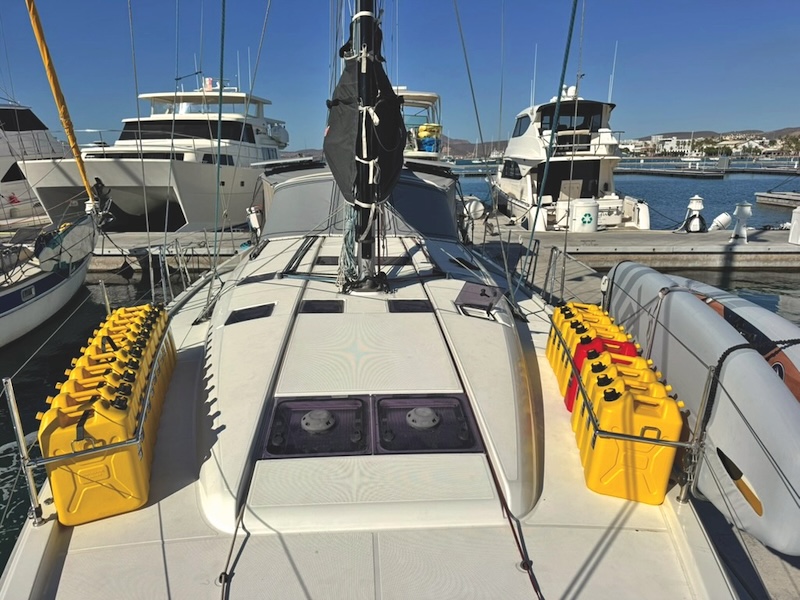
We evaluated the readiness of Hemisphere Dancer. After a setback in 2024 when our boat and several others were hit and heavily damaged by a 70-ft fishing boat that hit the docks at a Seattle boatyard — destroying our mast and setting our plans back a full year — Hemisphere Dancer was in great shape, with the necessary ocean-crossing hardware and software, tried and proven during our Mexico excursions. All that remained were a few final touches: getting the bottom cleaned and adding stainless steel racks to both the port and starboard rails for holding jerry cans full of extra diesel fuel. With 120 gallons of diesel in our main tanks and 100 more on deck, we felt we had enough to deal with the light and variable winds of the Intertropical Convergence Zone.
The ITCZ, as it’s commonly known, is a belt of low pressure circling Earth near the equator, where the trade winds of the Northern and Southern hemispheres meet. Sailors historically called this region the “doldrums” because the converging winds rise upward rather than blowing horizontally, leaving ships stranded for days or weeks with no wind. Additionally, as the warm, moist trade winds collide and are forced upward into the atmosphere, the constantly rising air creates a nearly continuous chain of massive thunderstorms, heavy rainfall and sudden, violent squalls.
We departed Cabo on April 1 at 9:30 a.m. It felt surreal to watch the hills fade away over a few hours, as we sailed into the great blue yonder toward French Polynesia.