
Second Victim Found in Wake of Boating Tragedy on S.F. Bay
A second victim of Tuesday’s boating tragedy involving the 51-ft Marine Trader Volare on San Francisco Bay has been confirmed. San Francisco police recovered the body of a 58-year-old woman on Thursday. She was later identified by the San Francisco Medical Examiner’s Office as Tondra Madruga of Sacramento County. Twenty people were aboard Volare on Tuesday afternoon to scatter the ashes of a family member when the boat sank approximately 600 yards off Alcatraz.
Police said that Tondra’s body was recovered west of Treasure Island on Thursday. Officers had been searching for the sunken vessel using sonar scanning when a passing boat alerted the officers to the body, the San Francisco Chronicle reported.
Bob Kingston, a captain with Pegasus Voyages, was sailing with a group of teenagers, observing sea life, when they spotted a body floating face down off Treasure Island. Latitude ambassador Gerry Gragg tells us, “At first Bob thought it might have been a dummy used for MOB drills, but a closer look determined it to be a human body. Observing maritime protocols, Bob and his crew dropped their sails and stood on station until the authorities arrived.
“Bob directed the kids on board to look away from the body, and provided distraction by reviewing with them the value of sharp observation, and the need to alert authorities, if a safety related issue presented itself, while they were at sea.”
The first confirmed death occurred on Tuesday. Clifford Boisa, 79, brother of Volare’s owner and captain John Boisa, died after he was pulled from the water soon after the accident. Clifford’s wife Jackie Boisa and his sister Carol Boisa are still missing.
Clifford and John Boisa’s brother Ralph Boisa, who was not aboard Volare on Tuesday, told reporters that most of the passengers were extended family who had gathered to spread the ashes of his adopted daughter Maria Boisa, who died in 2015. Tondra Madruga was a friend of Maria’s.
When another daughter of Ralph Boisa told him of the accident, she said that the group was unaware of anything happening. “They’re sitting, and all of a sudden, the boat went over,” Boisa said.
Witnesses and good Samaritans on the Bay reported having seen smoke coming from Volare prior to her sinking. There has not been a confirmed report of a fire aboard, but there is speculation that the “smoke” could have been steam coming from the engine as the boat sank lower into the water.
Two fishermen were among those first on the scene. They were able to get some of the people out of the water, but believed others were trapped inside. They described the situation in this video shared by ABC7.
While the broad-scale search for the remaining victims was called off late Wednesday, authorities are continuing to work on locating Volare and possibly raising the vessel from the bottom of the Bay.
Our condolences go out to all concerned.
St. Francis Yacht Club Wins San Francisco Perpetual Challenge Trophy
On July 11, the St. Francis Yacht Club (StFYC) successfully defended its possession of the San Francisco Perpetual Challenge Trophy in a best-of-five match-race series against the challenger, San Francisco Yacht Club (SFYC). This was the historic challenge cup competition’s 131st year, and it was sailed in SFYC’s fleet of one-design RS21 sportboats, with asymmetrical spinnakers. StFYC’s three-nil win left no uncertainty.
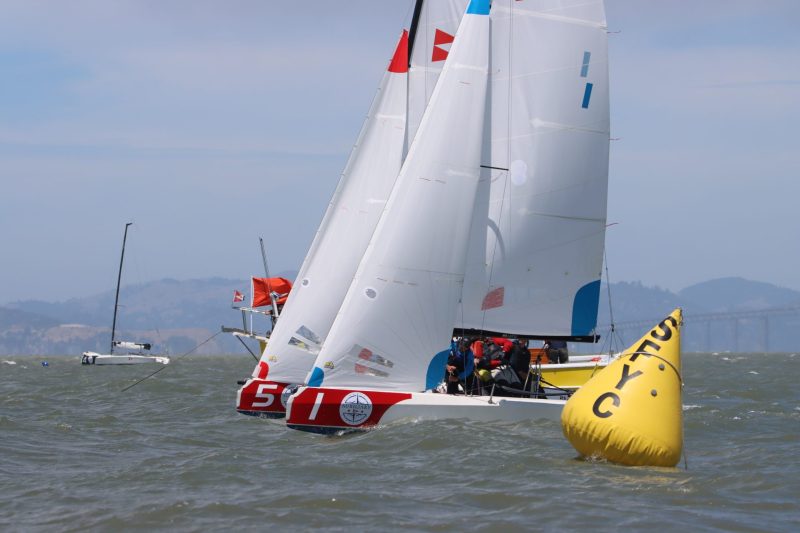
The winning StFYC team comprised Tor Svendsen (helm), Mike Martin (main), two-time MIT college sailing All-American Ty Ingram (jib) and Will Paulsen (bow). The SFYC boat was helmed by Molly Carapiet (the #35-ranked match racer in world sailing, and recent winner of a US Match Racing Championship Qualifier in San Diego), and crewed by her team of Hailey Thompson, Rhett Krawitt and Vikki Fennell. All of the races were sailed on the Berkeley Circle, in typical blustery summer winds. Svendsen and Carapiet are members of both yacht clubs, which tested their allegiances.
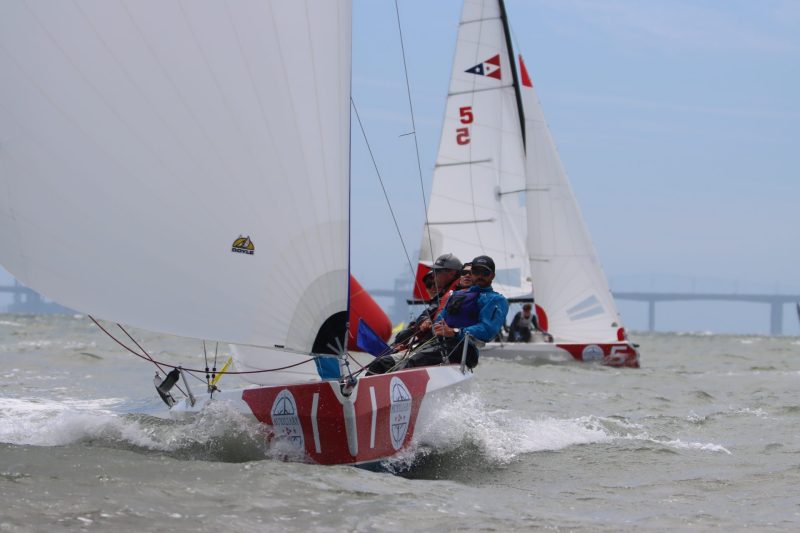
“For us, the key to success was focusing on upwind speed and downwind boat handling,” Svendsen tells Latitude of the racing. “We felt we had an advantage in both in the RS21s, so just sailing free enabled us to extend our lead. We’re very proud to keep the trophy at St Francis! It has such a storied 130-plus-year history, and we know what it means to the club, so we’re stoked we were able to defend the title.”
“StFYC was proud to have our team successfully defend the San Francisco Perpetual Challenge Cup,” StFYC commodore Susan Ruhne says of the win. “As the oldest continuously contested American challenge trophy, we have books that record in calligraphy the history of boats, crews and outcomes over the years that are treasures in our club’s archives. They are a testament to the value inherent to maintaining these sailing traditions. The event was possible this year due to San Francisco Yacht Club’s enthusiasm for the event and willingness to utilize their assets for the regatta. It was great to see a younger, up-and-coming skipper, Tor Svendsen, succeed in defending the trophy and join the ranks of its long history.”
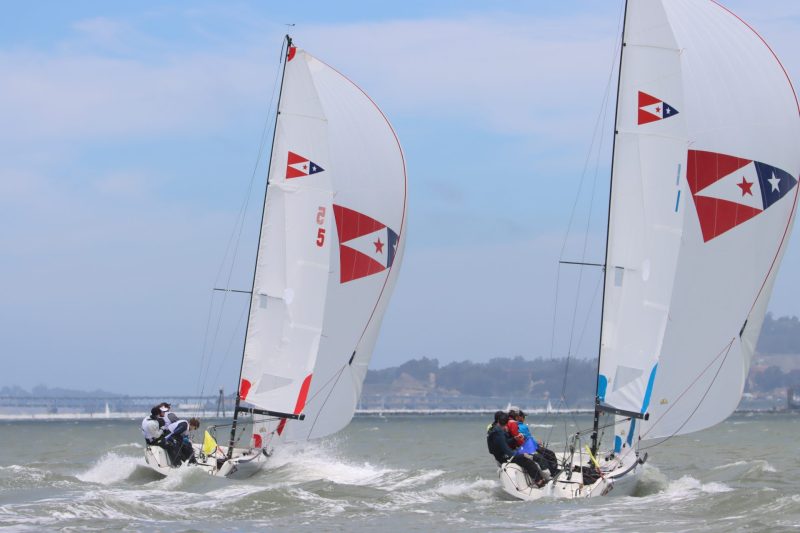
Negotiations for the challenge event were managed by a joint committee from both clubs: staff commodores Sean Svendsen and Kimball Livingston and rear commodore Larry Swift from StFYC, and staff commodore Madeline Morey, Board member Cam Tuttle and past Olympian Liz Baylis from SFYC. Kim Desenberg of Richmond Yacht Club served as the seventh (tiebreaker) member, and sited the starting line of each race. A team of US-certified umpires followed the boats, ensuring full adherence to the international match-racing rules. Sailing was clean, with no penalties assessed against either boat.
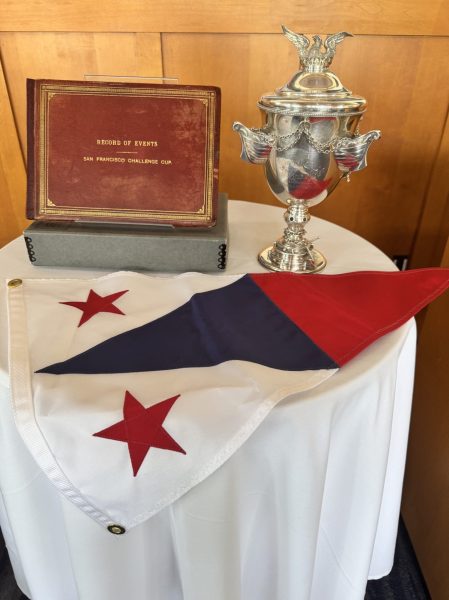
When asked about his StFYC team selection, Tor’s father Sean Svendsen said, “We chose a team with lots of young talent and added one elder statesman (5O5 multi-world champion Mike Martin) to show them how to close out a big win.”
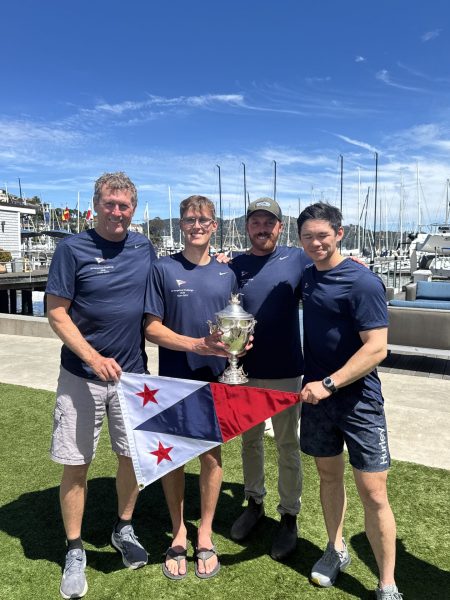
When asked about choosing his son as the skipper, the elder Svendsen laughed, “One could conjecture that it was nepotism, but he sails almost every day on the Boston College sailing team and practically sleeps with a tiller in his hand. So we had full confidence he’d deliver for us on game day.”
Haven Boatworks: Full Service Boatyard in Port Townsend
The Sinking of ‘Volare’ — A Perfect Storm?
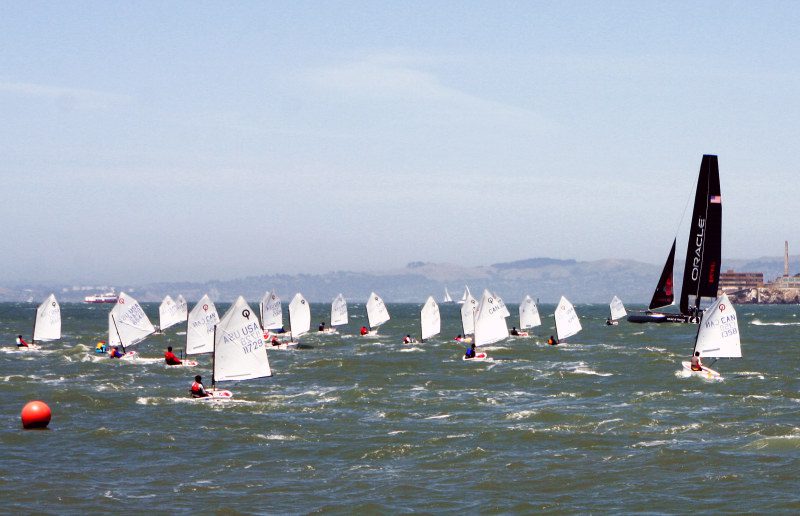
It was not a stormy day on San Francisco Bay, though it may have been a “perfect storm” that caused the truly horrific tragedy of the 1981 50-ft Marine Trader Volare’s sinking on Tuesday. A “perfect storm” is now a metaphor about an unusual set of circumstances that combine to cause a tragedy. To most knowledgeable sailors and boaters, Tuesday’s sunny July sailing conditions were no different than normal for summer racing or cruising on the Bay.
Experienced boaters like Chuck Hawley and Robert Hull commented on our Wednesday story, essentially reaffirming what we believe to be the most likely scenario. Absent any unusual discoveries in the future, we suspect the large, robust trawler was sideways to the wind as she traveled north to south across the Bay to return to San Francisco Marina. A large number of the guests were on the top deck, making the boat more unstable than normal. A breezy day with a slowly building ebb created an increasingly choppy Bay, but again, nothing outside the ordinary for summer sailing. Potentially a somewhat larger-than-average wave and a larger-than-average gust rolled the boat to leeward, at which point the very large bimini, ideal for the hot sun of the boat’s Delta homeport, also caught the wind, heeling the boat further. At that point, everyone on the top deck might slip toward the leeward rail, heeling the boat even further, at which point open engine intakes or ports might have started to flood the hull. Additional speculation in comments and local sailor, Paul Kamen, theorize that perhaps the ‘fire’ was actually steam from a disconnected hose in the engine room that was letting unnoticed water in the bilge, further reducing stability.
There is a lot of speculation in the above thoughts. Even if they recover the boat, it will likely take weeks or months to do a full investigation of the factors contributing to the Volare disaster. Personally, we’re more used to sailboats with keels, but we know many boats like the 50-ft Marine Trader are well-built ocean cruisers that are normally very capable of handling the chop on San Francisco Bay and cruising the California coastline. Indeed, Volare has cruised the California coast a number of times where she would have navigated much larger swells. There are probably a good number of woulda-coulda-shouldas in a situation like this, but at this point, it is very hard to understand anything beyond a momentary setup of very unfortunate circumstances that created some incredibly bad luck.
Surfers patiently wait offshore for the perfect wave, since they know that periodically, the perfect wave will give them the best ride to the beach. Sailors look for the extra puff of wind that will give them extra speed. Sometimes that normal wave set will combine with a ferry wake or some other wave set to create an extra-large wave. The confluence of wind and wave anomalies could have just been off.
What stands out the most in the general media reporting about the Bay is a severe lack of understanding about the Bay itself. It can definitely be a challenging place to sail, but over Latitude’s almost 50 years of reporting, there are remarkably few tragedies of this nature given the volume of activity. We were interviewed by the Bay Area News Agency about the disaster and found ourselves explaining the Bay like a ski area. The Central Bay is a black diamond run and there are many blue circles and green-square areas of more benign conditions. And even the breezy, choppy conditions that do exist on the Bay happen mostly during May through September, and then only on some days during the afternoons. That would be a Tuesday afternoon in July, though again, conditions on Tuesday weren’t anything unusual for most boats, including a Marine Trader.
There are millions of very safe ski days each year in the Sierra, yet this year’s tragic event on Donner Pass was another example of a rare, extreme confluence of events that created an outsized disaster. Occasionally, a golfer gets hit by lightning. The fire aboard the Conception dive boat was tragic beyond comprehension but also a one-in-a-million event. We think most people who spend time on the Bay feel safer out on a boat than they do while driving to a boat. We certainly have to leave the door open to many other possibilities that might have caused or contributed to this disaster but will have to wait for a more detailed investigation. We could speculate about numerous other possible causes and factors.
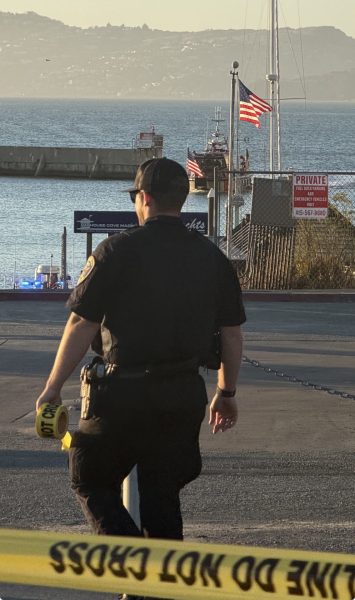
Another aspect of the rescue that might escape attention in this story is the critical importance of the Gashouse Cove fuel dock. The cove, the dock and fuel can all be critical in an emergency situation. That is where the rescue boats rendezvoused with the emergency vehicles to take victims to the hospital. If more fuel was needed for ongoing rescue operations, the fuel was right there. Our understanding is that San Francisco Rec and Park is planning to close this vital link to the Bay, which, when not used for the extremely rare emergency, is also public access for San Francisco citizens. It is also the only San Francisco-based fuel dock for commercial, recreational and public-agency refueling.
It’s not surprising that, in the rush to publish, so many “facts” from early reporting were wrong. We were asked by a boating friend last night why anyone would take a pontoon boat out on the Bay. It was not a pontoon boat, but the large bimini gave it that appearance, so it was reported and has stuck with many. However, it’s also apparent the general media is not helping the general public understand the Bay, where people sail, fish, swim, kayak, wingfoil and otherwise connect with the Bay Area’s largest park: the Bay itself. The lack of access and connection to the Bay leaves most people on shore with very little understanding of its true nature .
This is a tragedy of devastating proportions. At present, we don’t think it was caused by any unusual conditions of the Bay, the boat or the captain. It was a huge misfortune likely caused by a “perfect storm” of circumstances that set up a tragic outcome. But at the end of it all, our sympathies lie with the people and the families involved in Tuesday’s tragedy.
2026 Estuary Extravaganza Is Coming Up on July 26
Estuary Extravaganza: What is it? When is it? And would you like to race it?
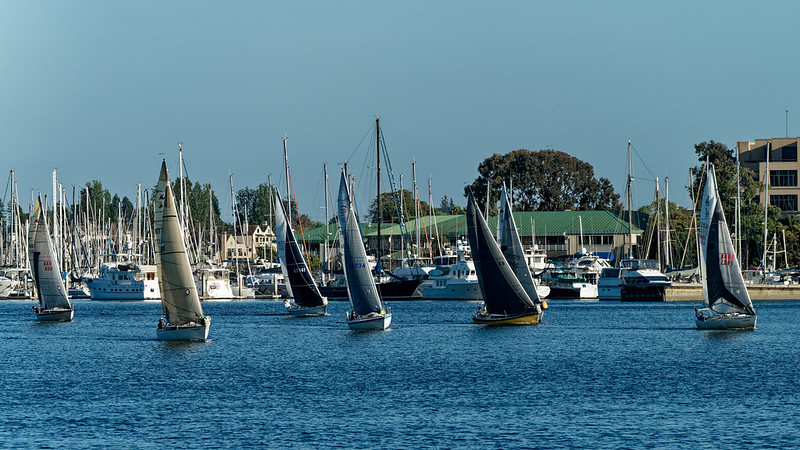
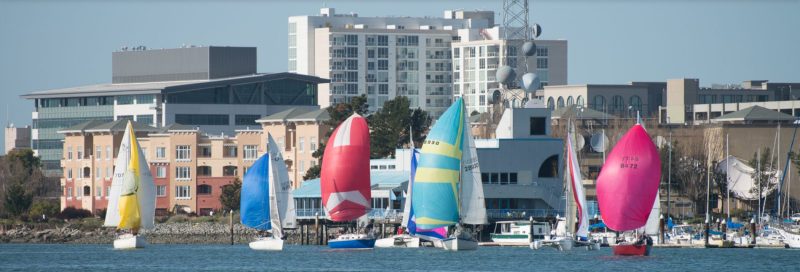
Well, it all started in 2020 as part of getting racing back up and running. At that time Encinal Yacht Club (EYC), Island Yacht Club (IYC) and Oakland Yacht Club (OYC) decided to come together and create a Sunday race for those staying over and ready to get back on the water. Later it was paired up so that it is run the Sunday after the Encinal Regatta. It was given the name Estuary Extravaganza, and it has featured fun and challenging races. It has run every year since getting started, and this year is no exception.
Part of the fun, and perhaps some challenge for pulling this together, is that we plan it as a team of race committees and manage it jointly. This year IYC handles the starts, OYC handles the finishes, and EYC is working the mark setting and any other water work that may be needed.
OYC has its Sunday Brunch, and it starts a half-hour early, at 9:30, to accommodate racers who like to have a great meal before another day of racing. For the skippers registered, participation swag is handed out at OYC during brunch. Of course, they can just come, grab the swag, and then head for the boat to rig.
Next it’s time to race: first sequences at noon on July 26. Hopefully the wind is good and two races can be completed before 1530, and then it’s back to EYC for a bit of an after-party.
It’s a nice way to finish up your weekend. If this looks interesting and you want more information, go to EYC’s Estuary Extravaganza for details and documents.
Discover San Francisco Marina Small Craft Harbor