

The Sinking of ‘Volare’ — A Perfect Storm?
It was not a stormy day on San Francisco Bay, though it may have been a “perfect storm” that caused the truly horrific tragedy of the 1981 50-ft Marine Trader Volare’s sinking on Tuesday. A “perfect storm” is now a metaphor about an unusual set of circumstances that combine to cause a tragedy. To most knowledgeable sailors and boaters, Tuesday’s sunny July sailing conditions were no different than normal for summer racing or cruising on the Bay.
Experienced boaters like Chuck Hawley and Robert Hull commented on our Wednesday story, essentially reaffirming what we believe to be the most likely scenario. Absent any unusual discoveries in the future, we suspect the large, robust trawler was sideways to the wind as she traveled north to south across the Bay to return to San Francisco Marina. A large number of the guests were on the top deck, making the boat more unstable than normal. A breezy day with a slowly building ebb created an increasingly choppy Bay, but again, nothing outside the ordinary for summer sailing. Potentially a somewhat larger-than-average wave and a larger-than-average gust rolled the boat to leeward, at which point the very large bimini, ideal for the hot sun of the boat’s Delta homeport, also caught the wind, heeling the boat further. At that point, everyone on the top deck might slip toward the leeward rail, heeling the boat even further, at which point open engine intakes or ports might have started to flood the hull. Additional speculation in comments and local sailor, Paul Kamen, theorize that perhaps the ‘fire’ was actually steam from a disconnected hose in the engine room that was letting unnoticed water in the bilge, further reducing stability.
There is a lot of speculation in the above thoughts. Even if they recover the boat, it will likely take weeks or months to do a full investigation of the factors contributing to the Volare disaster. Personally, we’re more used to sailboats with keels, but we know many boats like the 50-ft Marine Trader are well-built ocean cruisers that are normally very capable of handling the chop on San Francisco Bay and cruising the California coastline. Indeed, Volare has cruised the California coast a number of times where she would have navigated much larger swells. There are probably a good number of woulda-coulda-shouldas in a situation like this, but at this point, it is very hard to understand anything beyond a momentary setup of very unfortunate circumstances that created some incredibly bad luck.
Surfers patiently wait offshore for the perfect wave, since they know that periodically, the perfect wave will give them the best ride to the beach. Sailors look for the extra puff of wind that will give them extra speed. Sometimes that normal wave set will combine with a ferry wake or some other wave set to create an extra-large wave. The confluence of wind and wave anomalies could have just been off.
What stands out the most in the general media reporting about the Bay is a severe lack of understanding about the Bay itself. It can definitely be a challenging place to sail, but over Latitude’s almost 50 years of reporting, there are remarkably few tragedies of this nature given the volume of activity. We were interviewed by the Bay Area News Agency about the disaster and found ourselves explaining the Bay like a ski area. The Central Bay is a black diamond run and there are many blue circles and green-square areas of more benign conditions. And even the breezy, choppy conditions that do exist on the Bay happen mostly during May through September, and then only on some days during the afternoons. That would be a Tuesday afternoon in July, though again, conditions on Tuesday weren’t anything unusual for most boats, including a Marine Trader.
There are millions of very safe ski days each year in the Sierra, yet this year’s tragic event on Donner Pass was another example of a rare, extreme confluence of events that created an outsized disaster. Occasionally, a golfer gets hit by lightning. The fire aboard the Conception dive boat was tragic beyond comprehension but also a one-in-a-million event. We think most people who spend time on the Bay feel safer out on a boat than they do while driving to a boat. We certainly have to leave the door open to many other possibilities that might have caused or contributed to this disaster but will have to wait for a more detailed investigation. We could speculate about numerous other possible causes and factors.
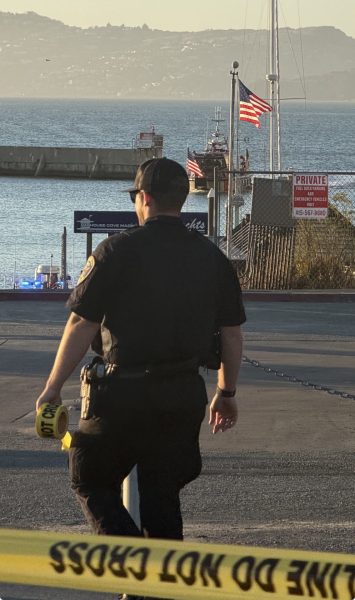
Another aspect of the rescue that might escape attention in this story is the critical importance of the Gashouse Cove fuel dock. The cove, the dock and fuel can all be critical in an emergency situation. That is where the rescue boats rendezvoused with the emergency vehicles to take victims to the hospital. If more fuel was needed for ongoing rescue operations, the fuel was right there. Our understanding is that San Francisco Rec and Park is planning to close this vital link to the Bay, which, when not used for the extremely rare emergency, is also public access for San Francisco citizens. It is also the only San Francisco-based fuel dock for commercial, recreational and public-agency refueling.
It’s not surprising that, in the rush to publish, so many “facts” from early reporting were wrong. We were asked by a boating friend last night why anyone would take a pontoon boat out on the Bay. It was not a pontoon boat, but the large bimini gave it that appearance, so it was reported and has stuck with many. However, it’s also apparent the general media is not helping the general public understand the Bay, where people sail, fish, swim, kayak, wingfoil and otherwise connect with the Bay Area’s largest park: the Bay itself. The lack of access and connection to the Bay leaves most people on shore with very little understanding of its true nature .
This is a tragedy of devastating proportions. At present, we don’t think it was caused by any unusual conditions of the Bay, the boat or the captain. It was a huge misfortune likely caused by a “perfect storm” of circumstances that set up a tragic outcome. But at the end of it all, our sympathies lie with the people and the families involved in Tuesday’s tragedy.
I am relieved to read such a thoughtful and logical description of what likely happened in this tragedy. I did not originally realize this was from Latitude 38, so after shaking my head yes as I read the article, I laughed to myself that of course this was written by knowlegeable sailors and watermen. Thank you for helping readers imagine better and understand what happens with wind, weight distribution changes, etc. on any boat, but maybe especially under these circumstances. I had one added thought when I first read about this tragedy…. I wondered is the family was dropping ashes in a ceremony for their loved one, and thus everyone gathered at that side of the boat all at the same time. Prayers to all involved.
This general area used to have a bulge in the bottom of the Bay due to dredger dumping. It was visible on the USGS side scanning radar at one time. I’ve encountered ‘mirengue’ like waves there.
Nicely written JOHN! I appreciate your efforts & insight!
LOUIS KRUK
John, you have done an excellent job of presenting real information to us, and especially to the general public. There will be lots more information after a couple more days of fact finding and we’re looking forward to hearing what took place just before this trajic accident happened.
We are very familliar with this type of boat having grown up with ‘stink-pots’ in Stockton before learning to sail. After our years of sailing on The Bay and sailing in Mexico, Carole and I moved on to a 36foot Marine Trader (a little brother to Volare) on The Bay. If something unexpected happened to even temporarilly kill his power it wouldn’t take any time at all to have that boat turnning sideways to the swell. At that point, in my estimation, the skipper would have had no control and virtualy no time to deploy any drag lines or anchors. You are right, it was like a perfect storm of bad circumstanses. We’ve been in virtually this same wind-waves-and sideway circumstance twice, on trawlers, once on The Bay and once off the coast of Baja. Fortunately we still had power. Even with power, bad things happen in the blink of an eye. I’m sure there is a lot more to learn about this situation.
I operated a Patrol Boat on the Bay for a number of years and I have seen the personalities of the Bay during different seasons. The ‘Perfect Storm’ theory is logical and there was definitely a line-up of circumstances that resulted in this tragedy. My thoughts and prayers to the families involved.
I am also saddened with the rush of the media to ‘Get The Story Out’ without the facts. Seems like the norm these days.
My condolences to everyone involved in this tragedy.
Thank you Latitude 38 for taking the opportunity to set the record straight about our Bay and it’s environment, challenges and opportunities as a playground for water oriented activities, a place to relax and find solace in its beauty.
Your reporting and educating boaters and non boaters alike is of great public service.
With 50 years of sailing that part of the bay I would have passed to the leeward
of Alcatraz. Given the large Bimini and amount of passengers. Sailing close to the windward side gets very bumpy and windy.
Thank you, John. Another term that came to mind here as the disaster story has unfolded was “Cascading Failures”, and you’ve illustrated this tendency for things to go wronger when things go wrong very graphically in your review. Vessel Stability is so critical a factor in boating, and so dynamic that it takes a lot of both education and experience to regard it adequately. In the absence of same, it’s only the ‘precautionary principle’ that can keep us safe—but even that requires some awareness of factors affecting risk. Righting moment… windage… live ballast… loss of buoyancy. Potentially all compounding in less than a moment.
As a sailor on the bay, I have a deep respect for bay conditions including the dangers of wind wave and weight.— SF bay is a wonderful beautiful body of water but also can be a difficult and dangerous place partially due to the many hills that can cause gusty winds that can come unexpectedly even if you are experienced spotting gusts traveling across the bay. As a boater it’s important to learn about wind gusts.
Heeding the experience of sea scout leaders and captains is vital for water safety, as this rescue clearly shows.
Equally critical was the Gashouse Cove fuel dock!!!! It was the hub that made the rescue possible, allowing for quick transport of victims and immediate refueling. It’s the only fuel dock in SF for commercial and public use. Closing it would be a huge loss to our safety and maritime infrastructure.
Thank you for reporting on this incident in such a comprehensive, contextualized and reverent manner. But, of course YOU would.
While no comparison to those directly affected, this incident is a collective trauma for those of us that race, sail, boat or fish on the Bay – recreationally and/or professionally. Thank you for your therapy.
There, but for the grace of dog, go I…
Nice writing and good possible outcome ideas too. You can’t tame the sea but respect it.
thanks, John. well done. Please continue to educate the Bay Area; in fact, a TV interview with you, Chuck and Robert would go a long way toward that end. Consider offering yourselves up to any TV contacts you might have, as a way to open that door. The Chron articles, specifically, failed to take just a moment to canvas the sailing literati to get their facts straight. Wouldn’t have been too much work or even time lost in ‘getting the scoop’.
Why is no one talking about the “elephant” in the room: life jackets?
As a former Bay sailor and racer (Santana 22) and an expired US Coast Guard Captain’s license, I insisted each person on board wear the latest in self inflating life jackets. And I supplied them. I realize boating in the Delta can relax your concerns, but being in the middle of the “Slot” (between Alcatraz and the Golden Gate) with a fully loaded boat changes everything. Only “carrying” life jackets, one per person, is required by law. But wearing them should be the norm. I grieve for the family, and I hope the rest of us will learn from their very hard very sad lesson.
Sally, you’re absolutely right. Life jackets are a critical part of this story though we think, the initial reaction, is to try to figure out why. Life jackets are critical for rescue but the early questions are about how can people avoid situations that result in needing them. Racers competing on the Bay are all required to wear life jackets. For everyone else, besides kids under 13, lifejackets are an option. One is required to be available for each person on board but there is no requirement to wear them.
We have to admit we weren’t very diligent about life jackets in our early years of sailing but, once we were asking our kids to wear them, we thought we should too. The same with bike helmets and ski helmets. Now, we make sure everyone on board is wearing one whether we’re out racing or just out sailing.
It’s great to encourage people to wear PFDs, but it’s also important to remember that this was 50′ trawler, not a 22′ sailboat. It’s a very big difference. Wearing a PFD while sitting in the salon of a big trawler enjoying canapés isn’t going to become the norm. And it seems that the majority of the fatalities occurred because people were trapped in the boat, so PFDs are somewhat of a moot point.
Until we have more concrete information about why the boat sank, the lesson I’m taking away from this is that I’m proud of how everyone in the maritime community–both professionals and recreational boaters including a wingfoiler who gathered a group of survivors–came together to assist fellow mariners in distress.