

France and New Zealand Collide in SailGP Auckland Event
SailGP, like most events with a “Grand Prix” theme, promises excitement and adrenaline while testing the edge of danger. Saturday’s SailGP event in Auckland crossed the danger line when the French and New Zealand teams collided after Peter Burling and team on Black Foils appeared to lose control in front of the French, who did their best to avoid a collision. They didn’t make it. The fleet boats were traveling at around 90 km/h (about 56 mph) in “breezy conditions” when the DS Team France F50 smashed into the side of Black Foils. Two sailors suffered significant injury, and the boats were badly damaged.
SailGP reported that Black Foils grinder Louis Sinclair and DS Team France strategist Manon Audinet were injured in the collision. They were quickly rescued and taken to the local hospital for treatment, and both are recovering.
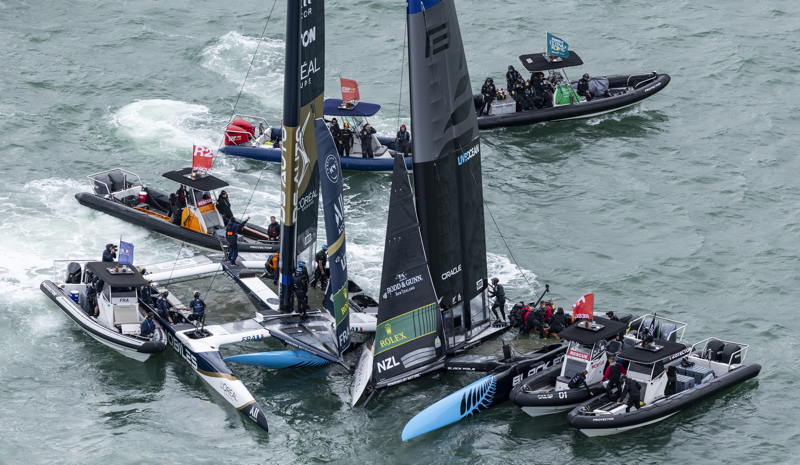
It’s reported Louis Sinclair suffered compound fractures to both legs but is in stable condition, while Audinet on the French boat was thrown forward in the collision, breaking the team’s left-side steering wheel in the process, and is being evaluated for abdominal injuries. All other crew were medically assessed and cleared.
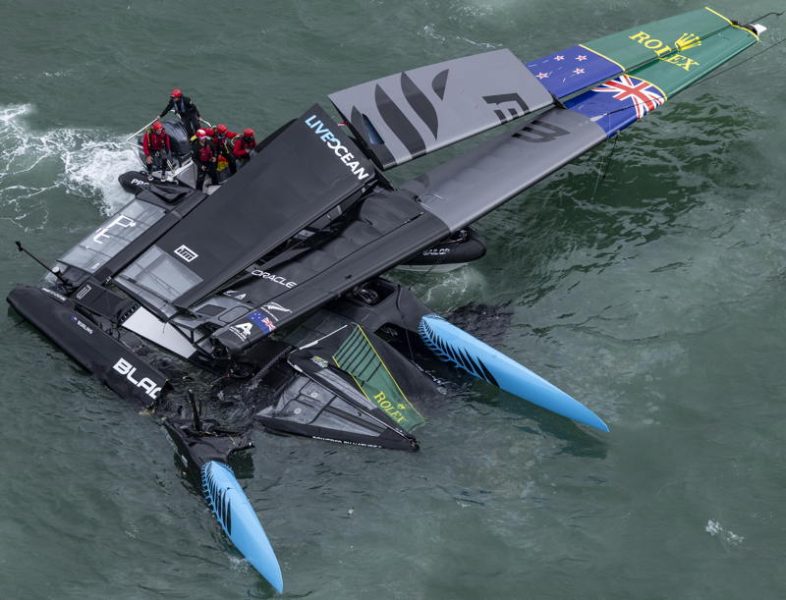
The remainder of Saturday’s racing was abandoned after the crash, and racing resumed on Sunday without the damaged Black Foils and DS Automobiles. The final results had Tom Slingsby with Bonds Flying Roos scoring their first Grand Prix win in a year, moving them to the top of the SailGP 2026 season standings after two events. Coming in second and third were Emirates Great Britain and Los Gallos (Spain). Losing their place at the top of the leader board, Team New Zealand was given an eight-point penalty by the umpires.
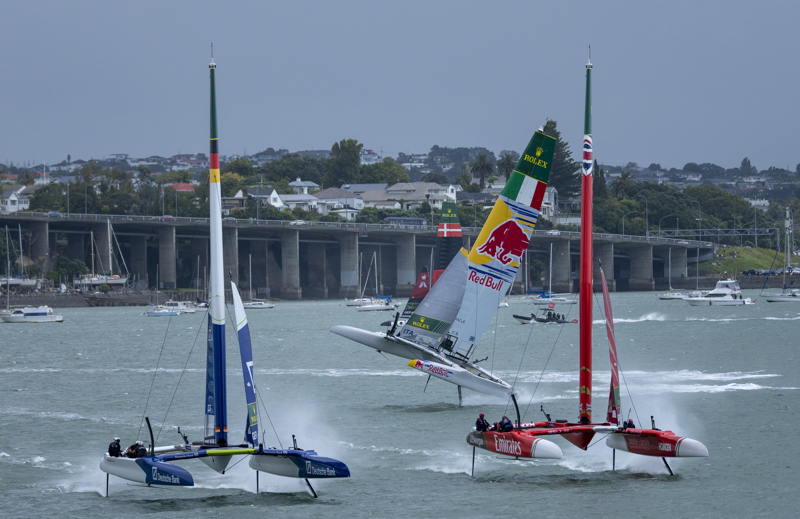
This was the Black Foils’ second collision this season; their F50 sustained severe damage in a crash with the Switzerland SailGP Team at the season opener in Perth, Australia, in January.
The next SailGP event will be KPMG Sydney Sail Grand Prix, on February 28–March 1. At this point, it’s unknown if the New Zealand and French boats will be able to rejoin the lineup.
The 2026 SailGP schedule:
• Jan 17-18 – Perth, Australia
• Feb 14-15 – Auckland, New Zealand
• Feb 28-March 1 – Sydney, Australia
• Apr 11-12 – Rio de Janeiro, Brazil
• May 9-10 – Hamilton, Bermuda
• May 30-31 – New York, USA
• June 20-21 – Halifax, Canada
• July 25-26- Portsmouth, GBR
• August 22-23 – Sassnitz, Germany
• Sept 5-6 – Valencia, Spain
• Sept 19-20 – Geneva, Switzerland
• Nov 21-22 – Dubai, UAE
• Nov 28-29 – Abu Dhabi, UAE
Taking a Look at Island Yacht Club’s Boat Share Program
Island Yacht Club member Shelli Bohrer sent us a quick photo of the club’s Santana 22 sailing the Estuary. Since we’re big fans of small boats and individuals, and clubs and programs that help give more people access to sailing, we requested more information about it.
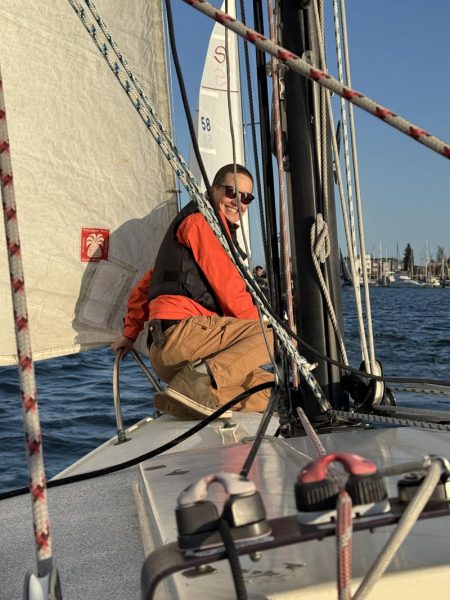
Shelli replied, “I help manage Island Yacht Club’s shared boat program. As you may know, the club doesn’t have a clubhouse anymore but we have two boats! One is David Buoy, our Whaler that is our mark-set boat for our year-round racing. The other is Island Girl 2, a Santana 22, lovingly refitted by members some five years ago after the original Island Girl was deemed totaled after a few too many incidents.”
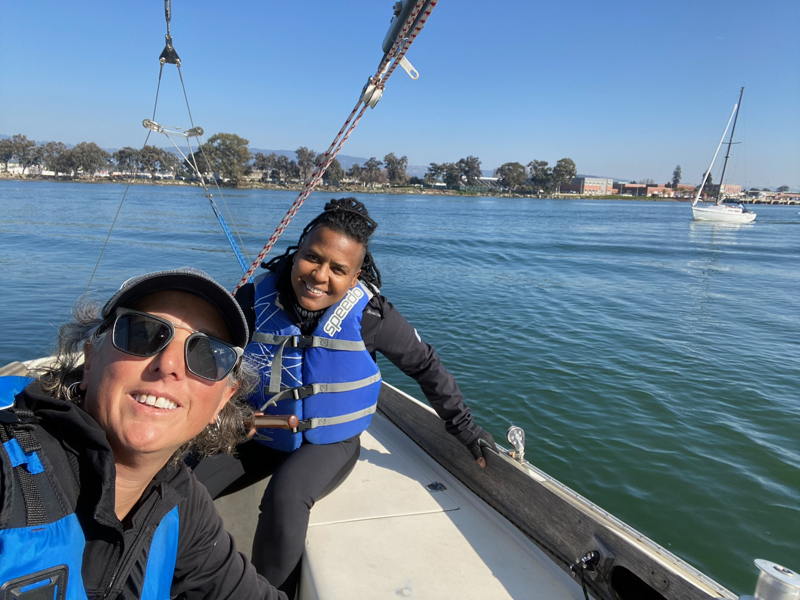
“We offer Island Girl 2 to members who are looking to better their skills on the Estuary or want access to a small boat without boat ownership. The shared-boat members maintain the boat; the club covers maintenance costs, insurance, and slip fees.”
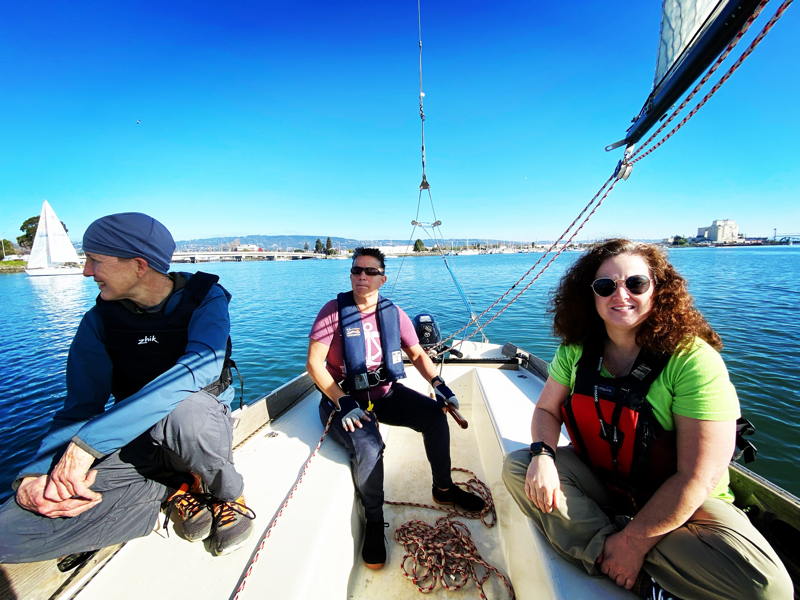
“For $50/month or $500/year, Island Yacht Club offers a great small boat to IYC members who want to practice their skills, or take family or friends out on the water,” Shelli continued. “We currently have seasoned and new sailors as members, including an airline pilot, a 50-ton captain, a stagehand, and other interesting folks. There’s more information on the IYC website.”
The Gary Mull-designed Santana 22 was first launched in 1966 and is one of many great boats that started numerous people sailing. Shelli mentioned that Hank Lindemann had recently written a piece for Encinal Yacht Club’s newsletter about his Santana 22, which he’s been sailing since he was 10, in 1969!
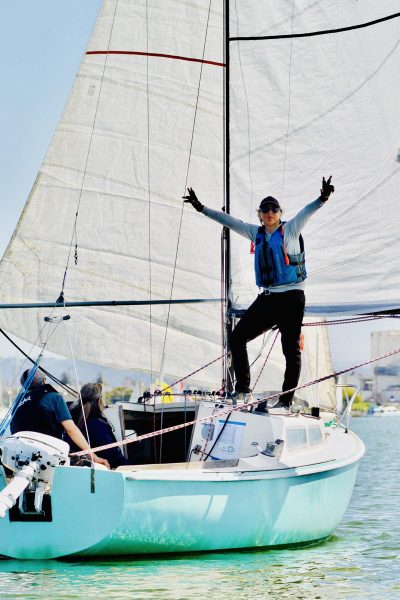
There are many ways to find your way onto the Bay. Island Yacht Club costs just $100 to join for a year (with no initiation fee), with access to sailing Island Girl 2 at just $50/month. Island Yacht Club members will be joining us, and many other sailors, for the Crew Party at the Golden Gate Yacht Club on Thursday, March 5. Reserve your tickets here.
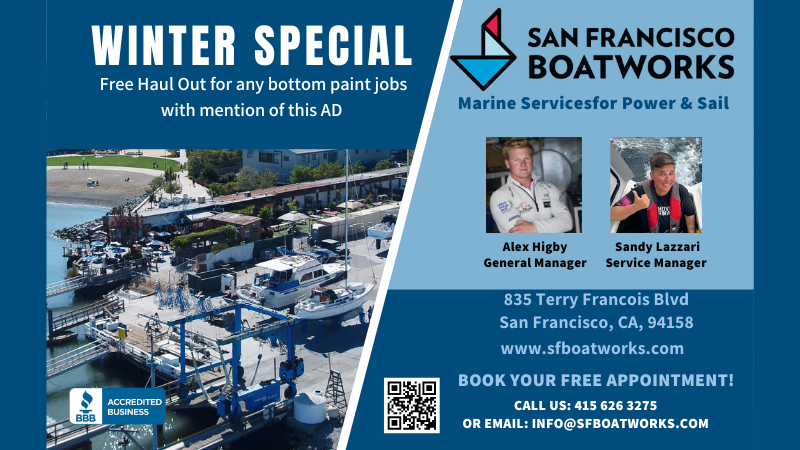
Catch the Winter Special at San Francisco Boatworks
2025 Season Champs Extra Part III: SSS Doublehanded Monohull
With the February 2026 edition of Latitude 38 out now, the “Season Champs” feature is officially wrapped up. We received so many submissions from the winners of different fleets this year that we didn’t have room for all of them in the print magazine, so over the next few weeks we will be posting in ‘Lectronic Latitude the submissions that we couldn’t fit into the magazine. Today we are focusing on Sergei Podshivalov and Frank van Diggelen, who won the SSS Doublehanded Monohull division aboard the Sunfast 3300 Sun Dragon.
“We started the season well, by being among the few finishers in the TBF; SSS points are computed from finish position/number of starters,” van Diggelen tells Latitude. “Also, every shorthanded race is a mini-fiasco anyway, so we love starting the season in the 300-strong TBF fleet. We had the usual ups and downs through the year, generally counting it a success if we corrected out close behind Gordie Nash in his Mull/Nash 27 Arcadia.”
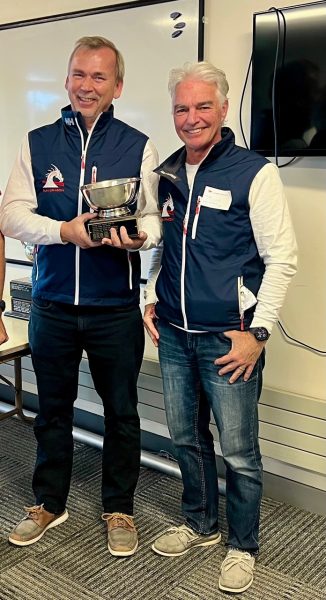
“Before the final event, all of the top three were in contention for the season victory,” van Diggelen says of the close racing this season. “We felt our chances of an overall win were pretty much hypothetical, but we had to compete anyway to defend our second place, under threat from five different boats. Luckily things went our way — and we’ve learned to keep racing to the very end.
“We bought Sun Dragon to campaign her doublehanded,” van Diggelen tells us of the team’s goals with the boat, “with our ultimate goal being ocean races. We’ll start our first Pacific Cup in July 2026. Follow us on YT “sunfastcam;” see your own boat from our 360 camera. And enjoy an original song and soundtrack: ‘The Three Bridge Fiasco Blues.’”
You can read the final print edition of the “Season Champs” feature in the February issue of Latitude 38, and you can find the first two parts of the 2025 “Season Champions” feature in the December and January issues.
Will AI Win the Pacific Cup?
AI beats humans at chess, Go programming, and Jeopardy!. Is sailing next? As a Pacific Cup race board member, I wanted to share some of our thoughts about what keeps the fun in the “Fun Race to Hawaii.” Artificial Intelligence is appearing everywhere. The magic technology is ghostwriting term papers and email replies and writing sophisticated software, and even driving autonomous taxis.
With the ability to learn over time and access wide swaths of data and convert it into an intelligible and useful format, AI has become a powerful and accessible tool in the hands of many. With Starlink, it operates offshore. Sailors will surely benefit. NOAA has recently announced the integration of AI into its weather models, and sail and yacht designers will use AI-assisted tools to enhance their work too.
For the racer and voyage planner, AI-assisted polar generation and routing are already available for a modest fee from PredictWind or others. You can even get AI to help write your blog posts as you cheerily tell folks on land about your adventures. Just over the horizon, however, things may not be so cheery. Starlink gives racers the ability to bring AI’s “brain power” with them so that AI and advanced instrumentation could easily destroy the fun. Imagine a race where each crew has a headset and gets instructions — “TRIM” or “TWO DEGREES to PORT” every few seconds. The boat performs perfectly to her polars, winning the race.
But nobody is smiling. The instructions come from an untiring, unfed, uncomplaining AI system somewhere. No tactical or boat-handling decisions are made by anyone aboard. Basically, the people on the boat are just meat-powered robots. The “white-collar” jobs of navigator and tactician have been eliminated, leaving the “blue-collar” jobs to execute the AI-generated tactics and strategy. Are we having fun?
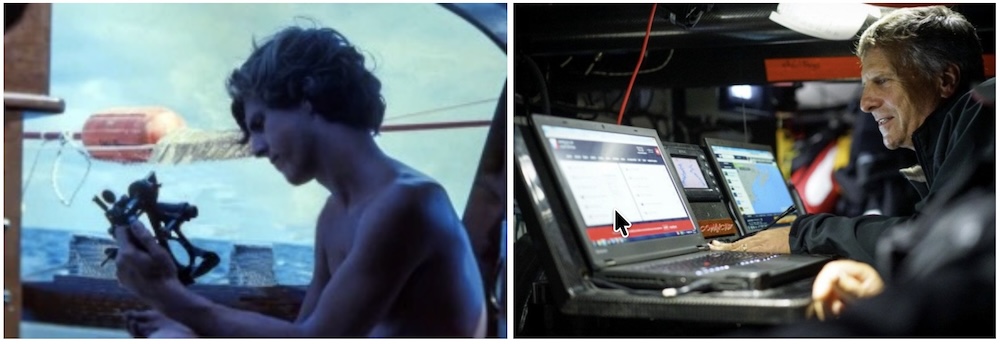
Once again, sailing must decide the rules on an event-by-event basis, adjusting rules depending on whether it’s the America’s Cup, dinghy racing or offshore. It would vary, as it does now, for the Vendée Globe, The Ocean Race, the Jules Verne Trophy or the Global Solo Challenge. The tech provides the information and the human “decider” determines the outcome. Yet, the day may still come when Waymo and Tesla are competing in the autonomous round-the-world race.
For fairness, regattas define what equipment may be used in a race. Many small-boat races restrict what instruments are allowed, and virtually all events prohibit outside assistance under Racing Rule 41, which states, “A boat shall not receive help from any outside source, except….”
Don’t Miss the Latitude 38 Spring Crew Party