

Rolex Sydney Hobart Yacht Race Finishers Sail Into Tasmania
Twenty-eight boats have now finished the 2025 Rolex Sydney Hobart Yacht Race, which began in Sydney on December 26 (AEST). Line honors went to Australian boat Master Lock Comanche, followed by Law Connect (with Mill Valley sailor Chris Lewis aboard as navigator), and third across the line SHK Scallywag 100. The remainder of the fleet is expected to arrive in port before midnight December 31.
Californian Stan Honey, co-navigator aboard Palm Beach XI, has crossed the finish line and is already on his way home. Bill Colombo aboard the Pac 52 Callisto is now ashore. Callisto completed the race on December 29 with an elapsed time of 03:03:42:47 and an average speed of 8.3 knots. At the time of this report, Ron Epstein and crew aboard Bacchanal (sailing under the Corinthian Yacht Club burgee) are shown to be just a few feet from the finish line.
Richmond Yacht Club members Andy Schwenk and Jim Quanci are sailing aboard Perplexity, and are expected to arrive in Hobart late tonight. According to the race tracker they have around 100 miles to go.
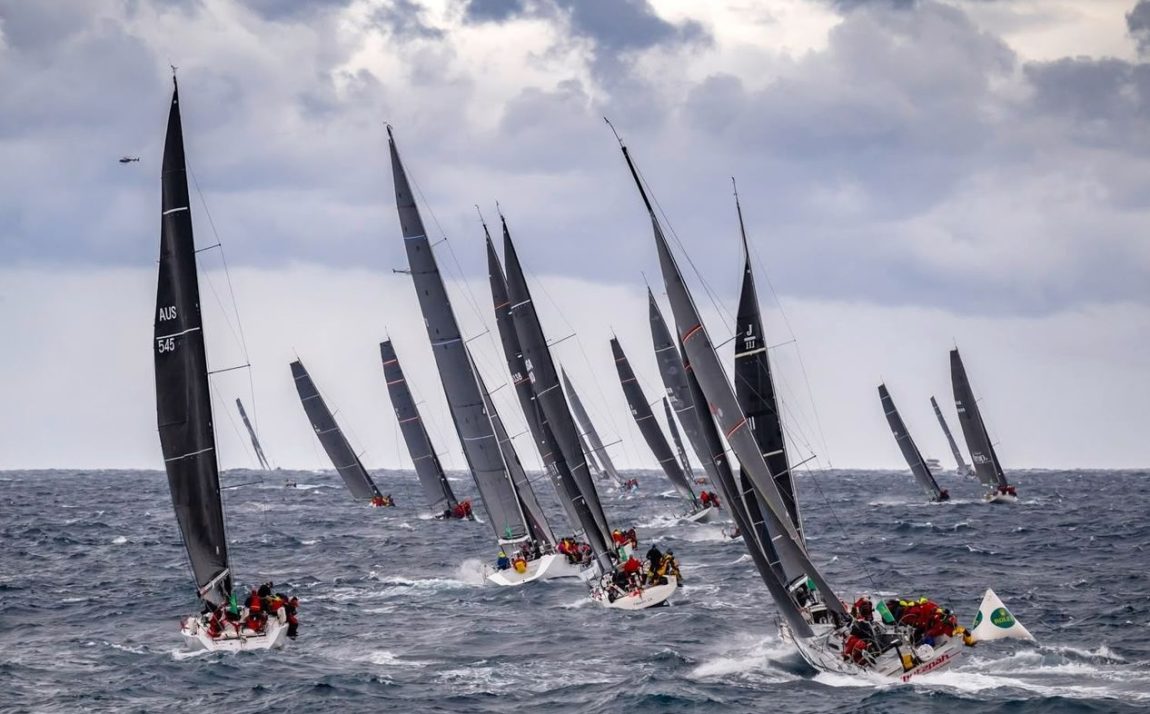
This year’s Sydney Hobart fleet started with 128 boats; 34 retired. After leaving Sydney Harbour amid overcast skies and a strong southerly breeze, the fleet entered the open waters with heavy seas and made their way south to face Bass Strait’s notorious confused seas and heavy-weather conditions. The conditions did settle down to bring a stretch of champagne sailing before dropping further to become light winds, bringing the pace down to almost a crawl. Suffice it to say the race has produced almost every condition for this year’s fleet.
We have eyes on the ground in Hobart today and hope to catch up with some of our local sailors and report back to readers later this week. In the meantime, you can follow the remaining boats here.
Delivering Latitude 38 Sailing Sunshine Before Another Rainy Stretch
It looks as if Latitude 38’s Bay Area delivery drivers are going to get lucky again with a break in the endless rain, allowing them to deliver the January Latitude 38 to your favorite magazine distributors tomorrow before the rain starts up again. If you time it right, you can also pick up the January issue in time for the New Year break and before the rain kicks in again on Wednesday.
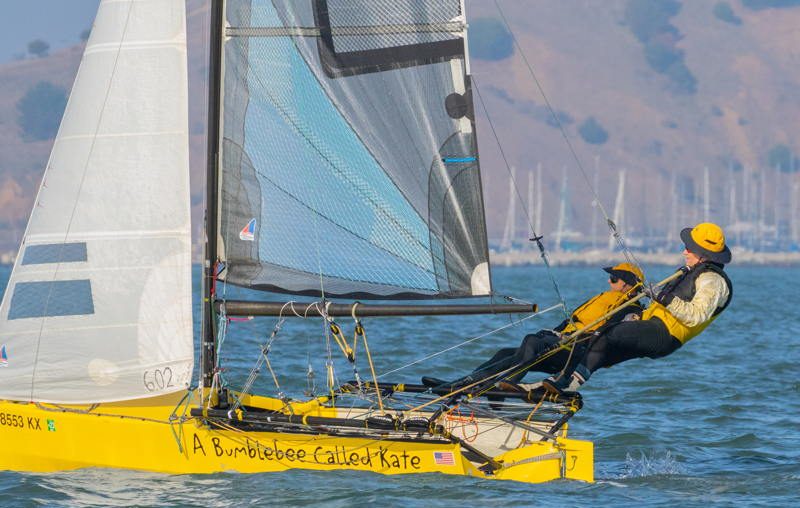
Another angle on our cover sailors this month: Rand Arnold and Gary Gremaux are out on the wire aboard their International 14, A Bumblebee Named Kate. The pair were racing in Richmond Yacht Club’s Small Boat Midwinters earlier this month. While much of the Bay Area was lamenting being shrouded in gloomy, chilled fog, sailors in the Small Boat Midwinters off the Richmond Riviera were relishing blue sky and sunshine. There were over 100 boats signed up, and just under 100 raced on December 7.
We liked the line in John Walsh’s story in Sightings describing his preparation for the Baja Ha-Ha aboard his 1978 Cal 29 Ondina, where he says, “There was recently an article in Latitude 38 asking, ‘Is DIY dead?’ I can tell you, DIY is not dead — though it did nearly kill me!” You can read John’s whole story on page 32 tomorrow.
Other stories in the January issue include Pac Cup Primavera — Andy Schwenk’s guide on preparing for this year’s race to Hawaii.
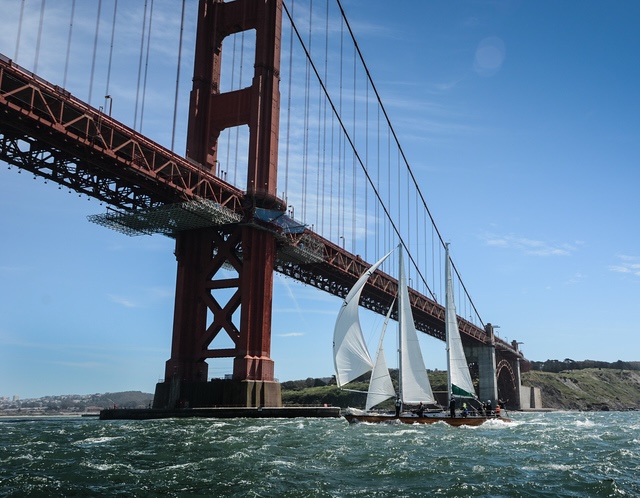
Tackling Unexpected Challenges on the Baja Bash — Eva Tanner shares the tale of the obstacles to an easy voyage north aboard Dolce Vita.
Also in this issue, The Poobah’s Last Hurrah; The Secret To a Long Life? Sailing; 2025 Season Champions, Part 2; Max Ebb — A Little Book; and more features, stories and regular columns.
Racing Sheet — Just because it’s the “off-season” doesn’t mean that sailing takes any time off. This month’s Racing Sheet highlights a collegiate regatta like no other in the form of the Big Sail between Cal and Stanford, along with midwinter racing hosted by Encinal Yacht Club, Island Yacht Club and San Diego Yacht Club. We have also included an expanded Box Scores section in this month’s issue.
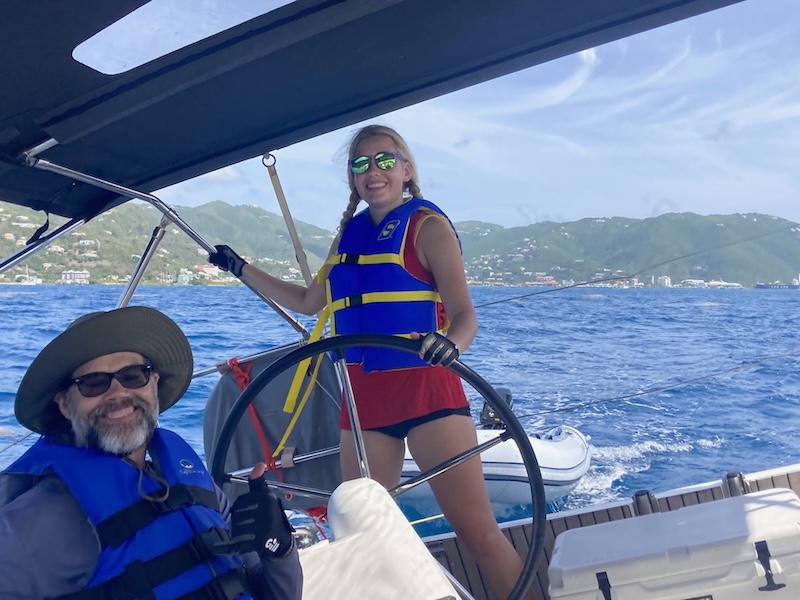
World of Charter — Pippin Brehler embarks on a sailing dad charter with his family in the British Virgin Islands.
In this month’s Changes in Latitudes we share Ondina’s long journey to get to the Ha-Ha; Second Wind’s transformation from racing boat to cruising boat; and the second installment of our “Where Are They Now?” feature, in which we catch up with 2025 contributors.
Plus you’ll find dozens of great letters and comments from readers, our monthly Caption Contest(!) winners, and more. Set your alarm and get ready to run out tomorrow and grab Latitude 38’s first issue of 2026!
“A Well MISSPENT Youth” by Ben Needly
‘Orient Express Corinthian’ Becomes the World’s Largest Sailboat
Jeff Bezos will have to be careful of “Everyone needs a bigger boat” when his crew pulls his 417-ft yacht Koru into a harbor, only to discover it isn’t the biggest sailboat around. Though it’s not a private yacht, the 722-ft Orient Express Corinthian is now the world’s largest sailing vessel. It’s still being finished, but it is expected to be ready for its inaugural Caribbean sailing season toward the end of October 2026.
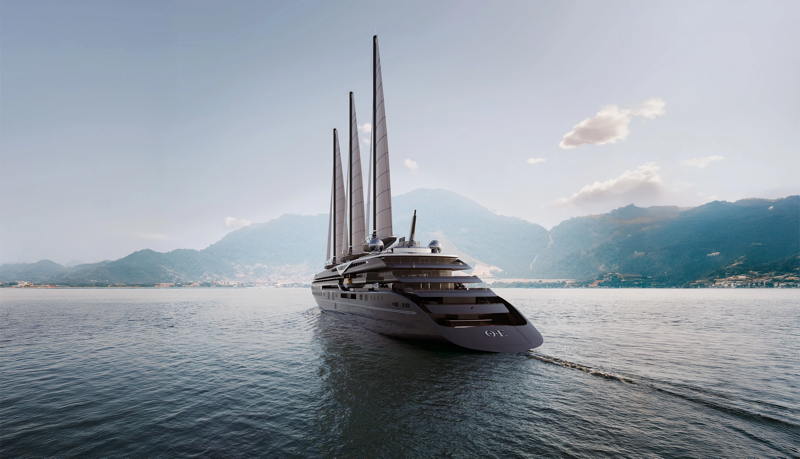
Orient Express Corinthian is a sailboat with three tilting masts about 330 feet tall, and has a rigid sail plan with over 45,000 sq ft of sail area (that’s around an acre!). She’s meant to be primarily driven by her sails, though she does have a hybrid LNG auxiliary power system for whenever powering is needed. She’s being built in at Chantiers de l’Atlantique shipyard in Saint-Nazaire, France.
If you saw her at a boat show and asked, “How many does she sleep?” the answer would be 110 guests in 54 suites. The largest suite is 2,476 sq ft! Booking a suite for seven days will cost in the range of $40,000-50,000. They are also building a sistership, the Orient Express Olympian.
If you’re after “ultra-luxury” travel, this could be the ticket, or if you like to sail, you can easily buy a good, used cruising boat for the price of a seven-night stay. Check out what’s available in Classy Classifieds.
Changes in Latitudes — Science From a Sailboat Aboard ‘Rafifi’
After crossing the Pacific on Kurt Christofferson’s Deerfoot 62 Emma a few years back, the crew of that voyage have scattered across the globe on adventures of different kinds. While Emma continued toward Fiji, I continued my career in marine science, founding the organization Windward Sciences. While looking for excuses to conduct research from sailboats whenever possible, I stumbled upon a ragtag group of scientists at the University of Oxford in 2023.
As we masqueraded as tea-sipping professionals in squashy common-room armchairs, plans grew to launch a research initiative to study evolutionary biology on island archipelagos across the world. We hoped to understand and model how biodiversity is being lost (or gained) over time, making islands the perfect study systems. (Think Darwin’s voyages — but this time, we came armed with advanced computing, DNA sequencing, and AI to address these age-old subjects.)
As we’d planned, the small research collective grew to include scientists, artists and free thinkers across three nationalities — Finnish, American and French. After many brainstorming sessions and funding applications, we cobbled together a shoestring budget to cover a few bits of essential science equipment and rental of the Jeanneau 40 Rafifi for a pilot expedition in Finland’s Turku Archipelago in the Baltic Sea.
With so many samples to collect and so few berths available, our sailing-savvy scientists doubled as skippers, and we were joined by Suzy Garren (one of my original Pacific crossing crewmates) to help make it all work.
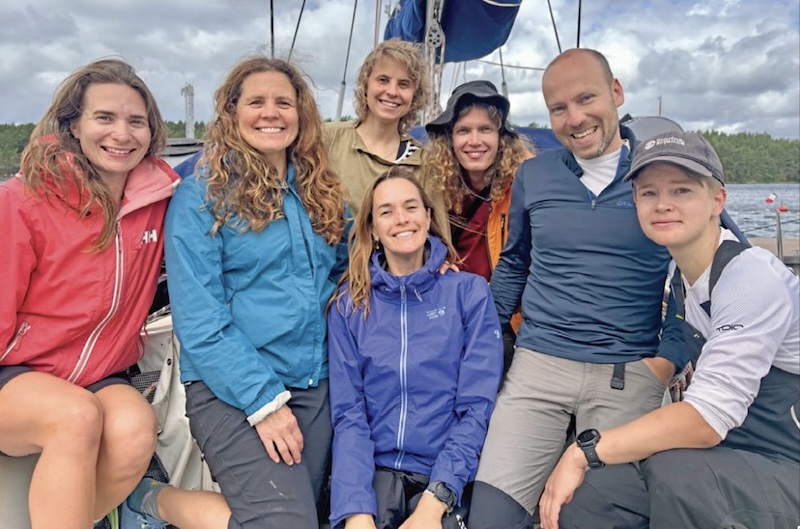
The seven of us set sail in August for what would become an incredibly exhausting yet rewarding couple of weeks in a landscape very foreign to me. To begin with, the Turku Archipelago in southern Finland was one of the most navigationally challenging places many of us had sailed. It was a labyrinth of tens of thousands of islands, some the size of Catalina and others barely big enough to land a gull. Given that we hoped to sample islands unaffected by humans, we were sleuthing our way through infrequently transited and unmarked passages. To make matters more interesting, the Baltic Sea is still rebounding from its last glacial maximum. This means that the ground is creeping upward after the giant ice sheet burying northern Europe melted some 20,000 years ago — like a memory foam mattress slowly returning to form after your removing your hand.