

Richmond Yacht Club Hosts First Weekend of Small Boat Midwinters
On Sunday, December 7, Richmond Yacht Club (RYC) hosted the first of four days of midwinter dinghy racing. Ninety-five boats showed up to race across 14 different one-design classes. Twelve were dinghy classes, while two small “dinghy-like” keelboat classes (Wylie Wabbits and Ultimate 20s) participated. Most fleets sailed four races on the day, while some sailed three and some sailed five.
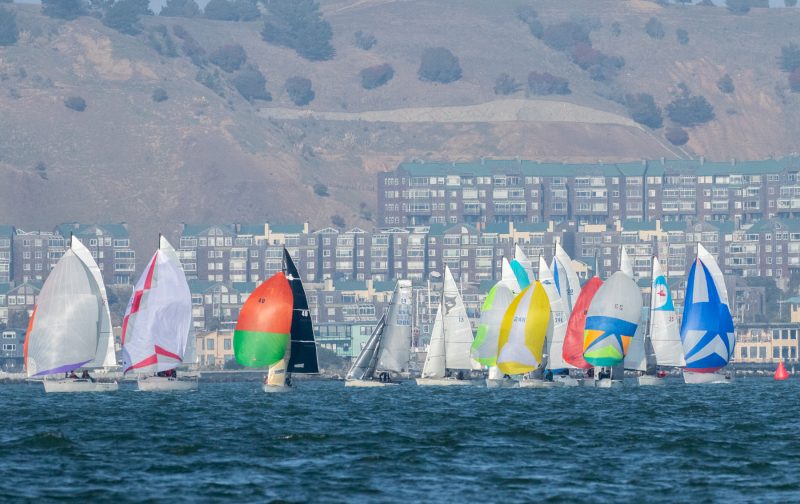
“The conditions on Sunday, December 7, for the RYC Midwinters were excellent for racing but a wee bit cold for the racers,” Ultimate 20 winner from the day and 2025 Ultimate 20 season champion Donna Womble tells Latitude. “We saw a consistent 5–8 knots of wind from the north (brrrrr!), flat water and minimal current.”
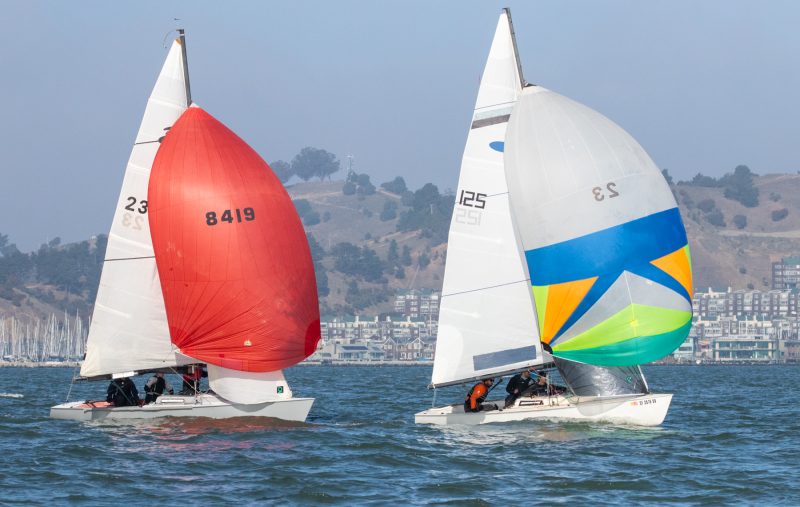
Womble and her team won three of the four U20 races aboard her boat Peabody (MPYC). The U20 fleet comprised five boats for the day, and the fleet was regularly competing not only with themselves, but with the similarly quick and small dinghy-esque Wylie Wabbits.
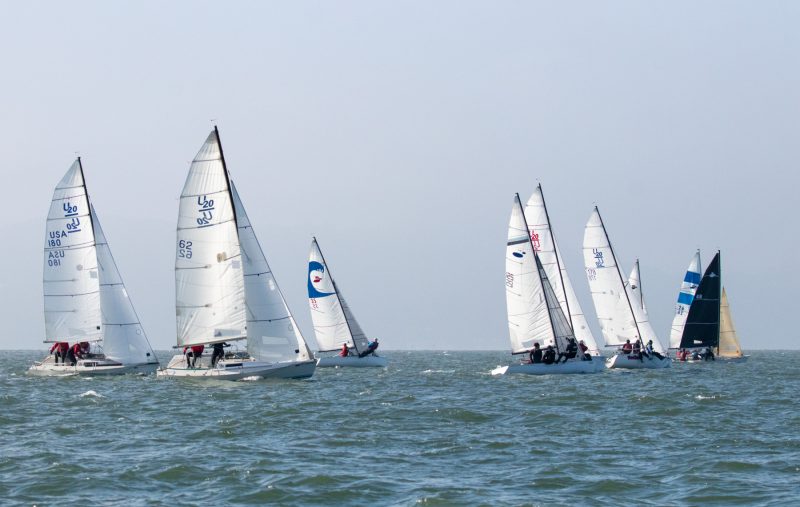
“The U20 fleet shared the race course with the Wabbits,” Womble tells Latitude. “We had four very tight races with a lot of traffic congestion. We never rounded a mark without at least two other boats nearby. One weather mark rounding even resulted in a minor collision, and fortunately someone did do their 720. Downwinds were tricky, since the U20s sailed hot angles with asymmetric kites, whereas the Wabbits drove dead downwind with symmetry. We crossed paths with many other boats, including the Laser and Mercury fleets on their upwind legs.”
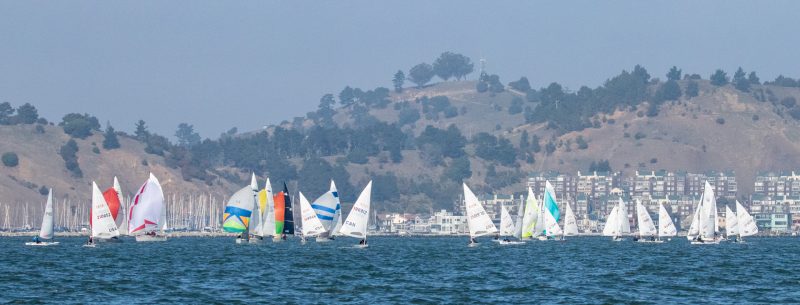
Colin Moore’s Kwazy (RYC) won the eight-boat Wabbit fleet with seven total points from four races, including bullets in races three and four.
Another notable fleet competing was the I-14 fleet, as the legendary class looks to regrow itself on the West Coast, nationally, and internationally. RYC is home to several of the I-14s in Northern California, and six boats showed up to race on the first day of Small Boat Midwinters (though not all six raced all four races on the day).
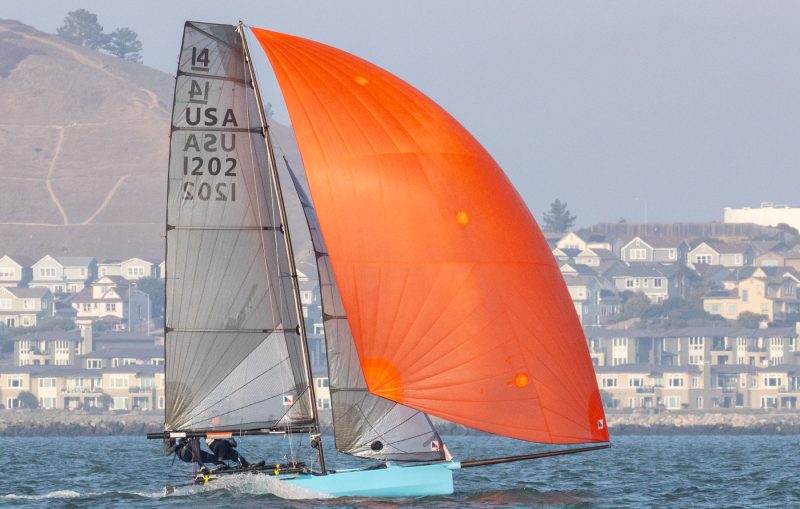
The I-14 fleet was won by the young duo of skipper Patrick Wilkinson and crew Max Roth.
“The RYC midwinters presented some very tricky racing,” Roth tells Latitude. “With 11 different fleets on the water, we found ourselves dodging traffic on every downwind. The racing was extremely tight at the top of the fleet, with multiple lead changes in some races. We couldn’t have asked for any better conditions, with 8–14 and sunny skies.”
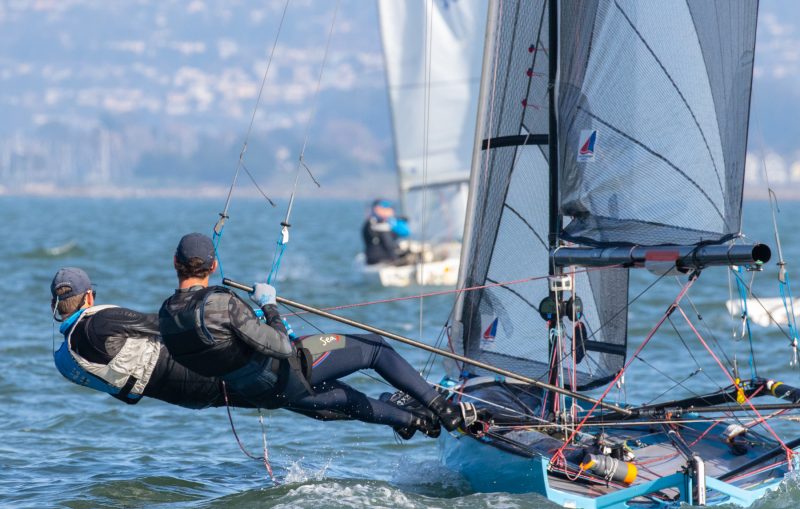
The 10-boat El Toro fleet was won by Gordie Nash (RYC), who won the first three races of the day to jump out to what proved to be an insurmountable lead for the rest of the day. Six youngsters raced in the RS Tera fleet, with Grace Anderson (RYC) winning two of three races and the day. The six-boat Snipe fleet saw incredibly tight competition, with just four points separating first from fourth for the weekend. Packy Davis (EYC/StFYC) ultimately won the Snipes with 12 points, one ahead of second. David Rumbaugh (LWYC) won the five-boat Coronado 15 fleet, recording a picket fence. David West (RYC) was victorious in the Mercury fleet, narrowly edging out David Bacci (RYC).
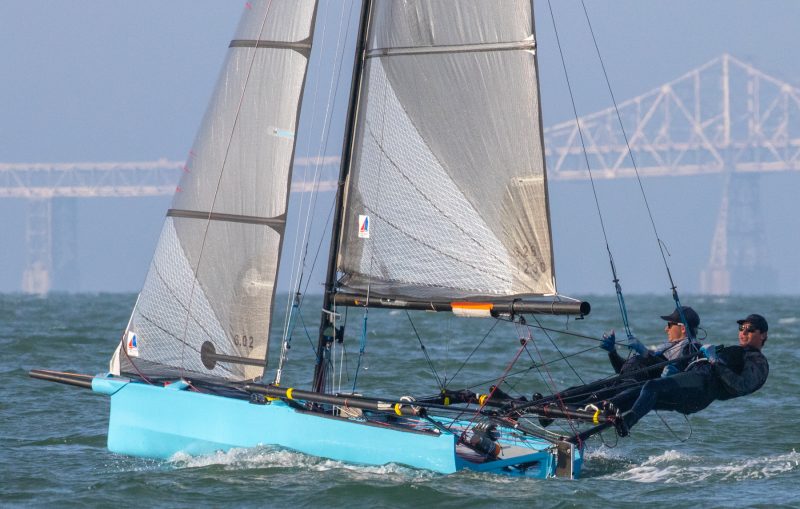
RYC’s Small Boat Midwinters will continue on January 4, and then wrap up with race days on the first of both February and March.
You can see the full scores for RYC Small Boat Midwinters Here.
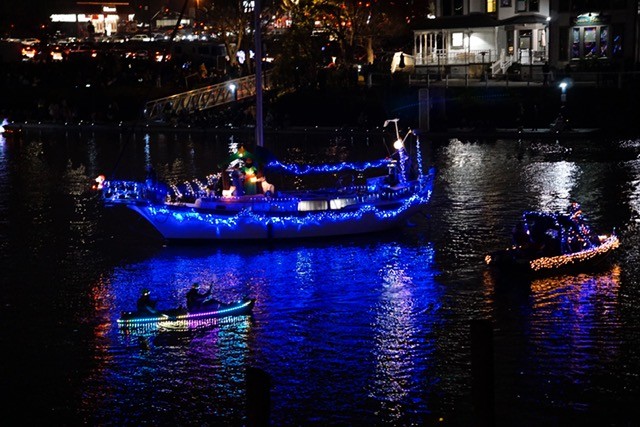
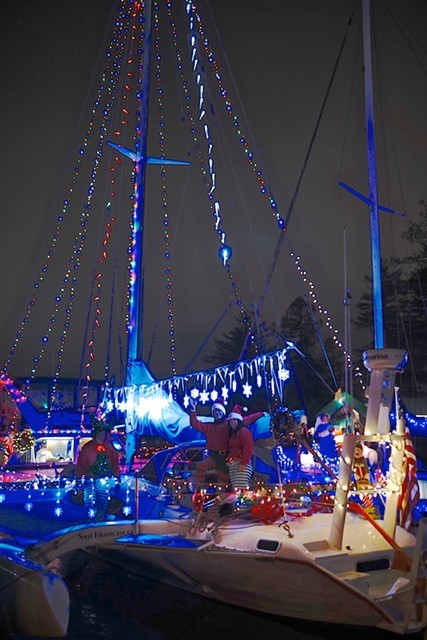
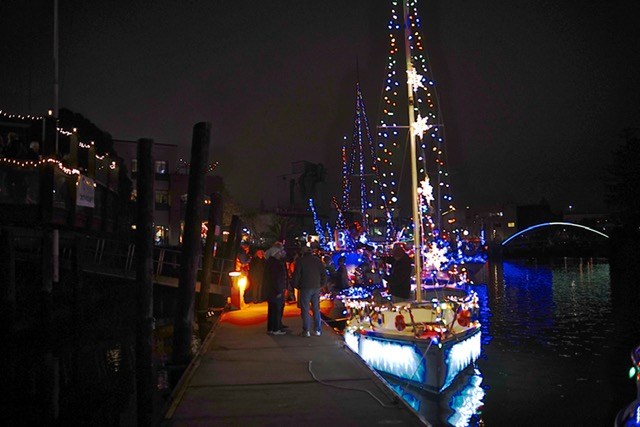
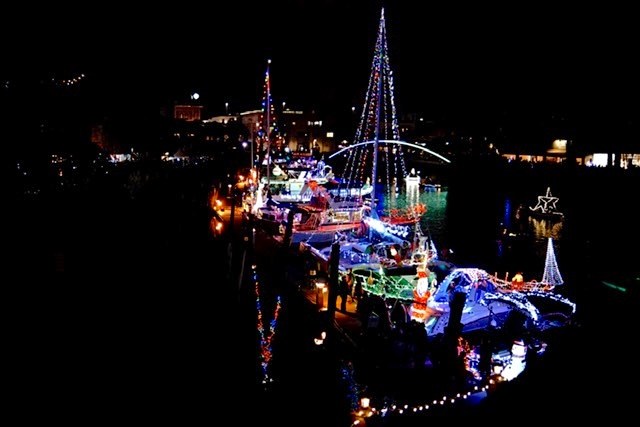
Petaluma Lighted Boat Parade Adds Sparkle to the Basin
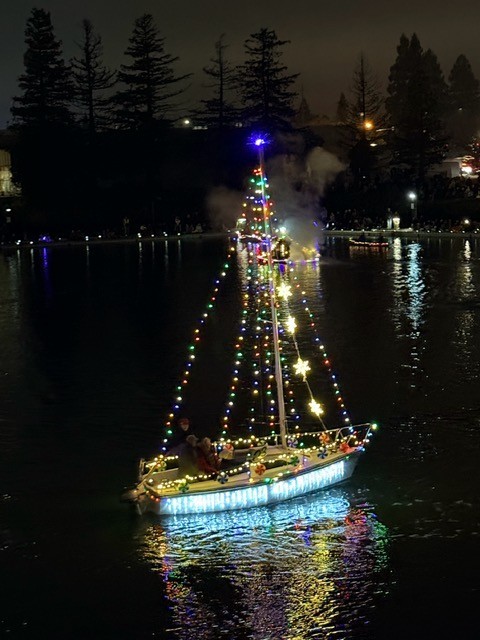
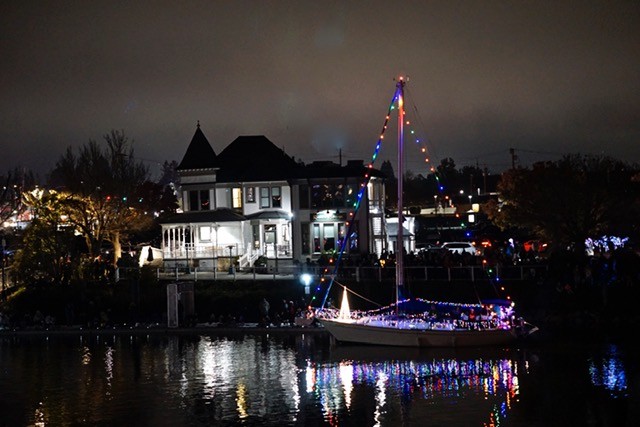
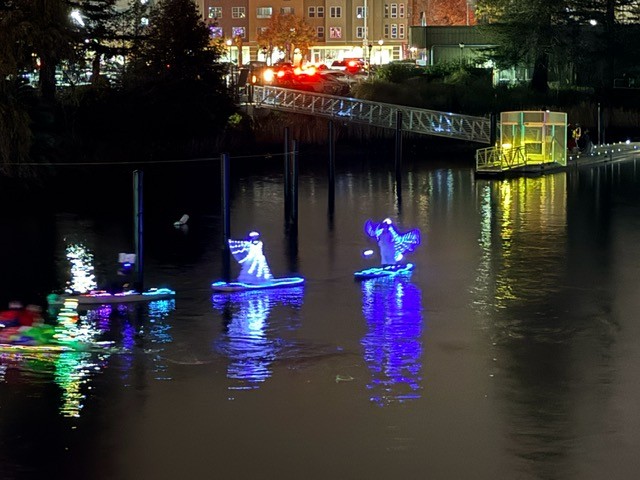
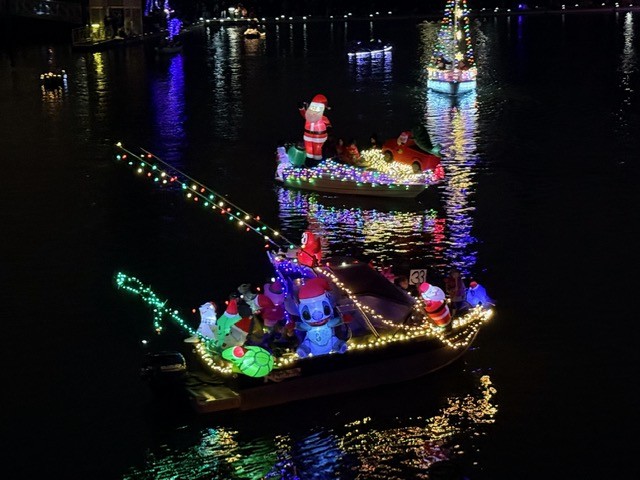
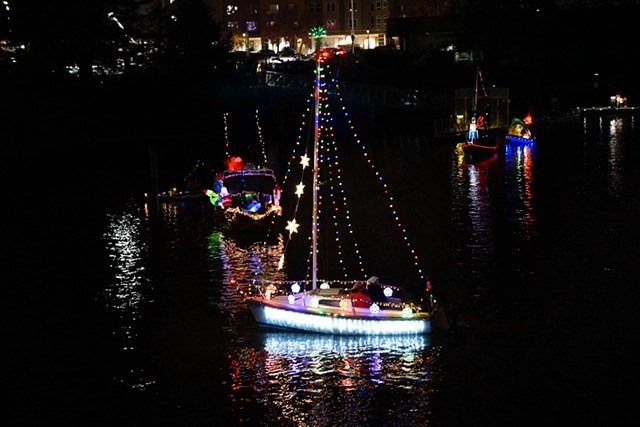
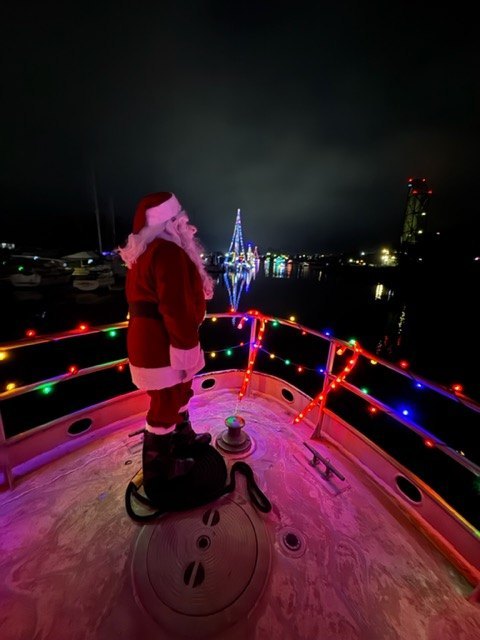
The 2025 Petaluma Lighted Boat Parade, hosted by the Petaluma Yacht Club, was a resounding success, with over 50 vessels ranging in size from SUPs to the 65-ft-long Sea Scout ship, Compass Rose, a former naval ship.
The one-and-a-half-mile parade route, lined with thousands of eager spectators, provided great views for all.

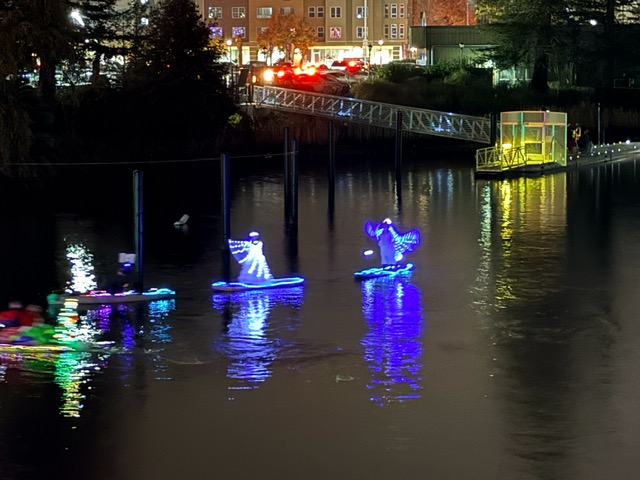
The downtown Petaluma Turning Basin and surrounding restaurants shared in this yearly tradition, which will be held next year on Saturday, December 12. Mark your calendar and join the fun!
Here’s a gallery with more photos. All photo credits go to Rich Brazil and the Petaluma Yacht Club.




Marina Riviera Nayarit — A Great Place To Visit
Warm Someone’s Winter With a Latitude 38 Gift Subscription
We’re grateful to our subscribers, readers and advertisers who made it possible for us to entertain and support sailing with 12 issues, 300+ stories, countless letters, photos, captions and comments, and hundreds of ’Lectronic Latitudes and other snippets of sailing and sailors. You can help with a gift subscription.

A couple of great reasons to give the gift of reading about something you love: The recipient of your gift gets a reminder of your generosity every month for 12 months in a row. They get a great hold-in-your-hands magazine delivered to their mailbox every month. Also, the colors always match, it shows great taste, and one size fits all!
Give a relaxing dose of reading that will cheer up your friends and family regardless of the sailing. Order online here.
Tales From the ‘Can’: Life on the Edge of the Spectrum
It was going to be cold. It was going to be light. It was possible that IFR rules might apply, giving some edge to those with good instruments, and a lucky sense of bearing and range to plug theoretical waypoints into them. But at month two of the Berkeley Yacht Club (BYC) Midwinters, only one of those ugly possibilities materialized on Saturday; it was cold. However, racers could see the marks, and there was a consistent eight- to 10-knot breeze out of 270 degrees on the Circle, with the occasional feint of a veer to what was apparent over the Chevron refinery: the north-northwest to north-northeast happening in the North Bay.
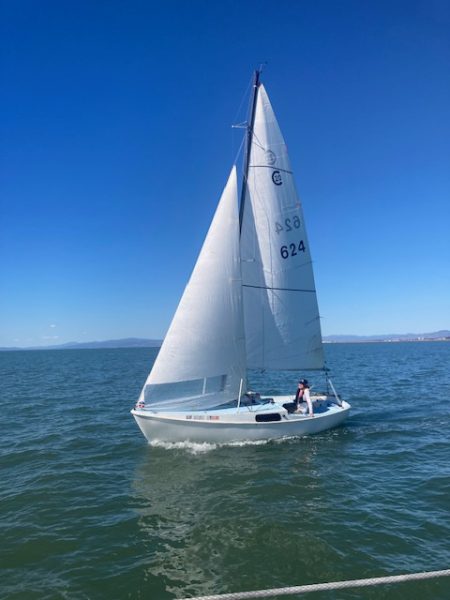
It was enough for the race committee to order up an eight-miler. In the Can’s brutal, PHRF 114–273 division, we were going to need smarts to do better than our seventh-place finish on November 6. The marginal glow of the previous weekend’s division win in the YRA Doublehanded Midwinters had faded midweek. Our gambit was to hit the right corner hard, hoping to avoid the fairly large ebb sweeping south up by the weather mark in the late approach. November winner Rick Reduziner’s yellow SC 27 Lickety Split had the same idea, and had tacked early to port, ahead of us. The rest of our division were either working shifts on the left side, or just banging it out on starboard, hoping for a pressure differential.
The right side didn’t go Iight, and with just a short approach tack on port into the ebb, we were sailing well over our handicap when the kites came out. Our set was not exemplary, but we got the laundry up, with the leaders riding the ebb toward the Berkeley Pier. We noticed the veer, and were nearly the only boat in Alpha, Bravo, or our Charlie group to jibe, finding an optimal rhumb-line course on port. We were still looking good at L, except for Vaughn Seifers’ Moore 24 The Flying Tiger up in front with Jim Carlsen’s S&S 30 Free. By a half-mile on port, on the two-mile leg back to W, everyone had gone to starboard, except the Can.
We were able to sail at nearly max upwind speed (5.2–5.4 knots), pushing water along at 4.7 all the way toward Brooks Island. At two miles out, some good layline calculations on the right corner nailed it spot on, and we were back with the bigs in our group. We jibed right away, while the bigs made the same mistake they had the first time down and sailed a longer downwind leg. As we went hard right on the last leg, the wind did not falter, and we corrected in second, seven seconds behind the Moore, and 12 seconds ahead of John Guilliford’s J/24 Phantom. That sketchy first set.… The Flying Tiger is in the sweet spot, going into the New Year with four others to wrestle for the podium remainders.
Sunday looked seriously more bleak, with the RC opting to go at the scheduled time with only zephyrs, because “… there is no model predicting much chance of wind.” They postponed for a short course adjustment, then started sending divisions off on a four-miler as the wind, wiggling from 270 occasionally back to 250 or so, built to 10 knots. Our division Sunday was a more reasonable PHRF 135–273, with some bigs and some smalls, and with an always-scary Moore, a Ranger 23, an Olson 911 or two, and Megan Dwyer’s new red Tuna, Ahi.
With a fairly short line, the wind on the back end of its wiggle, the pin up 15 degrees, and the Can wanting to go hard right again, what was a slow to do? Why, port-tack the fleet, of course! Pulling it off required the wind shift to hold, and it did. The feeling is like falling in love: really scary, but exhilarating. We hit the right corner hard once again, nailing the W mark from a mile out, and watched as a different group made the same mistake as our Saturday club, following the ebb toward the Berkeley Pier, while we immediately jibed, finding ourselves in a big veer that had us headstay-reaching the rhumb line most of the two miles to L. Meanwhile the rest of Charlie company sailed an extra half-mile along the pier. Twisting the knife, we hit the right corner again to the RC layline, fetching up at the pin end for a 03:32 win over the J/24. Back in the mix! See you next month!
John Sweeney Files New Point Buckler Island Lawsuits
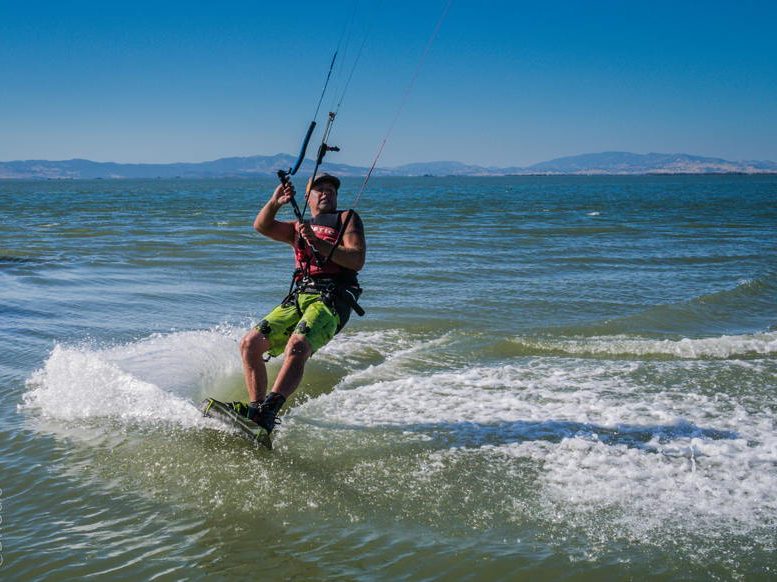
It’s just like kiteboarding. He’s up. No, he’s down. He’s back up. The long story of Bay Area sailor John Sweeney’s legal battle with state and federal regulatory agencies over his ownership and management of Point Buckler Island has been a decade-long knock-down, drag-out battle. It started when the BCDC and the California Regional Water Quality Control Board filed a suit against Sweeney in 2014 about Point Buckler Island in the Delta, which Sweeney bought in 2011. Sweeney filed a countersuit in 2016. He was arrested last January, and the island was sold at auction to the John Muir Land Trust. Now, almost 10 years after it all began, Sweeney is again back on the offensive.
There have been very few uplifting moments over the past several years, but with the help of AI, both Grok and ChatGPT, Sweeney has managed to get the case accepted in the Ninth Circuit court as US v. Sweeney, No. 25-2498. Sweeney spent several months pouring all the materials collected over 10 years of lawsuits into AI, and came up with a lawsuit that has gained some traction and support.
Sweeney is asking the Ninth Circuit Court of Appeals to overturn a federal judge’s finding that he and Point Buckler Club LLC violated the Clean Water Act at Point Buckler Island in the Suisun Marsh, and that Point Buckler Island is, in fact, an island and should never have been classified as wetlands.
His case is helped by a US Supreme Court 2023 decision in the Sackett case, narrowing which wetlands fall under federal Clean Water Act jurisdiction. The narrowed definition affects much of the broad, wet Delta cruising area dotted with islands, levees and marsh. There are many places in the Delta where cruisers anchor and tie up to the shore, reminding us there’s a place where Delta wetlands become Delta islands. Sweeney says the government and the district court treated his dry land as regulated wetlands.
The dispute is partly about the definition of Point Buckler as an island or as wetlands, and also, Sweeney’s repair of dikes. As Sweeney describes it, the island’s interior had been elevated, diked and dry for ages. He was driving equipment on the island to repair the levees, which presumably wouldn’t be possible in marshlands. The lawsuit says that in violation of federal permitting duties, the Army Corps failed to process and ultimately concealed Sweeney’s 2015 permit application for more than a decade.
In a sign of support, the Pacific Legal Foundation, a nonprofit public-interest law firm, has now filed an amicus brief (meaning a “friend of the court”) on December 1, 2025, urging reversal and saying the district court failed to analyze whether Point Buckler’s tidal channels are “relatively permanent waters,” and whether the island’s wetlands are actually “indistinguishable” from those channels.
Meanwhile, for now, the island itself has new owners. As we reported earlier, the John Muir Land Trust bought the property at a Solano County sheriff’s office auction with a $3.8 million credit bid in January 2025, with restoration framed as the next chapter for the site.
Many people might have given up after losing the court case, and with their former island sold. However, Sweeney is tenacious, and beyond trying to reestablish ownership of his island, he also has a separate lawsuit alleging that the state and federal government have been fraudulently classifying wetlands, falsifying maps, and seizing lands improperly. In the suit, he is going after scientists who helped create the alleged fraudulent maps. And in another lawsuit, Sweeney v. Solano County, he alleges they did not have the legal right to auction off the property, and the auction was rigged in advance.
This is all a long way from his days of sailing in the America’s Cup, organizing racing on the Bay, or when he and his wife Jennifer Frost sailed south with the Baja Ha-Ha on their Chance 55, Glory.

As this has been going on for over 10 years, we’re not expecting clarity any time soon. However, the case continues in the Ninth Circuit, and there’s a chance a decision will come sometime in 2026. With a lot of environmental law currently in flux, the court ruling could have wide-ranging implications, far beyond Sweeney’s (John Muir Trust’s?) 50-acre island in the Delta.
This is all happening just a couple of miles north of Port Chicago on Suisun Bay. It’s hard to imagine such drama as you head up the Delta for your relaxing summer cruise, but as we know from the Delta tunnel controversy and many environmental rulings, the water we relax on is also a source of tension.
Time will tell. At some point, the courts will rule again on whether Point Buckler Island is an island or a wetland, and if the many agencies, government officials and scientists have been following the law or have participated in bureaucratic overreach, and ultimately, fraud. The result could have far-reaching impact.
Westwind Yacht Management — Washing, Waxing and Varnishing
Westwind Yacht Management: Premiere Yacht & Fleet services for the San Francisco Bay Area.