
Berkeley Yacht Club Hosts Its First Midwinter Races
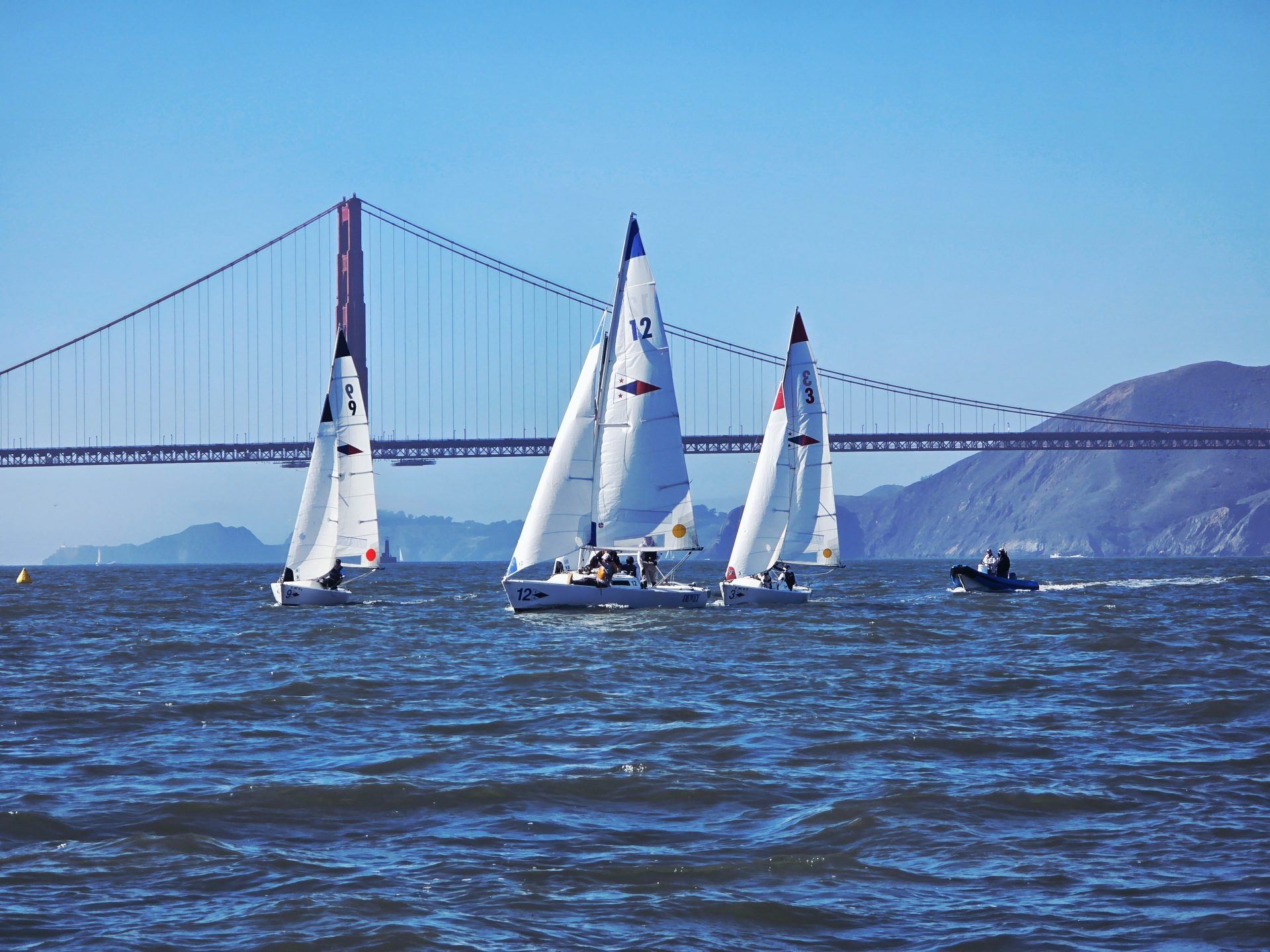
On November 8 and 9, Berkeley Yacht Club (BYC) hosted the first two of eight total races in their midwinter series. Each day saw one race sailed in light to moderate, sunny conditions. Saturday’s racing saw 20 boats compete across three different PHRF divisions. Participation nearly doubled on Sunday, with 44 boats showing up to race in six divisions.

Saturday’s racing was entirely made up of PHRF racers. PHRF Fleet One, comprising boats with a rating less than 85, had six competitors and was won by John Kernot’s C&C 115 Raven (RYC). Beating the winner boat-to-boat but finishing two minutes behind the winner on corrected time was Nesrin Basoz’s J/111 Swift Ness (RYC).

PHRF Fleet Two was won in both real and adjusted time by WYSIWYG (RYC), an Olson 30 owned by Hendrik Bruhns. Charlie Brochard’s Ericson Olson 34 Baleineau (RYC) took second, finishing just over two minutes behind WYSIWYG in adjusted time, and a little more than that in real time. John Oldham’s Melges 20 Rooster (StFYC) rounded out the podium.

The third and final of Saturday’s PHRF fleets was won by Lickety Split (TYC), a Santa Cruz 27 sailed by Rick Raduziner. In second was The Flying Tiger (RYC), Vaughn Seifers’ Moore 24. Third place went to Jim Carlsen’s S&S 30 Free (RYC).

In contrast to Saturday, Sunday’s racing was not only PHRF. Of the six fleets, only two were full-on PHRF fleets. Two more fleets used adjusted time, but their main feature was being single- and doublehanded fleets. Finally, there were two one-design fleets: Express 27 and Alerion 28.

PHRF One was won by Swift Ness, beating out Rooster for the day. Both boats returned from racing on Saturday to compete on Sunday. PHRF Two was won by a J/24, Froglips (RYC), skippered by Richard Stockdale.

Lickety Split also returned on Sunday, but this time to race specifically in the 10-boat-deep doublehanded division, which they won. They finished two minutes ahead of Nathan Bossett and Nathalie Criou in their Figaro 2 Envolée (SSS). Third went to Colin Moore’s Wylie Wabbit Kwazy (RYC). Two more Wabbits also raced, nearly enough for a one-design class.

Doug Kidder’s Synergy 1000 Soliton (RYC) won the singlehanded division, which comprised seven boats. Second was the Wyliecat 30 Uno sailed by David Herrigel. Third place went to an Alerion Express in the form of Surprise! (RYC), sailed by Bob Johnston.
The Express 27 fleet was the first of two one-design fleets, and was won by Seth Clark’s Current Affair (RYC). Steven Katzman’s Dianne (RYC) and Ross Groelz’s Eagle (SLTWYC) rounded out the Express podium. In total, eight Expresses competed, primarily boats from RYC and the South Lake Tahoe Windjammers Yacht Club. California’s Express fleet features a strong Tahoe contingent, most of whom snowbird in Richmond each winter.

The Alerion 28s were the other one-design class. Fred Paxton and Arnie Quan won in Zenaida (RYC). Recently crowned Ruth Wosser Trophy winners Chris and Denise Kramer were second in Sweet De (RYC). Chris Hermann’s Althea (SFYC) rounded out the Alerion podium and the day of racing.
BYC’s next midwinter races are scheduled for the weekend of December 13 and 14.
The (Not) Outrageous Cost of Sailing
While the sailing world’s attention is often distracted by the latest megayacht or America’s Cup funding stories, it can be easy to miss the affordable, accessible, sensible and simply fun side of sailing. It happens off the docks or across endless numbers of community sailing programs up and down the coast. Sometimes you find it in our Classy Classifieds.

We were reminded of this when reader Rich Brazil wrote to tell us about The Floathouse Petaluma and Petaluma Yacht Club’s “Intro to Sailing” camps for kids, held in the Petaluma River Turning Basin over the summer, and the inexpensive boat they found to add to next year’s program.
“I came upon a 1969 Wayfarer, made popular in England,” Rich wrote. “The listed price of $1,000 was far out of my price range, so I sent an email politely asking if he would be interested in donating the vessel for a worthy cause. He quickly replied, ‘Yes!’ His name is Erik and he lives in the Monterey area. I drove to Monterey the very next day to witness a completely restored sailing vessel, smartly decked out and resting nicely on a trailer. I was, and still am, flabbergasted and humbled by the generous gift provided by Erik.”
The high cost of sailing is optional. The donated $1,000/(free!) Wayfarer 16 will probably take more people sailing than many of the grandest, most expensive sailing yachts anywhere.
The letter from Rich appeared in our November issue across the page from a letter on the new Wylie 80 being built in Oregon. Each to their own.
We don’t always find boats for under $1,000, but when we do, we always have a look. There are two such boats in our Classy Classifieds right now.
The first is an Islander 36, described as a “Great Sailer, No Motor.”

The Islander appears to have numerous features — “Lines led aft, navy topsides, two jibs, spinnaker, 2021 furler, 2023 batteries, charger, CNG stove, 4.108 kaput!, self-tailing cockpit winches, 8-9 knots up to 10.5! Radar & chartplotter work but need a new screen. Ready to race/liveaboard.” The ad says it’s a “comfy cruiser,” and the photos appear to support that. Check it out.
For even less money, just $1 to satisfy the paperwork requirements, you can purchase this 1975 38-ft Downeaster.

This Downeaster is described as “Free to a good home. Solid bluewater cutter project. Mostly complete, lots of new parts, replacement beta marine engine, four anchors, 250′ fresh galvanized chain, new instruments panels and engine gauges, water maker, new electric head, microwave, propane water heater, the list of new and replacement parts goes on… She needs a DIYer with youthful energy to complete. Access available to the wood, metal, and upholstery shop to complete the project. Live aboard while working on it? YouTube content opportunity? This is a solid boat! Low-cost back-hauling to San Carlos, Mexico, is likely the cheapest option to get it back in the water. Mexican TIP in place. Located in Tucson AZ.”
OK, so she’s in AZ. But she has a Mexican TIP! She’d be perfect for next year’s Baja Ha-Ha! Think about it …
There are numerous “great deals” out there but we’ve been reminded by harbormasters, yacht brokers, Leland Parsons and our stories of the Oakland-Alameda Estuary anchor-outs that before you leap, you get a clear-eyed look at the full scope of the project. Who’s Leland Parsons? He has a boat-moving business and storage yard in San Diego. He loves sailboats but hates his current job, which mostly involves crushing abandoned and derelict boats. He says, “People buy these boats but, if they can’t find a marina to accept them and don’t have insurance, they could have a rude awakening. Buyers should check on those things before purchasing.”
We’re great fans of people who find and fix up old boats. We did a podcast with Reno Cambridge, who’s living aboard while fixing up his Cape George 36. There are some great deals in the Classifieds for boats we’d love to see sailing again. Have a good browse of the Classy Classifieds — something in there may just fit under the Christmas tree.
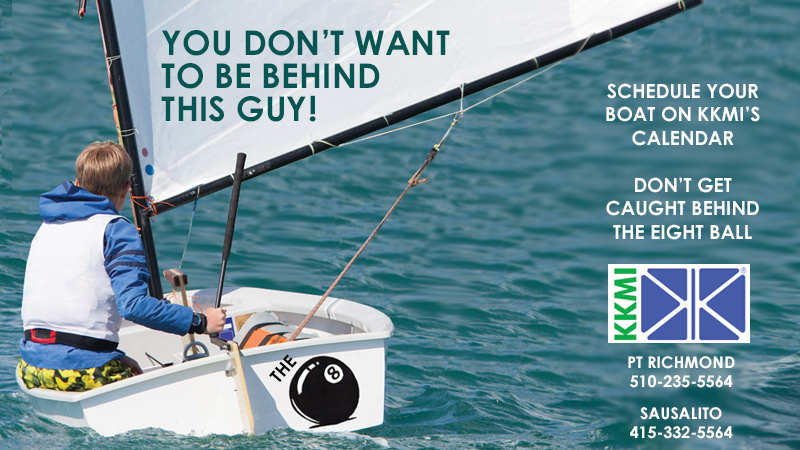
Don’t Get Behind — Schedule Your Service With KKMI Today
Scows Ask, “What’s the Point of a Bow?”
Where only the brave dare tread, who would design, build and sail a boat without a bow? The answer is Jim Antrim, Cree Partridge and Barry Spanier. It’s not unheard-of because the world of Mini-Transat racers has been dominated by scow-bowed boats for a number of years, and the Class 40 has seen a proliferation of winning scow-bowed competitors.

But would you take one of these cruising? Barry Spanier sketched it out and built it so he and his wife Samantha could try it out, sailing 8,000 miles from San Francisco to Australia. They’ve loved it. Our current, December issue has a letter from Barry and an added discussion from Max Ebb and designer Jim Antrim.
For many years, Barry was also a renowned windsurfing sail designer. So, besides the scow bow, he also wanted a pioneering rig that would be easy for an older couple to handle. He found it with a junk-rigged sail. He recently wrote, “The junk rig will be next. It’s so simple and relatively inexpensive, even when carbon for the best reasons. We could hardly find a reason, for a cruising boat anyway, to diss it. Especially the light-wind performance. And as a lifelong ‘developer’ guy, given the money I would do so much more than this first experiment, now that we have 8,000 miles under our keel. There is amazing potential for improvement. But even what we have now, which is sort of kludged together after each early mistake became obvious, is now working really fine, especially for shorthanded elder crew, as was the original intent. ”
You can read Barry’s letter and the comments from Jim and Max here. What do you think? Is a pointy bow necessary?
Sailagram — A Snapshot of November Sailing
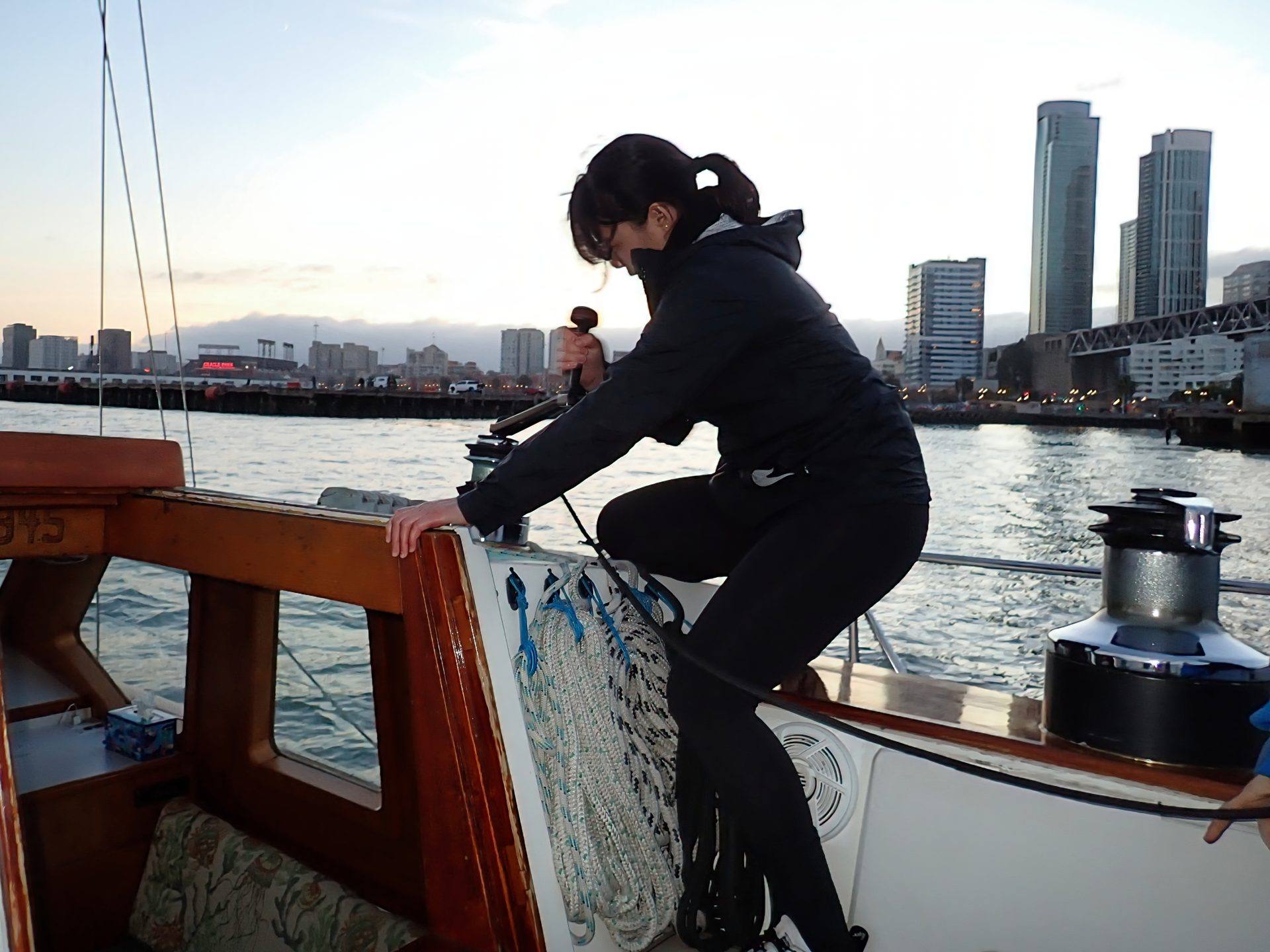
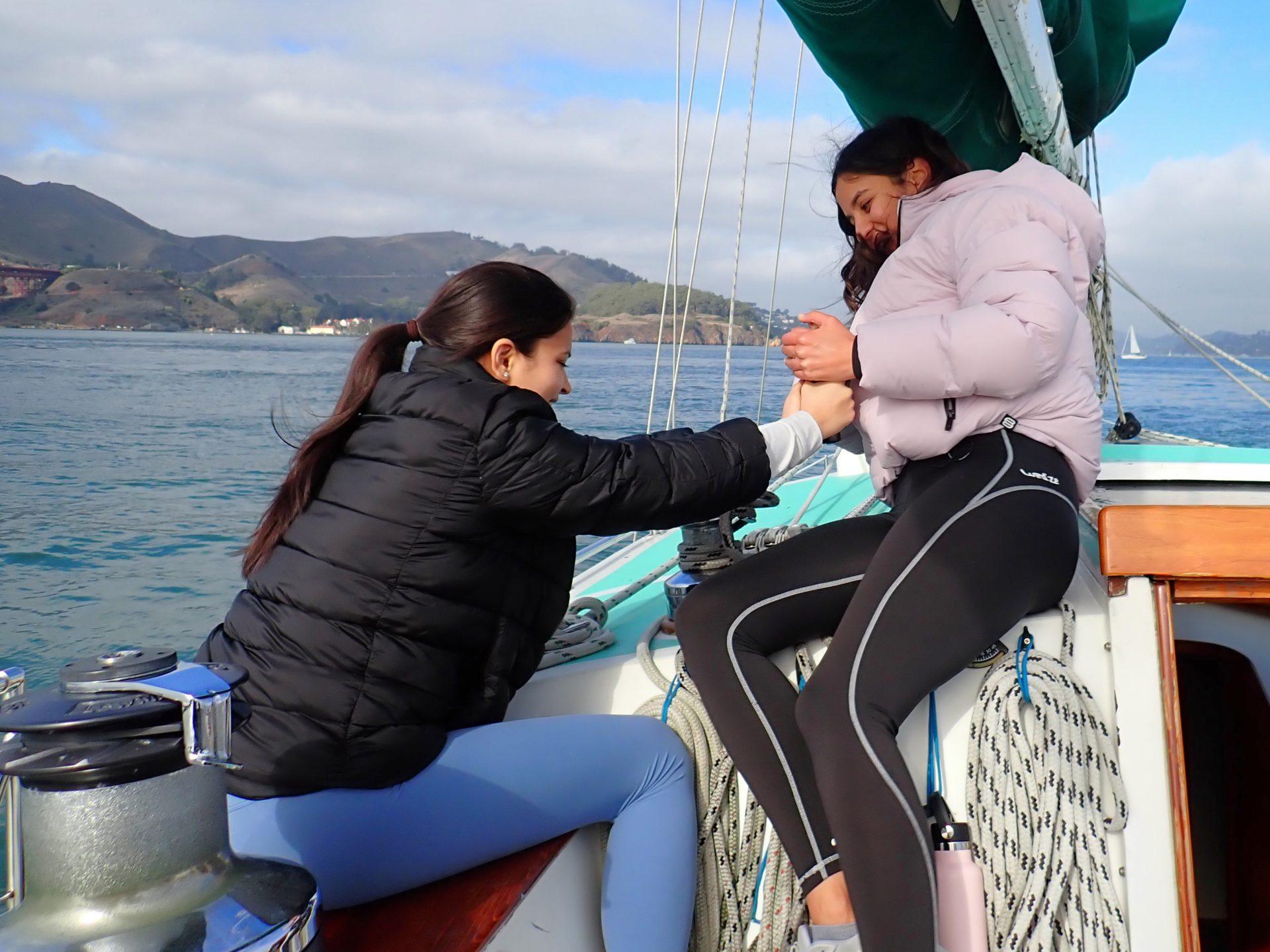
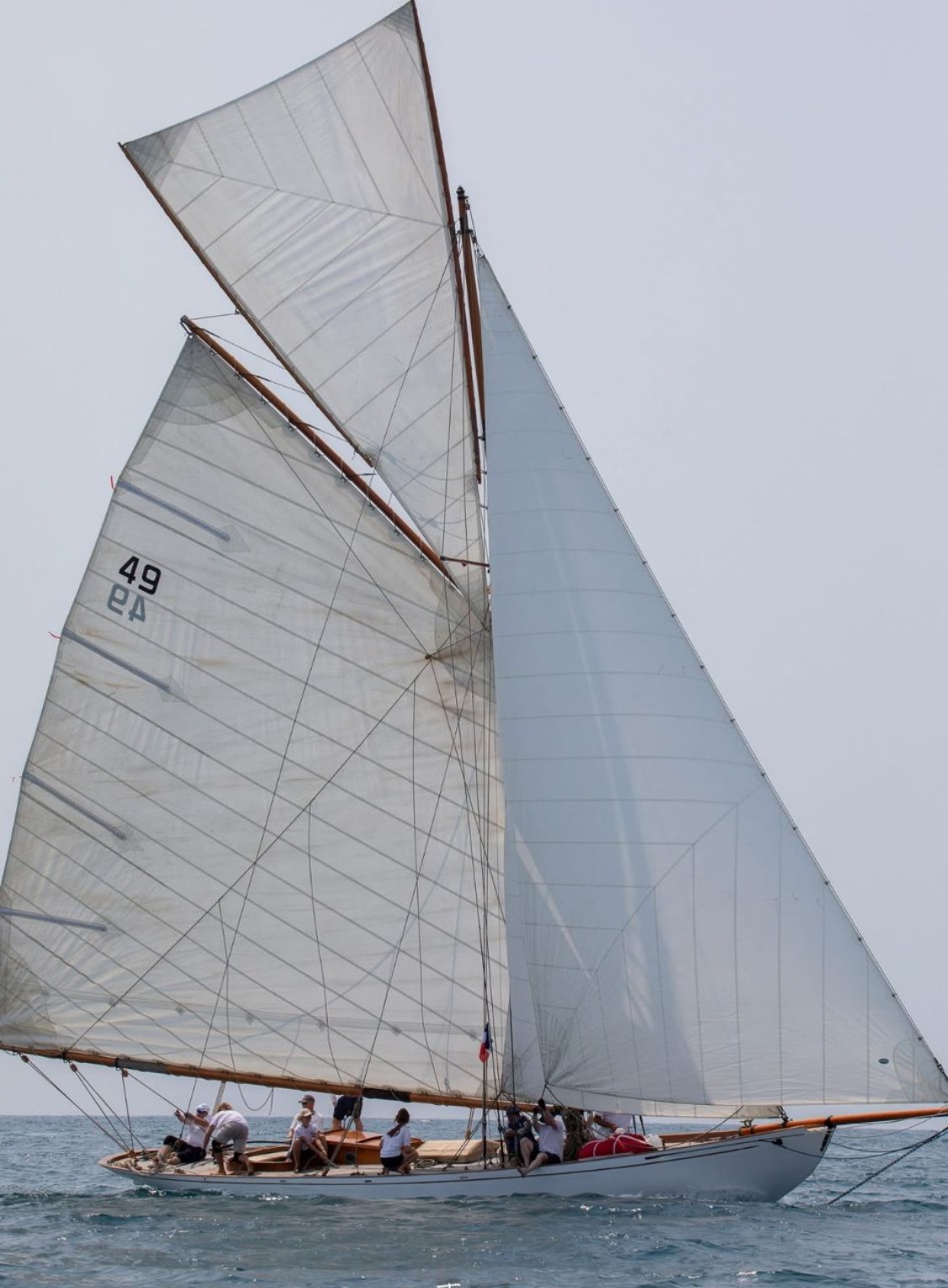
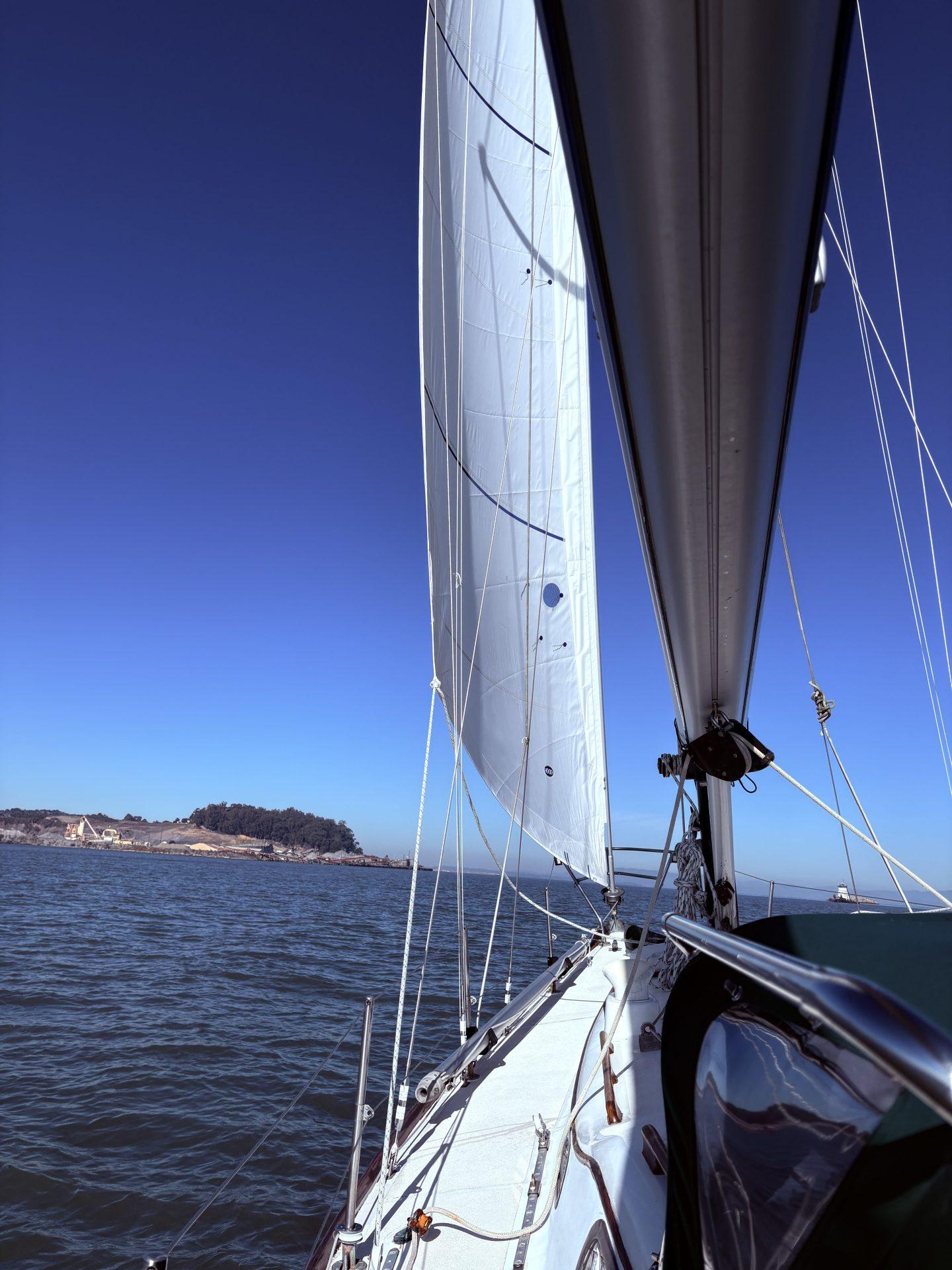
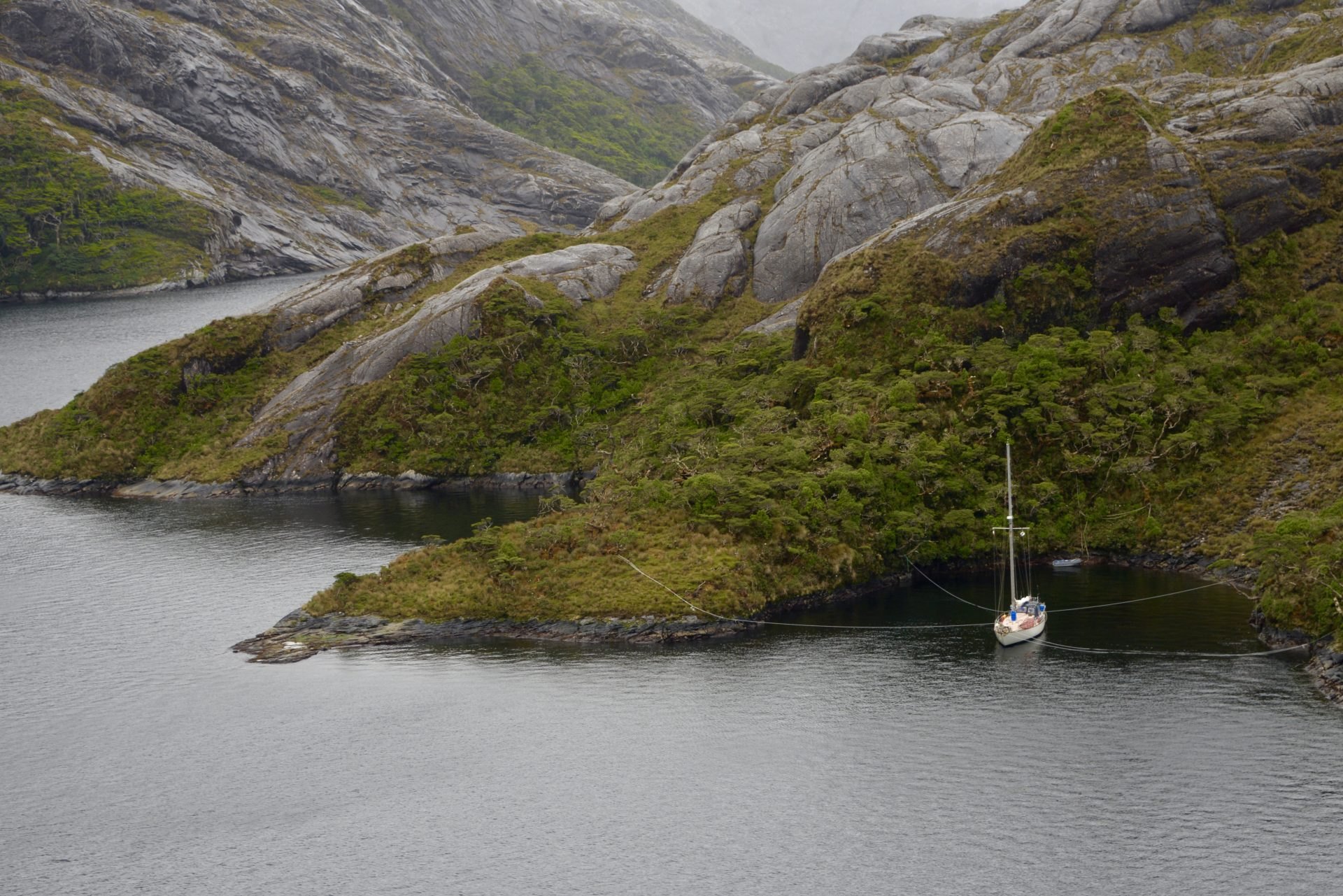
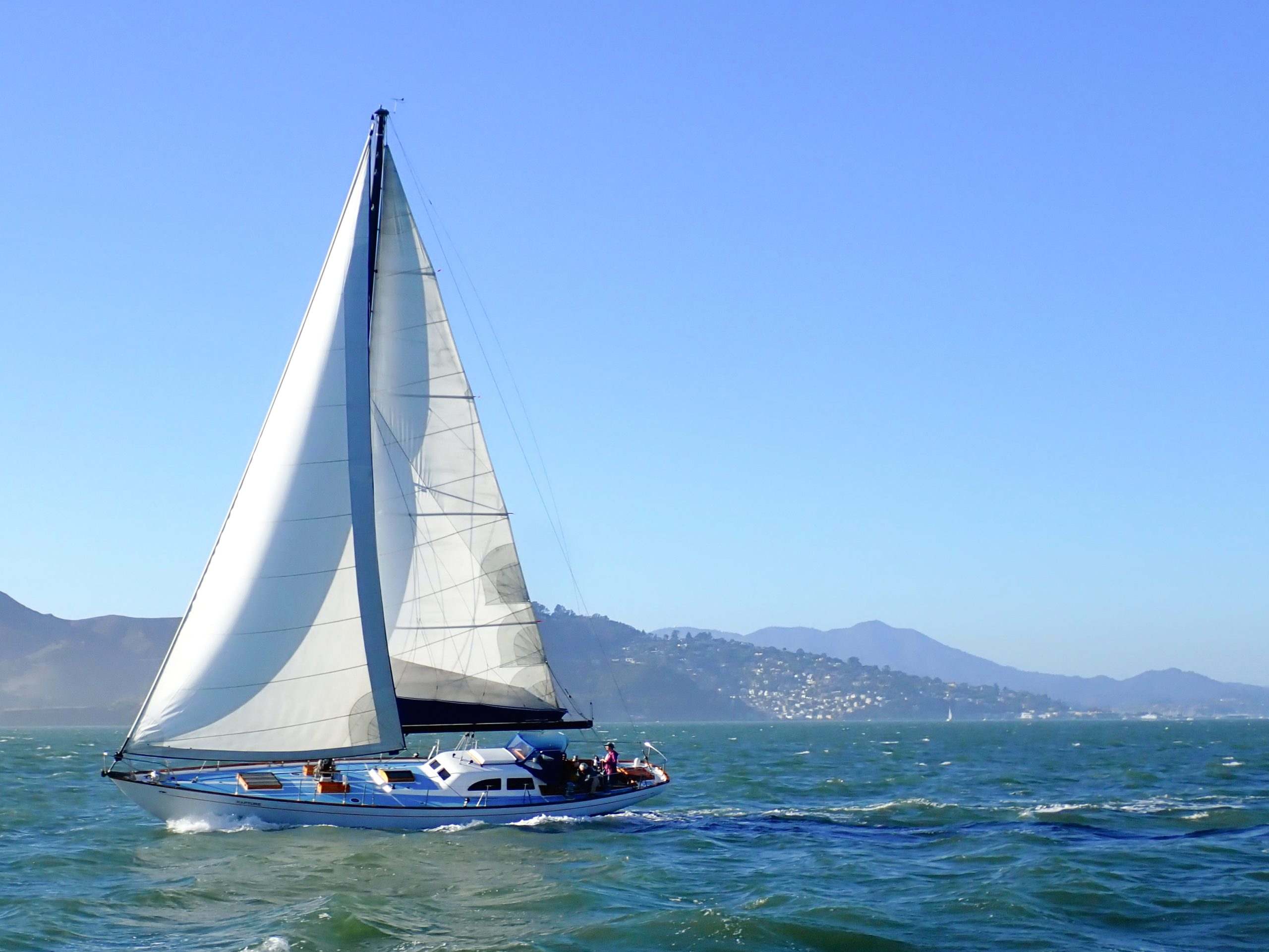
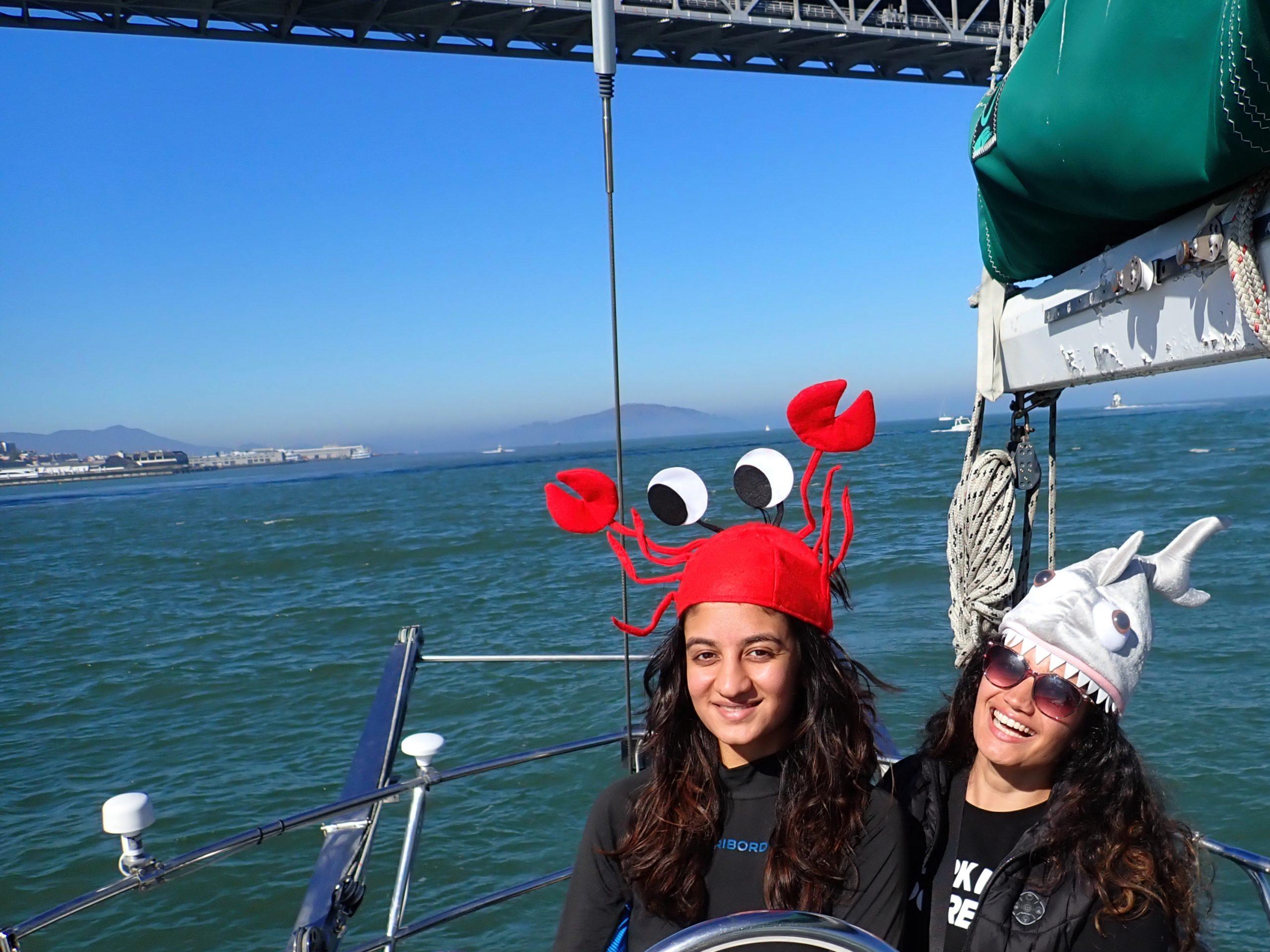
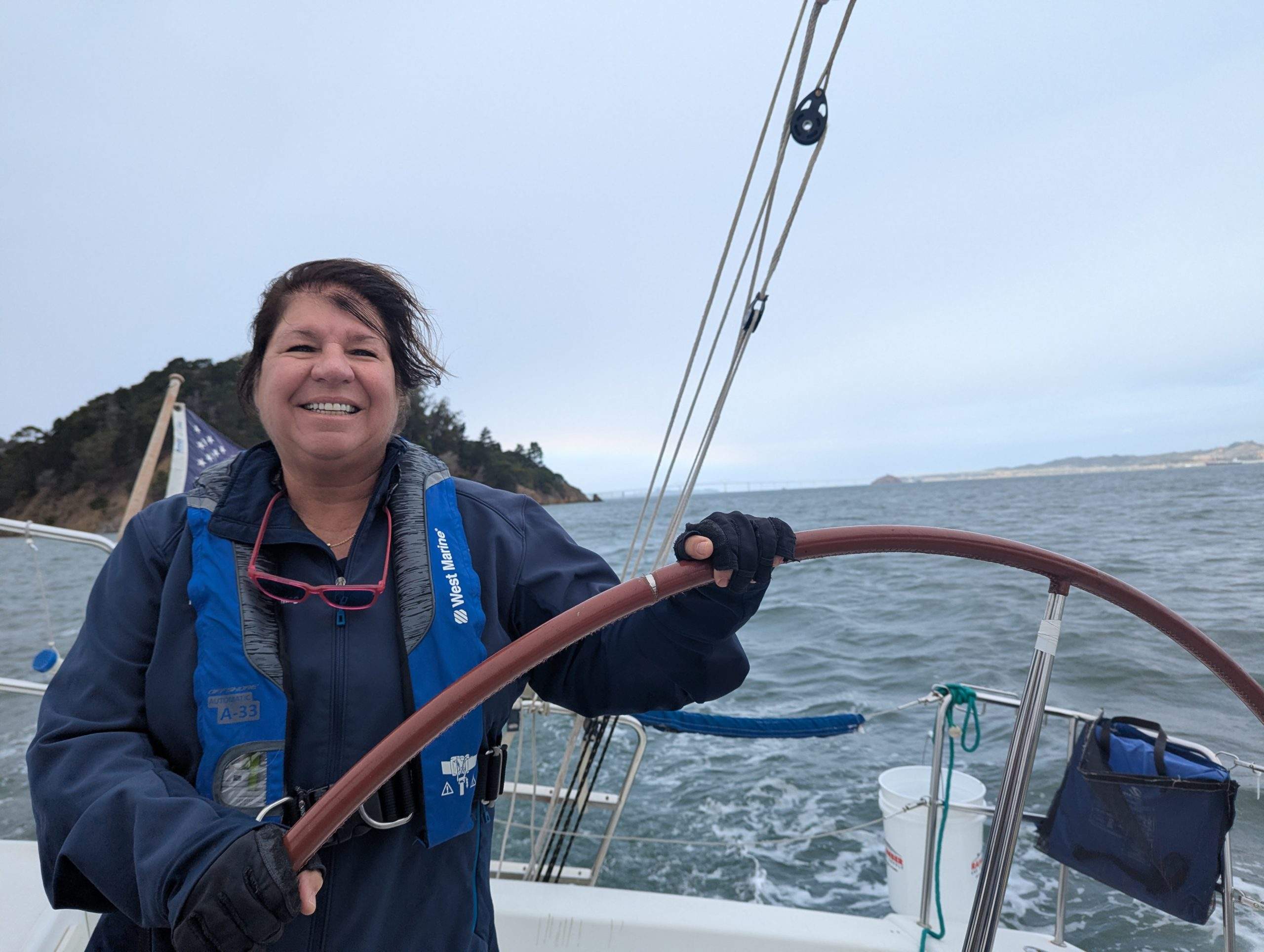
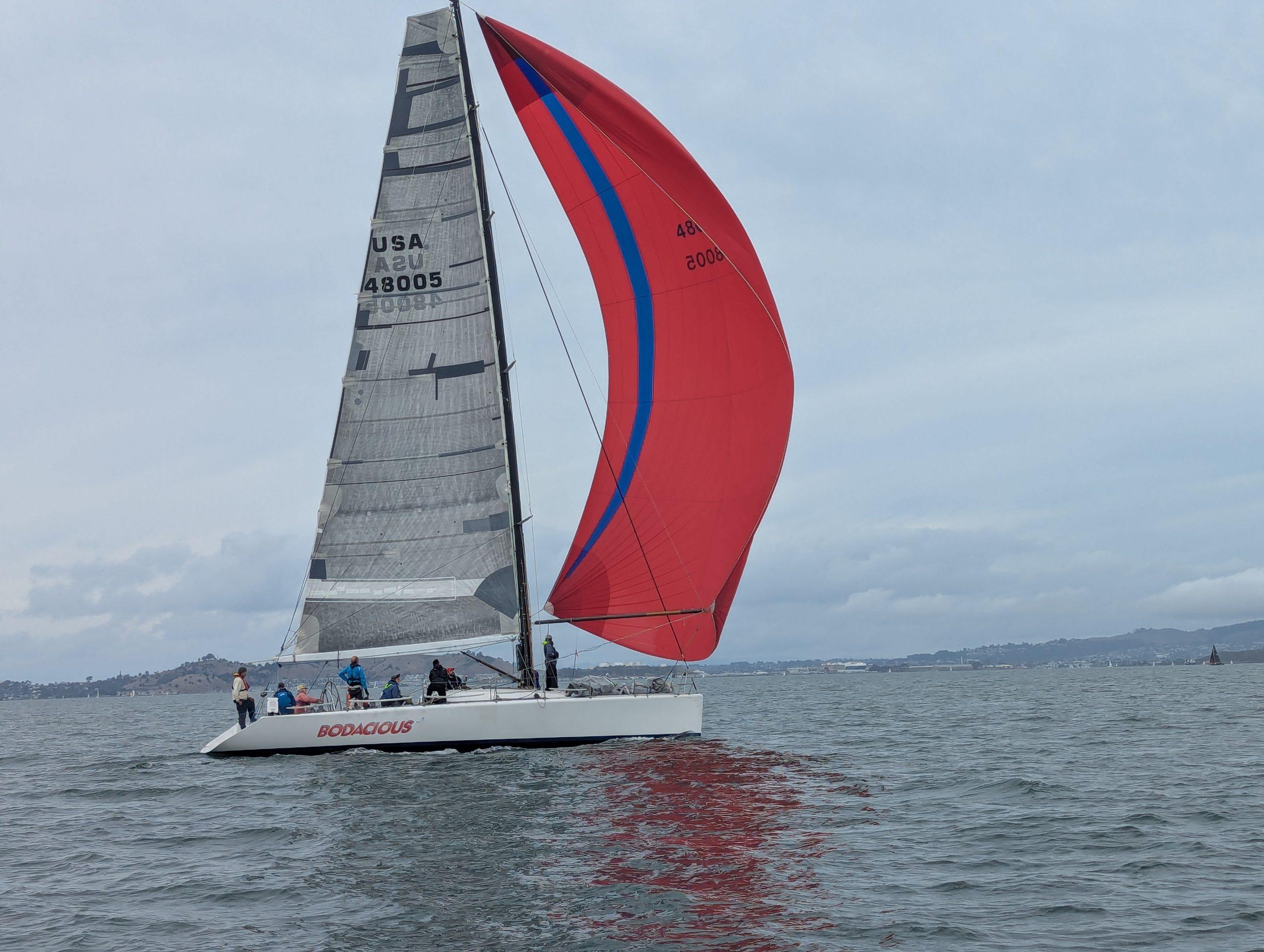
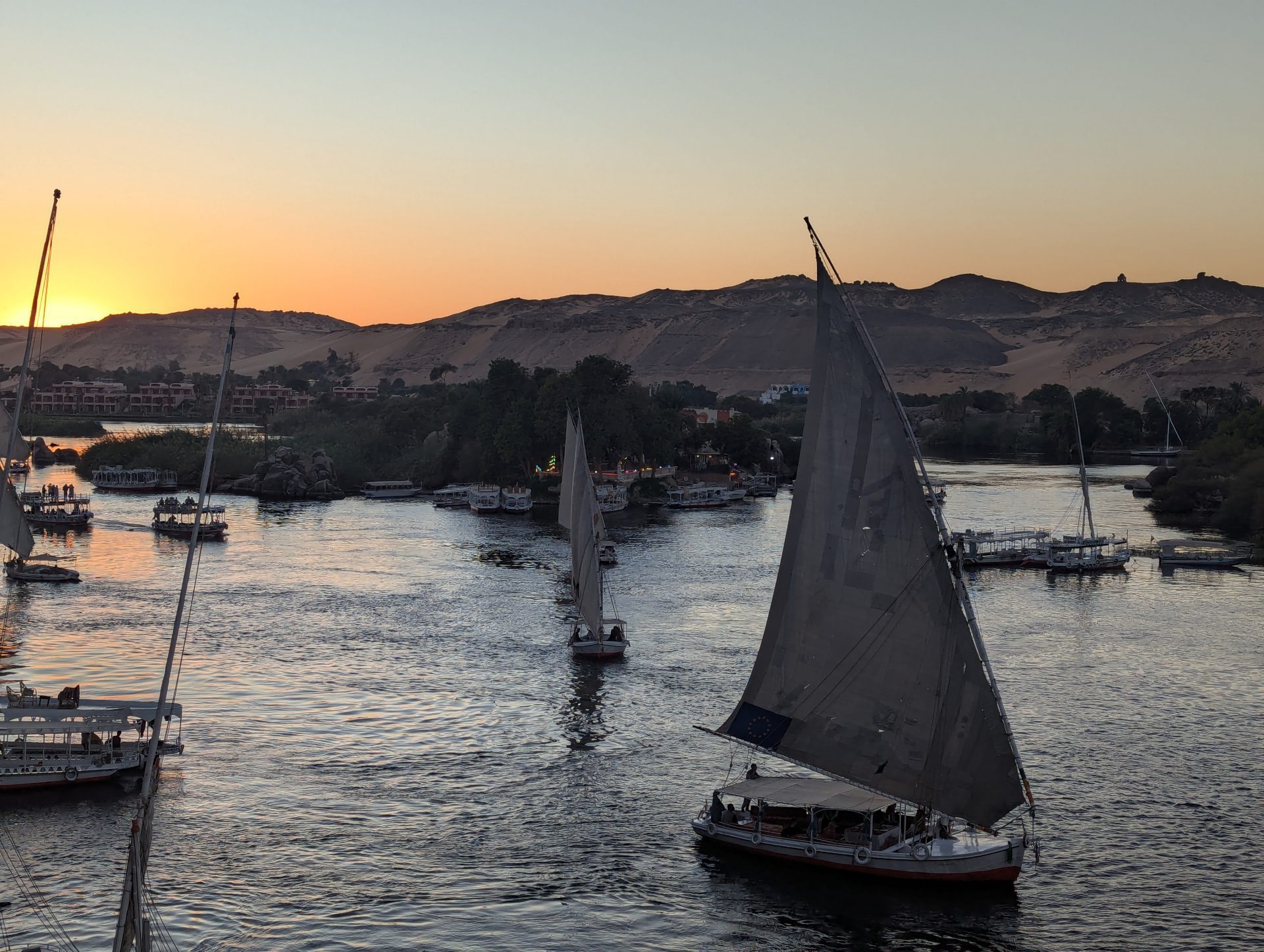
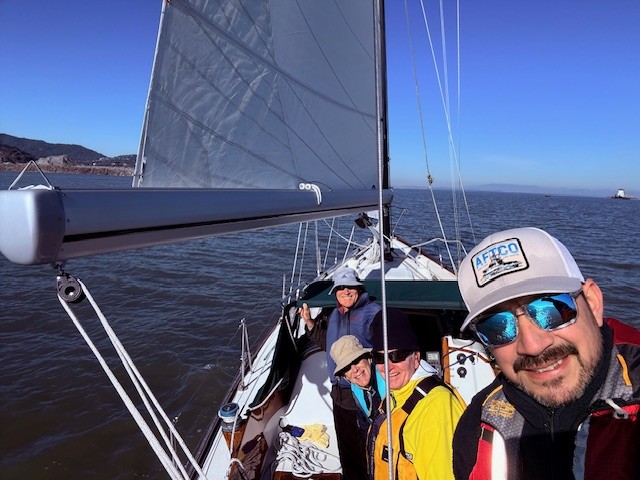
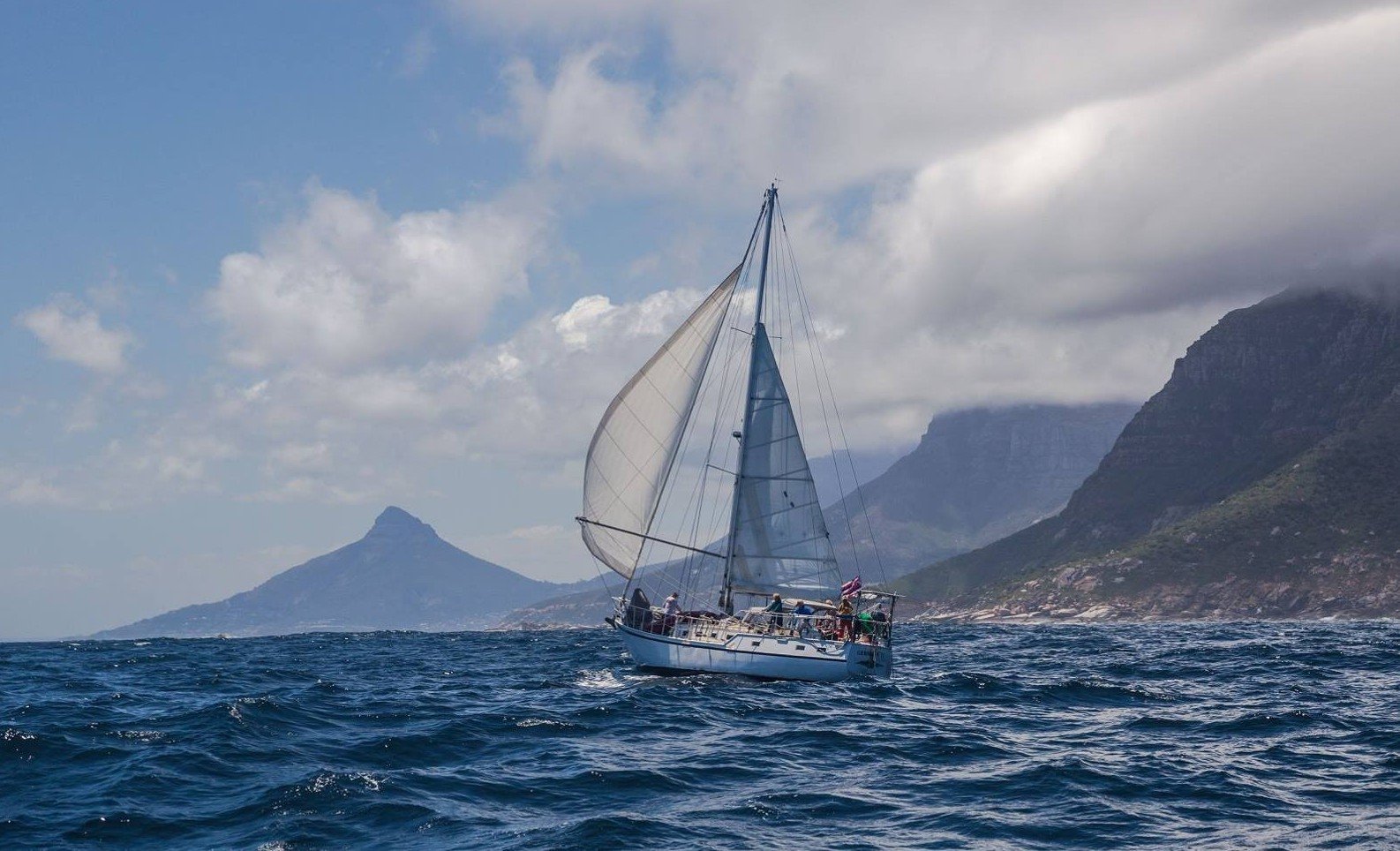
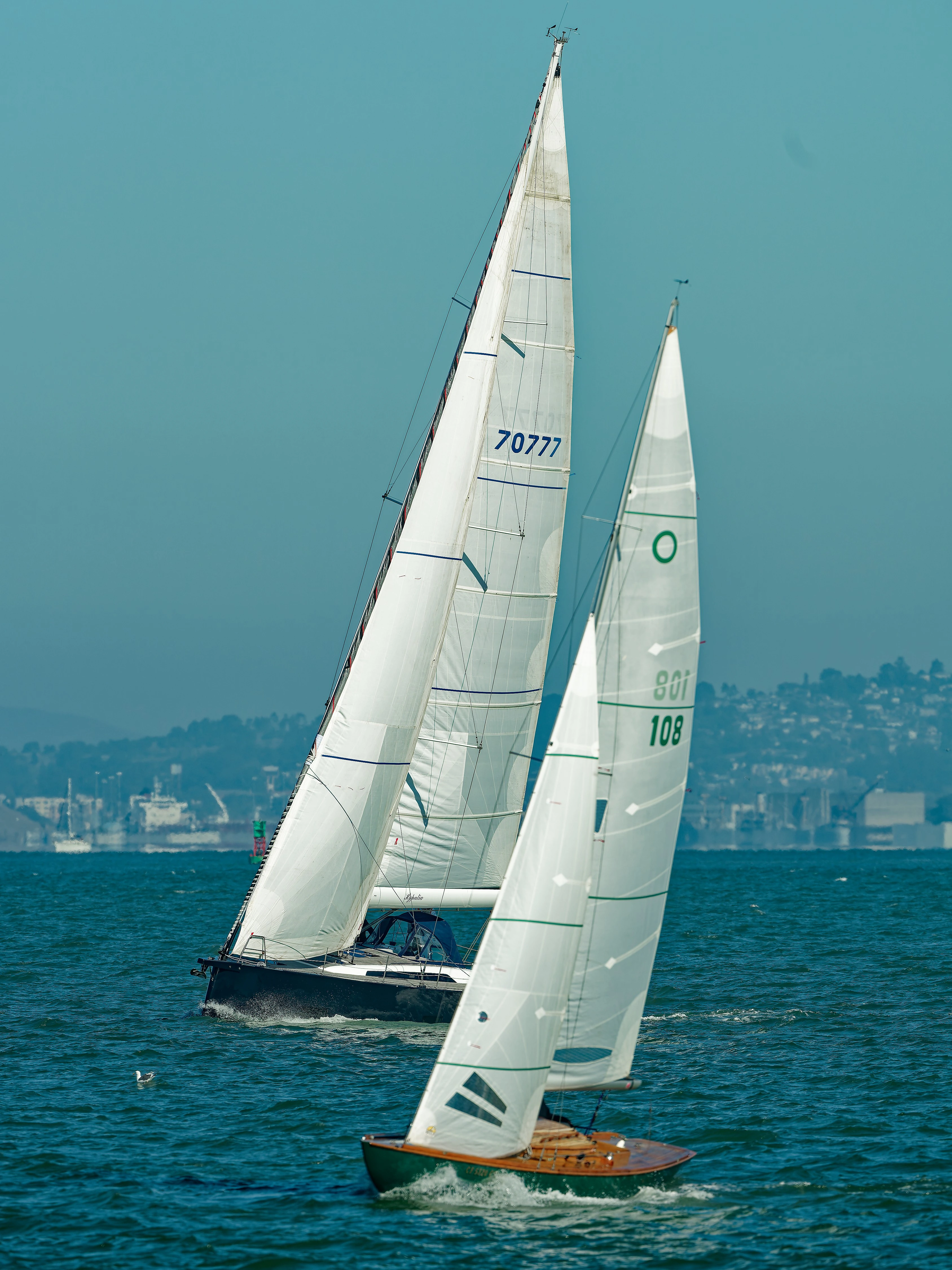
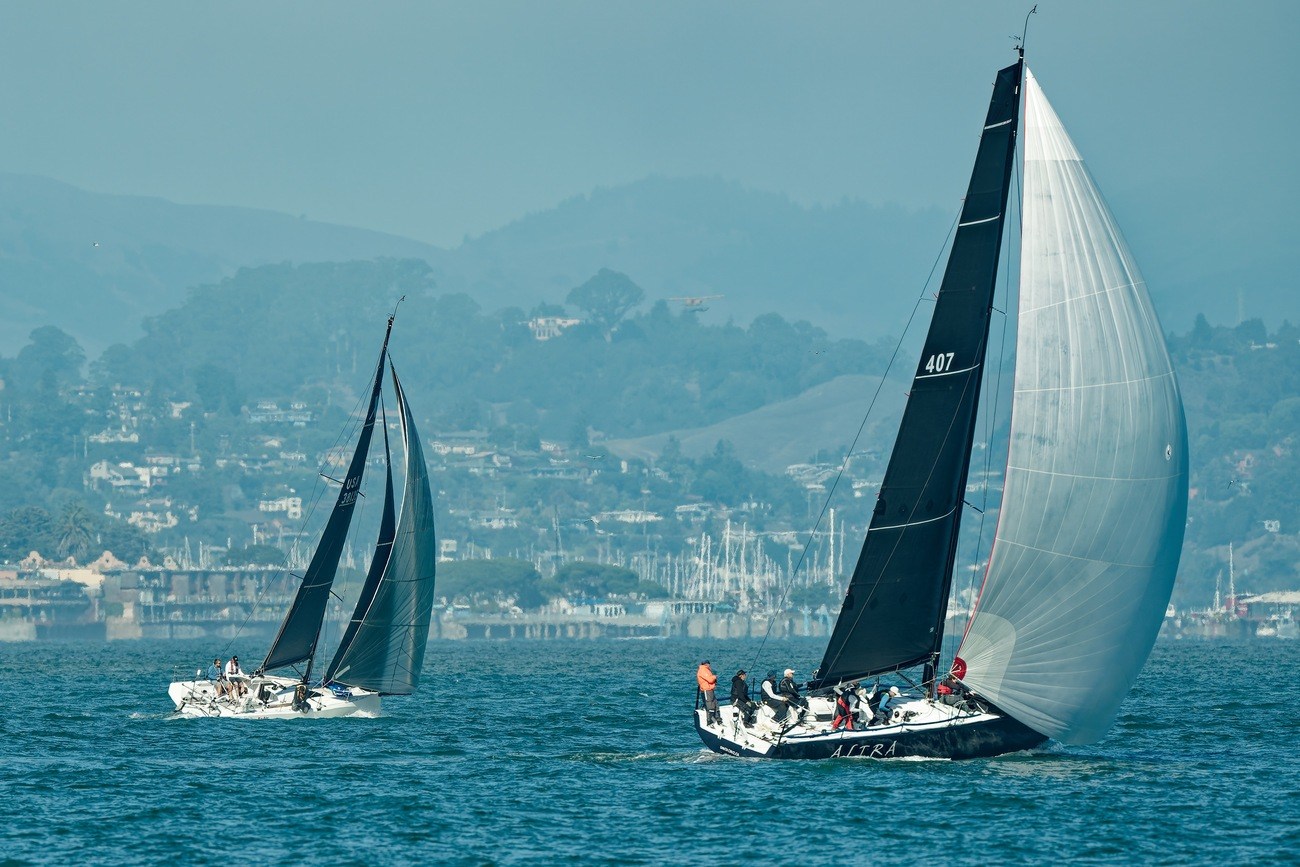
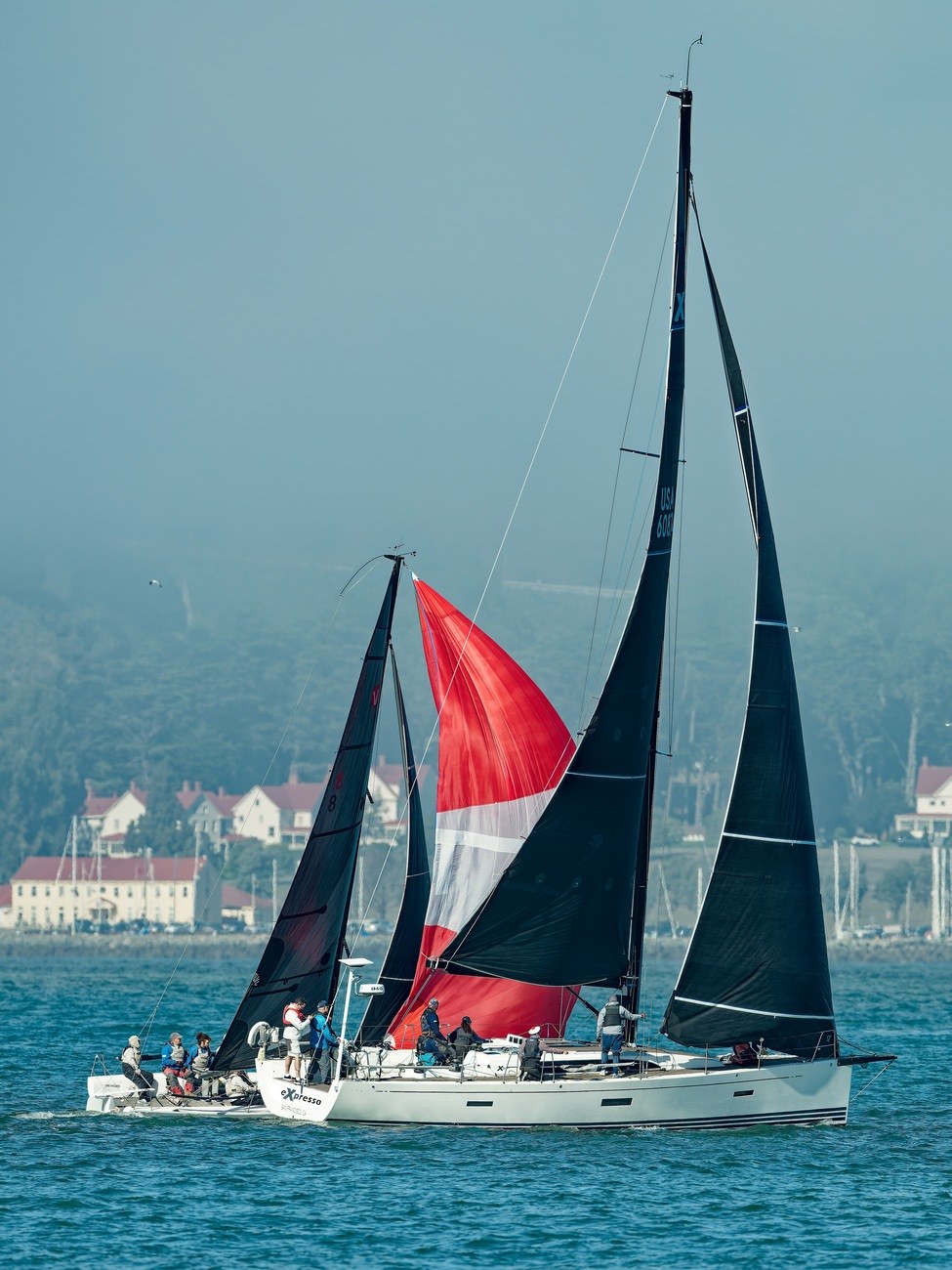
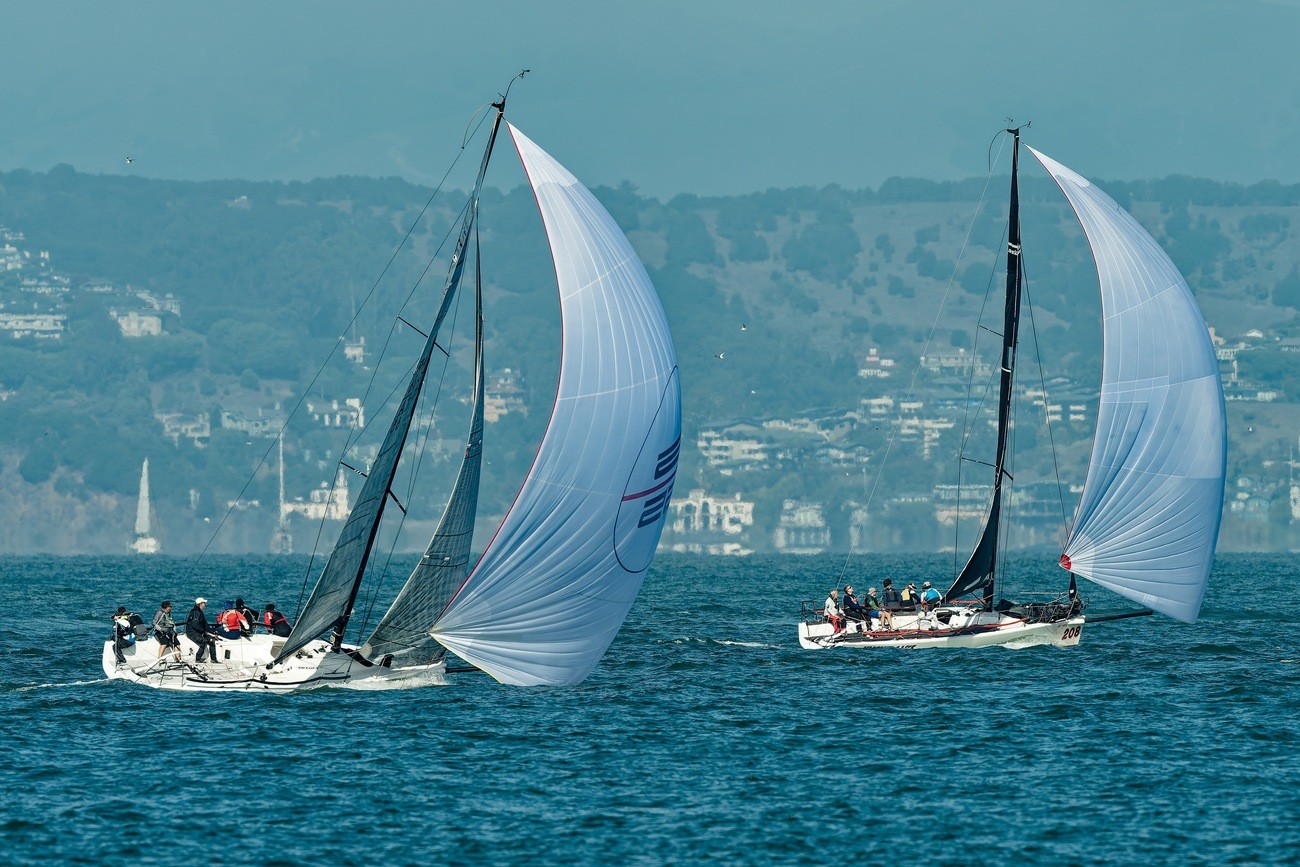
Welcome to this month’s Sailagram — a snapshot of sailing throughout November. This month we have a selection of photos spanning the globe from San Francisco Bay to South America, from the River Nile to the Cape of Good Hope, and points in between. We hope you enjoy this month’s gallery.





‘Convergence’ Comes Home: A Circumnavigation 21 Years in the Making
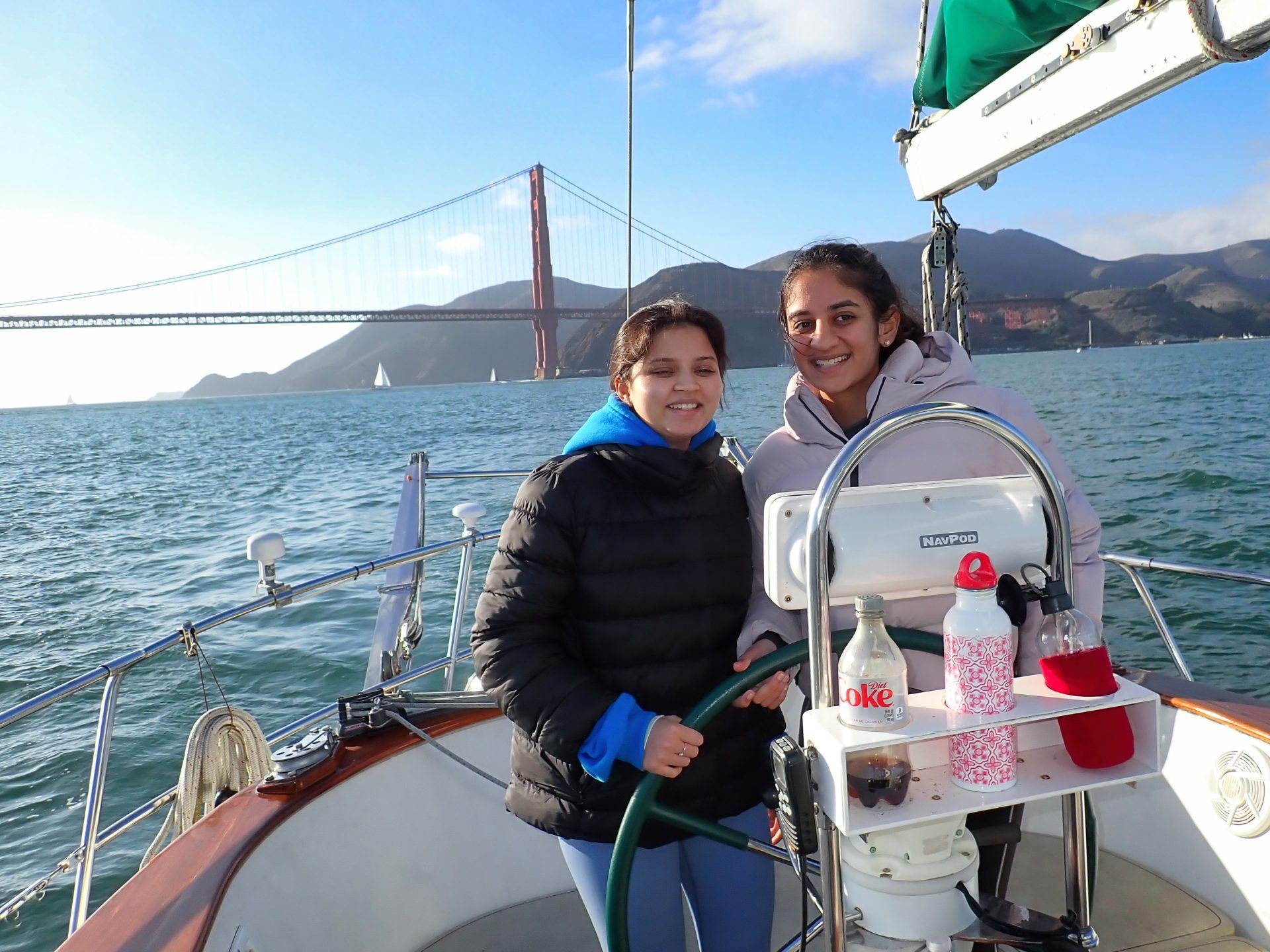
In 2004, Randy Repass, wife Sally-Christine Rodgers and their 9-year-old son Kent-Harris Repass bid goodbye to friends, hoisted the sails on their Wylie 65 cat ketch Convergence, and sailed from Santa Cruz into the horizon. Their goal: a circumnavigation. At the end of October, 21 years and about 40,000 miles later, mission accomplished.
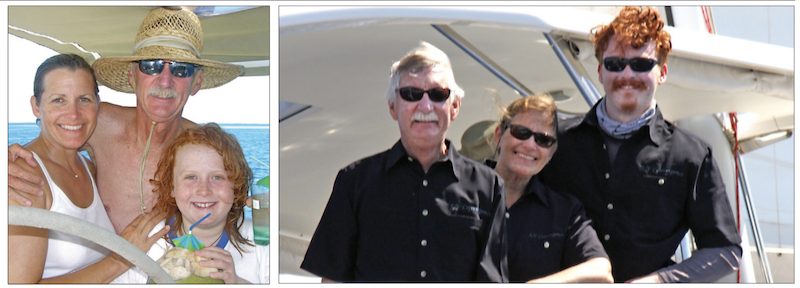
Here’s a quick debrief of a very long journey from Sally-Christine:
Tying the knot of a circumnavigation is a milestone that gives one pause. A deep sense of gratitude prevails, not to mention a splash of accomplishment. We left Santa Cruz in June 2004 with our 9-year-old son, Kent-Harris — and friends and circumnavigators Linda Moore and Jim Foley with their 4-year-old twins, Dana and Trevor — for a straight-shot, 3,000-mile downwind run to the Marquesas. Then on to the Tuamotus and Tahiti, where the Moore-Foleys departed.
Convergence meandered across the Pacific to the usual stops: Cook Islands, Samoa, Tonga, Fiji, New Caledonia, Vanuatu and the Banks. We also ventured to New Zealand and explored Tasmania, then up the coast through the Great Barrier Reef of Australia to Darwin. We crossed to rarely visited Banda and on through many of Indonesia’s islands, then to Malaysia and Thailand. Throughout, we spent as much time underwater as we could. These places are etched into our memories, and the people we encountered are etched into our hearts.
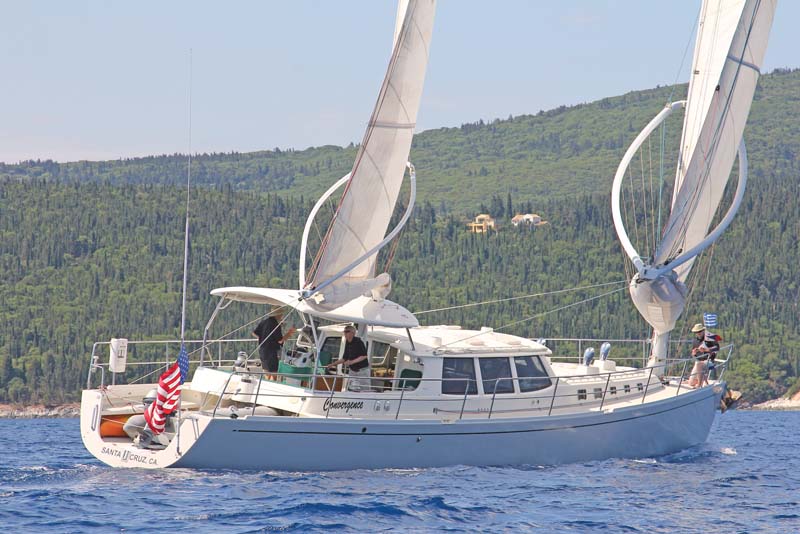
The Indian Ocean was the most spectacular sailing. The Red Sea, with its challenges of pirates and politics, provided a glimpse of the Sudan and Egypt during the Arab Spring. The Mediterranean opened our eyes to Western culture with a new lens. Turkey, Greece, Italy, Sicily, Malta, Albania, Montenegro, Croatia, Corsica, Sardinia, Spain, Morocco and the Canaries each left their historic, cultural, religious and culinary impressions.
In 2017, we crossed the Atlantic to Bermuda before heading north to anchor off Randy’s family home in Marion, Massachusetts. We took in Nova Scotia and the Bras d’Or Lakes of Cape Breton before turning south through the familiar Caribbean. (The following seas off Venezuela will be remembered!) We bartered through the San Blas, crossed through Panama, and sailed up to Costa Rica.
By that time, we had developed our own routine. Everyone who takes on the challenge of a circumnavigation puts their own spin on it. One of the reasons our roundabout took so long is that Randy and I were still working, so we sailed only two to five months a year, leaving Convergence to return home. Then COVID hit, and for a while, everything changed. We left the boat in Mexico and returned home for two years. When the coast was finally clear again, we returned to luxuriate in Mexico’s rich embrace, exploring her coastal Rivera and the Sea of Cortez before starting our way north toward home. The docklines were barely tied off when the questions started.…
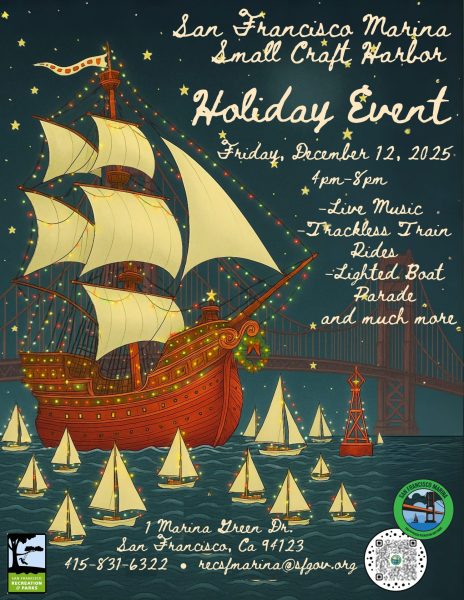
Join San Francisco Marina’s Holiday Event