

Baja Ha-Ha Sign-Up Deadline Is Wednesday, September 3
The deadline to join the 110 boats already signed up for the 31st annual Baja Ha-Ha is next Wednesday, September 3. If you’d like to join them, go to our Heading South page and click on Baja Ha-Ha. You’ll be joining the very last of the Grand Poobah-hosted rallies.

Some of the fleet have already started cruising on their way south to make the November 3 starting date in San Diego. Most others are getting their boats ready, though some maybe haven’t even closed on the purchase of the boat they’re planning to sail south! If you are getting ready, one of the best guides for your preparations is Latitude 38’s First Timer’s Guide to Mexico. You can read it online, or it will be mailed to you with your entry packet when you sign up for the Baja Ha-Ha. You can also get a free copy when you come to next week’s Latitude 38 Fall Crew List Party at Spaulding Marine Center on Thursday, September 4.
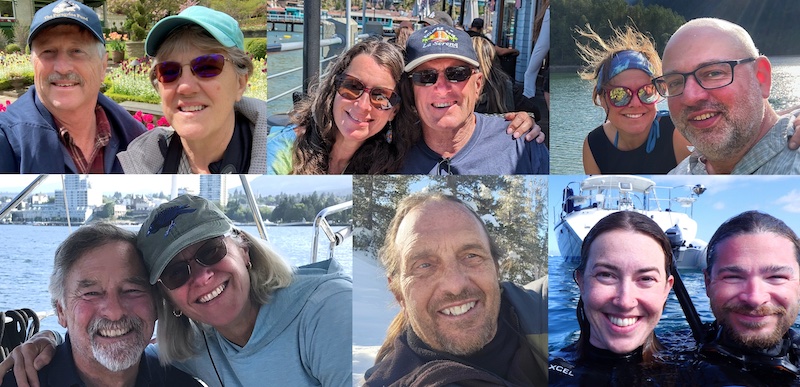
You can get a glimpse of who’s on board for the Ha-Ha in the September issue released today. The article is a snapshot of a few of this year’s fleet members, such as folks like Meggie Woodfield and Stephen Naler, who are already in San Diego aboard their Catalina 350 Mystic Wind. Meggie started sailing in 2021 when she moved to San Diego from Provo, UT, and she jumped in with both feet when she bought Mystic Wind in 2023. Like most crews in the Ha-Ha, Meggie and Stephen have Starlink aboard and are hoping to be able to do some remote work from La Paz and the Sea of Cortez. We’ll be sharing more profiles of Baja Ha-Ha cruisers in the October issue.
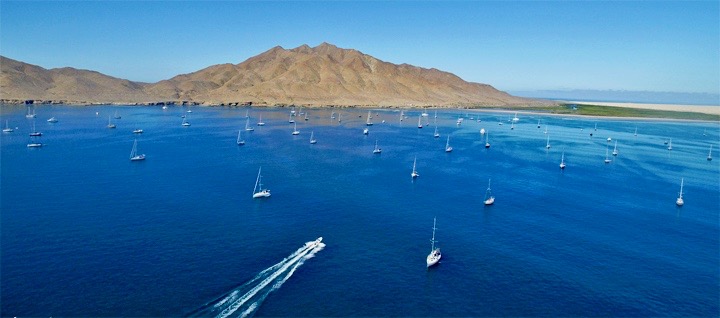
There’s no time like the present. Sign up for the Baja Ha-Ha by September 3, get your downwind sails ready, and get yourself to San Diego by November 3. You’ll have fun.
And we look forward to seeing everyone at the Mexico Cruising Seminar and Crew List Party next week at Spaulding Marine Center.
- Racing
- Cruising
- Latitude 38 Magazine
- Ha-Ha
- Maritime History
- Community Sailing
- West Coast Sailing
- Commentary
- General Sailing
Latitude 38 September Issue Out Today
September is a month of change. School has resumed, summer is drawing to a close, pumpkins and ghouls are starting to appear, and while some sailors are starting to think about boat storage, others are starting to think more about the idea of heading south for the winter months. But one thing that hasn’t changed is the joy of picking up a new issue of Latitude 38. We’re even giving you a couple of extra days with which to enjoy September’s offerings: stories including the 50th anniversary of Pi, voyaging on the USCGC Eagle, the Cal Maritime crew’s Transpac race, a welcome aboard to Latitude’s new racing editor, and many more. Here’s a preview.
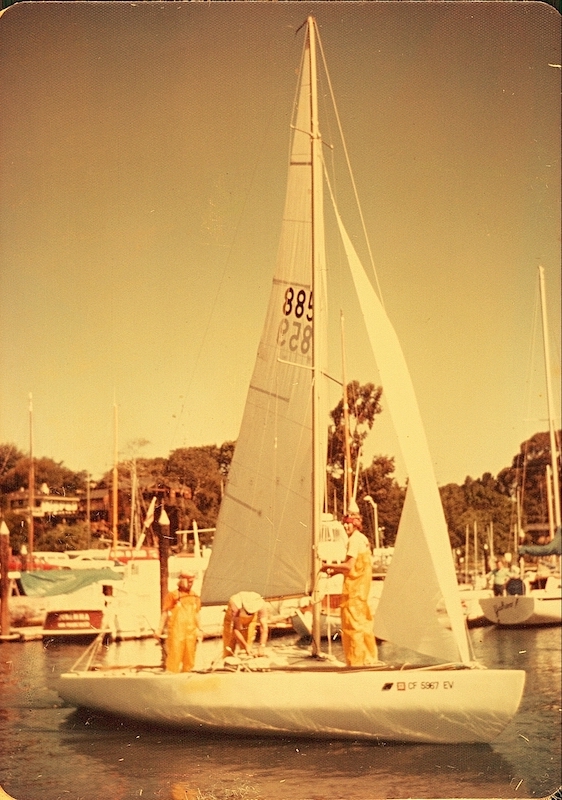
Pi to the 50th — a Remembrance to Remember
On June 27, 1975, brothers Steve and Walter Fennell (aged 28 and 26) and 16-year-old Niels Kisling sailed out of Santa Cruz to take part in the Santa Barbara race aboard Pi, the 24-ft fiberglass sailboat Niels had helped his then-teacher Walter build. On the night of June 28, Niels was picked up from the ocean by the SS Utah Standard. Pi had capsized the night before. Niels was the only survivor.
Steve Fennell grew up the eldest of five siblings in Alameda, California. Sailing was the center of the Fennell family, and with their going out every weekend, it seemed that everything revolved around sailing. After graduating from SDSU, Steve found his way to Capitola in the late ’60s and purchased the historical Van Sickle house on Cherry Avenue. He lived there with his wife and daughter, Serena, and offered cheap rents to friends in one of the many rooms and apartments on the property. Steve became a middle school math teacher and was a free thinker way ahead of his time. He invented a honeycomb aluminum building material, the Fennell Module. He held ecology classes for students and “was a safe harbor” for young people in his community. Students could be themselves around Steve and “never have to worry.” – Story by Vikki Fennell.
My Voyage on USCGC Eagle
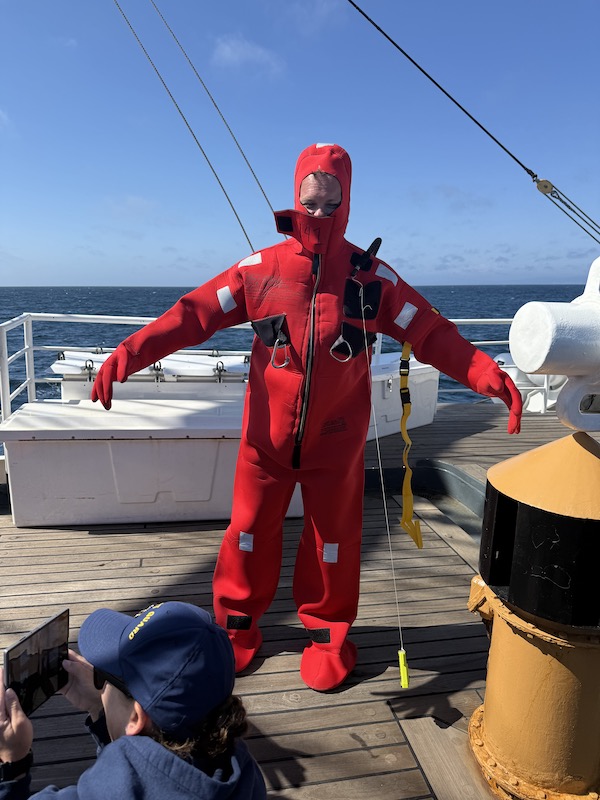
This summer, I had the rare privilege of sailing aboard the USCGC Eagle, the Coast Guard’s iconic barque, from San Francisco to San Pedro. While I’ve been fortunate to sail on Eagle before — last summer I joined her from Halifax, Nova Scotia, to Portsmouth, New Hampshire — this voyage was different. It wasn’t just about the miles logged or the sails set; it was about the setting, the mission, and the remarkable people aboard. – Story by Will Sofrin.
CMA Transpac Team Silences Doubters
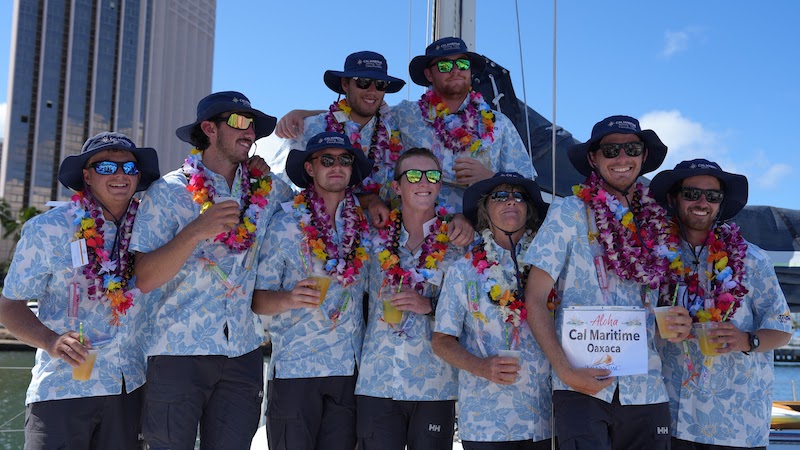
The 2025 Transpac featured plenty of great stories, including the Cal Poly Maritime Academy sailing team. The “Keelhaulers” competed on Oaxaca — a Santa Cruz 50 donated to the program in late 2024 — in the Cabrillo Boat Shop Division Five with five other boats. When all the results were tallied, they’d finished fourth in their division and 34th overall on corrected time. Oaxaca’s elapsed time was 10:22:47:17, with a corrected time of 9:22:05:10.
Who’s Aboard for the 31st Baja Ha-Ha?
Ahead of each Ha-Ha, the Poobah and Assistant Poobah gather a little background on the fleet: a who’s who of the Ha-Ha. Over the years this has proven to be a fun read and is great for getting to know one’s fellow cruisers. It’s also great for those following along from home. Of course, we can only tell you about the sailors — we know nothing about the cruising experience of the whales, dolphins, frigate birds, flying fish and other sea life you’re likely to encounter along the way. We can, however, assume that they’re very comfortable in their environment, and with a little luck, will happily cruise along with the fleet from time to time. Click here to meet a few of the Baja Ha-Ha XXXI participants.
Also in this month’s issue:
Letters: An Astounding West Coast Sailing Community; A Deep Dive Into Ocean Race Scoring; A Transpac History Hello; Do You DIY or Call a Pro?; and many more readers’ letters and comments.
Sightings: Welcome Aboard Racing Editor Fritz Baldauf; Sausalito Boat Show Take 3; Racing Into Environmental Action; A High Sierra Regatta We Won’t Forget; and other stories.
Max Ebb: “The Art of the Squirrel”
Racing Sheet: Summer regattas run hot and heavy as evidenced by the YRA Encinal Regatta and Offshore Series, the Estuary Extravaganza, the Plastic Classic, the I-14 Nationals, the Mercury Huntington Regatta, SFYC’s Summer Keel, and the Sears Cup. Box Scores is jam packed, and we finish up with Race Notes and a final special note.
Changes in Latitudes: With reports this month on Quark’s nice, long exploration of the twin islands of Raiatea and Taha’a; Kia Koropp’s renewed apprenticeship aboard Atea; Passiflor’s interrupted trip back from Tahiti; Fundango’s cruise through the islands of paradise; and a locker full of Cruise Notes.
All the latest in sailboats and sailboat gear for sale, Classy Classifieds.
We appreciate all readers and all our supporters — you keep the wind in our sails. Please show your appreciation by supporting the advertisers who have made this issue possible — Shop here.
Now, go get your copy! Here’s a map of Bay Area distributors.
Don’t Miss the Latitude 38 Fall Crew Party

Don’t miss the Latitude 38 Fall Crew List Party in Sausalito Thursday, September 4, 2025 at Spaulding Marine Center. Whether you’re cruising to Mexico, racing this winter, or just want to meet local sailors, this is your chance to find a boat, find a ride, or find crew. Tickets and more info here.
Model of San Francisco-Based ‘Jeremiah O’Brien’ in Scotland
Richmond sailor Jeff Cook sent a short note from his recent travels: “On a recent visit to the Museum of War and Peace in Oban, Scotland, I was drawn to a model of a Liberty ship on display. Apparently, Oban was used as a mustering port for incoming and outgoing convoys across the Atlantic during the war. And there it was, a replica of our very own Jeremiah O’ Brien in the main room overlooking the mustering harbor. The curator was very knowledgeable, and we talked about the productive yards in Richmond and the pace at which they [the ships] were built. I mentioned to him that the Jeremiah O’Brien was still alive and well as a tour vessel on S.F. Bay. He was interested to learn that she had made a last Atlantic crossing in 1994 for the 50th anniversary of the D-Day landing.” (Read Latitude 38, April 1994: Slow Boat to Omaha.)
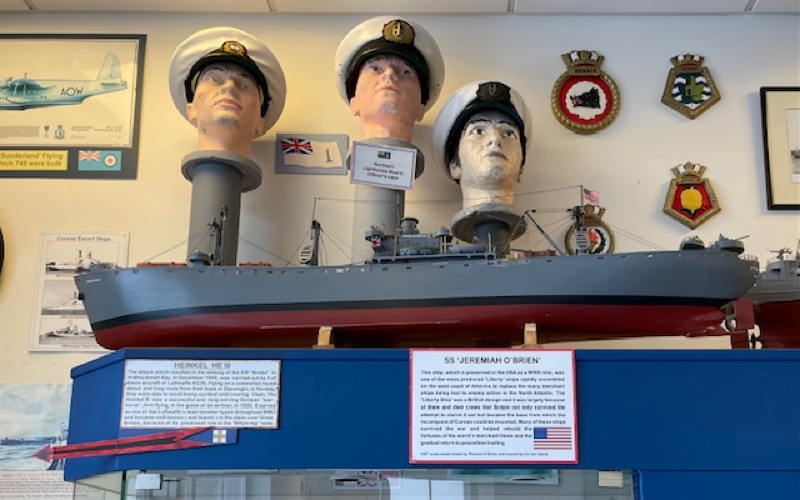
During World War II the Liberty ships were being built in Richmond at an astonishing speed, with the fastest one, the SS Robert E. Peary, having been built in a remarkable four days, 15 hours and 26 minutes after the keel was laid. The Liberty ships were about 450 feet in length, and the Jeremiah O’Brien was built in Maine in an also-remarkable 56 days. She is the last surviving Liberty ship of the 2,710 that were built for the war. She’s now based at Pier 45 in San Francisco. She’s remembered well in Europe.
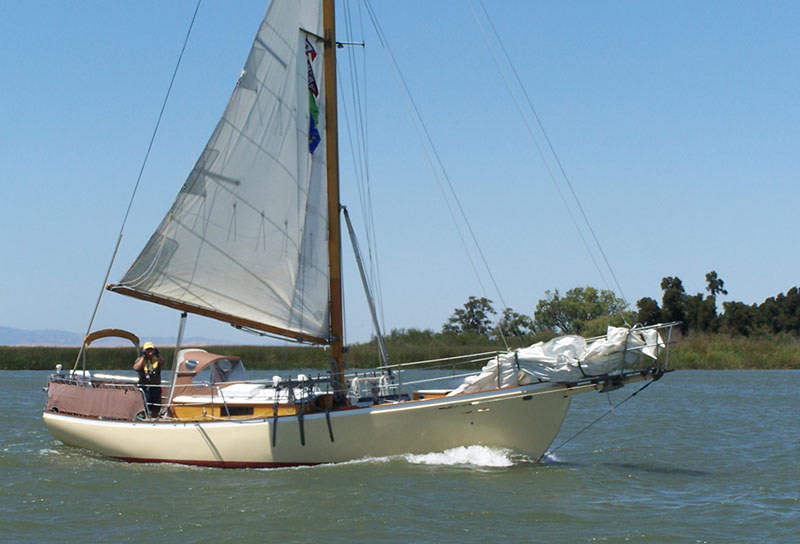
When not traveling, Jeff can be found sailing the Bay aboard his 33-ft custom cutter Annie out of the Richmond Yacht Club.
How To Get Into Racing Part 3: The PHRF Cert and Finding Crew
Over the last two articles we talked about getting a ride on a race boat and eventually getting your own boat to race. Maybe you have had the boat for a while and want to start racing it. Either way, now that you have the boat, let’s get it racing.
We are going to assume it is in reasonable shape with all its parts. Unless your sails are unusable, what you have is probably OK for the first season.
Unless you plan to sail only one-design you will need a PHRF certificate. You can get one through YRA at yra.org. It is a pretty straightforward process, especially if you have a production boat. If what you have is unique, there are forms to fill out to let the PHRF committee know about your boat.
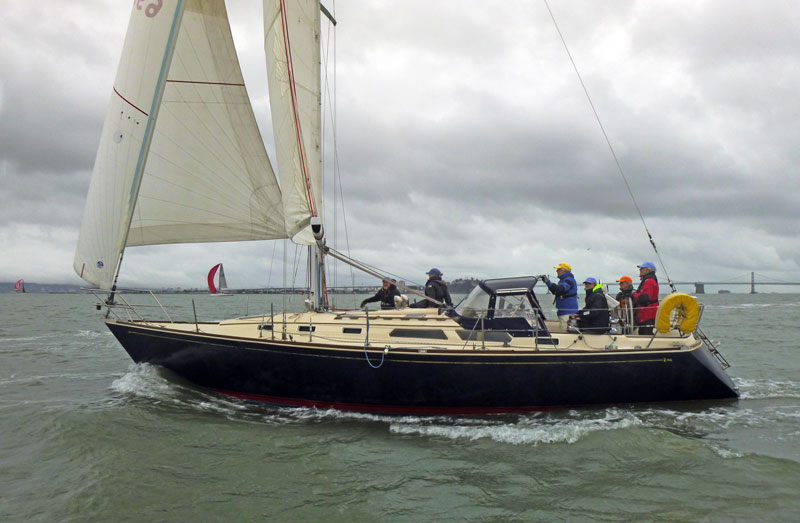
Recruiting, training, and retaining crew is by far the hardest part of campaigning a boat. Wrangling crew can be a pain, but it’s also an opportunity to develop lifelong friendships with people you enjoy hanging out with. Start with the folks you sail with on OPBs but don’t poach crew from other boats. See if there is anyone they know who might be a fit on your boat. Do a post on the Latitude 38 Crew List at “Skipper Looking for Crew” or search the listings of crew looking for boats. Join a yacht club, if you are not a member of one already, and network there. See if any of your non-sailing friends are interested in trying it out.
Once you have crew, treat them well; you can’t race without them. If they don’t have fun they won’t come back. Avoid yelling at all costs, and make sure the beer is cold. Do your best to schedule races in advance and do the races you have scheduled, except in an emergency or really bad weather. You won’t find reliable crew if you are not a reliable skipper.
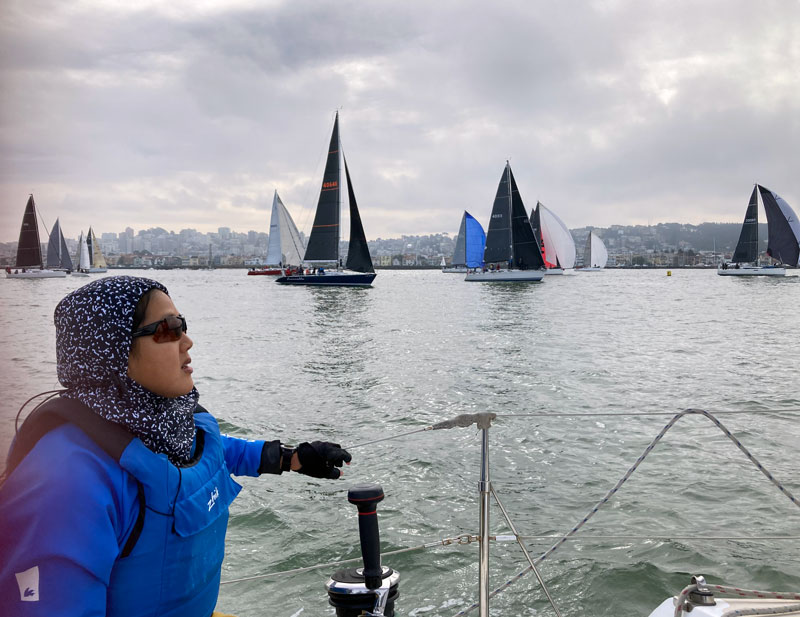
Get the crew out for a practice or two and make sure everyone knows their role. Don’t forget to do crew overboard drills. On race day, try to be the first boat out and practice every maneuver you might do that day. One of my goals in warmup is to do more tacks and jibes before the race than we will need to do during the race, especially if you have new people or people in unfamiliar roles.
You have been racing for a while so you should know the racing rules. If not, learn at least the basics. The important part, how to keep from hitting another boat, is only 10 pages and 23 rules.
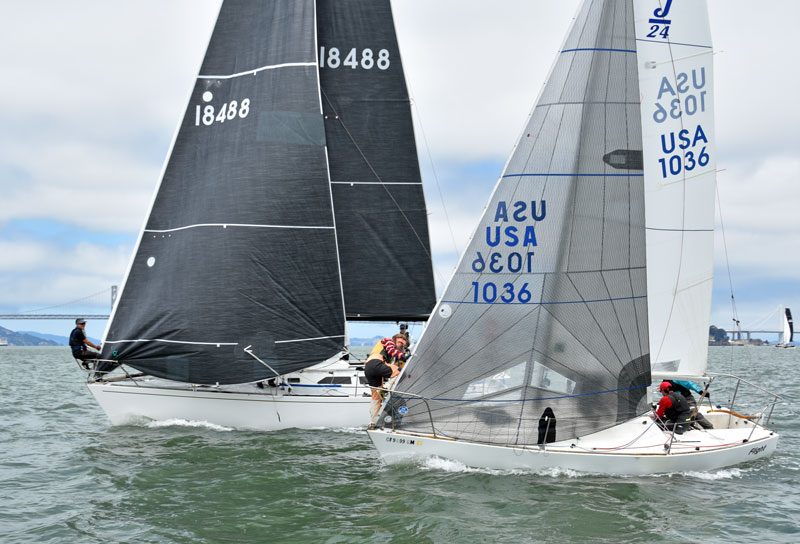
The last thing to do is to sign up for races. Many of the weeknight races are free, but you still need to sign up. Weekend races usually cost something to help cover the cost of running the race. The Notice of Race will tell you all the things you need to decide if you want to do that race. The Sailing Instructions will contain all the details about the race, like the start time and location, courses, and any special rules. You should read both carefully and have another crew member read them as well.
Take it easy on your first few races. Don’t be too aggressive on the start line. Your priorities should be nobody getting hurt, no damage to the boat, everybody having fun, and learning something new. Doing well in races will come with time.
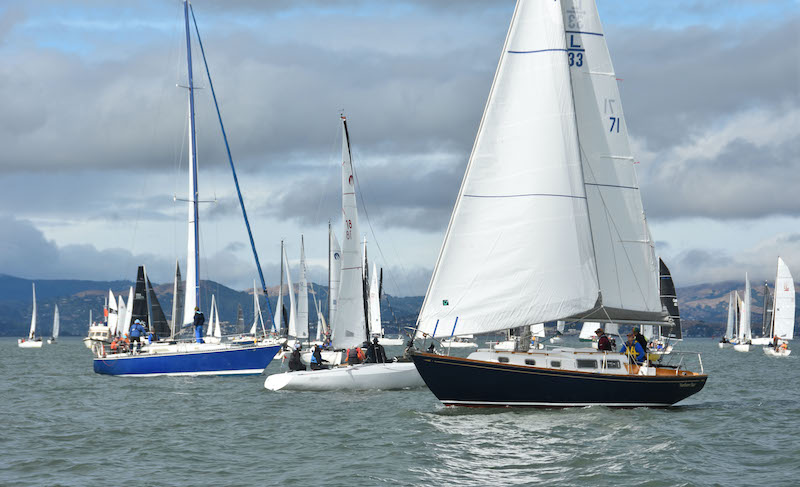
San Francisco on the Bay: “The List”

Dine, Drink, Smoke, Stay, Play and Shop. Discover San Francisco Bay and all that inspires those of us who live or visit here.