

Finally, Progress on Cleaning Up the Oakland Estuary
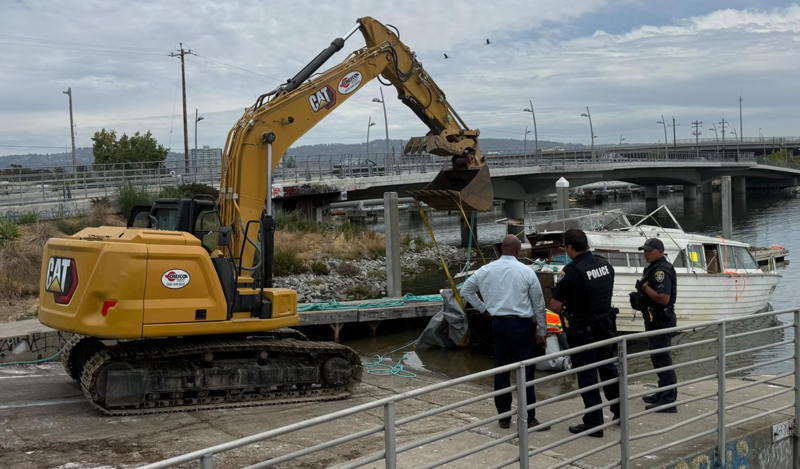
Last week we received news from Brock de Lappe that some of the long-awaited progress on cleaning up the Oakland Estuary had begun. In fact Brock said, “Offshore of the Jack London Aquatic Center is the cleanest this has been in years!” He went on to report that tagged vessels had moved out and some of the abandoned boats had been dragged up the ramp and destroyed.
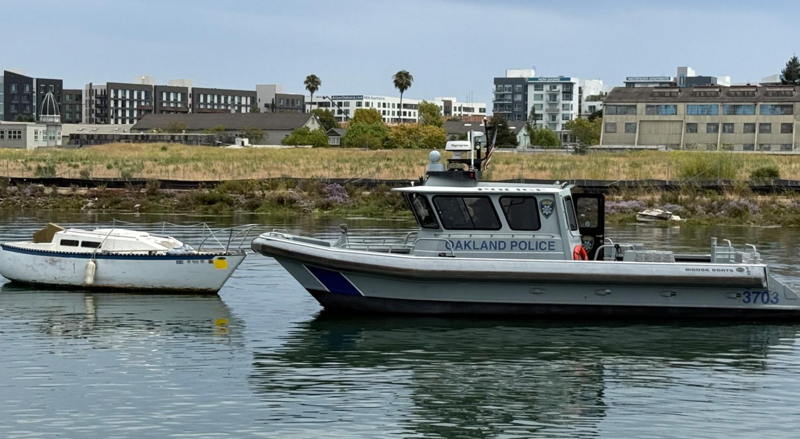
Brock reported that over a couple of days last week there had been significant developments on removing abandoned and derelict vessels (ADVs) from the Oakland Estuary. This resulted in there being only one illegal anchor-out offshore of the Jack London Aquatic Center, though 15 sunken and beached vessels still remained in that one cove.
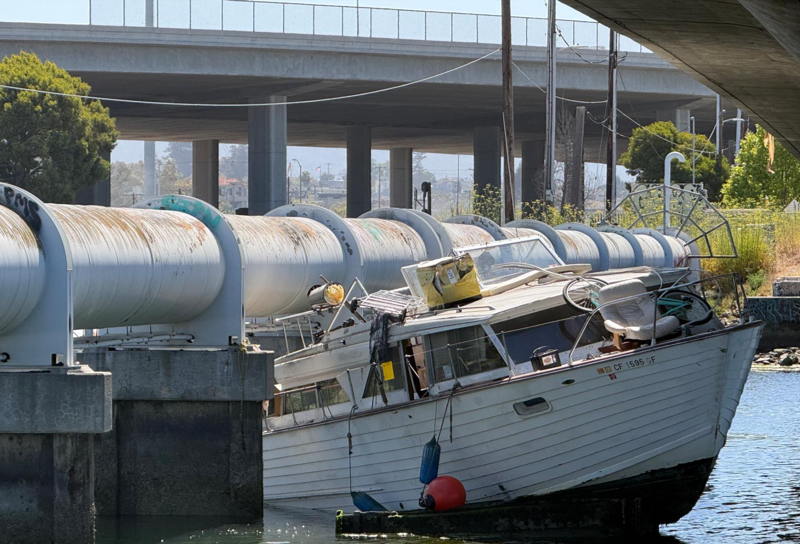
Brock stated, “EBMUD [East Bay Municipal Utility District] paid for the removal of two boats from under the Embarcadero Bridge over the channel to Lake Merritt. One of these was wedged under a pipeline that carries jet fuel to the Oakland Airport. One can only imagine the potential consequences if this damaged the pipeline when pressed up during a high tide.”
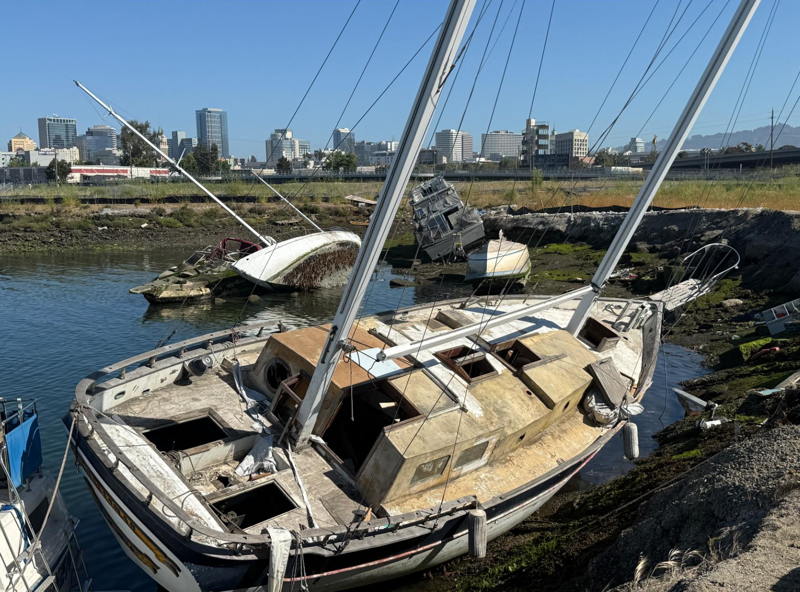
The City of Oakland has contracted Lind Marine to remove 16 sunken vessels later this month, the maximum allowed by permit from the State Water Resources Control Board. This will be a dent in the more than 40 sunken wrecks along the Oakland shoreline.
While the progress is welcomed, Brock continued with a report on the bureaucratic malaise that results in the ongoing failure to get the problem under control. He highlighted that it is now the State Water Resources Control Board that is handicapping the Estuary cleanup. In late 2023 the proposal was submitted to NOAA for funding to remove sunken boats from the Oakland Estuary. In October 2024 the City of Oakland and the nonprofit I Heart Oakland Alameda Estuary were among 13 locations in the United States sharing a grant of $3.16 million. Despite the grant, progress has been agonizingly slow.
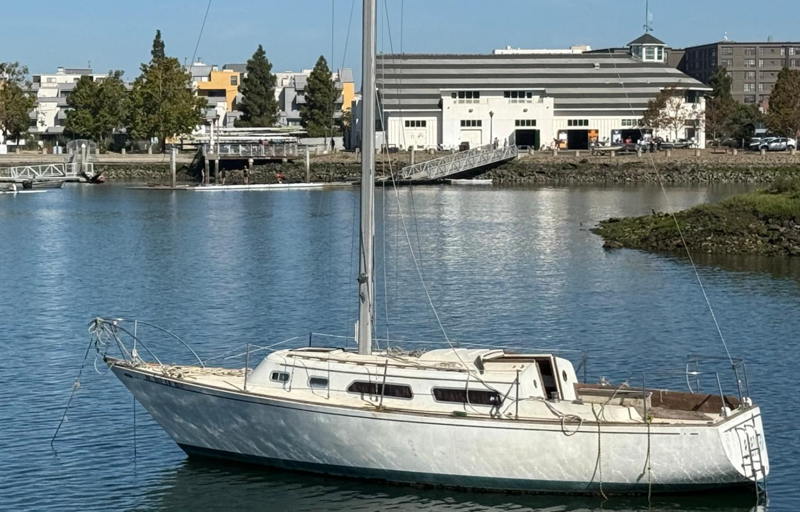
Brock writes, “The removal of sunken vessels required the City of Oakland to obtain permits from the US Army Corps of Engineers, the Bay Conservation and Development Commission (BCDC) and the California State Water Board. Unbelievably, the State Water Board would only permit the removal of 16 sunken vessels even though there are currently more than 40 along the Oakland shoreline. The number of 16 was in the original 2023 proposal, though the number of abandoned boats has increased dramatically over time.
“Andrew Mason, the NOAA project manager for this grant, has stated that the number of 16 was a minimum floor for boats to be removed, not a cap as being treated by the Water Board. What are the consequences of using data three years old at this time? The City of Oakland has contracted with Lind Marine to bring their barge and crane to the Oakland Estuary to remove sunken boats. Simply deploying this equipment is a significant expense. It makes no sense to limit their ability to remove vessels while this equipment is on site. This is an example of irrational bureaucracy.”
The progress is a positive development for all who use the Estuary to row, sail, paddle or otherwise recreate on the waterway. The East Bay Rowing Club can now get kids on the water with reduced threats to health and safety. We hope to see the progress continue, though we would also love to see old boats saved by getting into the right hands, and to see stable housing found for those who need it. It’s taking far too long with far too many negative consequences, but we’ll applaud any progress toward a clean, enjoyable Oakland Estuary.
Brock also called to remind us that this enormously expensive, multi-year clean-up project could likely be entirely avoided if Oakland would simply fund their estuary police patrol unit to prevent this infestation from happening in the first place. As they say, ‘an ounce of prevention is better than a pound of cure.” In this case, it would save millions and millions of dollars, especially if you count the seemingly infinite staff hours of ineffective agencies, that are trying to solve a problem that would be moot with an effective marine patrol unit.
While Oakland remains a poster child for mismanagement of public waterways and shorelines, the issue of abandoned and derelict vessels is a national problem. For those who can help, the BoatUS Foundation maintains a national database to track abandoned vessels across US coastal waters and territories and the Great Lakes. As part of the program, BoatUS Foundation will also host the Turning the Tide Summit on December 6–9 in New Orleans, bringing together industry leaders, environmental stakeholders and waste-management experts to advance removal, recycling and prevention solutions.
To report an abandoned or derelict vessel in your area, submit a report here.
If 16 was the floor in the grant why not treat 16 as the floor in the permit?
Nice to see some progress being made. But that begs the question of why there is any limit on removing derelict/sunken vessels. As pointed out, it is very expensive to deploy the requisite equipment to deal with the wrecks so it should be reasonable to remove as many as possible in the allotted timeframe.
A few weeks ago there were 38 illegal anchor-outs in the cove offshore of the Jack London Aquatic Center. Now there are none. This is entirely the result of the enforcement activity of the Oakland Police Dept marine patrol unit headed by Officer Ryan Smith. This is a clear testament that when the OPD marine unit is provided adequate staffing by the city administration they can get the job done.
Receiving the $3.16 million grant from the NOAA marine debris removal program provides Oakland with a unique opportunity to clear the estuary of sunken wrecks. Every effort should be made to use these funds as efficiently as possible. It is unclear why the state Water Board capped their permit for the removal of only 16 wrecks. I am aware that there are agencies appealing this ruling. Hopefully sanity will prevail.
It may be more cost effective to remove them all now. And fight with the State Water Board in court later if they are dumb enough to fight a cleanup effort.
To me the best solution for all of this is one agency to handle permits for the whole process. The way inter-agency bickering works cost a lot of money, and nothing gets done. This should be a simple process, Tag and remove.
The current situation is immeasurably improved over the disastrous situation of just a few weeks ago. Thank you to all of the agencies, individuals, and contractor firms who have made, and continue to make, this transformation possible. Imagine what could be!