
Rocking the Boat San Francisco Launches First Student-Built Boat
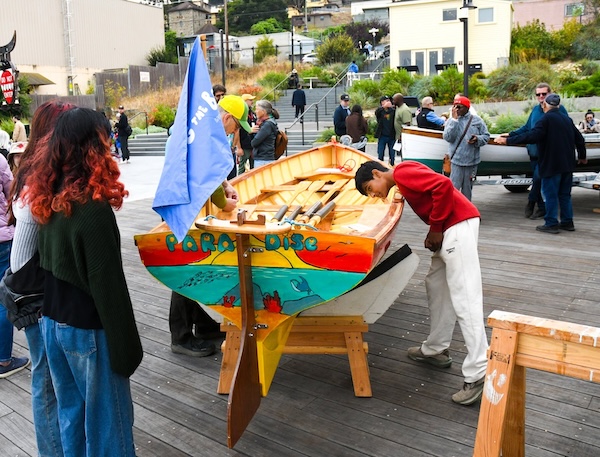
Just over a year ago, we shared the story of Rocking the Boat San Francisco as they launched their newly restored 14-ft Whitehall rowboat Neptune on June 7, 2025. Neptune was built by students in Bronx, NY, and shipped across the country to S.F., where she was worked on by Rocking the Boat students. Upon her launch she joined sister vessels La Bella and Phoenix for her first full season of community rowing at the park. Last Saturday, August 8, the students launched another vessel — their first-ever boat built from scratch — a 16-ft wooden rowboat named Paradise.
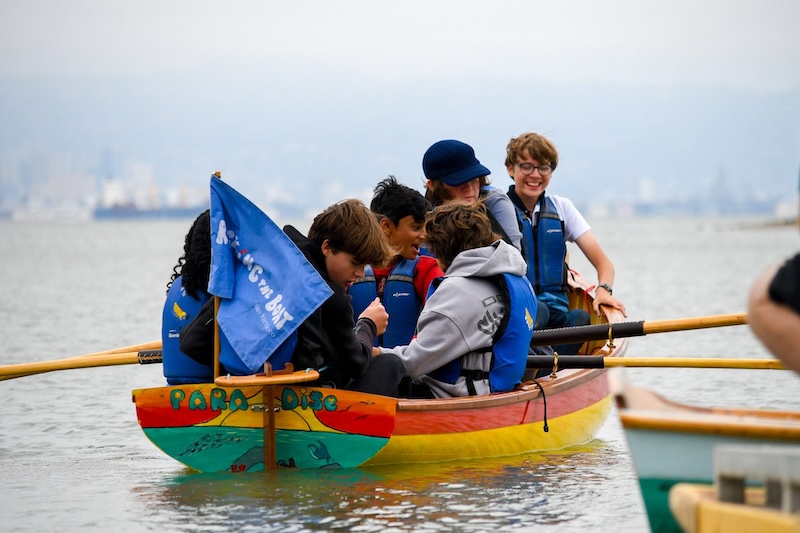
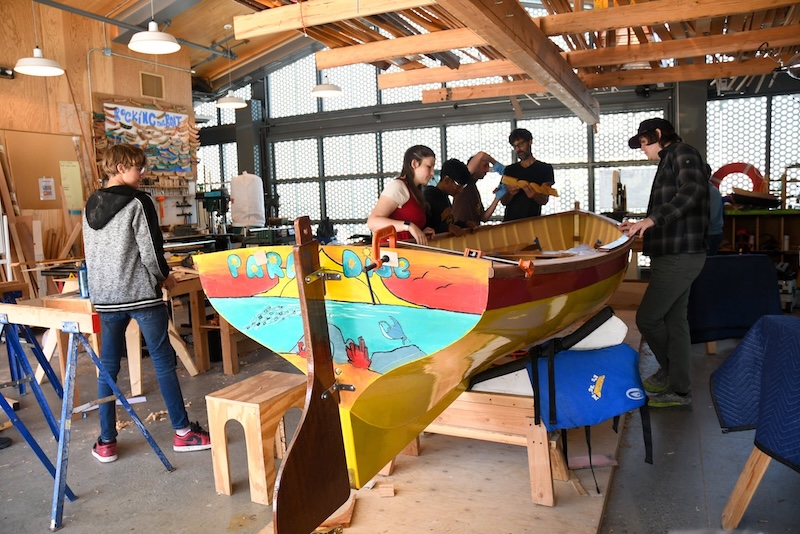
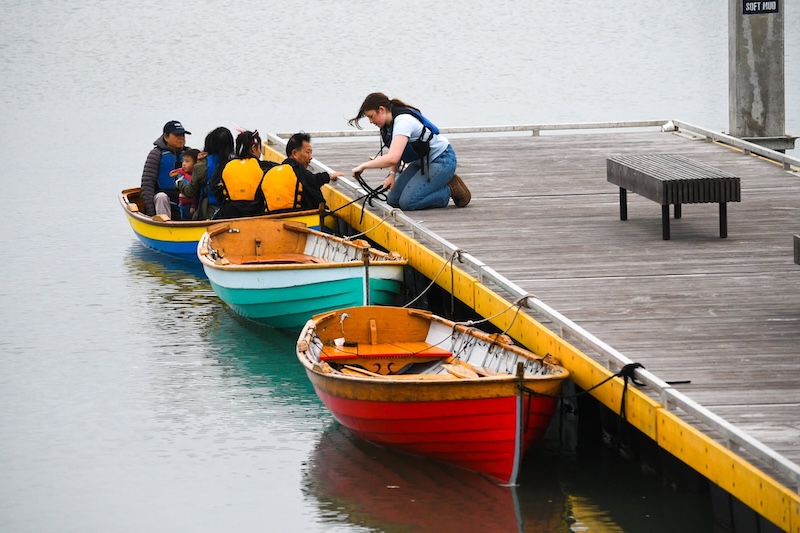
Paradise was crafted over 13 months from plans based on the Whitehall Alderbrook, which was built in a nearby boatyard in 1906. Alderbrook is part of the collection managed by the San Francisco Maritime National Historical Park and was brought over to the Rocking the Boat facilities to join the celebration of her new replica.
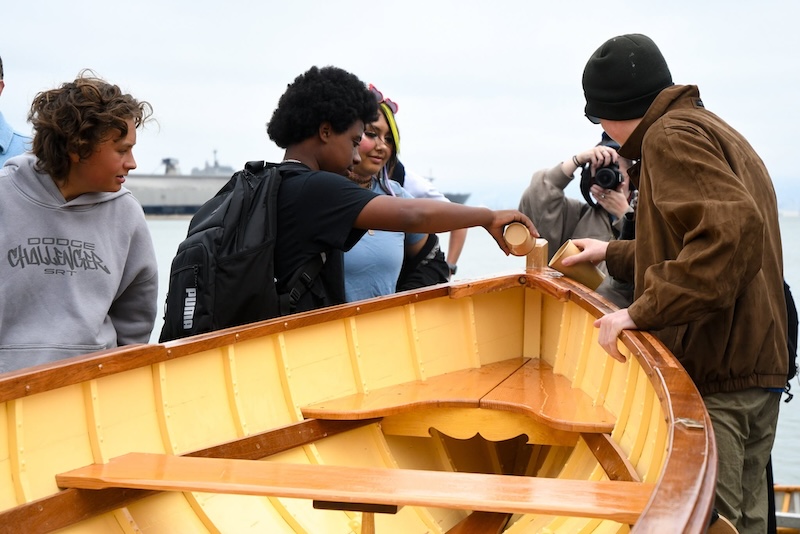
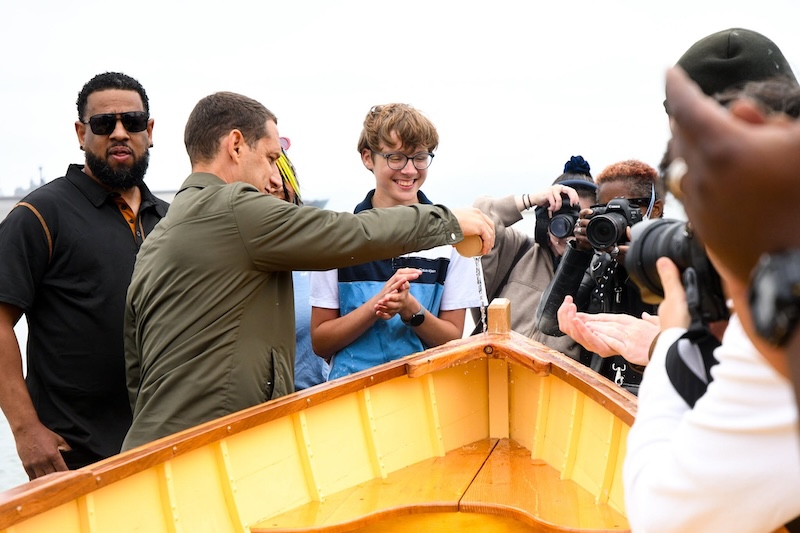
In front of an audience of 75 supporters, several students and San Francisco Mayor Daniel Lurie performed an official christening with cups of sparkling apple cider and water from the Bay.
The group of students, which began as six individuals in March 2025, has grown to a cohort of 17 youths aged 14 to 18 who have come from various youth programs in the Bayview and Hunters Point neighborhoods. They each devoted around six hours a week during the school term and five hours a day four days a week during the summer. Together they built every part of the boat from the hull through the oars, and painted the bright yellow and red hull and the decorative design on the transom.
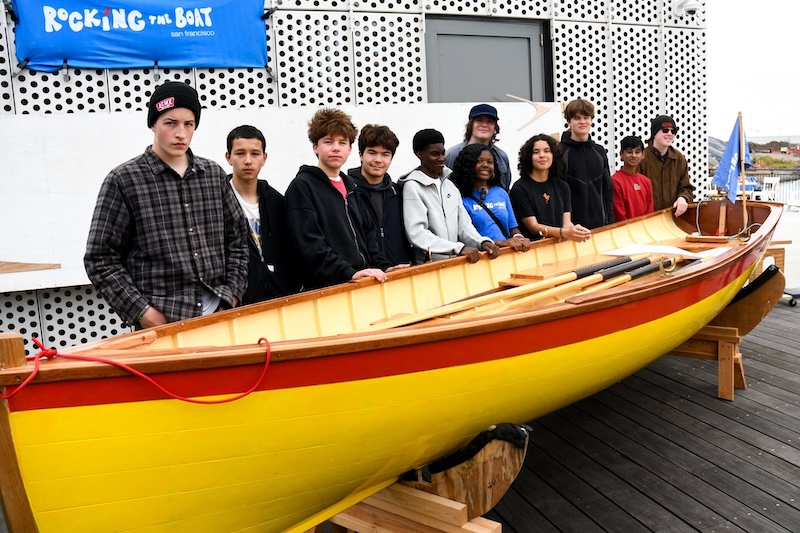
Rocking the Boat was founded in the Bronx, NY, by Adam Green. The program’s mission is to help participants develop pride, purpose and possibility by learning the unique and lifelong skills behind building and rowing wooden boats, sailing, and restoring the Bronx River and San Francisco Bay. “We create community, teach through transformative experiences, and make nature available to everyone, inspiring young people to determine their own future against a backdrop of systemic inequity.”
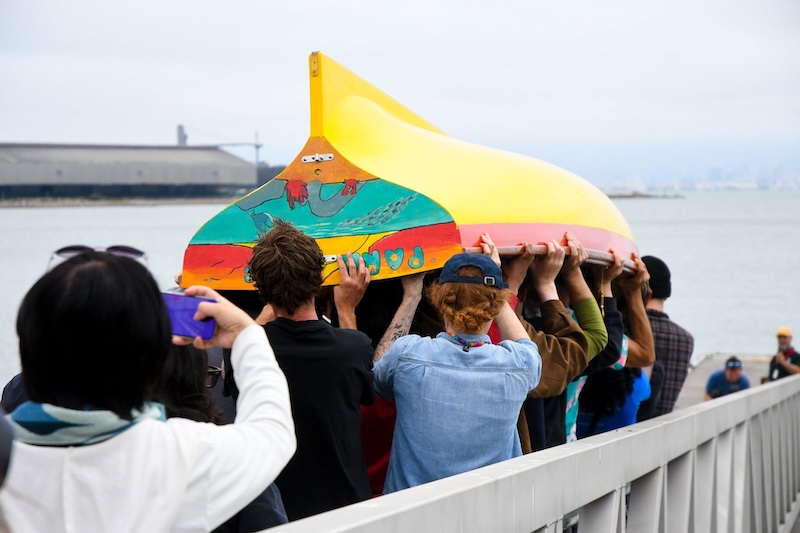
A new boat build will commence in September.
The Benefits and Features of the Baja Ha-Ha and Mexico — Part 2
Last month we shared a post in ‘Lectronic Latitude about the features and benefits of joining of the Baja Ha-Ha and cruising to Mexico. We closed out our previous post with snippets around how to cruise Mexico without spending a great deal of money. (That, of course, included a mention on how to spend big — it all depends on your tastes and the depth of your pockets.) Today we launch into the people, the proximity, the attractions and the seasons.
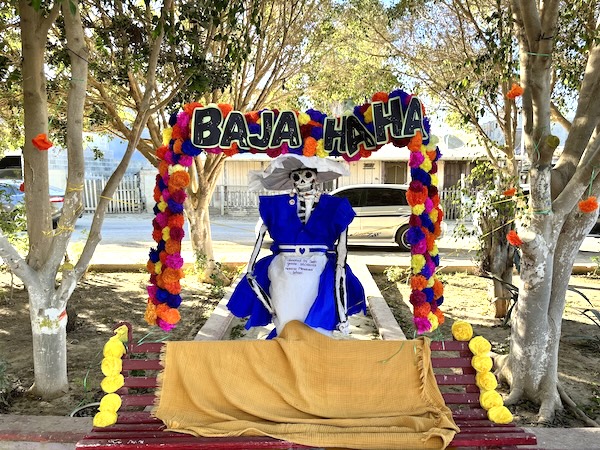
Latitude 38’s First Timer’s Guide to Mexico highlights the friendly people: friendly fellow cruisers and ultra-friendly and helpful Mexicans. “The tropical sun is warm in Mexico,” the Guide says, “but the people — particularly the poorer people — are warmer.” (This writer can attest to that.) Despite news reports about drug cartel wars, incidents involving cruisers and tourists remain uncommon in the traditional cruising areas. And there are no “pirates” in Mexico.
Many first-timers are surprised to discover the large number of gringos (that’s us) thriving in Mexico without undue concern for their personal safety. There are over 40,000 gringos in the Puerto Vallarta area, and something on the order of 1.6 million in the entire country. While you don’t want to flash your money anywhere in Mexico, or leave valuables unattended, as a tourist, you’re more likely to be mugged or attacked in certain parts of the Caribbean or the downtown areas of large cities in the United States. And nowhere in the world are cruisers more socially and group-oriented than in Mexico. Unless you’re a hermit, you’ll make more friends in Mexico than you had back in the States.
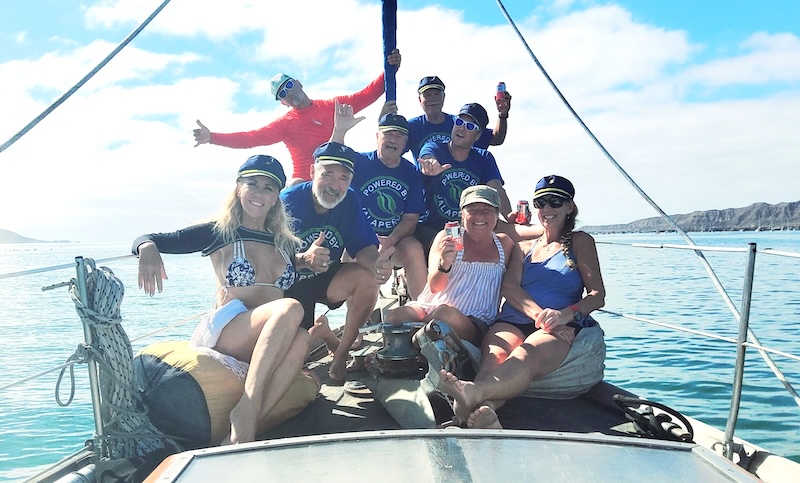
Proximity is another reason to cruise to and in Mexico. You can reach Cabo in around 10 days — including shore stops for a couple of parties and social time. This is exactly what the Baja Ha-Ha fleet does. The fleet launches from San Diego on November 2, and by November 12 you’re sailing from Bahia Santa Maria to Cabo San Lucas. If you want to leave your boat down south and come back to the US for a visit between cruising legs, you can fly home in less time and for less money than you would spend going to the South Pacific, the Eastern Caribbean, or the Med. And if you pick the right days, the Mexico-based flights are often very inexpensive.
Then there are the attractions — things to do in Mexico, other than sailing and relaxing (though for many cruisers sailing and relaxing are the sole reasons they head south). There are always those among the Ha-Ha fleet who love to surf, fish, hike, do some whale watching, swim with whale sharks, or explore jungle rivers and waterfalls. Oh, and for those who love their tunes, there’s a vibrant music scene in Mexico.
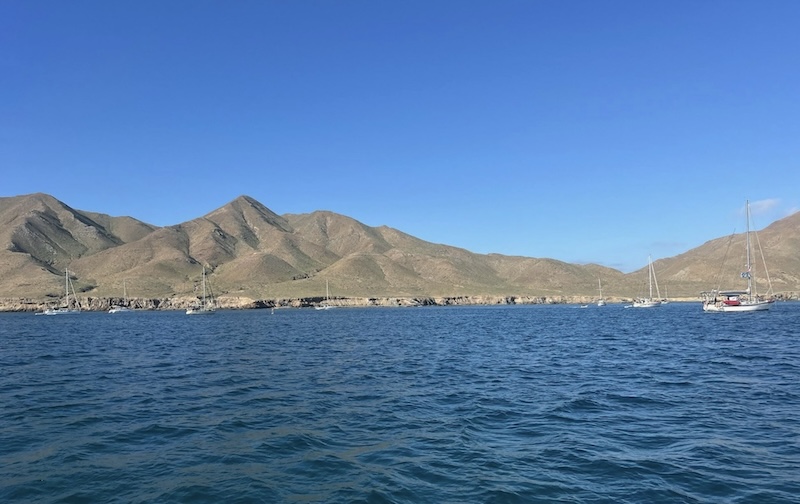
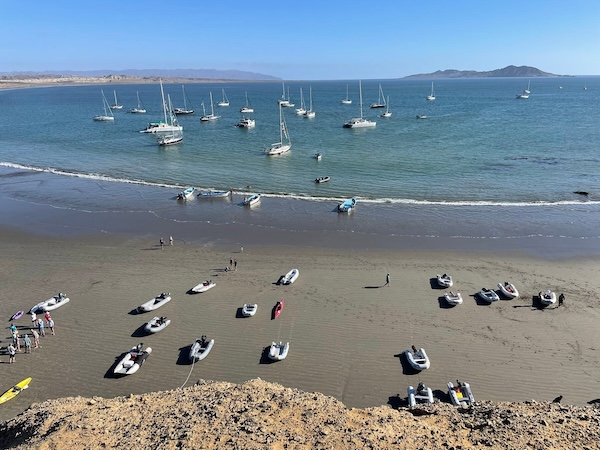
The cruising season in Mexico starts the first week in November, which is at the end of the hurricane season. Where and when the cruising season ends depends on what your game plan is and where you end up in Mexico. Many cruisers are on the “six-and-six” program. They cruise for six months — November 1 to May 1 — then do something else for six months. For the non-cruising six months, some take their boats back north, some stay with family and friends in the States, some travel the dirt in RVs, some head to Europe for more water-based adventure or relaxation. Staying on mainland Mexico from May 1 to November 1 is possible, but we don’t recommend it. It gets really humid, and the jungles are green because it rains so much. If you don’t have air conditioning, you’d be a masochist to stay on your boat on the mainland during the summer. Things are a little different in the Sea of Cortez, where the best of the best cruising weather is actually October and November, crossing fingers there are no hurricanes in October. And then again in April and early summer. By midsummer, it gets hot — really, really hot — in the Sea of Cortez.
Stay tuned for the next installment of snippets from the First Timer’s Guide to Mexico. In the meantime, if any of what we’ve shared above appeals to you, sign up for the 32nd Baja Ha-Ha and get ready for an unforgettable cruising experience.
Thanks to our sponsors for making the 2026 Baja Ha-Ha the best cruising rally ever: Baja Sur Tourism Board, Cabrales Boatyard, Commanders’ Weather, Cruiser Services, Ensenada Cruiseport Village, FlopStopper, Harbor Island West Marina, Hydrovane, Hylas Yachts, Julia Shovein (author), Keenan Filters, KTI Systems, La Paz Tourism Board, Marina de La Paz, Marina El Cid/Marina de Sábalo, Marina Puerto de la Navidad, Marina Riviera Nayarit, Mexico Marina Association, Novamar Insurance, Paradise Village Marina, Sevenstar Yacht Transport and Ullman Sails.
Note: If you want to join the Ha-Ha but don’t have a boat, check out Latitude 38’s Crew List for opportunities. Then come to the fall Baja Ha-Ha Crew List Party on September 10 at Spaulding Marine Center in Sausalito, and meet other cruisers heading south. John Schulthess and Monique Boucher from Barra de la Navidad Marina and Resort will be at the party, celebrating: “Baja Fog has been in Mexico for 10 years now … its our anniversary tour! Come say hi; this is a can’t-miss event!” They’ll have free giveaways and tons of info. “We will be at the Sausalito Boat Show also.… P.S. For those in the know, I’ll stay hydrated! inside joke.”
Modern Sailing Now at Clipper Yacht Harbor
‘Sisko’ Looks Forward to New Adventures
Every so often there’s a boat that seems to reach farther than its owner. In this instance, we’re referring to Sisko and her community under the ownership of Justin Jenkins. We’ve shared a number of stories about Sisko, and about Justin. Just last month Justin shared his thoughts on anchoring in the cove at Treasure Island and the joys of sharing time on the water with friends. In the March issue of Latitude 38, he told the story of Sisko and the community collective that grew around her as the boat was refitted and decked out for cruising. This week, Justin told us that Sisko will be going to a new home. He just doesn’t know yet whose home that will be …
After eight or nine years of Sisko being my boat, my home, my project, and in a lot of ways, a huge part of my life, I’ve decided it’s time to find her a new owner. It’s definitely a little bittersweet after all the years, miles, work and adventures I’ve had with her, but it feels like the right time to find her next home.
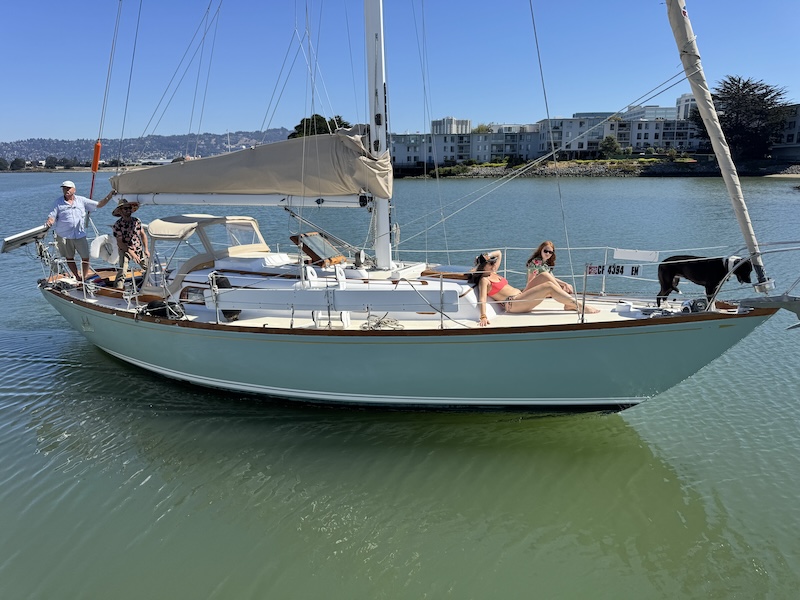
Sisko is a 1970 Cheoy Lee Luders 36, and Latitude readers have seen her in these pages a few times over the years. But it’s hard for me to think of her as simply a 36-ft sailboat that’s now “for sale.”
I poured my heart and soul into this boat. I was working as a shipwright at KKMI when much of Sisko’s restoration happened. I’d finish working on other people’s boats and then go work on my own. That went on for about five years, from 2018 to 2023.
And it wasn’t just me. In one way or another, it felt as if the whole shipyard had a hand in Sisko. People shared their knowledge, helped me solve problems, worked alongside me, and taught me along the way. I rebuilt the compression post, built custom cabinetry, created a new navigation station and table, and rebuilt and upgraded systems throughout the boat.
There probably isn’t another object I’ve owned that I’ve cared for the way I’ve cared for Sisko. The closest comparison I can think of is someone who built their own boat. But somewhere along the way, Sisko started rebuilding me, too.
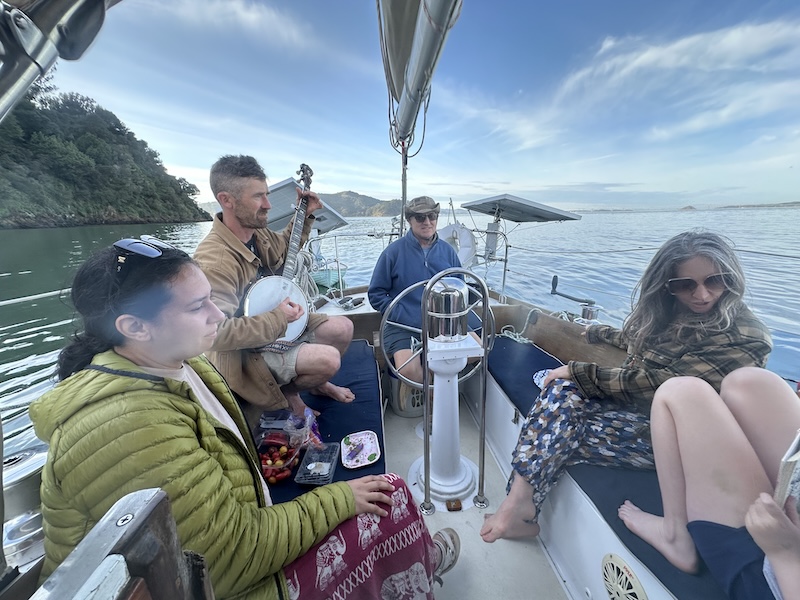
She became my home. I stopped drinking aboard her. I sailed her through the Gate and out onto the ocean. I’ve had incredible days with friends aboard her and plenty of difficult days by myself. She gave me a place to learn, work, think, heal, and figure out who I wanted to be.
The person who first stepped aboard Sisko eight or nine years ago isn’t the same person who’s getting ready to hand her over today. This boat healed me. She challenged me, taught me patience, and gave me confidence. She taught me an unbelievable amount about boats, but some of the most important things she taught me had nothing to do with sailing. That’s what makes letting her go so difficult.
The simple reality is that I now have another boat, and I can’t afford to properly care for two. And Sisko deserves to be cared for. I don’t want to watch a boat that I’ve spent nearly a decade looking after become something that simply sits at the dock. She’s too special for that.
Sisko is a heavily built, full-keel classic that’s been extensively refitted and outfitted for cruising. She’s ready to sail. But more than anything, I’m hoping to find someone who understands what they’re getting — someone who wants to become her next steward rather than simply her next owner.
I’ve spent years thinking about all the places Sisko could take me. What I didn’t understand when I bought her was how much she would change me along the way. And maybe that’s what I’m most excited about now.
I know what Sisko did for me. I can only imagine what she might do for the person who takes the helm next.
Long before Sisko, Justin was sharing his sailing adventures in the pages of Latitude 38, beginning with the boat he bought for $2,000 with a plan to “take off cruising to Mexico and beyond” — the 1972 Columbia 34 MkII Ichiban. But that’s another story.
See Sisko and other boats for sale in the Classy Classifieds.
High Times in the Pacific — 2026 Pacific Cup
Last month, In the July issue of Latitude 38, we shared Andy Schwenk’s predictions about the 2026 Pacific Cup race results. Here’s what actually happened.
It is always my great pleasure to break out my Magic 8 Ball and predict the fortunes of those lucky sailors who have the opportunity to set sail and bear away toward the former Sandwich Isles. Pacific Cup 2026 will long be remembered as the year the small boats got off to a lively start with steady 30-knot winds and heavy seas. The vessels that started a few days later got a little less wind, and the big-money campaigns got the opportunity to blast over the horizon with wind on the beam and set the colorful sails before the sun went down the second day.
Of course, none of this was obvious before the race started, but it’s still my best day when I get to write an article that predicts what I think is going to happen. See the July Latitude 38 for my shot at who was who on the high seas. Of course, when I wrote the article, the race had not started, and I had no idea I would actually be participating in the regatta myself.
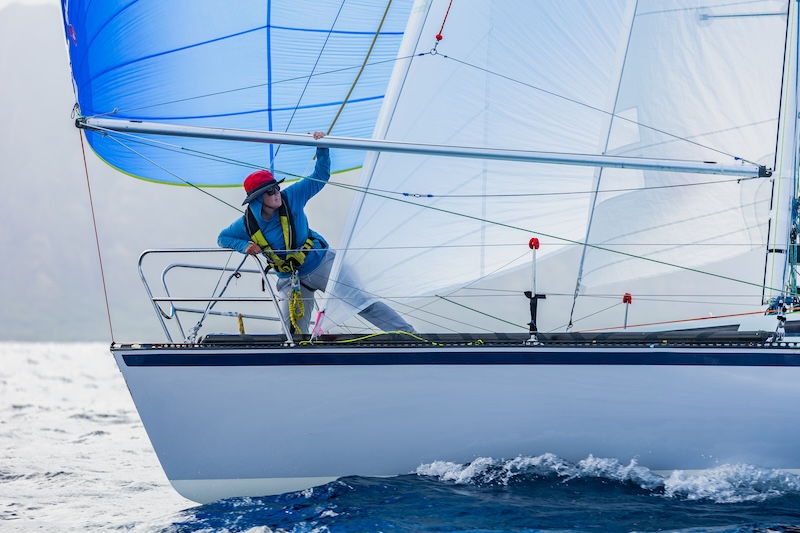
It was my great privilege to be able to compete among Kimo Winterbottom’s excellent crew aboard his sleek blue Andrews 56 Halawa. Of course, I figured when I wrote my prediction article it would be several weeks before I saw any of the sailors the story was written about. Now in the land of sunshine and coconuts, I’m writing this just as the last vessels get off the course, and more than a few sailors have taken the opportunity to point out that I missed a few top performers.
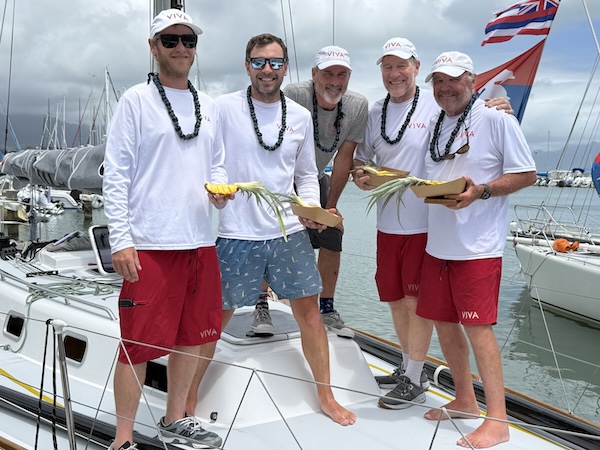
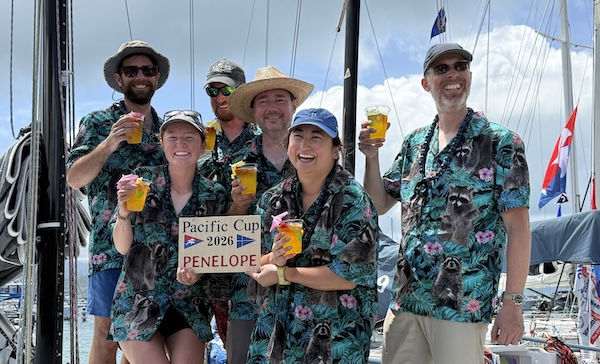
2026 was also a milestone year, bringing the 1,000th boat to race in the Pacific Cup across the finish line since the 2,100-mile “Fun Race to Hawaii” was first run in 1980. Finisher number 1,000 was Penelope, a C&C 99 out of Portland, Oregon, correcting to 38th overall (good number) with crew Ben Emery (skipper), Rich Ackerman, Jocelyn Emery, Elisa Fu, Denis Vannier and Kevin Elk.
At the top of the overall fastest elapsed time was Michael Firmin’s hot blue Infiniti 52 with her yellow foil boards, Zeus. Six hours behind them was Thomas Furlong’s R/P 52 Vitesse. These two 52-footers posted faster times than the rest of the big boys in the fleet.
Dock Your Boat! Live Your Dream!